
REVIEW · GRONINGEN TOURS
Groningen: Walking Tour with Local Guide
Start with the tower, then let Groningen unfold. This 1.5-hour walk packs a lot into a short route, taking you from the modern Forum Groningen through old squares, churches, harbors, and student streets. I like the compact 1.5-kilometer route, and I like the way it connects Groningen’s 1,000 years of history with its lively present.
The guides bring plenty of feeling to the walk. Margret made a small winter group relaxed and enjoyable, while Wessel mixed historical facts with cultural details and unusual local tidbits. The main consideration is weather: one January outing was cold and slippery, so good shoes and a warm coat matter.
In This Review
- Key points at a glance
- Why this Groningen walking tour works
- Beginning at Forum Groningen
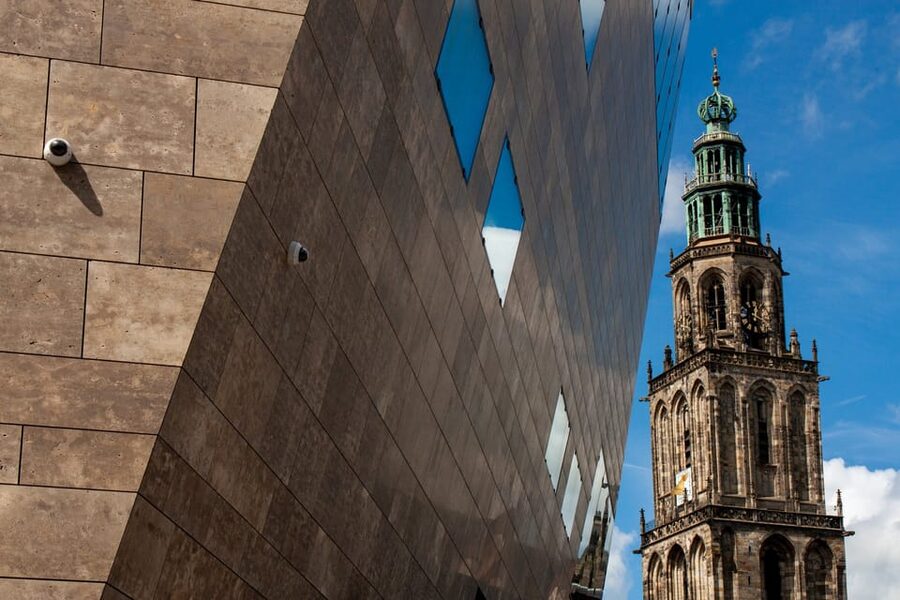
- New Market Square and the Martini-toren
- Civic buildings around the Grote Markt
- The yellow A-church and the Academic Building
- The oldest harbor and Groningen’s early trade
- Folkingestraat and Groningen’s Jewish past
- Back to Forum Groningen for the 45-meter view
- The guide can shape the whole experience
- Language, weather, and walking comfort
- Who will get the most from this walk
- Should you book the Groningen walking tour?
- FAQ
- Where does the Groningen walking tour begin?
- Where does the tour end?
- How long is the walking tour?
- How much does the tour cost?
- What languages are available?
- How large can the group be?
- Is the tour wheelchair accessible?
- Is the Pepergasthuis included every day?
Key points at a glance
- A short route with a big sweep: Cover Groningen’s old center in about 1.5 kilometers and 90 minutes.
- The Martini-toren is the star: Learn why Groningen’s old gray tower remains the city’s visual anchor.
- History meets student life: See old regent palaces, university buildings, bikes, cafés, shops, and modern Forum Groningen.
- A strong final view: Return to the Forum and take the electric stairs to its 45-meter-high platform.
- Small-group feel: Each tour allows up to 25 people, with smaller groups possible.
- Useful language choice: The experience is offered in Dutch, German, or English in the tour description, while the booking details specifically list Dutch and German.
Why this Groningen walking tour works
Groningen is easy to underestimate. It is far north in the Netherlands, away from the country’s best-known tourist circuit, yet its center brings together medieval streets, Renaissance buildings, university life, modern design, and a huge bicycle culture.
This tour gives you a quick way to understand that mix. You are not simply ticking off buildings. You are moving through the city in the order that makes sense: begin with its modern public face at Forum Groningen, then trace the older city around the Grote Markt, churches, university buildings, and former harbor areas.
At $22 per person, the price is reasonable for a live 90-minute city walk. You are paying for a local guide and a clear introduction to Groningen, not for admission to a major monument. That distinction matters. If you want to climb inside the Martini-toren or visit museums, you will need to arrange those separately. But if you want a useful first look before exploring on your own, the cost is fair.
The route is also compact. A 1.5-kilometer walk leaves you with time and energy for lunch, shopping, a museum, or another look at the Forum’s rooftop platform. You get a sense of the city without spending half a day on your feet.
More walking tours:
- Anne Frank’s Story – Guided Walking Tour through Amsterdam
★ 5.0 · 11,619 reviews - Amsterdam: Life of Anne Frank and World War II Walking Tour
★ 4.8 · 10,467 reviews - Absolutely Amsterdam – the Essential Introductory Walking Tour
★ 5.0 · 3,629 reviews
Beginning at Forum Groningen
The meeting point is inside Forum Groningen, in front of the VVV-store at the yellow counter. This is a smart starting place because Forum Groningen represents the city’s modern side before you begin tracing its older layers.
The Forum focuses on technical innovation, modern culture, and current affairs. From there, your guide leads you into the historic center. That change is part of the fun. One minute you are in a bold, contemporary building, and soon you are looking at old streets, churches, and civic buildings shaped by earlier centuries.
You finish back at Forum Groningen, so the route forms a neat loop. That makes the meeting point easy to use as a base at the beginning and end of your visit.
New Market Square and the Martini-toren
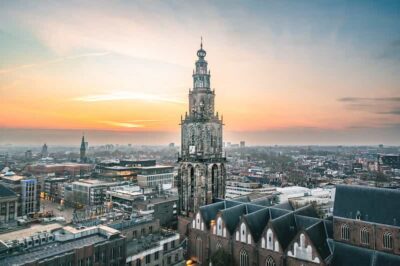
The first major historical stop is the New Market Square and the nearby Martini-toren. The old gray tower is one of Groningen’s clearest landmarks, and the tour uses it to open the city’s story.
The Martini-toren has plenty to explain about Groningen’s past. Even if you do not enter the tower, seeing it in relation to the surrounding streets helps you understand the scale and importance of the old center. Your guide can give the tower a human dimension by explaining what it has witnessed across the centuries.
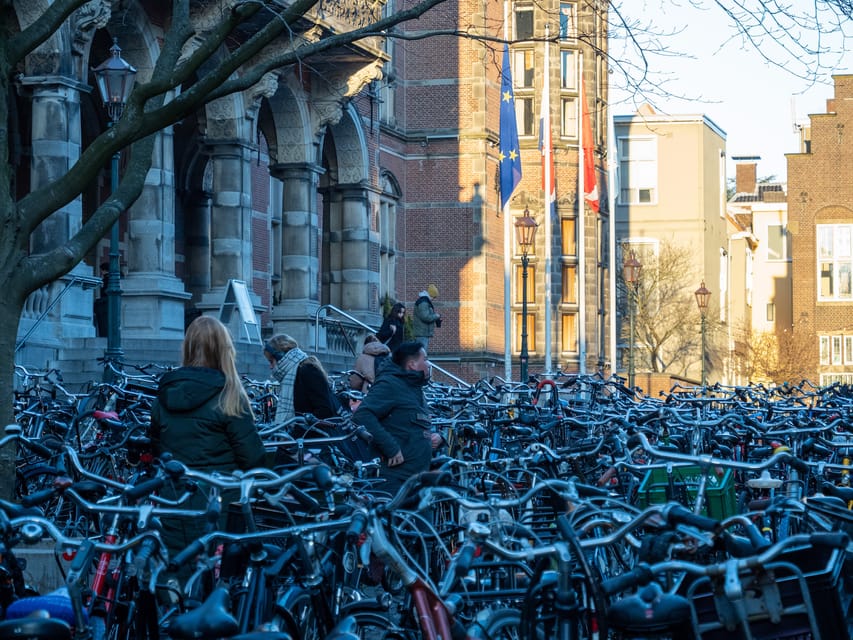
This is also where the bicycle culture becomes hard to miss. Groningen is home to about 70,000 students within a total population of roughly 235,000. That student presence shapes the city’s rhythm, from the number of bikes to the cafés, shops, and youthful energy around the center.
You should pay attention while walking. The city’s bikes are part of its character, but they also require care from anyone on foot. The tour’s urban setting is generally easy to manage, yet a crowded bicycle lane can be more demanding than an old cobbled alley.
Civic buildings around the Grote Markt
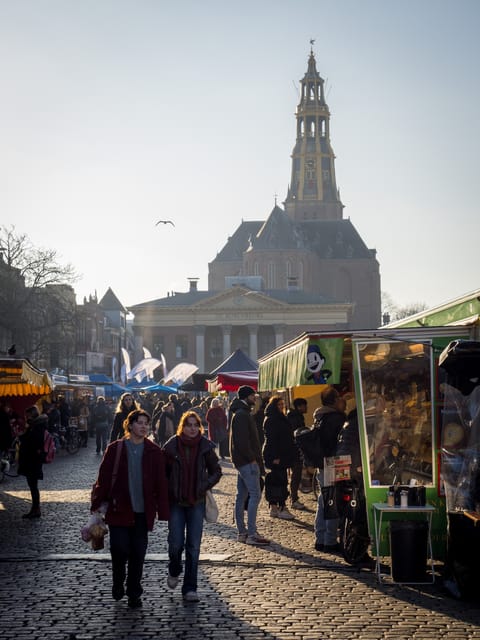
From the tower, the route continues through the Grote Markt and past a series of buildings that show how Groningen was governed and lived in over time.
You will see the City Hall on the Grote Markt, the office of the Commissioner of the King, and the Gold-office. You will also pass the Palace of the 17th and 18th century Regents. These stops help turn a collection of handsome façades into a story about civic power, wealth, and public life.
The guide’s role matters here. On your own, you might admire the architecture but miss the reason these buildings are gathered in this part of town. A local explanation gives the square more purpose and helps you spot the difference between grand civic architecture and the more modest streets around it.
The tour does not treat Groningen as a museum frozen in time. The point is to see Renaissance details beside newer buildings and to understand how the old center still functions as a place to shop, meet friends, drink beer, or enjoy wine.
More Groningen trips:
- Groningen: City Canal Cruise
★ 4.3 · 895 reviews - Groningen: Climb the Martinitower
★ 4.5 · 365 reviews - Groningen: Terrace Boat Experience with a Cozy Bar
★ 4.1 · 307 reviews - Groningen: Open Boat City Canal Cruise
★ 4.7 · 250 reviews
The yellow A-church and the Academic Building
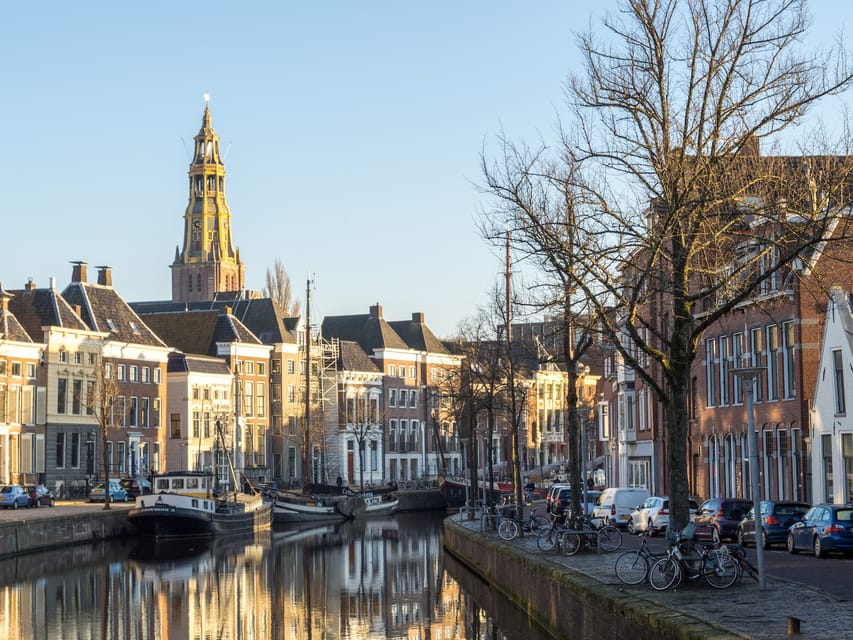
Another highlight is the A-church, known for its striking yellow tower. It adds a different shape and color to the city’s collection of religious buildings, especially when compared with the darker stone of the Martini-toren.
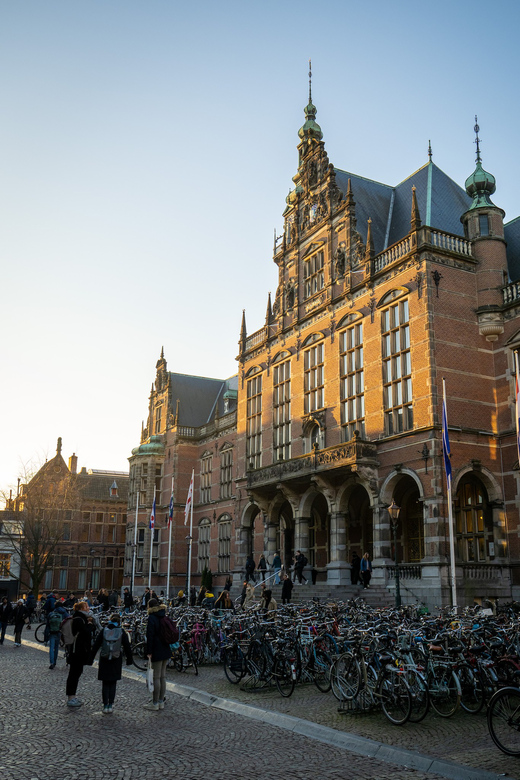
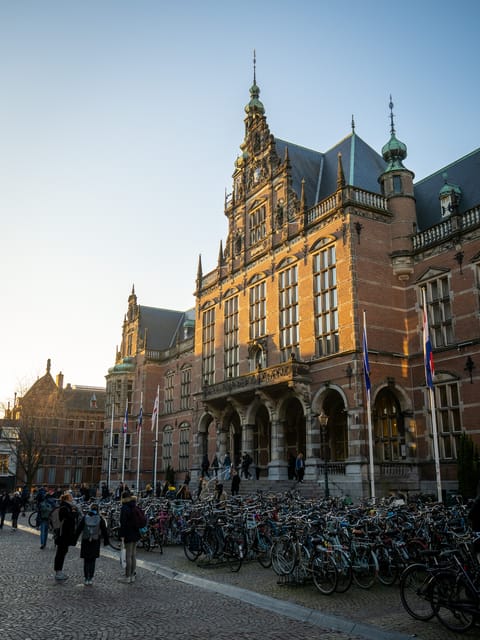
The route also includes the Academic Building. Groningen is a major university city, and this stop gives you a better feel for how education affects local life. The student population is not a minor side note. It helps explain why the city feels young, active, and full of bicycles even while its old buildings recall earlier centuries.
I like this part of the route because it avoids a narrow focus on medieval sights. You see religious architecture, university life, civic buildings, and modern culture within a short walk. That mix is more useful than a simple list of old monuments.
The oldest harbor and Groningen’s early trade
The walking tour steps back about 800 years at Groningen’s oldest harbor. This section provides a useful change from grand squares and public buildings.
Harbors tell a city’s story at street level. They point to trade, movement, work, and the practical reasons a settlement grew. The guide links this older waterfront to Groningen’s place as a major city in the north of the Netherlands.
You may find this stop especially helpful if you want context rather than only photographs. The harbor is not presented as a separate attraction with a long visit. Instead, it becomes part of the larger explanation of how Groningen developed.
The tour is still moving at a steady pace, so you should not expect a long pause at every location. If you like taking detailed architectural photographs, you may want to return later with more time.
Folkingestraat and Groningen’s Jewish past
Folkingestraat brings a more personal and serious part of the city’s story. The street has an important Jewish history, and the guide includes it as part of the walk through the old center.
This stop adds balance. Groningen is not only towers, markets, students, and cafés. Its streets also carry memories of communities and religious life that shaped the city. Hearing that history while standing in the actual street gives the subject a strong sense of place.
The route also includes the Pepergasthuis, described as a shelter for pilgrims who came to worship until the end of the 16th century, connected with the relic of Saint John the Baptist. This is a distinctive detail that you are unlikely to understand fully from a quick stroll without a guide.
There is an important Sunday limitation: the Pepergasthuis is not part of the tour on Sundays. If this particular stop matters to you, choose another day.
Back to Forum Groningen for the 45-meter view

The tour ends at Forum Groningen, where you can use the electric staircases to reach the 45-meter-high platform yourself. This final view is not simply a nice extra. It helps you connect the streets you have just walked with the city as a whole.
After hearing about the old harbor, the historic center, the churches, and the student population, you can look out and see how those pieces fit together. The platform also gives you a chance to pause after the walking portion rather than rushing straight to your next stop.
Because the platform visit comes at the end, you can decide how long to stay. The guided part ends at the Forum, and the platform is something you discover independently.
The guide can shape the whole experience
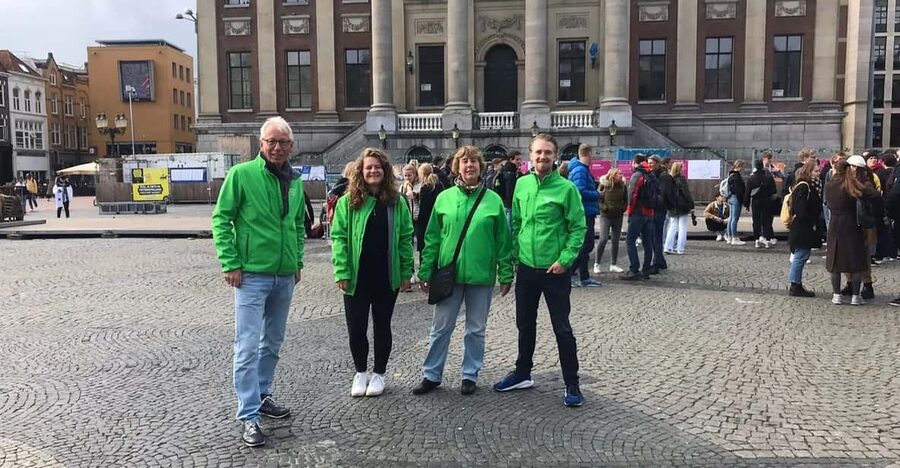
A city walk lives or dies by its guide. The strongest reports from this experience focus on enthusiasm, personal connection, and a good mix of information.
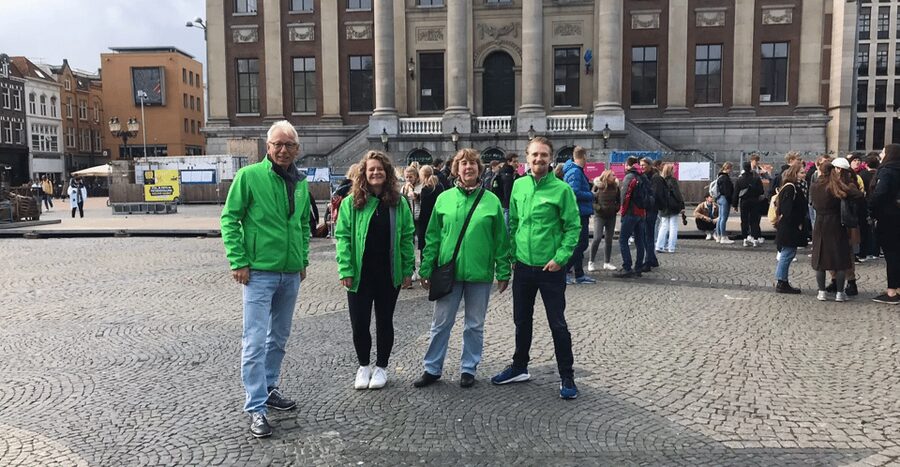
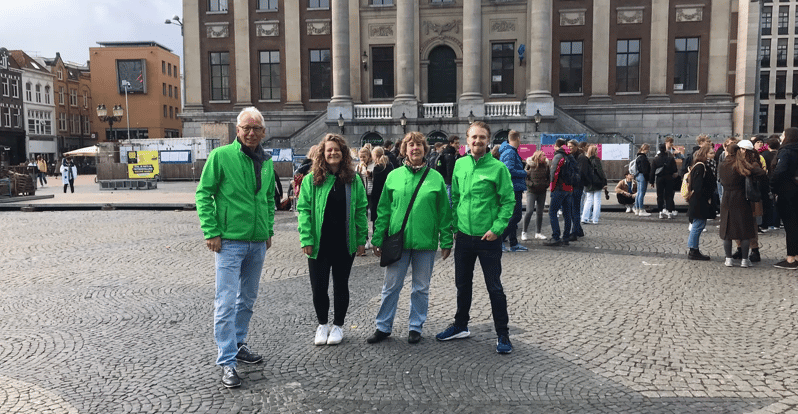
One guide, Wessel, was praised for combining historical and cultural information with modern details and unusual facts. Margret led a small group in December and made the tour feel relaxed and special. Another guide was described as enthusiastic and deeply connected to her city.
That personal warmth suits Groningen. This is not a formal lecture with dates delivered one after another. The best version of the tour feels like an introduction from someone who wants you to understand why the city matters today.
The maximum group size is 25 people. That is not tiny, but it is manageable for a walking tour. Smaller groups can feel more relaxed, as the December experience showed. If your group is large, stay close enough to hear the guide clearly, especially near busy squares and bicycle traffic.
Language, weather, and walking comfort
The tour description says it is available in Dutch, German, or English. The activity details specifically list Dutch and German, so check the available departure language when you book if English is essential for you.
The route is only about 1.5 kilometers, and the activity is listed as wheelchair accessible. Still, winter conditions can affect comfort. A January outing was cold and very slippery, though the guide’s enthusiasm kept it interesting. Wear shoes with a firm grip, particularly in colder months.
You will be outside for most of the 90 minutes. Groningen’s weather can change, and there is little sense in dressing for a quick walk when you will be standing at several points while listening. Bring a coat suited to the forecast and be ready for bicycles passing through the center.
The pace should suit most people who can manage a city walk, but it is not a sightseeing bus. You move from one stop to the next, listen, and keep going. The accessible designation is helpful, though individual mobility needs should still be checked before booking.
Who will get the most from this walk
I would recommend this tour to first-time visitors who want a clear introduction before exploring Groningen on their own. It is also a good fit if you have only a short stay and want to cover the main historic center without spending a full day on a formal tour.
History fans will appreciate the range: the Martini-toren, regent buildings, the oldest harbor, Folkingestraat, and the Pepergasthuis. Architecture fans get a quick comparison between Renaissance forms, religious towers, university buildings, and modern Forum Groningen.
Families and mixed-age groups may like the short distance. Student culture also gives the walk a lively edge that can keep younger visitors interested. If you mainly want an in-depth tour of one monument, this is not the right choice. The experience moves across the city rather than focusing on a single interior.
It is also less suitable for anyone hoping to avoid urban activity. Bikes are a major part of Groningen, and the center feels like a working city, not a quiet open-air museum.
Should you book the Groningen walking tour?
Book it if you want a friendly, efficient introduction to Groningen with a local guide who can connect old buildings to present-day city life. The $22 price is good value for the range of sights, the short route, and the final chance to see the city from Forum Groningen’s 45-meter platform.
I would especially choose it early in your visit. The guide can point out places to return to for shopping, drinks, food, or a closer look. Check the language, avoid Sunday if you want the Pepergasthuis included, and prepare for cold or slippery weather.
Skip it only if you prefer exploring entirely alone or want long interior visits at each sight. For most first visits, this is a practical way to get your bearings and understand why Groningen feels both old and young at the same time.
FAQ
Where does the Groningen walking tour begin?
Meet your guide inside Forum Groningen, in front of the VVV-store at the yellow counter.
Where does the tour end?
The tour ends back at Forum Groningen.
How long is the walking tour?
The tour lasts 1.5 hours and covers about 1.5 kilometers.
How much does the tour cost?
The listed price is $22 per person.
What languages are available?
The tour description lists Dutch, German, and English. The activity details specifically list Dutch and German, so check the available language when booking.
How large can the group be?
The maximum group size is 25 people.
Is the tour wheelchair accessible?
Yes, the activity is listed as wheelchair accessible.
Is the Pepergasthuis included every day?
No. The Pepergasthuis is not part of the tour on Sundays.
Just added around Groningen
- e-Scavenger hunt Groningen: Explore the city at your own pace★ 4.5 · 28 reviews
- Groningen: Terrace Boat Experience with a Cozy Bar: 1.5 Hours★ 5.0 · 29 reviews
- Groningen: City canal cruise (with unlimited drinks)★ 4.8 · 29 reviews
- Groningen: Terrace Boat Experience with a Cozy Bar: 1 hour★ 4.5 · 35 reviews
- Groningen: Evening Cheese and Wine cruise★ 4.9 · 54 reviews
- Historical Canal Tour★ 5.0 · 60 reviews
- Groningen: Open Boat City Cruise★ 4.5 · 154 reviews
- Groningen: City Highlights Bike Tour★ 4.8 · 59 reviews
Groningen Tours, compared.

Browse the lists this tour appears in