
REVIEW · THE HAGUE TOURS
The Hague: Beginner’s Surf Lesson
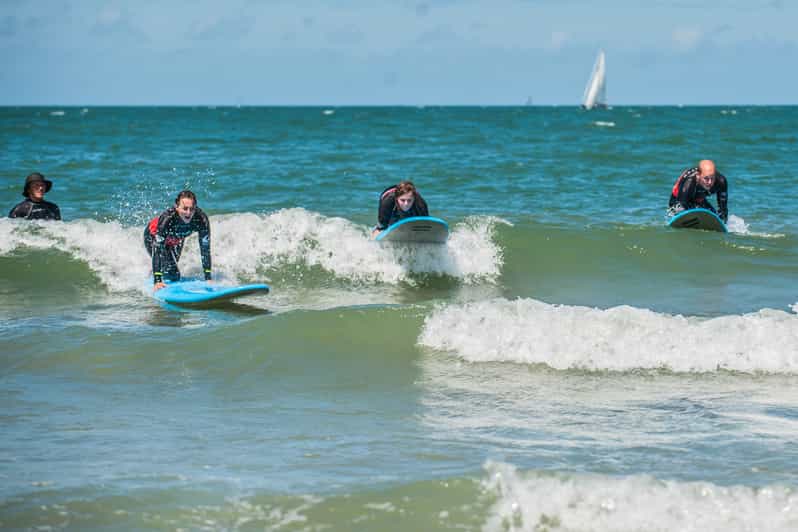
Catch your first wave in The Hague. This two-hour lesson at Scheveningen Beach gives beginners a friendly start, with Dutch and English-speaking instructors, warm wetsuits, and groups capped at six people. I like the small class size and the fact that the lesson includes a €15 rental credit for later use. The main consideration is simple: you need to be at least 16, and ocean conditions can affect how much time you spend standing on the board.
I also like that the lesson begins with safety and wave technique before you enter the water. That matters when you are new to surfing and still figuring out which way the board points. The separate changing rooms, lockers, hot showers, and winter gloves and boots make this a practical beach activity, not just a quick splash in the sea.
In This Review
- Key points at a glance
- Starting at Scheveningen Beach
- Why a group of six matters
- The beach briefing and water safety
- Learning to control the soft-top board
- Timing the takeoff and riding your first wave
- Warm wetsuits and useful beach facilities
- What the €45 price really gives you
- Who will enjoy this lesson most
- Booking details worth knowing
- FAQ
- Where does the beginner surf lesson meet?
- How long does the lesson last?
- What equipment is included?
- Should I bring swimwear and a towel?
- What languages does the instructor speak?
- Is there an age requirement?
- What is included after the lesson?
- Should you book the Scheveningen surf lesson?
Key points at a glance
- Small groups of six or fewer: You get more personal attention than in a large beach class.
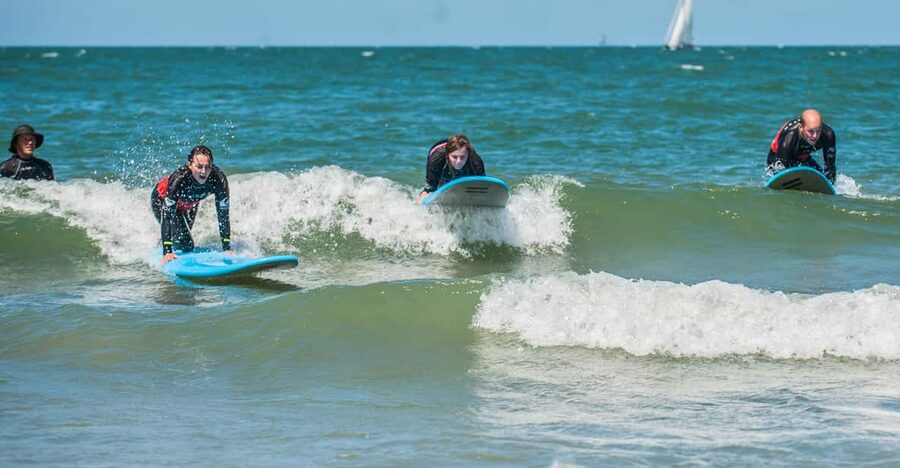
- A real beginner focus: The lesson covers water safety, board control, wave reading, and timing your takeoff.
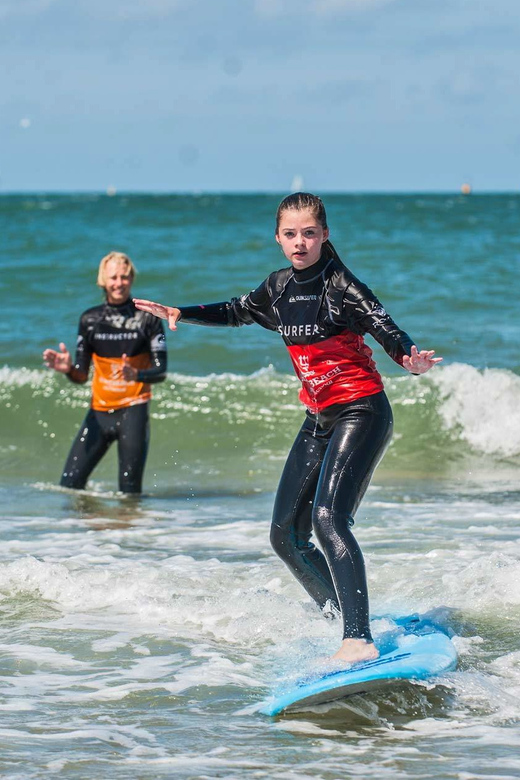
- Warm equipment provided: A wetsuit and cap are included, with gloves and boots available in winter.
- €15 rental credit included: Continue practicing after the lesson when it suits you.
- Dutch and English instruction: The class is accessible to both local and international participants.
- Convenient beach facilities: Changing rooms, lockers, and hot showers are available at the surf school.
Starting at Scheveningen Beach
The lesson begins at Strandweg 3, 2586JK Scheveningen, in The Hague’s seaside district. This is not a sightseeing tour with several stops. The beach itself is the setting, and the two-hour schedule is built around getting you comfortable with a board and into the water.
You meet at the surf school, where you can prepare in the changing rooms and store personal belongings in lockers. Bring your own swimwear and towel. The school supplies the less glamorous but more important parts of the outfit: a soft-top surfboard, warm wetsuit, and cap.
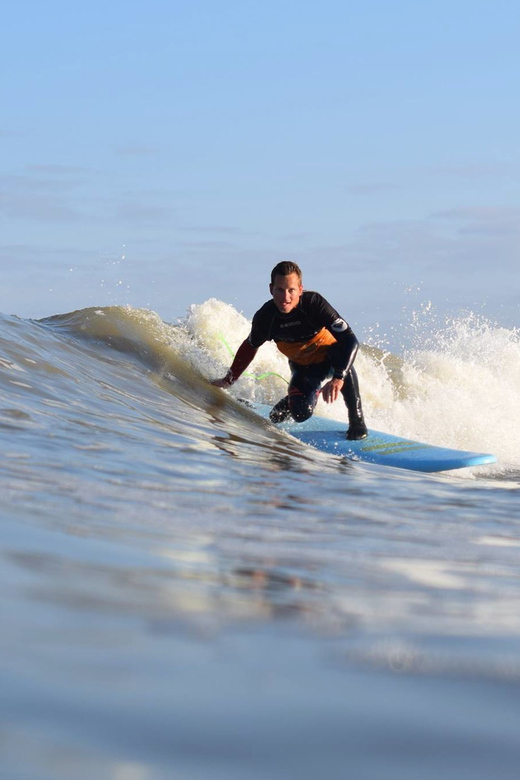
That soft-top board is a good choice for a first lesson. It is designed for beginners and is more forgiving than the hard boards used by experienced surfers. You still need to handle it carefully, but the setup lets you focus on balance and timing instead of worrying about advanced equipment.
The beach location also keeps the experience straightforward. You do not spend much of your two hours being transported around. After meeting the instructor, the group can move directly into the lesson.
More workshops and classes:
- Amsterdam: Traditional Dutch Syrup Waffle Making Workshop
★ 4.8 · 4,093 reviews - Amsterdam Traditional Dutch Syrup Waffle Making Workshop
★ 5.0 · 960 reviews - Amsterdam: Bols Cocktail Experience and Cocktail Workshop
★ 4.8 · 666 reviews
Why a group of six matters
A group limit of six is one of the best features here. Surf instruction can become frustrating when one instructor is trying to watch a crowd of beginners at once. With six or fewer people, you have a better chance of receiving corrections about your stance, board position, or timing.
That does not mean you will get a private lesson. You will still share the instructor’s attention, and the amount of individual coaching can depend on how quickly the group moves. Still, this is a much more personal setup than a large introductory class.
The instructors speak Dutch and English. That is useful in a sport where short directions matter. When you are trying to remember several steps at once, clear language can make the difference between catching a wave and sitting on your board wondering what happened.
The school is Hart Beach Quiksilver Surfschool. Specific instructors praised for their friendly and professional approach include Ayoub, Gijs, and Connor. Connor was especially appreciated for combining a fun teaching style with practical instruction. That balance suits a first lesson well: you want encouragement, but you also need someone to correct you before a small mistake becomes a bad habit.
The beach briefing and water safety
Before you try to surf, the instructor explains how to stay safe in the water. This part may sound less exciting than catching a wave, but it is essential. Beginner surfing involves boards, moving water, and other people, so learning how to enter the water safely gives you a better foundation for the rest of the class.
You learn several ways to approach the water and how to keep the board under control. The lesson also introduces basic surf techniques, including how to read the waves and how to choose the right moment to try standing.
I like this order. It keeps the lesson from becoming a frantic race to stand up. You first learn what the waves are doing, then how your board responds, and only after that work on the takeoff.
The briefing also helps you understand what success looks like. A first lesson is not about carving across a long wave or mastering advanced turns. It is about controlling the board, getting into the right position, and making a safe attempt to ride forward.
Learning to control the soft-top board
Once the beach instruction is complete, you take your board into the water. The soft-top design gives beginners a stable platform for learning the basic movements.
Board control is a bigger part of surfing than many first-timers expect. You need to keep the board pointed in the right direction, manage it as waves approach, and avoid letting it swing around unpredictably. The instructor works through these steps before asking you to focus on standing.
You also learn to read the waves. That does not mean becoming an expert in ocean conditions during one class. It means beginning to notice which waves are suitable for a beginner, how they move toward the beach, and when one has enough energy to carry you.
This is where the small group can help. The instructor can watch your attempts and offer simple corrections. You may need to shift your body position, wait a little longer, or begin standing at a different moment. Surfing is a sport of timing, and the first lesson gives you a practical introduction to that timing.
More trips to The Hague:
- The Hague: Mauritshuis Entrance Ticket
★ 4.7 · 2,706 reviews - The Hague: City Canal Cruise
★ 4.6 · 2,024 reviews - From Amsterdam: Rotterdam, Delft & The Hague Guided Day Tour
★ 4.2 · 1,765 reviews - The Hague: Madurodam Miniature Park Entry Ticket
★ 4.6 · 1,559 reviews
Timing the takeoff and riding your first wave
The main goal is to catch your first wave. The instructor explains when to begin the takeoff and how to move from lying on the board toward a standing position.
At first, the sequence can feel awkward. You are watching the water, holding the board steady, and trying to remember your foot placement. That is normal. The lesson is designed for beginners, so the instructor breaks the process into manageable actions rather than assuming you already know what to do.
When the timing works, the board begins to carry you toward shore. Even a short ride gives you a clear sense of why surfing is so appealing. You are not simply being pushed by the water. You have chosen a wave, positioned the board, and made a controlled attempt to stand.
The experience is also honest about the learning curve. You may not stand on every try, and the conditions may not give every participant the same number of good waves. Still, the class focuses on the skills that make later practice more productive: safety, wave reading, board control, and takeoff timing.
Warm wetsuits and useful beach facilities
Scheveningen is a North Sea beach, so warm equipment matters. The school provides a warm wetsuit and cap. During the winter months, gloves and boots are available if needed.
You still need to bring swimwear and a towel. That is easy to overlook when you are focused on the surfing itself, so pack both before heading to Strandweg 3. The towel is particularly useful after the hot shower.
The facilities make this activity easier to fit into a day in The Hague. You have separate changing rooms, lockers for personal belongings, and hot showers. Those details are not decorative extras. After two hours in the sea, being able to change, warm up, and collect your belongings without fuss adds real value.
The information provided does not specify every facility detail beyond these basics, so I would keep your packing simple. Bring swimwear and a towel, and avoid taking unnecessary valuables to the beach.
What the €45 price really gives you
At $45 per person, the lesson is priced as an accessible introduction rather than a full day of surfing. The two-hour duration gives you enough time for a safety briefing, beach instruction, water practice, and repeated attempts at catching waves.
The value improves because the price includes the board, wetsuit, and cap. You do not need to arrange beginner equipment separately, and the school provides winter accessories when needed. The small group limit also matters: part of the price pays for instruction rather than only equipment access.
You also receive €15 in rental credit to use after the lesson. This is useful if your first session leaves you wanting more time on the water. It is less valuable if you are only in The Hague for a short visit or do not plan to surf again, so consider your schedule before treating the credit as a major saving.
The price does not include swimwear or a towel. Those are small costs if you already have them, but they are worth remembering when comparing the total expense of the activity.
Who will enjoy this lesson most
This class suits adults and older teenagers who want a first, structured introduction to surfing. You must be at least 16 years old, so it is not an option for younger children.
It is a good match if you like active experiences and do not mind getting wet, making mistakes, and trying the same movement more than once. You do not need previous surfing experience. The lesson is specifically built around the first steps.
It also suits solo participants. A group of six or fewer makes it easier to join without feeling lost in a crowd. Couples and friends can book together, while the small format still gives the instructor room to help each person.
The lesson may be less suitable if you want a guaranteed long ride or a relaxed beach activity with little physical effort. Surfing requires concentration and repeated movement. The result also depends on the waves available during your session. You should arrive ready to learn, not expecting a polished performance on your first attempt.
The positive teaching style is another reason to consider it. Ayoub, Gijs, and Connor were singled out for being kind, helpful, fun, and professional. That combination can be especially helpful if you feel nervous about trying a new sport in front of other people. A supportive instructor makes it easier to keep trying after a wipeout.
Booking details worth knowing
The activity lasts two hours, but starting times depend on availability. Check the schedule before arranging other plans in The Hague.
You meet and finish at Strandweg 3, 2586JK Scheveningen. Since the activity ends at the same meeting point, you know where to return after the water session.
You can cancel up to 24 hours before the lesson for a full refund. The reserve-now-and-pay-later option also gives you some flexibility while you firm up your plans. These policies are useful for a beach activity because your daily schedule may change, though the details do not remove the need to check the available time before booking.
The instruction is offered in Dutch and English. The group is limited to six participants, and the activity is run by Hart Beach Quiksilver Surfschool.
FAQ
Where does the beginner surf lesson meet?
Meet at Strandweg 3, 2586JK Scheveningen, The Hague. The activity also ends at the same meeting point.
How long does the lesson last?
The beginner surf lesson lasts two hours. Starting times depend on availability.
What equipment is included?
The lesson includes a soft-top surfboard, a warm wetsuit, and a cap. Gloves and boots are included if needed during the winter months.
Should I bring swimwear and a towel?
Yes. Swimwear and a towel are not included, so bring both with you.
What languages does the instructor speak?
The instructors speak Dutch and English.
Is there an age requirement?
Yes. You must be at least 16 years old to take part.
What is included after the lesson?
The lesson includes €15 in rental credit, which you can use at a time that suits you after completing the lesson.
Should you book the Scheveningen surf lesson?
I would book this if you want a well-organized first taste of surfing near The Hague. The strongest reasons are the small groups, certified instruction, warm equipment, useful changing facilities, and clear focus on the skills you need to catch a first wave.
The $45 price is fair when you count the two-hour lesson and equipment rental, and the €15 credit gives you a reason to continue practicing. Just pack your swimwear and towel, remember the 16-and-over rule, and keep your expectations realistic. You may catch a wave quickly, or you may spend more time learning the basics. Either way, Scheveningen gives you a genuine introduction to surfing without requiring a full day or a large commitment.
Just added around The Hague
- Private Day Trip from Amsterdam to Rotterdam and the Hague★ 5.0 · 19 reviews
- Private Day Tour: Rotterdam and The Hague. English or Spanish★ 4.5 · 20 reviews
- Royal The Hague Private Guided Walking Tour★ 4.5 · 21 reviews
- Private Day Tour: Rotterdam, Delft & The Hague From Amsterdam★ 5.0 · 22 reviews
- e-Scavenger hunt Delft: Explore the city at your own pace★ 4.5 · 26 reviews
- The Hague Private Walking Tour with a Local★ 4.0 · 29 reviews
- The Hague: Street Art Tour by Bike★ 4.8 · 30 reviews
- Amsterdam: Zaanse Schans, The Hague & Rotterdam Tour★ 4.8 · 33 reviews
The Hague Tours, compared.




Hop-on Hop-off Old-Fashioned Heritage Tram Tour
Read our review →

Rotterdam, Delft, the Hague, Madurodam from Amsterdam
Read our review →Browse the lists this tour appears in