
REVIEW · THE HAGUE TOURS
The Hague: Courtyard Walking Tour
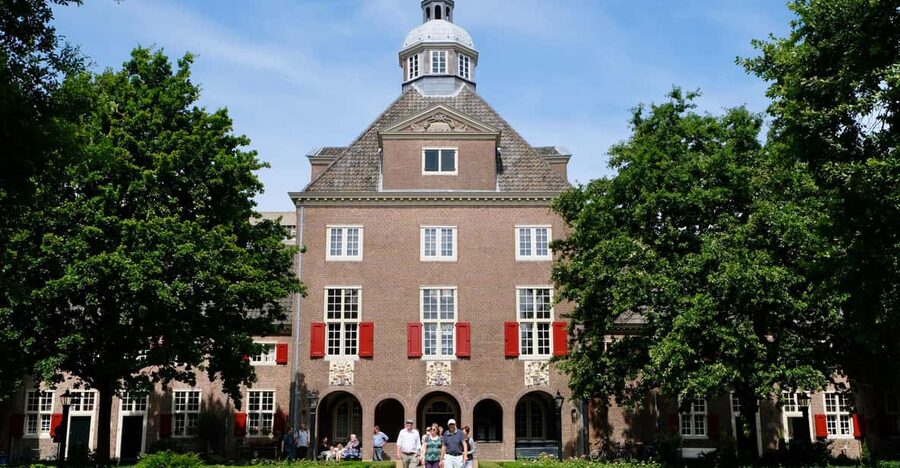
Quiet courtyards tell loud stories. This 90-minute walk reveals the hofjes of The Hague, secluded residential yards dating from the 16th century, where poor and elderly people once lived. I like the contrast between the busy city streets and these calm little spaces, and I appreciate how the route connects the courtyards with nearby monuments and Renaissance details.
I also like the small-group format, limited to 10 people, and the very low $9 price. Guides such as Hans and Kees have been praised for their clear, lively storytelling and for treating the courtyards and their residents with respect. The main consideration is that the walk may include fewer traditional hofjes than you expect, and the tour is conducted only in Dutch.
In This Review
- Key points before you book
- Why The Hague’s hofjes are worth your time
- Starting at ’t Goude Hooft
- Finding courtyards behind ordinary walls
- From charity housing to peaceful modern homes
- Renaissance details and nearby monuments
- What the 1.5-hour route feels like
- The Dutch-only guide is the biggest practical issue
- Wheelchair access, pets, and the small-group setting
- Is $9 good value for The Hague?
- Who will enjoy this walking tour most?
- How to get the most from the 90 minutes
- Should you book the Courtyard Walking Tour?
- FAQ
- Where does the Courtyard Walking Tour meet?
- How long does the walking tour last?
- How much does the tour cost?
- What language is the tour conducted in?
- How many people can join the group?
- Is the tour wheelchair accessible?
- Can I bring my pet?
- What does the tour focus on?
- Can I cancel the booking for a refund?
Key points before you book
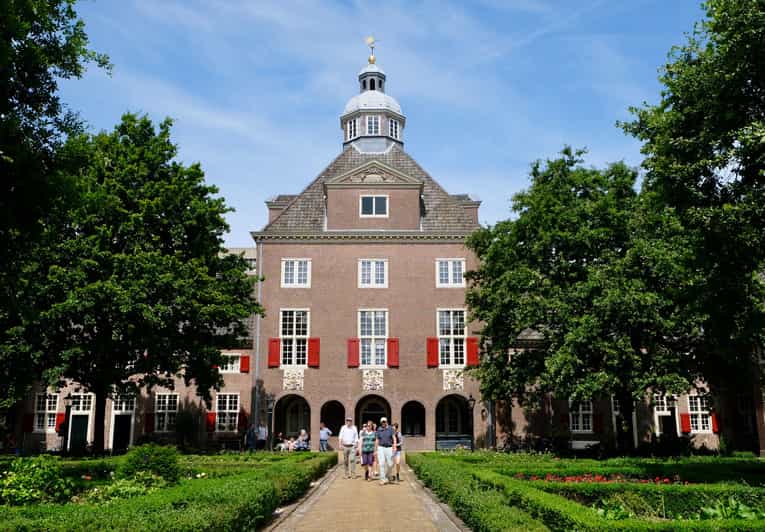
- The courtyards are often almost invisible from the street, hidden behind walls, gates, and ordinary-looking houses.
- The hofjes tradition reaches back to the 16th century, blending housing, charity, and quiet community life.
- The walk lasts 1.5 hours, long enough for historical context without taking up your whole day.
- The group is capped at 10 people, which suits a history walk through compact spaces.
- The guide speaks Dutch only, so this is best for Dutch speakers or people comfortable following a Dutch tour.
- Wheelchair access is available, but pets are not allowed, except for assistance dogs.
Why The Hague’s hofjes are worth your time
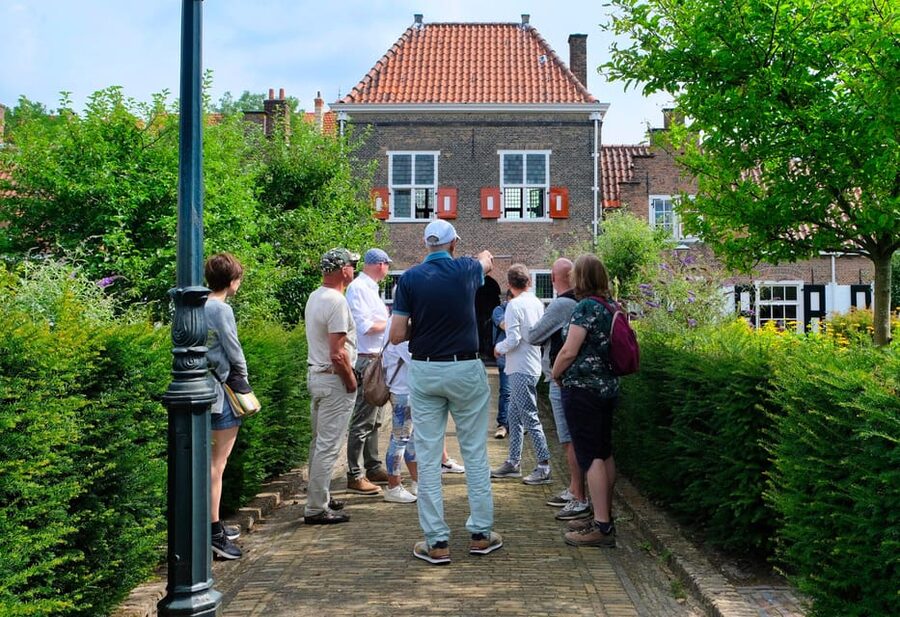
The Hague is known for government buildings, grand avenues, museums, and royal connections. Yet some of its most appealing spaces are modest and easy to miss. A hofje is a courtyard complex reached through an entrance from the street, with small homes arranged around a shared open area.
These courtyards were connected to charity. Poor and elderly people once lived in them, often through charitable foundations. The buildings offered shelter and a degree of order, while the enclosed courtyard gave residents a quieter setting than the crowded streets outside.
That social story gives the walk more weight than a simple architectural stroll. You are not just looking at attractive façades. You are seeing how earlier generations tried to provide housing for people with limited means, and how that idea shaped parts of The Hague.
I like tours that reveal a city through ordinary buildings rather than only its grandest monuments. This walk does exactly that. The courtyards may be small, but they explain a practical side of Dutch urban life that can be easy to miss from a standard sightseeing route.
More Walking Tours in The Hague
- Food Walking Tour of The Hague – by Bites & Stories
★ 5.0 · 188 reviews - The Hague: City Walking Tour
★ 4.5 · 156 reviews - The Hague: Old City Private Walking Tour
★ 4.4 · 81 reviews
Starting at ’t Goude Hooft
The meeting point is the small square by ’t Goude Hooft. This gives the walk a clear starting place in the center, close to the city’s more familiar streets and public buildings.
From there, your guide leads you into a less obvious part of central The Hague. The key pleasure is the change in mood. You begin among normal city activity, then pass through entrances that may be barely noticeable from the pavement.
The tour does not treat the courtyards as isolated curiosities. Along the way, the guide also points out other locations and monuments, explaining their history or a particular feature. That wider setting matters, since the hofjes make more sense when you see how they fit into the city around them.
Allow a few minutes before the start to find the meeting point. The published information identifies the small square by ’t Goude Hooft, but it does not give a separate street address or detailed directions.
Finding courtyards behind ordinary walls
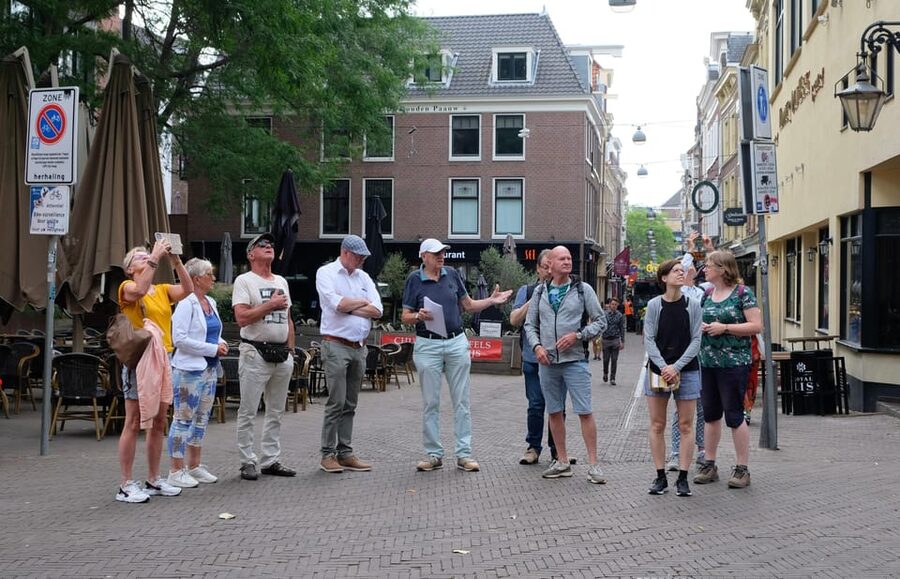
The first surprise is often the entrance. From the street, you may see little more than a wall, doorway, or passage. Behind it is a protected space with its own layout and atmosphere.
This element of discovery is central to the experience. The tour is not a parade of obvious monuments. You rely on the guide to show you places that you might pass without noticing. That makes the walk especially useful early in a visit to The Hague, when you are still learning how the city is arranged.
The courtyards also reward slower looking. Pay attention to the way homes face inward, the relationship between private doors and shared space, and the sense of separation from the city outside. The appeal is not only visual. These places were designed around a particular way of living.
You should keep your expectations measured. The route visits famous and attractive courtyards, but one recent participant felt that there were fewer real hofjes than expected. The rest of the route made up for that person, but the comment is useful. If you want nothing but courtyard after courtyard, this may feel broader than its title suggests.
From charity housing to peaceful modern homes
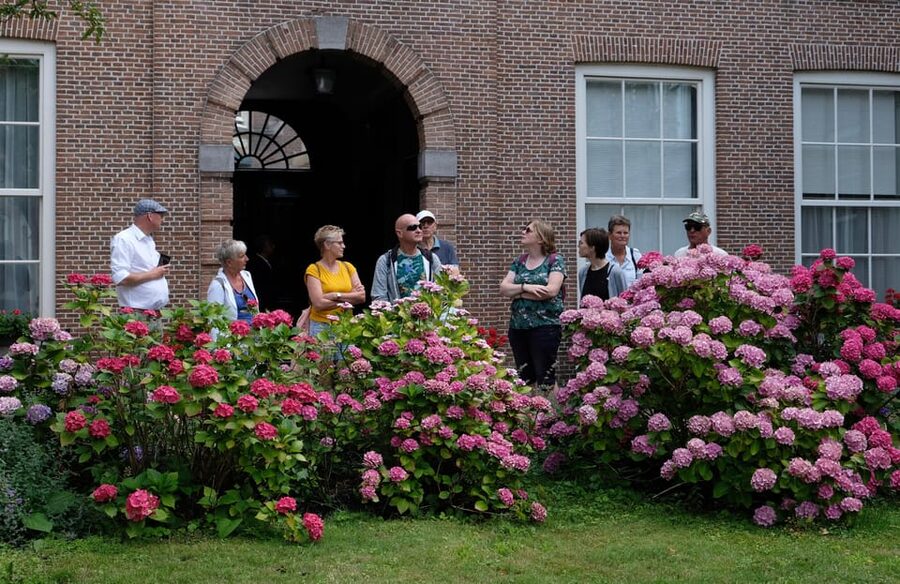
The guide explains that the hofjes were originally associated with poor and elderly residents. That charitable purpose is one of the most meaningful parts of the walk because it turns quiet architecture into social history.
Today, residents enjoy the peace and quiet of these spaces while still living in the middle of the city. That contrast is easy to understand once you pass from a public street into an enclosed courtyard. The homes are connected to urban life, but the shared space offers a calmer rhythm.
You will want to behave carefully here. These are not abandoned historical sets. They remain places where people live. The guide’s respectful approach is important, especially when the group enters or looks into residential areas.
Hans, one of the guides named in the feedback, was praised for knowing the subject well and handling the courtyards with respect. He also adapted the Dutch explanation when two foreign participants joined the group. Kees was praised for his enthusiasm and ability to offer fresh impressions of familiar surroundings.
Guide quality can shape this tour more than any single courtyard. The spaces themselves are quiet, but the explanations give them meaning. A strong guide helps you understand why the hofje was created, who used it, and how it fits into The Hague’s past.
More walking tours:
- The Hague 2-Hour Walking Tour | Discover The City With A Local
★ 4.5 · 81 reviews - Walking Tour of Delft – The City of Orange and Blue
★ 5.0 · 50 reviews - Private Walking Tour of Delft: Dive into the Dutch Golden Age
★ 5.0 · 33 reviews - The Hague Private Walking Tour with a Local
★ 4.0 · 29 reviews
Renaissance details and nearby monuments
Renaissance is one of the stated themes of the walk, though the experience is not presented as a specialist architecture lecture. Instead, Renaissance references are part of a wider look at the city’s older buildings and monuments.
You can expect the guide to pause at points of interest beyond the hofjes. These stops help break up the route and give you a fuller sense of central The Hague. The walk is therefore useful even if one particular courtyard does not impress you as much as expected.
This broader route also makes the experience more accessible for people who are curious about the city but do not want a long museum visit. You get architecture, charity history, urban planning, and local stories in one compact outing.
I would not book this if your main aim is a detailed study of Renaissance design. The information provided promises historical explanation and interesting monuments, but not a technical architectural tour. Think of Renaissance features as one thread in a general introduction to The Hague’s courtyards.
What the 1.5-hour route feels like
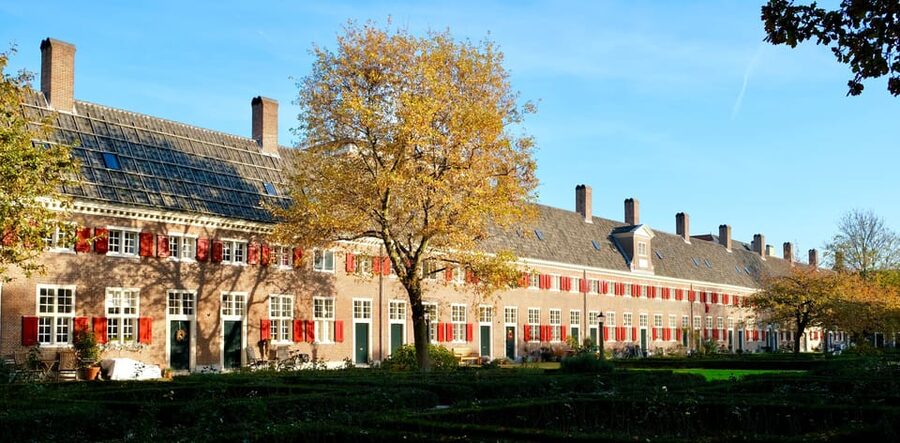
Ninety minutes is a sensible length for this subject. It gives the guide time to explain the courtyards and make several stops, while leaving most of your day open for museums, government buildings, or further walking.
The route should feel focused rather than exhausting. Courtyards are compact, and the appeal comes from close observation and storytelling rather than covering a large distance. You will have time to look around, listen, and notice small details without committing to a half-day activity.
I would schedule it for the start of a day in central The Hague if possible. That way, the walk helps you understand the city’s layout and gives you ideas for places to revisit afterward. It also works well as a shorter cultural activity between larger plans.
The small group limit of 10 is a real benefit. A large crowd would work against the character of these narrow entrances and quiet residential spaces. With fewer people, it should be easier to hear the guide and stay together when the group moves through less obvious passages.
The Dutch-only guide is the biggest practical issue
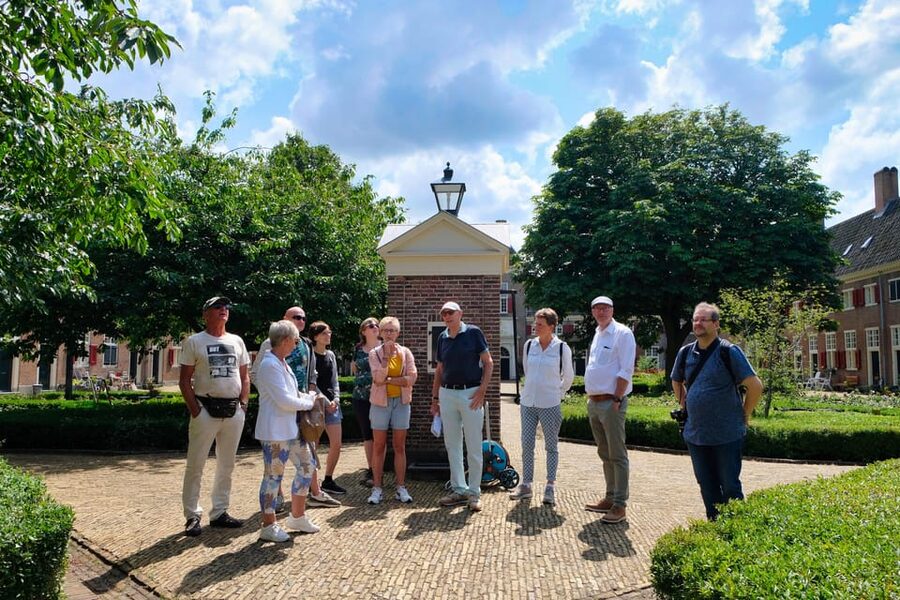
The guide speaks Dutch. That is not a minor detail. If you do not understand Dutch, you may miss the historical explanations that make the courtyards worthwhile.
Dutch speakers should find the format especially appealing. The comments about Hans and Kees suggest a lively, informed style, with room to adjust the explanation for people in the group. The tour can also suit visitors who have enough Dutch to follow a spoken walking tour, even if they are not fully fluent.
If you are relying on English, this is not the safe choice. The published information names Dutch as the tour language and does not promise written translations, an English guide, or audio support.
That limitation also explains the low price. At $9 per person, you are paying very little for a guided local walk, but the value depends on being able to use the guide’s language. For a Dutch-speaking participant, the cost is excellent. For someone who cannot follow Dutch, the same price may not be worthwhile.
Wheelchair access, pets, and the small-group setting
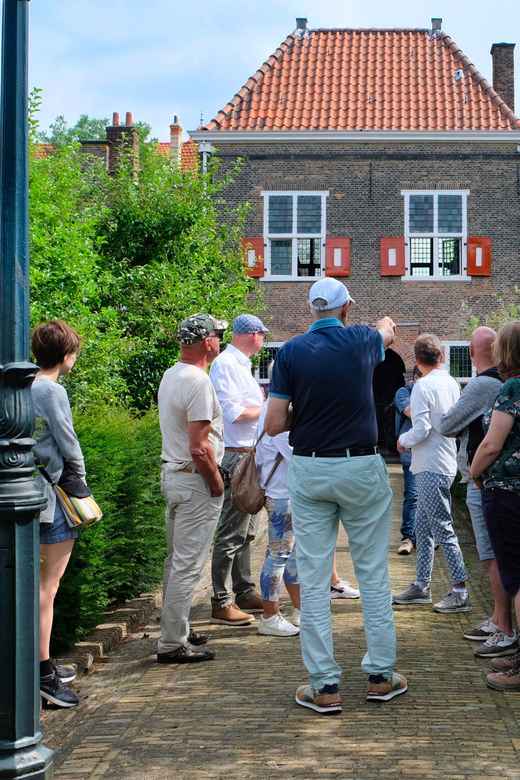
The tour is listed as wheelchair accessible, which makes it more practical for people who need step-free access. Still, the information does not describe every entrance, surface, or restroom along the route, so anyone with specific mobility needs should confirm details before booking.
Pets are not allowed, although assistance dogs are permitted. This rule matters because one participant received conflicting information by phone about bringing a dog, then was allowed to bring the dog as an exception. Do not rely on that exception. Plan on leaving ordinary pets behind.
Another participant was uncomfortable because a dog remained with the group for much of the route. If you have a serious fear of dogs or strong concerns about cleanliness, the pet rule is worth checking carefully before you reserve.
The group size is limited to 10 people. That keeps the experience personal and reduces pressure on residential courtyards. It also gives you a better chance to ask the guide about a building or historical detail that catches your attention.
Is $9 good value for The Hague?
Yes, if the language works for you. Nine dollars is a modest price for 90 minutes with a local guide, especially when the walk includes several types of content: hofjes, charity history, Renaissance references, monuments, and lesser-known parts of the center.
The value is not based on expensive admissions or a long list of included extras. The only stated inclusion is a skilled Dutch-speaking guide. You are paying for access, interpretation, and the ability to notice places you could easily miss alone.
That makes the tour a good supplement to independent sightseeing. You could walk through central The Hague without seeing the courtyards at all. The guide adds the doors, stories, and social context that turn an ordinary city walk into something more memorable.
The price also limits your financial risk. If you are already interested in Dutch urban history and can follow Dutch, this is an easy addition to your schedule. If you want a polished English-language tour or a tightly focused courtyard count, spend your time and money elsewhere.
Who will enjoy this walking tour most?
I would recommend it most strongly to:
- Dutch speakers interested in local history
- People who enjoy residential architecture and quiet urban spaces
- Repeat visitors looking for a less obvious side of The Hague
- Visitors who prefer small groups to large sightseeing walks
- Anyone interested in how charity shaped historic housing
- Visitors who want a short activity priced well below many guided tours
It is less suitable for people who want an English-language experience, a fast-paced list of major sights, or a route made up entirely of traditional courtyards.
Families may appreciate the short duration, but the information provided does not describe activities for children. The subject is historical and residential, so children who enjoy stories about old buildings may do well, while younger children may find the quiet stops less exciting.
How to get the most from the 90 minutes
Bring comfortable shoes, even though this is a short walk. The route passes through streets, entrances, and courtyards, and you will get more from it if you can stand comfortably while the guide explains each place.
Listen for the connection between architecture and social purpose. It is easy to focus on attractive walls and gardens, but the important question is why the courtyard existed and who it served.
Keep your camera discreet. These are living residential spaces, not simply public monuments. The most respectful approach is to follow the guide’s lead and avoid treating residents or private doorways as part of a photo display.
If you are joining with visitors from another country, remember that the tour remains Dutch-language even though a guide may adjust explanations for people who know some Dutch. Do not assume that adaptation means a full translation.
The walk has a strong local character. It is not designed to show off The Hague’s biggest sights. Its success comes from slowing down, looking behind the walls, and understanding how a charitable housing tradition still shapes the city.
Should you book the Courtyard Walking Tour?
Book it if you speak Dutch and want a friendly, low-cost look at an overlooked side of The Hague. The small group, 90-minute schedule, and $9 price make it an easy choice, while the courtyards offer a quieter story than the city’s grand public buildings.
Go in expecting a mix of hofjes, monuments, Renaissance references, and local history, not a nonstop procession of courtyards. If that balance suits you, guides such as Hans or Kees can make the walk both informative and entertaining.
Skip it if you need English commentary, cannot manage a Dutch walking tour, or are bringing a regular pet. For the right audience, this is a modestly priced way to see how charity, housing, and privacy shaped The Hague.
FAQ
Where does the Courtyard Walking Tour meet?
The meeting point is the small square by ’t Goude Hooft in The Hague.
How long does the walking tour last?
The tour lasts 1.5 hours.
How much does the tour cost?
The price is $9 per person.
What language is the tour conducted in?
The live guide speaks Dutch.
How many people can join the group?
The group is limited to 10 participants.
Is the tour wheelchair accessible?
Yes, the tour is listed as wheelchair accessible.
Can I bring my pet?
No. Pets are not allowed, but assistance dogs are permitted.
What does the tour focus on?
The walk focuses on The Hague’s courtyards, Renaissance features, charitable housing, and other interesting locations and monuments along the route.
Can I cancel the booking for a refund?
Yes. You can cancel up to 24 hours in advance for a full refund. You can also reserve now and pay later.
Just added around The Hague
- Private Day Trip from Amsterdam to Rotterdam and the Hague★ 5.0 · 19 reviews
- Private Day Tour: Rotterdam and The Hague. English or Spanish★ 4.5 · 20 reviews
- Royal The Hague Private Guided Walking Tour★ 4.5 · 21 reviews
- Private Day Tour: Rotterdam, Delft & The Hague From Amsterdam★ 5.0 · 22 reviews
- e-Scavenger hunt Delft: Explore the city at your own pace★ 4.5 · 26 reviews
- The Hague Private Walking Tour with a Local★ 4.0 · 29 reviews
- The Hague: Street Art Tour by Bike★ 4.8 · 30 reviews
- Amsterdam: Zaanse Schans, The Hague & Rotterdam Tour★ 4.8 · 33 reviews
The Hague Tours, compared.




Hop-on Hop-off Old-Fashioned Heritage Tram Tour
Read our review →

Rotterdam, Delft, the Hague, Madurodam from Amsterdam
Read our review →Browse the lists this tour appears in