REVIEW · AMSTERDAM TOURS
Amsterdam: Cultural Highlights in English/German/Italian
Amsterdam rewards walkers. This small-group tour links major sights with stories about trade, religion, colonialism, Jewish life, and LGBTQ+ history. I like the way it gives you a useful first look at the old center without asking you to pay admission fees, and I also like the practical shopping, food, and sightseeing advice for the rest of your stay. The main consideration is that the tour covers 3 to 4 kilometers in about two hours, so comfortable shoes matter.
I especially appreciate the guide’s flexible approach. Justus took time to explain sights at an easy pace, while Josh followed questions into less familiar corners, and Stephanie offered useful tips about local customs. The tour is also a good choice for families, and one participant found bringing a dog was no problem. Check the operating language carefully before booking, since the information describes English, German, and Italian availability in different places.
In This Review
- Key points at a glance
- A smart first walk through Amsterdam’s old center
- Dam Square sets the historical tone
- Beurs van Berlage explains Amsterdam’s Golden Age
- Nieuwe Kerk and Magna Plaza show change over time
- Multatuli introduces colonial Amsterdam
- Westerkerk connects the church to Jordaan
- Anne Frank and Amsterdam’s Jewish history
- The Gay Monument widens the city’s story
- The 9 Streets are the tour’s practical payoff
- Begijnhof and Spui finish with a quieter lesson
- Guide quality shapes the experience
- Walking conditions, weather, and who should book
- Is $33.88 good value?
- Should you book Amsterdam Cultural Highlights?
- FAQ
- Where does the tour start?
- Where does the tour end?
- How long is the walking tour?
- What languages are available?
- Are admission fees included?
- Does the tour visit the Anne Frank House?
- Does the tour include the red-light district or a coffee shop?
Key points at a glance
- Start at the National Monument: Meet at Dam Square, an easy central point near public transportation.
- Follow Amsterdam’s story in sequence: The walk moves from the city’s founding and Golden Age wealth to religion, colonialism, Jewish history, and LGBTQ+ life.
- See the city from outside: The tour does not include paid admissions, and you do not enter the Anne Frank House.
- Expect a gentle but steady walk: The route covers roughly 3 to 4 kilometers and suits most people who can walk that distance.
- Get useful follow-up ideas: Guides share suggestions for the 9 Streets, food, Begijnhof, and less obvious sights.
- Keep expectations realistic: The red-light district and a coffee shop are not tour stops, and poor weather can lead to cancellation.
A smart first walk through Amsterdam’s old center
At $33.88 per person, this is priced as an accessible introduction rather than a full-day history program. You pay for two hours of guiding, local context, and a small group capped at 15 people. Since every sight on the route can be visited free of charge, the value comes from the stories and orientation, not from bundled entrance tickets.
That distinction matters in Amsterdam. You can walk around Dam Square on your own, but it is easy to see a palace, church, canal, or statue without understanding how it fits into the city’s past. A good guide turns separate points on a map into one connected story.
The route is also practical for your first day. It ends back at the starting point, so you can continue exploring nearby afterward. You will finish close to the 9 Streets, Jordaan, Begijnhof, and central shopping areas, with suggestions from the guide fresh in your mind.
The title refers to English, German, and Italian, while the supplied details also describe the tour as being in German and list English among the languages offered. Because of that mismatch, I would confirm your preferred language when booking. The experience is described as a walking tour in German, English, or Italian, but the exact departure language should be clear before you commit.
A few more trips of this kind worth comparing:
- Amsterdam: Van Gogh Museum Ticket
★ 4.7 · 52,054 reviews - Amsterdam Classic Saloon Boat Cruise with Drinks and Cheese
★ 5.0 · 31,825 reviews - Amsterdam Luxury Canal Cruise + Unlimited Drinks & Bites option
★ 5.0 · 30,518 reviews
Dam Square sets the historical tone
The meeting point is the National Monument on Dam Square. You spend about five minutes getting started there, with no admission fee. This is a convenient place to meet, but it can be busy, so arrive with enough time to identify the monument and your guide.
Dam Square is the first proper history lesson. In about 15 minutes, the guide explains how Amsterdam began, how the settlement developed, and how the old town hall became the Royal Palace. This gives you a useful foundation before the walk turns toward commerce and religion.
I like this opening because it avoids starting with a random landmark. The square is not just a wide public space for photos. It represents political power, civic government, royal authority, and the growth of the city.
You should not expect a palace visit. The tour explains the building from outside and keeps moving. That is a limitation if you wanted an indoor look at royal interiors, but it helps the group cover more ground in a short time.
Beurs van Berlage explains Amsterdam’s Golden Age
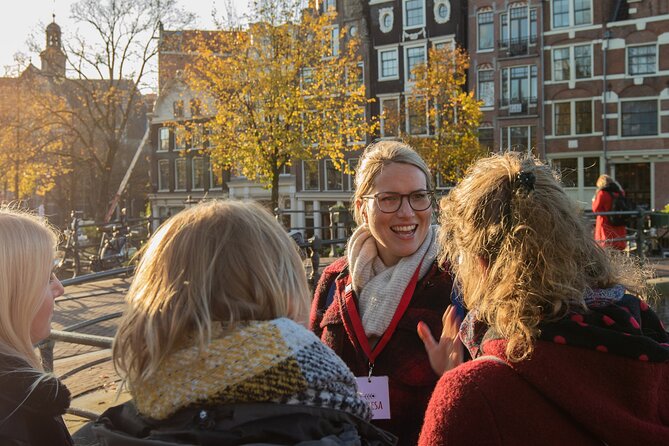
At the Beurs van Berlage, the guide spends about 15 minutes discussing how Amsterdam became one of the world’s wealthiest cities during the Golden Era. This is one of the most useful stops because it moves beyond dates and names to the forces that shaped the city.
The building connects naturally to Amsterdam’s commercial past. You can expect an explanation of trade, finance, and the city’s growing economic importance. This is the point where Amsterdam’s handsome center becomes easier to read: prosperity created grand public buildings, busy commercial networks, and the wealth that supported expansion.
The guide’s role matters here. A brief stop can otherwise feel like a quick photograph outside a historic building. Well-paced explanations help you understand why this particular place belongs in the story of Amsterdam’s rise.
Nieuwe Kerk and Magna Plaza show change over time

The Nieuwe Kerk receives about five minutes of attention. The guide explains its role in Amsterdam’s development and why the church matters to the city. You will learn from the outside rather than entering, so this is another interpretive stop rather than an admission-based attraction.
The short timing is sensible. The walk has many subjects to cover, and the Nieuwe Kerk works as a compact piece of the larger story. Still, anyone hoping for detailed architecture or a long look inside should plan a separate visit.
A few minutes later, Magna Plaza adds a different layer. The former post office is discussed for its importance and its later life as a shopping destination. This is a good reminder that old buildings in Amsterdam often change purpose rather than disappearing from daily life.
The tour does not treat the center as a museum frozen in time. It points out how older structures continue to serve modern residents and shoppers. After the tour, you can return to Magna Plaza if its interiors or shops interest you.
A completely different kind of day out in Amsterdam:
- Amsterdam: Heineken Experience Ticket
★ 4.6 · 30,055 reviews - Amsterdam: Rijksmuseum Entry Ticket
★ 4.7 · 25,535 reviews - Amsterdam: Classic Boat Cruise with Optional Cheese & Wine
★ 4.6 · 22,925 reviews - Amsterdam: Evening Cruise with Optional Wine and Snacks
★ 4.4 · 19,696 reviews
Multatuli introduces colonial Amsterdam
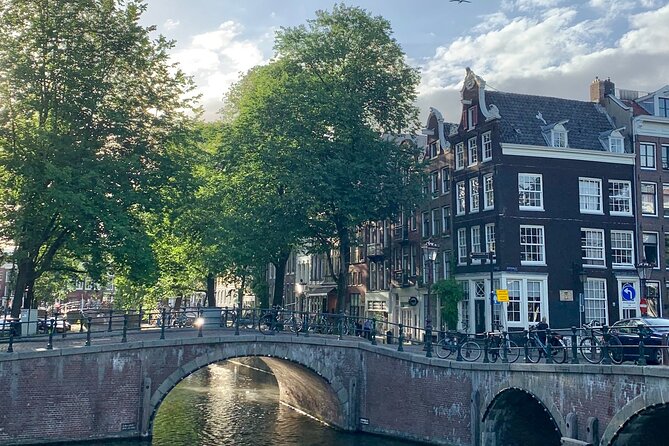
The stop at the Multatuli statue lasts about 10 minutes and tackles Amsterdam’s colonial past. The guide connects Multatuli to one of the Netherlands’ most important books, giving you a way into a difficult part of national history through literature and public memory.
This is an important inclusion. A city tour focused only on canals, merchants, and pretty façades would give you an incomplete picture. Amsterdam’s wealth had wider consequences, and the colonial era remains part of the city’s identity.
The stop is likely to appeal to you if you want history that includes uncomfortable questions, not just celebratory stories. Since the time is limited, you should view it as an introduction. It can point you toward further reading or a more specialized museum visit later.
Westerkerk connects the church to Jordaan
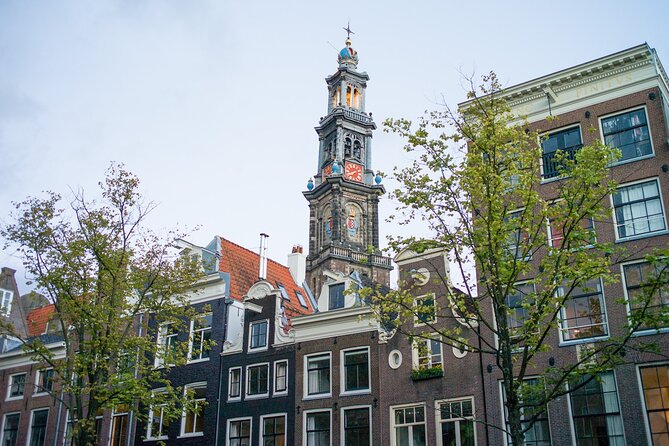
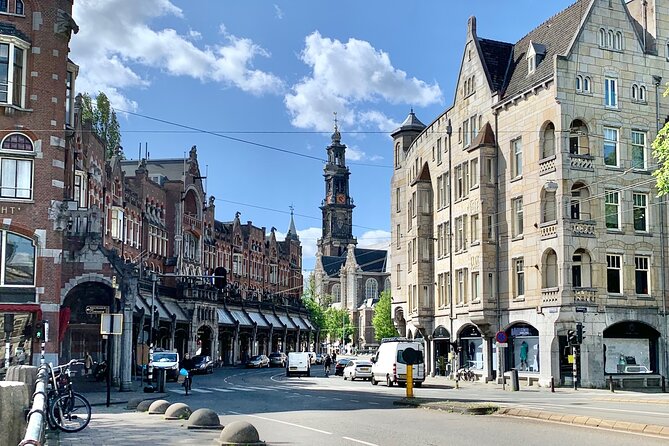
The Westerkerk is described as Amsterdam’s biggest church, and the guide spends around 10 minutes explaining its historic connection with the Jordaan area. This is one of the route’s stronger place-based stops because it ties a major building to the neighborhood around it.
You get more than a church photograph. The guide helps explain why the Westerkerk matters and how it relates to the nearby Jordaan, one of the city center’s best-known areas for walking and wandering.
Again, the tour focuses on the outside. There is no church admission included, and the schedule does not allow a long interior visit. If the church itself is a priority, ask the guide for practical advice about visiting separately.
Anne Frank and Amsterdam’s Jewish history
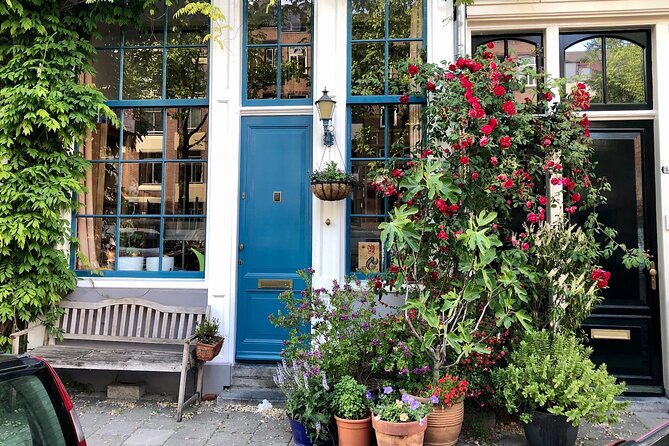
The statue of Anne Frank is given about 10 minutes. Here the guide discusses Jewish history in Amsterdam and how Anne Frank and her family experienced their time in the city.
This can be an affecting stop, but it is important to understand what is included. You visit the statue and hear historical context. You do not visit the Anne Frank House, and one participant was disappointed when a house visit did not take place without a replacement or refund. That confusion is avoidable if you treat this as a city walk, not as an Anne Frank House tour.
The subject deserves care and attention. A good guide can place Anne Frank’s story within the wider experience of Amsterdam’s Jewish community, rather than presenting it as an isolated memorial. You may find this portion emotionally heavier than the earlier stops, so give yourself a little quiet time afterward if needed.
The Gay Monument widens the city’s story
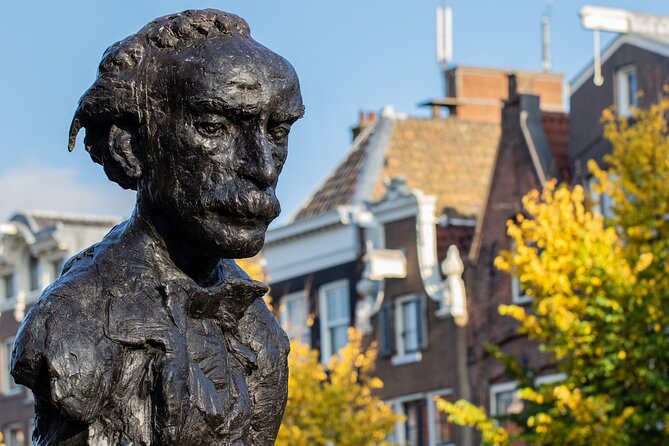
The Gay Monument receives about 10 minutes and introduces Amsterdam’s LGBTQ+ history. This is another strong choice in the route because it shows that cultural history is not limited to royal buildings and merchant wealth.
The stop gives you context for the city’s LGBTQ+ scene and its place in modern Amsterdam. You can expect a concise explanation rather than a dedicated LGBTQ+ neighborhood tour, but it adds an important perspective to the day.
I value the balance here. The route moves from the city’s medieval and commercial foundations to communities and struggles that are central to Amsterdam today. It makes the walk feel more current and human.
The 9 Streets are the tour’s practical payoff
At the 9 Streets, or Negen Straatjes, the guide spends about five minutes giving shopping advice. This is a short stop, but it can be highly useful because the area rewards a second look after the formal tour ends.
You may receive suggestions about where to browse, what kind of shops to expect, and how to explore the compact streets. The tour does not include shopping discounts or purchases. Its value is helping you decide where to return when you have more time.
This is also where the walk shifts from historical orientation to trip planning. I like that the guide does not simply end after listing monuments. You get ideas you can use immediately, whether you want to shop, eat, or continue toward the canals and Jordaan.
Several participants singled out practical food advice as especially helpful. That makes sense in Amsterdam, where a local suggestion can save you from choosing a place only because it happens to be near a famous square.
Begijnhof and Spui finish with a quieter lesson
The final major stop is Spui, where the guide discusses the historic Begijnhof and the Reformation in Amsterdam. The stop lasts about 15 minutes, making it one of the longer explanations on the route.
Begijnhof is particularly rewarding because it feels different from the open spaces and commercial streets earlier in the walk. The guide points out the concealed church and shares ideas for other less obvious places to see after the tour. You should be respectful here, since it is a historic religious site and not simply a photo backdrop.
The Reformation discussion adds another thread to the city’s religious story. Amsterdam’s past was shaped by changing beliefs, competing institutions, and adaptations in the built environment. The hidden church helps make that history concrete.
The tour ends back at the National Monument, according to the supplied details. This may mean the group retraces part of the route or returns through the central area. Either way, you are not left at an unfamiliar edge of town.
Guide quality shapes the experience
The strongest feature here is the guiding. The feedback is consistently positive, with a 5 out of 5 rating from 164 reviews and 100 percent recommending the experience. Names that appear in the comments include Deborah, Justin, Josh, Stephanie, Marina, Justus, and Noeme.
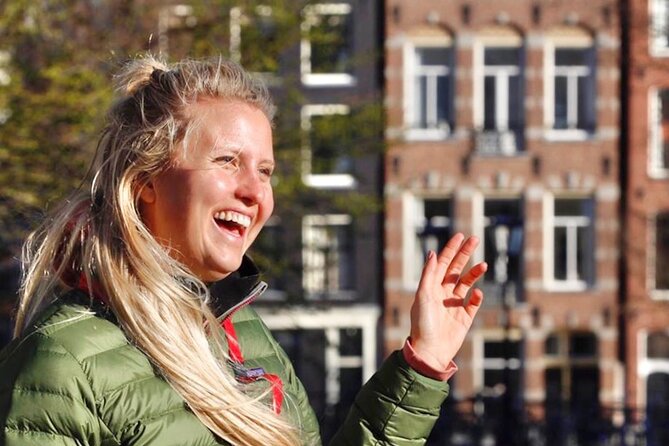
The praise is specific. Deborah was warm and explained each place carefully. Justin kept the pace comfortable and waited for the slowest person in the group. Josh shared stories and followed questions into less familiar places. Stephanie was praised for explaining local customs and giving practical advice.
German-language feedback also highlights Marina’s cheerful Cologne personality and her clear presentation of Amsterdam’s history and food suggestions. Justus is described as precise, thorough, and sympathetic, while Noeme is praised for explaining the city’s history and economy and drawing attention to small details.
Guides naturally vary from one departure to another, so I would not expect an identical performance every time. Still, the repeated pattern is encouraging: clear explanations, patience, answers to questions, and useful advice beyond the basic route.
The group maximum of 15 helps. It is small enough for questions and easier to keep together on crowded streets. It is not a private tour, so you will still share the experience with other people and may need to stay close to the guide.
Walking conditions, weather, and who should book
The route covers about 3 to 4 kilometers. That is not a strenuous hike, but Amsterdam’s streets can be uneven and the tour lasts roughly two hours. Wear comfortable shoes, bring water, and use a hat in hot weather.
The experience is suitable for children, and most people can participate. The available information does not promise special accessibility arrangements, so anyone with specific mobility needs should confirm details before booking.
The tour requires good weather. If poor weather causes cancellation, you are offered another date or a full refund. For a normal change of plans, cancel at least 24 hours before the start time for a full refund. Cancellations or changes inside that window are not refunded or accepted.
The walk does not visit the red-light district. It passes only along its southern side, and it does not visit a coffee shop. That makes this a better fit for cultural orientation than for Amsterdam’s more provocative nightlife reputation.
Is $33.88 good value?
I think the price is fair if you want a structured introduction on your first day. You are paying about $17 per hour for a small-group guide, a carefully arranged route, and advice that can shape the rest of your visit.
The price is less attractive if you only want photographs or plan to visit every attraction inside. No entry tickets are included, though that is not a major weakness here because all listed stops can be visited free of charge and the route is designed around outdoor interpretation.
The tour’s real value is time saved. Instead of piecing together Amsterdam’s origins, Golden Age commerce, religious changes, colonial connections, Jewish history, and LGBTQ+ culture from separate guidebook entries, you get a single walk that links them.
Should you book Amsterdam Cultural Highlights?
Book it if you want a friendly, history-led introduction before exploring on your own. It suits first-time visitors, families, solo visitors who want an easy orientation, and anyone who appreciates practical tips about food, shopping, and places to return to later.
I would also recommend it to German-speaking visitors, provided the language is confirmed before booking. The guide style appears to be a major strength, especially if you value patient pacing and direct answers.
Skip it if your main goal is the Anne Frank House, an interior palace visit, the red-light district, or a coffee shop stop. This is a city orientation walk, not a ticketed attraction tour. For $33.88, it is a sensible way to understand Amsterdam’s center, find your bearings, and leave with a better plan for the rest of your trip.
FAQ
Where does the tour start?
The tour starts at the National Monument on Dam Square, Amsterdam, Netherlands. The listed address is Dam, 1012 JS Amsterdam.
Where does the tour end?
The activity ends back at the meeting point.
How long is the walking tour?
The tour lasts approximately two hours and covers about 3 to 4 kilometers on foot.
What languages are available?
The experience is described as available in German, English, or Italian. The supplied details also list English and separately describe the tour as being in German, so confirm your preferred language when booking.
Are admission fees included?
There are no admission fees during the tour. The listed sights can be visited for free, and the experience does not include paid attraction entry.
Does the tour visit the Anne Frank House?
No. The tour stops at the Anne Frank statue and discusses Jewish history and Anne Frank’s experiences, but it does not include a visit to the Anne Frank House.
Does the tour include the red-light district or a coffee shop?
No. The red-light district is not visited, though the route passes along its southern side. A coffee shop is not included either.
Just added around Amsterdam
- Amsterdam 1-Hour Rickshaw Tour★ 4.9 · 17 reviews
- Amsterdam: Canal Cruise and Jewish Cultural Quarter Tickets★ 4.2 · 17 reviews
- Keukenhof Gardens and Tulip Experience Tour from Amsterdam★ 4.8 · 17 reviews
- Marken, Volendam and Edam: Private Full-Day Tour★ 4.6 · 18 reviews
- Discover Amsterdam’s city center in this Outside Escape game tour★ 4.5 · 18 reviews
- Amsterdam: Personal Travel & Vacation Photographer★ 4.8 · 18 reviews
- Amsterdam: Luxury Saloon Boat Cruise with 3-Course Dinner★ 3.9 · 18 reviews
- Rijksmuseum & Amsterdam City Center Semi-Private Tour 12ppl Max★ 5.0 · 18 reviews
Amsterdam Tours, compared.

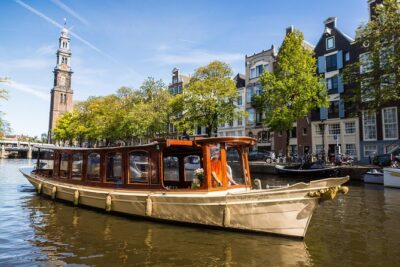
Amsterdam Classic Saloon Boat Cruise with Drinks and Cheese
Read our review →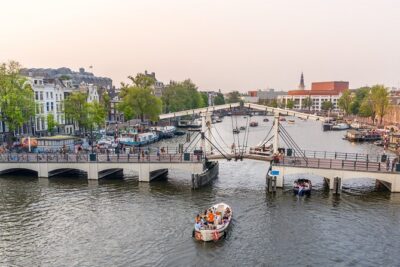
Amsterdam Luxury Canal Cruise + Unlimited Drinks & Bites option
Read our review →
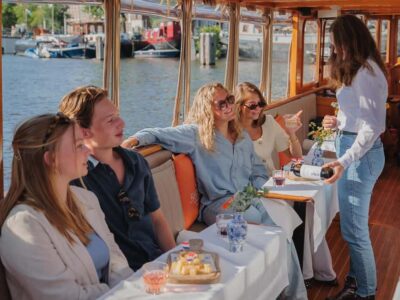
Classic Boat Cruise with Optional Cheese & Wine
Read our review →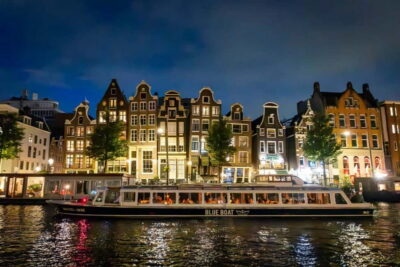
Evening Cruise with Optional Wine and Snacks
Read our review →