
REVIEW · ATTRACTION TICKETS IN AMSTERDAM
Amsterdam: Fabrique des Lumières Dutch Masters Ticket
Paintings do not stay on the wall here. At Fabrique des Lumières, Vermeer, van Gogh, Rembrandt, and Mondriaan spread across a former industrial space in Westergas park, with music and moving light turning familiar art into a full-room show. I love the huge scale, with projections covering 3,800 square metres and walls rising 17 metres high. I also like the careful musical timing, which gives the paintings a strong emotional pull. The main catch is strict timing: arrive late and you may miss part of the only showing.
This is not a quiet museum visit, and it is not meant to replace seeing an original painting at the Rijksmuseum or Van Gogh Museum. Instead, you get a lively visual introduction to Dutch art, with the pictures enlarged, animated, and arranged as a flowing story. Plan for a roughly hour-long experience, wear something warm, and keep your expectations focused on feeling and spectacle rather than detailed art study.
In This Review
- Key points to know before you go
- Entering Fabrique des Lumières in Westergas park
- How the Dutch Masters presentation unfolds
- Why the music matters as much as the pictures
- The Mondriaan programme offers a sharp change of pace
- Finding the best way to watch the show
- Is the $21 ticket good value?
- Who will enjoy Fabrique des Lumières most?
- Practical timing and booking advice
- Should you book the Dutch Masters show?
- FAQ
- Where is Fabrique des Lumières located?
- How long does the Dutch Masters experience last?
- When does the Dutch Masters exhibition run?
- How early should I arrive?
- Is Fabrique des Lumières wheelchair accessible?
- Can I bring luggage, a stroller, or a pet?
Key points to know before you go
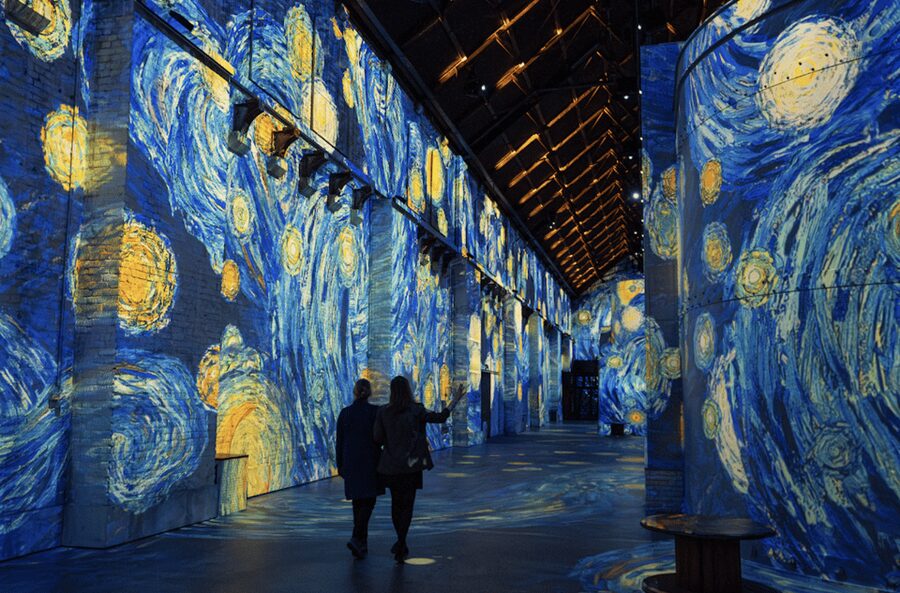
- Dutch masterpieces fill a 3,800-square-metre hall: Vermeer, van Gogh, Rembrandt, and other Dutch artists appear across walls reaching up to 17 metres.
- Music drives the presentation: The soundtrack is matched closely to the changing images and helps create the show’s emotional impact.
- The exhibition runs only once per booked slot: The Dutch Masters presentation is offered only in the first and last time slot of the day.
- You must arrive on time: Doors open 15 minutes before the start, and Fabrique des Lumières closes after the show.
- Mondriaan gets a separate short programme: The presentation follows his move from traditional painting toward neoplasticism.
- Bring a warm layer, not a large bag: Lockers are included, but luggage, large bags, baby strollers, and pets are not allowed.
Entering Fabrique des Lumières in Westergas park
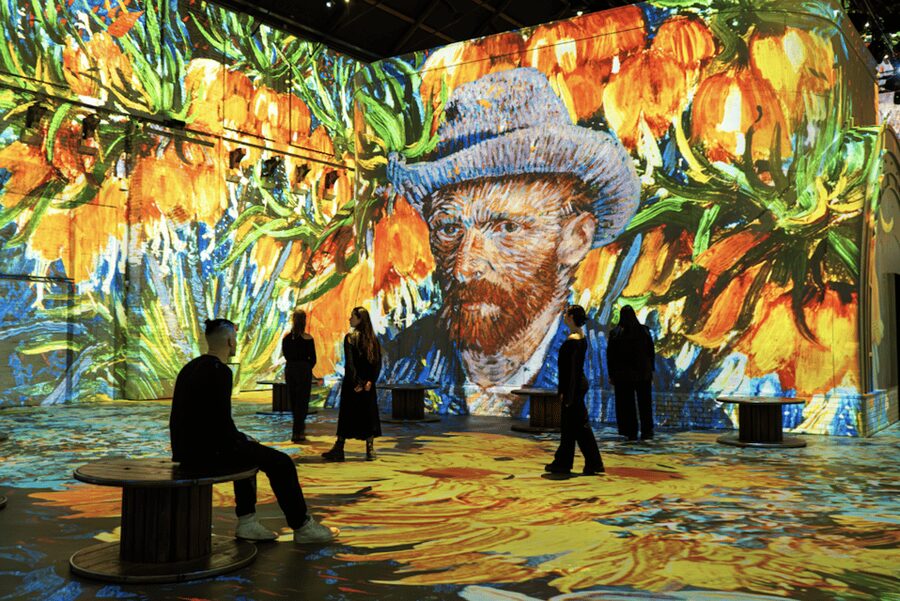
Fabrique des Lumières sits in Amsterdam’s Westergas park, in a large industrial building that feels very different from the city’s traditional art museums. You arrive directly at the venue rather than meeting a guide or joining a walking group.
The building is part of the experience. Inside, the high walls and open floor create room for pictures to move over your head, beside you, and across the far end of the hall. I like that the setting has real architectural weight. The projections are not simply placed on a screen. They use the building’s height, corners, and broad surfaces.
The site can be easy to miss, so I would allow extra travel time. One visitor lost the first 10 minutes after traffic slowed the journey and the venue proved hard to find. That matters here because the show is not continuously running. It begins exactly at the time on your ticket and is shown only once during that slot.
Doors open 15 minutes before the exhibition. Use that window to find the entrance, put away your belongings, and choose a place from which you can see the room. A locker is included with admission, which is useful because large bags and luggage are not permitted inside. Baby strollers and pets are also excluded.
The exhibition is wheelchair accessible. It is not suitable for people with epilepsy, so take the intense light changes and moving projections seriously before booking.
More Attraction Tickets in Amsterdam
- Amsterdam: Van Gogh Museum Ticket
★ 4.7 · 52,054 reviews - Amsterdam: Heineken Experience Ticket
★ 4.6 · 30,055 reviews - Amsterdam: Rijksmuseum Entry Ticket
★ 4.7 · 25,535 reviews
How the Dutch Masters presentation unfolds
The central show presents famous Dutch art in a way that turns individual paintings into a moving sequence. You may recognize a face, room, flower, sky, or brushstroke, then watch it expand across the walls and connect with the next work.
Vermeer’s quiet interiors gain a different force at this scale. His careful light, domestic scenes, and small gestures are no longer confined to a frame. The enlarged details make you notice the way a beam of light falls across a room or how a figure’s posture carries the scene.
Rembrandt brings another mood. His dramatic use of light and shadow suits projection well, and the changing scale can make a single face feel almost theatrical. I would not treat this as a replacement for standing in front of an original Rembrandt, where texture and brushwork matter. But the presentation gives you a clear sense of his command of contrast and expression.
Van Gogh provides some of the show’s most obvious visual energy. Swirling skies, strong colours, and thick-looking marks become moving patterns around the room. This is especially helpful if you have trouble connecting with art behind a museum barrier. The digital format makes the structure of the paintings easier to notice, though it also makes them more decorative.
The appeal is not only the famous names. The presentation follows the Dutch masters’ interest in ordinary life and shows how everyday subjects can become memorable art. That idea gives the show some substance beneath the special effects. You are not just watching colourful pictures move. You are seeing how artists found drama in rooms, people, work, and familiar surroundings.
The presentation uses short films, moving images, and music rather than a spoken guide. There is no guide included, so you should not expect a detailed lecture on dates, techniques, or museum locations. One useful point from the experience is that the amount of written explanation may feel limited. If you want labels and art criticism, visit a traditional museum before or after this show.
Why the music matters as much as the pictures
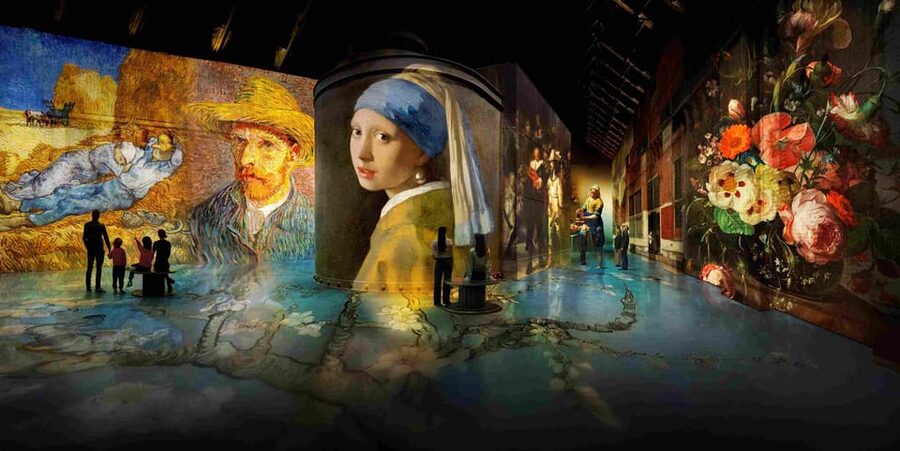
The soundtrack is one of the best parts of the experience. Several visitors praised how closely the music matched the changing images, and I can see why that pairing matters. A painting that might seem still or distant in a gallery can feel tense, calm, playful, or sad when the sound changes around it.
The music also controls the rhythm of the room. Some sections invite you to sit and watch. Others move faster, with colour and form passing across the walls in quick succession. The result feels closer to a concert or film than a normal gallery visit.
This is also why the show may affect you more emotionally than you expect. A few visitors described the experience as moving or even emotional. The combination of scale, sound, and repeated images can create a strong mood, particularly during the best-known van Gogh and Rembrandt sequences.
The tradeoff is that music and spectacle can guide your reaction too strongly. You may feel what the show wants you to feel, instead of taking your own quiet time with one painting. I find that perfectly acceptable for a digital art show, but it is worth knowing before you compare it with a museum visit.
The Mondriaan programme offers a sharp change of pace
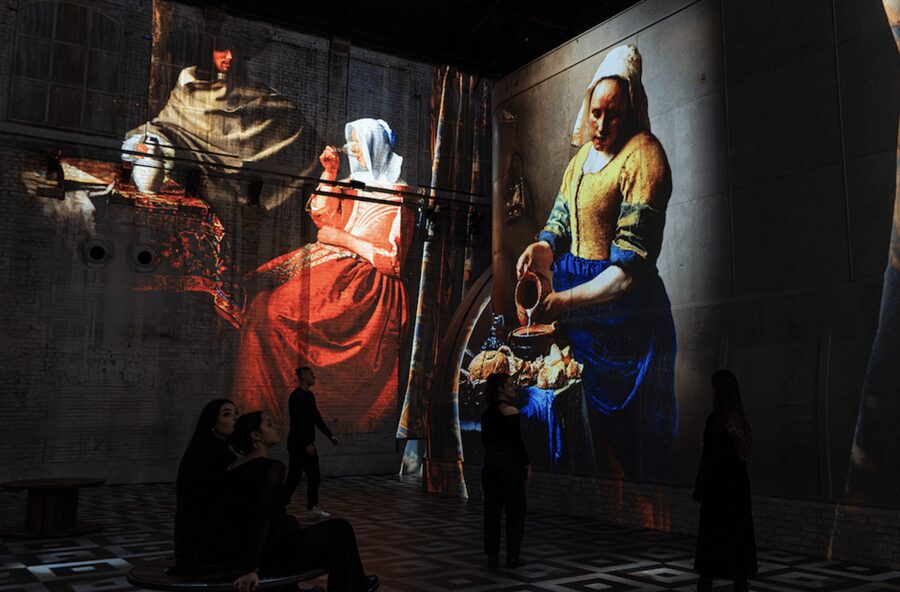
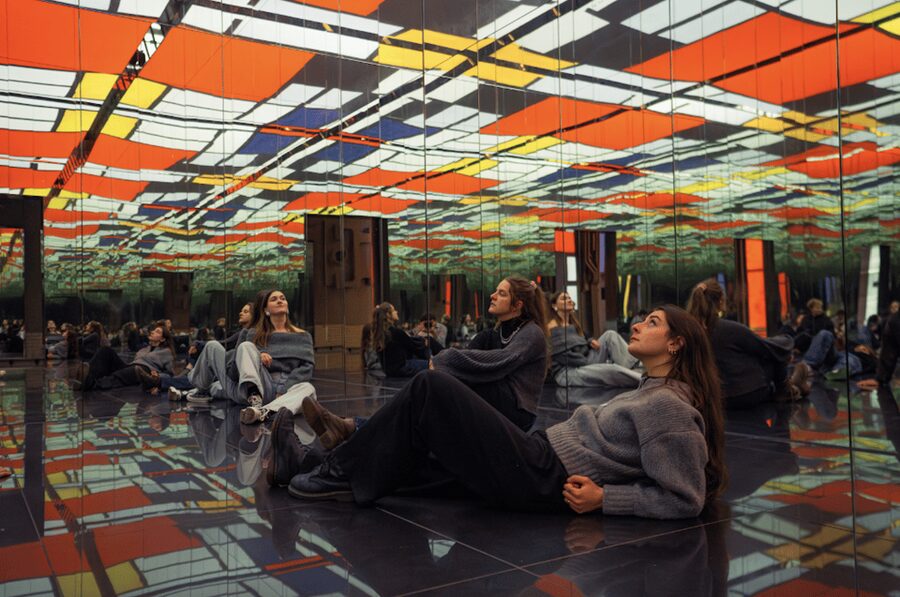
After the main Dutch Masters presentation, you see a shorter programme devoted to Piet Mondriaan. This section follows his artistic development from more traditional painting toward the abstract, highly structured style linked with neoplasticism.
That progression gives the visit a useful second chapter. Instead of presenting Mondriaan only as the artist of coloured squares and black lines, the programme shows how he moved away from familiar forms and toward a more visionary approach.
The digital format suits this subject particularly well. Lines, blocks, and colour relationships can shift across a large space, making it easier to see how Mondriaan reduced painting to structure. If you already know his later work, this section can provide context. If you do not, it helps explain that his abstract style did not appear all at once.
The shorter presentation may feel less emotionally sweeping than the Dutch Masters section. Still, it gives the visit variety and shows that Fabrique des Lumières is not limited to one period or one visual style.
A few more trips of this kind worth comparing:
- Amsterdam Classic Saloon Boat Cruise with Drinks and Cheese
★ 5.0 · 31,825 reviews - Amsterdam Luxury Canal Cruise + Unlimited Drinks & Bites option
★ 5.0 · 30,518 reviews - Amsterdam: Classic Boat Cruise with Optional Cheese & Wine
★ 4.6 · 22,925 reviews - Amsterdam: Evening Cruise with Optional Wine and Snacks
★ 4.4 · 19,696 reviews
Finding the best way to watch the show
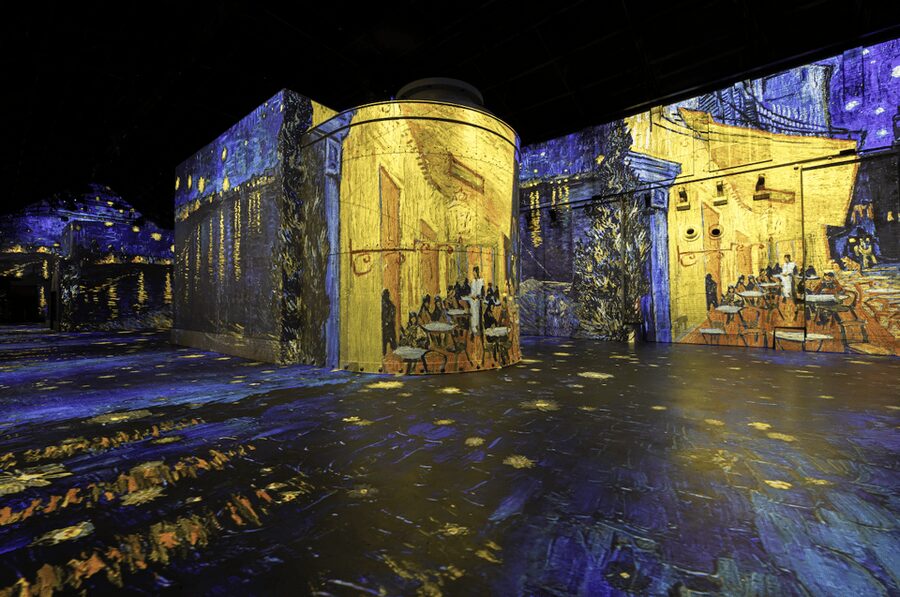
The hall gives you space to walk around, and you should use it. From one area, you may notice the full composition. From another, a projected detail can fill your view. Moving around also helps if another person blocks your sightline.
There are places to sit, but much of the viewing happens from the floor. This is worth planning for. One visitor found the floor cold and wished for cushions, while another appreciated having different places to sit and relax. I would bring a warm layer and avoid assuming that every part of the show will be viewed from a conventional seat.
The room can also feel different depending on the crowd. Many people follow the house rules, but children may run around or talk loudly. That can break the mood during quieter sections. If you want the calmest possible viewing, the first or last available slot may help, though the Dutch Masters programme is already restricted to those times.
The show is designed for movement, but do not feel that you must stand for every minute. Sitting can make the projections feel more like a film, while walking brings out the size of the building. I would alternate between the two.
Photography may seem tempting, but pictures usually fail to capture the scale of the room, the music, and the changing light. One visitor found that photographs did not do the experience justice. That is a fair warning: save a few quick images if permitted, then watch the show instead of spending the hour framing your phone.
Is the $21 ticket good value?
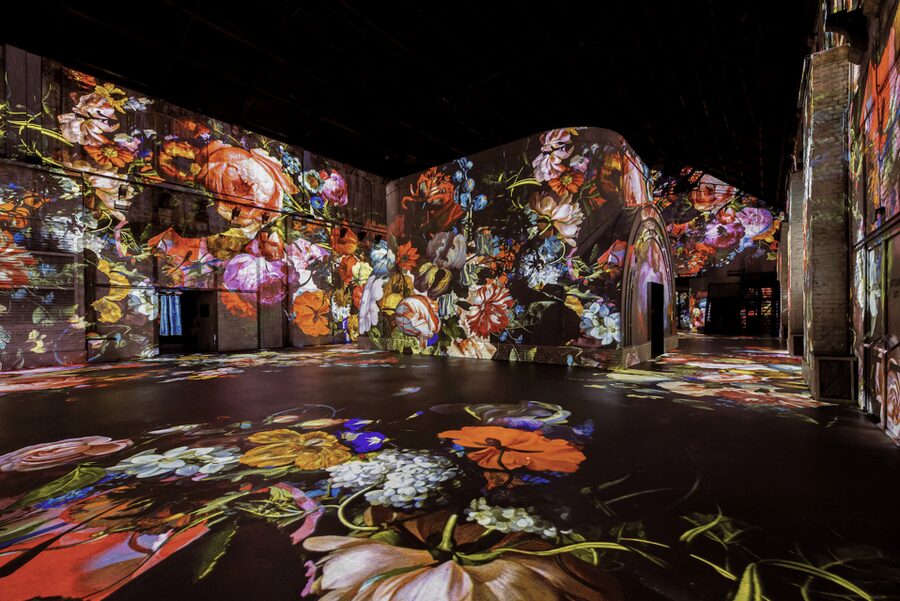
At $21 per person, this is not the cheapest short activity in Amsterdam. You are paying for a timed digital production rather than access to a collection of original works. If your priority is seeing authentic paintings, put your money toward the Rijksmuseum, the Van Gogh Museum, or another gallery.
I think the ticket offers fair value if you enjoy visual shows, music, technology, or unusual cultural attractions. The vast room gives the experience a scale that a standard screen cannot match, and the Dutch Masters programme presents familiar artists in a fresh way. The included locker is a small but useful benefit, especially if you are carrying a day bag.
The value also depends on how you use the visit. If you rush in late, miss the opening section, and leave before the programme finishes, the price will feel high. If you arrive early, watch from several points in the room, and stay for both the Dutch Masters and Mondriaan sections, you get a fuller experience.
I would also consider it a good choice when museum tickets are sold out. One visitor who could not get into the Van Gogh Museum found this a satisfying alternative. It does not show the original canvases, but it can introduce you to the artist’s colours, subjects, and visual language in a memorable way.
Who will enjoy Fabrique des Lumières most?
I would recommend this experience to you if you want a break from conventional sightseeing. It suits adults who enjoy art but do not usually spend hours reading labels. It also works well for families, provided children can stay reasonably quiet and follow the venue rules.
It is a strong choice for a rainy Amsterdam day, though the cold interior means you should dress sensibly. The location in Westergas park also makes it easy to combine with time outdoors and a coffee nearby. That pairing gives the visit more balance than treating the show as your only activity.
Art lovers should see it as an extra perspective, not a substitute for originals. The projections help you notice composition, colour, and movement, but they cannot provide the surface, size, or physical presence of a painting in a museum.
You may want to skip it if you dislike loud music, intense light changes, floor seating, or crowded visual environments. It is also a poor fit if you need a flexible arrival time. Here, punctuality is part of the deal.
Practical timing and booking advice
Choose your time carefully because the Dutch Masters exhibition is available only in the first and last time slot of the day. The show starts exactly at the booked time, and the venue closes afterward, so do not build a tight connection with another appointment.
I would aim to arrive at least 15 minutes early, using the official door-opening window to get settled. Add extra time for traffic and for locating the building inside Westergas park. Missing even 10 minutes can noticeably reduce the value of a one-hour presentation.
You can cancel for a full refund up to 24 hours in advance, and the reserve-now, pay-later option keeps your plans flexible. Check the available start times before booking, since the ticket is valid for one day but is still tied to a specific slot.
The venue is wheelchair accessible. Keep large bags and luggage at your accommodation or elsewhere, since they are not allowed. Pets and baby strollers are also not permitted, and lockers are provided for suitable personal items.
Should you book the Dutch Masters show?
Book it if you want Dutch art presented with scale, music, and movement rather than glass cases and quiet galleries. I especially recommend it as a first look at Vermeer, Rembrandt, van Gogh, and Mondriaan, or as a lively companion to museum visits in Amsterdam.
Skip it if you want close study of original brushwork or detailed historical explanation. For most people, the best approach is to see this first, enjoy the sensory presentation, then visit a museum and look for the paintings that caught your attention.
At $21, it is a reasonable treat when you arrive on time and stay for the full programme. Wear warm clothes, leave your large bag behind, and give yourself room to walk, sit, and watch. The show works best when you stop trying to photograph it and let the walls do the talking.
FAQ
Where is Fabrique des Lumières located?
Fabrique des Lumières is located in Westergas park in Amsterdam, in North Holland. You should arrive directly at the venue.
How long does the Dutch Masters experience last?
The presentation is described in the available information as a roughly one-hour show. The ticket itself is valid for one day, but you must attend at the specific booked time.
When does the Dutch Masters exhibition run?
The Dutch Masters exhibition is available only during the first and last time slot of the day. It is shown once during your booked slot and starts exactly at that time.
How early should I arrive?
Doors open 15 minutes before the exhibition. Arrive early because late arrival can mean missing part of the show, and the venue closes afterward.
Is Fabrique des Lumières wheelchair accessible?
Yes. The venue is wheelchair accessible.
Can I bring luggage, a stroller, or a pet?
No. Luggage, large bags, baby strollers, and pets are not allowed. Locker use is included for permitted personal items.
Just added around Amsterdam
- Amsterdam 1-Hour Rickshaw Tour★ 4.9 · 17 reviews
- Amsterdam: Canal Cruise and Jewish Cultural Quarter Tickets★ 4.2 · 17 reviews
- Keukenhof Gardens and Tulip Experience Tour from Amsterdam★ 4.8 · 17 reviews
- Marken, Volendam and Edam: Private Full-Day Tour★ 4.6 · 18 reviews
- Discover Amsterdam’s city center in this Outside Escape game tour★ 4.5 · 18 reviews
- Amsterdam: Personal Travel & Vacation Photographer★ 4.8 · 18 reviews
- Amsterdam: Luxury Saloon Boat Cruise with 3-Course Dinner★ 3.9 · 18 reviews
- Rijksmuseum & Amsterdam City Center Semi-Private Tour 12ppl Max★ 5.0 · 18 reviews
Attraction Tickets in Amsterdam, compared.


Keukenhof Ticket and Roundtrip Shuttle Transfer
Read our review →
Moco Museum Amsterdam Entrance Tickets with Banksy & More
Read our review →

Browse the lists this tour appears in