
REVIEW · ATTRACTION TICKETS IN AMSTERDAM
Amsterdam: Fabrique des Lumières Entry Ticket
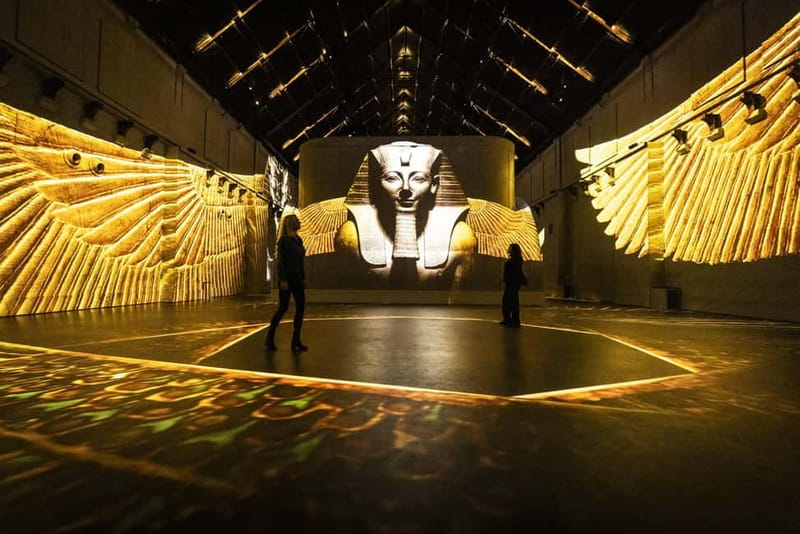
Art becomes architecture here. Amsterdam’s Fabrique des Lumières turns a huge former industrial space into a moving picture of light, music, and color, with ancient Egypt as the main feature. I like the scale of the projections and the freedom to watch from different spots, including smaller rooms and a mirror room. The $20 price also feels fair if you stay for more than one cycle.
The main drawback is that this is not a quiet museum visit. Music, flashing images, and huge projections can feel intense, especially for young children or anyone sensitive to light. The venue is not suitable for people with epilepsy, and children under three are not admitted.
In This Review
- Key things to know before you go
- Entering Amsterdam’s former industrial art hall
- The Kingdom of the Pharaohs, art on a monumental scale
- French Orientalist painters and the limits of romantic pictures
- Foreign Nature turns mathematics into moving color
- Why the music matters as much as the pictures
- Finding the best place to watch
- Is the $20 ticket good value?
- Who will enjoy Fabrique des Lumières most?
- Practical advice for a smoother visit
- Should you book Fabrique des Lumières?
- FAQ
- How long does each exhibition last?
- Where is Fabrique des Lumières located?
- What does the ticket include?
- Is Fabrique des Lumières wheelchair accessible?
- Are children allowed to enter?
- What items are not allowed inside?
Key things to know before you go
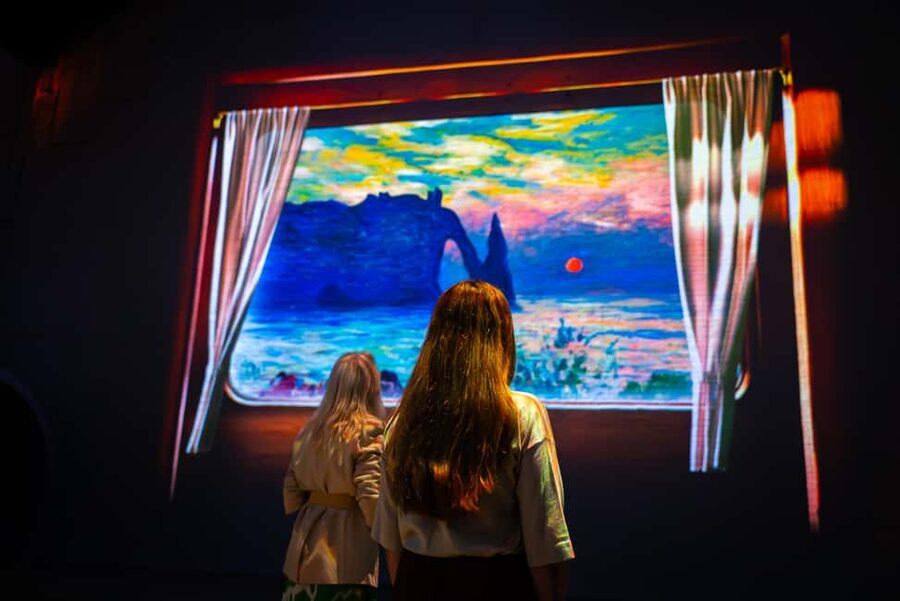
- Ancient Egypt fills a 3,800-square-meter hall: Pharaohs, craftsmen, monuments, jewelry, reliefs, and painted tomb art move across walls up to 17 meters high.
- The show works best from several viewpoints: Walk through the large hall, try the smaller spaces, and look for a balcony or mirror room if available during your visit.
- Each exhibition lasts about 40 minutes: The program loops, so you can stay and watch again rather than rushing out when the first cycle ends.
- Music is part of the artwork: Classical pieces and modern songs have been used in the venue’s programs, adding a strong emotional layer to the images.
- Westergas park makes access simple: The center is easy to reach by public transport and gives you a useful indoor plan on a wet Amsterdam day.
- Pack light: Large bags, luggage, food, drinks, strollers, pets, and flash photography are not allowed. Lockers are included.
Entering Amsterdam’s former industrial art hall
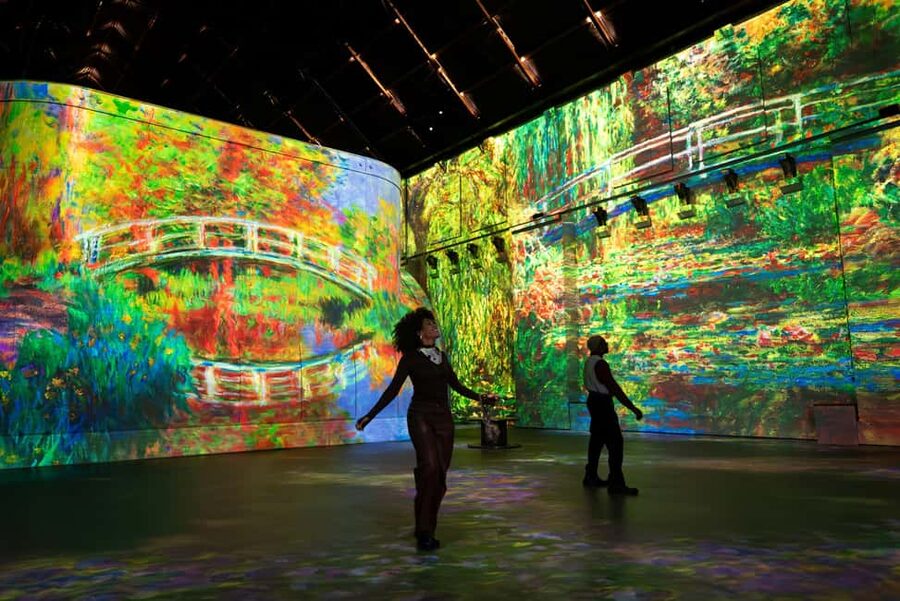
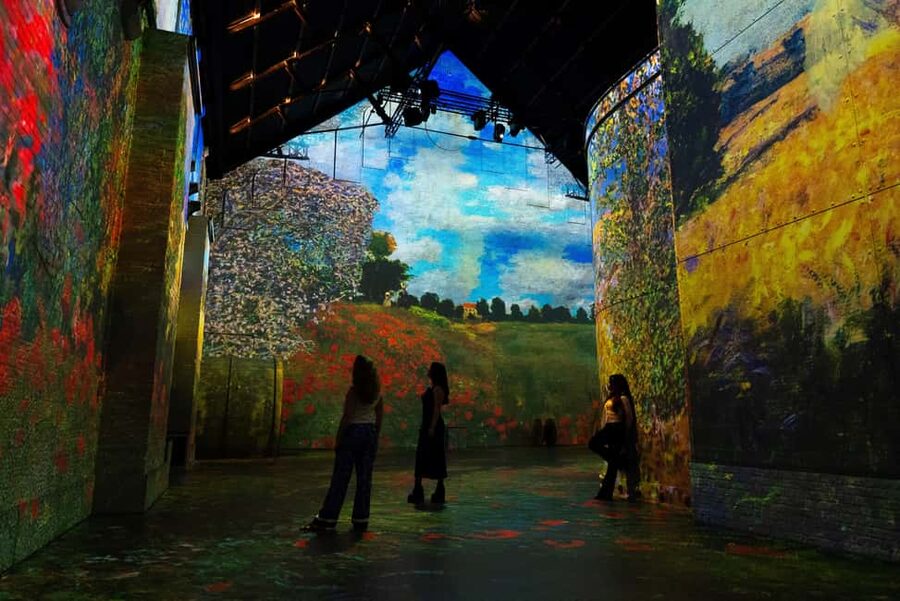
Fabrique des Lumières sits in Westergas park, a former industrial area now used for culture, food, events, and green space. That setting matters. You are not entering a traditional white-walled gallery with framed pictures and small labels. You walk into a large hall where the walls, floor, and scale of the room become part of the artwork.
The building’s walls reach up to 17 meters. That height gives the projections room to breathe, but it also makes the first few minutes feel almost theatrical. Images can cover an entire wall, stretch overhead, and move across the floor beneath your feet. I like this format because it lets you look at famous art without standing shoulder to shoulder with a crowd around one small canvas.
Your ticket is timed, so check the available starting times when you book. Once inside, you do not need a guide to explain every image. The program tells its story through changing pictures and music. Lockers are included, which is useful because large bags and luggage cannot enter the exhibition area.
The attraction is wheelchair accessible. You should still travel light, since baby strollers are not allowed inside. Assistance dogs are permitted, but other pets are not.
More Attraction Tickets in Amsterdam
- Amsterdam: Van Gogh Museum Ticket
★ 4.7 · 52,054 reviews - Amsterdam: Heineken Experience Ticket
★ 4.6 · 30,055 reviews - Amsterdam: Rijksmuseum Entry Ticket
★ 4.7 · 25,535 reviews
The Kingdom of the Pharaohs, art on a monumental scale
The main program, The Kingdom of the Pharaohs, takes you back to ancient Egypt through paintings, reliefs, sculpture, jewelry, and architectural details. Instead of viewing these objects one by one, you see them assembled into a flowing visual story about the people who built, decorated, and worshipped in the world of the pharaohs.
This approach is especially effective with Egyptian art. A carved figure or painted symbol can seem small and still when seen in a book or museum case. On the Fabrique’s walls, the same image can become part of a room-sized procession. A monument may appear in fragments, then join with color, pattern, and music to create a sense of movement.
The program focuses on the pyramid architects and the craftsmen who served the pharaohs. It also points toward the religious beliefs behind the art. Many of these works were linked to the gods, royal power, or hopes for the afterlife. The digital format cannot replace seeing original stone, paint, or jewelry in a museum, but it does help you notice how Egyptian art was designed to communicate across large spaces.
I recommend standing still for one section, then moving around the hall during the next. From the center, you get the full scale. From a side wall, you can watch images pass close by. A higher viewpoint, if open during your visit, gives you another sense of how the projections fit together.
The only caution is that the effect can be intense. The room changes constantly, and the music helps drive the mood. If you prefer slow, quiet looking, this will feel more like a light-and-sound performance than a conventional art visit.
French Orientalist painters and the limits of romantic pictures
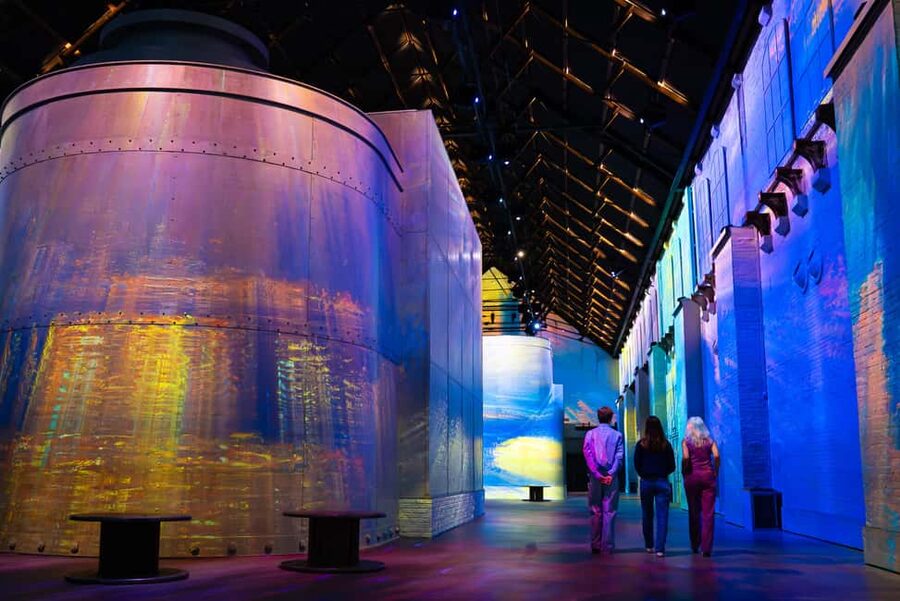
The second program focuses on French Orientalist painters, including Ingres, Delacroix, and Gérôme. These 19th-century artists became fascinated by places they knew largely through travel, reports, and imagination. Their pictures often present the East as exotic, dramatic, and picturesque.
The show is attractive, but it is worth bringing a critical eye. Orientalist art can be visually rich while also presenting Eastern countries through Western stereotypes. The projections make the colors, interiors, costumes, and staged scenes especially dramatic, but the beauty of the images should not hide the fact that they reflect the assumptions of their time.
That tension gives this section more value than a simple parade of pretty pictures. You can enjoy the brushwork and composition while asking how the artists turned unfamiliar places into subjects for a European audience. The format does not provide a long written lecture, so you may need to supply that context yourself.
For many people, this will be the most traditionally painterly part of the visit. The Egyptian program is about monuments and ancient civilization. The Orientalist program is about artists looking outward and reshaping what they saw through their own imagination. It is a useful contrast between historical art and modern presentation.
Foreign Nature turns mathematics into moving color

Foreign Nature takes a different route. Instead of projecting historical paintings, it uses computer-generated fractals to create strange, colorful alien worlds. Here, the subject is not a particular artist or civilization. It is the visual relationship between mathematics, repetition, shape, and motion.
This section may appeal most to you if you enjoy abstract art or atmospheric experiences. Fractals can produce forms that seem organic, crystalline, or otherworldly, even though they come from mathematical processes. The result is hypnotic rather than informative.
I would treat Foreign Nature as a change of pace. After the recognizable figures, buildings, and objects of ancient Egypt and Orientalist painting, the abstract images give your eyes a rest from trying to identify everything. You can simply watch the forms develop and let the music set the pace.
That freedom is also the weakness. If you want a clear story from every room, this program may feel less satisfying. If you like color, patterns, and experimental technology, it may be the section you remember best.
A few more trips of this kind worth comparing:
- Amsterdam Classic Saloon Boat Cruise with Drinks and Cheese
★ 5.0 · 31,825 reviews - Amsterdam Luxury Canal Cruise + Unlimited Drinks & Bites option
★ 5.0 · 30,518 reviews - Amsterdam: Classic Boat Cruise with Optional Cheese & Wine
★ 4.6 · 22,925 reviews - Amsterdam: Evening Cruise with Optional Wine and Snacks
★ 4.4 · 19,696 reviews
Why the music matters as much as the pictures
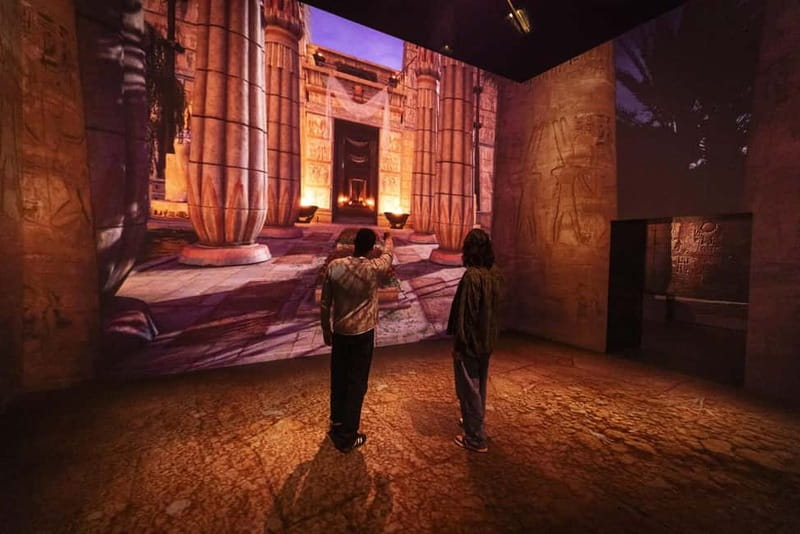
The projections are the headline, but music carries much of the emotional weight. The images do not simply appear as a silent slideshow. They move with an audio track, and the timing can make a static painting feel tender, grand, eerie, or playful.
This combination explains why the experience can affect people who do not normally visit art museums. You do not need to know the names of every painter or recognize every Egyptian symbol to respond to the scale, rhythm, and color. The presentation gives you an immediate way into the art.
Programs at Fabrique des Lumières have also featured Dutch masters and Van Gogh in the past, and the attraction can change its themes. That is useful to remember if you see older photographs online. Check the current program before booking, since the exact exhibition affects the experience you will receive.
The sound can be a drawback for anyone looking for peace and quiet. Flash photography is not allowed, and that is sensible here. A phone screen or camera flash would distract from the room and make it harder for others to watch the projections.
Finding the best place to watch
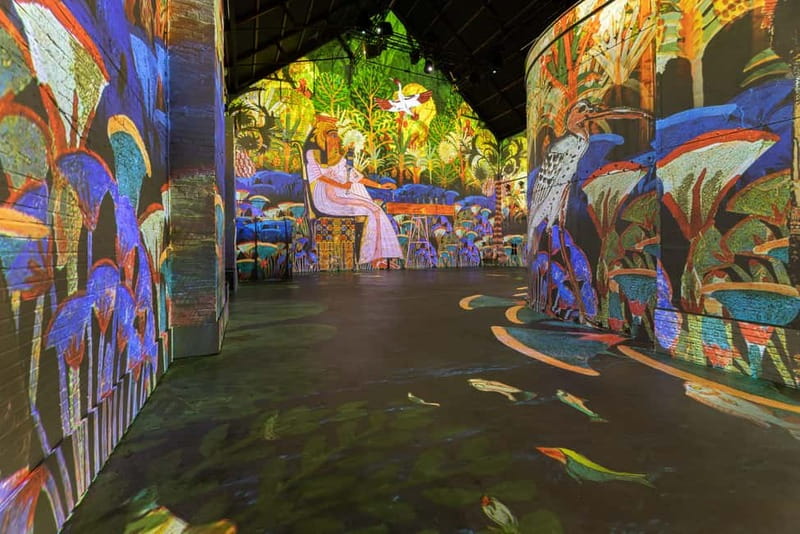
There is no single correct viewing position. The hall is large enough for you to change your angle, and that is one of the ticket’s best advantages. The front may give you a direct view of the largest wall, while the edges let you see images moving across several surfaces at once.
Smaller spaces can offer a more enclosed experience. A mirror room, when available as part of the setup, adds reflections and makes the projections feel less tied to one wall. A balcony or higher position can help you understand the full design of the room.
I would not hurry through the first cycle. Use the opening minutes to find your bearings, then choose a spot where you can watch without blocking someone else. During a second cycle, move to another part of the building. The exhibition lasts about 40 minutes, but you can stay longer and watch again.
This repeat option is important. A single viewing can be overwhelming because there is so much happening at once. The first pass lets you absorb the overall story. A second pass lets you notice smaller details, changes in color, and the way individual images are used.
Some people stay for around two and a half hours, especially when they explore every room and repeat favorite sections. You do not need that much time, but it shows why the ticket should not be judged only as a 40-minute attraction.
Is the $20 ticket good value?
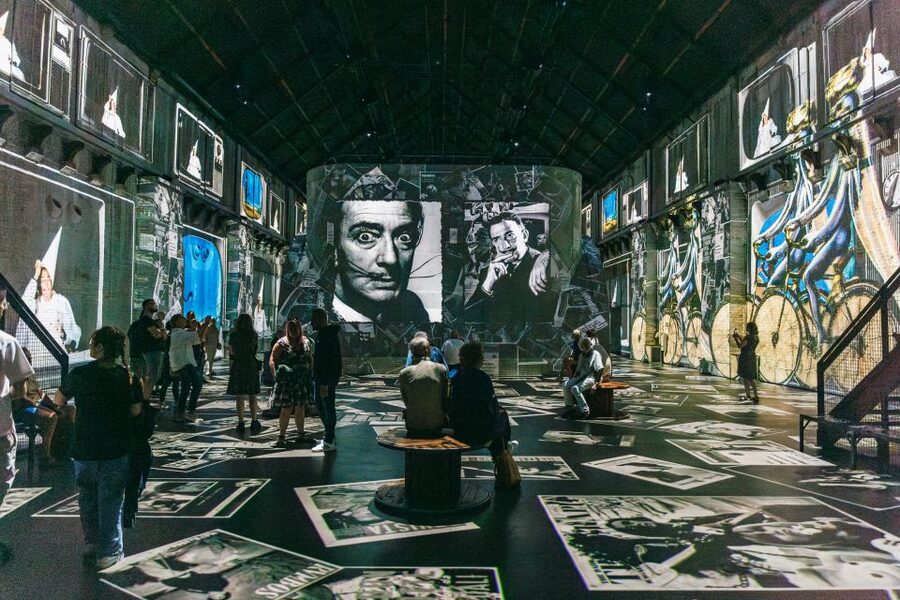
At $20 per person, the ticket is priced like a major Amsterdam attraction, but the value depends on how you use it. If you enter, watch one cycle, and leave after 40 minutes, the cost is reasonable but not a bargain. If you stay for several cycles and explore the smaller spaces, it becomes much better value.
The ticket is valid for one day, with entry tied to a selected starting time. That gives you a little flexibility once you are inside, though you should still arrive for your timed entry. Free cancellation is available up to 24 hours ahead, and you can reserve now and pay later, which helps if your Amsterdam schedule is still changing.
For a rainy day, the price makes more sense. One visitor spent about two and a half hours inside during wet weather and found enough to do across the rooms. Westergas park is also easy to reach by public transport, so you are not spending a large part of your day getting there.
I would compare the ticket with the cost of a regular museum admission, but not too literally. You are paying for a produced audio-visual show, not access to original objects and quiet gallery space. If you want detailed labels and close study of physical artworks, choose a conventional museum. If you want a shared, theatrical experience with plenty of room to look around, Fabrique offers something different.
Who will enjoy Fabrique des Lumières most?
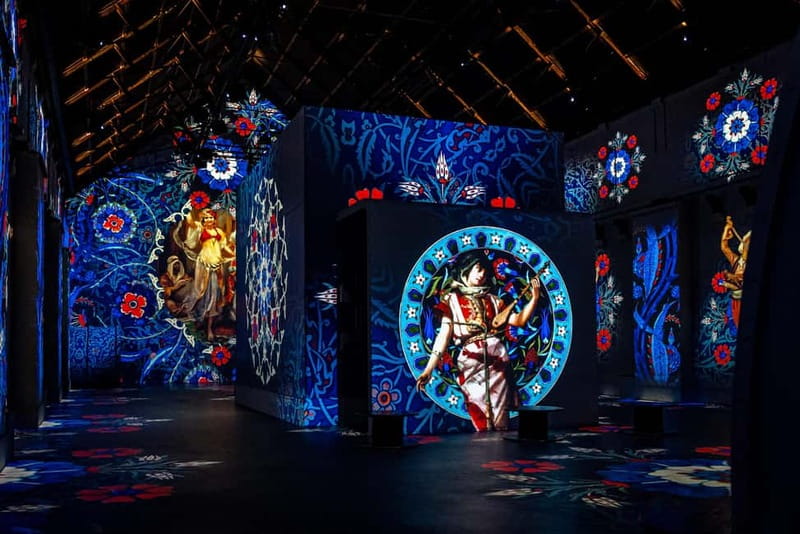
I recommend it to couples, friends, families with older children, and anyone who wants an art experience that feels more active than a standard museum. It can also work well for people who do not usually feel comfortable in art galleries, because the room gives you an emotional response before you need to understand the history.
Children can enjoy the changing images, though the attraction is not suitable for children under three. One family even found the show enjoyable with a three-year-old, but that does not mean every young child will handle the sound and flashing projections well.
Art lovers will appreciate seeing paintings and historical subjects enlarged beyond normal museum scale. Technology fans will enjoy the projection system and the fractal program. People looking for a calm, low-stimulation visit should think twice.
The experience is also social. You can watch with friends, compare viewpoints, and move around the room together. It is less suited to someone who wants to spend ten minutes studying one painted detail in silence.
Practical advice for a smoother visit
Book a timed entry that leaves you enough space in your day. Since you may want to watch a program again, do not place this attraction between two tightly scheduled appointments.
Wear something comfortable for standing and walking around. There is no need to carry food or drinks inside, since both are prohibited. Large bags and luggage are also not allowed, but lockers are included.
Keep your phone ready for practical use, not flash photography. The room is at its best when you stop trying to document every image and simply watch the program from different places.
If you are visiting Amsterdam during wet weather, pair Fabrique des Lumières with other activities around Westergas park or nearby parts of the city. The exhibition gives you a useful indoor block of time without requiring a full day.
The attraction has earned a 4.7 rating from more than 8,600 ratings, and the most consistent praise focuses on the same things: the emotional effect of the music, the clarity of the projections, the color, and the chance to see art from several angles. Those strengths are real, but they come with the tradeoff of loud audio and intense light.
Should you book Fabrique des Lumières?
Book it if you want art on a giant scale, strong music, and a modern alternative to Amsterdam’s traditional museums. The ancient Egyptian program gives the visit a clear theme, while French Orientalist painters and Foreign Nature add variety. Staying for a repeat cycle makes the $20 ticket a better buy.
Skip it if you dislike flashing images, loud music, or crowded indoor attractions, or if you want original artworks with detailed written explanations. For everyone else, this is one of Amsterdam’s more memorable rainy-day choices, especially when you give yourself time to watch twice and explore the room from more than one angle.
FAQ
How long does each exhibition last?
Each exhibition lasts approximately 40 minutes. You can stay longer and watch the programs again.
Where is Fabrique des Lumières located?
The venue is in Westergas park in Amsterdam, North Holland. It is easily accessible by public transport.
What does the ticket include?
The ticket includes timed entry to The Kingdom of the Pharaohs at Fabrique des Lumières and use of the lockers.
Is Fabrique des Lumières wheelchair accessible?
Yes, the venue is wheelchair accessible.
Are children allowed to enter?
Children under three are not allowed to enter. The attraction is also not suitable for people with epilepsy.
What items are not allowed inside?
Baby strollers, food, drinks, luggage, large bags, pets, and flash photography are not allowed. Assistance dogs are permitted.
Just added around Amsterdam
- Amsterdam 1-Hour Rickshaw Tour★ 4.9 · 17 reviews
- Amsterdam: Canal Cruise and Jewish Cultural Quarter Tickets★ 4.2 · 17 reviews
- Keukenhof Gardens and Tulip Experience Tour from Amsterdam★ 4.8 · 17 reviews
- Marken, Volendam and Edam: Private Full-Day Tour★ 4.6 · 18 reviews
- Discover Amsterdam’s city center in this Outside Escape game tour★ 4.5 · 18 reviews
- Amsterdam: Personal Travel & Vacation Photographer★ 4.8 · 18 reviews
- Amsterdam: Luxury Saloon Boat Cruise with 3-Course Dinner★ 3.9 · 18 reviews
- Rijksmuseum & Amsterdam City Center Semi-Private Tour 12ppl Max★ 5.0 · 18 reviews
Attraction Tickets in Amsterdam, compared.



Keukenhof Ticket and Roundtrip Shuttle Transfer
Read our review →
Moco Museum Amsterdam Entrance Tickets with Banksy & More
Read our review →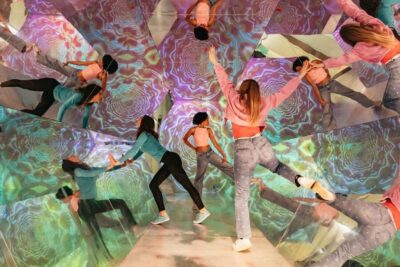

Browse the lists this tour appears in