REVIEW · TOURS
Amsterdam: Spanish Tour Unmasking the Redlight District
Amsterdam’s oldest streets still have secrets. This two-hour Spanish walking tour gives you a useful way to understand the Red Light District beyond its neon windows and crowded lanes. You follow the area from its medieval beginnings through the Dutch Golden Age and into its modern reputation for tolerance and progressive thinking.
I like the route’s range. It takes in the St. Nicholas Basilica, Zeedijk, Nieuwmarkt, De Waag, Oude Kerk, and Warmoesstraat, so you get more than a quick stroll through the adult entertainment quarter. I also like the storytelling focus, especially the way Amsterdam’s port, trade, immigration, religion, and nightlife are tied together.
The main drawback is that this is an outdoor walking tour with no interior admissions. You will pass important buildings, but you should not expect a museum visit or entry into venues. The tour is also not suitable for children under 14 or wheelchair users, and the subject matter may not suit everyone.
In This Review
- Key points to know before you book
- Why this Amsterdam walking tour is worth considering
- Starting near Central Station and St. Nicholas Basilica
- Zeedijk and Amsterdam’s seafaring past
- A tucked-away stop and the He Hua Temple
- Nieuwmarkt and the old city gate at De Waag
- Entering the Red Light District along Oudezijds Voorburgwal
- Oude Kerk, Amsterdam’s oldest building
- Warmoesstraat and the district’s working streets
- The final tucked-away stop and Beursplein
- What the $31 price delivers
- Who will enjoy this Spanish-language tour
- Booking flexibility and practical details
- Should you book it?
- FAQ
- What language is the tour offered in?
- How long does the tour last?
- Where does the tour start?
- Where does the tour finish?
- What sights are included on the route?
- Is entry to Oude Kerk included?
- Are food and drinks included?
- Can I take photographs?
- Is the tour suitable for children?
- Is the tour accessible to wheelchair users?
Key points to know before you book
- The tour begins outside Barbizon Palace Hotel: The meeting point is on Prins Hendrikkade, close to Amsterdam Central Station.
- The route covers much more than red-light windows: You pass a basilica, a former city gate, Chinese temple, old canals, and Amsterdam’s oldest building.
- Spanish is the only listed tour language: This is best for Spanish-speaking visitors who want live explanations rather than an audio guide.
- Oude Kerk is a major stop: You spend about 15 minutes there, though entry fees are not included.
- The experience lasts two hours: That makes it a manageable first look at the district, but the pace may feel brisk.
- Photography has limits: You may bring a camera, but your guide will tell you when it is appropriate to take pictures.
Why this Amsterdam walking tour is worth considering
Amsterdam’s Red Light District can be easy to misread. A short wander may show you red-lit windows, narrow canals, and busy bars, but it does not explain why this part of town developed as it did. This tour supplies that missing context.
The story begins with Amsterdam as a port city. Sailors, merchants, migrants, religious groups, and workers passed through the area, bringing money and new ideas with them. Over time, the port’s commercial success helped create demand for lodging, entertainment, alcohol, and prostitution.
That explanation matters because the district did not appear as a separate oddity. It grew alongside the city. As Amsterdam became richer and more populated, the streets around the old harbor became a place where business and pleasure met.
I like that the tour frames the Red Light District as part of Amsterdam’s wider story. It looks at the area’s medieval roots, its growth during the Golden Age, and its later connection with progressive attitudes. You get a more balanced picture than the usual sensational treatment.
The guide is a key part of the experience. The strongest feedback points to a Spanish-speaking Chilean guide who was praised for clear explanations and an agile, easygoing style. The guide’s job is not simply to point out buildings. It is to connect each street with an anecdote, a mystery, or a change in Amsterdam’s social life.
A few more trips of this kind worth comparing:
- Amsterdam: Van Gogh Museum Ticket
★ 4.7 · 52,054 reviews - Amsterdam Classic Saloon Boat Cruise with Drinks and Cheese
★ 5.0 · 31,825 reviews - Amsterdam Luxury Canal Cruise + Unlimited Drinks & Bites option
★ 5.0 · 30,518 reviews
Starting near Central Station and St. Nicholas Basilica
You meet outside the entrance to the Barbizon Palace Hotel on Prins Hendrikkade. This is a practical location because it is near Amsterdam Central Station, though you should allow a few minutes to find the correct side of the street and the guide.
The tour begins at the St. Nicholas Basilica, opposite the station. The building provides an immediate contrast to the district’s more famous adult nightlife. Here, the introduction covers Amsterdam’s maritime heritage and early development.
That opening is useful. It gives you a sense of how the city’s position on the water shaped its fortunes. You are not starting with a narrow focus on prostitution. Instead, you begin with the city’s port economy and the conditions that later helped form the Red Light District.
The basilica is also a strong visual starting point. You can take in its grand exterior before moving into the tighter streets near the old harbor. Since the tour does not include venue entry, this stop is mainly about exterior viewing and explanation.
Zeedijk and Amsterdam’s seafaring past
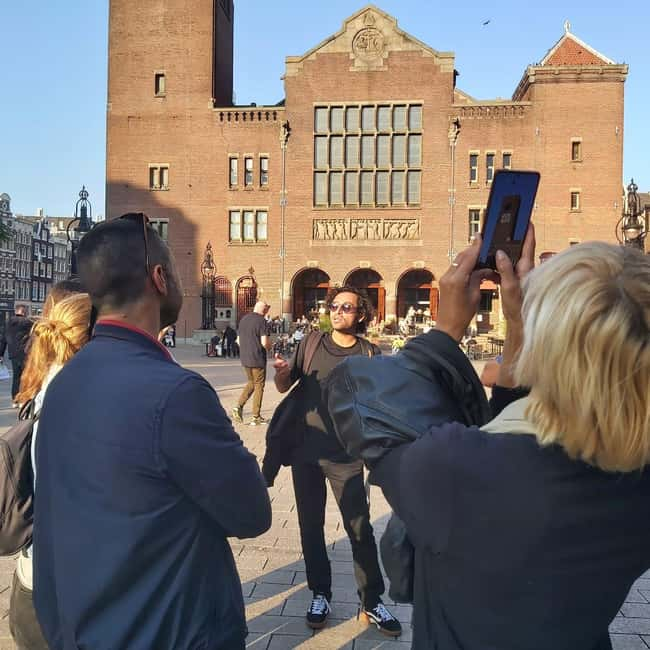
From the starting area, you walk for about 15 minutes to Zeedijk. This street is presented as a place with a long multicultural and maritime connection. Its old bars once served sailors arriving from many parts of the world.
Zeedijk helps you picture Amsterdam as an international port rather than a quiet canal city. People arrived with different languages, customs, beliefs, and expectations. The area’s social mix made it a natural setting for trade, lodging, drinking, and entertainment.
You will hear about the historic bars and the people who used them. The information gives the street a human scale. Instead of treating Zeedijk as a backdrop, the guide shows how ordinary commerce and seafaring helped change the neighborhood.
The walking conditions here are typical of central Amsterdam. Streets can be narrow, surfaces uneven, and foot traffic heavy. Wear comfortable shoes, as the tour continues on foot with no scheduled transport break.
A tucked-away stop and the He Hua Temple
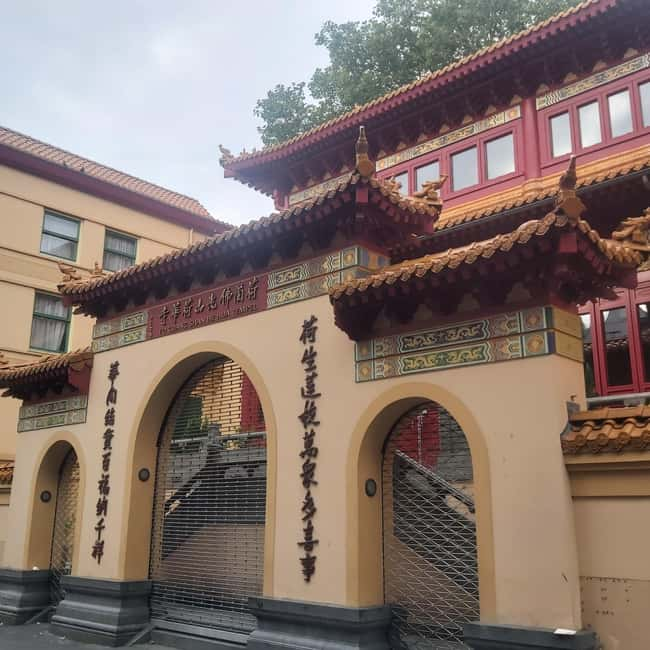
The itinerary includes a short photo stop at a secret location, followed by about 10 minutes at the He Hua Temple. The exact nature of the first stop is not specified, so it is best to treat it as a small surprise rather than a major attraction.
The He Hua Temple adds another layer to the area’s cultural story. It helps show how Amsterdam’s old port district became home to communities and traditions from beyond the Netherlands. This is one of the tour’s better choices because it broadens the usual Red Light District narrative.
You should bring a camera if you want photographs, but photography inside is not allowed. The guidance says you may carry a camera and that the guide will tell you when it is suitable to use it. Follow that instruction carefully, particularly around people working in the district and inside religious spaces.
A completely different kind of day out in Amsterdam:
- Amsterdam: Heineken Experience Ticket
★ 4.6 · 30,055 reviews - Amsterdam: Rijksmuseum Entry Ticket
★ 4.7 · 25,535 reviews - Amsterdam: Classic Boat Cruise with Optional Cheese & Wine
★ 4.6 · 22,925 reviews - Amsterdam: Evening Cruise with Optional Wine and Snacks
★ 4.4 · 19,696 reviews
Nieuwmarkt and the old city gate at De Waag
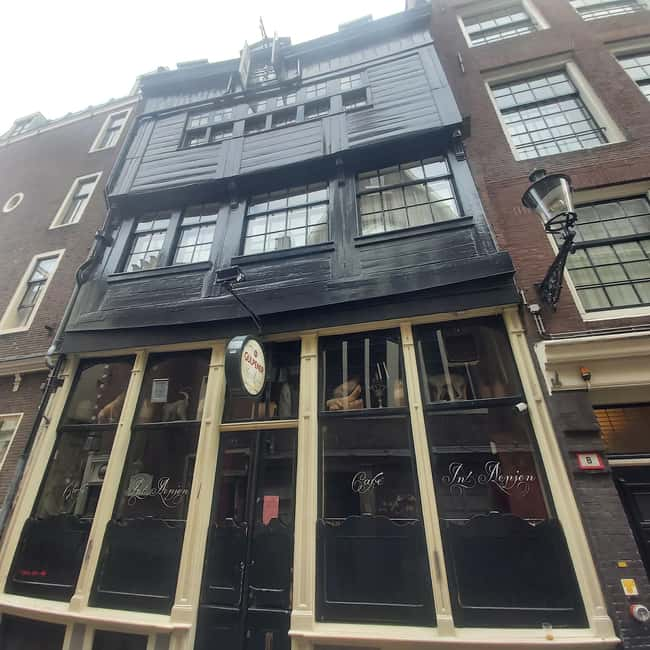
The route continues to Nieuwmarkt Square, where you have about 10 minutes for a photo stop. The square is dominated by De Waag, an imposing former city gate that later became a weighing house.
This is a good place to understand how Amsterdam’s defenses and trade systems overlapped. A city gate was not only a barrier. It could also become part of the machinery of commerce as the city expanded and goods moved through its streets.
The stop is brief, so you will not get an extended architectural visit. Still, De Waag gives the tour a strong historical anchor. You can connect the city’s military past with its later commercial power, then see how that prosperity affected nearby nightlife.
Nieuwmarkt also breaks up the narrower street walking. A short open-square stop can help you get your bearings before the route returns to the canals and lanes of the Red Light District.
Entering the Red Light District along Oudezijds Voorburgwal
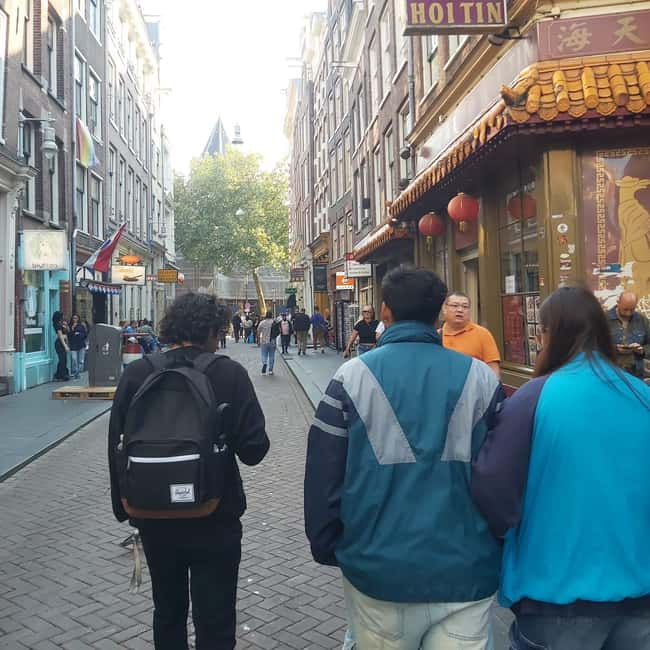
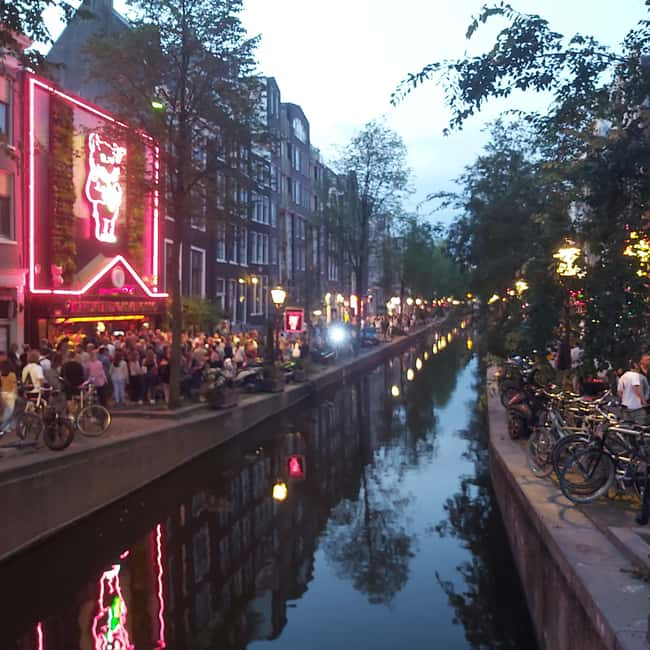
The tour then spends about 20 minutes walking through the Red Light District. The focus is on its origins, growth, and changing public role, not simply on the most visible attractions.
Oudezijds Voorburgwal is at the heart of the district’s canal network. Here, you see the close mix of water, old buildings, narrow lanes, businesses, and religious sites that makes the area so unusual. The guide explains how population growth and rising prosperity created more demand for nightlife and vice.
You should expect a public neighborhood, not a staged attraction. People live and work here, and the streets can be crowded. Treat the area with discretion. Do not photograph workers or people without permission, and follow the guide’s instructions about when cameras are appropriate.
The adult subject matter is central to the tour. It is suitable for visitors who want historical and social context, but it is not designed as a family outing. The stated minimum age is 14, and parents should use their own judgment about the material.
Oude Kerk, Amsterdam’s oldest building
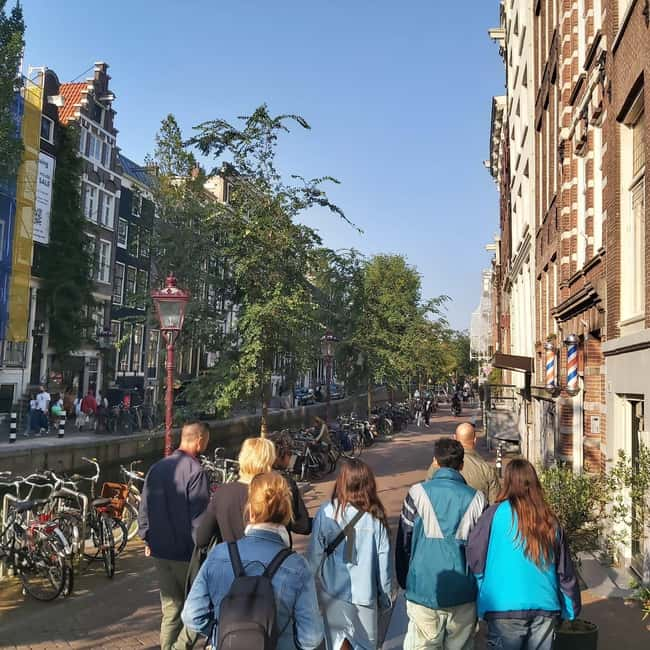
Oude Kerk receives about 15 minutes on the route. It is described as Amsterdam’s oldest building, and its presence in the middle of the Red Light District makes the neighborhood’s history especially layered.
The church shows how religious life and commercial life existed side by side. That tension, or coexistence, is part of what makes the area worth studying. Amsterdam’s old center was never divided into neat modern categories. Worship, trade, housing, drinking, and prostitution developed close together.
Keep in mind that the tour price does not include entry into venues. If the guide takes you to the church entrance or discusses it from outside, you should not assume admission is covered. The supplied details describe a visit stop but list no included tickets, so confirm the exact arrangement when booking.
For many visitors, Oude Kerk will be the most meaningful architectural stop. It gives the tour a physical link to the city’s earliest period and keeps the experience from becoming only a discussion of modern nightlife.
Warmoesstraat and the district’s working streets
The route continues along Warmoesstraat with about 10 minutes of walking. This street helps you see how the district functions as a real part of central Amsterdam rather than a single attraction.
The guide uses the street to continue the story of nightlife, trade, and changing social attitudes. Amsterdam’s reputation for tolerance did not appear overnight. It developed through long contact between commerce, different communities, private behavior, and public regulation.
The exact balance between history and modern street observation will depend on the guide. That is worth remembering when you book. The tour promises mysteries and anecdotes, but it does not promise a formal lecture or a fixed set of interior visits.
The final tucked-away stop and Beursplein
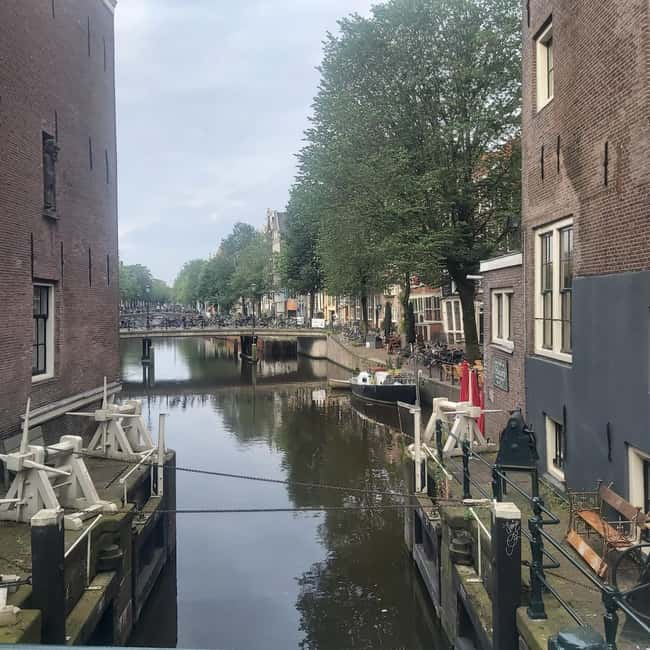
A further 15-minute visit takes place at a hidden location on the route. No additional details are given about this stop, so I would view it as a chance to hear another local story rather than a guaranteed major sight.
The experience is listed as ending at Beursplein, while the meeting information also says the activity ends back at the meeting point. Because those details do not match perfectly, confirm the final drop-off point before you set plans for dinner, a museum, or a train.
The ending is connected with Dam Square and the Royal Palace. You hear about the palace’s relationship with the Red Light District, which brings the tour back to Amsterdam’s civic and royal center.
That final connection is important. It shows that the district’s story is not isolated from official Amsterdam. The old center, royal power, trade, and nightlife have long occupied the same compact part of the city.
What the $31 price delivers
At $31 per person, the main value is the live Spanish explanation over two hours. You are paying for a structured route and a guide who can connect scattered sights into one story.
The price is reasonable if you want orientation and context on your first visit. In two hours, you cover several important streets and buildings without committing to a half-day activity. You also avoid the confusion that can come from wandering the district without knowing what you are looking at.
The value is weaker if you mainly want interior sightseeing. Food, drinks, and admission fees are not included. You will need to budget separately for any entry costs, and the tour itself does not provide a meal or refreshment.
I would compare this activity with the cost of a short private guidebook-style walk. If you speak Spanish and care about the social history of the neighborhood, the live commentary makes the fee worthwhile. If you want only photographs or nightlife, you may not get enough from the format.
Who will enjoy this Spanish-language tour
I would recommend it most to Spanish-speaking adults and older teenagers who want a historical explanation of Amsterdam’s most misunderstood neighborhood. It suits first-time visitors who want a quick orientation before exploring on their own.
The tour also works well for anyone interested in urban history, maritime trade, migration, religion, and changing ideas about public morality. The mix of basilica, temple, church, canals, and former city gate gives you a broader view of Amsterdam.
It is less suitable if you dislike adult themes, prefer quiet sightseeing, or need step-free access. The tour is outdoors, lasts two hours, and is not suitable for wheelchair users. People over 95 are also listed as unsuitable for the activity.
Wear comfortable shoes and weather-appropriate clothing. Amsterdam weather can change quickly, and there is no indication of an indoor break. Non-alcoholic drinks are allowed, but alcohol and drugs are not permitted.
Booking flexibility and practical details
You can cancel up to 24 hours in advance for a full refund. The reserve-now-and-pay-later option is useful if your Amsterdam schedule is still shifting, since you do not pay at the time of booking.
The tour is offered in Spanish with a live guide. Starting times vary, so check availability before you plan other activities around it.
Arrive at the Barbizon Palace Hotel meeting point with enough time to identify the guide. Since the tour begins near Central Station, it can fit neatly into a day of central Amsterdam sightseeing, but do not assume the route returns to exactly the same spot without confirming the finish.
Should you book it?
Book this tour if you want a Spanish-language history walk that explains why the Red Light District developed, rather than simply showing you its most famous streets. The route is broad, the price is fair for two hours of live guiding, and the guide’s clear, lively delivery is a strong reason to choose it.
Skip it if you need wheelchair access, want included museum admission, or prefer a tour without adult themes. For the right visitor, this is a compact and useful introduction to Amsterdam’s old center, with enough street-level detail to make the district easier to understand and approach respectfully.
FAQ
What language is the tour offered in?
The tour is offered in Spanish with a live Spanish-speaking guide.
How long does the tour last?
The walking tour lasts two hours.
Where does the tour start?
Meet outside the entrance to the Barbizon Palace Hotel on Prins Hendrikkade street in Amsterdam.
Where does the tour finish?
The route is listed as finishing at Beursplein, while the meeting information says the activity ends back at the meeting point. Confirm the final location when booking.
What sights are included on the route?
The route includes St. Nicholas Basilica, Zeedijk, the He Hua Temple, Nieuwmarkt Square, De Waag, the Red Light District, Oude Kerk, Warmoesstraat, and the Royal Palace area around Dam Square.
Is entry to Oude Kerk included?
No entry fees to venues are included in the activity price. Confirm the exact arrangement for the Oude Kerk stop before visiting.
Are food and drinks included?
No food or drinks are included. Non-alcoholic drinks are allowed, but alcohol and drugs are not permitted.
Can I take photographs?
You may bring a camera, but photography inside is not allowed. Your guide will advise you when photography is appropriate.
Is the tour suitable for children?
The activity is not suitable for children under 14 years old.
Is the tour accessible to wheelchair users?
The activity is not suitable for wheelchair users. Comfortable shoes and weather-appropriate clothing are recommended.
Just added around Amsterdam
- Amsterdam City Center Guided Walking Tour – 12 guests 2,5h★ 5.0 · 3 reviews
- Amsterdam Light Festival Boat Cruise★ 5.0 · 3 reviews
- Daytrip Tour from Amsterdam to Zaanse Schans and Giethoorn★ 5.0 · 3 reviews
- Amsterdam: Roller Dreams & Amsterdam Nightlife Experience★ 3.7 · 3 reviews
- Amsterdam: Van Gogh Museum Entrance and Guided Tour★ 3.5 · 3 reviews
- Amsterdam: Red light tour in German/English for groups of 4 people or more★ 5.0 · 3 reviews
- 2 Hour Making Rembrandt’s Traditional Oil Paints in Amsterdam★ 5.0 · 3 reviews
- Amsterdam Red Light District and Old Town Walking Tour★ 5.0 · 3 reviews
Tours, compared.
Zaanse Schans, Edam, Volendam & Marken Bus Tour
Read our review →
Anne Frank’s Story – Guided Walking Tour through Amsterdam
Read our review →
Life of Anne Frank and World War II Walking Tour
Read our review →
Red Light District Tour in German/English/Italian
Read our review →
Guided Zaanse Schans, Windmills & Cheese Tour
Read our review →
Windmill Tour from Amsterdam, Including Volendam & Marken
Read our review →