
REVIEW · DELFT TOURS
Delft: Entrance Ticket for the Old and New Churches
History lives on in Delft’s churchyards. This $11 ticket gives you entry to the New Church and Old Church, two monuments that show how Dutch religious, royal, and civic life changed across seven centuries. I like the royal mausoleum in the New Church and the chance to see Johannes Vermeer’s grave in the Old Church. I also like that one ticket covers both sites, making this an easy addition to a day in Delft.
The main drawback is that this is a self-guided visit, not a guided tour. You need to exchange your voucher at the New Church first, and church activities or repair work can alter opening hours. Give yourself the full 1.5 hours, especially if you want to study the tombs, stained glass, organ, and displays rather than make a quick circuit.
In This Review
- Key points to know before you go
- Why these two churches belong together
- Start at the New Church and its royal tombs
- The New Church visit: what deserves your attention
- Walk through seven centuries at the Old Church
- What the 1.5-hour visit feels like
- Where this ticket gives good value
- Timing, closures, and the best way to plan
- Who should buy this Delft church ticket?
- Should you book both churches?
- FAQ
- How much does entry to the Old and New Churches cost?
- How long does the visit take?
- Which church should I visit first?
- Is a guide included?
- Can I visit the Old Church and New Church with one ticket?
- Can I see the Dutch Royal Family’s burial place?
- Is Johannes Vermeer buried in one of the churches?
- Are the churches wheelchair accessible?
Key points to know before you go
- Start at the New Church: You must exchange your voucher at its ticket counter before visiting the Old Church.
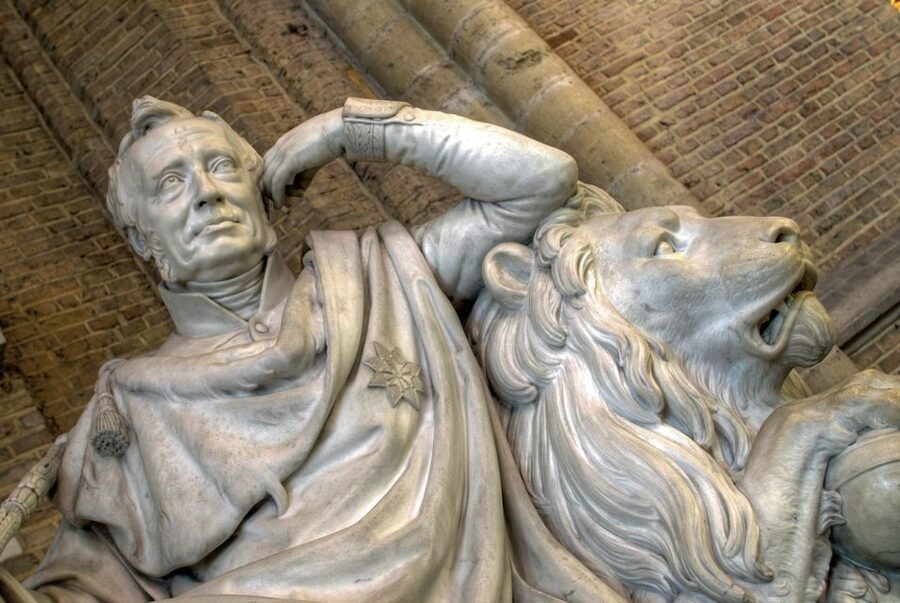
- See William of Orange’s mausoleum: The elaborate monument honors the man often called the Father of the Fatherland.
- Look for the royal burial place: Members of the Dutch Royal Family have been buried in the New Church since William of Orange was interred there in 1584.
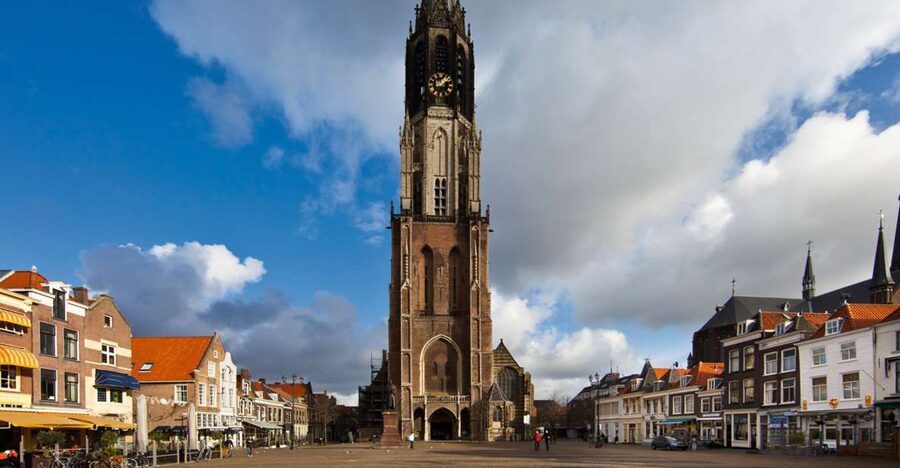
- Find Delft’s leaning tower: The Old Church tower tilts about two meters off center and is known as Leaning John.
- Visit Vermeer’s grave: Johannes Vermeer, famous for his paintings of Delft light, is buried in the Old Church.
- Plan around closing times: No new visitors enter during the final 15 minutes, and the tower closes one hour before the churches.
Why these two churches belong together
Delft’s Old and New Churches are not simply two old buildings with admission fees. Together, they tell a clear story about the city and the Netherlands. The Old Church reaches back to medieval Delft, while the New Church became tied to the House of Orange and the Dutch state.
The ticket costs $11 per person. That is a fair price if you appreciate architecture, Dutch history, royal connections, or the work of Vermeer. You get two substantial sites rather than one short interior visit, and most people can see both in about 1.5 hours.
I would not buy this ticket only to admire grand interiors. The value comes from the names, tombs, memorials, stained glass, and historical links inside. If you are already spending time in central Delft, the churches offer a quiet, meaningful pause from the city streets.
There is no guide included. That keeps the visit flexible, but it also means you need to read the maps and displays yourself. A handout map provides useful orientation, and the New Church uses video screens and written explanations to lay out historical timelines and key figures.
More Attraction Tickets in Delft
- Delft: Vermeer Centrum Delft Museum Entry Ticket
★ 4.6 · 189 reviews - Royal Delft: Delftblue Factory and Museum Admission Ticket
★ 4.5 · 145 reviews - The Hague: One Way Boat Ticket to or from Delft
★ 4.5 · 52 reviews
Start at the New Church and its royal tombs
Begin at the New Church, as required. Exchange your voucher at the ticket counter before entering the building or continuing to the Old Church. This small bit of planning matters because arriving at the Old Church first can send you back across the city.
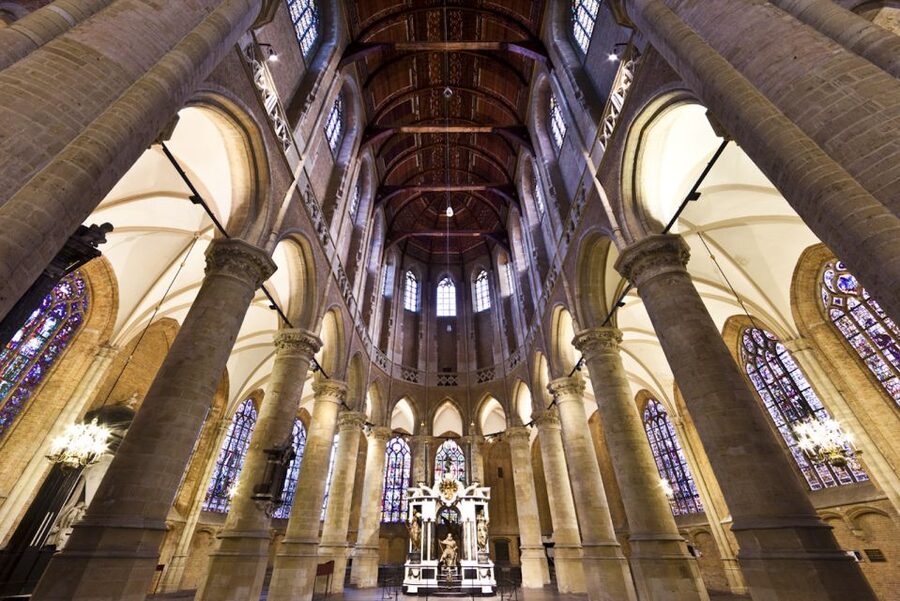
The New Church was completed in 1655. Its most important connection began earlier, in 1584, when William of Orange was buried here. Since then, the church has served as the burial place of members of the Dutch Royal Family.
That royal connection gives the New Church a different mood from the Old Church. Here, the focus is not only medieval worship. It is also national identity, dynastic power, and the story of the Netherlands as a modern country.
The main sight is the mausoleum of William of Orange, known as the Father of the Fatherland. Take time to walk around it rather than viewing it from a single angle. The route around the monument is designed to help you understand the people and events connected with it.
Video screens and written text explain historical timelines and important figures. This is especially helpful because a large tomb can otherwise become a blur of stone, symbols, and carved decoration. The displays give you a way to connect the monument with Dutch history.
A model of the burial crypt provides another useful visual aid. It helps explain what lies below the church and gives the royal burial place a sense of structure rather than mystery.
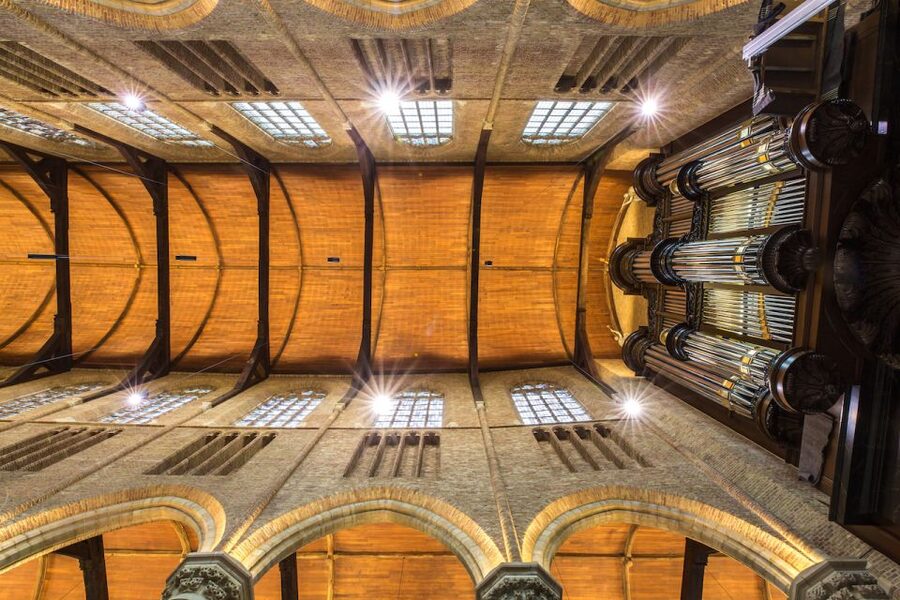
The building also contains a monumental organ. Even when no performance is taking place, its size adds weight to the room and reminds you that this is still a working church, not only a museum.
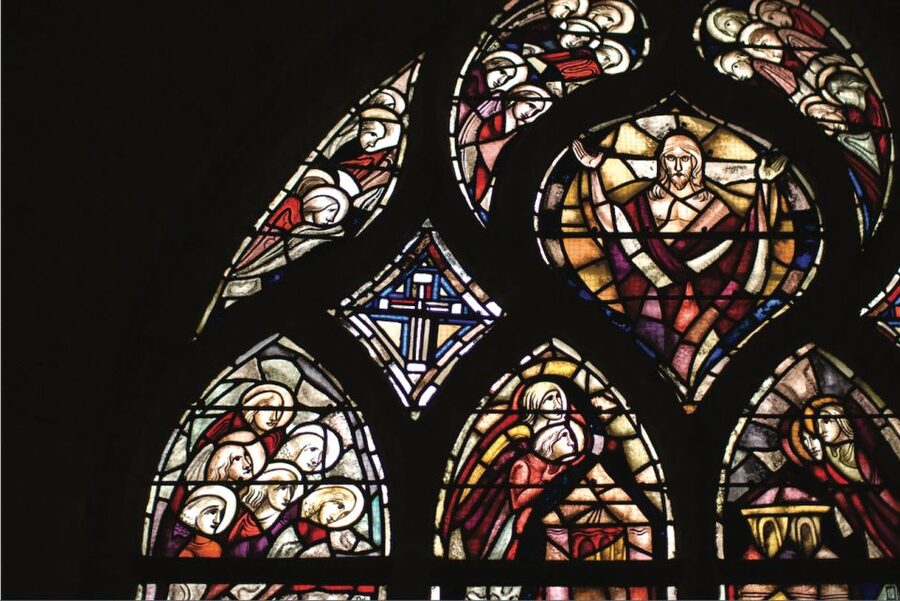
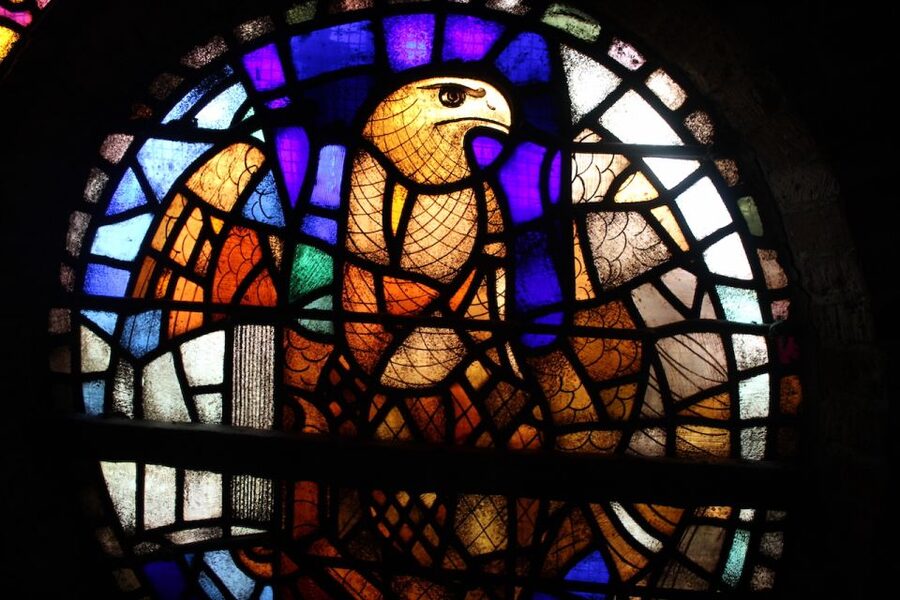
Look up at the stained-glass windows, too. Modern windows cast color across the older stone interior, creating an interesting contrast between new artistic work and centuries-old architecture. The effect is less about a single famous object and more about how the whole space has continued to change.
The New Church visit: what deserves your attention
You can approach the New Church in several layers:
- Begin with the general interior and its scale.
- Find William of Orange’s mausoleum.
- Follow the route around the monument.
- Read the timeline panels and watch the historical video material.
- Examine the model of the crypt.
- Look for the monumental organ and modern stained-glass windows.
This order works well because you first understand the setting, then focus on the church’s central historical figure. If you begin with every small detail, you may lose the larger story.
The New Church is the better half of the visit for anyone interested in the monarchy. It is also the place where the ticket feels most connected to national history. If your interest is mainly art, the stained glass and interior details may matter more than the royal tombs.
The atmosphere can change if the church is hosting another activity. Opening hours may be adjusted for events, so check the church agenda before setting out. This is not a place where you should assume every day follows the same schedule.
Walk through seven centuries at the Old Church
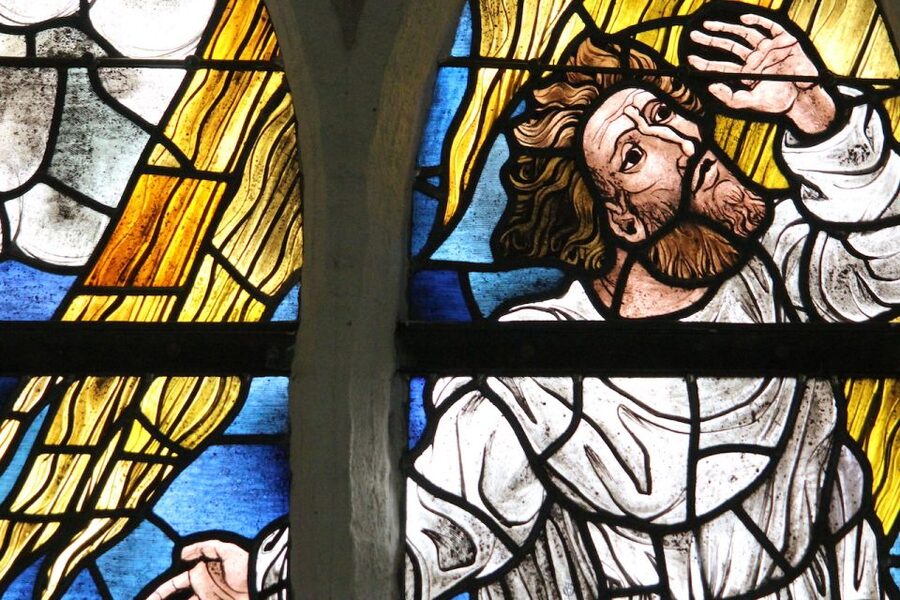
After the New Church, continue to the Old Church. The building has been part of Delft since 1246, and its age is easy to feel in the interior. The mood is more medieval, with old stone, tomb monuments, and a less formal connection to the modern Dutch monarchy.
The Old Church is famous for its leaning tower. The tower is about two meters off center, earning it the nickname Leaning John. From outside, the tilt is the obvious draw. Inside, it becomes part of the church’s character, an unusual reminder that historic buildings are not always perfectly straight or tidy.
The tower may be closed in poor weather. It also closes one hour before the churches, so do not leave it until the end of a late visit. The information provided confirms that the tower has an earlier closing time, but you should check current access when you exchange your ticket.
The Old Church holds the grave of Johannes Vermeer, the Delft painter known for his treatment of light. His burial place gives art lovers a direct link to the city that appears in his work. The church also contains the graves of Piet Hein and Antoni van Leeuwenhoek.
Those names broaden the visit beyond painting. You are seeing a place connected with Dutch art, maritime history, and scientific discovery. The tombs turn the church into a record of people who shaped the country in very different ways.
Take your time with the historic tomb monuments. Some may be easy to pass without a guide, especially if you are focused on the tower. The handout map can help you orient yourself and identify what deserves a closer look.
The stained-glass windows are another reason not to rush. They add color to the medieval setting and make the Old Church feel less like a frozen relic. The contrast between ancient stone, later memorials, and colored glass is part of the appeal.
More Delft trips:
- From Amsterdam: Rotterdam, Delft & The Hague Guided Day Tour
★ 4.2 · 1,765 reviews - Delft: Canal Cruise with Guided Commentary
★ 4.4 · 990 reviews - Rotterdam, Delft, the Hague, Madurodam from Amsterdam
★ 4.0 · 793 reviews - Rotterdam, Delft and The Hague Small Group Tour from Amsterdam
★ 4.5 · 599 reviews
What the 1.5-hour visit feels like
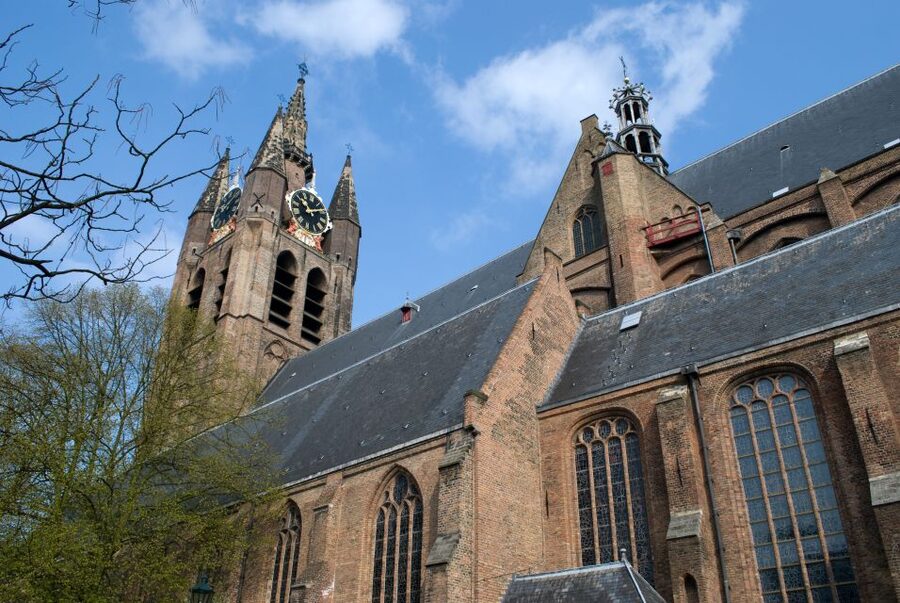
The stated duration is 1.5 hours, and that is a sensible amount of time for a thoughtful visit to both churches. You can move faster if you only want the major sights, but the experience has more value when you stop for the displays and graves.
A useful plan is to give slightly more time to the New Church if royal history interests you. The mausoleum, crypt model, timeline material, organ, and stained glass create several distinct points of attention.
At the Old Church, allow time for the leaning tower, Vermeer’s grave, other historic figures, tomb monuments, and windows. The Old Church may appeal more to you if you prefer medieval atmosphere over royal ceremony.
The visit is not physically demanding in the way a long walking tour would be. Still, the floors can be uneven or bumpy. Both churches are wheelchair accessible, but the surface may require care, particularly for anyone who finds rough flooring difficult.
Food and drinks are not allowed inside, and alcohol and drugs are prohibited. Plan to finish snacks before entering. These are active religious buildings as well as historic attractions, so respectful behavior is expected.
Where this ticket gives good value
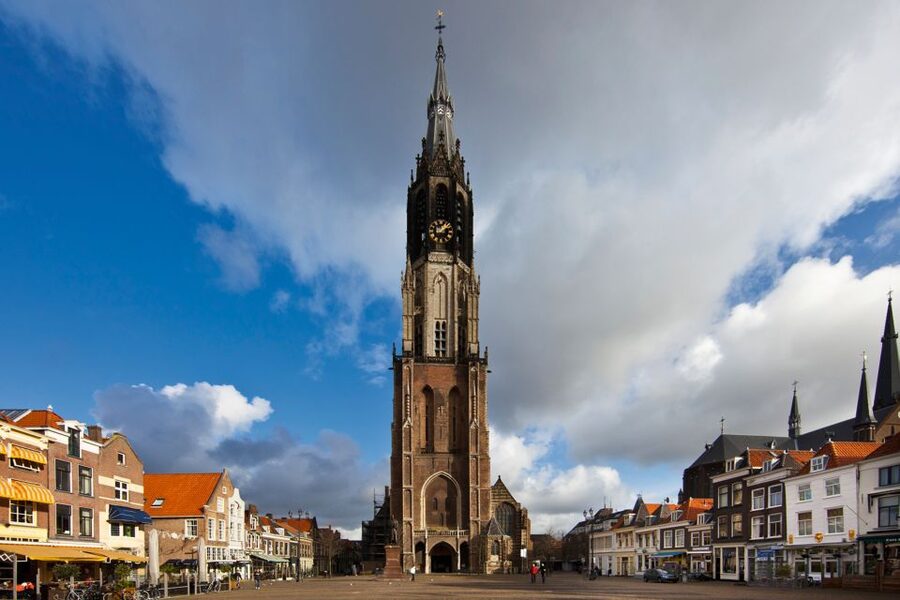
At $11, the ticket is priced well for a short cultural stop. You are paying for access to two major Delft landmarks, not just a view from the outside. The combination is especially useful if you want several kinds of history in one visit.
I see the strongest value in four areas:
For royal history: The New Church gives you a direct connection to the House of Orange and the burial place of Dutch royalty.
For Dutch national history: William of Orange’s mausoleum and the historical timelines help explain why Delft matters beyond its canals and ceramics.
For art history: Vermeer’s grave gives a personal connection to one of the city’s most important artists.
For architecture: The contrast between the Old Church’s medieval structure and the New Church’s later royal setting gives you two very different interiors.
The ticket is less useful if you are pressed for time and can spare only a few minutes. You would miss much of what makes the visit worthwhile. It is also not the best match if you want a live guide to explain every tomb and architectural detail.
The free-cancellation policy adds practical value if your schedule is uncertain. You can cancel up to 24 hours in advance for a full refund, and the reserve-now, pay-later option lets you keep plans flexible. Those terms do not replace checking opening hours, since church activities can still affect access.
Timing, closures, and the best way to plan
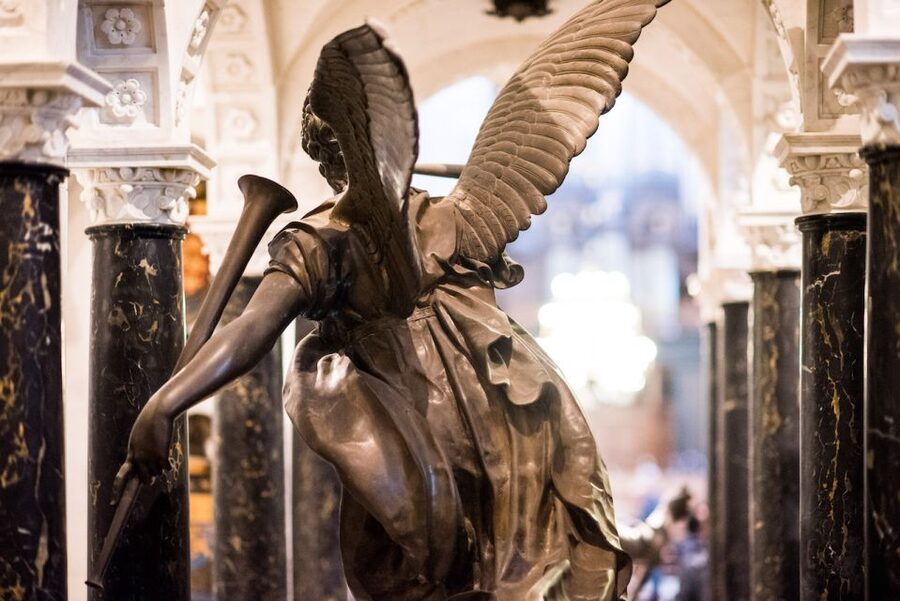
Visit the New Church first. This is not merely a suggestion. The voucher must be exchanged at the New Church ticket counter, so build that step into your route.
Avoid arriving close to closing time. No new visitors are admitted during the final 15 minutes, which can leave you with too little time for either building. If the tower is important to you, remember that it closes one hour earlier than the churches.
Weather can affect tower access. The tower may close in poor conditions, so treat it as an extra part of the visit rather than the only reason to buy the ticket.
Church activities can also change access or opening hours. Check the agenda before you go, particularly during holidays or on a day when a ceremony or special event may be taking place.
During the Christmas holidays, both churches are open from 10:00 a.m. to 5:00 p.m. on weekdays and Saturdays. That schedule is useful for planning, but you should still check for special changes.
Who should buy this Delft church ticket?
I would recommend it to you if you enjoy history that connects buildings with real people. William of Orange, members of the Dutch Royal Family, Johannes Vermeer, Piet Hein, and Antoni van Leeuwenhoek give the visit a strong human focus.
It also suits you if you want a quiet cultural stop without committing to a full-day tour. The 1.5-hour duration fits neatly into a day in Delft, and the two churches offer enough variety to keep the visit from feeling repetitive.
Families with older children may find the leaning tower and royal tombs easy starting points for questions. The video screens, written timelines, and crypt model in the New Church can also make the historical material easier to follow.
Art lovers should not expect a museum devoted to Vermeer. His grave is the connection here, not a collection of his paintings. If you want to study his artwork, this ticket will not replace a dedicated museum visit.
You should also think carefully about mobility needs. The churches are wheelchair accessible, but uneven or bumpy floors may make movement less comfortable. A little extra time and care can help.
Should you book both churches?
Yes, if you want more than a quick photograph of Delft’s famous buildings. The New Church gives you royal and national history, while the Old Church offers medieval character, a leaning tower, and the graves of major Dutch figures.
The ticket is worth buying for $11 when you can give the churches around 1.5 hours. Start at the New Church, exchange your voucher, check tower access, and keep an eye on closing times.
Skip it if your schedule is too tight, if you need a guide to bring the history alive, or if current repair work would spoil your visit. Otherwise, this is a well-priced way to connect Delft’s streets with the people and events that shaped the Netherlands.
FAQ
How much does entry to the Old and New Churches cost?
The ticket costs $11 per person.
How long does the visit take?
The stated duration is 1.5 hours.
Which church should I visit first?
You must visit the New Church first because you need to exchange your voucher at its ticket counter.
Is a guide included?
No. Admission to both churches is included, but a guide is not.
Can I visit the Old Church and New Church with one ticket?
Yes. One ticket includes admission to the Old Church and the New Church.
Can I see the Dutch Royal Family’s burial place?
Yes. The New Church is the final resting place of members of the Dutch Royal Family.
Is Johannes Vermeer buried in one of the churches?
Yes. Johannes Vermeer is buried in the Old Church.
Are the churches wheelchair accessible?
Yes. Both churches are wheelchair accessible, but the floors may be uneven or bumpy.
Just added around Delft
- From Amsterdam: Tulip Tour Keukenhof & City Tour Delft★ 4.2 · 20 reviews
- Private Day Tour: Rotterdam, Delft & The Hague From Amsterdam★ 5.0 · 22 reviews
- e-Scavenger hunt Delft: Explore the city at your own pace★ 4.5 · 26 reviews
- Workshop ‘Paint your own Delft Blue Tile!’★ 5.0 · 54 reviews
- Rotterdam, Delft and the Hague Day Trip from Amsterdam★ 4.5 · 55 reviews
- Delft: Craft Beer Tasting in Medieval Brewery with Snacks★ 4.4 · 67 reviews
- Rotterdam, Delft and The Hague Guided Tour from Amsterdam★ 4.0 · 74 reviews
- From Amsterdam: Day Tour to Rotterdam, Delft and The Hague★ 4.8 · 98 reviews
Delft Tours, compared.


Rotterdam, Delft, the Hague, Madurodam from Amsterdam
Read our review →
Rotterdam, Delft and The Hague Small Group Tour from Amsterdam
Read our review →

The Hague, Delft and Rotterdam Small-Group Tour (Max. 8 People)
Read our review →
Rotterdam, Delft, The Hague Day Tour Incl. Madurodam/Royal Delft
Read our review →Browse the lists this tour appears in