
REVIEW · DELFT TOURS
Royal Delft: Delftblue Factory and Museum
Delft Blue begins as plain white clay. At Royal Delft, I like watching that clay become hand-painted pottery, and I like the mix of working factory, museum, and courtyard garden. The main catch is that this is usually a self-guided audio tour, not a live tour with a guide beside you.
Founded in 1653, Royal Delft is the last original 17th-century Delft Blue factory in Delft still making Delftware by hand. You can see painters at their tables, learn why black paint turns blue in the kiln, and browse pieces ranging from traditional plates to modern designs. At $21 per person, it offers good value if you care about craft and Dutch design, though the high prices in the shop may come as a surprise.
In This Review
- Key points to know before you go
- Why Royal Delft is more than a Delftware shop
- Entering the 1653 building and museum
- Seeing clay become Delft Blue
- Hand painting, skill, and the human scale
- The showroom, shopping, and the true cost of Delftware
- A break at Brasserie 1653 and the courtyard garden
- Getting there from Delft, The Hague, Rotterdam, or Amsterdam
- Is $21 good value for 1.5 hours?
- Who will enjoy Royal Delft most?
- Should you book Royal Delft?
- FAQ
- How long does the Royal Delft visit take?
- What does the $21 ticket include?
- Is a live guide included?
- Which languages are available for the audio guide?
- Can I watch people painting Delft Blue?
- Is Royal Delft wheelchair accessible?
- How far is Royal Delft from Delft train station?
- Is Royal Delft open during the Christmas and New Year period?
Key points to know before you go
- Hand painting is the star: Watch craftsmen paint fine lines on white earthenware, with the level of detail making the process much more impressive than a display case alone.
- The audio tour lasts about one hour: It is available in English, Dutch, Spanish, Chinese, French, German, Italian, and Japanese.
- The factory floor is part of the visit: You do not only see finished pottery. You also see clay preparation, moulds, sanding, painting, and production areas.
- Working hours affect what you see: More artists may be present in the morning. Afternoon visits can be quieter, with only a few people working.
- The courtyard garden adds breathing room: Brasserie 1653 serves coffee, high tea, snacks, and lunch overlooking the garden.
- Delft is easy to reach from here: The train station is about a 15-minute walk away, and Market Square is about 20 minutes on foot.
Why Royal Delft is more than a Delftware shop
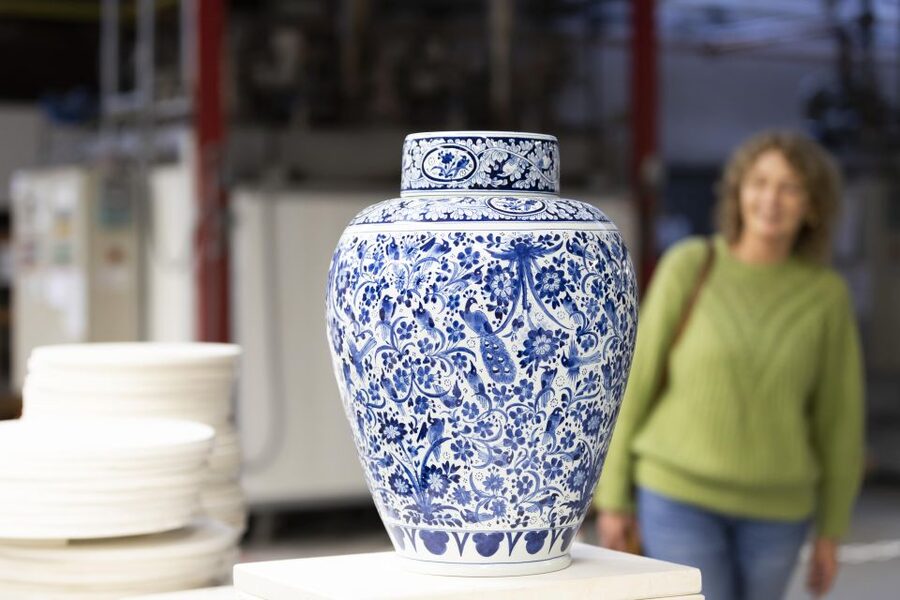
Delft Blue is often reduced to windmills, canal houses, and blue-and-white souvenirs. Royal Delft gives you the useful backstory behind those familiar objects. You see how the tradition began, how it survived, and how the factory still combines old methods with current designs.
The company was established in 1653, making it almost 400 years old. It is also the last surviving Delft factory from the 17th century that continues to make Delft Blue by hand. That fact gives the visit a clear purpose: you are not simply looking at old ceramics, you are seeing a living production tradition.
I especially like the link between the historic pieces and the people still working today. A museum display can tell you that an object took great skill to make. Watching a painter carefully trace a design onto a vase or plate makes that skill easier to understand.
The visit is also friendly to people who are not serious pottery fans. One family found the audio tour interesting even for a child who normally dislikes museums. That is a useful sign. The subject is specific, but the process is visual and easy to follow.
More Museums in Delft
- Delft: Vermeer Centrum Delft Museum Entry Ticket
★ 4.6 · 189 reviews - Royal Delft: Delftblue Factory and Museum Admission Ticket
★ 4.5 · 145 reviews - Vermeer Centrum Delft Museum Admission Ticket
★ 4.0 · 45 reviews
Entering the 1653 building and museum
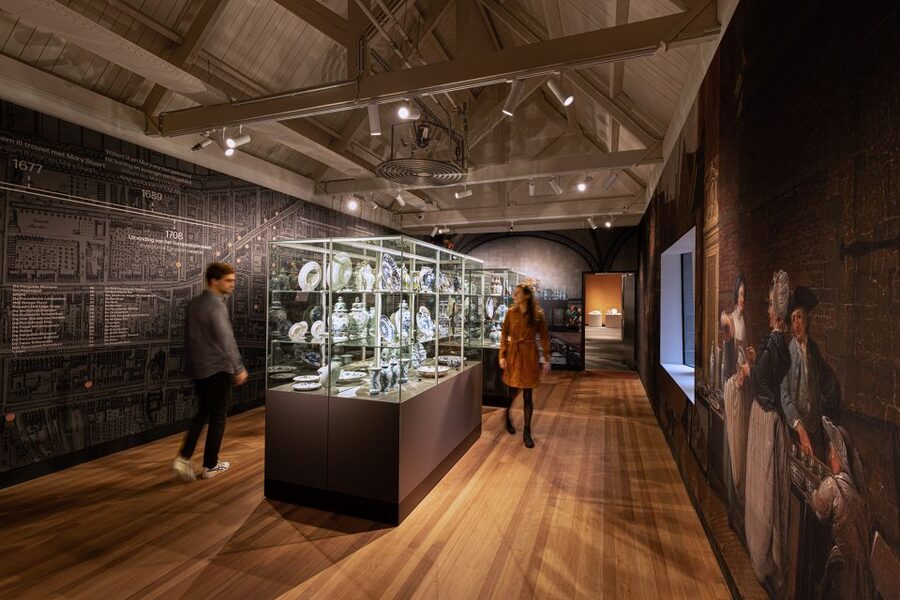
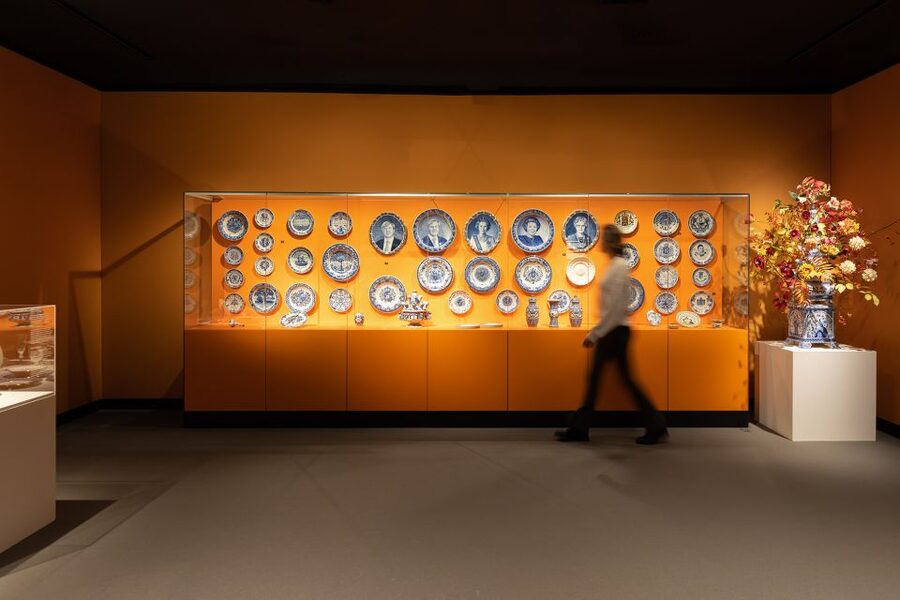
Your visit begins with the history of Royal Delft and Delft Blue earthenware. The displays include antique and modern pieces, so you can compare older designs with the company’s current work.
The audio guide supplies the main explanations. It lasts about an hour and can be used in eight languages: English, Dutch, Spanish, Chinese, French, German, Italian, and Japanese. The pace works well for a self-guided visit, and you can move at your own speed rather than wait for a group.
If you prefer reading, the museum also has written information and directional signs. One useful advantage is that you are not tied to a fixed tour time. You can stop longer at a favourite piece, move quickly through a section, or skip the audio and read instead.
The displays are carefully arranged, but the museum section may feel less exciting if you want constant action. One honest assessment is that the museum can seem a little quiet or even dull when the audio does not hold your attention. A live guide would add more conversation and allow questions.
That matters because the included audio tour is not the same as a guided tour. Royal Delft offers guided tours, but a guide is not included with this basic entry. At one scheduled demonstration, visitors expected an explanation but instead watched a staff member paint in silence. I would treat the demonstrations as chances to watch the craft, not as guaranteed talks or personal lessons.
Seeing clay become Delft Blue
The factory is the strongest part of the visit for most people. Here, you can see the authentic production process rather than only the finished product.
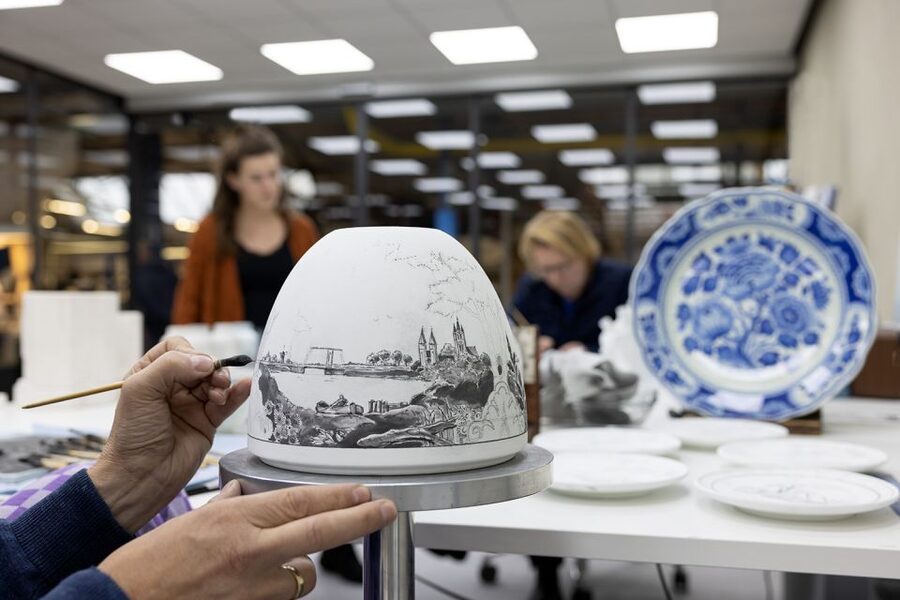
Clay is poured into handmade moulds. Newly formed pieces are sanded and prepared. Painters then work on the white earthenware with small brushes and careful control. The work looks calm, but the detail demands patience and a very steady hand.
One of the most interesting facts explained during the visit is that the pottery is painted in black ink, which turns blue in the kiln. That small detail changes how you look at every Delft Blue object in the showroom. The famous blue is not simply brushed onto a finished blue surface. It develops through the firing process.
The factory floor also helps you understand why each hand-painted item costs more than a mass-produced souvenir. You can watch the attention given to a single vase or plate, sometimes with only one or two workers visible. A painter may be focused on detailed lines and curves while another person sands a newly made pitcher.
Do not expect a busy production line at every hour. The number of craftsmen at work can vary, and afternoon visitors may see fewer artists than those who arrive in the morning. On some days, very little active work may be visible. If watching painters is your main reason for coming, an early visit is the sensible choice.
Even when few people are working, the factory areas remain worthwhile because the process displays and videos explain what happens at each stage. Still, it is fair to say that the visit is best when you catch an artist painting in front of you.
Hand painting, skill, and the human scale

The hand-painted work is what separates this place from a standard ceramics museum. You can stand close enough to appreciate the difference between a printed pattern and brushwork made by a trained painter.
The designs may look simple from a distance. Blue outlines on white pottery have a clean, restrained appearance. Up close, you notice fine curves, repeated details, and the control needed to keep the pattern balanced around a rounded surface.
I like that the factory lets you see craft without turning the process into a theatrical show. Workers are focused on their jobs, not performing for a crowd. That can make the visit feel authentic, although it also means demonstrations may not include much spoken explanation.
This is an important expectation to set. You might see a painter quietly working rather than receive a step-by-step presentation. For some people, that quiet concentration is the point. For others, it may feel under-explained.
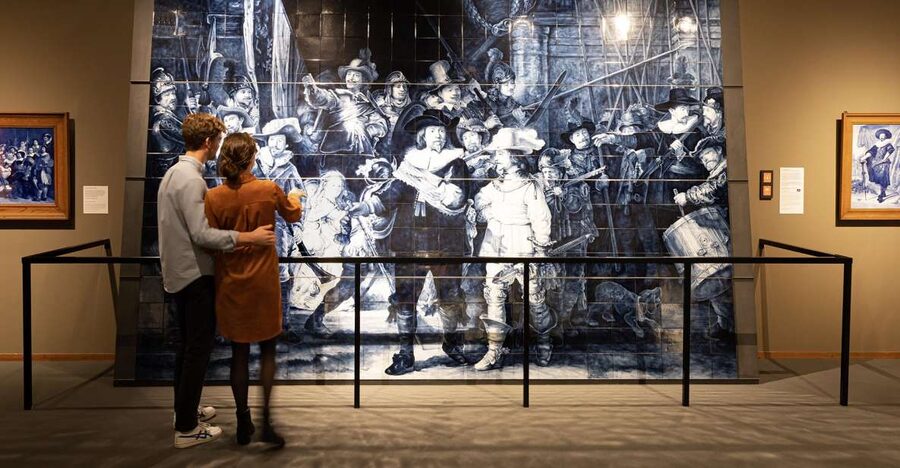
Large works help add drama to the museum displays. One notable piece is a life-sized tiled version of Rembrandt’s The Night Watch. It gives you a better sense of what Delft tiles can do beyond small plates and souvenir tiles.
Royal Delft has also used the tile format for large collaborative projects. In 2018, 365 people helped paint a Delft Blue tile painting during the company’s anniversary year. Exhibitions have also explored modern design, including the Nouveau Blue project.
More Delft trips:
- From Amsterdam: Rotterdam, Delft & The Hague Guided Day Tour
★ 4.2 · 1,765 reviews - Delft: Canal Cruise with Guided Commentary
★ 4.4 · 990 reviews - Rotterdam, Delft, the Hague, Madurodam from Amsterdam
★ 4.0 · 793 reviews - Rotterdam, Delft and The Hague Small Group Tour from Amsterdam
★ 4.5 · 599 reviews
The showroom, shopping, and the true cost of Delftware
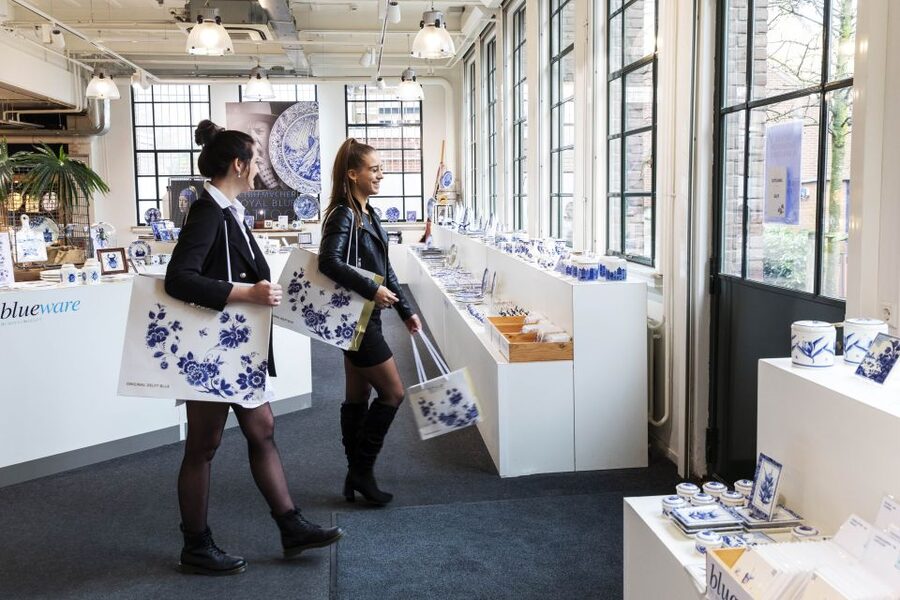
The showroom displays the full Royal Delft collection, including classic hand-painted Delftware, modern designs, and souvenirs. It is attractive even if you have no plan to buy anything.
The shopping selection is useful because it lets you compare levels of decoration and price. You can find smaller keepsakes alongside more elaborate pieces. The traditional designs will appeal to anyone looking for a distinctly Dutch object, while the modern collection may suit you if classic windmills and canal scenes feel too familiar.
Be prepared for the quality to cost more. Delftware is not bargain pottery, and several visitors were surprised by the prices. That is not necessarily a criticism. The cost reflects hand painting, skilled labour, and the Royal Delft name, but you should know that the $21 admission does not make the merchandise inexpensive.
The shop offers gift wrapping and can pack and ship purchases home. That is a real convenience if you are buying fragile ceramics and do not want to protect them in your luggage. I would ask about shipping before making a large purchase and allow time for the staff to prepare the parcel.
For a souvenir, you do not need to buy the biggest or most ornate piece. A small tile or modest item can carry the story of the factory without turning into a major expense. The best purchase is the one you will actually display, not simply the most traditional object on the shelf.
A break at Brasserie 1653 and the courtyard garden
After the museum and factory, you can pause at Brasserie 1653. It overlooks a beautiful courtyard garden and serves coffee, high tea, snacks, and lunch.
This stop helps pace the visit. The audio tour and factory walk take about 1.5 hours in total, but the café gives you a reason to stay longer. If you are visiting Delft as part of a full day, it can be a pleasant place to rest before walking into the centre.
The garden is also a welcome change from the indoor displays. It gives you a quieter setting to look over any purchases, have a drink, or plan the next part of your day. Food and drinks are not included in the admission, so treat the brasserie as an optional extra.
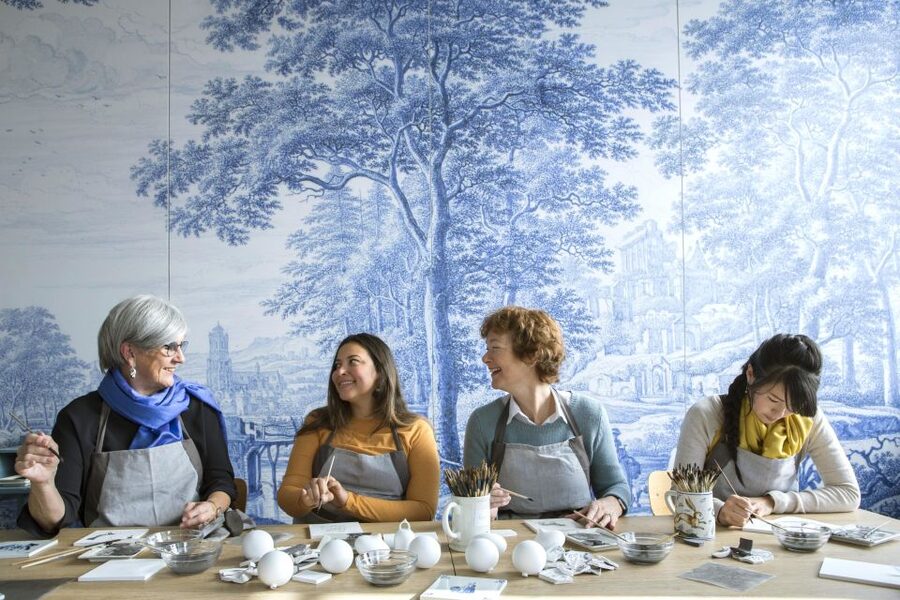
A workshop may also be available as a separate activity. One family enjoyed painting its own Delft tile with help from friendly teachers, then had the finished tiles sent to them. The workshop is not part of the $21 entry ticket, but it could be a good choice if you want to make something rather than only observe.
Getting there from Delft, The Hague, Rotterdam, or Amsterdam
Royal Delft is at Rotterdamseweg 196, 2628 AR, Delft. The building is easy to reach by several methods.
From Delft train station, allow about 15 minutes on foot. Market Square is about 20 minutes away by foot, so you can pair the factory with Delft’s central sights. The walk makes the museum a practical part of a city day rather than an isolated outing.
From The Hague or Rotterdam, the train journey takes about 30 minutes. From Amsterdam, plan on roughly 1.5 hours by train. That makes Royal Delft a reasonable side trip from either nearby city, but Amsterdam visitors should allow enough time for both travel and the museum visit.
Free parking is available around the building. Public bus stops are nearby, and a canal boat or Delft City Shuttle can take you into town quickly. If you use the shuttle or boat, check the operating times for your date.
The building is wheelchair accessible, and one family found the staff helpful when visiting with a wheelchair. That makes the visit easier for people who need step-free access, though it is still wise to confirm current arrangements if you have specific mobility needs.
Is $21 good value for 1.5 hours?
At $21, Royal Delft is fairly priced if you use the whole visit. You receive admission to the museum and factory, a one-hour audio tour, and free Wi-Fi. The value comes from seeing actual production areas and hand painting, not from the museum alone.
The price feels stronger when several artists are working and you can watch the process. It feels weaker if the factory is quiet and you mainly read displays or listen to the audio. That is why timing matters, especially if you have flexibility in your day.
I would compare it with the price of a standard museum ticket plus the cost of a separate craft demonstration. Royal Delft combines those elements in one visit, although the demonstration may be silent and informal rather than a full presentation.
The ticket also includes access to a company with a long, specific connection to Delftware. If you are already interested in Dutch design, ceramics, or traditional crafts, the admission is easy to justify. If you only want a quick Delft souvenir, you may prefer seeing the showroom without spending 1.5 hours on the full visit.
Free cancellation up to 24 hours before the visit and the option to reserve now and pay later give you some planning flexibility. The museum closes early at 4 p.m. on December 24 and December 31. It is closed all day on December 25, December 26, and January 1.
Who will enjoy Royal Delft most?
I would recommend this experience to you if you like:
- Traditional crafts and working factories
- Dutch art, design, and decorative objects
- Museums that let you move at your own pace
- Shopping for carefully made souvenirs
- Short cultural visits that fit into a day in Delft
- Hands-on workshops, if you choose to add one
Families can do well here because the pottery process is visual. The audio guide keeps the visit organised, and the factory gives children something concrete to watch. The subject may appeal less to anyone who wants a fast-paced attraction or a live storyteller.
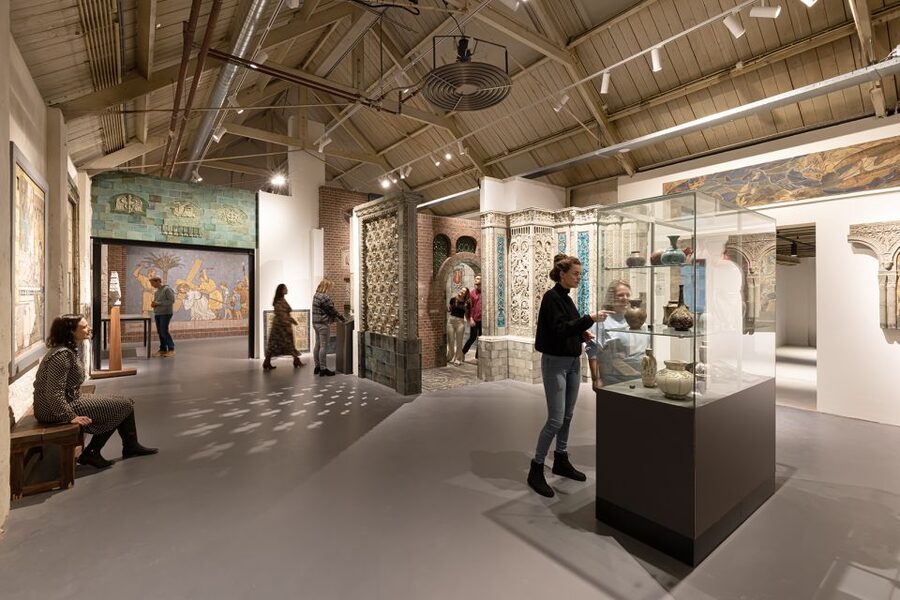
Art and design fans should allow extra time for the details. Even if you do not buy anything, the antique and modern collections show how Delft Blue has changed while keeping its familiar blue-and-white identity.
The experience also suits you if you want something beyond Delft’s canals and Market Square. The factory is close enough to combine with the old town, but it offers a different look at the city’s identity.
Should you book Royal Delft?
Book it if you want to see Delft Blue being made, not just displayed. The hand painting, mould work, factory floor, and historic objects make this one of the more meaningful ways to understand the city’s famous pottery.
I would visit in the morning if watching craftsmen is your top priority. Expect a self-guided audio experience, and do not assume a demonstration will include a talk or questions. Add time for Brasserie 1653, and consider the optional workshop if you want a personal keepsake.
Skip it if you have little interest in ceramics, dislike audio tours, or need a lively guided performance. For everyone else, Royal Delft offers a focused, accessible visit with enough history, craft, and shopping to earn its place on a Delft day.
FAQ
How long does the Royal Delft visit take?
The experience lasts about 1.5 hours. The included audio tour takes about one hour, with additional time for the museum, factory, and showroom.
What does the $21 ticket include?
The ticket includes entry to Royal Delft, the museum and factory areas, a one-hour audio tour, and free Wi-Fi.
Is a live guide included?
No. The standard ticket includes an audio guide, not a guided tour. Guided tours are available separately.
Which languages are available for the audio guide?
The audio guide is available in Spanish, Chinese, Dutch, English, French, German, Italian, and Japanese.
Can I watch people painting Delft Blue?
Yes. You can watch master painters and craftsmen working, although the number of artists present can vary. More artists may be working in the morning than in the afternoon.
Is Royal Delft wheelchair accessible?
Yes. Royal Delft is wheelchair accessible, and staff have been described as helpful to visitors using a wheelchair.
How far is Royal Delft from Delft train station?
The train station is about a 15-minute walk from Royal Delft. Market Square is about 20 minutes away on foot.
Is Royal Delft open during the Christmas and New Year period?
Royal Delft closes at 4 p.m. on December 24 and December 31. It is closed all day on December 25, December 26, and January 1.
More Museums
- Amsterdam: Van Gogh Museum Ticket
★ 4.7 · 52,054 reviews - Moco Museum Amsterdam Entrance Tickets with Banksy & More
★ 4.4 · 10,088 reviews - Amsterdam: The Upside Down Museum Entrance Ticket
★ 4.4 · 9,506 reviews - Amsterdam: Red Light Secrets Museum Entry Ticket
★ 4.2 · 5,722 reviews
Just added around Delft
- From Amsterdam: Tulip Tour Keukenhof & City Tour Delft★ 4.2 · 20 reviews
- Private Day Tour: Rotterdam, Delft & The Hague From Amsterdam★ 5.0 · 22 reviews
- e-Scavenger hunt Delft: Explore the city at your own pace★ 4.5 · 26 reviews
- Workshop ‘Paint your own Delft Blue Tile!’★ 5.0 · 54 reviews
- Rotterdam, Delft and the Hague Day Trip from Amsterdam★ 4.5 · 55 reviews
- Delft: Craft Beer Tasting in Medieval Brewery with Snacks★ 4.4 · 67 reviews
- Rotterdam, Delft and The Hague Guided Tour from Amsterdam★ 4.0 · 74 reviews
- From Amsterdam: Day Tour to Rotterdam, Delft and The Hague★ 4.8 · 98 reviews
Delft Tours, compared.

Rotterdam, Delft, the Hague, Madurodam from Amsterdam
Read our review →
Rotterdam, Delft and The Hague Small Group Tour from Amsterdam
Read our review →

The Hague, Delft and Rotterdam Small-Group Tour (Max. 8 People)
Read our review →

Rotterdam, Delft, The Hague Day Tour Incl. Madurodam/Royal Delft
Read our review →Browse the lists this tour appears in