
REVIEW · LEIDEN TOURS
Discover Leiden with a self-guided Outside Escape city game tour!
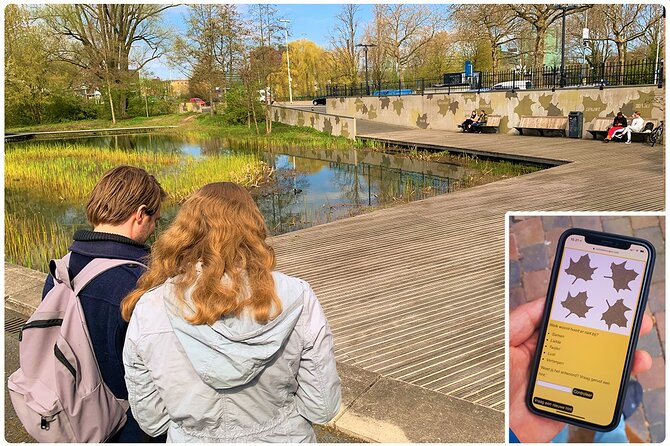
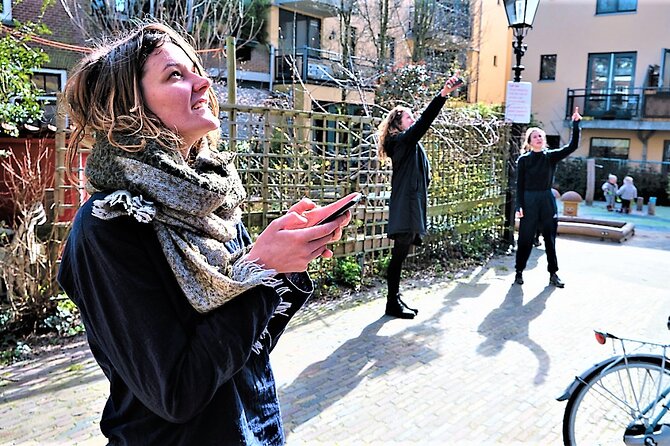
Leiden turns sightseeing into a puzzle. This self-guided Outside Escape city game leads you through old streets, canals, monuments, and quiet corners while your group solves clues on a smartphone. You start when you like, pause whenever you wish, and finish at your own pace.
I like the freedom to stop for coffee, views, or even a museum visit without losing the game. I also like the route’s mix of well-known sights and smaller historical places, including Molen de Put, Rembrandtplaats, Doelenpoort, and Koornbrug. The main consideration is that you need internet access on your phone, and some riddles may feel tricky if you rush or skip the written clues.
The game costs $30.04 per group of up to six people, not per person. That makes it good value for a family or group of friends, especially since most of the route is free to explore. You should allow about one to two hours, though the flexible format makes a longer afternoon possible.
In This Review
- Key points about the Leiden city game
- Why this is a good way to see Leiden
- Starting at Beestenmarkt near Leiden station
- Molen de Put: a windmill with a modern story
- Rembrandtplaats and the young Rembrandt statue
- Doelenpoort: solving a riddle beside an old city gate
- Pieterskerkhof and the quieter side of the route
- Van der Werfpark and the 1886 memorial
- Koornbrug and the final riddles
- The Burcht detour is worth considering
- How difficult are the puzzles?
- Price, group size, and practical value
- Who should book this Leiden experience?
- Cancellation and booking details
- Should you book Outside Escape Leiden?
- FAQ
- Where does the Outside Escape Leiden game start?
- Where does the experience end?
- How long does the Leiden city game take?
- How many people can join one booking?
- What do I need to play?
- Can I cancel for a full refund?
Key points about the Leiden city game
- Six historic stops: Visit Molen de Put, Rembrandtplaats, Doelenpoort, Pieterskerkhof, Van der Werfpark, and Koornbrug.
- A private group activity: Your group plays together, with no strangers joining you.
- Flexible timing: Start between 7:00 AM and 10:00 PM, Monday through Sunday, during the stated operating period.
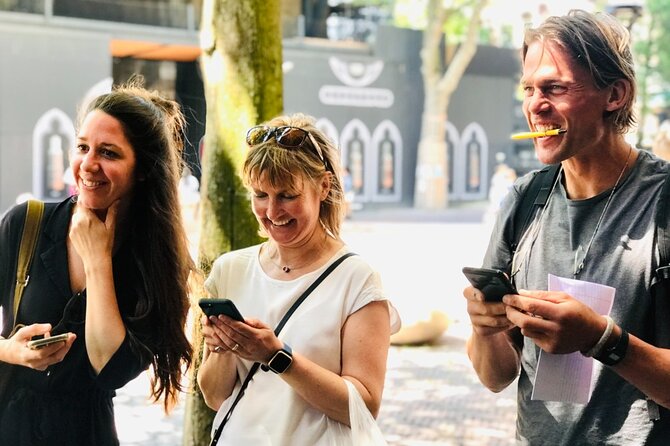
- Smartphone-based play: You need a smartphone with internet access, but no special equipment is listed.
- Two levels of challenge: The basic version is approachable, while the challenging version asks more of your observation and puzzle-solving skills.
- A useful detour: The Burcht, Leiden’s citadel, is not one of the six main stops, but the route’s creators specifically recommend the detour for its views.
Why this is a good way to see Leiden
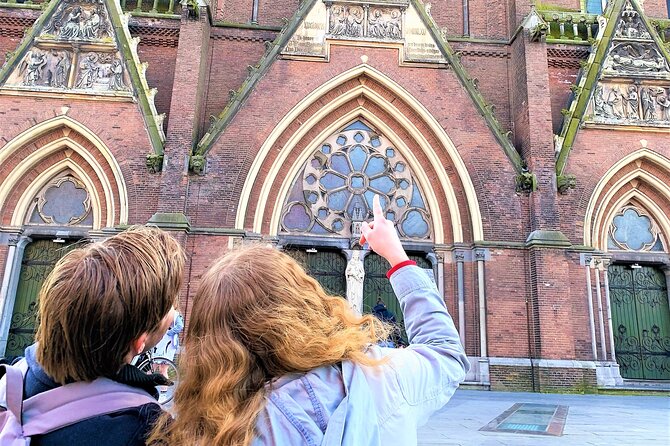
Leiden is easy to walk, but its sights can feel scattered if you simply follow a map. This game gives your walk a purpose. You are not only moving from one postcard view to the next. You are watching for details, reading short pieces of information, and solving riddles tied to the places around you.
That format works particularly well in Leiden because the city rewards close attention. A gate, bridge, statue, or windmill can look like a quick photo stop when you pass by. The puzzle encourages you to pause and inspect it.
The route also avoids the stiffness of a fixed guided tour. You do not have to keep up with a guide or reach the next point at a set time. If you want to stop for a drink, sit in a square, or visit the Hortus Botanicus along the way, you can pause the game and continue afterward.
I would describe the challenge as thoughtful rather than frantic. There is no countdown pressing you forward. The clues can be difficult, but the basic version is intended to remain manageable. If you choose the challenging version, read every section carefully, even after you have worked out where to go. Missing part of the text can cost you points.
More self-guided tours:
- 90 minutes Self-Guided Walking tour with puzzles in Leiden
★ 4.0 · 15 reviews - Amsterdam: 75 Minute City Canal Cruise with Audio Guide
★ 4.4 · 17,501 reviews - Amsterdam: Royal Palace Entry Ticket and Audio Guide
★ 4.6 · 6,475 reviews
Starting at Beestenmarkt near Leiden station
The game begins at Beestenmarkt, in Leiden. This is a practical starting point because it places you close to public transportation and gets you into the city quickly.
You receive confirmation at booking, then use your phone to access the game. Since this is self-guided, you should make sure your phone is charged and has internet access before you begin. The supplied information does not list a separate guide, printed map, or physical game kit, so your smartphone is the key tool.
The private format is useful for several types of groups. A couple can work through the clues together, while a family or group of friends can divide the searching and debating. With a maximum of six people per booking, the price becomes especially attractive for a full group.
You can start any time during the stated hours, from 7:00 AM to 10:00 PM. The advertised playing time is roughly one to two hours. In practice, you can stretch it by taking breaks, stopping at cafés, or adding the Burcht and other city sights.
Molen de Put: a windmill with a modern story
The first stop takes you past Molen de Put, a replica of the Standerdmolen mill associated with Jan Jansenzoon Put. The current mill dates from 1987, so this is not an untouched medieval machine. That fact makes the stop more interesting, not less. It shows how Leiden has rebuilt and preserved symbols of its past.
The visit itself is brief, listed at about three minutes. You will mainly be passing the windmill rather than entering it. That keeps the opening section moving and gives you an early taste of the game’s method: observe the setting, absorb a small piece of context, and continue.
This stop is a good reminder to look beyond the biggest monuments. The route is not built only around grand interiors or ticketed attractions. Several of its best moments come from public places that you can see for free.
Rembrandtplaats and the young Rembrandt statue
Rembrandtplaats honors Leiden as the birthplace of Rembrandt. Here, the game gives you a longer pause, about 25 minutes, and one of its central riddles.
The statue shows a young man looking at a portrait. It draws on Rembrandt’s self-portrait from 1629, made in his Leiden studio. That detail gives the square a personal link to the artist. You are not simply being told that Rembrandt was born in Leiden. You are being pointed toward the young artist’s early identity and working life.
This is likely one of the strongest stops for people who enjoy art, but you do not need to be an art expert to take part. The puzzle is designed around observation and the information provided through the game. Give yourself time to read before answering.
The 25-minute estimate suggests that the stop is more than a quick glance. If your group likes to discuss clues, this is a natural place to slow down. It may also be the point where younger participants become more engaged, since the statue and riddle turn a historical fact into a task.
More Leiden trips:
- Leiden: Guided City Canal Cruise
★ 4.6 · 724 reviews - Leiden: Cruise through the Historic City Center with Guide
★ 4.6 · 445 reviews - Leiden: Windmill and Countryside Cruise near Keukenhof
★ 4.3 · 179 reviews - Leiden: Electric Boat Rental
★ 4.8 · 168 reviews
Doelenpoort: solving a riddle beside an old city gate
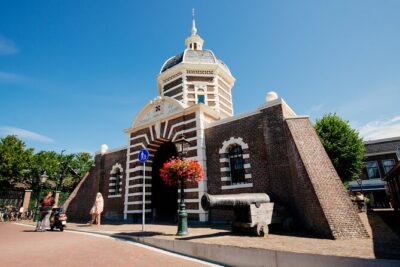
At Doelenpoort, you pass through the story of Leiden’s defenses. The gate dates from the 17th century and is one of the route’s more tangible reminders of the old city.
The game gives you about 15 minutes here for another riddle. That timing is long enough to inspect the gate and consider the clue without making the stop feel like a lecture.
For me, this is the kind of place where a game adds real value. On a normal walk, you might photograph the arch and move on. With the riddle in hand, you have a reason to notice its design and location. You also begin to understand how the stops connect. The route is not simply a collection of random landmarks. It builds a sense of Leiden through public monuments and pieces of the former city.
The drawback is that puzzle play can divide a group. One person may want to solve everything quickly while another wants to read the historical text. The best approach is to agree early that everyone should have time to look and think.
Pieterskerkhof and the quieter side of the route
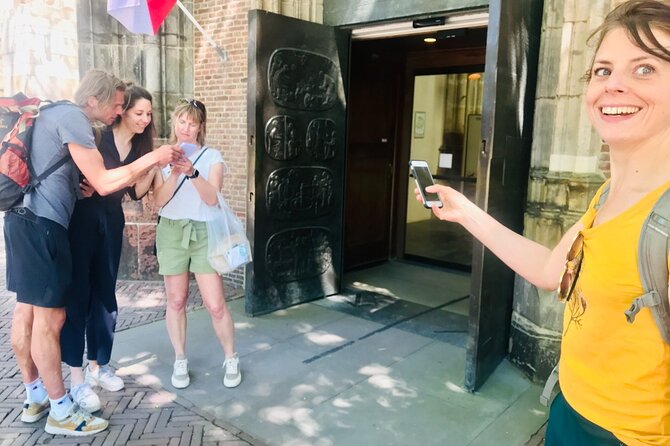
The next stop takes you past Pieterskerkhof cemetery, with about 15 minutes set aside for another riddle. This is a quieter portion of the walk and gives the experience a different mood from the open square at Rembrandtplaats or the architectural focus of Doelenpoort.
The cemetery setting adds a reflective pause. The game continues to ask you to connect place and clue, but the atmosphere is less about a single famous figure and more about Leiden’s older civic and religious surroundings.
You should not expect an admission-based attraction here. The listed stops are free, and the game is built around viewing places from the public route. That keeps the total cost down, though it also means the experience depends on your willingness to stop, read, and observe rather than enter a series of buildings.
Van der Werfpark and the 1886 memorial
Van der Werfpark provides a green break in the walk. The park was created in 1886 and has a statue of Pieter Adriaansz. van der Werff at its center. The game allows about ten minutes here, with another riddle waiting.
This stop helps vary the pace. After several architectural and historical points, you get open space and a statue set within a park. It is a useful place to regroup if your team has been arguing over clues, and it may suit families who need a little room between puzzle stops.
The park also shows how Leiden’s public spaces carry layers of memory. The game does not rely only on famous museum pieces. It uses a park, a cemetery, a gate, and a bridge to make the city itself the playing field.
If you want to stretch the outing, this is one of several places where a short pause makes sense. The game has no time pressure, so you do not need to sacrifice the pleasure of the walk for a perfect score.
Koornbrug and the final riddles
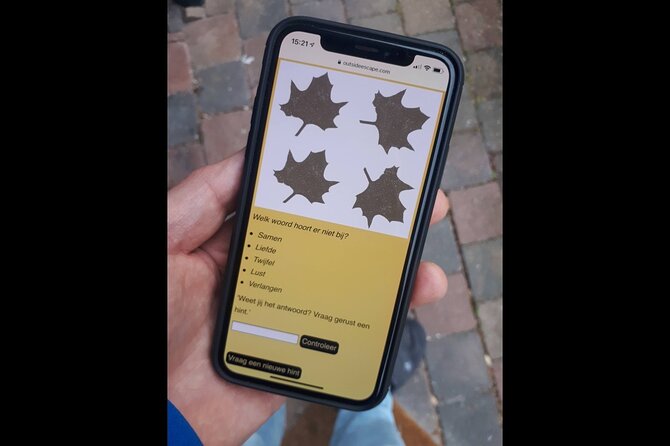
The final stop is Koornbrug, a fixed stone arch bridge with a double roof over the Nieuwe Rijn. It connects Burgsteeg with Koornbrugsteeg and provides the setting for the last riddles.
The stop is listed at about five minutes, so the ending is meant to be compact. You will be looking closely at the bridge and working through the final questions before reaching the finish at Burgsteeg 14.
A covered bridge is a fitting final setting for a city game. It is visually distinct, easy to recognize, and tied to the waterways that shape Leiden. The endpoint also gives the route a clear finish rather than leaving you to wonder if you have completed the game.
The experience includes a designed lock as part of its ending. That small physical element gives the conclusion more character than simply receiving a final message on your phone. It turns the last few minutes into an actual finish.
The Burcht detour is worth considering
The main route covers six stops, but I would strongly consider adding the Burcht detour. The route’s creators recommend it for its views, and the flexible format makes the addition simple.
The Burcht is not listed as one of the required stops, so you should treat it as an optional extra rather than assume it is included in the advertised one to two hours. Still, it can make the outing feel more complete, particularly if you want a broader look over Leiden.
This is also where the no-time-pressure format matters most. You can pause the game, take the detour, stop for a drink, or visit the Hortus Botanicus, then return to the route. That freedom is one of the experience’s best practical features.
How difficult are the puzzles?
The puzzles are meant to be challenging without becoming frustrating. The basic version is described as tricky enough for a satisfying game, while a challenging version is available for groups that want more work.
I would choose the basic version if your group includes casual players, younger participants aged 15 or older, or people who want the sightseeing to remain the main event. Choose the challenging version if your group likes hunting for clues and does not mind spending longer on a riddle.
The most useful tip is simple: read every piece of text carefully. Even if you already know the next location, the remaining information may contain a clue or affect your score. It is easy to skim once you feel ahead, but that can mean missing part of the game.
Because the game is private, you can also talk openly and test ideas without worrying about another group waiting behind you. That makes the experience more relaxed than a competitive escape room.
Price, group size, and practical value
At $30.04 per group of up to six people, the cost is reasonable for a private city activity. A full group pays roughly $5 per person, while a couple pays about $15 each. The value improves if you want an activity that fills an afternoon rather than a short attraction with a separate admission charge.
All six listed stops are free to view, and the activity does not require entrance tickets for those locations. You are paying for the game structure, the riddles, the route, and the historical information that connects the walk.
The format also saves you from committing to a fixed start time. You can begin any day between 7:00 AM and 10:00 PM within the stated operating period. That is useful if your Leiden visit includes a museum, lunch reservation, or train schedule.
The main cost consideration is not financial. It is your tolerance for phone-based sightseeing. If you prefer a human guide who explains each place directly, this will feel too independent. If you like solving problems and setting your own pace, the format offers good value.
Who should book this Leiden experience?
I would recommend it to couples, families with participants aged 15 and up, and groups of friends who want more structure than a normal walk. It is also a good choice if someone in your group already knows Leiden. The route can reveal places you have passed before without really examining.
The game suits people who want history in small, usable pieces. You get information about Rembrandt, the city gate, the park, the windmill, the cemetery, and the bridge, but you are not sitting through a long talk. You learn while moving.
It may not suit you if you want a fully guided tour, a museum-heavy experience, or a route with no problem-solving. The puzzles are central, not an optional extra. You should also be comfortable using a smartphone with internet access for the whole activity.
The experience is offered in English. Service animals are allowed, public transportation is nearby, and the activity is described as suitable for most participants. The supplied information does not provide a detailed accessibility assessment, so anyone with specific mobility needs should confirm route conditions before booking.
Cancellation and booking details
You receive confirmation when you book. The experience offers free cancellation if you cancel at least 24 hours before the local start time.
Cancellations or changes made less than 24 hours before the start time are not accepted for a refund. Keep that deadline in mind if your plans in Leiden depend on weather or train connections.
Should you book Outside Escape Leiden?
Book it if you want to explore Leiden on foot, prefer a private activity, and enjoy puzzles that make you look twice at ordinary city details. The strongest reasons are the flexible schedule, low group price, free public sights, and route through places connected to Rembrandt and Leiden’s past.
I would choose the basic version for a relaxed sightseeing day and add the Burcht detour if you have time. Read every clue, keep your phone charged, and resist the urge to rush from one answer to the next.
Skip it if you want a traditional guide or find smartphone games distracting. For everyone else, this is a smart way to turn a walk through Leiden into a shared challenge, with enough history and scenery to make the solving worthwhile.
FAQ
Where does the Outside Escape Leiden game start?
The game starts at Beestenmarkt, 2312 Leiden, Netherlands.
Where does the experience end?
The route ends at Burgsteeg 14, 2312 JS Leiden, Netherlands.
How long does the Leiden city game take?
The estimated duration is one to two hours. You can take longer because the game has no time pressure and can be paused.
How many people can join one booking?
The price covers one private group of up to six people.
What do I need to play?
You need a smartphone with access to the internet. The experience is offered in English.
Can I cancel for a full refund?
Yes. You can cancel for a full refund up to 24 hours before the experience start time. Changes or cancellations made less than 24 hours before the start time are not accepted.
Just added around Leiden
- Historical Leiden: Private Tour with Local Guide★ 5.0 · 3 reviews
- Historical Private Tour of Delft and Leiden including Transfer★ 5.0 · 4 reviews
- Historical Leiden: Private Walking Tour with a Local Guide★ 4.8 · 5 reviews
- Leiden: Paddleboard Rental to Explore Leiden’s Canals★ 4.4 · 5 reviews
- Windmill cruise through Warmond★ 4.5 · 7 reviews
- Genuine Leather Tote Bag Workshop in Leiden★ 5.0 · 9 reviews
- Dutch Windmills & Polder Walking Tour★ 5.0 · 10 reviews
- Leiden: Secret Stories Guided Walking Tour★ 5.0 · 12 reviews
Leiden Tours, compared.
Cruise through the Historic City Center with Guide
Read our review →

Leiden Tour with Live guide and Visit to Rembrandt’s First Studio
Read our review →
e-Scavenger hunt Leiden: Explore the city at your own pace
Read our review →
90 minutes Self-Guided Walking tour with puzzles in Leiden
Read our review →Browse the lists this tour appears in