

REVIEW · MAASTRICHT TOURS
Highlight Running Tour
Maastricht is made for seeing on the run. This 90-minute tour links Roman-era streets, old walls, leafy parks, grand squares, and the Maas in one brisk circuit. I like the small group, listed at a maximum of eight participants, and I like that guide Raoul adjusts the pace instead of treating the outing like a race. You cover far more ground than on foot, yet still have time for stories and photo stops. The one catch is simple: you need a moderate level of fitness, and cobblestones are part of the deal.
At $29.02 per person, this is a sensible way to get your bearings early in a Maastricht stay. The route packs in major sights without museum tickets or extra admission costs. Pickup is offered from hotels in postal codes 6211 and 6221, though the advertised meeting point is at Beluga Loves You, Plein 1992 12.
In This Review
- Key points at a glance
- Why running is a smart way to see Maastricht
- Starting at the former ceramic factory
- Stokstraat and the Roman heart
- Jekerkwartier: Maastricht at a slower pace
- Helpoort and the old city wall
- City Park and the western Jekerkwartier
- Vrijthof: Maastricht’s grand civic stage
- Market Square and the Minckeleers statue
- Sphinxpassage and Maastricht’s industrial reset
- Sint Servaasbrug and views toward Wyck
- What the pace and group size mean for you
- Price, timing, and practical value
- Who should book this Maastricht run?
- Should you book the Highlight Running Tour?
- FAQ
- How long does the Highlight Running Tour last?
- What language is the tour offered in?
- Where does the tour start?
- Does the tour end at the starting point?
- Is hotel pickup available?
- How many people can join the tour?
- Do I need a high level of fitness?
- Can I cancel for a full refund?
Key points at a glance
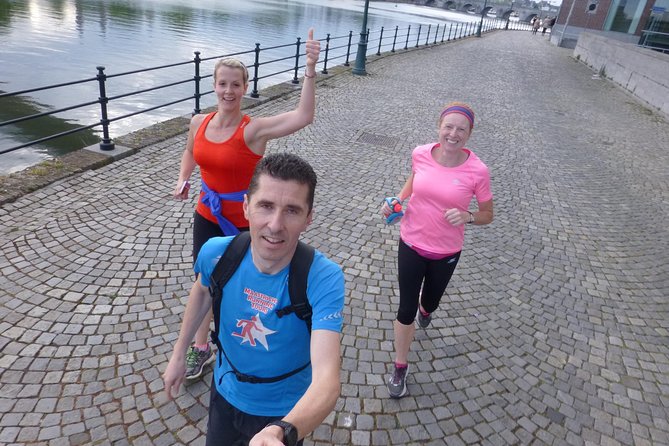
- Raoul sets the pace: The guide has adjusted runs to individual ability and interests, making this suitable for beginners as well as regular runners.
- A city tour with real mileage: You move from the former ceramic-factory district to Roman-era streets, medieval walls, major squares, and Sint Servaasbrug.
- Small groups matter: The booking information lists a maximum of eight participants, while the tour description mentions up to 12, so confirm the final group size when booking.
- Historic Maastricht in one loop: The route includes Stokstraat, Jekerkwartier, Helpoort, Vrijthof, Market Square, Sphinxpassage, and the Maas bridge.
- A useful morning introduction: You get exercise, orientation, and local context before spending the rest of the day exploring on your own.
- Digital photos are included: You receive free digital running-tour pictures after the experience.
Why running is a smart way to see Maastricht
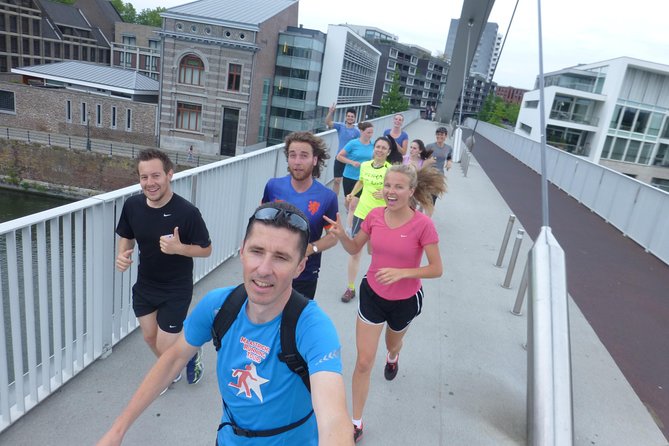
Maastricht’s center is compact, but its sights are spread across several distinct quarters. A normal walking tour can cover the same ground, but at a slower pace and often with less time for the city’s outer edges. This run connects the old center, Jeker district, parks, river crossing, and former industrial zone in one outing.
I see the main value in the route’s variety. You are not simply jogging around a park. You pass Roman-era streets, a surviving medieval gate, churches, a town hall, old mansions, former industrial buildings, and views toward Wyck. The guide’s commentary gives these places a useful frame, so the run works as both exercise and a first orientation to Maastricht.
The pace is intended to suit all levels. That does not mean effortless. You should be comfortable being active for about an hour and a half, with repeated stops and starts. The official guidance asks for moderate physical fitness, and the city’s cobblestones require sensible shoes and attention.
More Maastricht trips:
- e-Scavenger hunt Maastricht: Explore the city at your own pace
★ 4.5 · 110 reviews - Maastricht: Museum of Illusions Entry Ticket
★ 4.2 · 82 reviews - Maastricht Privat Sightseeing City Walk
★ 5.0 · 76 reviews
Starting at the former ceramic factory
The tour begins at Beluga Loves You on Plein 1992, in a modern residential area built on the grounds of the former ceramic factory. This is a fitting place to begin because Maastricht is not only an old city of churches and walls. It also has a strong industrial past, and the opening section shows how former working spaces have been given a new purpose.
The start area helps set up the contrast you will see throughout the run. Modern apartments and reused factory grounds lead into old quarters, then back toward another redeveloped industrial zone later in the route. You get a quick sense that Maastricht is a layered city rather than a collection of isolated monuments.
Hotel pickup is available if your hotel is in postal code 6211 or 6221. Otherwise, you meet at the stated starting point. Since the tour ends back there, you do not need to arrange a second pickup across town.
Stokstraat and the Roman heart
The first historic section takes you through the Stokstraat quarter, a group of streets between the central shopping area and Jekerkwartier. These lanes lead toward Onze Lieve Vrouweplein, and the area marks the part of Maastricht associated with its Roman-era heart.
This is a good place to begin the history lesson because the streets feel close and old, but the route does not ask you to stand still for long. You run through the quarter, then pause for a short explanation. The supplied timing gives roughly five minutes at each listed stop, which keeps the outing moving while leaving room for the guide to point out details.
The limitation is that five minutes is not enough for a full archaeological discussion or a leisurely look inside nearby buildings. Think of this as a preview. You will learn where the oldest layers of the city sit, then can return later at walking speed.
Jekerkwartier: Maastricht at a slower pace
The Jekerkwartier is described as an original, authentic neighborhood in the city center. It gives the route a more residential feel after the opening streets, and it helps show why Maastricht rewards wandering beyond its largest squares.
You pass through the quarter in two parts. The first section introduces the neighborhood, while a later stretch takes you through its western side. That second passage includes cobbled lanes, pieces of the former city walls, handsome mansions, and decorative gable stones.
The cobbles are part of the charm, but they are also the practical issue here. Running on uneven stone asks more of your ankles and knees than a smooth pavement route. Keep your pace comfortable, watch your footing, and do not feel pressured to match a faster runner. The guide’s willingness to adapt is particularly useful in this part of town.
A completely different kind of day out in Maastricht:
- 2H Walking Tour Maastricht
★ 4.8 · 57 reviews - Maastricht 2-Hour Walking Tour | Discover The City With A Local
★ 4.5 · 57 reviews - Valkenburg: Municipal Cave Guided Tour
★ 4.5 · 47 reviews - Maastricht Hidden Gems Tour Uncover the Unexpected
★ 4.7 · 44 reviews
Helpoort and the old city wall
At the Helpoort, you reach the oldest land gate in the Netherlands and the only one in Maastricht that remains visible. This is one of the route’s clearest historical anchors. The gate makes the medieval defensive system easy to picture, especially when paired with the wall remains and parks that follow.
The stop is short, but its position in the route works well. You have already seen older streets and the Jeker neighborhood. Now you encounter a physical piece of the city’s defenses rather than only historic façades.
Do not expect a long visit inside a monument. Admission is listed as free because the tour is an exterior running route, not an entry-based museum tour. If Helpoort interests you, note the location and plan to return independently with more time.
City Park and the western Jekerkwartier
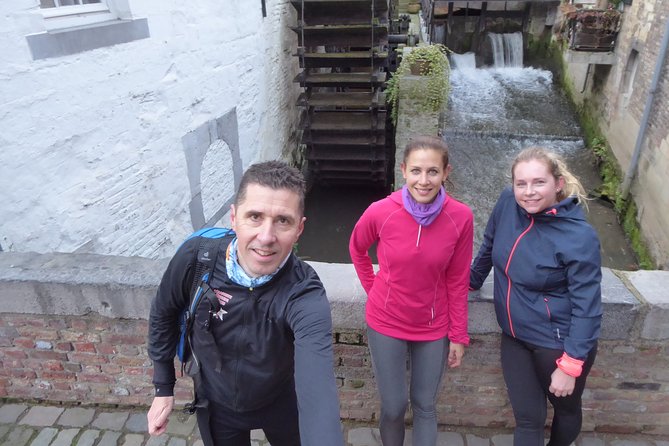
The route follows the ancient walls through Maastricht’s city parks. This is where the run gets a welcome change of rhythm. After narrow lanes and hard cobbles, the parks provide a more open setting and a chance to breathe while the guide points out additional historic features.
The parks also show how old defenses can become part of daily city life. Walls, paths, trees, and quiet corners occupy the same space, making this section feel less like a formal monument visit and more like a normal part of Maastricht life.
From there, you run through the western side of Jekerkwartier. This is one of the most visually rewarding portions of the route, with picturesque stone streets, old wall remains, mansions, and gable stones. The short stop format means you see a lot quickly. I would treat it as a sampler that helps you decide where to return later for a slow walk.
Vrijthof: Maastricht’s grand civic stage
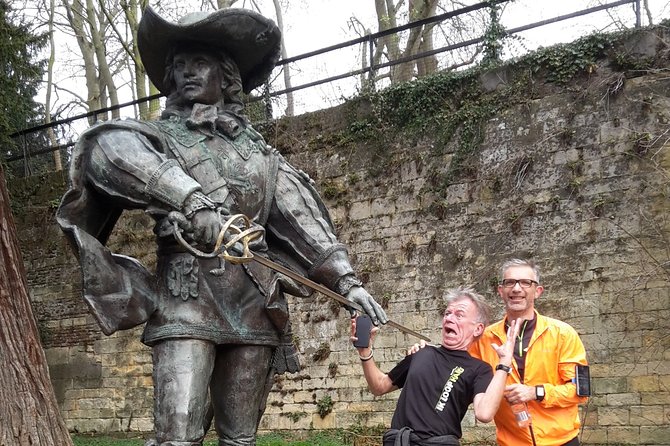
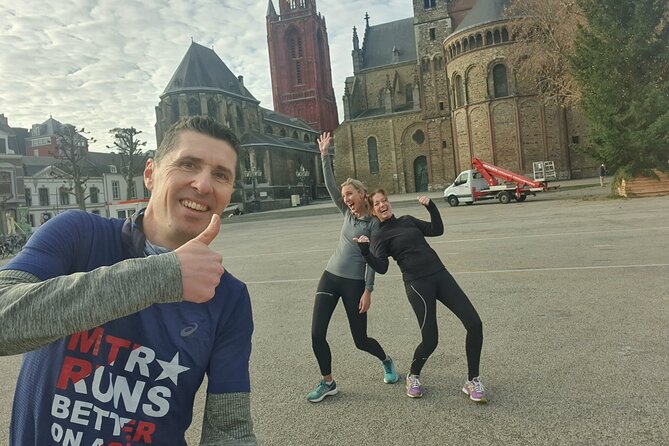
Vrijthof is Maastricht’s main square and one of the route’s biggest open spaces. The square is known for André Rieu’s annual concerts, but the guide’s focus reaches beyond events. You see the Basilica of Saint Servatius, St. John’s Church, and the former governor’s palace around the square.
This stop gives the run a strong architectural center. The churches provide an immediate sense of scale, while the palace adds a civic and political layer. After the intimate streets of Jekerkwartier, Vrijthof feels broad and formal.
A concert square is rarely at its most atmospheric when empty, and the tour does not include a performance or church entry. Still, the guide can explain why the buildings matter, and the square is an easy place to revisit later. If you plan to explore the basilica or St. John’s Church inside, set aside separate time.
Market Square and the Minckeleers statue
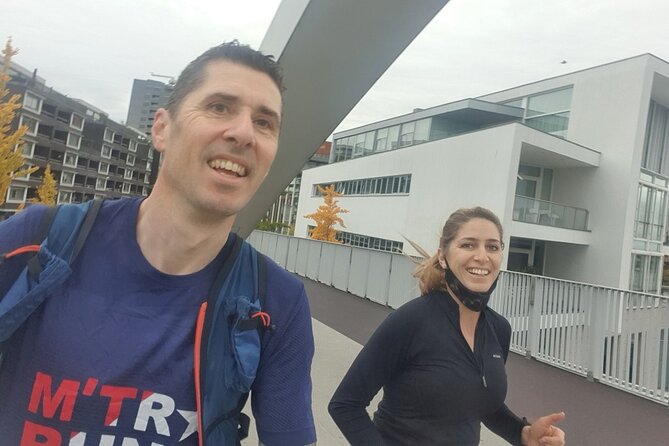
Next comes Market Square, home to Maastricht’s attractive town hall and the statue of Minckeleers, a local inventor associated with gaslight. This is a practical stop because it shifts your attention from religious and defensive buildings to civic life and scientific progress.
The town hall gives the square a clear visual focus. The Minckeleers statue adds a smaller detail that you might miss on a quick self-guided run. These are the kinds of facts that make a guide useful: you can pass through a square in seconds, but a short explanation gives you a reason to look twice.
Again, the tour is not a full architectural lecture. The five-minute stop keeps the schedule moving, which is helpful if you want to see many districts in one morning. It is less useful if you prefer to study façades or take a long series of photographs.
Sphinxpassage and Maastricht’s industrial reset
The Sphinxpassage returns you to the former ceramic-factory area, now converted into modern housing and a new cultural center. This stop ties directly back to the beginning of the tour and gives the route a clear sense of place.
The former industrial zone is important because it shows a different side of Maastricht. You are not only seeing preserved medieval streets. You are also seeing how the city has reused industrial land for contemporary life and culture.
This part will appeal to you if you enjoy urban change as much as old architecture. If your main goal is medieval Maastricht, it may feel less essential than Helpoort or Vrijthof. Even so, the contrast makes the route more complete.
Sint Servaasbrug and views toward Wyck
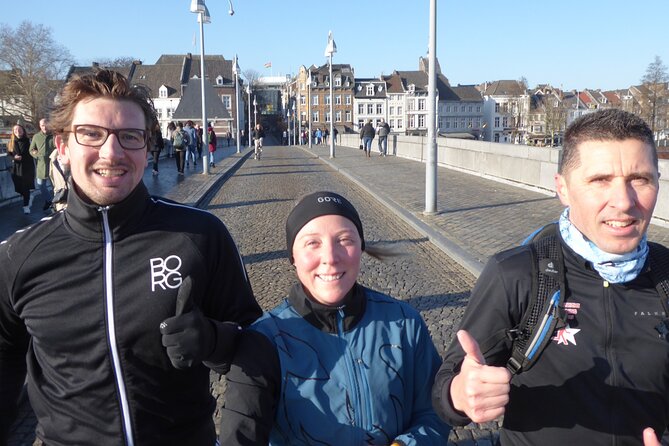
The final major stop is Sint Servaasbrug, described as the oldest bridge in the Netherlands. The bridge crosses the Maas and opens views toward Wyck, the district on the opposite bank. You also hear about the former local brewery once owned by Heineken.
This is a strong ending because the bridge connects several parts of Maastricht at once. You have seen the old center, the Jeker district, and the former factory zone. From the bridge, the city’s position along the river becomes easier to understand.
The bridge is also a working city crossing, not a quiet viewing platform. Stay aware of other people and traffic while stopping for pictures. The route returns to the starting point, so the bridge is not the end of your logistics, only the last major sightseeing point before the loop closes.
What the pace and group size mean for you
The tour description allows a maximum of 12 people, while the additional booking information gives a maximum of eight. That difference is worth clarifying before you pay. Either figure still suggests a personal outing, especially compared with a large walking group.
The strongest feature is the guide’s pacing. Raoul has adjusted the run to a participant’s speed and changed the route to match interests. One family outing included an early start, plenty of information, and even a taste of herring along the way. That kind of small local touch cannot be guaranteed, but it shows the tour can be more flexible than a fixed sightseeing circuit.
A separate account describes covering a great deal during close to two hours, even though the listed duration is about 90 minutes. I would plan on 90 minutes, then keep a little spare time if you hope for a highly customized route or extended conversation.
You also receive free digital running-tour photos. They are a pleasant extra, particularly if you are traveling alone and would otherwise have few pictures of yourself in the city. The main value, though, is the guide’s route and personal attention, not the photographs.
Price, timing, and practical value
At $29.02 per person, the tour costs less than many conventional guided city activities while covering a wide area. You get a guide, a planned route, local commentary, digital pictures, and hotel pickup in the two listed postal-code areas. There are no attraction admission fees built into the route, because the stops are viewed from public spaces.
The value is best if you want orientation and exercise at the same time. You can use the run to mark places for later visits, such as Helpoort, Vrijthof, the churches, Market Square, or the bridge. It is less valuable if you want indoor access, long photo stops, or detailed talks at each sight.
English is the offered language. A mobile ticket makes the meeting process straightforward, and the tour operates near public transportation. Service animals are allowed. Severe weather is the stated reason for cancellation, so check conditions before setting out.
Free cancellation is available up to 24 hours before the start time for a full refund. Changes or cancellations made inside that 24-hour window are not accepted for a refund. Confirmation is immediate in most cases, but bookings made within two days of the outing may receive confirmation within 48 hours, subject to availability.
Who should book this Maastricht run?
I would choose this experience if you like active sightseeing, want a quick introduction to Maastricht, and prefer a guide who can respond to your pace. It is especially useful on your first morning, when you want to understand how the Roman center, Jekerkwartier, old walls, river, and newer districts fit together.
Families and mixed-ability groups may also find it practical because the pace can be adjusted. The early family outing and Raoul’s flexible approach suggest that the run is not reserved for serious athletes.
I would hesitate if you dislike uneven streets, need a completely relaxed pace, or want to enter historic buildings. The tour gives you exterior views and short explanations. It does not replace a church visit, museum visit, or slow architectural walk.
Should you book the Highlight Running Tour?
Book it if you want to see a lot of Maastricht without sitting on a bus, and if moving at a comfortable running pace sounds better than walking. The route is broad, the price is fair, and Raoul’s personal approach is the feature that makes the experience work.
Before booking, confirm the expected group size and hotel pickup details. Wear supportive shoes, allow for cobblestones, and keep your schedule slightly flexible. If you meet those conditions, this is a lively and efficient introduction to Maastricht, with enough historical detail to guide the rest of your stay.
FAQ
How long does the Highlight Running Tour last?
The listed duration is approximately 1 hour and 30 minutes. A customized outing may take longer, so allow extra time if your schedule is tight.
What language is the tour offered in?
The tour is offered in English.
Where does the tour start?
The stated meeting point is Beluga Loves You, Plein 1992 12, 6221 JP Maastricht, Netherlands.
Does the tour end at the starting point?
Yes. The activity ends back at the meeting point.
Is hotel pickup available?
Yes. Pickup is offered from hotels in postal codes 6211 or 6221, with no extra travel required for the tour start.
How many people can join the tour?
The tour description gives a maximum of 12 people, while the additional booking information lists a maximum of eight. Confirm the final group size when booking.
Do I need a high level of fitness?
No high athletic level is stated, and all running levels are welcome. You should have a moderate level of physical fitness.
Can I cancel for a full refund?
Yes. You can cancel at least 24 hours before the local start time for a full refund. Cancellations or changes made less than 24 hours before the start time are not refunded or accepted.
Just added around Maastricht
- e-Scavenger hunt Valkenburg: Explore the city at your own pace★ 4.5 · 20 reviews
- Maastricht Medieval Mystery: Interactive City Game & Tour★ 4.0 · 25 reviews
- Kerkrade: Discovery Museum Entry Ticket★ 4.6 · 25 reviews
- Explore Maastricht with Passionate Tour Guides★ 3.9 · 32 reviews
- Hoensbroek: Entry Ticket to Hoensbroek Castle★ 4.5 · 37 reviews
- GaiaZOO Entry Ticket★ 4.4 · 39 reviews
- Maastricht Hidden Gems Tour Uncover the Unexpected★ 4.7 · 44 reviews
- Valkenburg: Municipal Cave Guided Tour★ 4.5 · 47 reviews
Maastricht Tours, compared.

e-Scavenger hunt Maastricht: Explore the city at your own pace
Read our review →
Maastricht 2-Hour Walking Tour | Discover The City With A Local
Read our review →
Maastricht Hidden Gems Tour Uncover the Unexpected
Read our review →
Browse the lists this tour appears in