
REVIEW · MAASTRICHT TOURS
Maastricht Private Walking Tour With A Professional Guide
Maastricht rewards a slower first look. I like the private format, which keeps your group together and lets you ask questions without competing with a crowd. I also like the broad story: Roman origins, medieval churches, wartime Maastricht, and the Maastricht Treaty all fit into one clear introduction. The main drawback is time. Two hours gives you a useful overview, but entrance fees are extra and the tour may feel brisk if you want to explore every church and museum.
This is a walking tour, not a ride around town, so comfortable shoes matter. The tour is priced at $275.65 for up to 15 people, which can be fair for a full group but expensive for one or two people. A small service problem has also occurred in the past when a guide confused this booking with another cancellation, so I would check the meeting details before setting out.
In This Review
- Key points to know before booking
- Why Maastricht works well on foot
- Markt, City Hall, and Maastricht’s civic center
- From the Dominicans to the churches of Saint Servatius
- Vrijthof, Hendrik van Veldeke, and the city’s cultural side
- Helpoort and the medieval city walls
- Sint Servaasbrug and the city’s changing fortunes
- War, refuge, and German occupation
- The Maastricht Treaty and the European Union
- What the two-hour format really gives you
- Price, group size, and real value
- Who should book this Maastricht walk?
- FAQ
- How long is the Maastricht private walking tour?
- What is the price of the tour?
- Where does the tour start?
- Where does the tour finish?
- Is the tour private?
- Can the tour be customized?
- Are entrance fees included?
- Is the tour suitable for people using public transportation?
- What is the cancellation policy?
- Should you book it?
Key points to know before booking
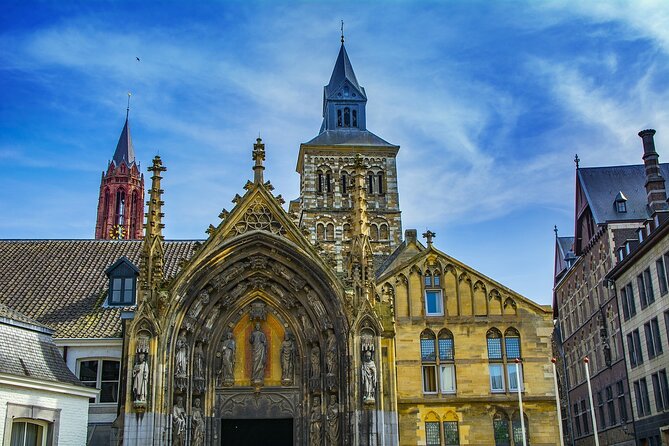
- Roman beginnings to the Euro: The guide connects Maastricht’s ancient past with its role in creating the modern European Union.
- Private group of up to 15: You avoid a bus tour and can request changes during the walk.
- Two-hour introduction: The route covers many major sights, but it is designed for orientation rather than long interior visits.
- Starts at Markt 52: The walk begins and ends at Maastricht’s market square.
- Good for first-time visitors: You get a useful map of the central sights, streets, churches, and bridges.
- A few practical limits: Admission fees are not included, and the price offers better value when divided among several people.
Why Maastricht works well on foot
Maastricht is compact enough for a central walking tour, yet its story is unusually dense. Roman beginnings, religious conflict, military pressure, industrial change, and European politics all left marks on the same streets.
I like that this experience treats the city as more than a collection of pretty buildings. You are meant to understand why Maastricht mattered, first as a Roman settlement, then as a contested religious and political city, and later as the place linked to the Maastricht Treaty and the birth of the Euro.
The walk begins at Markt 52, on the Markt. That is a practical starting point because City Hall and the street market are nearby, and the tour returns to the same meeting point at the end. You will not need to arrange a separate pickup or find your way across town after the guide finishes.
The route is best for someone who wants a first orientation. You will hear plenty of names and dates, but the guide can also adjust the emphasis on the spot. If you care more about churches, war history, architecture, or European politics, ask for more time in that area.
More walking tours:
- Maastricht Privat Sightseeing City Walk
★ 5.0 · 76 reviews - 2H Walking Tour Maastricht
★ 4.8 · 57 reviews - Maastricht 2-Hour Walking Tour | Discover The City With A Local
★ 4.5 · 57 reviews
Markt, City Hall, and Maastricht’s civic center
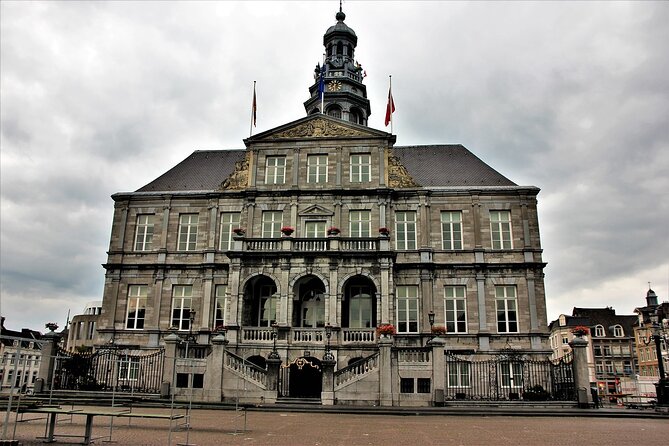
The Markt gives the tour an immediate sense of Maastricht’s public life. Here you see City Hall, or Stadhuis, and the street market, two places that help explain how the city functioned as a civic and commercial center.
A guide adds value here because a square can look simple when you first arrive. With context, the buildings become part of the city’s long public story rather than just a backdrop for photographs.
The Markt is also a useful place to get your bearings. Since the tour starts and ends here, you can return later for your own walk or continue exploring after the guide leaves. The fixed meeting point keeps the logistics easy, especially if your group includes people arriving by public transportation.
From the Dominicans to the churches of Saint Servatius
The Dominicans Church, known as Dominikanerkerk, offers one of the tour’s more unusual stops. Its presence helps show how religious institutions shaped Maastricht’s streets and daily life. The broader discussion includes the religious wars of the 16th and 17th centuries, a period when faith and political power were closely tied.
The tour also visits St. Servatius Church, one of the city’s main religious landmarks. Saint Servatius is central to Maastricht’s identity, and the guide explains the legend connected with him. This is a good example of how the walk combines documented history with the stories people have carried through generations.
Nearby, St. John Church, or Sint-Janskerk, adds another layer to the city’s religious character. Its architecture helps you see how several major churches can occupy a relatively small central area, while the guide explains the conflicts and changes that affected them.
The Church of Our Lady, or Onze-Lieve-Vrouwekerk, continues that religious thread. You can admire its exterior as part of the walking route, but remember that admission fees are not included. The tour is therefore strongest as an introduction to the buildings and their place in Maastricht’s story, not as a series of included interior visits.
Vrijthof, Hendrik van Veldeke, and the city’s cultural side
Museum Aan Het Vrijthof brings the route toward Maastricht’s cultural and artistic life. Even if you do not enter, the stop helps connect the city’s old center with its museums and public culture.
The tour also points out Hendrik van Veldeke, a literary figure linked to the city. This detail is easy to miss when you walk independently, since a name or monument may not explain itself. A local guide can turn such a brief stop into part of a wider story about Maastricht’s language, culture, and public memory.
The Vrijthof area is one place where a private walk can feel more useful than a large group tour. You can ask why the square matters, how it relates to the churches, and which sights deserve a return visit. You may not get a long pause at every point, but you can make the short visit work better for your own interests.
More Maastricht trips:
- Highlight Running Tour
★ 5.0 · 118 reviews - e-Scavenger hunt Maastricht: Explore the city at your own pace
★ 4.5 · 110 reviews - Maastricht: Museum of Illusions Entry Ticket
★ 4.2 · 82 reviews - Valkenburg: Municipal Cave Guided Tour
★ 4.5 · 47 reviews
Helpoort and the medieval city walls
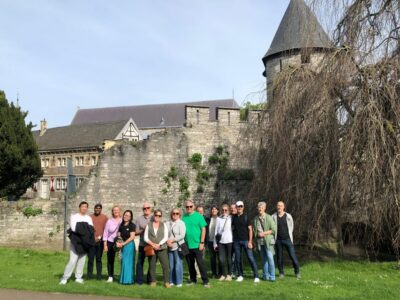
Helpoort gives the route a physical link to medieval Maastricht. A surviving gate makes the old defensive city easier to picture than a spoken description alone. Here, the guide can explain how walls, gates, and controlled entrances affected movement through the city.
The stop also pairs well with the tour’s discussion of the Middle Ages and the Carolingian Empire. Maastricht’s position made it important, but it also made the city vulnerable to changing powers and rival claims. You get a sense of a place shaped by its location, not simply a town that happened to preserve old buildings.
The route includes Pieke oet de Stokstraot, another local point of interest. This sort of stop is useful because it moves beyond the most famous churches and squares. A private guide can explain why a small statue, figure, or street detail matters instead of rushing past it with the rest of a large group.
Sint Servaasbrug and the city’s changing fortunes
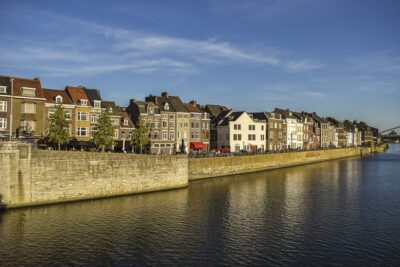
The Sint Servaasbrug is one of the most recognizable sights on the walk. The bridge gives you a direct view of Maastricht’s relationship with the river and its role as a crossing point. It also provides a natural pause after the denser church and city-center stops.
From Roman origins through the Middle Ages, the bridge helps explain why Maastricht could grow as a place of trade, movement, and strategic value. The tour then carries the story into the industrial revolution, when the city’s economy changed again.
The guide also covers the Napoleonic era and the creation of the Kingdom of the Netherlands. Maastricht did not simply slide comfortably into the new kingdom. Its integration was difficult, and that tension helps explain why local identity can feel especially strong.
This is where a good question can improve the tour. Ask how Maastricht’s position near national borders affected its politics and daily life. The private format gives you room to raise questions like this, instead of saving them until the end.
War, refuge, and German occupation
The tour does not treat Maastricht’s past as a string of pleasant architectural highlights. It includes World War I, when the city became a haven for refugees, and World War II, when Maastricht was under German occupation.
Those subjects add needed weight to the walk. You see a city that served as a place of shelter in one conflict and lived under occupation in another. The guide’s role is especially useful here because wartime history is not always obvious from the streets themselves.
The post-war period completes this section of the story. Maastricht’s modern identity grew out of recovery, changing borders, economic shifts, and its place within a wider European framework. I appreciate that the tour gives these events room instead of stopping at medieval architecture.
The Maastricht Treaty and the European Union
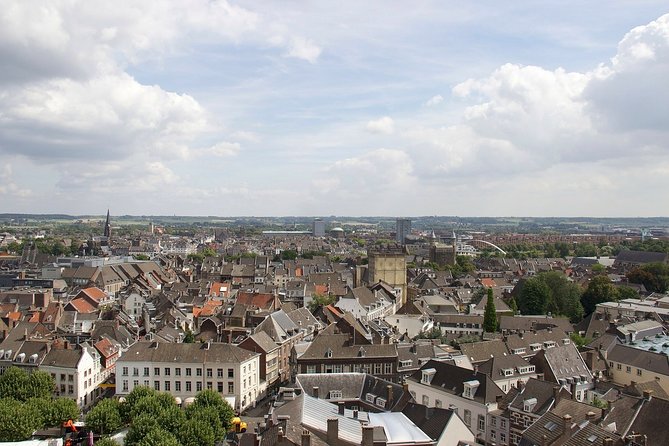
The final major theme is Maastricht’s role in European integration. The Maastricht Treaty helped establish the European Union and the Euro, so the city’s name is now tied to one of Europe’s most important political developments.
For a first visit, this is a valuable connection. You are not only looking backward at Roman roads or old churches. You are also seeing how a Dutch city became part of a modern European project that affects money, borders, and government.
The exact balance between ancient and modern history can be adjusted with your guide. If the European Union interests you, request more explanation here. If you prefer architecture or local legends, you can ask to keep the focus elsewhere. That flexibility is one of the strongest reasons to choose a private walk.
What the two-hour format really gives you
Two hours is enough for a clear introduction, but you should set realistic expectations. The route includes City Hall, the Markt, the Dominicans Church, St. Servatius Church, Museum Aan Het Vrijthof, St. John Church, the Church of Our Lady, Helpoort, Pieke oet de Stokstraot, and Sint Servaasbrug, along with a long historical timeline.
That is a lot for one short walk. You will likely spend more time hearing the city’s story and seeing exterior highlights than entering buildings. If you want detailed museum visits or extended church interiors, plan those separately.
The easy walking pace has been praised, and most people can participate. Still, this is not a sitting tour. You will be on your feet, moving between central sights, so wear shoes suited to city streets and consider the needs of anyone in your group who dislikes extended walking.
Price, group size, and real value
The cost is $275.65 per group of up to 15 people. For a full group, the price works out to roughly $18 per person. For six people, it is about $46 per person, while a couple would pay about $138 each.
That makes group size the key value question. Families, reunions, and small organized groups can get a private guide without paying a separate per-person fee. For one or two people, a shared walking tour may be easier on the budget if one is available.
You are paying for privacy, flexibility, and a local guide rather than admission tickets. The private setting lets you ask questions and avoid the poor sightlines that can come with a bus tour. It also means the guide can make small changes during the walk to suit your interests.
There is one service concern to keep in mind. A prior booking failed because the guide mistakenly believed the tour had been canceled. The provider apologized, accepted responsibility, and said the guide had more than 20 years of guiding experience. That does not erase the inconvenience, so I would verify the confirmed booking and meeting point before the day of the tour.
Who should book this Maastricht walk?
I would recommend it most strongly to first-time visitors who want a practical introduction before exploring alone. It is also a good match for groups that value privacy and want to shape the conversation around their own interests.
History fans should enjoy the wide time span, from the Romans and Carolingian period to Napoleon, the world wars, and the European Union. Architecture fans will appreciate the number of churches, gates, civic buildings, and the old bridge packed into one central route.
I would be more cautious if you want long visits inside museums and churches, or if you are watching every euro on a small booking. Since admissions are not included and the walk covers so much ground, you may need a second visit to see the interiors properly.
The tour accepts mobile tickets, allows service animals, is near public transportation, and says most people can participate. Free cancellation is available until 24 hours before the local start time. Changes or cancellations made inside that window are not accepted for a refund.
FAQ
How long is the Maastricht private walking tour?
The tour lasts approximately two hours.
What is the price of the tour?
The price is $275.65 per group, with up to 15 people allowed in the group.
Where does the tour start?
The meeting point is Markt 52, 6211 CK Maastricht, Netherlands.
Where does the tour finish?
The activity ends back at the meeting point.
Is the tour private?
Yes. Only your group participates, and a local guide accompanies your group.
Can the tour be customized?
Yes. You can request customization with the local guide during the tour, depending on what you would like to focus on.
Are entrance fees included?
No. Entrance fees are not included in the tour price.
Is the tour suitable for people using public transportation?
Yes. The meeting area is near public transportation.
What is the cancellation policy?
You can cancel at least 24 hours before the experience start time for a full refund. Cancellations and changes made less than 24 hours before the start time are not accepted for a refund.
Should you book it?
Book this tour if you want a private first look at Maastricht and value a guide who can connect Roman beginnings, medieval power, wartime events, and the Maastricht Treaty in one walk. It is particularly good value for a larger group, where the fixed price is shared among several people.
Skip it if you mainly want museum interiors, lengthy church visits, or the lowest possible cost for one or two people. For everyone else, the tour offers a useful beginning: you return to the Markt with the city’s major sights identified, its history put in order, and a better idea of where to spend your own time next.
Just added around Maastricht
- Maastricht: Day trip from Amsterdam with 3 country point★ 5.0 · 4 reviews
- Maastricht Self Guided Sherlock Holmes Murder Mystery Game★ 3.5 · 6 reviews
- Maastricht Heritage and Nature Tour★ 5.0 · 6 reviews
- Maastricht Evening Sightseeing Tour★ 4.5 · 7 reviews
- Maastricht Highlights, Architecture & Heritage Tour★ 5.0 · 7 reviews
- Maastricht: Segway City Tours★ 4.9 · 9 reviews
- Best of Maastricht: Private Walking Tour with a Local★ 5.0 · 10 reviews
- Discover Maastricht with a Smile! Culture, History and People★ 5.0 · 16 reviews
Maastricht Tours, compared.


e-Scavenger hunt Maastricht: Explore the city at your own pace
Read our review →

Maastricht 2-Hour Walking Tour | Discover The City With A Local
Read our review →
Maastricht Hidden Gems Tour Uncover the Unexpected
Read our review →Browse the lists this tour appears in