

REVIEW · ARNHEM TOURS
Oosterbeek: Airborne Museum Hartenstein Entry Ticket
History feels personal here. At Airborne Museum Hartenstein, I like the way the Battle of Arnhem is told through British, Polish, German, and civilian experiences, not just military maps. I also like the freedom to set your own pace with the audio tour, available in four languages.
The museum’s former headquarters setting gives the visit real weight, and the underground Airborne Experience adds a strong sensory element to the story. The main consideration is tone: this is a serious war museum, not a light family attraction, although children can follow a special mission with Soldier Tommy.
In This Review
- Key points to know before you go
- Entering Villa Hartenstein and the Battle of Arnhem
- Four national viewpoints, not one simple war story
- The underground Airborne Experience
- Soldier Tommy gives children a way into the story
- Eyewitness memories make the history immediate
- The temporary exhibition adds another reason to check current displays
- Is $19 a fair price?
- Practical details for a smoother visit
- How I would plan the visit
- Should you book Airborne Museum Hartenstein?
- FAQ
- Where is Airborne Museum Hartenstein located?
- What does the admission ticket include?
- Is the audio tour available in English?
- Can children take part in a special activity?
- Is the museum wheelchair accessible?
- Can I cancel the booking?
Key points to know before you go
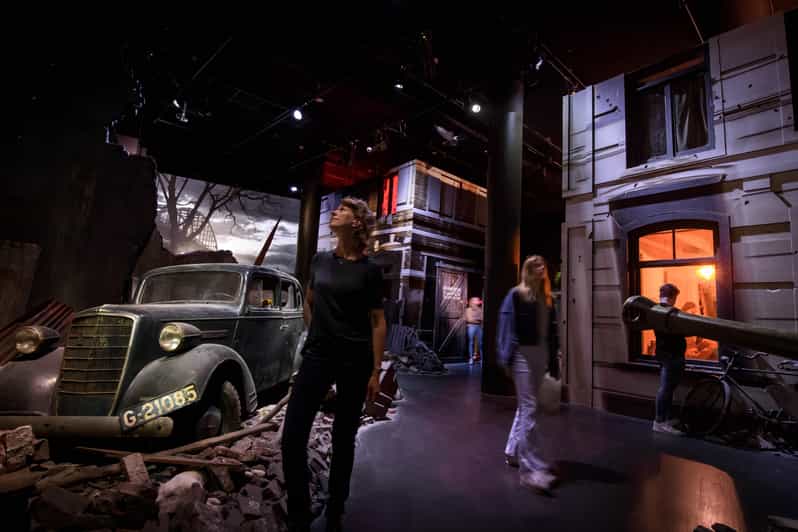
- The museum occupies General Urquhart’s former headquarters, Villa Hartenstein, used by British forces during the Battle of Arnhem in September 1944.
- The story includes British, Polish, German, and civilian voices, giving you more than a one-sided account of the battle.
- Airborne Experience takes the story underground, adding a more direct and atmospheric part to the visit.
- Children can follow Soldier Tommy, an interactive audio mission designed to help younger visitors stay engaged.
- Audio tours are free in Dutch, English, German, and Polish, so you can explore without depending on a live guide.
- The $19 admission covers the museum, temporary exhibition, and Airborne Experience, making it good value for a focused half-day visit, even though the ticket is valid for one day.
Entering Villa Hartenstein and the Battle of Arnhem
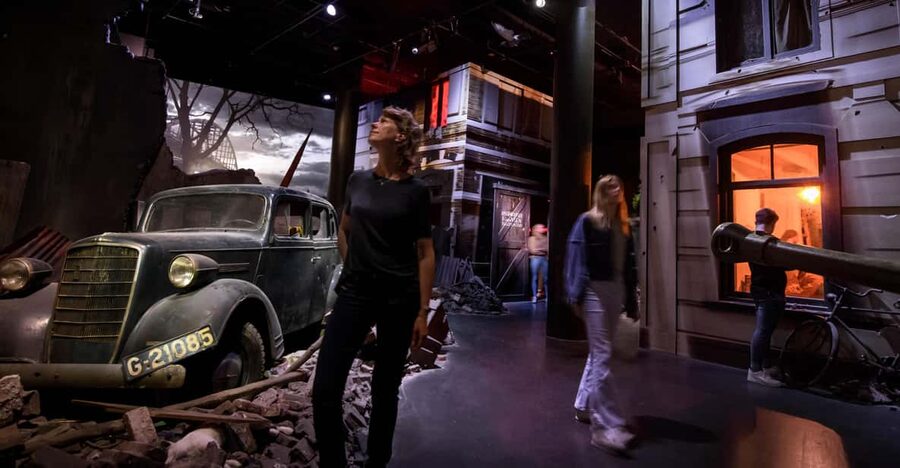
Your visit begins in a place that already carries historical meaning. Villa Hartenstein served as the headquarters of British General Urquhart during the Battle of Arnhem in September 1944. The building is not just a convenient museum shell. It connects the exhibits to the command decisions and military pressure of the battle itself.
I appreciate that the museum presents Arnhem as part of a larger story. The battle affected the later course of the Second World War and helped shape postwar Europe. That context matters because it keeps the visit from becoming a collection of uniforms, weapons, and dates without a clear sense of consequence.
The museum guides you through the battle step by step. You can use the audio tour to follow the story in Dutch, English, German, or Polish. That makes a big difference if you want explanations rather than a quick look around. You can pause, replay, and move at your own speed instead of trying to keep up with a group.
The pace is one of the museum’s best features. Some sections may hold you for a long time because of the personal accounts, while other displays may need only a short look. You control that balance. I would not rush this museum simply because the admission is for one day. The value comes from giving the stories time to settle.
More museums:
- Amsterdam: Van Gogh Museum Ticket
★ 4.7 · 52,054 reviews - Moco Museum Amsterdam Entrance Tickets with Banksy & More
★ 4.4 · 10,088 reviews - Amsterdam: The Upside Down Museum Entrance Ticket
★ 4.4 · 9,506 reviews
Four national viewpoints, not one simple war story
The Battle of Arnhem is often remembered through the British airborne operation, but the museum widens the view. You meet the experiences of British and Polish soldiers, along with German soldiers who were on the other side of the battle. That broader presentation helps you understand the event as a conflict involving people with different orders, fears, and hopes.
This does not make the story less clear. Instead, it gives you a more honest picture. Military history can become too neat when it is told only from the side that planned the operation. Here, the inclusion of German perspectives adds balance, while the Polish stories remind you that the Allied effort was not solely British.
Civilians also have an important place. Eyewitness accounts describe what it was like to experience the war as a child. These accounts may be the most affecting part of the museum because they show how combat reached homes, families, and daily life. A battle is not only fought by soldiers in uniform. It changes what children see, where families go, and how people remember ordinary days.
I would plan to spend extra time with the civilian material. Military equipment can explain what happened, but a child’s memory can help you understand what the battle felt like. The museum’s most praised quality is its emotional force, and these firsthand stories are a major reason why.
The underground Airborne Experience
The Airborne Experience is included with your ticket and takes the story below ground. It is designed to give you a more direct sense of the Battle of Arnhem, rather than asking you to absorb everything through labels and display cases.
I like this change of setting because it breaks up the museum visit. After working through the historical sequence, you get a more atmospheric section that asks you to picture the battle from a human viewpoint. The underground setting helps create a stronger sense of confinement and pressure without needing a long explanation.
The experience is still part of the museum’s historical presentation, so you should not expect a separate entertainment ride. Its purpose is to support the story of Arnhem. For some people, this will be the most memorable section. For others, the eyewitness accounts and personal stories in the main museum may carry more weight.
This is also where the museum’s serious tone is most important. The subject involves war, death, fear, and the disruption of civilian life. I would be cautious about bringing very young children unless you already know they can handle difficult historical material. The museum does offer a child-focused audio mission, but that does not change the nature of the events being presented.
Soldier Tommy gives children a way into the story
Children can take part in an interactive audio tour with Soldier Tommy. This gives younger visitors a task to follow instead of asking them to listen to long explanations aimed at adults.
That feature is useful for families because it turns the museum into something they can explore together. Your child can follow Tommy’s mission while you use the main audio tour or examine the exhibits in more detail. It is a practical way to keep different ages involved during the same visit.
The activity should not be mistaken for a cheerful game set apart from the museum’s subject. The child’s route still connects to the Battle of Arnhem and the wartime setting. You may want to explain beforehand that the museum deals with real events and real suffering.
I especially like this approach because it gives children a starting point without removing the history. Soldier Tommy can help them notice details, ask questions, and understand that the people in the displays were individuals, not just names in a textbook.
More Arnhem and Hoge Veluwe trips:
- Kröller-Müller Museum Entrance Ticket
★ 4.4 · 241 reviews - Otterlo: De Hoge Veluwe National Park Entry Ticket
★ 4.5 · 97 reviews - Arnhem: Burgers’ Zoo Entry Ticket
★ 4.7 · 88 reviews - Small Group Tour to NP Hoge Veluwe (van Gogh) from Amsterdam
★ 5.0 · 19 reviews
Eyewitness memories make the history immediate
The museum’s eyewitness accounts are central to its appeal. You hear about wartime life from people who experienced the Battle of Arnhem as children. That perspective adds something a standard military display cannot provide.
A battle map can show movement. A date can show timing. A child’s memory can show the human cost. The strongest moments here are likely to come from those personal accounts, especially if you are interested in how war changed civilian life in the Netherlands.
The emotional response can be strong. Recent comments about the museum describe it as impressive rather than entertaining, with painful stories from survivors and eyewitnesses. That is a useful way to set your expectations. You should come prepared for a thoughtful visit, not a casual stop between other attractions.
I would leave a little quiet time after the museum if possible. The material may stay with you, particularly if you listen closely to the civilian testimony. This is one of those places where a fast visit can give you facts, but a slower visit gives you understanding.
The temporary exhibition adds another reason to check current displays
Your admission also includes the temporary exhibition. The subject can change, so you should check what is showing when you plan your visit. It is worth allowing time for this section rather than treating it as an optional extra.
A recent temporary display focused on BIDKL, an organization connected with the identification and documentation of war-related remains. The work was described as especially strong, which points to the value of checking the temporary material even if your main interest is the Battle of Arnhem.
Temporary exhibitions can also make a return visit worthwhile. The permanent galleries tell the core story of Arnhem, while the changing display can give you another angle on the Second World War and its long aftermath. You may find that this section is quieter and more specialized than the main route.
Because the ticket covers both areas, I see the temporary exhibition as part of the admission value. At $19 per person, you are not paying only to enter a historic villa. You are getting the main collection, the underground experience, and an additional exhibition in one visit.
Is $19 a fair price?
At $19 per person, the ticket offers solid value if you have a real interest in the Battle of Arnhem or Dutch wartime history. The price includes entrance to Airborne Museum Hartenstein, the Airborne Experience, the temporary exhibition, and the audio tour.
The free audio tour is especially useful. A museum of this kind can be difficult to understand from objects alone, and the multilingual commentary lets you follow the events in Dutch, English, German, or Polish. You do not need to pay extra for the explanations that give the exhibits their meaning.
The value also depends on how much time you give the museum. If you rush through in under an hour, $19 may feel less convincing. If you listen to the accounts, follow the battle’s stages, visit the underground section, and see the temporary exhibition, the price feels more reasonable.
The ticket is valid for one day, so you have flexibility during your visit. The activity also allows cancellation up to 24 hours in advance for a full refund, and a reserve-now, pay-later option is available. Those terms help if your wider Gelderland plans are not fixed.
Practical details for a smoother visit
The museum is in Oosterbeek, in Gelderland, Netherlands. The listed experience lasts one day because the ticket remains valid for that period, but the information does not set a fixed visit length or a required starting time. You should check availability for the opening or entry times that fit your plans.
You can use the audio tour in Dutch, English, German, or Polish. The host or greeter support is also listed in those four languages. That makes the museum accessible to a wide range of visitors, though your own pace and the time you spend at each section will shape the visit.
The museum is wheelchair accessible. That is useful to know before you plan a full day around the visit, especially since the Airborne Experience is located underground. If you have specific mobility needs, I would still confirm the practical route details before arrival.
The experience is suitable for solo visitors, couples, families with older children, and anyone studying the Second World War. It may be less suitable if you want a quick, cheerful attraction or if military history is not your interest. The museum’s strength is its seriousness, and that is also the main reason some people may find it emotionally demanding.
How I would plan the visit
I would start with the main museum galleries and use the audio tour from the beginning. The chronological structure should help you understand the Battle of Arnhem before you reach the more atmospheric sections.
Next, I would give extra attention to the British, Polish, and German accounts. Hearing the different viewpoints together gives the battle more shape than reading a single national version. I would then spend time with the civilian eyewitness stories, particularly if you want to understand the effect on Dutch families.
After that, I would visit the underground Airborne Experience. The change in setting should have more impact once you already understand the events it represents. Families can use Soldier Tommy’s mission during the main visit, while adults follow the full audio commentary.
Finish with the temporary exhibition. Since it is included in the ticket and may cover specialized work linked to the war, it deserves more than a quick pass. You can then decide if you want to return to a section that held your attention, since the ticket is valid for the day.
Should you book Airborne Museum Hartenstein?
I would book this experience if you want a serious, human account of the Battle of Arnhem. The combination of the former headquarters, multilingual audio tour, eyewitness memories, several national viewpoints, and the underground Airborne Experience gives you much more than a basic military museum visit.
I would especially recommend it to anyone exploring Gelderland’s wartime history, families with older children, and visitors who prefer to learn at their own pace. The Soldier Tommy audio mission helps families, while the civilian stories give adults a reason to slow down.
I would skip it only if you have very little interest in war history or want a light attraction. For everyone else, $19 is a reasonable price for a thoughtful museum with several included elements. Come with time, listen closely, and expect to leave impressed rather than entertained.
FAQ
Where is Airborne Museum Hartenstein located?
The museum is in Oosterbeek, in Gelderland, Netherlands.
What does the admission ticket include?
The ticket includes entrance to Airborne Museum Hartenstein, the Airborne Experience, the temporary exhibition, and a free audio tour.
Is the audio tour available in English?
Yes. The audio tour is available in Dutch, English, German, and Polish.
Can children take part in a special activity?
Yes. Children can follow an interactive audio mission with Soldier Tommy.
Is the museum wheelchair accessible?
Yes, the experience is listed as wheelchair accessible.
Can I cancel the booking?
Yes. You can cancel up to 24 hours in advance for a full refund. A reserve-now, pay-later option is also available.
Just added around the Netherlands
- Discover Alkmaar with a self-guided Outside Escape city game tour★ 4.5 · 17 reviews
- Amsterdam 1-Hour Rickshaw Tour★ 4.9 · 17 reviews
- 3 hour boarding ticket Summer sailing from Wemeldinge (Zeeland)★ 5.0 · 17 reviews
- Amsterdam: Canal Cruise and Jewish Cultural Quarter Tickets★ 4.2 · 17 reviews
- Keukenhof Gardens and Tulip Experience Tour from Amsterdam★ 4.8 · 17 reviews
- Texel: Electric Fatbike Rental with Map★ 4.8 · 17 reviews
- Amsterdam: Windmills E-Bike Tour to Zaanse Schans★ 5.0 · 18 reviews
- Volendam: 2.5-Hour Cheesemaking Workshop & Clog Making Tour★ 4.5 · 17 reviews
Arnhem Tours, compared.


Otterlo: De Hoge Veluwe National Park Entry Ticket
Read our review →

Small Group Tour to NP Hoge Veluwe (van Gogh) from Amsterdam
Read our review →
e-Scavenger hunt Arnhem: Explore the city at your own pace
Read our review →Browse the lists this tour appears in