REVIEW · AMSTERDAM TOURS
Operation 45: An Adventure in Diamonds
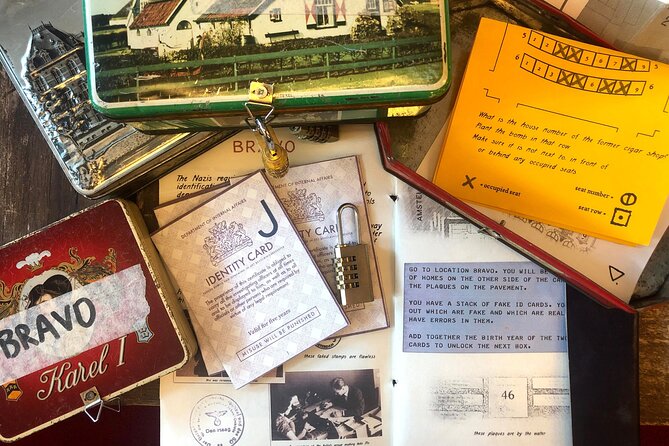
A wartime mystery turns Amsterdam into your game board. Operation 45 combines a self-guided city walk, puzzle solving, and a true story about industrial diamonds during the Nazi invasion. I like the freedom to play when your group wants, and I like that you see Amsterdam’s buildings and monuments with a clear purpose rather than simply passing them by.
The private format is another strong point. You play with your own group, and groups of six or more can split into competing teams. The main drawback is that this is an outdoor activity requiring good weather, and map reading can slow you down if your group is not comfortable finding its way around.
At about $29.96 per person for roughly two hours, this is not the cheapest way to walk through Amsterdam. Still, the price covers a focused story, puzzles, and an activity that keeps your group involved. It works best for families, friends, and small groups who want more than a standard sightseeing stroll.
In This Review
- Key things to know before you play
- A diamond mystery rooted in Amsterdam’s wartime past
- Starting at Zwanenburgwal 178
- How the two-hour route works
- Why the walking format works
- Playing as one group or racing in teams
- Map reading and phone support
- The family and group appeal
- Is $29.96 good value?
- Booking, weather, and timing
- Who should book Operation 45?
- Should you book this Amsterdam mystery game?
- FAQ
- Where does Operation 45 begin?
- Where does the activity finish?
- How long does Operation 45 take?
- How much does the experience cost?
- Is the experience private?
- Can groups compete against one another?
- What is the story about?
- Is help available if my group gets lost?
- Can I cancel for a refund?
Key things to know before you play
- The story begins on May 10, 1940: You follow a secret mission linked to the Nazi invasion of the Netherlands and a valuable cache of industrial diamonds.
- The game ends around May 5, 1945: Amsterdam’s liberation provides the historical finish line, but your final task is to discover what happened to the diamonds.
- You explore Amsterdam on foot: The route leads you past buildings, monuments, and historical details instead of keeping you inside one attraction.
- Your group controls the schedule: The experience is private, so you can play at a time that suits your plans.
- Groups of six or more can compete: Split into teams and see who solves the mystery first, or stay together and tackle every puzzle as one group.
- Help is available by phone: If maps give your group trouble, staff can help you work out where you are and what to do next.
A diamond mystery rooted in Amsterdam’s wartime past
The central story gives this activity more weight than a simple city scavenger hunt. On May 10, 1940, Nazi forces invaded the Netherlands. Within hours, a secret mission was set in motion to keep Amsterdam’s industrial diamonds out of Nazi hands.
You are not asked to study a long historical lecture before walking. Instead, the story unfolds through clues and tasks as you move through the city. That format makes the history easier to remember because each piece is tied to a place, a direction, or a puzzle you must solve.
The story then moves forward to May 5, 1945, when Amsterdam celebrated liberation. Your mission is to follow the trail left by the resistance and work out what happened to the diamonds. The time span gives the game a clear shape. You begin with danger and urgency, then move toward the unresolved question at the heart of the experience.
I appreciate that the historical subject is specific. Industrial diamonds may not be the first thing you associate with wartime Amsterdam, which gives the story an unusual angle. The game does not simply ask you to identify famous sights. It asks you to connect city details with a true wartime problem.
A few more trips of this kind worth comparing:
- Amsterdam: Van Gogh Museum Ticket
★ 4.7 · 52,054 reviews - Amsterdam Classic Saloon Boat Cruise with Drinks and Cheese
★ 5.0 · 31,825 reviews - Amsterdam Luxury Canal Cruise + Unlimited Drinks & Bites option
★ 5.0 · 30,518 reviews
Starting at Zwanenburgwal 178
The experience begins at Mystery City Games, Zwanenburgwal 178, 1011 JH Amsterdam. It also ends back at this meeting point, which makes planning easier. You do not need to arrange a separate pickup or work out how to return from an unfamiliar final location.
The starting point is near public transportation, another practical advantage in a city where you may already be moving between museums, hotels, and canal-side areas. Confirmation is provided at booking, and a mobile ticket means you can keep the booking information on your phone.
The exact route and puzzle locations are not laid out in advance, so you should expect to receive the instructions needed to begin the game and then make your way through Amsterdam. That is part of the appeal, but it also means you should arrive ready to pay attention. This is not a ride where you can sit back and let someone else handle the navigation.
Give yourself enough time to reach Zwanenburgwal 178 before your chosen start time. A group that arrives calm and organized will get more from the opening clues than one still trying to find the meeting point.
How the two-hour route works
The game lasts about two hours. That is long enough to create a proper story and short enough to fit beside other Amsterdam plans. You can place it before or after another activity without giving up an entire day.
The first stage sets up the mission. You learn about the invasion, the diamonds, and the need to keep them from Nazi control. From there, the game sends you into the city to follow the resistance trail.
As you walk, you discover interesting buildings, monuments, and historical details. The route is not only about reaching the next answer. You need to look at the city around you and use what you see to move the story forward.
The middle of the experience is built around puzzles. You solve them with your friends while moving through Amsterdam, which gives each participant a job. One person may focus on the map, another may notice a detail on a building, and someone else may connect the clue to the wartime story.
That shared work is a big part of the value. A conventional walking tour can leave you listening while one guide does the talking. Here, you have to discuss, test ideas, and make decisions. The group’s progress depends on participation.
The final stage brings you to the question of what happened to the diamonds. The liberation date provides the historical endpoint, but the puzzle gives you a reason to keep working until the mystery is resolved.
The route returns to the original meeting point. Because the activity ends where it starts, you can continue with your Amsterdam day without needing to collect belongings or arrange transportation from a distant finish.
Why the walking format works
Amsterdam is a city that rewards close attention. Buildings, monuments, and small historical details often pass unnoticed when you are rushing between major sights. This game gives you a reason to slow down and look properly.
I like that the city itself becomes part of the puzzle. You are not just reading about wartime events in a room. You are walking through the setting while searching for the next useful detail.
The experience also offers a different way to see familiar places. If you have already spent time in central Amsterdam, the clues may send you toward buildings or monuments you would otherwise overlook. The information provided does not name every stop, so you should not book this expecting a fixed list of famous landmarks. The reward is the act of discovering details as the story leads you along.
There is a tradeoff. A walking puzzle requires more focus than a normal stroll. If you want a relaxed hour with no decisions, this may feel like work. If you enjoy solving problems and exploring with a purpose, the format should keep the pace lively.
The city setting also means conditions matter. This experience requires good weather. Bring suitable clothing for an outdoor walk, though the supplied information does not specify a particular dress code or equipment list.
A completely different kind of day out in Amsterdam:
- Amsterdam: Heineken Experience Ticket
★ 4.6 · 30,055 reviews - Amsterdam: Rijksmuseum Entry Ticket
★ 4.7 · 25,535 reviews - Amsterdam: Classic Boat Cruise with Optional Cheese & Wine
★ 4.6 · 22,925 reviews - Amsterdam: Evening Cruise with Optional Wine and Snacks
★ 4.4 · 19,696 reviews
Playing as one group or racing in teams
The activity is private for your own group. That matters if you want to keep family or friends together instead of being placed with strangers. Your group can discuss answers openly and choose its own style of play.
Groups of six or more can split into competing teams. The first team to solve the mystery wins the race, adding a little pressure to the walk. This setup can work well for friends, work groups, or families with older children who enjoy competition.
You can also stay together. That is the better choice if the group includes younger participants, people with different levels of confidence, or anyone who would rather solve the clues cooperatively.
The private format allows the game to suit your group’s personality. Competitive groups can treat the mission as a race. A family can make it a shared challenge. Friends can stop to discuss a clue without worrying about slowing down a larger public tour.
Groups can also receive discounts, though the supplied details do not state the discount amount. If you are booking for a larger party, check the final price before payment.
The experience allows up to 50 participants. That is a fairly large maximum, but the activity remains private for each group. For the best puzzle discussion, smaller teams may find it easier to hear one another and compare ideas.
Map reading and phone support
The main practical warning is navigation. One participant described the group as poor at reading maps, but staff were ready by phone to help them work out where they were and how to continue.
That support is worth knowing about before you start. You do not have to abandon the game because your group takes a wrong turn or cannot interpret the next direction. Keep your phone charged, and make sure the person carrying it can reach the staff if needed.
Phone help does not remove all the challenge. It simply prevents a navigation problem from becoming the whole afternoon. I see that as a sensible balance for a self-guided game.
If your group has one strong map reader, let that person take responsibility for directions while others focus on the historical details and puzzle answers. If nobody enjoys maps, agree in advance that asking for help is part of the game, not a failure.
This is also a reason to avoid splitting into too many small teams if your group is not confident with directions. Competition is fun only when every team can make reasonable progress.
The family and group appeal
The experience suits families because it gives children and adults different ways to participate. Younger players can search for clues and notice visual details, while adults may enjoy the wartime context and the logic behind the mission.
The activity is recommended for most participants, and service animals are allowed. The available information does not give a minimum age, child price, route length, or detailed accessibility information, so families should confirm those points before booking if they matter to their plans.
Friends will get the most from the shared problem solving. The game creates natural conversation because you need to explain why you think an answer is correct. It is also a good option for a group that wants to do something together without committing to a formal guided tour.
For a work group, the team format may add useful energy. Six or more people can compete, while a smaller party can work as one unit. Keep in mind that the experience involves walking and outdoor conditions, so it may not suit anyone looking for a seated group activity.
Solo visitors or couples can technically book, but the social nature of the puzzles is more rewarding with at least a few people. The supplied information does not explain whether smaller parties are paired with others, so you should confirm that point if you plan to book alone.
Is $29.96 good value?
At $29.96 per person, Operation 45 costs more than simply walking around Amsterdam with a map. The comparison is not quite fair, though. You are paying for a structured story, game materials, puzzle design, and support from Mystery City Games.
The value improves when you share the experience with friends or family. You get a two-hour activity that combines sightseeing and entertainment, rather than paying separately for a short attraction and a guided walk.
The price also buys flexibility. You can choose when to play, and the experience is private for your group. That can be useful on a busy Amsterdam itinerary, especially when fixed tour departure times do not fit.
I would not book it only for landmark collecting. The route details are not fully provided, and the main attraction is the mystery and the way it changes your attention as you walk.
I would book it if you want a city activity that asks you to participate. The strong rating of 4.9 from 38 published ratings and a 100 percent recommendation rate support the idea that the format works well for the right audience. The praise also points to useful phone assistance and family appeal, two features that matter more than flashy presentation.
Booking, weather, and timing
You receive confirmation when you book, and you can use a mobile ticket. The activity is booked around five days ahead on average, which suggests you may not need to reserve far in advance, though a popular date could still fill.
Free cancellation is available if you cancel at least 24 hours before the start time. Cancel less than 24 hours ahead, and you will not receive a refund. Changes made inside that 24-hour window are not accepted.
The cut-off uses Amsterdam local time. Pay attention if you are arranging the activity while booking from another time zone.
Good weather is required. If poor weather forces cancellation, you will be offered another date or a full refund. Since the game takes place outdoors, check the forecast and avoid scheduling it too tightly against another fixed booking.
The activity starts and ends at Zwanenburgwal 178. It lasts about two hours, but allow extra time around it for reaching the meeting point and dealing with any navigation delays.
Who should book Operation 45?
I would recommend this experience to:
- Families who like puzzles and want children involved in sightseeing
- Friends looking for a shared activity rather than a passive tour
- Groups of six or more that enjoy friendly competition
- Visitors who want wartime history presented through a city walk
- People with a flexible schedule who like choosing their own start time
I would think twice if you dislike maps, walking, outdoor activities, or puzzle solving. Staff can help by phone, but you still need to move around Amsterdam and work through clues.
You should also skip it if bad weather is likely and you have no flexibility to change dates. The cancellation terms are generous up to 24 hours ahead, but not inside that window.
Should you book this Amsterdam mystery game?
Book Operation 45 if you want to see Amsterdam while working toward a clear goal. The unusual diamond story, private group format, and choice between cooperation and competition give it more character than a basic city scavenger hunt.
I especially like it for families and groups of friends. You get two hours of shared problem solving, historical context, and city exploration for a reasonable activity price. Just arrive prepared for an outdoor walk, keep your phone charged, and do not be embarrassed to ask for map help.
If you prefer a traditional guide who explains everything while you listen, choose another tour. If you want to follow a resistance trail, notice Amsterdam’s details, and solve a wartime mystery with your own group, this is a smart choice.
FAQ
Where does Operation 45 begin?
It begins at Mystery City Games, Zwanenburgwal 178, 1011 JH Amsterdam, Netherlands.
Where does the activity finish?
The activity ends back at the meeting point on Zwanenburgwal.
How long does Operation 45 take?
The experience lasts approximately two hours.
How much does the experience cost?
The listed price is $29.96 per person. Group discounts are available.
Is the experience private?
Yes. The experience is private for your own group.
Can groups compete against one another?
Yes. Groups of six or more can split into competing teams and see which team solves the mystery first. You can also remain together as one group.
What is the story about?
The game follows a secret mission connected to the Nazi invasion of the Netherlands on May 10, 1940. You follow a resistance trail to discover what happened to a cache of industrial diamonds before Amsterdam’s liberation on May 5, 1945.
Is help available if my group gets lost?
Yes. Staff can help by phone if your group has trouble reading the maps or working out where to go.
Can I cancel for a refund?
You can cancel up to 24 hours before the start time for a full refund. Cancellations or changes made less than 24 hours before the start time are not refunded or accepted. If poor weather causes the operator to cancel, you will be offered another date or a full refund.
Just added around Amsterdam
- Amsterdam 1-Hour Rickshaw Tour★ 4.9 · 17 reviews
- Amsterdam: Canal Cruise and Jewish Cultural Quarter Tickets★ 4.2 · 17 reviews
- Keukenhof Gardens and Tulip Experience Tour from Amsterdam★ 4.8 · 17 reviews
- Marken, Volendam and Edam: Private Full-Day Tour★ 4.6 · 18 reviews
- Discover Amsterdam’s city center in this Outside Escape game tour★ 4.5 · 18 reviews
- Amsterdam: Personal Travel & Vacation Photographer★ 4.8 · 18 reviews
- Amsterdam: Luxury Saloon Boat Cruise with 3-Course Dinner★ 3.9 · 18 reviews
- Rijksmuseum & Amsterdam City Center Semi-Private Tour 12ppl Max★ 5.0 · 18 reviews
Amsterdam Tours, compared.

Amsterdam Classic Saloon Boat Cruise with Drinks and Cheese
Read our review →
Amsterdam Luxury Canal Cruise + Unlimited Drinks & Bites option
Read our review →

Classic Boat Cruise with Optional Cheese & Wine
Read our review →
Evening Cruise with Optional Wine and Snacks
Read our review →