
REVIEW · WORKSHOPS
Private Sushi Workshop in Hilversum
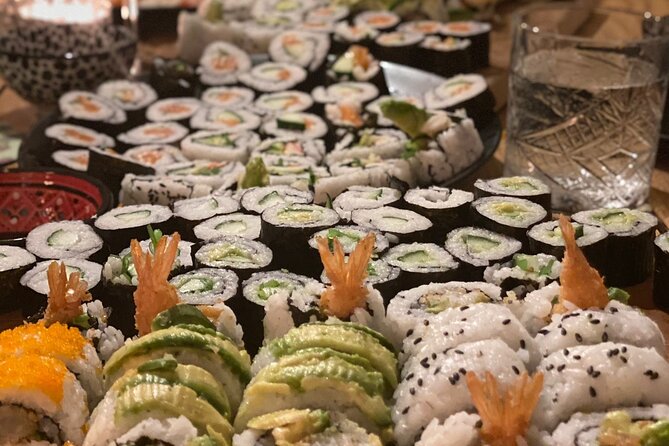
Sushi tastes better when you make it. This private workshop gives you a hands-on evening with Nigel van der Weerd, a former sushi restaurant owner and chef, as you prepare maki, nigiri, uramaki, and temaki from rice to toppings. I like the personal format and the fact that your finished work becomes dinner, with wine, beer, or non-alcoholic drinks included. I also like the flexible menu, which can include meat and fish or be adapted for vegetarians.
The main thing to watch is the location. This experience is promoted as an Amsterdam activity, but the stated meeting point is on Kometenstraat in Hilversum, in North Holland. That makes it less convenient if you are staying in central Amsterdam, and you should check the route before booking. The workshop also prefers a minimum of four people, so it suits a small group better than a solo visitor.
In This Review
- Key points to know before booking
- What the 5:00 pm Hilversum workshop is really like
- Starting with sushi rice and basic preparation
- Making maki, nigiri, uramaki, and temaki
- From kitchen lesson to dinner at the table
- A private format with a small-group feel
- Bringing the workshop to your vacation rental
- Is $108.45 a fair price?
- Getting there and planning the evening
- Who will enjoy this sushi class most?
- Should you book the Private Sushi Workshop in Hilversum?
- FAQ
- Where does the sushi workshop begin?
- What time does the workshop start?
- How long does the experience last?
- Where does the activity end?
- Which kinds of sushi will I make?
- Are drinks included?
- Can the menu be adapted for vegetarians?
- Can the workshop take place at my vacation rental?
- How many people can join?
- Can I cancel for a full refund?
Key points to know before booking
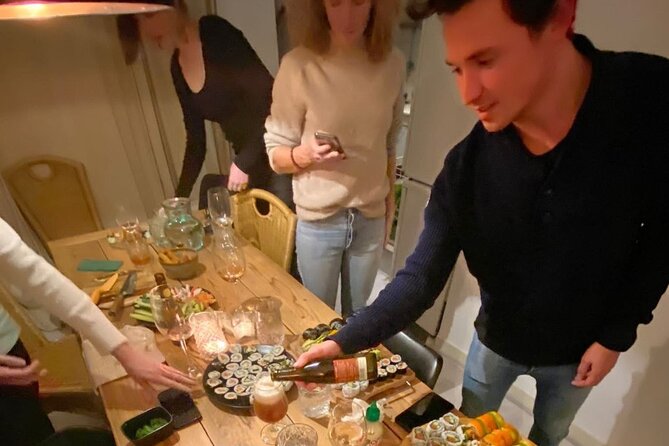
- Four sushi styles in one evening: You make maki, nigiri, uramaki, and temaki, giving you a useful introduction to several basic sushi formats.
- Led by a former restaurant owner: Nigel van der Weerd brings professional kitchen experience, while Nigel and Chantal are praised for their patience, warmth, and enthusiasm.
- Your sushi becomes the meal: The food you prepare is served as dinner after the workshop, so the experience includes both instruction and a shared meal.
- Flexible for different diets: Menus may include meat and fish, but the workshop can be adjusted for vegetarians.
- Private and small-scale: The maximum is 10 people, with a preferred minimum of four. You can also ask to host the class at your rental if it has a kitchen.
- Drinks are included: Wine, beer, and non-alcoholic drinks are part of the experience, along with snacks.
What the 5:00 pm Hilversum workshop is really like
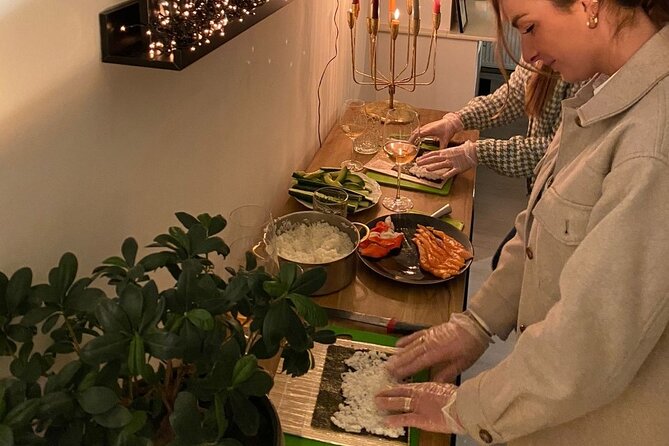
The workshop begins at 5:00 pm and lasts about two and a half hours. That timing makes sense for the format. You arrive in the late afternoon, learn the techniques, prepare several types of sushi, and finish with the meal you have made.
This is not a quick demonstration where you watch a chef work and then receive a plate. The point is to make the sushi yourself, with guidance along the way. You should expect to handle the ingredients, shape the rice, and work through the different forms at a practical pace.
The setting is private and home-based. That gives the class a more relaxed feel than a formal restaurant kitchen, though it also means the experience depends on the available home setup. If you arrange the workshop at your own Airbnb or vacation rental, a kitchen is required. Without one, the mobile option will not work.
The stated meeting point is Kometenstraat, 1223 Hilversum, Netherlands. The activity ends at the same location. Since Hilversum is not central Amsterdam, you need to treat the location carefully when planning your evening. Public transportation is nearby, but the exact travel time depends on where you are staying.
More workshops and classes:
- Amsterdam: Traditional Dutch Syrup Waffle Making Workshop
★ 4.8 · 4,093 reviews - Amsterdam Traditional Dutch Syrup Waffle Making Workshop
★ 5.0 · 960 reviews - Amsterdam: Bols Cocktail Experience and Cocktail Workshop
★ 4.8 · 666 reviews
Starting with sushi rice and basic preparation
Good sushi depends on more than fresh toppings. The rice needs the right texture, and the preparation affects how well each piece holds together. The workshop includes the process from the rice through to the toppings, so you get a look at the less glamorous but important part of sushi making.
That is useful for beginners because rice can be harder to manage than it appears. Too much pressure can make it dense, while too little can leave it loose. You should expect Nigel to show you how the ingredients fit together rather than simply handing you pre-made components.
The strongest praise for this experience focuses on patience and passion. Nigel and Chantal are described as a warm, friendly pair who explain the preparation from rice to toppings with care. That matters in a cooking class, especially when your first attempts do not look like restaurant sushi.
You are not paying only for ingredients. You are paying for the chance to ask questions, repeat a technique, and get help before the food reaches the table.
Making maki, nigiri, uramaki, and temaki
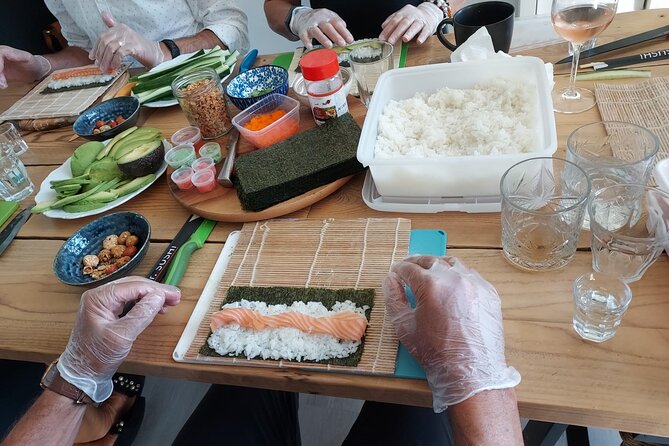
The four sushi styles give the evening a clear structure. Each one uses similar ingredients in a different way, so you can compare the techniques as you go.
Maki is the familiar rolled sushi, usually formed with a sheet of nori around rice and fillings. It is a good starting point because you can see how the ingredients are arranged before the roll is sliced.
Nigiri puts the focus on the rice and topping. Instead of rolling everything inside seaweed, you shape a small portion of rice and place the topping on top. This looks simple, but the shape and pressure matter.
Uramaki reverses the usual arrangement, with rice on the outside and nori inside. It gives you another lesson in handling rice and keeping the roll together.
Temaki is hand-rolled into a cone shape. It is often the most informal of the four, and it can be fun because you build and eat it without the same neat slicing required for a standard roll.
The workshop does not promise that you will leave with professional knife skills or restaurant-level presentation. Its value is more practical. You learn the basic differences between these forms and get a feel for how sushi is assembled.
From kitchen lesson to dinner at the table
Once the sushi is made, you eat it as dinner. I like this arrangement because it gives the workshop a satisfying finish. You do not spend the evening preparing food only to watch someone else serve the main meal.
The final meal also gives you a chance to see which styles you handled best. One person may prefer the neat structure of maki, while another may enjoy the looser temaki format. Since the class covers four types, you get more than one way to judge your results.
Snacks are included, as are wine, beer, and non-alcoholic drinks. The drinks help make the experience feel like a full evening rather than a paid lesson that ends as soon as the last roll is finished. If you do not drink alcohol, the non-alcoholic option is clearly available.
The food menu can include meat and fish. Vegetarian adjustments are possible, which makes the workshop more useful for mixed groups. You should still discuss your needs when booking, since the menu needs to be adapted in advance rather than assumed on arrival.
A few more trips of this kind worth comparing:
- Private Electric Boat Rental in Haarlem (No License Required)
★ 5.0 · 186 reviews - Windmills Zaanse Schans small group tour-region Amsterdam
★ 5.0 · 55 reviews - Fresh nose tour with the canoe through the nature near Amsterdam
★ 5.0 · 26 reviews - Haarlem Private Canal Tour with Bites and Unlimited Drinks
★ 4.5 · 18 reviews
A private format with a small-group feel
The maximum group size is 10 people, and the preferred minimum is four. That is an important detail. The experience is designed around a private group, so it makes the most sense for families, friends, couples traveling together, or a small celebration.
A group of four or more can share the preparation without making the kitchen feel crowded. You also have enough people for the dinner portion to feel social. At the upper limit of 10, the class remains smaller than a large public cooking event, though the comfort of that size will depend on the kitchen.
The private format can be a real advantage if your group wants to set its own pace. You may be able to ask for more help with rolling, rice shaping, or vegetarian substitutions. It is also easier to share the finished food with people you already know.
The tradeoff is that this is not the best fit if you are traveling alone or as a pair and do not want to organize additional people. The minimum number requirement can also affect availability. If the required minimum is not met, the experience may be canceled and you will be offered another date or a full refund.
Bringing the workshop to your vacation rental
The workshop may be organized at your guest accommodation or Airbnb. This is a useful option for a group that wants to avoid another evening out, but there is one firm condition: the rental must have a kitchen.
That requirement sounds obvious, but holiday rentals vary widely. A property may advertise a kitchenette without having enough work space for several people. Before choosing the mobile option, confirm that the kitchen is available and suitable for a hands-on cooking class.
The at-home setup could be especially convenient for families or groups staying outside the main center. It also removes the need to return to a separate meeting point after dinner. On the other hand, the stated meeting point for the experience is in Hilversum, so you should confirm the location arrangement before assuming the chef will come to your rental.
Is $108.45 a fair price?
At $108.45 per person, this is not a cheap meal, but it is not simply a restaurant dinner. The price covers about two and a half hours of instruction, the ingredients for four sushi styles, snacks, alcoholic or non-alcoholic drinks, and the dinner you prepare.
That makes the value stronger for people who want an activity as well as food. If you only want to eat sushi, a restaurant will likely be simpler. If you want to learn the basics, spend an evening with a private group, and enjoy the result, the price is easier to justify.
The former restaurant owner background also adds value. You are learning from someone who has worked professionally with sushi rather than following a generic demonstration. The praise for Nigel and Chantal centers on their patient, warm approach, which is important because beginners need clear help more than flashy technique.
Still, compare the cost with your plans. You will need to arrange transportation to Hilversum unless the workshop is hosted at your rental. If your accommodation is in Amsterdam and you have only a short stay, the travel time may reduce the appeal.
Getting there and planning the evening
The meeting point is Kometenstraat in Hilversum, postal code 1223. The activity starts at 5:00 pm and returns to the same meeting point. Public transportation is nearby, but you should plan the route rather than rely on a last-minute journey.
The Amsterdam wording can cause confusion, so check the exact address shown at booking. Hilversum is a separate town, and the experience should not be treated as a central Amsterdam activity simply because Amsterdam is used in the description.
Confirmation is sent within 48 hours of booking, subject to availability. That timing is worth noting if you are trying to fit the workshop into a tightly planned holiday. I would not build an entire evening around it until the booking is confirmed.
The free cancellation policy allows you to cancel up to 24 hours before the local start time for a full refund. Cancellations or changes made less than 24 hours ahead are not accepted for a refund. The minimum group rule also applies, so keep an eye on any booking updates.
Who will enjoy this sushi class most?
I would recommend this workshop to a small group that enjoys doing something together rather than simply ordering dinner. It is a particularly good match for people who are curious about Japanese food but have never tried making sushi at home.
It also suits groups with mixed diets, since the menu can include meat and fish or be adapted for vegetarians. The private format gives you a more personal experience than a large class, and the included drinks make it easy to turn the lesson into a relaxed evening.
Families may appreciate the hands-on format, though the supplied information does not specify a minimum age. If you are booking with children, ask about age suitability before paying.
This is less suitable for anyone who wants a quick activity in central Amsterdam, a formal fine-dining meal, or a guaranteed small booking for only one or two people. The Hilversum location and preferred minimum of four are the two biggest practical limits.
Should you book the Private Sushi Workshop in Hilversum?
Book it if you have at least four people, can reach Hilversum comfortably, and want to make your dinner rather than just eat it. The combination of four sushi styles, professional instruction, included drinks, and a private setting gives the evening real substance.
I would be most inclined to book for a group staying in or near Hilversum, or for a group with a suitable vacation-rental kitchen. If you are based in central Amsterdam, first check the transport time and confirm whether a mobile workshop at your accommodation is possible.
The experience earns its strong reputation through the human side of the class: Nigel and Chantal are praised for warmth, patience, and enthusiasm. You should not expect a polished restaurant production. Expect a friendly, practical lesson where imperfect rolls are part of the fun and the final plate is your reward.
FAQ
Where does the sushi workshop begin?
It begins at Kometenstraat, 1223 Hilversum, Netherlands.
What time does the workshop start?
The stated start time is 5:00 pm.
How long does the experience last?
The workshop lasts approximately two hours and 30 minutes.
Where does the activity end?
It ends back at the meeting point in Hilversum.
Which kinds of sushi will I make?
You will learn to make maki, nigiri, uramaki, and temaki.
Are drinks included?
Yes. Wine, beer, and non-alcoholic drinks are included. Snacks are also included.
Can the menu be adapted for vegetarians?
Yes. The menu may include meat and fish, but it can be adapted for vegetarians.
Can the workshop take place at my vacation rental?
It may be organized at your guest accommodation or Airbnb if the property has a kitchen.
How many people can join?
The maximum group size is 10 people, and a minimum group of four is preferred.
Can I cancel for a full refund?
Yes. You can cancel at least 24 hours before the local start time for a full refund. Cancellations made less than 24 hours before the start are not refundable.
Just added around North Holland
- Discover Texel (Den Burg) with Self-Guided Outside Escape game★ 4.0 · 3 reviews
- Texel: Solex Moped Rental★ 4.6 · 4 reviews
- IJmuiden to Amsterdam Private Transfer★ 5.0 · 6 reviews
- Amsterdam to Schiphol Airport Transfer Comfort & service.★ 5.0 · 6 reviews
- Private Transfer Service Between Ijmuiden and Amsterdam★ 5.0 · 6 reviews
- Guided Bike Tour along the Dutch Tulip Fields in Noord Holland★ 5.0 · 9 reviews
- 3-Hour E-fatbike Rental in Texel★ 4.5 · 9 reviews
- Texel: Electric Fatbike Rental with Map★ 4.8 · 17 reviews
Workshops, compared.
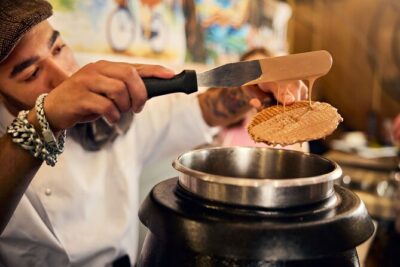
Traditional Dutch Syrup Waffle Making Workshop
Read our review →Amsterdam Traditional Dutch Syrup Waffle Making Workshop
Read our review →
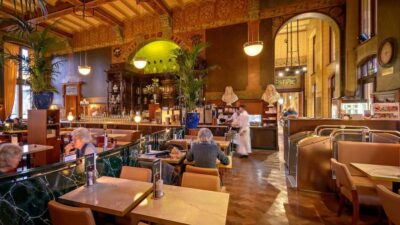
3-Course Meal in Historic 1st Class Waiting Rooms
Read our review →

Amsterdam Light Festival Winter Walk with Stroopwafel Workshop
Read our review →
Distilling Class @ Spirited Union Rum Co. (Amsterdam)
Read our review →
Cocktail workshop @ Spirited Union Rum Co. (Amsterdam)
Read our review →Browse the lists this tour appears in