
REVIEW · ROTTERDAM TOURS
Rotterdam Architecture: Centre and South Bank with watertaxi
Rotterdam makes a strong first impression. This three-hour tour pairs post-war architecture with a fast watertaxi crossing, giving you a clear introduction to the city’s center and South Bank without wasting time on long transfers. An architect guide leads the walk, adding useful context to buildings that can otherwise look like a jumble of glass, concrete, and bright colors.
I especially like the route’s variety: you move from Central Station and modern shopping streets to a medieval church, the Markthal, and the famous Cube Houses. I also like that the watertaxi is part of the tour rather than an optional extra, since the river crossing gives you a fresh view of Rotterdam’s skyline and the Erasmus Bridge.
The main drawback is the 4-kilometer walk, followed by the speedboat ride. The tour is listed as wheelchair accessible, but it is also described as unsuitable for people with mobility impairments or visual impairments, so check your needs carefully before booking.
In This Review
- Key points at a glance
- Why this Rotterdam route works so well
- Meeting at Central Station and reading the new city
- Lijnbaan and Rotterdam’s post-war experiment
- Timmerhuis and the city’s bold building language
- St. Laurens Church, a survivor in a rebuilt center
- Markthal and the Cube Houses
- The watertaxi ride beneath the Erasmus Bridge
- The South Bank and Rotterdam’s former harbor district
- What the architect guide adds
- Walking demands, timing, and who should book
- Booking value and practical choices
- Should you book the Rotterdam architecture tour?
- FAQ
- Where does the Rotterdam architecture tour begin?
- How long does the tour last?
- How far do you walk?
- Is the watertaxi ride included?
- What language is the tour in?
- Can children under 12 join the tour?
- What should you bring?
- Is the tour suitable for people with mobility or visual impairments?
Key points at a glance
- Meet beneath Rotterdam Central Station’s clock: The starting point is outside, beside the main entrance, making it easy to locate once you reach the station.
- See Rotterdam through an architect’s eyes: The guide explains why the city looks so different from other Dutch cities and points out future development plans.
- Cover major central sights on foot: The route includes Lijnbaan, Timmerhuis, St. Laurens Church, Markthal, and the Cube Houses.
- Cross the Maas by watertaxi: The speedboat passes beneath the Erasmus Bridge on the way to the South Bank.
- Explore the former harbor district: You see Hotel New York, Fenixloods, Fenix Food Factory, and the OMA building.
- Bring walking shoes, not luggage: Large bags are not allowed, and children under 12 pay only the speedboat fee.
Why this Rotterdam route works so well
Rotterdam is easier to understand when you see its past and future side by side. Much of the central city was rebuilt after wartime destruction, so broad streets, bold buildings, and modern planning define the experience. At the same time, older survivors such as St. Laurens Church remind you that Rotterdam was not created from nothing.
This tour makes that contrast the main story. You do not simply stop at a church, a market hall, and a set of unusual houses for photographs. The guide links them together as parts of a city that keeps testing new ideas.
I would choose this outing early in a Rotterdam stay. The route gives you a useful map in your head, and guide Tania has been praised for explaining the architectural highlights clearly, discussing future projects, and offering practical tips for the rest of your visit. That sort of advice can help you decide which areas deserve a second look on your own.
The experience lasts three hours, which is long enough to cover plenty but short enough to fit around a museum, lunch, or an afternoon train. You should expect a steady walking pace rather than a casual stroll with long sitting breaks.
More Rotterdam trips:
- Rotterdam: Harbor Sightseeing Cruise
★ 4.3 · 7,599 reviews - Rotterdam: 1-Hour Sightseeing Splash Tour
★ 4.5 · 3,299 reviews - Rotterdam: Rotterdam Zoo Blijdorp Entry Ticket
★ 4.6 · 2,754 reviews
Meeting at Central Station and reading the new city
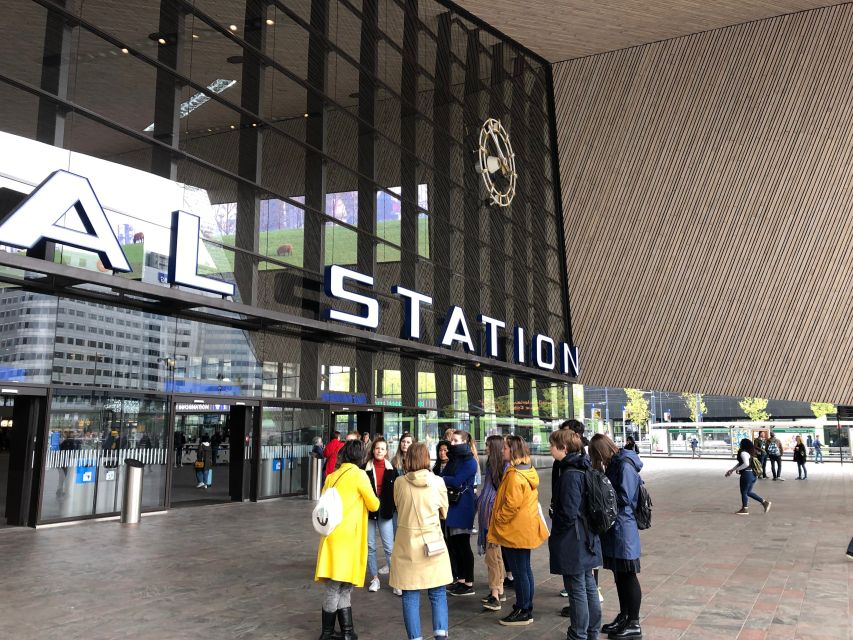
Your guide meets you under the station clock, outside beside the main entrance of Rotterdam Central Station. Arrive with comfortable shoes and without large luggage. This is a sensible meeting place because the station is one of the city’s easiest landmarks, but make sure you are outside, not wandering through the concourse looking for the group.
Central Station sets the tone. Its newly built design reflects Rotterdam’s taste for large, practical, forward-looking structures. Starting here also lets the guide explain how the city rebuilt and reorganized itself after severe wartime damage.
From the station, the route heads into the center. You will spend much of the first part on foot, so this is where the tour’s physical demand begins. The distance is not extreme for someone used to city walking, but four kilometers can feel substantial if you have already spent the morning sightseeing.
Lijnbaan and Rotterdam’s post-war experiment
The Lijnbaan is one of the key early stops. This post-war modernist shopping area shows that Rotterdam’s new identity was not limited to dramatic towers and bridges. The district reflects a planned approach to shopping and city life, with architecture shaped by the needs of a modern urban center.
An architect guide can make this stop more useful than a quick walk through the shops. You learn to notice the relationship between pedestrian space, commercial buildings, and the wider plan of the city. The area also gives you a practical break from the more famous photo stops, since it shows how Rotterdam’s design ideas affect ordinary daily life.
Do not expect every building to be conventionally pretty. Rotterdam often asks you to think before you admire. That is part of its charm, but it may not suit you if you want a tour filled only with historic façades and picturesque canals.
Timmerhuis and the city’s bold building language
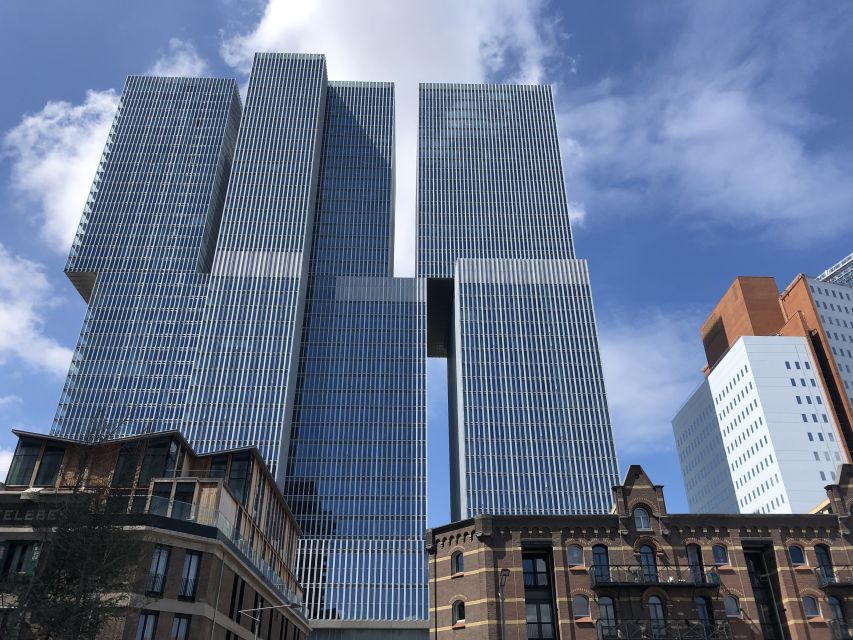
The route continues to Timmerhuis, designed by the internationally known architecture firm OMA. It is one of the clearest examples of Rotterdam’s willingness to treat architecture as a public statement.
The guide’s explanation matters here. Without context, a modern building can be reduced to a quick photograph and a vague comment about its unusual shape. With an architect leading the walk, you get a better sense of how the building fits into the city and how new projects are changing the center.
The tour does not claim that every design choice is universally appealing. That balance is useful. You can appreciate the ambition while deciding for yourself if the result works visually and practically.
A completely different kind of day out in Rotterdam:
- Rotterdam: Euromast Lookout Tower Ticket
★ 4.4 · 2,549 reviews - Rotterdam: Pancake Cruise
★ 4.4 · 1,986 reviews - From Amsterdam: Rotterdam, Delft & The Hague Guided Day Tour
★ 4.2 · 1,765 reviews - Rotterdam: Kinderdijk UNESCO World Heritage Entry Ticket
★ 4.6 · 1,477 reviews
St. Laurens Church, a survivor in a rebuilt center
St. Laurens Church brings an older note to the route. Its presence is especially striking because so much of the surrounding center reflects post-war rebuilding and recent construction.
This stop helps you avoid a common mistake in Rotterdam: assuming the city is entirely modern. The church connects the present city to its earlier identity and gives the guide a chance to explain how old and new Rotterdam exist side by side.
You should not expect a long religious or art-history visit based on the tour description. The church is one part of a moving architectural route, not the sole focus. If you want a detailed interior study, you may need separate time elsewhere.
Markthal and the Cube Houses
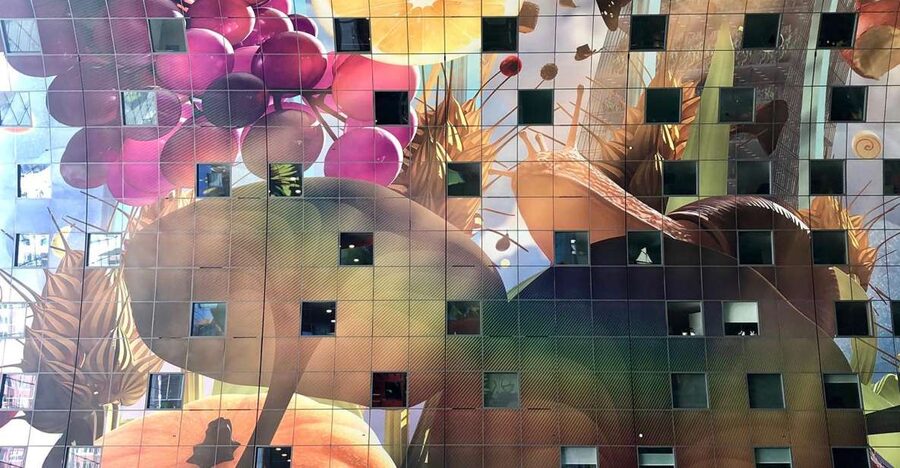
The Markthal is one of the tour’s biggest visual moments. It is described as Europe’s most unique indoor market, and the stop gives you a chance to experience Rotterdam’s love of large-scale, imaginative public buildings.
The value here is not just the building’s appearance. A market hall is an active city space, so you get a sense of how design, food, shopping, and public life meet. You can also use the stop to reset before the final central highlight, the Cube Houses.
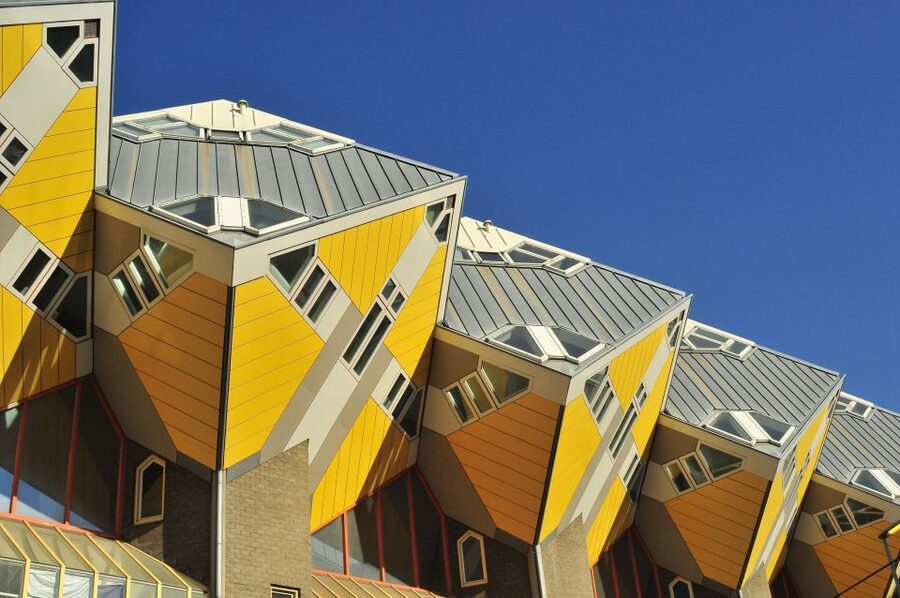
The Cube Houses are among Rotterdam’s most recognizable buildings. Their angled forms are playful and difficult to ignore, but the guide adds an important practical question: what is it like to use a home designed this way?
You will want your camera ready, but do not let the photo stop end the conversation. This is one of the places where an architect guide can explain the difference between an eye-catching concept and an everyday building. The tour gives you a more useful way to look at the houses than simply labeling them strange.
The watertaxi ride beneath the Erasmus Bridge
At the riverside, you board a watertaxi speedboat for the crossing to the South Bank. This is the tour’s most physical burst of fun, and it breaks up the walking with a short ride on the water.
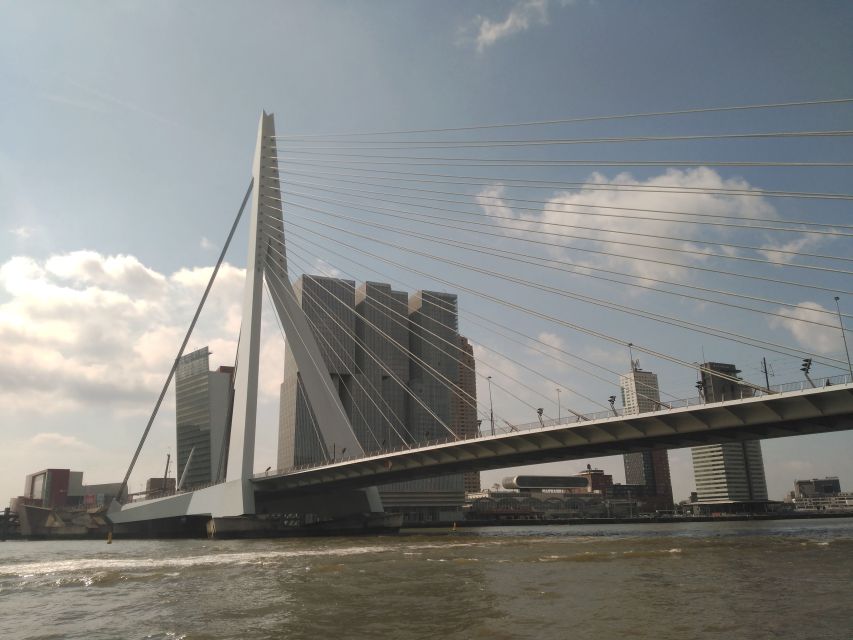
The route passes under the Erasmus Bridge, Rotterdam’s best-known landmark. From the river, the bridge and the city appear at a different scale. You are no longer looking up from a street corner. You are seeing how the buildings, harbor, and bridge relate to one another across the water.
The watertaxi is also a smart piece of sightseeing transport. It moves you to the South Bank while giving you a view that a normal road transfer cannot provide. The ride is included in the $82 price, so you are not paying separately for this part of the experience.
That price deserves a clear look. You are paying for three hours with a live English-speaking architect guide, a structured central walking route, and the watertaxi fee. If you already plan to take a watertaxi independently and prefer to explore buildings alone, the value may be less convincing. If you want the river crossing tied to an explained route, the package is more useful.
The South Bank and Rotterdam’s former harbor district
The South Bank feels different from the central route. Here, the focus shifts to a former harbor area that has become one of the city’s key districts for new architecture, cafés, and restaurants.
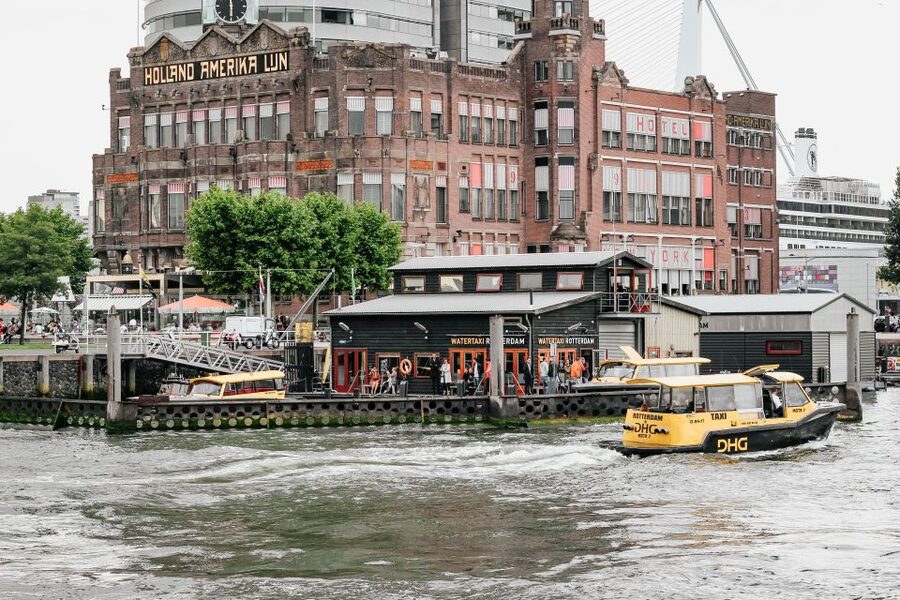
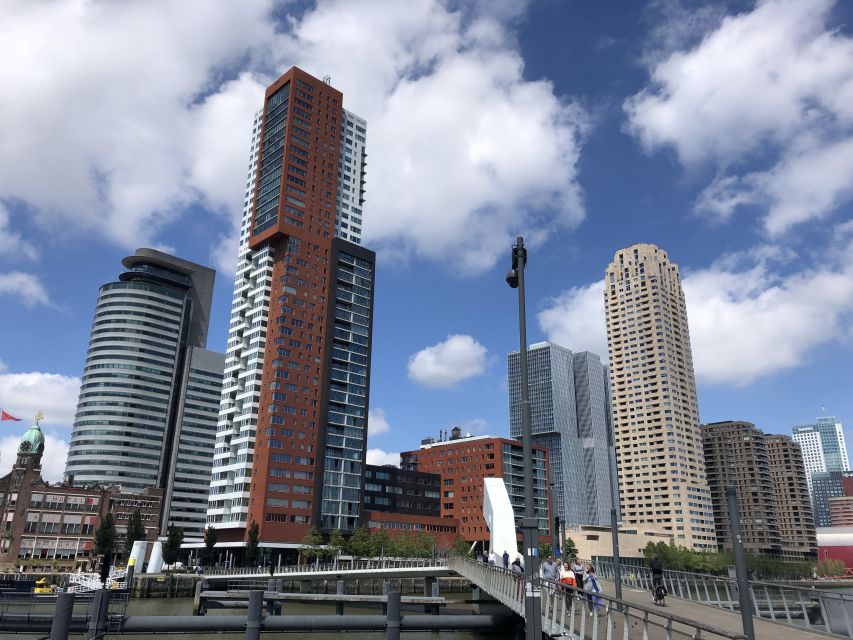
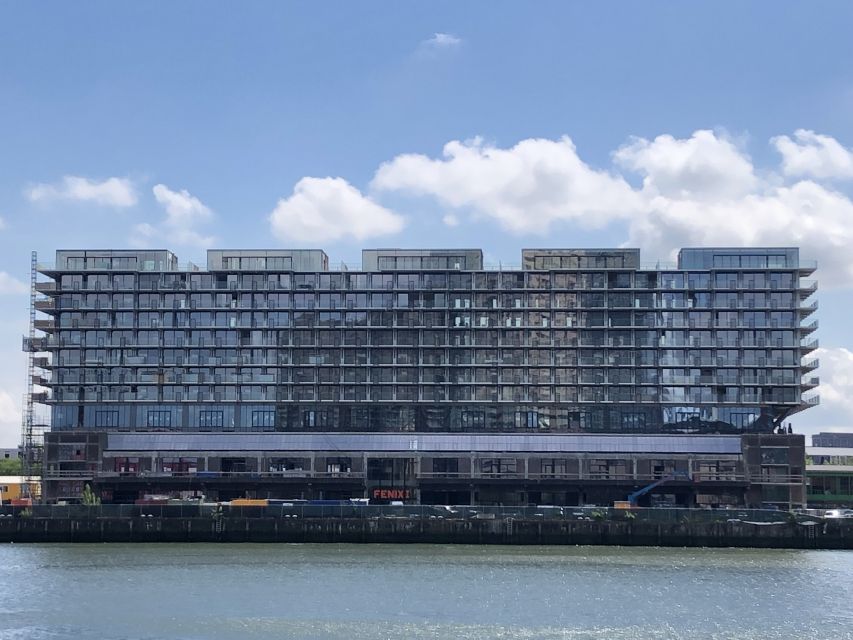
You see the Rotterdam OMA building, Hotel New York, Fenixloods, and Fenix Food Factory. These stops show how Rotterdam has reused and reshaped its harbor spaces rather than leaving them as closed-off industrial zones.
Hotel New York adds a historic layer to the South Bank. Fenixloods and Fenix Food Factory connect the area with its working-port past and present-day food culture. The tour does not include drinks or food, so you should treat these as places to notice and perhaps return to later, not as included tasting stops.
This part is especially useful if you have another half-day in Rotterdam. The guide can point out future plans for the area, and Tania was specifically praised for offering sightseeing suggestions for the rest of a visit. I would take notes here, especially if you want a good area for a later meal or independent walk.
What the architect guide adds
The guide is the heart of this experience. Rotterdam’s buildings are easy to photograph but not always easy to interpret. An architect can explain the choices behind them, point out connections between districts, and give you a clearer sense of where the city may go next.
The experience is in English, and Tania has received especially strong praise for clear explanations of Rotterdam’s architectural highlights and future developments. That is a valuable combination. You get both the city’s built past and a look at its plans ahead.
The guide can also help you notice details you might miss alone. Lijnbaan is more than a shopping street. Timmerhuis is more than an OMA project. The Markthal and Cube Houses are not just unusual shapes. The route turns separate sights into a connected story.
Group size is not provided, so I would not book this expecting a private tour. You should expect a guided group setting and a route that keeps moving.
Walking demands, timing, and who should book
The tour covers four kilometers on foot over three hours, with a watertaxi crossing included. Comfortable shoes are essential. Large bags and luggage are not allowed, which is important if you are arriving with suitcases or planning to leave directly for another train.
Children under 12 can join free of charge, with the listed price covering only the speedboat fee. That makes the outing more appealing for families, provided children are comfortable with the walking distance and the speedboat format.
The activity is advertised as wheelchair accessible, but the same information says it is not suitable for people with mobility impairments or visual impairments. Because the route includes four kilometers of walking and a boat transfer, you should contact the provider before booking if you have specific access needs.
The tour suits you best if you:
- Like modern architecture and city planning
- Want a fast introduction to central Rotterdam
- Enjoy walking tours with an expert guide
- Want a memorable river crossing
- Have comfortable shoes and no large bags
- Prefer a structured first look before exploring alone
It may not suit you if you want a slow food tour, a detailed museum visit, or a route built around historic Dutch streets. Rotterdam is the subject here, not postcard Holland.
Booking value and practical choices
At $82 per person, this is not the cheapest way to see Rotterdam. The price makes more sense when you value the guide’s architectural background and the included watertaxi ride. You are buying interpretation and a well-planned route, not just transport between attractions.
Free cancellation up to 24 hours before the start gives you some flexibility, and you can reserve now and pay later. Check the available starting times before making plans, since the tour lasts three hours and the schedule is not fixed in the information provided.
I would also avoid combining this with a heavy suitcase transfer. The no-large-bag rule is clear, and the walking route will be more enjoyable when you can move freely.
Should you book the Rotterdam architecture tour?
Book it if you want to understand why Rotterdam looks the way it does. The combination of Lijnbaan, Timmerhuis, St. Laurens Church, Markthal, Cube Houses, and the South Bank gives you a broad introduction in a compact period. The watertaxi ride adds real movement and a fine river-level view beneath the Erasmus Bridge.
I would book this early in your stay, especially if you want guide Tania’s kind of practical advice about what to see next. Skip it if four kilometers of walking is too much, if you need a fully accessible route, or if your main goal is historic architecture rather than modern city design.
For the right visitor, this is a lively and useful first chapter in Rotterdam, with enough detail to make the city’s bold buildings feel less random and more intentional.
FAQ
Where does the Rotterdam architecture tour begin?
Meet your guide under the station clock, next to the main entrance of Rotterdam Central Station, on the outside.
How long does the tour last?
The tour lasts three hours.
How far do you walk?
The walking route covers four kilometers.
Is the watertaxi ride included?
Yes. The watertaxi fee is included in the tour price.
What language is the tour in?
The live guided tour is in English.
Can children under 12 join the tour?
Yes. Children under 12 can participate free of charge. The listed price only covers their speedboat fee.
What should you bring?
Bring comfortable shoes. Large bags and luggage are not allowed.
Is the tour suitable for people with mobility or visual impairments?
The activity is listed as wheelchair accessible, but it is also described as unsuitable for people with mobility impairments or visual impairments. Contact the provider before booking if you have specific access requirements.
Just added around Rotterdam
- Private tour: Markthal, Cube houses and Rooftop Het Witte Huis★ 4.5 · 3 reviews
- Private tour from Rotterdam to Windmills of Kinderdijk & Gouda Cheese Experience★ 5.0 · 3 reviews
- Discover Rotterdam: Classic Highlights Bike Tour by a Local★ 5.0 · 3 reviews
- Private Transfer from Rotterdam Port to Amsterdam Airport (AMS)★ 5.0 · 3 reviews
- Discover Rotterdam’s most Photogenic Spots with a Local★ 5.0 · 3 reviews
- privatetour Delft, The Hague&Rotterdam Kinderdijk from Amsterdam★ 5.0 · 3 reviews
- Rotterdam: Capture the most Photogenic Spots with a Local★ 5.0 · 3 reviews
- Private Tour of Rotterdam and The Hague including Transfer★ 5.0 · 3 reviews
Rotterdam Tours, compared.



Kinderdijk UNESCO World Heritage Entry Ticket
Read our review →
Browse the lists this tour appears in