REVIEW · TOURS
Small Group Hidden Gems Tour in Amsterdam
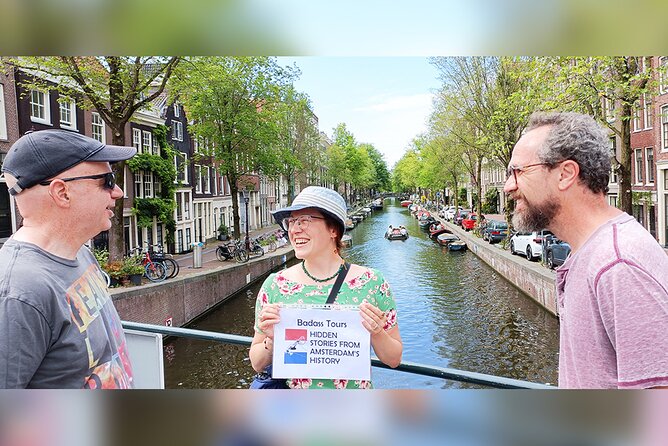
Amsterdam has more stories than canals. This two-hour walking tour takes you beyond the usual postcard sights, linking overlooked people and major social changes to ordinary-looking places. I like its small group of no more than 12 and its focus on voices often missed by standard city tours. I also like the guide-led storytelling, which brings philosophy, Jewish life, Black history, LGBTQ+ rights, labor movements, and wartime resistance into one compact walk.
The main drawback is the pace. You cover nine stops in about two hours, with most visits lasting only five to 15 minutes. You will not enter the attractions, and the tour depends on good weather, so this suits you best if you want a lively introduction to Amsterdam’s lesser-known stories rather than a slow, detailed museum visit.
In This Review
- Key points at a glance
- Starting beside the Amstel at Monument Megadlé Jethomiem
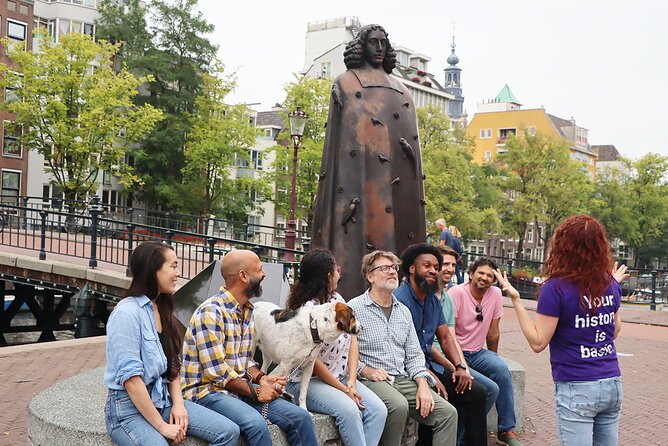
- Spinoza Monument and the cost of independent thought
- Mozes en Aaronkerk and Amsterdam’s Black past
- Portuguese Synagogue and an underground escape network
- Hortus Botanicus and two Indonesian revolutionaries
- De Burcht and the workers who changed daily life
- ARTIS Amsterdam Royal Zoo and the people behind the city
- University of Amsterdam and two public trailblazers
- H’ART Museum and the making of an art-world household name
- Why the guides matter so much
- A small group that encourages questions
- What $48.16 gets you
- Practical details before you go
- Who should book this Amsterdam walk?
- Should you book the Hidden Gems Tour?
- FAQ
- How long is the Small Group Hidden Gems Tour in Amsterdam?
- How many people can join the tour?
- What language is the tour offered in?
- Where does the tour begin?
- Where does the tour end?
- Are admission tickets included?
- Can I cancel for a full refund?
Key points at a glance
- Nine stops in two hours: The route connects Amstel-area landmarks, religious buildings, university grounds, a zoo, and the H’ART Museum.
- Amsterdam’s overlooked voices: Stories include the world’s first gay marriage, a 17th-century Black couple, Sephardic Jewish rescue efforts, Indonesian revolutionaries, and women who shaped public life.
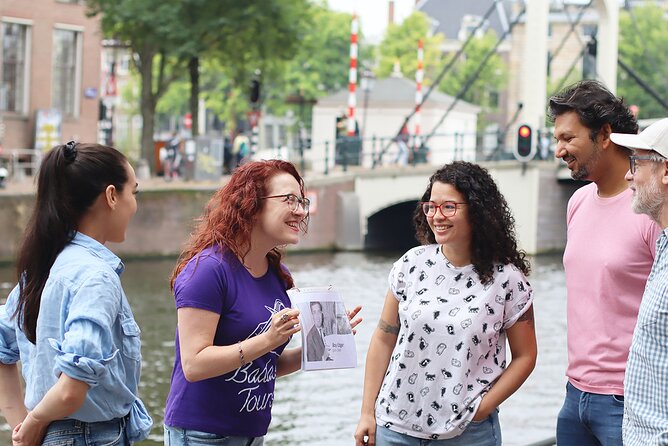
- A genuinely small group: With a maximum of 12 people, you should have a better chance to hear the guide and ask questions.
- Story-first sightseeing: Admission is not included because the tour mainly takes place outdoors, using buildings and monuments as settings for short historical accounts.
- Strong guide reputation: Elizabeth, Elyzabeth, Tanja, and Astrid are praised for clear storytelling, care, and thoughtful handling of difficult subjects.
- Good value at $48.16: The price is reasonable if you want a focused history walk with a passionate local guide, though less attractive if you prefer major interiors and formal sightseeing.
Starting beside the Amstel at Monument Megadlé Jethomiem
The tour begins at Monument Megadlé Jethomiem, at Amstel 23. That location puts you near the water and within reach of several places tied to Amsterdam’s religious, political, and social history.
Your guide begins by helping you get oriented in the city. This is useful early in a visit, especially if Amsterdam feels like a maze of canals, bridges, and narrow streets. The opening story concerns the world’s first gay marriage and the modest building where it took place. It is a smart choice for a first stop because it immediately challenges the idea that major moments in history always happen in grand buildings.
You will want comfortable shoes. The walk is only about two hours, but the route includes several outdoor stops and time standing while the guide talks. Since no admission tickets are included, you should think of this as a guided city walk, not a sequence of museum visits.
A few more trips of this kind worth comparing:
- Amsterdam: Van Gogh Museum Ticket
★ 4.7 · 52,054 reviews - Amsterdam Classic Saloon Boat Cruise with Drinks and Cheese
★ 5.0 · 31,825 reviews - Amsterdam Luxury Canal Cruise + Unlimited Drinks & Bites option
★ 5.0 · 30,518 reviews
Spinoza Monument and the cost of independent thought
The five-minute stop at the Spinoza Monument introduces Baruch Spinoza, one of modern philosophy’s major figures. The focus is not only on his ideas, but also on his break with his own religious community and the price he paid for thinking independently.
This is a good example of the tour’s method. Instead of giving you a broad lecture on Amsterdam, the guide uses one person and one place to explain how the city dealt with religion, identity, and dissent. Five minutes is enough for a sharp introduction, but not enough for a full discussion of Spinoza’s philosophy. If you are especially interested in him, treat this as a starting point for further reading.
Mozes en Aaronkerk and Amsterdam’s Black past
At Mozes en Aaronkerk, the guide tells the story of a couple living in Amsterdam’s free Black community during the 17th century. This stop adds an important correction to the old picture of Amsterdam as a city shaped only by white merchants, painters, and politicians.
The value here is the human scale. You are not simply hearing that Black people lived in Amsterdam centuries ago. You are being introduced to the life of a specific couple and the community around them. The short stop cannot cover every part of that community’s experience, but it gives you a more complete way to look at the city’s streets and old buildings.
Portuguese Synagogue and an underground escape network
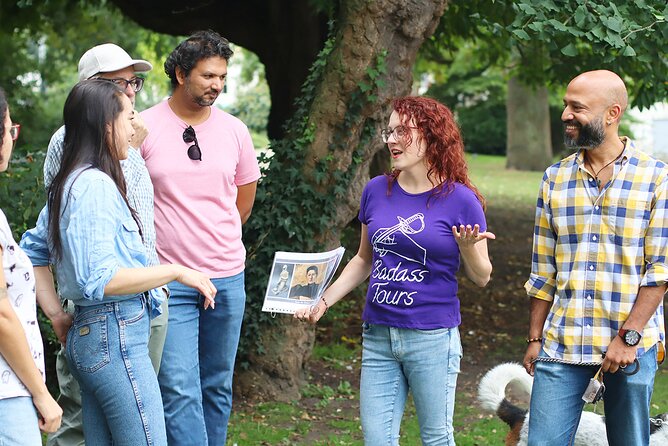
The Portuguese Synagogue is one of the most atmospheric locations on the route, even though the tour does not include entry. From outside, you hear about an heiress who helped create an underground railroad during the Spanish and Portuguese Inquisitions.
That story gives the synagogue a human focus. You are not simply looking at an old religious building. You are considering how wealth, courage, family connections, and secrecy could help people escape persecution.
The stop also adds a Jewish perspective to the tour without reducing Jewish history to the Second World War. The five to ten minutes here are brief, so you should visit the synagogue separately if you want to see its interior or spend more time with its collections.
A completely different kind of day out in Amsterdam:
- Amsterdam: Heineken Experience Ticket
★ 4.6 · 30,055 reviews - Amsterdam: Rijksmuseum Entry Ticket
★ 4.7 · 25,535 reviews - Amsterdam: Classic Boat Cruise with Optional Cheese & Wine
★ 4.6 · 22,925 reviews - Amsterdam: Evening Cruise with Optional Wine and Snacks
★ 4.4 · 19,696 reviews
Hortus Botanicus and two Indonesian revolutionaries
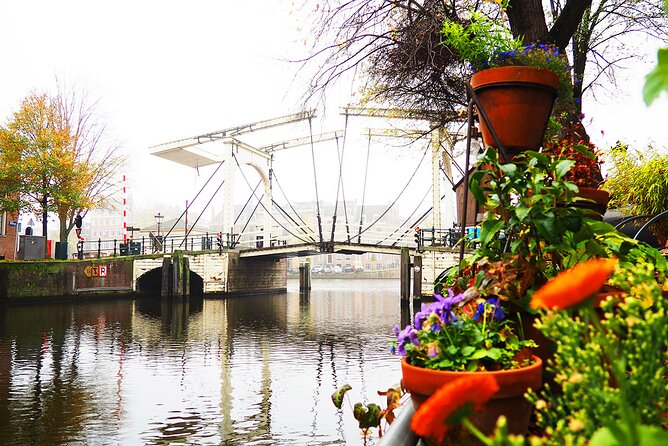
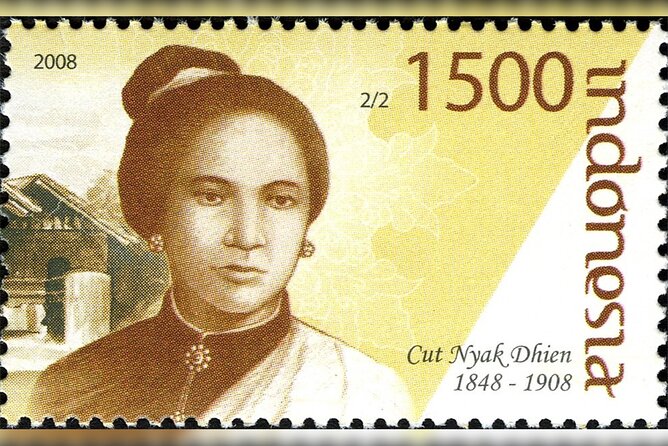
Near Hortus Botanicus, the guide shifts the focus from Amsterdam’s religious communities to Indonesia. You hear the difficult stories of two Indonesian rebels and revolutionaries whose lives took very different paths.
This is one of the route’s most useful links between Amsterdam and its former colonial world. It reminds you that Dutch history did not stop at the edge of the city. People, power, money, and political struggles connected Amsterdam to Indonesia in ways that are easy to miss during a standard canal walk.
The stop lasts about ten minutes. That allows room for a compelling comparison, but not a full account of Indonesian independence or Dutch colonial policy. I would listen for the personal details, then use the story as a prompt to explore Amsterdam’s wider connection with Indonesia.
De Burcht and the workers who changed daily life
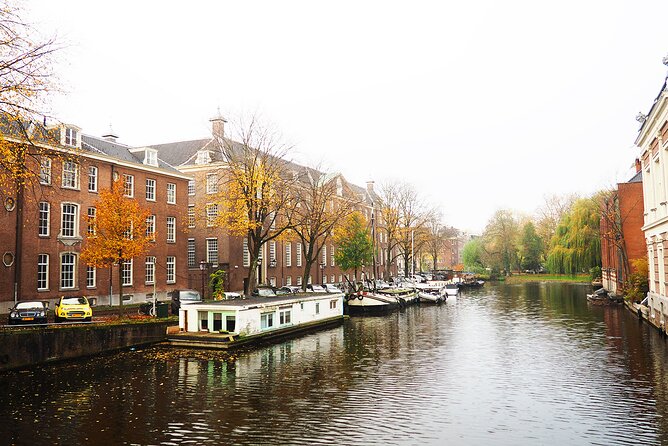
At De Burcht, you learn about Amsterdam’s diamond workers and the labor union that built the building. The story reaches beyond diamonds and architecture, explaining how organized workers helped secure rights that people across society now depend on.
This is a particularly effective stop because De Burcht is not just a decorative landmark. It becomes evidence of political action. The building helps you picture the people who worked, organized, and pushed for fairer treatment.
The ten-minute visit gives the subject more room than the shorter monument stops. If you are interested in social history, this may be one of the strongest parts of the walk. It connects a local industry to wider questions about work, unions, and public rights.
ARTIS Amsterdam Royal Zoo and the people behind the city
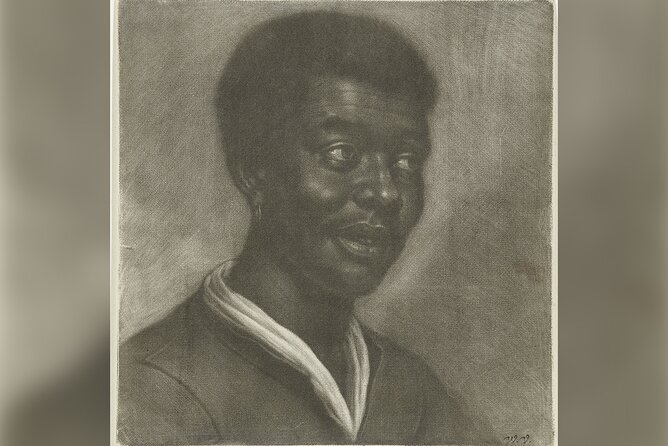
The route passes ARTIS Amsterdam Royal Zoo, including its flamingos, while the guide introduces several influential Amsterdammers. The subjects range from major artists to resistance heroes from the Second World War.
This section sounds lighter at first because of the animals, but it carries serious historical weight. The setting helps break up the more difficult material while keeping the focus on people who shaped the city.
You spend about 30 minutes around this part of the route, making it the longest stop. That extra time matters. It gives the guide space to move between different lives and show that Amsterdam’s story includes art, courage, political action, and resistance.
You should not expect a zoo visit. The stop is outdoors and the focus is on the people and stories connected to Amsterdam. If you already plan to visit ARTIS, this walk can give the area extra meaning, but the tour does not replace a ticketed visit inside.
University of Amsterdam and two public trailblazers
The walk crosses through the University of Amsterdam’s main campus. Here, the guide tells you about an influential suffragist and a diplomat whose work changed the world.
This stop broadens the tour’s treatment of public life. Women’s political rights and international diplomacy often get separated into different history lessons, but here they appear as part of Amsterdam’s human story. The campus setting also gives the walk a change of mood after the zoo and resistance stories.
You spend around 15 minutes here. That is enough to follow the main arc of each person’s life, though you may want to ask the guide for names and further reading if one story catches your attention. The small group format is useful at moments like this because questions can be handled without the guide trying to manage a large crowd.
H’ART Museum and the making of an art-world household name
The tour ends outside the H’ART Museum, formerly known as the Hermitage Museum, at Amstel 51. The final story concerns one of the art world’s giants and the relative who barely knew him but helped ensure that his name would not disappear.
It is an excellent closing idea. After hearing about political leaders, workers, philosophers, religious communities, and resistance figures, you finish with the surprising private connection behind a famous artist’s later reputation.
The stop takes about 15 minutes, and the museum gives you an easy option for continuing your afternoon. The guided portion ends in front of the building, so you can decide for yourself if you want to go inside or move on to another part of Amsterdam.
Why the guides matter so much
The strongest feature is the quality of the storytelling. Elizabeth and Elyzabeth are praised for being engaging, thoughtful, and well prepared. One family said Elyzabeth’s stories stayed with them for the rest of their visit, while another described her as an exceptional storyteller who made the experience emotionally powerful.
Astrid receives similar praise for her treatment of Jewish history and the suffering of the Second World War. Her approach appears especially suited to difficult subjects because she connects past events to the need for remembrance without turning the walk into a dry lecture.
Tanja is also praised for answering questions clearly during the Jewish quarter version of the tour. The provider appears to work with several guides, so your guide may not be one of these named hosts. Still, the pattern is clear: the best part of the experience is not a scripted list of dates. It is the guide’s ability to connect a person, a building, and a larger idea.
A solo participant who wanted a BIPOC-focused view of Amsterdam also found the booking process responsive and the experience inclusive. That is useful if you are traveling alone or looking for a perspective that treats Amsterdam’s diversity as central rather than decorative.
A small group that encourages questions
The maximum group size is 12. That is small enough to make the walk feel personal, while still giving it the energy of a shared activity.
You will often be standing outdoors as the guide speaks. In a large group, that can mean struggling to hear or missing the chance to ask about a detail. Here, the smaller format should make it easier to stay involved, though the actual experience will still depend on where you are standing and how busy the streets are.
One especially useful detail concerns accessibility. A guide made a strong effort to accommodate a mother using a wheelchair and dealing with hearing limitations. The tour information also says most people can participate, service animals are allowed, and the route is near public transportation. Even so, the walk is outdoors and includes several stops, so you should contact the provider ahead of time if you have specific mobility or hearing needs.
What $48.16 gets you
At $48.16 per person, this is not the cheapest way to walk around Amsterdam. You can see many of these buildings from outside without paying anything, and you can read about the people involved on your own.
The price makes more sense if you value a guide who has researched the connections between those places. In two hours, you receive a carefully selected introduction to philosophy, Jewish life, Black history, colonial ties, labor rights, LGBTQ+ history, art, women’s activism, diplomacy, and wartime resistance. That range would take considerable effort to assemble independently.
The tour also avoids the cost of attraction tickets because the value lies in interpretation. I would book it if you want context and memorable stories. I would skip it if your priority is entering buildings, spending long periods at one site, or getting a broad architectural tour of Amsterdam.
The group limit helps protect the value. Twelve people is still enough for a social walk, but not so many that the guide becomes hard to hear. With the tour booked an average of 16 days ahead, reserving early is sensible if your dates are fixed.
Practical details before you go
The experience is offered in English and includes a mobile ticket. Confirmation normally arrives when you book, although bookings made within two days of departure may take up to 48 hours to confirm, subject to availability.
You can cancel for a full refund up to 24 hours before the start time. Changes or cancellations made inside that 24-hour window are not accepted for a refund. The tour requires good weather, and if poor weather forces cancellation, you will be offered another date or a full refund.
The walk begins at Monument Megadlé Jethomiem, Amstel 23, and finishes at H’ART Museum, Amstel 51. That ending is convenient because you are left near a major museum and public transportation rather than returned to the starting point.
The route is compact, but you should allow extra time before the start to find the monument. A mobile map and comfortable shoes will help. Since the experience is built around short outdoor talks, bring clothing suited to the forecast.
Who should book this Amsterdam walk?
I would choose this tour for a first or second visit when you want Amsterdam to feel like a city of people, not just canals and famous paintings. It is especially well suited to history fans, solo visitors, couples, families with older children, and anyone interested in Jewish, Black, LGBTQ+, labor, colonial, or women’s history.
It is also a good fit if you prefer stories about lesser-known figures to a standard list of famous sights. The guides appear particularly strong at making difficult material personal and memorable.
I would choose something else if you want a relaxed pace, a canal ride, extensive architectural detail, or entry to several attractions. Nine stops in two hours means the tour is selective and brisk. You will leave with many leads, not a complete account of Amsterdam.
Should you book the Hidden Gems Tour?
Book it if you want a smart, human-focused introduction to Amsterdam and value a passionate guide over attraction admission. The mix of subjects is unusually broad, and the small group should make the walk easier to follow and more open to questions.
At $48.16, it offers fair value for a well-led history walk, especially if the stories shape how you understand the rest of your visit. Just arrive ready to walk, listen outdoors, and accept that each stop is a short chapter rather than a full lesson.
FAQ
How long is the Small Group Hidden Gems Tour in Amsterdam?
The tour lasts approximately two hours.
How many people can join the tour?
The maximum group size is 12 people.
What language is the tour offered in?
The experience is offered in English.
Where does the tour begin?
It begins at Monument Megadlé Jethomiem, Amstel 23, 1011 PT Amsterdam, Netherlands.
Where does the tour end?
The tour ends in front of H’ART Museum, formerly the Hermitage Amsterdam, at Amstel 51, 1018 EJ Amsterdam.
Are admission tickets included?
No admission tickets are included. The tour uses outdoor locations and passes by places such as ARTIS Amsterdam Royal Zoo, Hortus Botanicus, and H’ART Museum.
Can I cancel for a full refund?
Yes. You can cancel at least 24 hours before the start time for a full refund. If poor weather causes the provider to cancel the experience, you will be offered another date or a full refund.
Just added around Amsterdam
- Amsterdam City Center Guided Walking Tour – 12 guests 2,5h★ 5.0 · 3 reviews
- Amsterdam Light Festival Boat Cruise★ 5.0 · 3 reviews
- Daytrip Tour from Amsterdam to Zaanse Schans and Giethoorn★ 5.0 · 3 reviews
- Amsterdam: Van Gogh Museum Entrance and Guided Tour★ 3.5 · 3 reviews
- Amsterdam: Red light tour in German/English for groups of 4 people or more★ 5.0 · 3 reviews
- Amsterdam: Roller Dreams & Amsterdam Nightlife Experience★ 3.7 · 3 reviews
- 2 Hour Making Rembrandt’s Traditional Oil Paints in Amsterdam★ 5.0 · 3 reviews
- Amsterdam Red Light District and Old Town Walking Tour★ 5.0 · 3 reviews
Tours, compared.

Zaanse Schans, Edam, Volendam & Marken Bus Tour
Read our review →
Anne Frank’s Story – Guided Walking Tour through Amsterdam
Read our review →
Life of Anne Frank and World War II Walking Tour
Read our review →

Red Light District Tour in German/English/Italian
Read our review →
Guided Zaanse Schans, Windmills & Cheese Tour
Read our review →
Windmill Tour from Amsterdam, Including Volendam & Marken
Read our review →