
REVIEW · UTRECHT TOURS
Utrecht: Rietveld Schröderhuis UNESCO Entry Ticket
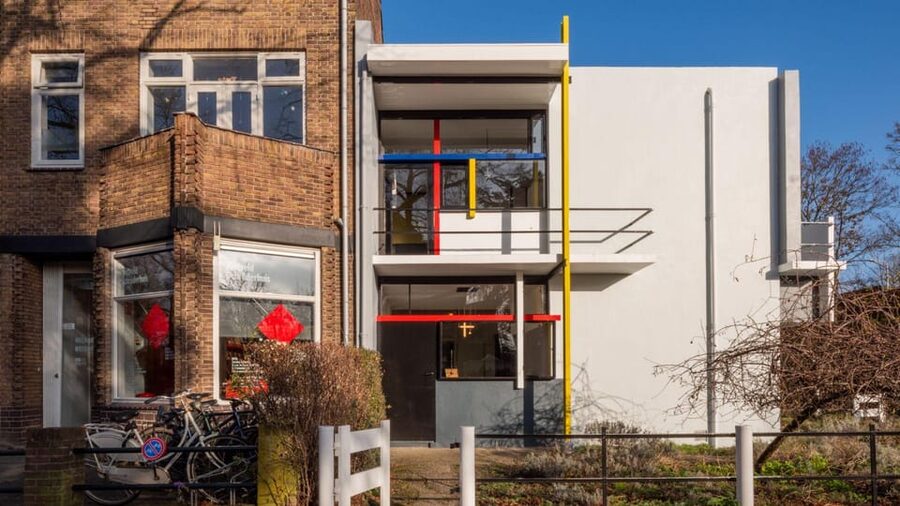
Modern architecture begins here. The Rietveld Schröder House gives you a close look at one of the Netherlands’ most important buildings, designed in 1924 by Gerrit Rietveld for Truus Schröder. I like the short, focused visit and the clever moving walls that show exactly how radical this home was. I also like the self-guided audio tour, which lets you explore at your own pace without trailing behind a large group.
The main drawback is the building’s limited access. It is not suitable for wheelchair users or people with mobility impairments, and the entire visit lasts only about 30 to 40 minutes. At $22 per person, the price is reasonable for a UNESCO World Heritage site, but you are paying for a compact architectural experience rather than a long museum visit.
- The house changed domestic life in 1924: Gerrit Rietveld and Truus Schröder designed rooms that could shift with the needs of the people living there.
- Sliding walls are the star feature: Upstairs, a demonstration shows how open and private spaces could be created with movable partitions.
- It launched Rietveld’s career as an architect: This was his first residence design, making the small house an important starting point.
- The audio tour keeps the visit clear and personal: You can listen in Dutch, English, German, French, Spanish, Italian, Japanese, or Chinese.
- The visit is short but concentrated: Plan on 30 to 40 minutes inside, with extra time for check-in and the museum shop.
- The ticket includes flexibility: You can cancel up to 24 hours before the visit for a full refund, and reserve now while paying later.
In This Review
- Why the Rietveld Schröder House Matters
- Arriving at the Ticket Office
- Moving Through the House with the Audio Tour
- Upstairs: Walls That Change the Room
- The De Stijl Design in Full Scale
- Is $22 a Fair Price?
- Who Will Enjoy This Visit Most?
- Practical Tips for a Smooth Visit
- Rietveld Schröder House: Final Verdict
- FAQ
- How long does the Rietveld Schröder House visit take?
- What is included with the ticket?
- Which languages are available for the audio tour?
- Do I need to bring headphones?
- Where do I check in?
- Is the house accessible to wheelchair users?
Why the Rietveld Schröder House Matters
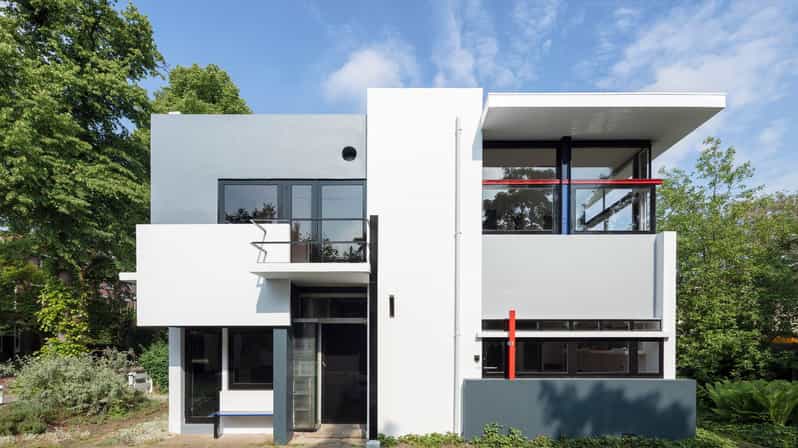
The Rietveld Schröder House is more than an unusual white building with colored lines. It is a physical experiment in how people might live differently.
Rietveld designed the house for Truus Schröder, whose ideas helped shape the building as much as his architectural skill did. Their partnership produced a home that rejected many standard assumptions about domestic space. Instead of fixed rooms with one permanent purpose, the house could change during the day.
That idea was closely tied to De Stijl, the Dutch modern movement associated with clean lines, geometric forms, and a restrained use of primary colors. The house puts those principles into daily use. You are not simply looking at a design style on a wall. You are walking through a home built around it.
The building became a UNESCO World Heritage site in 2000. That designation matters because it recognizes the house as an important work of modern architecture, not just a curiosity in Utrecht. The house also marks the beginning of Rietveld’s career as an architect. Before this project, he was known as a furniture designer and craftsman. The Schröder House helped establish his architectural reputation.
The 2024 centenary gave the building another reason for attention, marking 100 years since its construction. Even without a special anniversary program, the house remains a useful stop for anyone interested in architecture, design, social history, or the changing role of the home.
Arriving at the Ticket Office
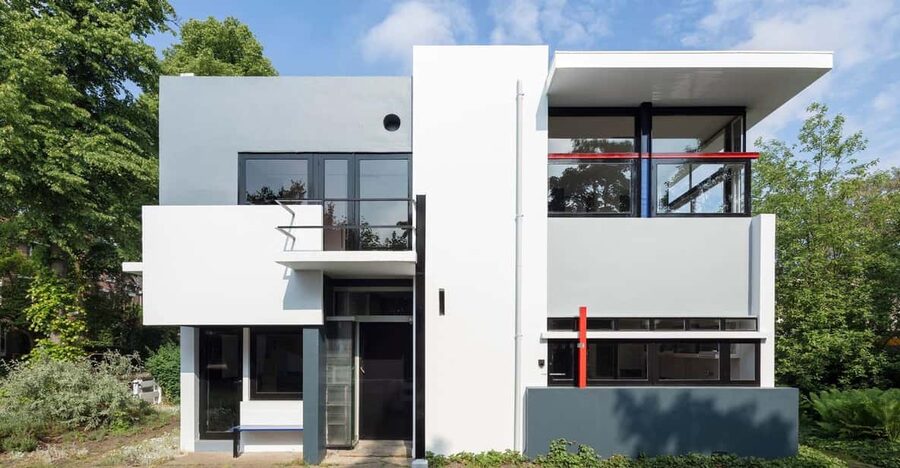
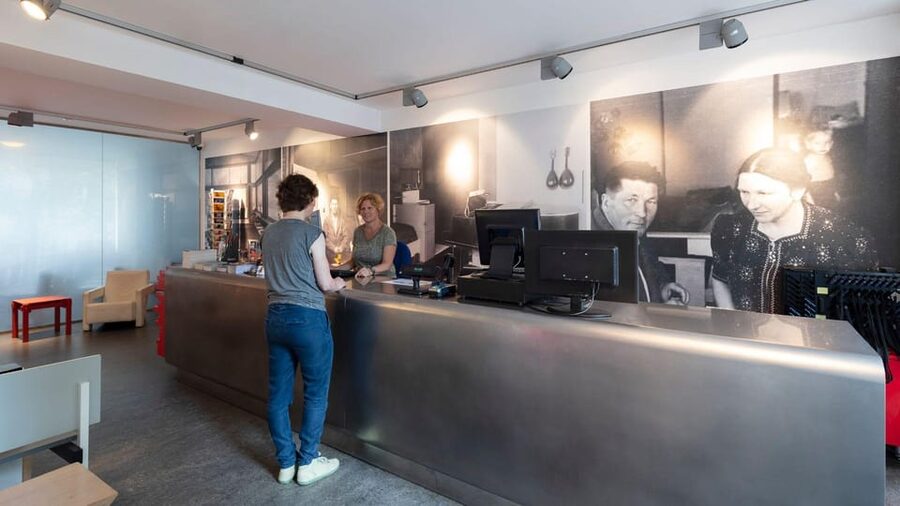
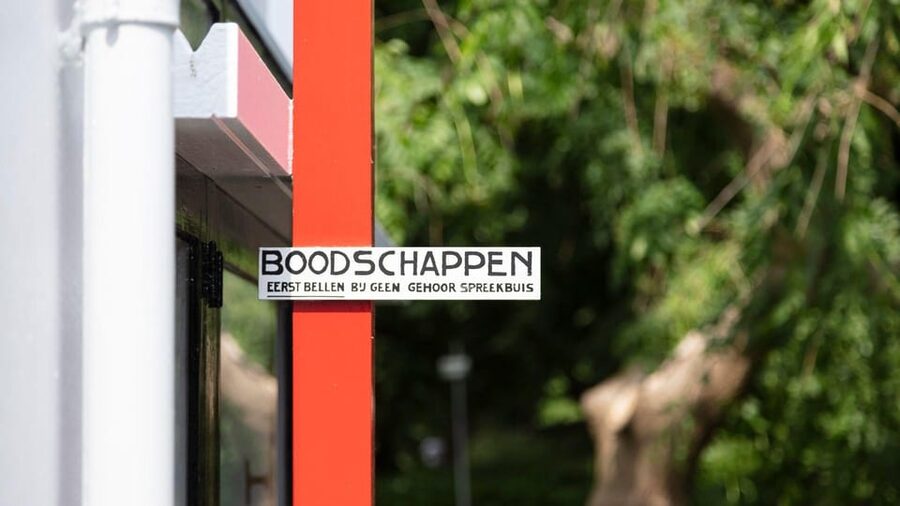
Your visit begins at the ticket office to the left of the Rietveld Schröder House. Check in there before entering the building. This is also where you receive the media player for the audio tour, or scan a QR code if you prefer to use your own device.
The setup is simple. The supplied player has a built-in speaker, so you do not need a headset. If you prefer a quieter, more private audio experience, bring your own headphones with a mini-jack connection. You can also use your own device, but you need to bring your headphones for that option.
This small choice is worth considering before you arrive. The built-in speaker is convenient, especially if you want to keep both hands free. Your own headphones may make it easier to hear every explanation, particularly if other people are listening nearby.
There is no pickup or drop-off service, and food and drinks are not included. Those omissions are not surprising for a short entry visit, but you should treat the house as one stop within a larger day in Utrecht rather than as a full-day activity.
More Attraction Tickets in Utrecht
- Utrecht: De Haar Castle & Park Entry Ticket
★ 4.7 · 1,350 reviews - Utrecht: DOMunder Entry Ticket with Guide
★ 4.4 · 706 reviews - Utrecht: Dom Tower Entry Ticket and Guided Tour
★ 4.6 · 513 reviews
Moving Through the House with the Audio Tour
The audio guide provides the main structure of the visit. As you move from room to room, it explains Rietveld’s design ideas, Schröder’s role, and what daily life was like in a house built around flexible space.
I like this format because the building needs explanation. At first glance, some of its features may look decorative or stark. The audio commentary helps you understand why the lines, walls, furniture, and open areas were arranged as they were.
The information is available in eight languages: Dutch, English, German, French, Italian, Spanish, Japanese, and Chinese. That broad language choice makes the experience useful for international visitors, and you can select the language that lets you think about the architecture rather than translate it in your head.
The visit is self-guided, so you are not tied to a live guide’s pace. You can focus on a detail for a moment, listen carefully, and then move on. At the same time, the audio tour means the experience is less interactive than a guided architectural walk. If you want to ask questions as you go, this may feel a little limited.
The audio stories also help bring Truus Schröder into the picture. It would be easy to treat the house as Rietveld’s solo masterpiece, but the design grew from the needs and ideas of the woman who commissioned it. That human side gives the visit more meaning than a quick look at a famous facade.
Upstairs: Walls That Change the Room
The most memorable part of the visit comes upstairs, where you can see a demonstration of the sliding walls and movable furniture.
This is the point where the phrase new way of living becomes practical. The upper floor can be rearranged to create different degrees of privacy and openness. Rooms do not have to remain locked into one use. A space can change according to the time of day or the needs of the people inside.
That flexibility was highly progressive in 1924. Most homes were organized around fixed rooms and firm divisions. Rietveld and Schröder treated the interior more like a system that could adapt. The walls are not simply barriers. They are tools.
The demonstration is valuable because photographs cannot fully show how the system works. You can see the physical movement and understand how a family might alter the space. It also makes clear that this was not modern design for appearance alone. The bold exterior reflects an equally bold approach to everyday life.
The moving elements are also a reminder that experimental design can bring practical compromises. A flexible room requires attention and adjustment. The house was carefully planned, and its compact visit lets you see the ideas without needing to live with them yourself.
The De Stijl Design in Full Scale
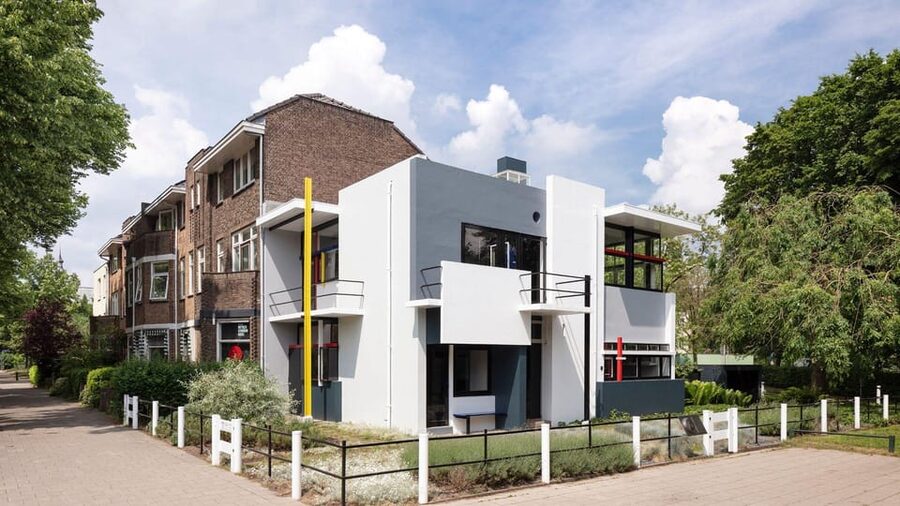
De Stijl is often introduced through paintings, furniture, and abstract compositions. Here, you experience it at full scale.
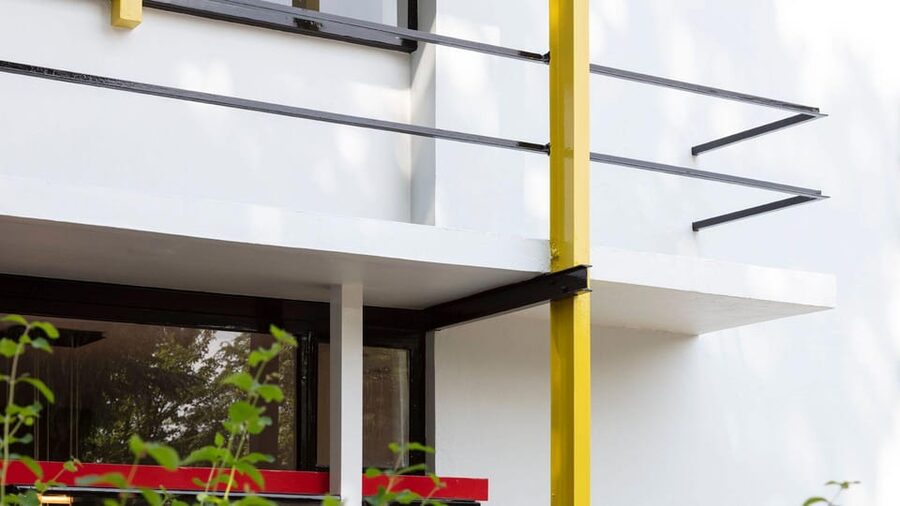
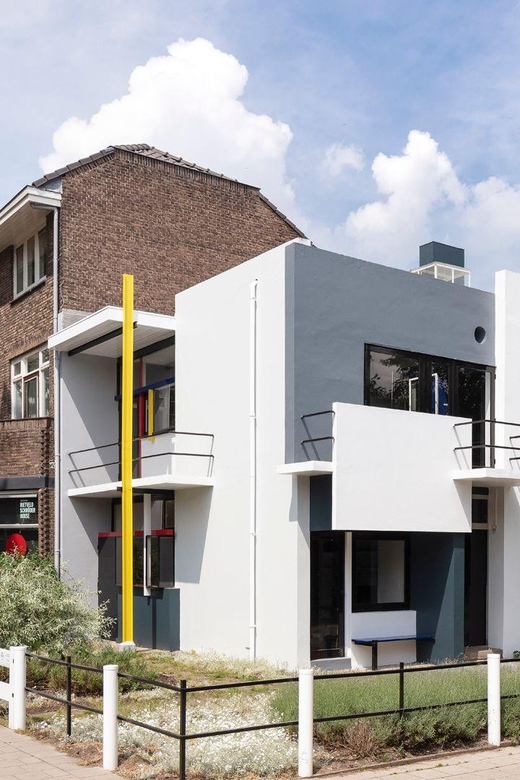
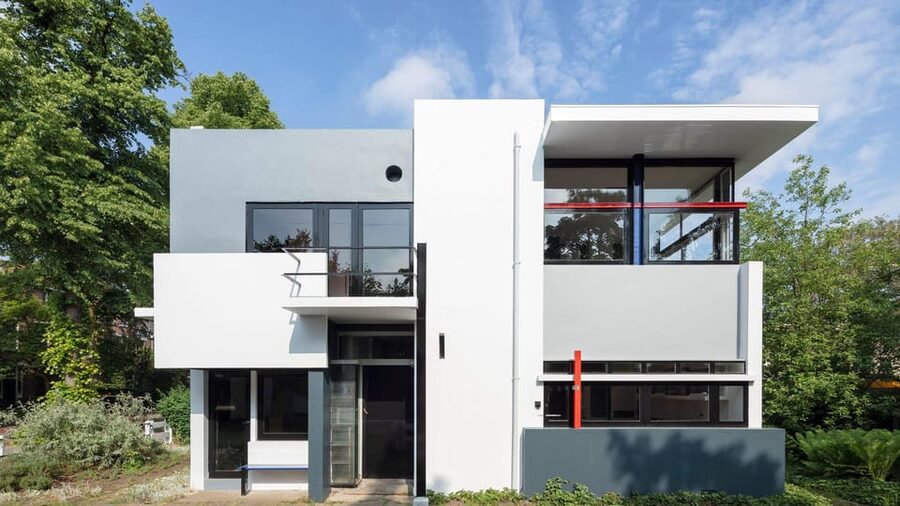
The house uses strong horizontal and vertical lines, carefully placed planes, and a limited color scheme. These elements make the building feel less like a traditional Dutch home and more like a three-dimensional composition. Yet it was still designed for ordinary needs such as sitting, sleeping, moving, and finding privacy.
That contrast is what makes the visit worthwhile. You are not looking at an object removed from daily life. You are seeing modern art principles applied to a real residence.
The house also rewards close attention. The audio tour points you toward the concepts behind the design, but you can spend your own time looking at the relationship between fixed and movable parts. Small details become easier to read once you understand the overall plan.
I would not expect a large collection of objects or a sequence of exhibition rooms. This is a single architectural work, and the building itself is the exhibit. If you prefer traditional museums with many displays, the visit may feel brief. If you enjoy seeing how a strong idea works in physical space, the compact format is a strength.
More Utrecht trips:
- Utrecht: City Canal Cruise
★ 4.3 · 2,895 reviews - Utrecht: De Haar Castle, Park Entry Ticket
★ 4.6 · 153 reviews - Utrecht 2-Hour Walking Tour | Discover The City With A Local
★ 5.0 · 138 reviews - Utrecht Food Tour with local guide
★ 5.0 · 112 reviews
Is $22 a Fair Price?
At $22 per person, the ticket is not a bargain in the ordinary sense. You receive entry and an audio tour, with about 30 to 40 minutes inside. There is no meal, transportation, or extended guided program included.
Still, I think the price can make sense if modern architecture is important to you. This is a UNESCO World Heritage site and Rietveld’s first residence design. You are seeing the actual house that helped launch his architectural career, not a later reconstruction or a themed display.
The value depends on how you plan your Utrecht day. If you are already interested in De Stijl, Dutch design, or twentieth-century architecture, this is a strong specialist stop. If you are looking for a broad introduction to Utrecht, you may find the cost harder to justify because the visit is so short.
The museum shop adds a little extra value for design-minded visitors. It offers unique products and souvenirs connected to the house and its ideas. You do not need to buy anything, but it gives you a chance to take home something more distinctive than a standard postcard.
A useful way to judge the price is to compare it with the quality of the experience rather than the number of minutes. The visit is short, but the building is unusually important. You are paying for access to a rare, carefully preserved work of modern architecture and an explanation that helps you read it.
Who Will Enjoy This Visit Most?
I would recommend the Rietveld Schröder House to several kinds of visitors.
Architecture students and design professionals will find plenty to examine in the house’s structure, colors, furniture, and moving walls. People who know little about De Stijl can also enjoy it, because the audio guide explains the ideas in a direct way.
It suits a short Utrecht itinerary. You do not need to give up half a day, and the 40-minute maximum makes it easier to fit around other plans. The focused format can be especially useful if you are visiting several museums or historic sites.
Families with older children may find the movable walls more engaging than a conventional architectural display. However, babies under one year are not permitted, and the site is not suitable for people with mobility impairments or wheelchair users. Those limits are important, since the house itself is the main experience and access cannot be treated as a minor detail.
I would be less likely to recommend it if you want a social, group-based tour with a guide answering questions in real time. The audio format is clear and flexible, but it is still a self-guided visit.
Practical Tips for a Smooth Visit
Reserve a starting time before building your day around the house. The activity lasts about 40 minutes at most, but the available entry times can affect how easily it fits with other plans.
Check in at the ticket office on the left side of the house. That is where you receive the media player or scan the QR code for your own device.
If you want to use personal headphones with the supplied player, bring a mini-jack connection. Wireless headphones may not work with that device, so the stated connection matters.
Choose your audio language before entering. Dutch, English, German, French, Spanish, Italian, Japanese, and Chinese are available.
Do not plan to eat at the site. Food and drinks are not included, and the visit is too short to function as a meal stop anyway. The museum shop is useful for souvenirs, but it is separate from the ticket’s core value.
The activity offers free cancellation up to 24 hours before the visit, and you can reserve while postponing payment. That is helpful if your Utrecht schedule is still moving around.
Rietveld Schröder House: Final Verdict
You should book this experience if you care about architecture, design, or the story of how people began rethinking the modern home. The sliding walls and movable furniture give you something concrete to see, while the audio tour explains why the house mattered.
The visit is short, and $22 is a considered purchase for 30 to 40 minutes. But the building’s importance, the UNESCO status, and its connection to both Gerrit Rietveld and Truus Schröder make it more than a quick photo stop.
I would book it as a focused addition to a day in Utrecht, not as the day’s main attraction. Check the access limits first, bring suitable headphones if you want to use your own device, and leave time for the shop afterward. For the right visitor, this small house delivers a remarkably large idea.
FAQ
How long does the Rietveld Schröder House visit take?
The visit takes approximately 30 minutes and no more than 40 minutes.
What is included with the ticket?
The ticket includes entrance to the Rietveld Schröder House and an audio tour.
Which languages are available for the audio tour?
The audio tour is available in Dutch, English, German, French, Spanish, Italian, Japanese, and Chinese.
Do I need to bring headphones?
No. The supplied media player has a built-in speaker. You can connect your own headphones if they use a mini-jack, or scan the QR code at the ticket desk to use your own device with headphones.
Where do I check in?
Check in at the ticket office to the left of the Rietveld Schröder House.
Is the house accessible to wheelchair users?
No. The experience is not suitable for wheelchair users or people with mobility impairments. Babies under one year are also not permitted.
Just added around Utrecht
- 3 Hours itinerary between Amsterdam & Utrecht: The Heart Of Holland In A Sidecar★ 5.0 · 20 reviews
- Utrecht Food Tour on a Bicycle with local guide★ 5.0 · 23 reviews
- e-Scavenger hunt Utrecht: Explore the city at your own pace★ 4.5 · 28 reviews
- Utrecht Quiz Tour★ 3.2 · 31 reviews
- Discover Our Utrecht: Limited Group Size & Optional Extras★ 5.0 · 32 reviews
- Utrecht: Lofen Palace with Entry Ticket & Guide (Dutch)★ 4.4 · 41 reviews
- From Amsterdam: Castle De Haar Guided Tour★ 4.7 · 41 reviews
- Utrecht: Ludwig’s Original Pub Crawl with VIP Club Entry★ 3.3 · 42 reviews
Utrecht Tours, compared.
Utrecht 2-Hour Walking Tour | Discover The City With A Local
Read our review →
Browse the lists this tour appears in