
REVIEW · HISTORICAL TOURS
Amsterdam: Allard Pierson Heritage Collections Entry Ticket
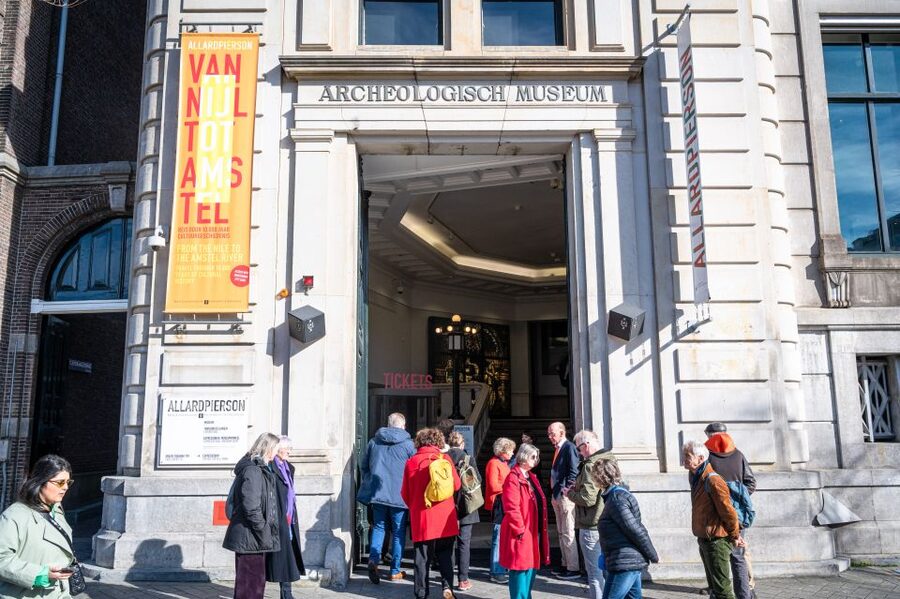
Some museums tell one story. This one tells many. Amsterdam’s Allard Pierson brings together Egyptian hieroglyphs, Greek pottery, Roman glass, medieval manuscripts, atlases, cookbooks, and classical sculpture casts under one roof. I especially like the wide range of collections and the way the museum links ancient objects with modern curiosity. The world’s great ideas appear here in physical form, from the first written marks to early printed books.
I also like the attic plaster-cast collection, where an audio guide adds useful context to copies of famous Greek and Roman statues. The main point to consider is focus: if you already know specialist museums devoted to archaeology, books, or art, parts of this visit may feel introductory rather than revelatory.
In This Review
- Key points at a glance
- What the Allard Pierson is really about
- Begin with the origins of writing
- Ancient Egypt and Sudan beyond the postcard image
- Face to Face and the people behind mummy portraits
- Amsterdam’s book history in physical form
- The map and atlas rooms
- Up to the attic for Greek and Roman plaster casts
- Ancient merchants and Amsterdam theatre makers
- How much time should you allow?
- Is the $18 ticket good value?
- Who should visit the Allard Pierson?
- Practical details before you go
- Should you book this museum ticket?
- FAQ
- Where is the Allard Pierson located?
- How much does admission cost?
- How long is the ticket valid?
- What does the admission ticket include?
- Is the Face to Face exhibition included?
- What can I see in the Face to Face exhibition?
- Is the museum wheelchair accessible?
- Can I cancel my booking?
Key points at a glance
- Ancient Egypt and Sudan: See hieroglyphs, objects, and collections connected with the ancient Nile world.
- Amsterdam’s book culture: Follow the city’s story through manuscripts, cookbooks, printed books, and early industrial book production.
- Maps and atlases: Explore one of the largest collections of maps and atlases in the world.
- The attic plaster casts: Find Greek and Roman sculpture casts in an unusual setting, with an audio guide included.
- Temporary mummy portrait exhibition: From 6 October to 25 February, Face to Face brings together 38 Roman-period Egyptian mummy portraits.
- Simple one-day access: Your ticket covers the permanent and temporary exhibitions, museum shop, cafe, and plaster collection audio guide for one day.
What the Allard Pierson is really about
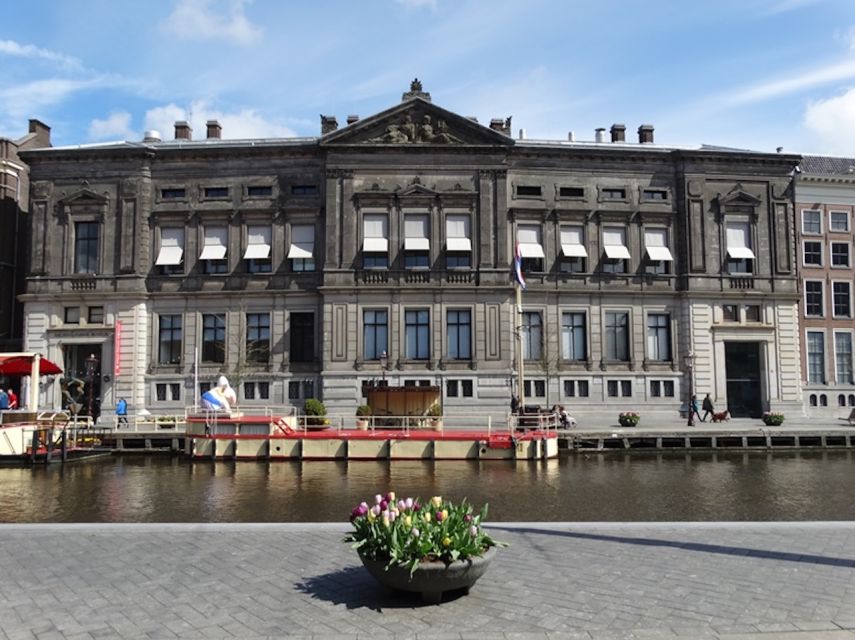
The Allard Pierson is not a museum with one famous object and a quick route to the exit. It is a museum of collected human curiosity. Its holdings cover archaeology, cartography, book history, church history, zoology, and other fields, so the experience changes character from room to room.
That variety is both the pleasure and the challenge. You might begin with an Egyptian inscription, move to Greek pottery, then encounter a medieval manuscript or a seventeenth-century atlas. The museum asks you to make connections between objects rather than follow one narrow historical line.
The permanent presentation focuses on the meeting of the ancient and modern worlds. It follows human curiosity from the origins of writing to early industrial book production, while also bringing in Assyrian merchants and theatre makers in Amsterdam. That combination gives the museum a distinctly broad outlook. It is not only about ancient civilizations, and it is not only about Amsterdam.
I would allow time to pause and read. The displays cover subjects that can easily become a blur if you rush. An Egyptian object may be visually striking, but its meaning becomes clearer when you consider writing, trade, religion, preservation, and the later people who collected and studied it.
More Attraction Tickets in Amsterdam
- Amsterdam: Van Gogh Museum Ticket
★ 4.7 · 52,054 reviews - Amsterdam: Heineken Experience Ticket
★ 4.6 · 30,055 reviews - Amsterdam: Rijksmuseum Entry Ticket
★ 4.7 · 25,535 reviews
Begin with the origins of writing
The story of writing is one of the strongest ways to understand the museum’s purpose. Written marks changed how people kept accounts, recorded laws, passed on religious ideas, and remembered events. At the Allard Pierson, writing is treated not as an abstract invention but as a physical process with tools, surfaces, and traditions.
Egyptian hieroglyphs provide one major point of entry. They are beautiful to look at, but the important question is what they allowed people to do. Writing could preserve names, organize administration, and connect the living with the dead. A visit here gives you a chance to consider that practical side instead of treating hieroglyphs as decoration.
The museum also places ancient writing beside later forms of book production. That creates a useful arc, from early written communication to manuscripts and printed volumes. You can see how human beings kept solving the same problem in new ways: how to store information and make it travel across time.
Ancient Egypt and Sudan beyond the postcard image
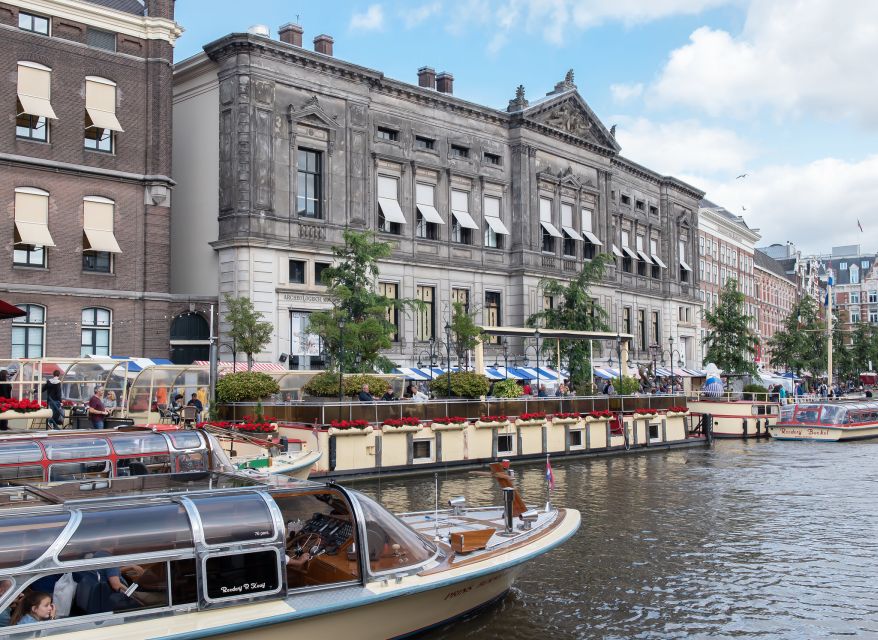
The Ancient Egyptian and Sudanese collections are a major reason to choose this museum. They offer more than a quick display of familiar symbols. The material helps show the range of societies connected with the Nile and the different ways people expressed identity, belief, power, and daily life.
You can expect Egyptian hieroglyphs, along with objects connected to the wider ancient world. Greek pottery and Roman glass add useful contrast. Pottery often reveals decoration, trade, and social habits, while glass can show technical skill and changing taste. These objects may be smaller than monumental statues, but they can bring everyday life closer to you.
The Sudanese material also broadens the picture of the ancient Nile region. It is easy to think only of the most famous Egyptian monuments. A collection that includes Sudan helps correct that narrow view and reminds you that ancient cultures did not fit neatly into modern borders.
This section rewards patient looking. Ask yourself what each object was made for, who might have used it, and why it survived. Those questions turn a display case into a human story.
Face to Face and the people behind mummy portraits
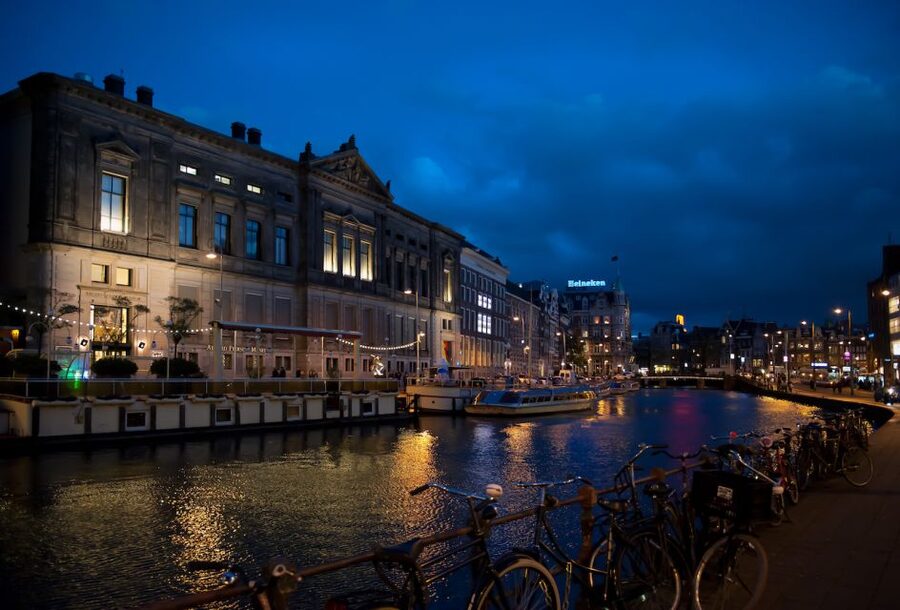
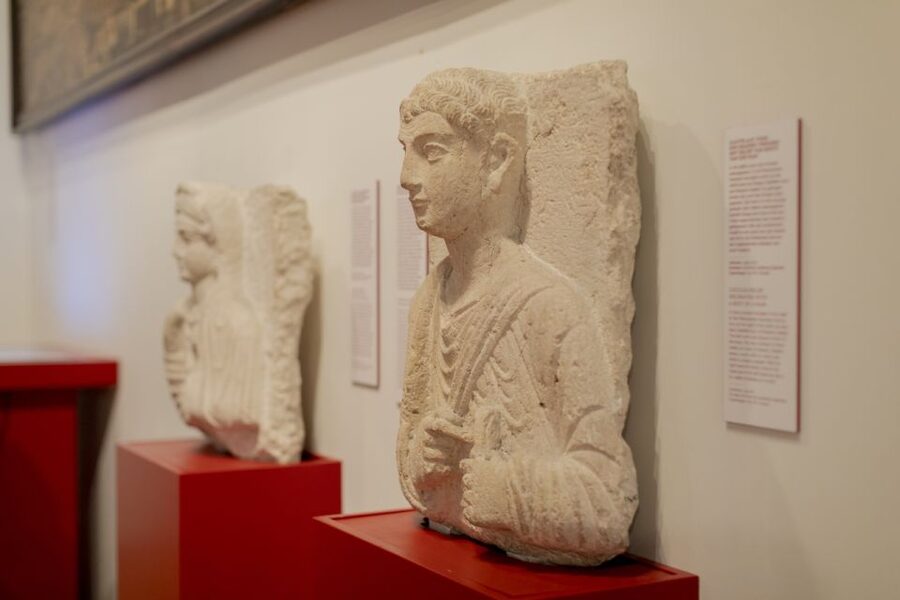
If your visit falls between 6 October and 25 February, the temporary exhibition Face to Face: The People Behind Mummy Portraits adds a particularly strong reason to go. It is described as the first exhibition in the Netherlands devoted to ancient Egyptian mummy portraits.
The exhibition brings together about 38 portraits from international collections, including works from the Louvre and the J. Paul Getty Museum. These are not painted in the pharaonic period. They date from the Roman period in Egypt, from the first to the fourth century AD.
The portraits were usually painted on wooden panels and placed over the faces of mummified people. They are often called Fayum portraits because many were excavated in the Fayum region. Their power comes from their directness. Instead of seeing an anonymous ancient figure, you face an individual who lived nearly 2,000 years ago and chose, or whose family chose, to preserve that likeness.
The exhibition also looks beyond the faces themselves. It includes the people connected with the portraits across time: the artists, descendants, followers, collectors, archaeologists, and researchers. That wider view matters. An ancient object does not reach a museum untouched by history. Its meaning is shaped by the people who made it, buried it, found it, bought it, studied it, and displayed it.
I would make this exhibition a priority if you care about portraiture, ancient family life, or the history of archaeology. The temporary dates are important, so check that your visit falls within the stated period. Outside those dates, the permanent collections remain the main reason to enter.
More Historical Tours in Amsterdam
- Amsterdam Food and Cultural Tour with Tastings
★ 5.0 · 2,442 reviews - Amsterdam: Haunted History and Ghost Walking Tour
★ 4.5 · 488 reviews - Amsterdam High-End Dutch Food & History Tour – Up to 8 guests
★ 5.0 · 482 reviews - Amsterdam: Historic City Sightseeing Canal Cruise
★ 4.5 · 444 reviews
Amsterdam’s book history in physical form
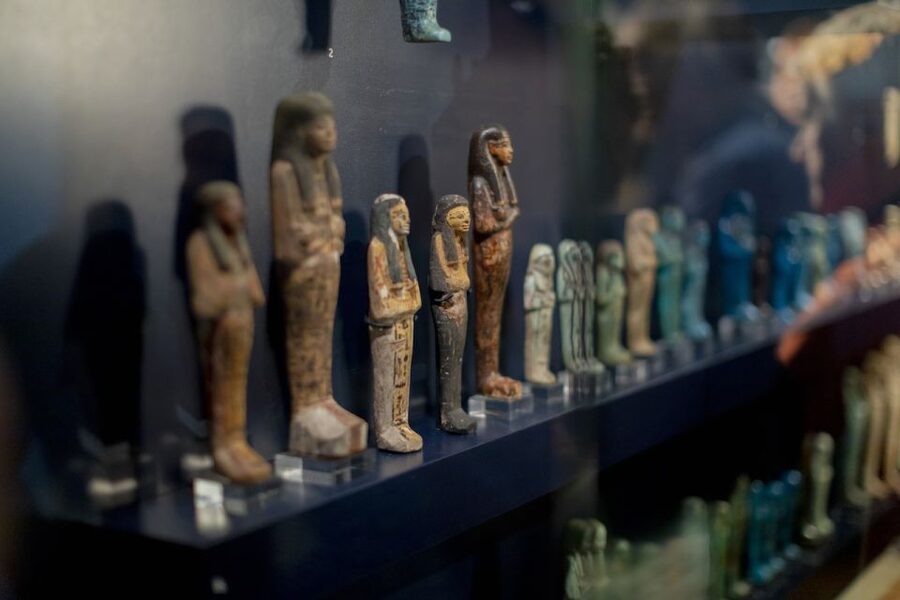
The Amsterdam book history section brings the city into the museum. Here, the story is not simply about famous writers or attractive old bindings. It is about how books were made, circulated, read, collected, and used.
Medieval manuscripts show the labor involved before industrial production. Later books and early printed material point toward a world in which texts could be produced in larger numbers. Cookbooks add a welcome everyday angle. They remind you that books were not only vessels for religion, philosophy, or law. They also carried instructions for ordinary life.
The movement toward early industrial book production is especially useful for understanding the social effect of printing. As production methods changed, books could reach new readers and take on new roles. Amsterdam’s position as a major commercial city gives this subject a natural local setting.
You may find this section most rewarding if you enjoy paper, printing, design, or the quiet details of old books. It is less about a dramatic visual spectacle and more about material evidence. Look closely at paper, type, illustrations, covers, and signs of use.
The map and atlas rooms
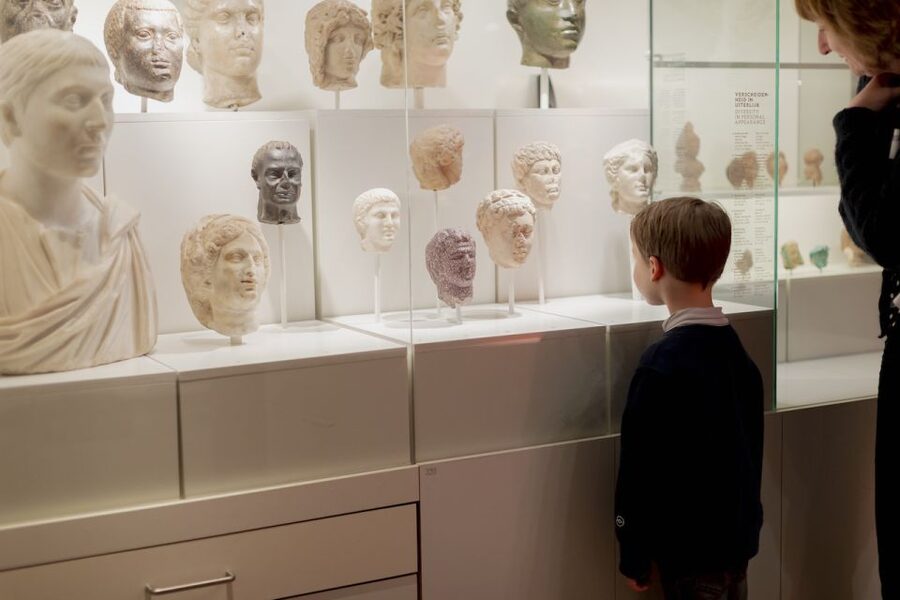
The Allard Pierson holds one of the largest map and atlas collections in the world. That claim alone may attract map lovers, but the value goes beyond size. Maps show how people understood space, trade, borders, coastlines, and distant places at different points in time.
Old maps can be beautiful, but they are not neutral pictures. They reflect the information available to their makers, along with their assumptions and priorities. An atlas can reveal what a society considered important, how it pictured the known world, and how geography supported commerce and power.
For you, the main reward is comparison. A map is not simply an old version of a modern road app. It is a record of a particular moment in human understanding. Differences in scale, decoration, labeling, and accuracy can tell you as much as the places shown.
The atlas collection also fits neatly with the museum’s larger theme. Writing stores knowledge in words. Maps store it in lines, symbols, and space. Both are attempts to make a complicated world easier to understand and share.
Up to the attic for Greek and Roman plaster casts
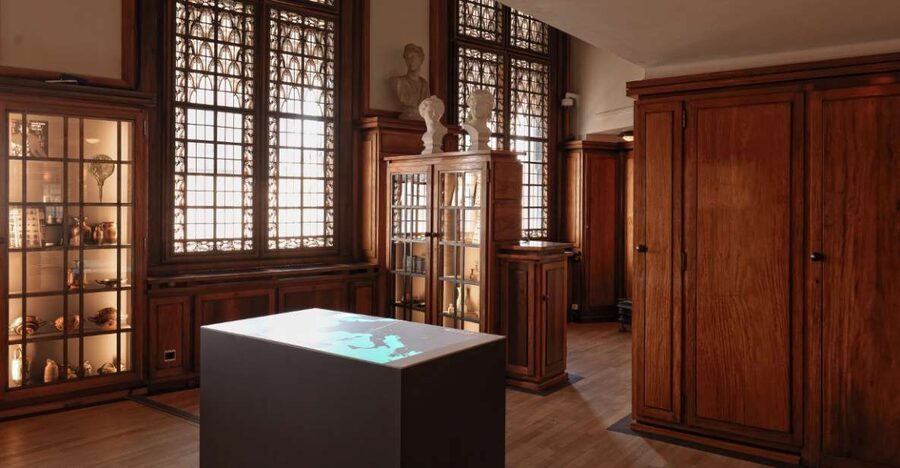
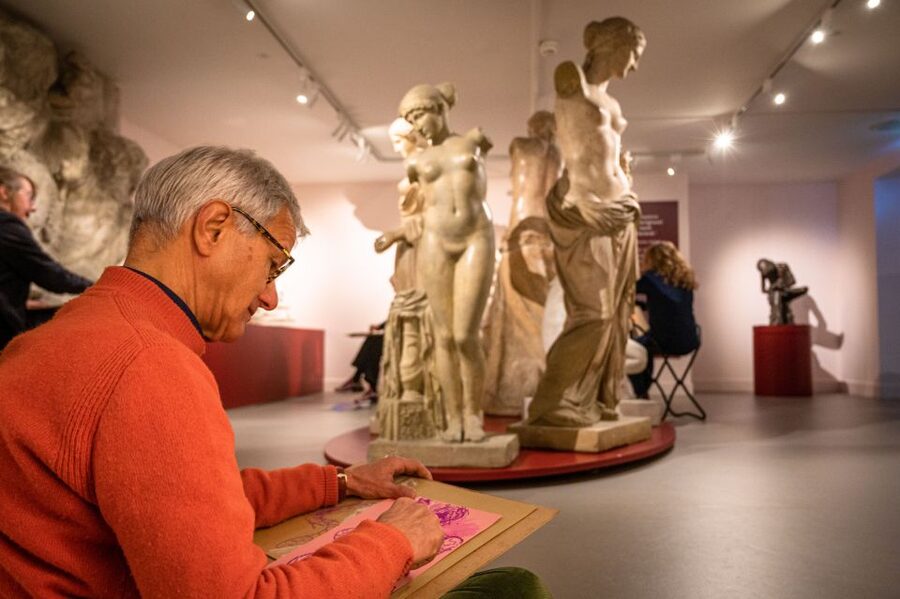
The plaster-cast collection gives the museum one of its most unusual stops. Set in an attic, it includes casts of famous classical statues from the Greek and Roman eras. The casts are not the original sculptures, and that is worth keeping in mind. Their value lies in how they helped people study, teach, compare, and preserve knowledge of classical art.
The attic setting gives this part of the visit a different mood from the cases of small archaeological objects. You are looking at full-scale forms and familiar classical poses, but through the history of reproduction. A plaster cast can show how museums and schools once made distant works available to a wider audience.
An audio guide for the plaster collection is included. Use it rather than treating the casts as a room of silent white figures. The guide can help explain what you are seeing and why these copies matter. Without context, the collection may seem less important than the original sculptures. With context, it becomes a lesson in how art history was taught and preserved.
This is a good stop for families, art students, and anyone who likes unusual museum spaces. It is also a welcome change of scale after manuscripts, coins, pottery, and other smaller objects.
Ancient merchants and Amsterdam theatre makers
One of the museum’s most interesting links is between Assyrian merchants and theatre makers in Amsterdam. At first, the subjects seem unrelated. One belongs to the ancient Near East, the other to a later urban culture. The connection is the museum’s interest in how people communicate, perform, trade, and preserve ideas.
Assyrian merchants bring questions of movement and exchange. Goods, messages, contracts, and customs traveled with them. Amsterdam theatre makers show how a city could turn stories and performance into part of its public life.
These themes help prevent the permanent exhibition from becoming a parade of disconnected objects. The museum wants you to notice recurring human habits: people record transactions, tell stories, create images, organize belief, and search for ways to make their ideas last.
If you prefer a museum with a single period and a clear chronological route, this approach may feel scattered. I see it as a good choice for curious visitors who enjoy connections between subjects, even when the connections are not obvious at first.
How much time should you allow?
The ticket is valid for one day, but the information provided does not set a fixed visit length. That flexibility is useful because the museum contains both broad permanent presentations and a temporary exhibition that may deserve serious time.
For a quick introduction, you could focus on the ancient collections, the map and atlas displays, the book history section, and the attic casts. If you add Face to Face, give yourself more breathing room. Reading labels and considering the links between sections will make the visit more rewarding than simply moving from case to case.
I would not treat the museum as a hurried stop between major Amsterdam attractions. The collections span too many subjects for that. At $18 per person, the ticket has better value when you plan to spend enough time with several areas rather than entering only for one object.
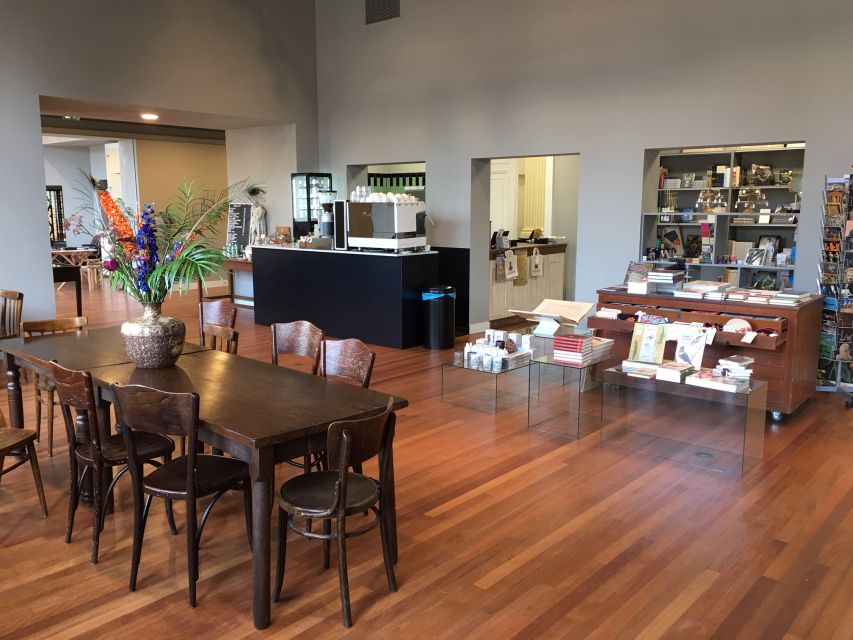
The included museum shop and cafe also make it easier to extend the visit. You do not have to buy anything, of course, but the shop may appeal if you like books, maps, or museum-related gifts. The cafe offers a practical place to pause after the dense displays.
Is the $18 ticket good value?
At $18, the ticket is fairly priced for access to both the permanent and temporary exhibitions for one day. The value is strongest if you are interested in more than one subject. A person who likes ancient Egypt, maps, books, and classical sculpture will find plenty to justify the admission.
The value is less clear if you want a single blockbuster object or a tightly focused archaeology museum. The Allard Pierson asks you to bring curiosity rather than a short checklist. Its strength is breadth, and breadth can feel less dramatic than a museum built around one famous collection.
The included plaster collection audio guide adds something tangible to the price. So does the chance to see an international mummy portrait exhibition during its limited run. Free cancellation up to 24 hours before the visit and the option to reserve now and pay later also reduce the risk of fitting this museum into a changing Amsterdam schedule.
Who should visit the Allard Pierson?
I would recommend it to:
- People who like museums that connect ancient and modern subjects.
- Readers, writers, printers, and book lovers interested in how texts were made.
- Map fans who want to see historic atlases and changing ideas of geography.
- Visitors curious about Egyptian and Sudanese collections.
- Families with children who enjoy objects, symbols, and unusual museum spaces.
- Art students or classical art fans interested in plaster casts and reproduction.
- Anyone visiting during Face to Face who wants to see Roman-period mummy portraits.
I would be more cautious if you have already visited several specialist museums on the same subjects and want only new discoveries. One aspect of the museum can feel familiar if you already know the standard stories of Egypt, Greece, Rome, manuscripts, and printing.
Still, its mix is the point. You can move from a portrait of one ancient person to a map of a vast world, then from a cookbook to a classical statue cast. Few museums make those changes of scale and subject so directly.
Practical details before you go
The ticket includes entry to the permanent and temporary exhibitions, access to the shop and cafe, and the audio guide for the plaster collections. The stated language is English, and the host or greeter is also listed as English.
The museum is wheelchair accessible. You can cancel up to 24 hours in advance for a full refund, and reserve now while paying later. The ticket is valid for one day, with starting times shown when you check availability.
Because the temporary Face to Face exhibition runs from 6 October to 25 February, confirm the dates before you make it the main reason for your visit. If the exhibition is not running, plan around the permanent collections instead, especially the maps, books, ancient Egypt and Sudan material, and plaster casts.
Should you book this museum ticket?
Book it if you want a thoughtful museum with wide subject coverage rather than a single famous attraction. I especially recommend it when you have time for the mummy portraits, the map and atlas rooms, and the attic plaster casts.
Skip it if you want a fast, highly focused display or if your schedule allows only a brief glance. At $18, the ticket earns its value through variety and time. Give the Allard Pierson room to tell its many connected stories, and it can become one of Amsterdam’s more rewarding indoor stops.
FAQ
Where is the Allard Pierson located?
The experience is located in Amsterdam, in North Holland, Netherlands.
How much does admission cost?
The listed price is $18 per person.
How long is the ticket valid?
The ticket is valid for one day.
What does the admission ticket include?
It includes entry to the permanent and temporary exhibitions, access to the museum shop and cafe, and an audio guide for the plaster collections.
Is the Face to Face exhibition included?
Yes. The ticket includes the temporary exhibitions, including Face to Face: The People Behind Mummy Portraits when it is running from 6 October to 25 February.
What can I see in the Face to Face exhibition?
The exhibition presents about 38 ancient Egyptian mummy portraits from the Roman period, dating from the first to the fourth century AD. It includes works from the Allard Pierson and international collections such as the Louvre and the J. Paul Getty Museum.
Is the museum wheelchair accessible?
Yes, the museum is wheelchair accessible.
Can I cancel my booking?
Yes. You can cancel up to 24 hours in advance for a full refund. You can also reserve now and pay later.
More Historical Tours
- Amsterdam: Historical Highlights Walking Tour with Tasting
★ 4.6 · 381 reviews - Anne Frank and the Jewish History of Amsterdam Private Tour
★ 5.0 · 307 reviews - Amsterdam: 3-Course Meal in Historic 1st Class Waiting Rooms
★ 4.5 · 292 reviews - Amsterdam: Highlights & History Walking Tour
★ 4.8 · 266 reviews
Just added around Amsterdam
- Amsterdam City Center Guided Walking Tour – 12 guests 2,5h★ 5.0 · 3 reviews
- Amsterdam Light Festival Boat Cruise★ 5.0 · 3 reviews
- Daytrip Tour from Amsterdam to Zaanse Schans and Giethoorn★ 5.0 · 3 reviews
- Amsterdam: Roller Dreams & Amsterdam Nightlife Experience★ 3.7 · 3 reviews
- Amsterdam: Van Gogh Museum Entrance and Guided Tour★ 3.5 · 3 reviews
- Amsterdam: Red light tour in German/English for groups of 4 people or more★ 5.0 · 3 reviews
- 2 Hour Making Rembrandt’s Traditional Oil Paints in Amsterdam★ 5.0 · 3 reviews
- Amsterdam Red Light District and Old Town Walking Tour★ 5.0 · 3 reviews
Historical Tours, compared.

Amsterdam Food and Cultural Tour with Tastings
Read our review →
Kinderdijk UNESCO World Heritage Entry Ticket
Read our review →
Hop-on Hop-off Old-Fashioned Heritage Tram Tour
Read our review →

Amsterdam High-End Dutch Food & History Tour – Up to 8 guests
Read our review →
Cruise through the Historic City Center with Guide
Read our review →
Browse the lists this tour appears in