
REVIEW · HISTORICAL TOURS
Amsterdam: Historic Tram Ride on Heritage Line to Amstelveen
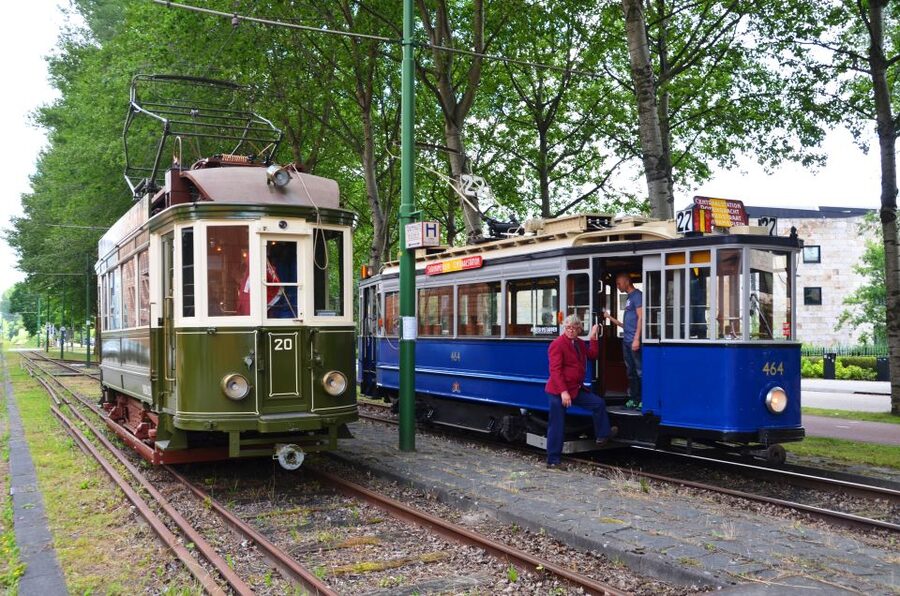
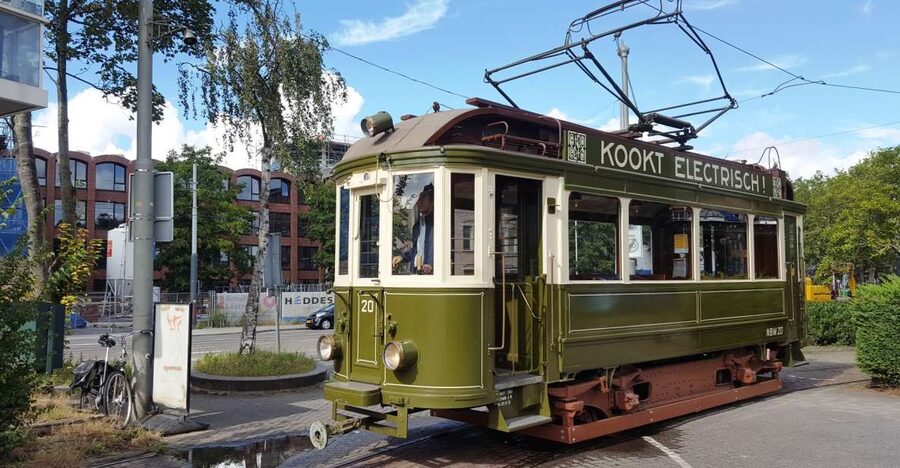
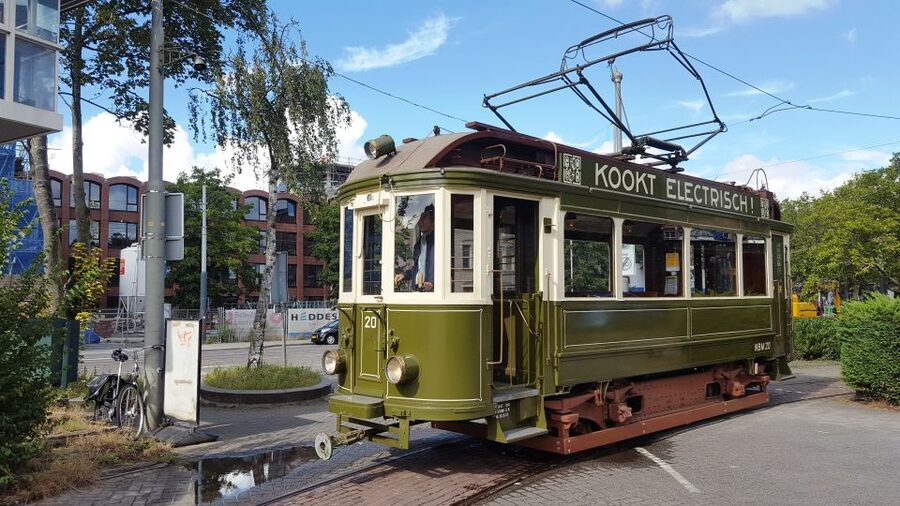
Old trams make short journeys memorable. I like the restored Lijn 30 tram, with its punched paper ticket, ringing bell, conductor’s whistle, and century-old track. I also like the freedom to get off at the Olympic Stadion, Amsterdam Forest, Bosbaan lake, Heemtuinen, or Amstelveen’s Old Village. The main drawback is simple: the route itself may feel less interesting than the tram, with limited sights along parts of the line.
This is a one-hour roundtrip from Haarlemmermeerstation, operated by Electrische Museumtramlijn Amsterdam. At $9 per person, it is a modest splurge for families, tram fans, and anyone who prefers a gentle outing to another crowded city attraction. You should think of it as a moving museum ride with optional stops, not as Amsterdam’s best sightseeing route.
The tram runs on a track more than 100 years old. That matters because you are not simply riding a modern vehicle dressed up for tourists. You are using a preserved transport line, complete with old operating routines and staff who keep the experience feeling hands-on.
In This Review
- Key points to know before you ride
- Starting at Haarlemmermeerstation with a paper ticket
- Inside the restored Lijn 30 tram
- The journey to Amstelveen
- Olympic Stadion: a stop with sporting history
- Amsterdam Forest and Bosbaan lake
- Heemtuinen and Amstelveen’s Old Village
- Why the bells and procedures matter
- Value at $9 per person
- Practical limits and comfort
- Who will enjoy this heritage tram ride?
- Should you book the Lijn 30 tram?
- FAQ
- Where does the historic tram ride begin?
- Where does the tram travel?
- How long does the experience last?
- Is the ticket one-way or roundtrip?
- Can I get off at stops along the route?
- Is food or drink allowed on the tram?
- Is the tram accessible for wheelchair users?
Key points to know before you ride
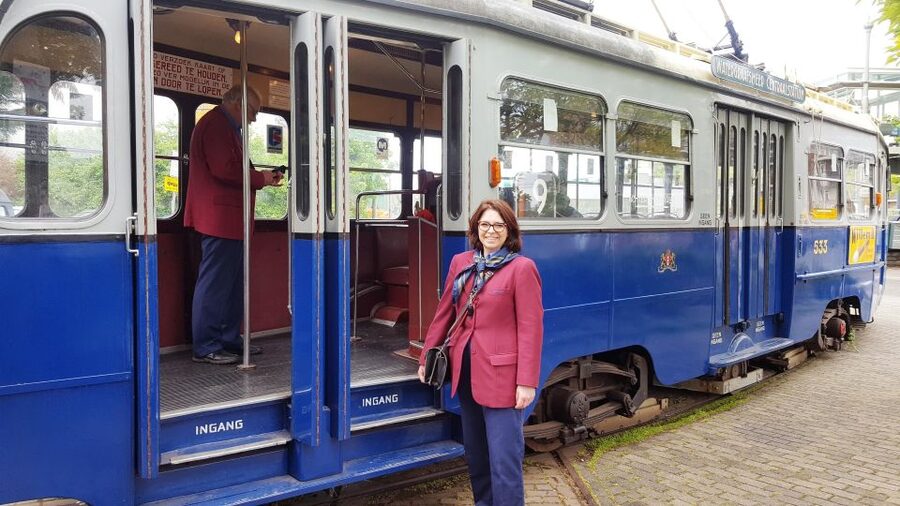
- Ticket punching is part of the fun: Exchange your ticket at the Tramshop in Haarlemmermeerstation, then have the conductor punch it before departure.
- The tram operates on historic tracks: The route from Amsterdam to Amstelveen follows a line that is more than a century old.
- The sounds are wonderfully old-fashioned: Listen for the whistle, bell, called-out stops, and hum of the tram as it moves between stations.
- You can use it as a short outing or a stop-and-explore ride: Get off near the Olympic Stadion, Amsterdam Forest, Bosbaan, Heemtuinen, or the Old Village.
- The route is not the star at every point: Some sections offer little to look at, so the appeal lies mainly in the tram, its operation, and the optional stops.
- Plan for a few restrictions: Food, drinks, smoking, alcohol, drugs, non-folding strollers, and non-folding wheelchairs are not allowed inside.
Starting at Haarlemmermeerstation with a paper ticket
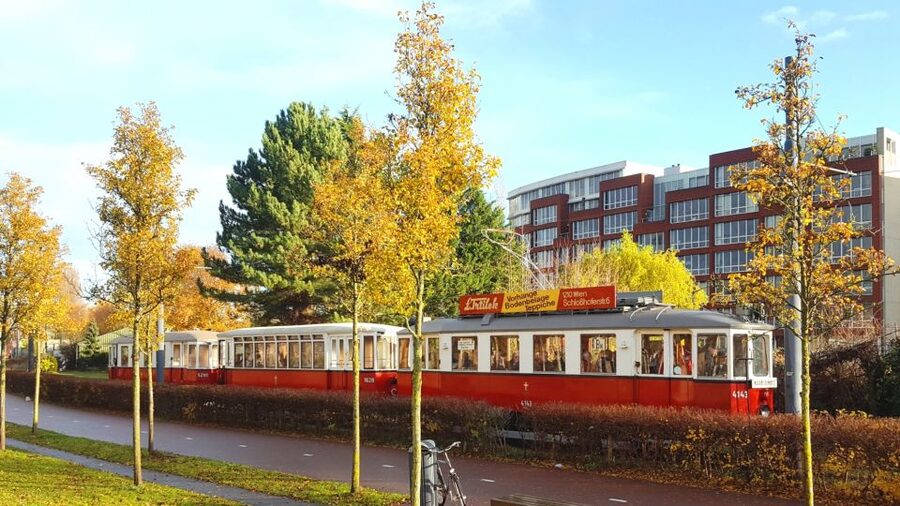
Your outing begins at Haarlemmermeerstation, home of the Electric Tram Museum Amsterdam. Do not head straight to the platform and expect to board with the ticket on your phone. First exchange your ticket in the Tramshop inside the station. From there, staff guide you to the waiting tram.
That small check-in step sets the tone. This is not a standard city transport journey where you tap a card and disappear into the crowd. The station and shop connect the ride to the museum operation, and the conductor’s ticket punch gives you a physical souvenir of the trip.
The meeting point is also the end point, since the ticket covers a return ride to Haarlemmermeerstation. The advertised duration is one hour, though you should check the selected departure when booking because starting times vary.
The operator provides service in Dutch and English. You do not need a long explanation to enjoy the ride, but English support is useful when you are deciding where to get off or need help with the return journey.
More Historical Tours in Amsterdam
- Amsterdam Food and Cultural Tour with Tastings
★ 5.0 · 2,442 reviews - Amsterdam: Haunted History and Ghost Walking Tour
★ 4.5 · 488 reviews - Amsterdam High-End Dutch Food & History Tour – Up to 8 guests
★ 5.0 · 482 reviews
Inside the restored Lijn 30 tram
The tram car is restored and maintained for an authentic feel. That does not mean every part will look new. In fact, the old-fashioned character is the reason to ride. You get the sounds, motions, and rituals of an earlier form of public transport rather than the quiet efficiency of a modern tram.
Listen as the conductor blows the whistle and rings the bell to signal the driver. Stops are called out along the route, giving you a chance to decide if you want to leave the tram. At crossings, you may see red flags used to secure the line. These small working details carry more weight than a plaque in a museum because you see the transport system being operated.
I especially like the moment before departure. The conductor checks that everything is ready, signals the driver, and the tram begins with its characteristic hum. At the Amstelveen terminus, you can see how the vehicle is prepared for the return trip. That turn-around is a useful reminder that the ride is a working heritage operation, not simply a stationary exhibit.
You may have to leave the tram temporarily at the terminus, or change to another vehicle altogether. Keep that possibility in mind if you are expecting to remain in one car from start to finish.
The journey to Amstelveen
The full trip takes about an hour, including the ride back to Haarlemmermeerstation. It is short enough to fit into a half-day of Amsterdam sightseeing and long enough to feel like a proper excursion.
The route does not deliver a nonstop parade of famous views. One direct assessment puts it plainly: the tram is well maintained, but the line is not especially interesting in every section. That is the fair way to approach this experience. If you want a route packed with major landmarks, this is not the best choice. If you enjoy historic vehicles and the way they operate, the ordinary stretches become part of the charm.
You will hear the stops announced and can choose to get off. Since the ticket is a return ticket, the ride works best when you check the stops in advance and choose one or two places that match your interests. You can also stay aboard for the complete roundtrip and treat the journey itself as the attraction.
That flexibility makes the ride more useful than a simple out-and-back loop. You can use it for a brief tram adventure, or combine it with a walk near one of the stops. Just remember that the supplied information does not give exact stop times, so check current departures and allow enough time for your return.
Olympic Stadion: a stop with sporting history
The Olympic Stadion is one of the listed places where you can get off. It gives the ride a city connection beyond the tram line itself. If the stadium interests you, this stop can turn the trip into a small piece of Amsterdam’s sporting story.
The stadium is not presented as a guided visit, so do not book the tram expecting an included stadium tour. The value here is the option to pause near a notable site and continue by tram later, according to the operating schedule.
For visitors with limited time, the Olympic Stadion may be the most convenient optional stop because it offers a clear destination without requiring a longer outing into the countryside. Still, confirm the return arrangements before stepping off. The ticket provides a return journey, but schedules and vehicle changes can matter.
More historical tours:
- Amsterdam: Historic City Sightseeing Canal Cruise
★ 4.5 · 444 reviews - Amsterdam: Historical Highlights Walking Tour with Tasting
★ 4.6 · 381 reviews - Anne Frank and the Jewish History of Amsterdam Private Tour
★ 5.0 · 307 reviews - Amsterdam: 3-Course Meal in Historic 1st Class Waiting Rooms
★ 4.5 · 292 reviews
Amsterdam Forest and Bosbaan lake
Amsterdam Forest offers a different reason to use the heritage line. Instead of treating the tram as a point-to-point transfer, you can use it to reach an outdoor break from the city.
Bosbaan lake is also named as a possible stop. The combination of forest and water gives you a chance to stretch your legs, take a walk, or slow down after time spent in Amsterdam’s central streets. The tram does not include food or drinks, so bring your plans for refreshments outside the vehicle. Food and drinks are not allowed aboard, making this a good place to pause rather than snack during the ride.
The practical question is timing. The full experience lasts about an hour, but getting off changes how you use the service. You will need to pay attention to the operating schedule so you do not miss a suitable tram back. Since exact frequencies are not provided, I would treat a stop at the forest or lake as a planned add-on, not an improvised quick exit.
This option suits you if you like mixing transport history with open-air time. It is less suitable if you want every minute tightly packed with sights, because the tram’s pace and the optional walk both call for a relaxed schedule.
Heemtuinen and Amstelveen’s Old Village
Heemtuinen, described as a wildlife garden, offers another stop for visitors who prefer plants and natural spaces. The information provided does not promise a guided garden visit or a specific set of facilities, so think of it as a place to explore independently if the stop fits your plans.
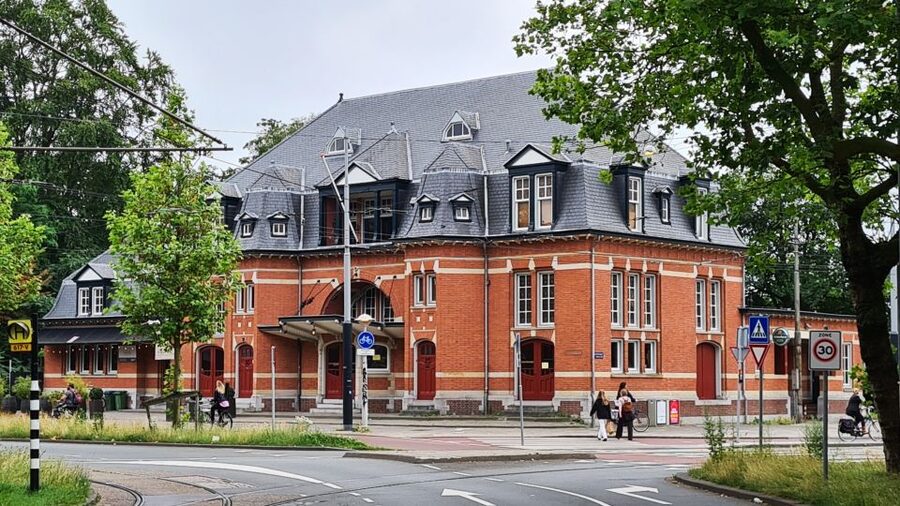
The Old Village in Amstelveen brings a more built-up character to the outing. Its redbrick buildings offer a change from the tram line and the greener stops. This can be a good choice if you want to see a quieter side of Amstelveen rather than simply ride to the terminus and turn around.
Both stops show why the ticket is more flexible than a standard museum admission. You are not locked into one activity. You can remain aboard for the full historic ride, or use the line to reach a small selection of places outside central Amsterdam.
The trade-off is that the route does not come with a guide explaining each stop in detail. Dutch and English-speaking staff can help, but this is primarily a self-directed outing. I would choose one destination before departure and keep the rest as optional.
Why the bells and procedures matter
The strongest part of the experience is not the scenery. It is the working detail.
A bell rings. A whistle sounds. A red flag helps secure a crossing. A paper ticket is punched. These actions make the ride tactile and audible. You are not merely looking at an old tram behind glass. You are sitting inside it while staff operate it using visible procedures.
At the terminus, watching the tram get ready for the return journey adds another layer. You see that the vehicle needs attention between runs, and you gain a better sense of how historic tram service functioned.
This is also why children may enjoy the ride. The experience gives them clear things to watch and listen for, and the ticket punch provides a small moment of participation. Adults who like transport history may appreciate the preservation work even more.
Still, the ride is not a full museum tour. The supplied details do not promise a lengthy explanation of the tram’s construction, restoration, or history. If you want a detailed lecture, you may find the ride too light. If you want a living, moving example of old public transport, it delivers more.
Value at $9 per person
At $9, the ticket is reasonably priced for a one-hour return ride. You are paying for a preserved vehicle, a historic line, staff-operated details, and the option to stop at several destinations. Compared with a regular modern tram fare, it is a special outing rather than a basic transport purchase.
The value depends on what you count as sightseeing. If you judge it by the number of famous buildings visible from the windows, the price may feel less impressive. Parts of the line are not especially scenic, and one direct assessment finds the route less interesting than the tram itself.
If you judge it as a short transport museum experience, $9 works well. The conductor’s ticket punch, the bells, the whistle, the flagged crossings, and the terminal procedure give you details that a normal city ride cannot provide.
I would be happy with the price if I wanted a calm activity between larger Amsterdam attractions. I would be less interested if I had only one day in Amsterdam and had not yet seen the city’s main sights. This is a pleasant extra, not a substitute for the Rijksmuseum, canal area, or central historic streets.
Practical limits and comfort
The ride is not suitable for people with mobility impairments or wheelchair users according to the activity information. Non-folding wheelchairs and electric wheelchairs are not allowed, and non-folding strollers are also excluded. If you need mobility equipment, check before booking rather than relying on the historic vehicle to accommodate it.
Smoking, food, drinks, alcohol, and drugs are prohibited inside the tram. These rules make sense in a preserved vehicle, but they affect how you plan the hour. Eat before or after the ride, and carry drinks only for use outside the vehicle.
The experience is also listed as unsuitable for people with motion sickness. An old tram may have more noticeable movement and sound than modern transport, so this is worth taking seriously if you are sensitive to motion.
Free cancellation is available up to 24 hours in advance for a full refund. You can also reserve now and pay later, which helps if your Amsterdam schedule is still changing. Starting times vary, so check availability before building other plans around the ride.
Who will enjoy this heritage tram ride?
I would recommend it most strongly to:
- Tram and railway enthusiasts
- Families who enjoy hands-on historic experiences
- Visitors who like museums that operate rather than simply display objects
- People looking for a short, low-cost activity outside central Amsterdam
- Anyone who wants to combine a historic ride with Amsterdam Forest, Bosbaan, Heemtuinen, or the Old Village
I would be more cautious about recommending it to visitors who want a scenic tour filled with major landmarks. The route has quieter sections, and the most memorable sights are the tram’s own sounds and routines.
It also suits an unhurried afternoon better than a tightly scheduled morning. You can ride for the full hour, but the optional stops become more useful when you have time to leave the tram and explore.
Should you book the Lijn 30 tram?
Book it if you like old vehicles, small details, and the pleasure of traveling slowly. The punched ticket, ringing bell, conductor’s whistle, historic track, and return trip make this a distinctive $9 outing.
Skip it if your main goal is nonstop sightseeing or if you need wheelchair access, a non-folding stroller, or a completely smooth ride. The line itself is not consistently scenic, and the experience does not include food, drinks, or a guided visit at the stops.
For the right reader, this is a charming break from Amsterdam’s busy center. Plan it as a living transport museum with optional outdoor stops, and you will have the right expectations.
FAQ
Where does the historic tram ride begin?
The ride begins at Haarlemmermeerstation in Amsterdam, at the Electric Tram Museum Amsterdam. You first exchange your ticket in the Tramshop and then follow the guidance to the tram.
Where does the tram travel?
The Lijn 30 tram travels from Haarlemmermeerstation in Amsterdam to Amstelveen and returns to Haarlemmermeerstation.
How long does the experience last?
The listed duration is one hour. Starting times vary, so check availability for the departure options on your chosen date.
Is the ticket one-way or roundtrip?
The ticket is a return ticket from Haarlemmermeerstation to Amstelveen. At the terminus, you may need to leave the tram temporarily or change vehicles.
Can I get off at stops along the route?
Yes. You can choose to get off at places including the Olympic Stadion, Amsterdam Forest, Bosbaan lake, Heemtuinen, and Amstelveen’s Old Village.
Is food or drink allowed on the tram?
No. Food and drinks are not allowed inside the vehicle. Smoking, alcohol, and drugs are also prohibited.
Is the tram accessible for wheelchair users?
The activity is not suitable for wheelchair users or people with mobility impairments. Non-folding wheelchairs and electric wheelchairs are not allowed, and non-folding strollers are also prohibited.
Just added around Amsterdam
- Amsterdam 1-Hour Rickshaw Tour★ 4.9 · 17 reviews
- Amsterdam: Canal Cruise and Jewish Cultural Quarter Tickets★ 4.2 · 17 reviews
- Keukenhof Gardens and Tulip Experience Tour from Amsterdam★ 4.8 · 17 reviews
- Marken, Volendam and Edam: Private Full-Day Tour★ 4.6 · 18 reviews
- Discover Amsterdam’s city center in this Outside Escape game tour★ 4.5 · 18 reviews
- Amsterdam: Personal Travel & Vacation Photographer★ 4.8 · 18 reviews
- Amsterdam: Luxury Saloon Boat Cruise with 3-Course Dinner★ 3.9 · 18 reviews
- Rijksmuseum & Amsterdam City Center Semi-Private Tour 12ppl Max★ 5.0 · 18 reviews
Historical Tours, compared.

Amsterdam Food and Cultural Tour with Tastings
Read our review →
Kinderdijk UNESCO World Heritage Entry Ticket
Read our review →
Hop-on Hop-off Old-Fashioned Heritage Tram Tour
Read our review →


Amsterdam High-End Dutch Food & History Tour – Up to 8 guests
Read our review →
Cruise through the Historic City Center with Guide
Read our review →
Browse the lists this tour appears in