
REVIEW · RED LIGHT DISTRICT TOURS
Amsterdam: Red Light Secrets Museum Entry Ticket
Amsterdam’s windows tell only half the story. The Red Light Secrets Museum gives you the other half, using a former brothel in a 17th-century house to explain sex work, regulation, and daily life behind the famous glass. I like the first-person audio guide, voiced from a sex worker’s perspective, and the chance to sit in an actual working-style window. The main drawback is size: you can finish the museum in about 15 to 30 minutes, and the rooms may feel crowded at busy times.
I also like the museum’s frank but generally respectful tone. It explains how sex work became legal in the Netherlands in 2000, presents personal stories, and lets you explore at your own pace. Just remember that this is a compact museum, not a long guided tour, and the narrow rooms can make it hard to hear or take photos when several people arrive together.
In This Review
- Key points at a glance
- Arriving at Oudezijds Achterburgwal 60h
- Inside the former brothel
- The audio guide follows a worker’s experience
- Sitting in the Red Light District window
- What the museum explains about Amsterdam
- The Confession Wall and the final rooms
- How long the visit takes
- Is the $17 ticket good value?
- Crowds, sound, and comfort
- Who will enjoy this museum most?
- Red Light Secrets or a street walk?
- Practical tips for a better visit
- Should you book Red Light Secrets Museum?
- FAQ
- Where is the Red Light Secrets Museum?
- How much does admission cost?
- How long does the museum visit take?
- Is an audio guide included?
- Do I need to choose an entry time?
- What is the minimum age?
- Is the museum wheelchair accessible?
Key points at a glance
- Set inside a former brothel: The museum occupies a 17th-century house on Oudezijds Achterburgwal, right in Amsterdam’s Red Light District.
- Hear Inga’s story: The audio guide follows the experiences of a former sex worker, mixing humor with practical details about the work.
- Sit behind the glass: You can take a seat in a window used to show what it feels like to be on the other side of Amsterdam’s famous display windows.
- Learn about legalization: Exhibits explain how the Netherlands legalized sex work in 2000 and how the trade is regulated.
- Finish at the Confession Wall: Written confessions range from funny to unsettling, and they provide an unusual final note.
- Allow 30 minutes, not half a day: The museum is short, but the content is worthwhile if you want context before walking through the district.
Arriving at Oudezijds Achterburgwal 60h
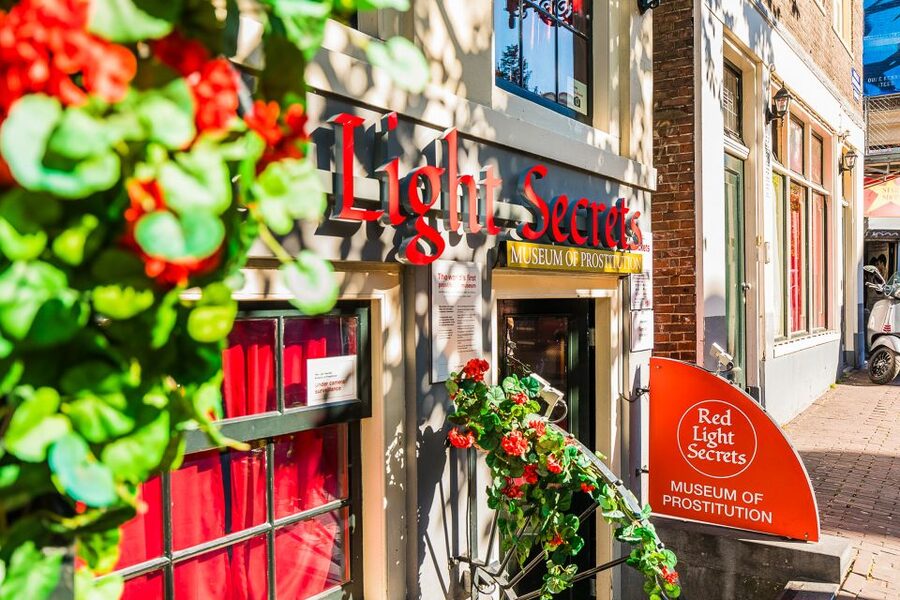
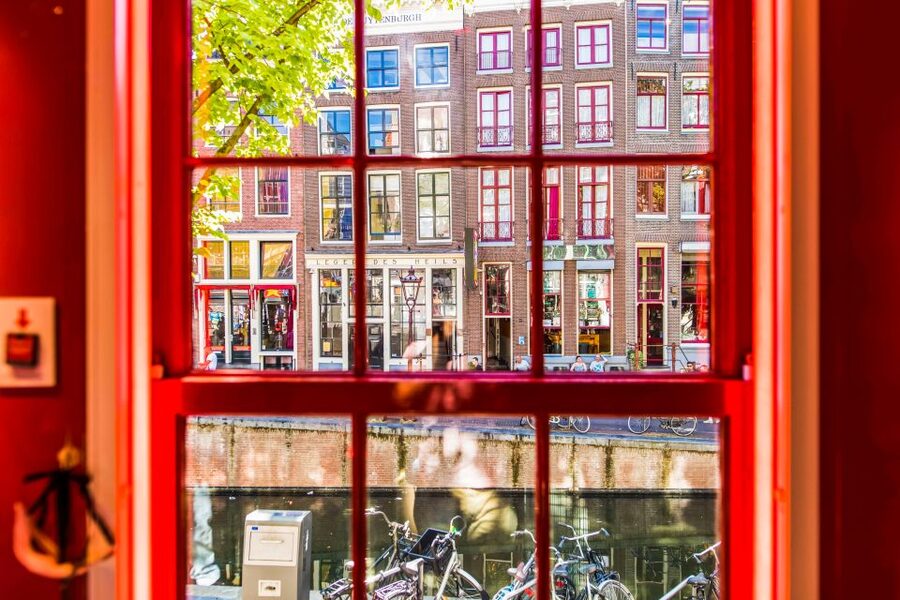
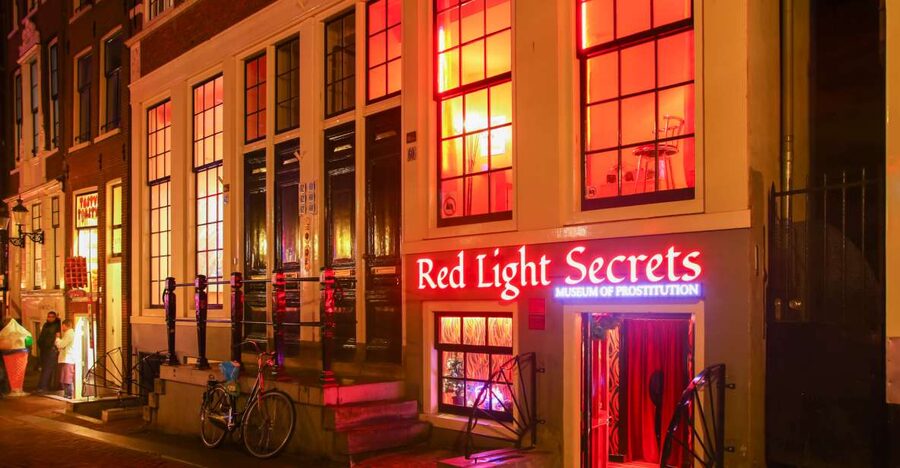
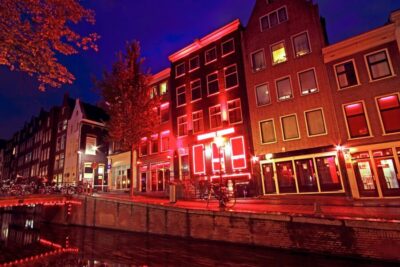
The Red Light Secrets Museum is at Oudezijds Achterburgwal 60h, 1012 DP Amsterdam. That puts you directly in the old Red Light District, where narrow canals, historic buildings, restaurants, bars, and window displays all sit close together.
You go straight to the museum and present your voucher for scanning. A timed entry is required, so do not treat this as a completely flexible walk-in attraction. Your ticket is valid for one day, but access is tied to the time slot you select.
The location is part of the experience. You are not viewing the subject from a distant gallery in another part of the city. You are standing in the district itself, then stepping inside a former brothel to see how the rooms behind the windows were arranged. I find that setting useful because it connects the museum’s information with what you see outside.
The entrance area may be busy. Booking ahead gives you a scheduled place, but it does not always mean you will walk straight in without waiting. One practical tip is to arrive a little early and check the queue before your time. The line arrangement has not always been clear, especially when people with prepaid tickets and people buying at the door are mixed together.
More Attraction Tickets in Amsterdam
- Amsterdam: Van Gogh Museum Ticket
★ 4.7 · 52,054 reviews - Amsterdam: Heineken Experience Ticket
★ 4.6 · 30,055 reviews - Amsterdam: Rijksmuseum Entry Ticket
★ 4.7 · 25,535 reviews
Inside the former brothel
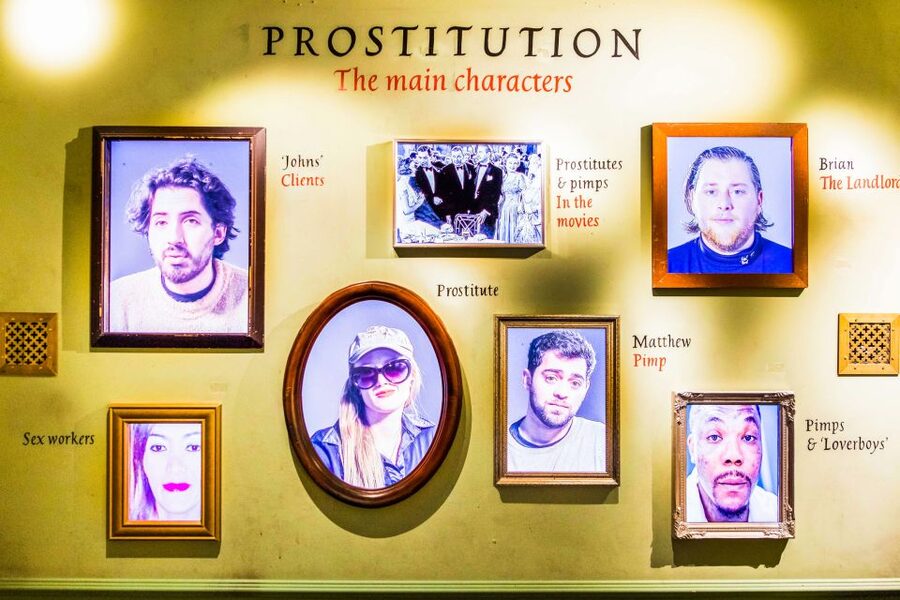
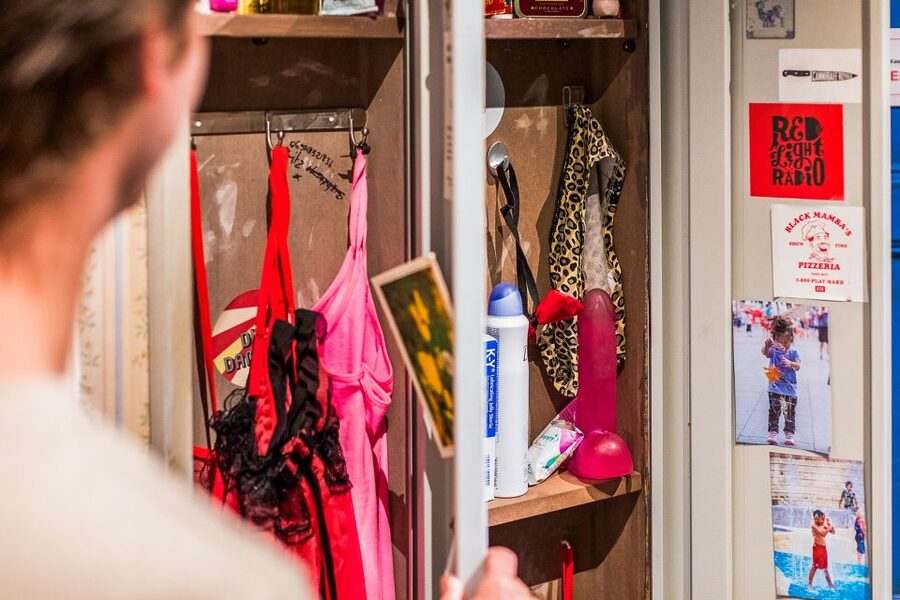
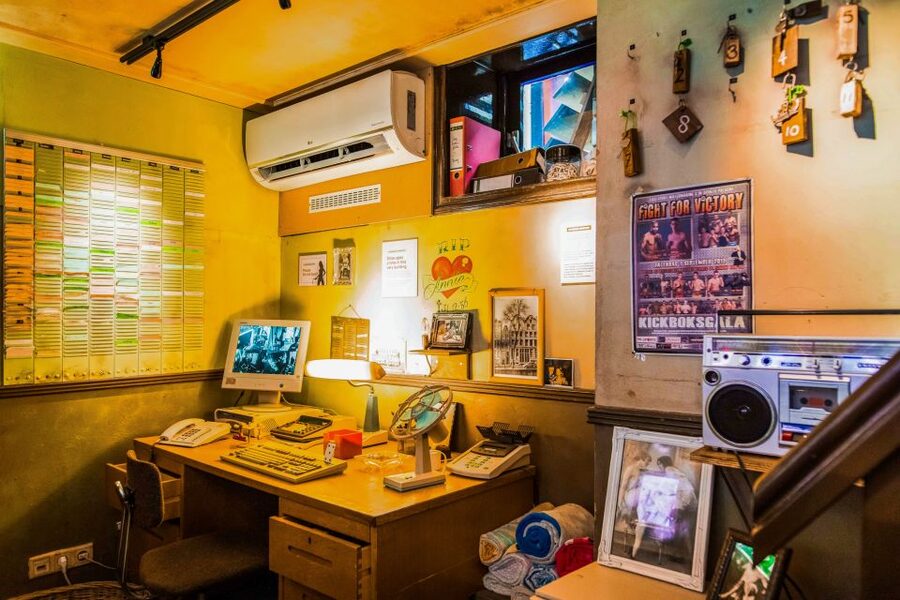
The museum occupies a small, old building rather than a large modern exhibition hall. That gives it atmosphere, but it also limits space. You move through compact rooms that recreate the working environment and explain what took place there.
The rooms are intentionally direct. You see the kind of space where a sex worker would meet clients, along with written information, images, and audio points. The goal is not to turn the subject into a spectacle. Instead, the museum tries to show the ordinary working conditions, choices, pressures, and risks connected with the profession.
The setting also makes one important point very clearly: the window is a workplace. From the street, it is easy to see only the display and the unusualness of the scene. Inside, the museum asks you to think about the person sitting behind the glass, managing customers, time, money, privacy, and personal safety.
Some material is frank and can be graphic. You can keep moving if a particular section is too much for you, but this is not an attraction for young children. The minimum age is 16.
The audio guide follows a worker’s experience
The audio guide is included in the ticket and is available in Dutch, English, French, German, Italian, and Spanish. For most people, it is the main reason the museum feels more personal than a room full of labels.
The English narration follows Inga, described through the audio as a former sex worker. Her account gives the visit a human voice and explains the work in a light-hearted, candid way. You hear about the daily routine, the business side of prostitution, and the separation between work and private life.
That first-person approach was the most praised part of the experience for good reason. Facts about legalization and regulation are useful, but they can feel dry on a printed panel. A personal account makes you stop and consider the difference between what the public sees and what the work actually involves.
The tone is sometimes funny, which helps ease an awkward subject. It does not make every part of the story cheerful. Personal accounts also touch on disturbing matters, including violence against sex workers and the dangers some have faced.
Take your time with the audio. The museum is self-guided, so you are not required to keep pace with a group. If another party is close behind you, move to the next section and return when it is quieter. In a small museum, that simple habit can make the difference between hearing the story clearly and catching only fragments.
Sitting in the Red Light District window
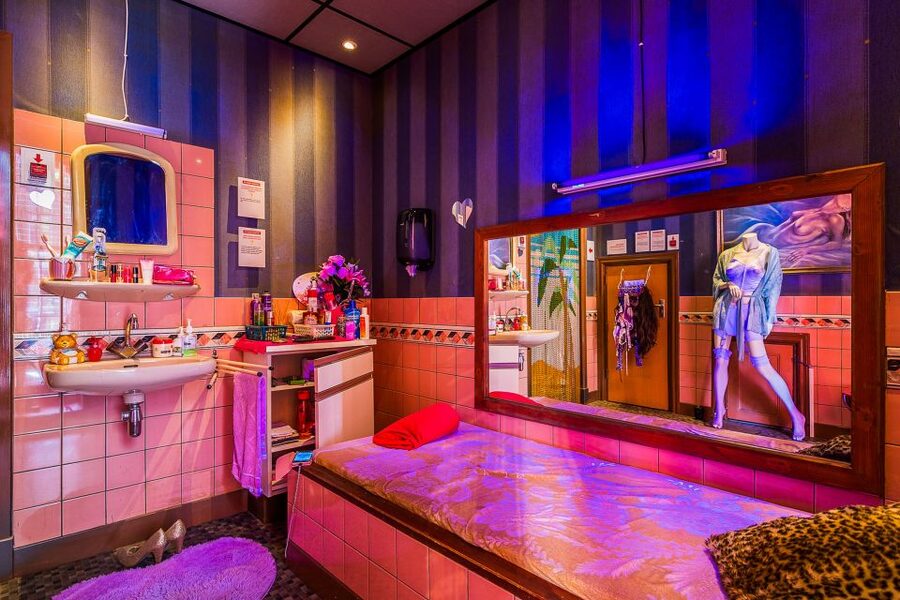
The most memorable physical feature is the chance to sit in a sex worker’s window. The museum sets up a window area so you can experience the view from behind the glass, rather than looking in from the canal-side street.
It is a simple activity, but it changes your perspective. Standing outside, you are part of the audience. Sitting inside, you become aware of how exposed the position feels, even in a recreated setting. The window is not just a photo opportunity. It shows how the district’s famous presentation works from the worker’s side.
You may have to wait for your turn, especially when the museum is full. Be considerate with photographs and give other people room. There are several photo opportunities inside, although one part of the picture option has not always worked.
This section also works best when you treat it with respect. The museum’s purpose is to reduce taboos and explain the people behind the windows, not to encourage visitors to mock or harass workers outside. The distinction matters, particularly if you plan to continue walking through the district afterward.
More Museums in Amsterdam
- Moco Museum Amsterdam Entrance Tickets with Banksy & More
★ 4.4 · 10,088 reviews - Amsterdam: The Upside Down Museum Entrance Ticket
★ 4.4 · 9,506 reviews - Amsterdam’s Weirdest Museum: Believe It or Not!
★ 4.5 · 4,086 reviews - Amsterdam: Van Gogh Museum Ticket and City Canal Cruise
★ 4.6 · 3,899 reviews
What the museum explains about Amsterdam
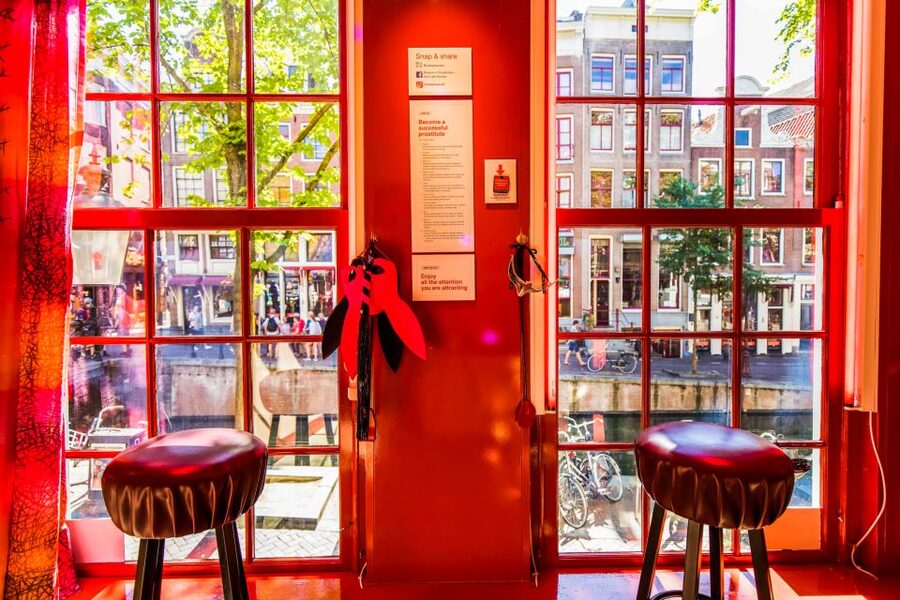
The museum places modern window prostitution in a wider Amsterdam story. You learn how sex work developed in the city and how the Netherlands came to take a more liberal legal approach.
A central point is legalization in 2000. The exhibits explain the basic history and regulation of the industry, helping you understand why the Red Light District operates openly in Amsterdam. The visit also explores the idea that many workers choose this form of employment and can keep their work and home lives separate.
That does not mean the museum presents the subject as simple or problem-free. The material also points toward exploitation, forced prostitution, violence, and the vulnerability of workers. A memorial to sex workers who were murdered adds a sober note and reminds you that legal status does not remove every danger.
I appreciate that balance. The museum is light enough to remain approachable, but it does not pretend the subject is only amusing. You leave with a clearer sense of the difference between regulation, personal choice, and coercion.
If you visit the district before coming here, the museum may help you interpret what you have seen. If you visit first, the street walk afterward may carry more meaning. Either order works, but doing the museum early in your Amsterdam stay can give you useful context for the rest of your time in the city.
The Confession Wall and the final rooms
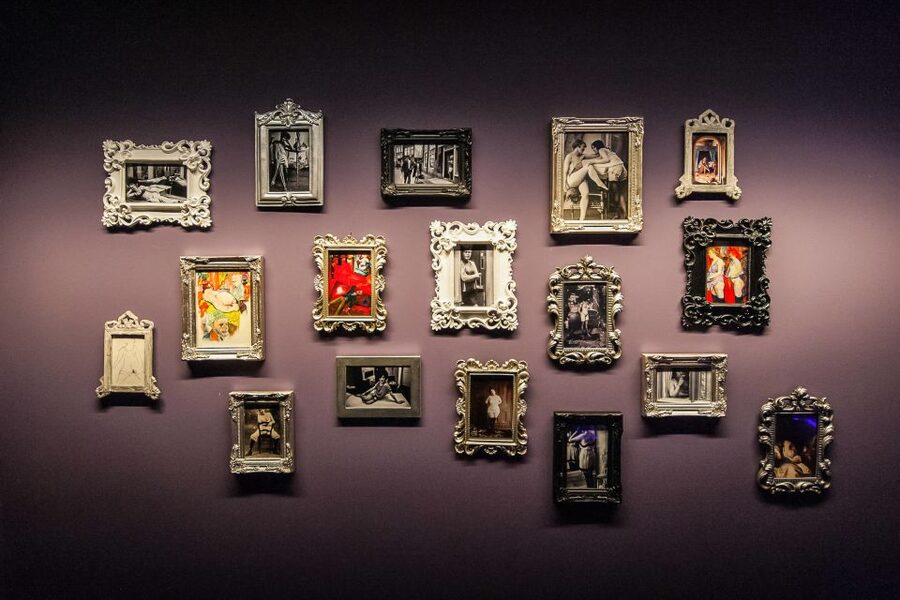
The visit ends with the Confession Wall, a collection of written confessions left by museum visitors. This is the most playful part of the experience, and it is also the least predictable.
Some confessions are funny. Some are strange. Some are surprisingly revealing. A few clearly treat the wall as a place for jokes, so do not expect every entry to offer serious reflection. Still, the collection shows how differently people respond to the Red Light District and the subject of sex work.
The wall often becomes a highlight because it breaks up the heavier material. After hearing personal stories and learning about violence and regulation, you get a more relaxed final stop. It gives you something to read while moving toward the exit, and it is one of the museum’s better small touches.
The content is not always suitable for sensitive readers, so keep that in mind if you are visiting with older teenagers. The age requirement is 16, but the tone can still be adult and explicit.
How long the visit takes
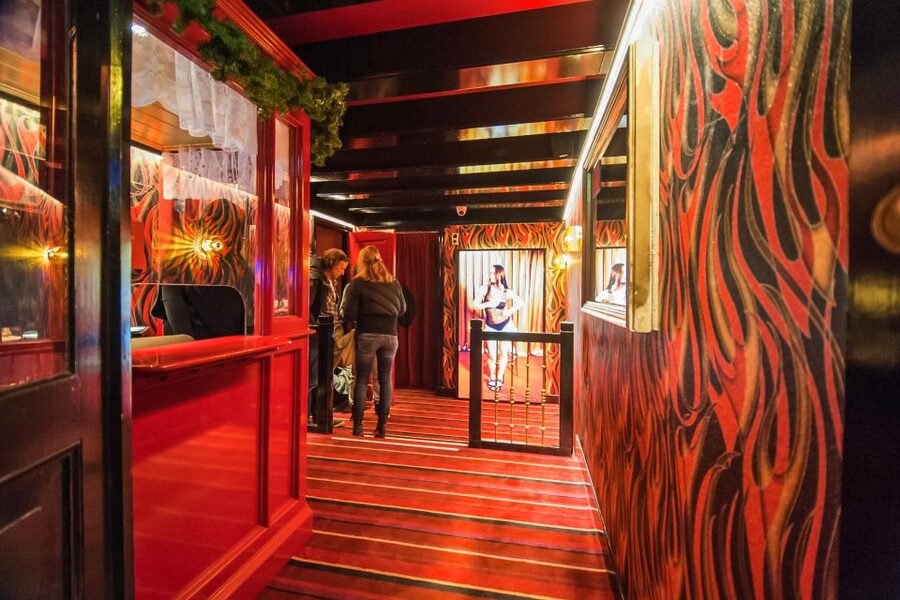
Plan on roughly 15 to 30 minutes. Some people finish quickly, especially if they read only the main panels. Others spend longer with the audio, the room displays, and the Confession Wall.
That short length is both a strength and a weakness. You can fit the museum easily between a canal walk, a meal, or another central Amsterdam sight. You do not have to surrender a full afternoon to it.
On the other hand, $17 can feel expensive if you expect a large museum with several floors and hours of material. The strongest value comes from the setting, the audio story, and the unusual window experience, not from the quantity of exhibits.
I would allow 30 minutes rather than planning around the shortest possible visit. That gives you time to listen properly and move at your own speed. If the rooms are crowded, you may need more time simply because you will pause and wait for space.
Is the $17 ticket good value?
At $17 per person, this is not Amsterdam’s cheapest quick attraction. It is fairly priced for a specialized museum in a central historic building, but the value depends on your expectations.
I think the ticket works well if you are curious about the Red Light District and want more than a street-level glance. You receive entry, the multilingual audio guide, access to the recreated rooms, and the window display. The audio alone gives the visit more substance than a novelty photo stop.
The price is harder to justify if you want a long museum visit or a large collection of objects. This is a focused experience. You pay for the subject, the location, and the personal storytelling rather than a high number of galleries.
The flexible booking terms help. You can cancel up to 24 hours in advance for a full refund, and you can reserve now and pay later. Those options are useful when your Amsterdam schedule is still changing, but they do not remove the need to arrive for your selected time slot.
Crowds, sound, and comfort
The museum is not suitable for wheelchair users. The old building has small spaces, and the layout is not designed for wheelchair access.
Crowding is the bigger day-to-day concern for most people. When many visitors enter together, it can be difficult to hear the audio, read every panel, or take a clear photograph. The compact layout means people naturally gather around the same displays.
I would choose an early time slot if you want a calmer visit. One early-morning visit was described as busy, so do not assume the first slot will be empty, but it is still a sensible choice if you want to avoid the busiest parts of the day.
You control the pace, which helps. Let a group move ahead, then listen in a quieter room. If you are visiting with friends, agree that everyone will take turns at the window rather than stopping the whole passageway.
Who will enjoy this museum most?
I recommend Red Light Secrets to adults and older teenagers who want context before judging Amsterdam’s Red Light District. It suits curious visitors who value personal stories, social history, and a frank explanation of how sex work operates.
It is especially useful for a first visit to Amsterdam. The museum gives you a basic framework for understanding legalization, regulation, workers’ perspectives, and the difference between the public image of the district and the reality behind the windows.
Couples, groups of friends, and solo visitors can all manage the self-guided format. You do not need to join a live group, and the language choices make it accessible to many international visitors.
I would skip it if you are uncomfortable with explicit material, want a formal art museum, or need a lengthy attraction to justify the ticket price. It is also not a good choice for anyone under 16 or for wheelchair users.
Red Light Secrets or a street walk?
A walk through the Red Light District costs nothing, but it tells you only what can be seen from outside. You see the windows, the canals, the crowds, and the surrounding businesses. You do not automatically learn how the work is organized or hear from someone who has done it.
The museum supplies that missing perspective. It lets you look at the rooms behind the glass and hear a worker explain the job in her own voice. I would pair the two rather than choosing only one.
Walk respectfully through the district, avoid photographing workers, and remember that people are working there. Then use the museum to understand the setting more carefully. The combination is more useful than treating the neighborhood as a collection of unusual photo stops.
One visitor described an additional live tour led by Robin, who offered history, culture, humor, and room for questions. That is a separate style of experience from this self-guided museum visit, so check your booking carefully if you specifically want a guide. The museum itself includes an audio guide, not a live walking tour.
Practical tips for a better visit
- Choose your time slot carefully because entry is allowed only at the selected time.
- Arrive early enough to find the entrance and check the queue.
- Bring headphones only if the venue’s audio equipment allows them, as the included audio guide is the key part of the visit.
- Allow 30 minutes so you are not forced to rush through the stories.
- Visit early if possible, but expect that popular time slots can still be busy.
- Treat the window display as a perspective-changing exhibit, not just a novelty photograph.
- Leave time for the Confession Wall, which is easy to pass quickly but adds humor to the final part of the visit.
- Avoid planning this for young children. The minimum age is 16, and some content is graphic.
- Pair the museum with a respectful walk through the surrounding district.
Should you book Red Light Secrets Museum?
Book it if you want a short, thoughtful introduction to Amsterdam’s Red Light District and you are interested in hearing the subject explained by a sex worker. The audio guide, former brothel setting, window experience, and Confession Wall make the $17 worthwhile for the right visitor.
Do not book it expecting a large museum or a full-hour tour. The experience can take as little as 15 minutes, and busy rooms may limit how much you can hear or photograph.
My advice is to reserve an early time slot, keep 30 minutes free, and visit near the start of your Amsterdam stay. It will not answer every question about sex work, but it gives you a more human view of a famous neighborhood that is often treated as a joke. That alone makes it more useful than its small size suggests.
FAQ
Where is the Red Light Secrets Museum?
It is at Oudezijds Achterburgwal 60h, 1012 DP Amsterdam, in North Holland, Netherlands.
How much does admission cost?
The listed price is $17 per person.
How long does the museum visit take?
The visit can take roughly 15 to 30 minutes, depending on how long you spend with the audio guide, displays, and Confession Wall.
Is an audio guide included?
Yes. The audio guide is included with entry and is available in Dutch, English, French, German, Italian, and Spanish.
Do I need to choose an entry time?
Yes. You can enter only during the time slot you selected.
What is the minimum age?
The activity is suitable only for people aged 16 and over.
Is the museum wheelchair accessible?
No. The activity is not suitable for wheelchair users.
More Museums
- Amsterdam: Rembrandt House Museum Entrance Ticket
★ 4.7 · 3,385 reviews - Amsterdam: Van Gogh Museum Ticket & Canal Cruise
★ 4.5 · 3,304 reviews - Amsterdam: NEMO Science Museum Ticket
★ 4.4 · 2,979 reviews - Amsterdam: Streetart Museum STRAAT Entrance Ticket
★ 4.8 · 2,137 reviews
More Red Light District Walks
- Amsterdam: Red Light District Tour in German/English/Italian
★ 4.9 · 5,623 reviews - Amsterdam Red Light District & Coffee Shop Tour
★ 4.6 · 4,134 reviews - Amsterdam: Red Light District Pub Crawl with Unlimited Shots
★ 4.1 · 2,130 reviews - Amsterdam Red Light District Pub Crawl
★ 4.5 · 1,497 reviews
Just added around Amsterdam
- Amsterdam 1-Hour Rickshaw Tour★ 4.9 · 17 reviews
- Keukenhof Gardens and Tulip Experience Tour from Amsterdam★ 4.8 · 17 reviews
- Amsterdam: Canal Cruise and Jewish Cultural Quarter Tickets★ 4.2 · 17 reviews
- Marken, Volendam and Edam: Private Full-Day Tour★ 4.6 · 18 reviews
- Discover Amsterdam’s city center in this Outside Escape game tour★ 4.5 · 18 reviews
- Amsterdam: Personal Travel & Vacation Photographer★ 4.8 · 18 reviews
- Amsterdam: Luxury Saloon Boat Cruise with 3-Course Dinner★ 3.9 · 18 reviews
- Rijksmuseum & Amsterdam City Center Semi-Private Tour 12ppl Max★ 5.0 · 18 reviews
Red Light District Tours, compared.

Red Light District Tour in German/English/Italian
Read our review →
Amsterdam Red Light District & Coffee Shop Tour
Read our review →
Red Light District Pub Crawl with Unlimited Shots
Read our review →
Private Amsterdam Red Light District and Coffee Shop Tour
Read our review →
Browse the lists this tour appears in