
REVIEW · DELFT TOURS
Delft: Canal House Museum ‘Paul Tetar van Elven’ Ticket
Delft keeps one artist’s home intact. In the center of Delft, the Museum Paul Tetar van Elven gives you a rare look inside a 19th-century canal house still arranged as its former owner left it. I especially like the original furnishings and the personal feel of the studio, library, and drawing rooms. I also like the striking collection of Delft blue pottery and Far Eastern porcelain. The main consideration is scale: this is a small, focused museum, not a full-day attraction by itself.
The $14 ticket is a fair price if you enjoy historic interiors, collecting, or Dutch art. A guided visit can add much to the experience, especially since one Dutch visitor praised the guide’s enthusiasm and an Australian visitor had an excellent time with an exceptionally well-informed guide. Still, you should come for atmosphere and detail, not a long list of major paintings.
In This Review
- Key details inside Delft’s most personal museum
- Who Paul Tetar van Elven was
- Koornmarkt and the house’s older layers
- The Salon and its painted ceiling
- The drawing rooms and personal atmosphere
- The studio: where the collection becomes personal
- The library and antique books
- Delft blue pottery and Far Eastern porcelain
- How the guided experience changes the visit
- Is $14 good value?
- Practical planning for your Delft day
- Who should book the Paul Tetar van Elven Museum?
- Should you book this Delft canal house ticket?
- FAQ
- Where is the Museum Paul Tetar van Elven located?
- How much does admission cost?
- How long is the ticket valid?
- What does the ticket include?
- Are food and drinks included?
- Can I cancel the booking?
- Can I reserve now and pay later?
- What languages are available?
- What can I see inside the museum?
- Who was Paul Tetar van Elven?
Key details inside Delft’s most personal museum
- A real 19th-century artist’s home: Paul Tetar van Elven’s house remains furnished with his possessions, giving the museum an unusually direct sense of its former owner.
- A canal house with 16th-century roots: The building dates from shortly after Delft’s Great Fire of 1536, though it was altered several times.
- A remarkable painted ceiling: The Salon ceiling lists old masters admired and copied by Tetar van Elven, including Raphael, Rubens, and Rembrandt.
- Art, books, and collecting in one visit: You can see paintings, portraits, antique books, pottery, porcelain, and studio objects under one roof.
- A central Delft setting: The museum is on Koornmarkt, in the historic center of Delft, once one of the city’s wealthiest areas.
- A flexible $14 ticket: You can cancel up to 24 hours ahead for a full refund and reserve now while paying later.
Who Paul Tetar van Elven was
Paul Tetar van Elven lived from 1823 to 1896. He was an artist, a drawing-master at the Polytechnic School, now Delft University of Technology, and an active collector.
That combination matters. This is not simply a museum about one painter’s best-known works. It is a portrait of how an educated 19th-century artist lived, worked, displayed art, and filled his home with objects that interested him.
Tetar van Elven collected art and antiques, along with Delft blue pottery and porcelain from the Far East. His home became both a private residence and a showcase of his taste. If you like the human side of art, I think you will find this more rewarding than a conventional gallery arranged by period and artist.
He left the house and its contents in his will, with the wish that they become a museum. That decision preserved something rare: not just individual objects, but the setting that gave them meaning.
The museum describes the house as the only well-preserved, authentic example of a 19th-century artist’s house in the Netherlands. That is a major reason to visit. You are not looking at a modern reconstruction designed to suggest the past. The rooms retain the atmosphere of a home shaped by one man’s working life and collecting habits.
More Attraction Tickets in Delft
- Delft: Entrance Ticket for the Old and New Churches
★ 4.4 · 229 reviews - Delft: Vermeer Centrum Delft Museum Entry Ticket
★ 4.6 · 189 reviews - Royal Delft: Delftblue Factory and Museum Admission Ticket
★ 4.5 · 145 reviews
Koornmarkt and the house’s older layers
The museum is located on Koornmarkt, in central Delft. The house itself dates to the 16th century, from the period shortly after the Great Fire of Delft in 1536.
Koornmarkt became one of the wealthiest parts of the city in that era. The building changed over time, as canal houses often did. A new front façade was added, and extensive modernization took place around 1800.
Tetar van Elven bought the property in 1864. He did not carry out another major renovation, but he adjusted the interiors to match current fashion. That distinction helps you understand what you are seeing. The structure carries several centuries of Delft, while the decoration reflects a specific 19th-century owner.
I like this layered character. The museum is not only about Tetar van Elven. It also shows how an older Dutch canal house could be adapted for a later period without losing its earlier bones.
As you move through the building, look for the contrast between the historic shell of the house and the lavish rooms Tetar van Elven created inside it. The result is a compact lesson in Dutch domestic life, art, and taste.
The Salon and its painted ceiling
The Salon is likely to be the room that fixes the museum in your memory. Tetar van Elven commissioned Abraham Gips to decorate the ceiling with the names of old masters he admired and copied.
The names include Raphael, Rubens, Rembrandt, and other major artists. This is more than decoration. It tells you how Tetar van Elven placed himself within the artistic tradition he respected.
Take time to look upward. In a house filled with pottery, portraits, furniture, books, and personal objects, the ceiling can be easy to miss. It deserves attention because it is one of the clearest expressions of Tetar van Elven’s artistic interests.
The Salon also helps explain the home’s lavish character. The description of the museum emphasizes richly decorated and furnished living rooms, and that richness is best understood as a reflection of the period and the owner rather than as modern luxury.
You may find the room less useful if you want a simple display of paintings with long explanatory labels. The attraction here is the relationship between the art, the room, and the person who lived there.
The drawing rooms and personal atmosphere
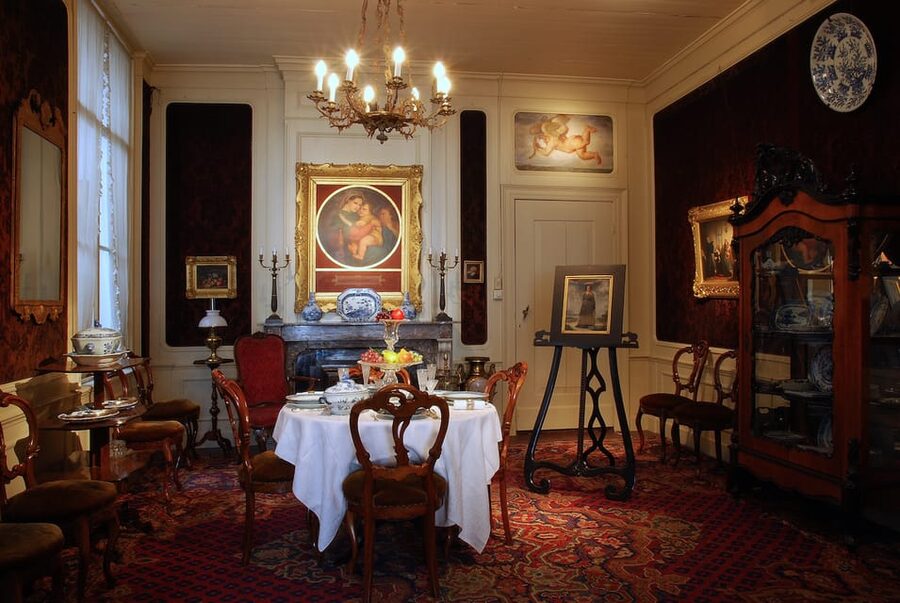
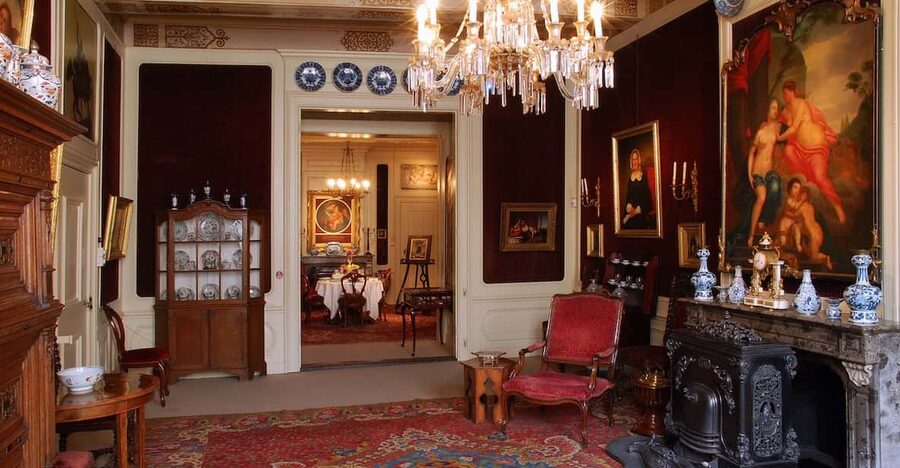
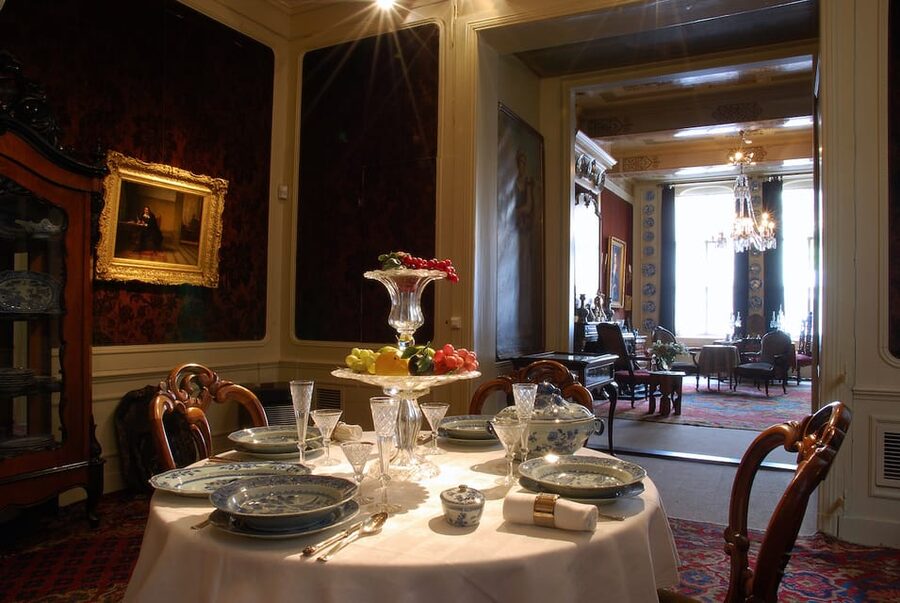
The living rooms are arranged to preserve the feeling of a private home. The furnishings, portraits, and paintings by Tetar van Elven and his contemporaries create a setting that feels personal rather than anonymous.
That is where the museum earns its ticket price for me. In a large museum, you may admire an object and move on. Here, the object is part of a domestic story. A portrait belongs in a room. A collection of porcelain sits alongside the furniture and decorative details that shaped daily life.
The supplied experience description makes a memorable comparison: the drawing room can feel as though the artist and his wife are welcoming you into their home. I would keep that expectation in mind, but with one qualification. This is a museum, not a staged theatrical performance. The feeling comes from the preserved interior and possessions, not from actors or a scripted show.
The rooms are particularly well suited to people who enjoy looking closely. You can study how an artist displayed his own work, how he lived among antiques, and how the home reflected his social and artistic ambitions.
If you are visiting Delft with children, the intimate scale may work well for a short cultural stop, though the material is aimed more at adults and art-minded visitors than at active entertainment.
More Museums in Delft
- Royal Delft: Delftblue Factory and Museum
★ 4.6 · 588 reviews - Vermeer Centrum Delft Museum Admission Ticket
★ 4.0 · 45 reviews - Private Tour of Delft + Visit to Delft Blue Museum & Factory
★ 4.5 · 8 reviews - Private Tour of Delft + Visit to Royal Delft Museum
★ 5.0 · 4 reviews
The studio: where the collection becomes personal
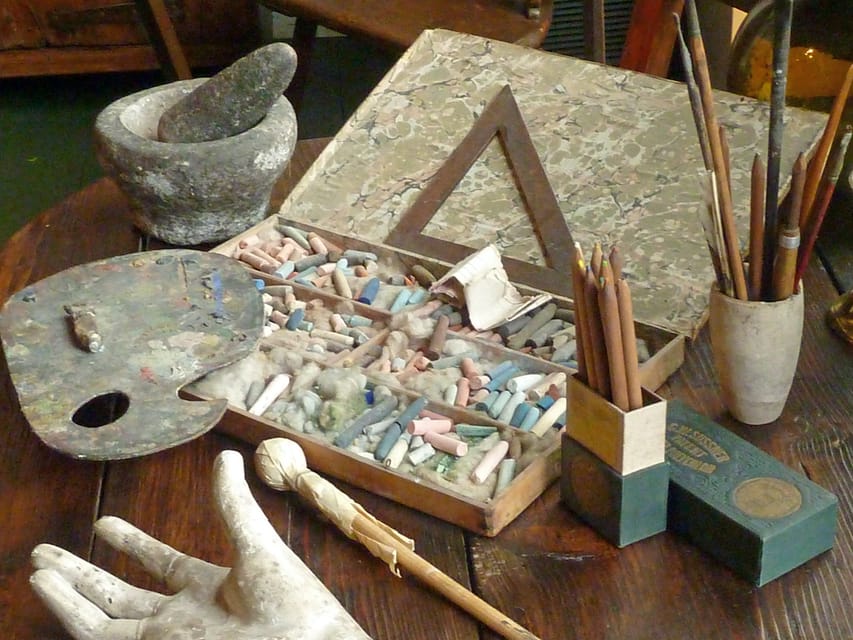
The studio is one of the most important parts of the house because it connects Tetar van Elven’s public identity with his private working life.
You can see his personal possessions there, along with other evidence of the artist and drawing-master behind the museum. The studio helps prevent the house from becoming merely a display of fashionable rooms. It reminds you that this was a working home.
The experience description does not promise a live demonstration or a hands-on art activity, so you should not expect one. Instead, you are looking at the setting and possessions linked to Tetar van Elven’s work.
For me, that is enough. A studio can reveal habits and priorities that a formal portrait cannot. It shows the practical side of an artist’s life, even when the museum visit remains largely visual.
The museum also gives context for Tetar van Elven’s role at the Polytechnic School, now Delft University of Technology. He was not isolated from education. He taught drawing at an institution that remains central to Delft, and the house reflects both his artistic interests and his place in the city’s intellectual life.
The library and antique books
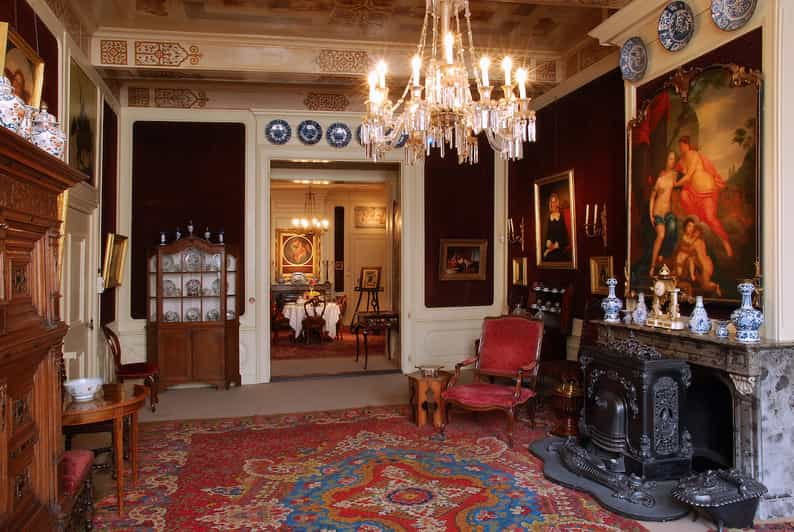
The library adds another dimension to the visit. Along with paintings and furnishings, the house contains a collection of antique books.
Books help you see Tetar van Elven as more than a painter and collector of decorative objects. His interests included the artistic past, and the library fits naturally beside the painted ceiling devoted to old masters.
I would not rush through this room. Even if you cannot read every title or examine each book in detail, the library completes the picture of a 19th-century artist building a personal world from images, texts, and objects.
The museum is at its best when these sections are considered together. The Salon shows admiration for famous artists. The studio shows the working artist. The library shows the collector and student. The pottery cabinets show his interest in craft, trade, and decorative design.
That range makes the museum feel fuller than its modest size suggests.
Delft blue pottery and Far Eastern porcelain
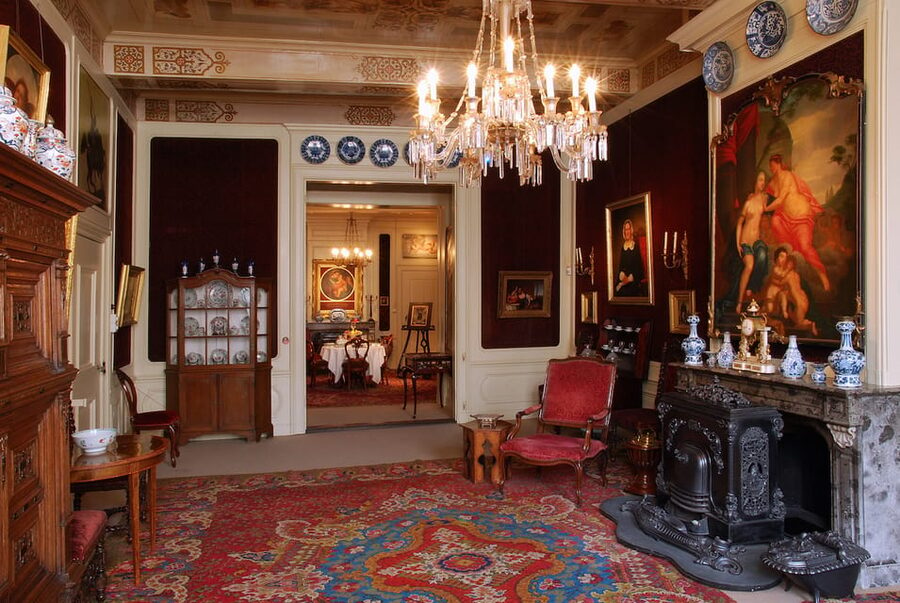
The cabinets of pottery and porcelain are another major reason to visit. Tetar van Elven collected Delft blue pottery as well as porcelain from the Far East.
Delft blue is an obvious fit for a Delft visit, but the collection is not limited to local ceramics. The Far Eastern porcelain gives you a wider view of the objects that attracted European collectors.
I like this part of the museum because it connects the house to both local identity and international exchange. Delft pottery belongs to the city’s familiar visual culture, while imported porcelain points to wider trade and changing European tastes.
The collection also helps explain why the house feels so full. Tetar van Elven did not collect one narrow category. He brought together art, antiques, books, pottery, porcelain, and furnishings. The result is a home where almost every room offers something to inspect.
You should expect display cabinets rather than a large ceramics hall. That is part of the charm, but it can also be a limitation if ceramics are your only interest. The pottery and porcelain are one strand of the visit, not the entire museum.
How the guided experience changes the visit
The ticket information lists English and Dutch for the host or greeter. That makes the museum accessible to visitors who do not speak Dutch, although the available language and timing should be confirmed when you check availability.
A guide can be especially helpful here. The rooms contain many layers: the building’s 16th-century origins, its changes around 1800, Tetar van Elven’s purchase in 1864, his teaching position, his collecting habits, and the later ceiling commissioned from Abraham Gips.
Without context, you can still appreciate the furnishings and objects. With a good guide, you are more likely to notice why a room matters and how the collections relate to Tetar van Elven’s life.
The strongest praise attached to this experience concerns the guidance. One visitor described a Dutch guide as wonderfully enthusiastic, while another praised a guide for being exceptionally well informed. No guide’s name is provided, so I cannot promise a particular person. I can say that the guided element appears to be one of the experience’s strongest assets.
If you prefer to move slowly and study objects alone, confirm how the visit is organized before booking. The supplied information identifies a host or greeter in English and Dutch, but it does not spell out whether every admission includes a full guided tour.
Is $14 good value?
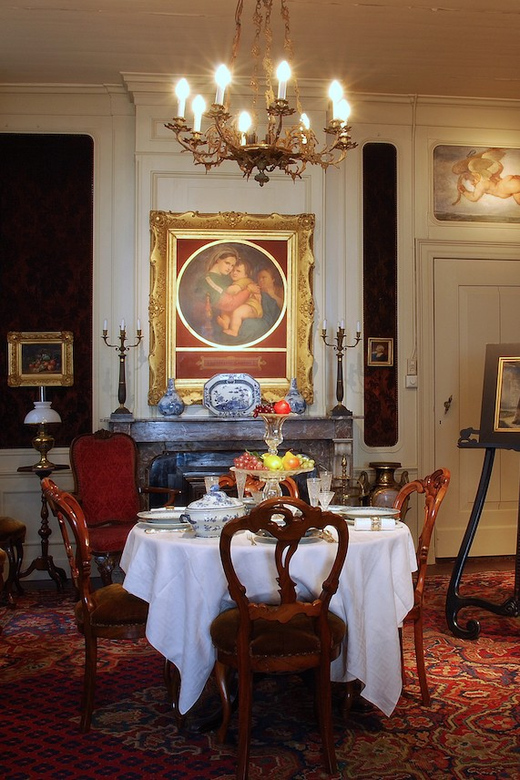
At $14 per person, this is a reasonable Delft cultural ticket if you value an authentic interior and a focused museum visit.
You are paying for more than entry into a house. The price gives you access to a preserved artist’s home, its furnishings, Tetar van Elven’s paintings and possessions, the painted Salon ceiling, the library, and the pottery and porcelain collection.
The value depends on your interests. I would consider it good value for:
- Art students and teachers
- People interested in historic Dutch homes
- Visitors who enjoy antiques and decorative arts
- Anyone who prefers small museums with a clear personal story
- Delft visitors who want something beyond the city’s better-known sights
I would be more cautious if you expect a major national collection, a long tour, or a large number of famous masterpieces. The duration is listed as one day for ticket validity, not as a promise that the museum itself will occupy an entire day. You should treat it as a compact stop within a Delft visit.
Food and drinks are not included. That is not much of a drawback because the ticket is for museum entry, but you should plan refreshments separately.
The free cancellation window also adds practical value. You can cancel up to 24 hours in advance for a full refund, and the reserve-now, pay-later option keeps your plans flexible.
Practical planning for your Delft day
The museum is on Koornmarkt in central Delft, so it fits naturally into a day focused on the historic city center. The supplied information does not provide travel directions, accessibility details, exact visit length, or a fixed starting time.
You should check availability for the current starting times before booking. The ticket is valid for one day, but that does not mean you need to devote the whole day to the museum.
I would place this visit alongside your other Delft plans rather than treating it as a stand-alone excursion. Its central location makes that practical, though no specific walking time or transport arrangement is provided.
The museum is most rewarding when you give yourself enough time to look carefully. A quick pass through the rooms will show you the furniture and cabinets, but a slower visit lets you connect the house to Tetar van Elven’s work and collecting.
Since food and drinks are not included, handle those before or after the museum. No restaurant, café, or refreshment service is specified as part of the experience.
Who should book the Paul Tetar van Elven Museum?
I would book this ticket if you want to see how a Delft artist actually lived, rather than simply viewing paintings on white gallery walls.
It is a particularly good match for anyone who enjoys authentic interiors, historic houses, porcelain, Delft blue pottery, old books, and the personal habits of artists. The house also suits visitors who appreciate a guide’s explanation and want more context than a few wall labels can provide.
I would not make it your first choice if you want a high-energy activity, a broad survey of Dutch art, or a full-day attraction with many separate exhibits. This is a quiet, specialized museum.
The small scale is both its strength and its limit. You get a more personal sense of Tetar van Elven because the collection is concentrated in his own home. You also have less variety than you would find in a major city museum.
Should you book this Delft canal house ticket?
Yes, if the idea of entering a preserved artist’s home appeals to you. The combination of original furnishings, Tetar van Elven’s studio and library, the painted ceiling, and the collections of Delft blue pottery and Far Eastern porcelain offers a distinctive Delft experience.
I would especially recommend it when you have already seen the city’s main sights and want a quieter stop with strong local character. At $14, the ticket is a sensible purchase for art and historic-house enthusiasts.
Skip it only if your schedule is extremely tight or you need a large museum with many famous works. For everyone else, this is a focused and worthwhile look at one artist, one home, and the collecting habits of 19th-century Delft.
FAQ
Where is the Museum Paul Tetar van Elven located?
The museum is on Koornmarkt in the center of Delft, in South Holland, Netherlands.
How much does admission cost?
The listed price is $14 per person.
How long is the ticket valid?
The ticket is valid for one day. Starting times should be checked for availability.
What does the ticket include?
The ticket includes entry to the Museum Paul Tetar van Elven.
Are food and drinks included?
No. Food and drinks are not included.
Can I cancel the booking?
Yes. You can cancel up to 24 hours in advance for a full refund.
Can I reserve now and pay later?
Yes. The reserve-now, pay-later option lets you book without paying immediately.
What languages are available?
The host or greeter is listed as available in English and Dutch.
What can I see inside the museum?
You can see the former artist’s canal house, its furnished living rooms, paintings, portraits, studio, personal possessions, library, antique books, painted Salon ceiling, Delft blue pottery, and Far Eastern porcelain.
Who was Paul Tetar van Elven?
Paul Tetar van Elven was an artist, a drawing-master at the Polytechnic School, now Delft University of Technology, and a collector of art, antiques, Delft blue pottery, and Far Eastern porcelain.
More Museums
- Private Tour of Vermeer’s Delft + Tickets to Vermeer Museum
★ 5.0 · 3 reviews - Amsterdam: Van Gogh Museum Ticket
★ 4.7 · 52,054 reviews - Moco Museum Amsterdam Entrance Tickets with Banksy & More
★ 4.4 · 10,088 reviews - Amsterdam: The Upside Down Museum Entrance Ticket
★ 4.4 · 9,506 reviews
Just added around Delft
- privatetour Delft, The Hague&Rotterdam Kinderdijk from Amsterdam★ 5.0 · 3 reviews
- Discover Historical Delft with an Audio Guide★ 5.0 · 3 reviews
- Private half-day Delft and The Hague tour★ 5.0 · 3 reviews
- Private Tour of The Hague, Delft and Rotterdam with Lunch★ 5.0 · 3 reviews
- Private Tour of Vermeer’s Delft + Tickets to Vermeer Museum★ 5.0 · 3 reviews
- 3 Course Walking Dinner in Delft with Guided Tours in Between★ 5.0 · 3 reviews
- Gouda Cheese and Delft Blue: Full-Day Private Tour★ 5.0 · 4 reviews
- Delft: City Walk with Audio Guide in 7 Languages on your Phone★ 5.0 · 4 reviews
Delft Tours, compared.


Rotterdam, Delft, the Hague, Madurodam from Amsterdam
Read our review →
Rotterdam, Delft and The Hague Small Group Tour from Amsterdam
Read our review →
The Hague, Delft and Rotterdam Small-Group Tour (Max. 8 People)
Read our review →
Browse the lists this tour appears in