
REVIEW · DELFT TOURS
Delft – Step/scootertour in and around the city
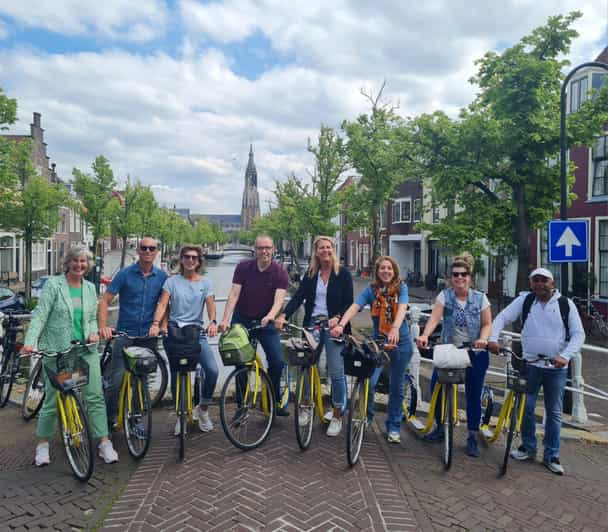
Delft looks different from a scooter. This 1.5-hour tour takes you beyond the usual postcard center, linking modern Delft with Mill de Roos, Agnetapark, Hofje van Pauw, the Eastern Gate, Markt, and the leaning Old Church. I like the small group limit of 10, which should make it easier to hear the guide and ask questions. I also like the route’s mix of famous sights and quieter neighborhoods, especially Agnetapark and Hofje van Pauw.
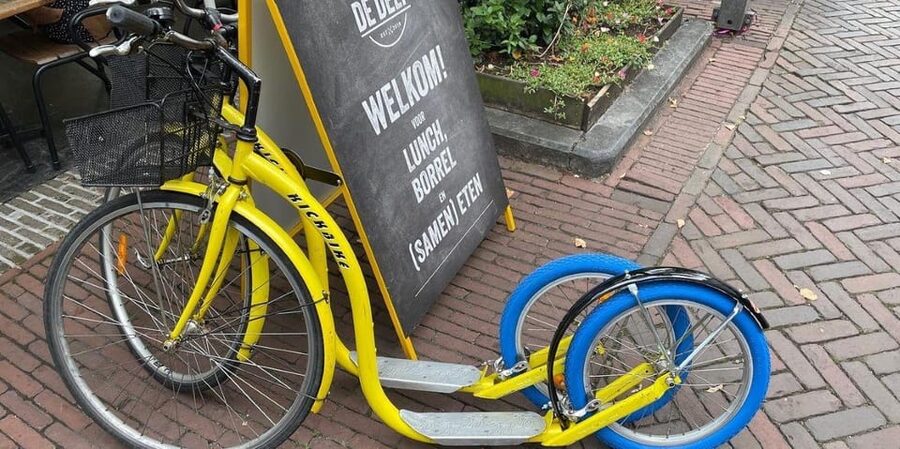
The main catch is simple: this is a non-electric scooter, or step in Dutch. You need to ride it yourself, and one stop-and-go ride through town can feel warm or tiring, especially on a sunny day. Still, at $32 per person, it offers a lively way to get your bearings without spending half a day on a formal walking tour.
In This Review
- Key Points At A Glance
- Why See Delft On A Step Scooter?
- Starting At Oude Delft 113 And De Delf
- Modern Delft And The City Beneath The Tracks
- Mill De Roos: A Working Piece Of Delft
- Agnetapark And The Markens’ Social Ideal
- Hofje van Pauw, A Small Courtyard With A Big Story
- Eastern Gate And Delft’s Old Street Pattern
- Markt, New Church, And Delft’s Main Stage
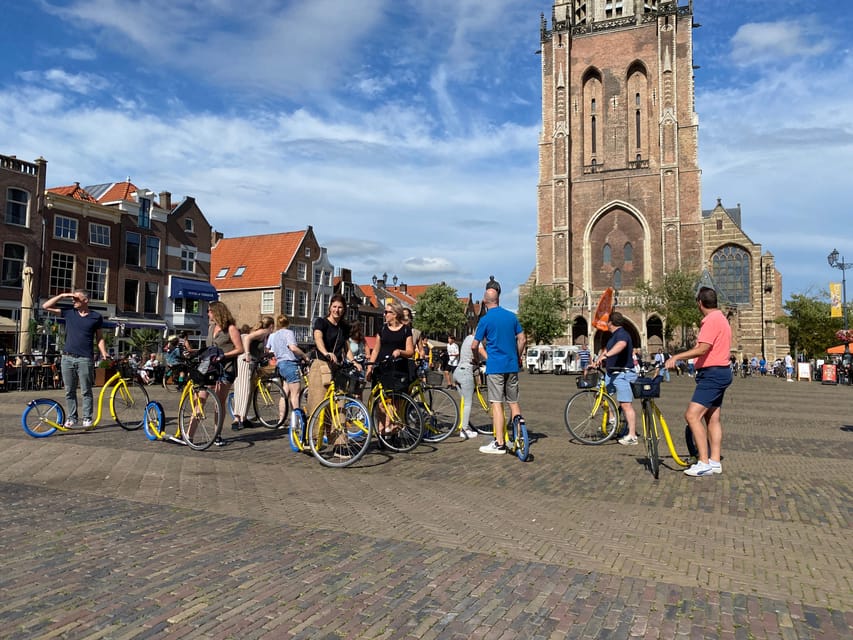
- The Leaning Old Church Before Returning
- Is $32 A Fair Price For 90 Minutes?
- Who Will Enjoy This Delft Tour?
- Should You Book The Step Scooter Tour?
- FAQ
- Where does the Delft step scooter tour start?
- How long does the tour last?
- Is the scooter electric?
- What languages are available?
- What places does the tour visit?
- Who cannot join the tour?
Key Points At A Glance
- Non-electric steps make the tour active: You propel the scooter yourself, so this is not a motorized sightseeing ride.
- Agnetapark adds a social story: The garden village reflects the forward-thinking ideas of Jacques van Marken and his wife.
- Hofje van Pauw is a quiet surprise: This small courtyard, founded in 1707, offers a calm break from Delft’s busier streets.
- The route reaches beyond the center: You see modern architecture, Mill de Roos, and neighborhoods that many short city walks skip.
- The best-known sights arrive near the end: The Markt, New Church, town hall, and Old Church give the tour a strong finish.
- Frans and Kevin are named guides: Their storytelling and friendly style receive repeated praise, with room for questions and some flexibility.
Why See Delft On A Step Scooter?
Delft is easy to explore on foot, but its center can feel compact and familiar after you have seen the Markt and canals. This tour changes the pace. You roll from one area to another, stopping for short guided visits rather than standing in one place for a long lecture.
The route also gives you a wider picture of the city. You begin near the modern part of Delft, where the train now runs beneath the city. That change has left room for new construction, and the guide uses the area to point out modern architecture. It is a useful reminder that Delft is not only old brick, blue-and-white pottery, and church towers.
I appreciate the balance. You get old streets and courtyards, but you also see places connected to work, housing, transport, and city planning. The result feels less like a checklist of monuments and more like a quick look at how Delft works as a living city.
The short stops matter, too. Each main location receives about 15 minutes of guided attention. That is enough time to hear the central story, take photographs, and move on before the tour becomes a stationary history class.
More City Tours in Delft
- Delft: City Center Walking Tour
★ 4.7 · 88 reviews - Visit the Girl with the Pearl Earring, The Hague & Delft City
★ 5.0 · 63 reviews - Walking Tour of Delft – The City of Orange and Blue
★ 5.0 · 50 reviews
Starting At Oude Delft 113 And De Delf
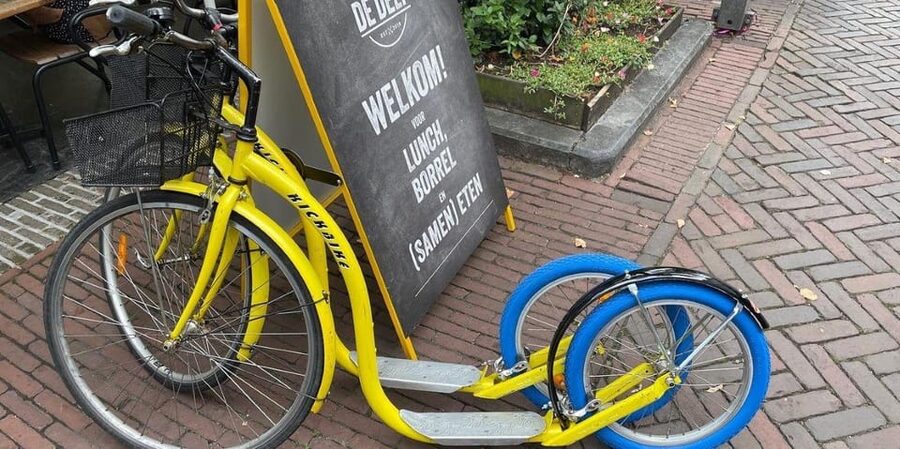
The tour starts at Oude Delft 113, at restaurant De Delf. This is also where the steps are kept, and where you return at the end. The location gives the outing a practical beginning in the historic part of town, while the first section heads toward modern Delft.
Your guide provides the step scooter and leads the group. The available languages are English and Dutch. Guides named in the feedback include Frans and Kevin, both praised for keeping the talk lively and for explaining Delft in an approachable way.
Because the group is limited to 10 people, the setting should feel more personal than a large coach tour. You can ask questions, and one account specifically praised the chance to stop and ask things along the way. The guide may also make small adjustments on the return route, such as pointing out places to eat for the evening.
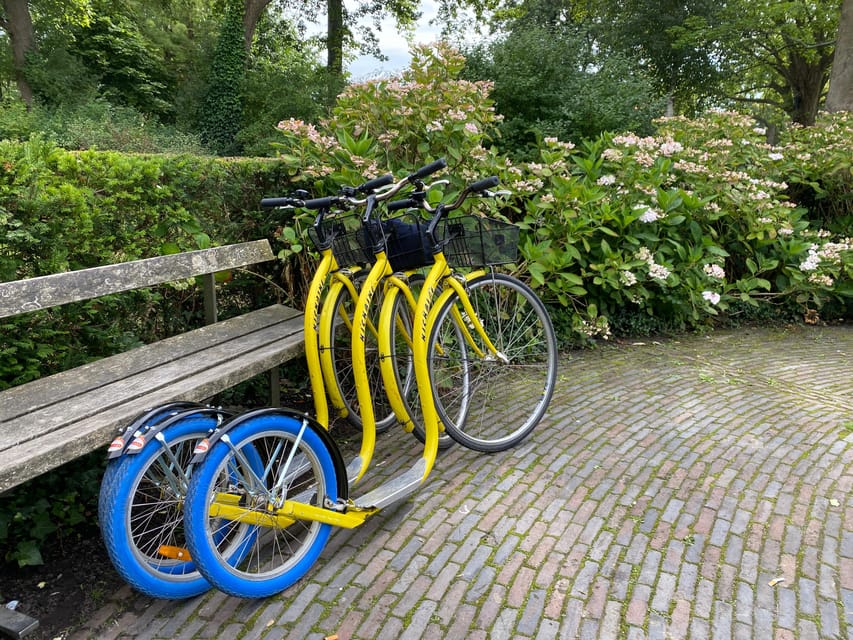
Before booking, pay attention to the word step. The scooter is not electric, and the pictures should be checked if you are unsure what type of vehicle to expect. You need to be able to ride a bicycle and manage a non-electric scooter. The tour is not suitable for children under 16, wheelchair users, or people with visual impairments.
Modern Delft And The City Beneath The Tracks
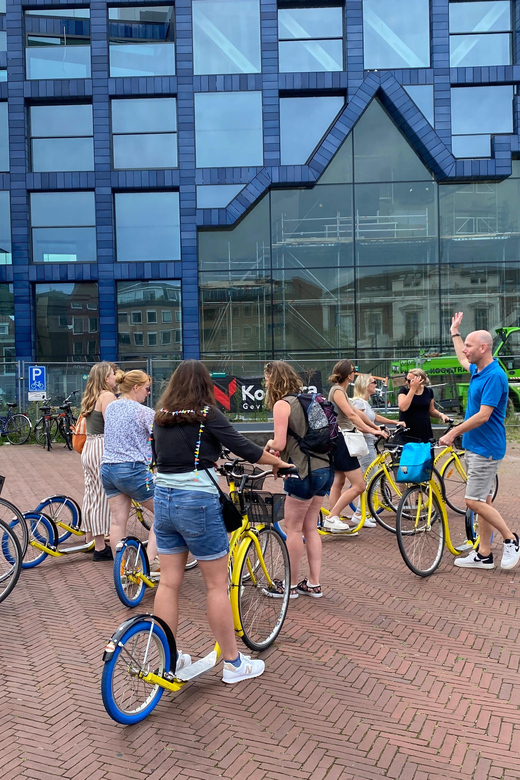
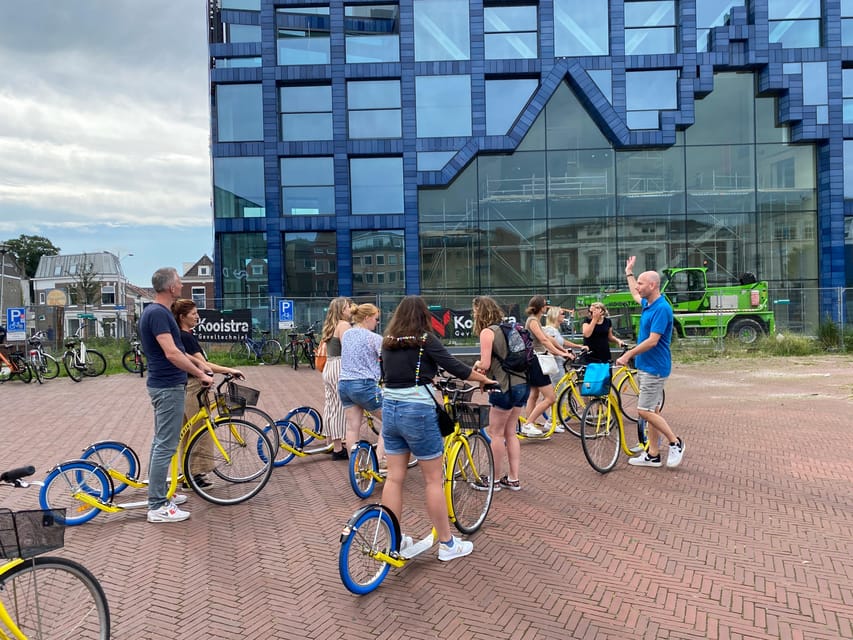
The opening section takes you through the newer part of Delft. Since the train runs underground, space has opened for construction above it. The guide uses this section to show the city’s newer architecture and explain how the area has changed.
This may not be the part you came to Delft to see, but it gives the tour useful range. A classic walking route usually focuses on the old center. Here, you get a short lesson in how a historic Dutch city deals with modern transport and new buildings.
The step is helpful in this part because you cover more ground than you would on foot. You still move slowly enough to look around, but the ride keeps the tour from feeling like a string of disconnected stops. The route includes only small sections of stepping between stories, according to the available feedback, which helps if you are not used to this kind of scooter.
That point also explains one of the lower scores. One person found the ride varied and informative, but said the non-electric scooter took some getting used to. Consider wearing comfortable clothes and shoes, and expect physical activity rather than a passive sightseeing ride.
Mill De Roos: A Working Piece Of Delft
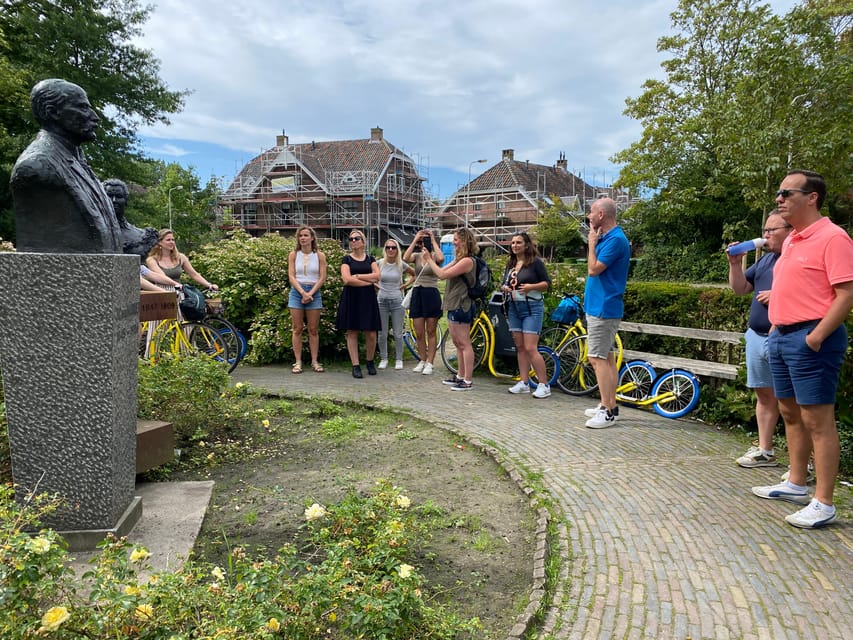
The next main stop is Mill de Roos. It is still in use, which gives the visit a practical edge. You are not looking only at a preserved object. The mill remains part of Delft’s working identity.
The stop also breaks up the city views with a different kind of architecture. After the modern buildings, the mill gives you a clear sense of the older technology that once shaped Dutch towns. Your guide explains the site during the photo stop, and the short format lets you see it without turning the tour into a long museum visit.
I would treat Mill de Roos as a useful part of the route rather than the main reason to book. Its value comes from the contrast. Delft’s story includes both underground trains and traditional wind power, and this tour places those subjects within the same short outing.
More Delft trips:
- From Amsterdam: Rotterdam, Delft & The Hague Guided Day Tour
★ 4.2 · 1,765 reviews - Delft: Canal Cruise with Guided Commentary
★ 4.4 · 990 reviews - Rotterdam, Delft, the Hague, Madurodam from Amsterdam
★ 4.0 · 793 reviews - Rotterdam, Delft and The Hague Small Group Tour from Amsterdam
★ 4.5 · 599 reviews
Agnetapark And The Markens’ Social Ideal
Agnetapark is one of the strongest sections of the tour. This quiet garden village was linked to Jacques van Marken and his wife, who were well ahead of their time in their social ideas. The guide shares their story while you pause among the calmer streets and gardens.
The stop gives you more than attractive houses. It introduces the idea of planned housing connected to the welfare of workers and families. That social angle makes Agnetapark feel different from a standard old-town photo stop. You are looking at a neighborhood shaped by a particular view of community life.
The setting is also a welcome change of pace. After moving through modern Delft and visiting the mill, you get a peaceful area where the guide can tell a story without the pressure of a major square around you. One of the clearest strengths of this tour is the way it uses places like Agnetapark to show a side of Delft that many short visits miss.
If you enjoy architecture, urban planning, or stories about people trying new social ideas, give this stop your full attention. It may be the most distinctive part of the route.
Hofje van Pauw, A Small Courtyard With A Big Story
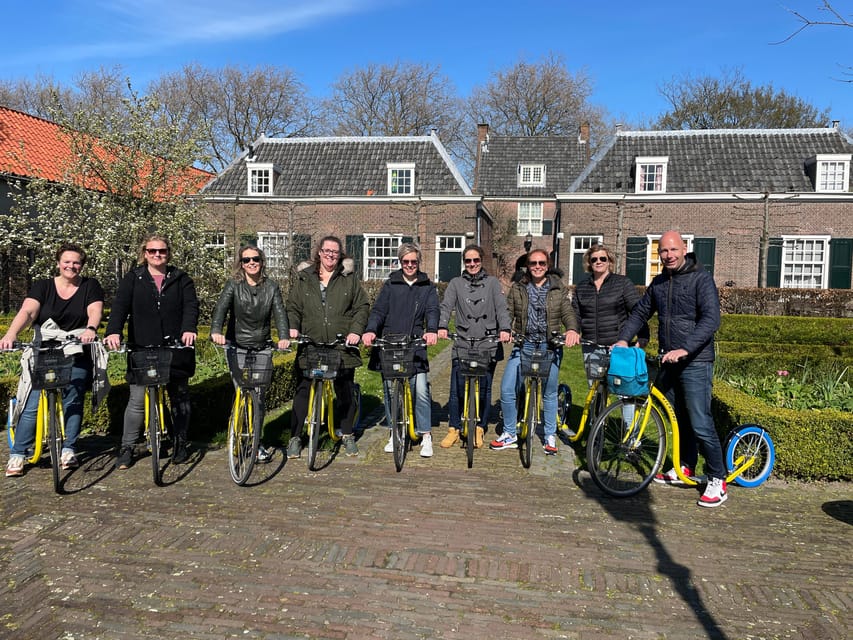
Next comes Hofje van Pauw, founded in 1707. The Dutch word hofje refers to a courtyard housing complex, often created through a charitable foundation. Here, the appeal comes from the quiet setting and the story of the woman who founded it.
The guide explains more about her and the purpose of the courtyard during the stop. The word idyllic fits the setting, but the history gives it more weight than a pretty photo background. You see how private generosity helped shape Delft’s homes and neighborhoods.
This is exactly the kind of place that benefits from a guide. On your own, you might pass by without understanding why the courtyard matters. With a short explanation, the architecture becomes part of a larger story about charity, housing, and civic life.
Hofje van Pauw also gives the tour a pleasant rhythm. You have been stepping through wider streets, then you pause in a compact and sheltered space. At about 15 minutes, the visit remains focused. You will not spend long enough to study every detail, but you should leave with a clear reason to remember the place.
Eastern Gate And Delft’s Old Street Pattern
The Eastern Gate is another photo stop on the route. It adds a defensive and architectural note before the tour returns toward the central sights. The guide provides context while you take photographs, helping you see the gate as part of Delft’s earlier street pattern rather than as an isolated structure.
The itinerary gives each stop roughly the same amount of time. That is helpful for planning, but it also means the guide has to keep the explanation moving. If you prefer very detailed monument talks, this tour may feel brisk. If you want a broad introduction with several different locations, the pace works well.
The Eastern Gate also helps connect the outer route with the historic center. By this point, you have seen modern Delft, the mill, a planned garden village, and a charitable courtyard. The gate shifts the focus back toward the older city before the final central stops.
Markt, New Church, And Delft’s Main Stage
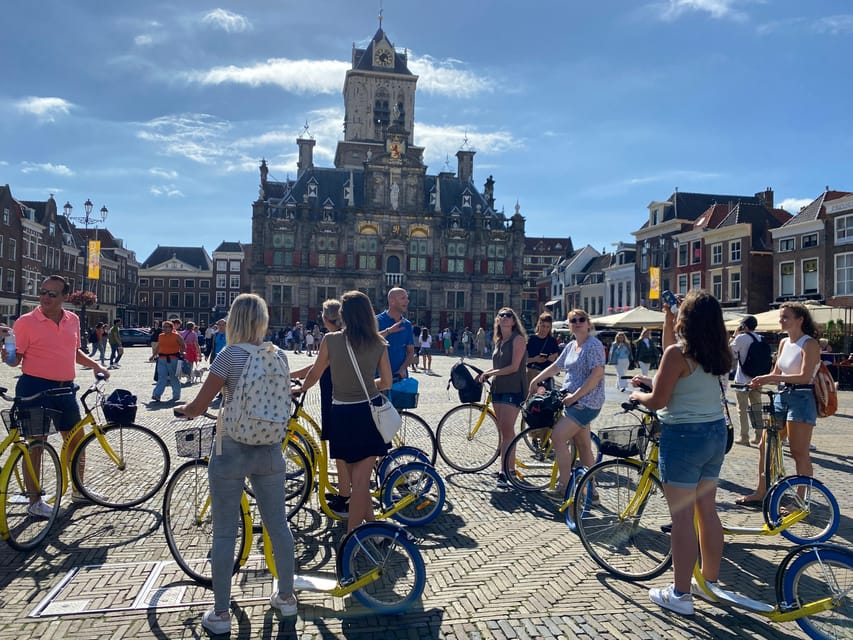
The return route takes you through Markt, Delft’s central square. The New Church and town hall make this the most recognizable part of the tour, and the guide points out why the square should not be missed.
You get the familiar Delft scene here: a broad public space framed by important civic and religious buildings. It is a good place for photographs, but try not to treat it as just a quick backdrop. The square helps tie together the city’s public life, government, and religious past.
After the quieter stops, Markt may feel more active and visually full. That contrast is one of the route’s strengths. You have already seen Delft away from its standard center, so the famous square arrives with more context.
The guide’s role is especially useful here. A photo of the New Church and town hall is easy to take on your own. A short explanation can help you understand why this square acts as the city’s main meeting point and why it remains central to Delft’s identity.
The Leaning Old Church Before Returning
The Old Church, or Oude Kerk, provides the final major landmark. Its leaning tower is the feature most people notice first. The tower has a famous tilt, and the stop gives you a chance to photograph it while hearing the story behind the building.
Ending with the Old Church works well. The tour begins with modern Delft and then moves through working, residential, charitable, defensive, civic, and religious parts of the city. The last stop brings you back to the image many people associate with Delft: a historic church tower rising above the old streets.
The route then returns to Oude Delft 113. One useful detail is that the return can have a little flexibility. A guide may point out restaurants and other places to eat for the evening, which gives the tour some value beyond its stated 90 minutes. A drink at the end is also included according to the experience details shared after one outing, though you should confirm current arrangements when booking.
Is $32 A Fair Price For 90 Minutes?
At $32, this is not the cheapest way to see Delft, since you can walk through the center for free. The price pays for the step scooter, a live guide, and a route that reaches areas you might not choose on your own.
I think the value is strongest for a first visit or a short stay. In 90 minutes, you see seven distinct points, including several outside the standard central circuit. You also receive background on Agnetapark and Hofje van Pauw, two places that are more rewarding when someone explains their purpose.
The price is less compelling if you want a slow visit at each monument or if you already know Delft well. The stops are short, and the step scooter requires effort. You are paying for variety, movement, and interpretation, not for extended time inside one attraction.
A small group adds to the value. With no more than 10 people, the guide can keep the group together and answer questions without the outing feeling like a large procession. The strongest praise goes to the route, the enthusiasm of guides such as Frans and Kevin, and the way the tour reaches beyond the usual center.
Who Will Enjoy This Delft Tour?
I would recommend it to adults and older teenagers who want an active introduction to Delft. It suits people who like architecture, local stories, and a little exercise, especially if a normal walking tour feels too predictable.
It is also a good choice for anyone with only a limited amount of time. The route gives you a quick look at both modern and historic Delft, and you can use the guide’s restaurant suggestions when planning the rest of your day.
You should think twice if you cannot ride a bicycle or dislike physical activity. The scooter is non-electric, and the experience can feel warm in sunny weather. It is also not suitable for children under 16, wheelchair users, or people with visual impairments.
English and Dutch tours are available. Free cancellation is allowed up to 24 hours before the start, and you can reserve now and pay later, which is useful when your Delft plans are still shifting.
Should You Book The Step Scooter Tour?
Book it if you want to see Delft beyond the obvious center and do not mind pushing yourself along on a non-electric step. The best parts are Agnetapark, Hofje van Pauw, and the guide’s stories, with the Markt and leaning Old Church supplying the classic Delft finish.
Skip it if you want a fully relaxed ride, a long stop at each landmark, or an activity suitable for children under 16. For the right person, $32 buys a friendly, compact tour with a genuinely varied route and a useful first look at Delft’s quieter corners.
FAQ
Where does the Delft step scooter tour start?
It starts at Oude Delft 113, at restaurant De Delf. The tour also returns to this location.
How long does the tour last?
The tour lasts 1.5 hours, or 90 minutes. Starting times depend on availability.
Is the scooter electric?
No. The scooter is a non-electric step, and you propel it yourself.
What languages are available?
The live guide can conduct the tour in English or Dutch.
What places does the tour visit?
The route includes modern Delft, Mill de Roos, Agnetapark, Hofje van Pauw, the Eastern Gate, Markt, the New Church and town hall area, and the Old Church.
Who cannot join the tour?
The tour is not suitable for children under 16, people who cannot ride a bike, wheelchair users, or people with visual impairments.
Just added around Delft
- privatetour Delft, The Hague&Rotterdam Kinderdijk from Amsterdam★ 5.0 · 3 reviews
- Discover Historical Delft with an Audio Guide★ 5.0 · 3 reviews
- Private half-day Delft and The Hague tour★ 5.0 · 3 reviews
- Private Tour of The Hague, Delft and Rotterdam with Lunch★ 5.0 · 3 reviews
- Private Tour of Vermeer’s Delft + Tickets to Vermeer Museum★ 5.0 · 3 reviews
- 3 Course Walking Dinner in Delft with Guided Tours in Between★ 5.0 · 3 reviews
- Gouda Cheese and Delft Blue: Full-Day Private Tour★ 5.0 · 4 reviews
- Delft: City Walk with Audio Guide in 7 Languages on your Phone★ 5.0 · 4 reviews
Delft Tours, compared.


Rotterdam, Delft, the Hague, Madurodam from Amsterdam
Read our review →
Rotterdam, Delft and The Hague Small Group Tour from Amsterdam
Read our review →
The Hague, Delft and Rotterdam Small-Group Tour (Max. 8 People)
Read our review →
Browse the lists this tour appears in