
REVIEW · HISTORICAL TOURS
Financial History Tour
Money built Amsterdam’s old center. This private financial history tour links exchange houses, merchant wealth, banking, city archives, and Tulip Mania in a compact 2.5-hour walk. I like the way it looks beyond canals and grand facades to explain why Amsterdam became such an important commercial city.
I especially like the private format for up to 10 people and the chance to see places many city walks skip, including the basement of the Stadsarchief Amsterdam. The tour also offers plenty of photo stops near central Amsterdam landmarks. The main drawback is its narrow subject: if finance, trade, and economic history do not interest you, the walk may feel more like a lecture than a general introduction to Amsterdam.
In This Review
- Key points about Amsterdam’s money trail
- Why Amsterdam’s financial story makes a good walking tour
- Starting at Beurs van Berlage near Dam Square
- Following the financial heart of Amsterdam
- Entering the former bank basement at Stadsarchief Amsterdam
- Meeting Amsterdam’s wealthy merchants
- Tulip Mania at the floating flower market
- A private walk with room for questions
- Walking distance, transport, and timing
- Who will get the most from this tour?
- Is the Financial History Tour worth booking?
- FAQ
- Where does the Financial History Tour start?
- Where does the tour end?
- How long does the experience last?
- How much does the private tour cost?
- What language is the tour offered in?
- Is the tour private?
- Can I cancel for a full refund?
Key points about Amsterdam’s money trail
- Starts at Beurs van Berlage, one of the exchange buildings around Dam Square and a fitting place to begin.
- Explains Amsterdam’s financial heart, including why this part of the city became so important.
- Visits the basement of Stadsarchief Amsterdam, housed in a former 1920s bank building.
- Connects merchant fortunes to daily city life, showing how wealthy traders shaped Amsterdam’s culture and heritage.
- Covers Dutch Tulip Mania at Amsterdam’s floating flower market, one of the most famous economic bubbles in history.
- Ends near Rokin, about 500 meters from the starting point, keeping the walk central and easy to combine with other sightseeing.
Why Amsterdam’s financial story makes a good walking tour
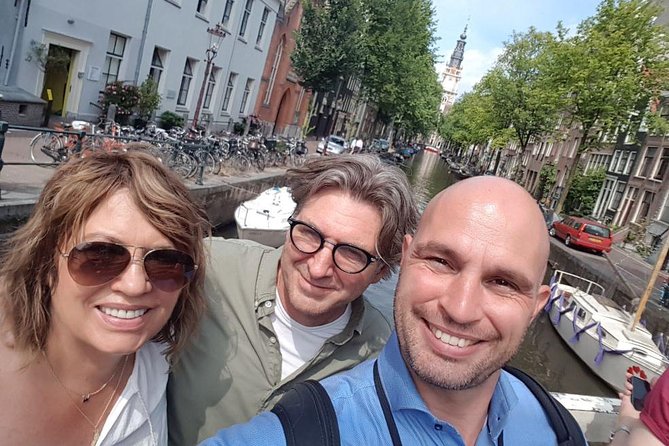
Amsterdam can seem like a city of canals, narrow houses, bicycles, and museum masterpieces. Those are all part of its appeal, but money explains much of the city’s shape. Trade paid for buildings, drew merchants here, supported civic institutions, and helped create the culture you see in the center today.
This tour gives you a useful thread to follow. Instead of looking at old buildings as pretty scenery alone, you learn to ask who paid for them, who worked inside them, and how financial decisions affected ordinary life.
I find that approach especially useful early in an Amsterdam visit. Once you understand the city’s commercial roots, later walks around Dam Square, the canal belt, and the old center have more meaning. The tour does not try to cover every part of Amsterdam. It focuses on one theme and follows it through a small area.
The route lasts about 2 hours and 30 minutes. That is long enough for a clear story, but short enough to fit around a museum visit or an afternoon of independent sightseeing. Since it is a private tour, your group is the only group participating. That gives the guide more room to adjust the pace and respond to your questions than a large public walk usually allows.
More Historical Tours in Amsterdam
- Amsterdam Food and Cultural Tour with Tastings
★ 5.0 · 2,442 reviews - Amsterdam: Haunted History and Ghost Walking Tour
★ 4.5 · 488 reviews - Amsterdam High-End Dutch Food & History Tour – Up to 8 guests
★ 5.0 · 482 reviews
Starting at Beurs van Berlage near Dam Square
The meeting point is Bistro Berlage at Beursplein 1, 1012 JW Amsterdam. This puts you beside Beurs van Berlage, one of the exchange buildings constructed around Dam Square. It is a strong starting point because the building itself introduces the main subject: Amsterdam’s financial life was not tucked away in a distant business district. It was part of the old city center.
You spend about 10 minutes at this first stop, with admission included at no extra charge. Do not expect a long indoor visit based on the information available. The value here is the setting and the opening explanation, which establishes why this part of Amsterdam became the city’s financial heart.
That setting also makes the first photo opportunity easy. Beurs van Berlage gives you a substantial historic backdrop, while the surrounding Dam area places the financial story among some of central Amsterdam’s best-known sights.
A short opening stop can be useful, but it also means you should not expect a detailed architectural tour of every exchange building. The building is the doorway into the subject, not the entire subject itself.
Following the financial heart of Amsterdam
From Beurs van Berlage, the walk continues through the central area around Dam. The focus shifts from one building to the wider question of why Amsterdam’s economic life developed here.
This part matters because finance is not only about banks, prices, and merchants. It changes the way a city looks and functions. Decisions made by traders and investors affected construction, public institutions, social status, and the city’s sense of identity.
The guide’s job here is to connect visible places with the people behind them. You learn about the wealthy merchants of Amsterdam and how they made their money. That question keeps the story grounded. It is easy to admire merchant houses without asking how fortunes were built, what kinds of trade supported them, and what those fortunes meant for the city.
The supplied experience information does not give a detailed list of every street or building visited between the main stops. That is worth keeping in mind if you prefer a tightly mapped route. The tour is best understood as a guided story through the old center, with the guide filling in the links between the named locations.
Tijs de Boer is the guide specifically praised for his insights and local hints. That is a useful detail for anyone who prefers a tour leader who can place financial history in a wider Amsterdam context. The local advice may also help you plan the rest of your visit, although the experience description does not promise a formal restaurant, museum, or neighborhood recommendation service.
Entering the former bank basement at Stadsarchief Amsterdam
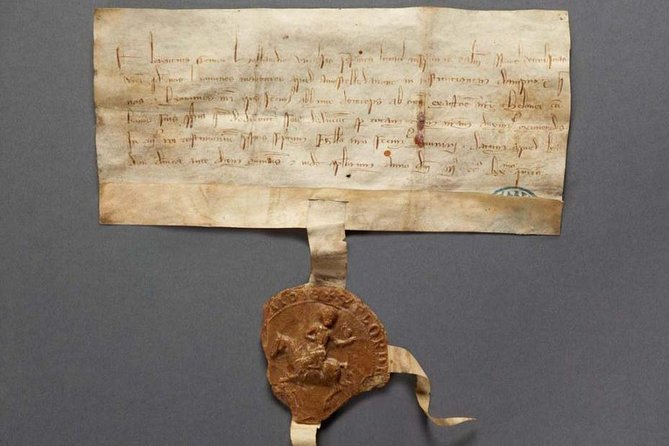
The second named stop is Stadsarchief Amsterdam, where you visit the basement of a 1920s bank building. The basement now houses the treasury of the city archives. You spend about 10 minutes here, and admission is included.
This is likely to be the most distinctive stop for many people. A former bank basement is a natural place to discuss money, storage, security, and civic records. It also gives the tour a physical setting that feels closely tied to its subject, rather than simply using streets and facades as illustrations.
The archive connection broadens the story. Amsterdam’s financial past is not only about wealthy traders making deals. It is also preserved in the records, documents, and administrative material that help explain how the city worked.
The short time at this stop suggests a focused visit rather than a full archive tour. You should not expect to explore the whole Stadsarchief or spend an hour examining documents. Instead, you get a compact look at a place where the city’s past is stored, followed by the guide’s explanation of the merchants and financial systems that shaped Amsterdam.
For me, this stop adds texture to the walk. Outdoor city tours can sometimes move from facade to facade without giving you a strong sense of the evidence behind the story. The archive basement helps make that past feel more concrete.
More historical tours:
- Amsterdam: Historic City Sightseeing Canal Cruise
★ 4.5 · 444 reviews - Amsterdam: Historical Highlights Walking Tour with Tasting
★ 4.6 · 381 reviews - Anne Frank and the Jewish History of Amsterdam Private Tour
★ 5.0 · 307 reviews - Amsterdam: 3-Course Meal in Historic 1st Class Waiting Rooms
★ 4.5 · 292 reviews
Meeting Amsterdam’s wealthy merchants
The tour asks a direct question: who were Amsterdam’s rich merchants, and how did they make their money? That question gives the experience a human focus.
You are not simply studying anonymous economic growth. You are looking at the people who gained wealth, the activities that supported them, and the way their success affected Amsterdam. The information provided does not name individual merchants or describe specific trading companies, so you should treat this as an overview rather than a biography tour.
Still, the theme is valuable. Financial history can explain why certain parts of a city received investment, why institutions developed, and why Amsterdam’s cultural heritage took the form it did. Wealth leaves visible traces, but a guide can also point out the less obvious effects, such as the connection between commerce and civic life.
The private setup should work well here. With only your own group, you can ask how merchant wealth related to the buildings around you, or request more explanation when a financial term or historical event is unfamiliar. The tour is offered in English, so the language should suit English-speaking visitors, though the information does not specify whether other languages are available.
Tulip Mania at the floating flower market
The final major topic is Dutch Tulip Mania, presented at Amsterdam’s floating flower market. The guide explains how the first economic bubble was created, using the tulip trade as a memorable example of speculation.
This is a smart closing subject because most people have heard of Tulip Mania, but fewer understand why it is used as a lesson in financial behavior. The market setting gives the subject a direct connection to Amsterdam’s flower trade and adds color to the final part of the route.
The tour does not claim that you will take part in a flower-buying activity or receive a market discount. The purpose is historical explanation and location-based storytelling. You can expect an opportunity to look around and take photographs while hearing how speculation affected prices and public thinking.
This stop should appeal even if you are not normally interested in banking. Tulips make the financial story easier to picture, and the idea of a bubble connects Amsterdam’s past to a question that still matters: why do people pay more and more for something simply because they expect its price to rise?
The market is also a pleasant visual change after the exchange buildings and archive setting. It keeps the walk from becoming too abstract.
A private walk with room for questions
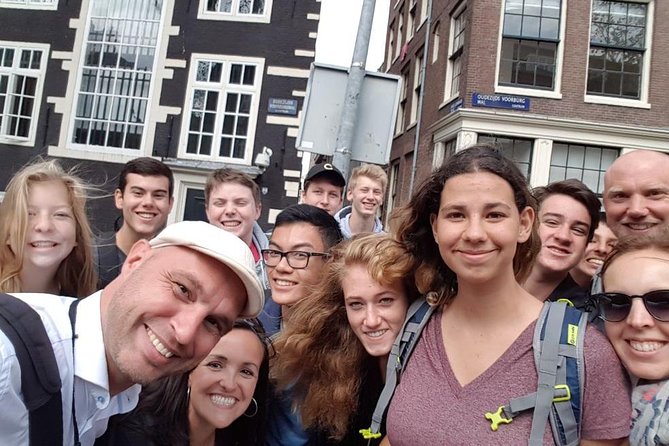
At $390.50 per group, the price is not low for a 2.5-hour walking experience. The calculation changes if you fill the group. Ten people would bring the cost to about $39.05 per person, while two people would pay about $195.25 each.
That makes the tour best suited to a family group, a group of friends, or colleagues who want a private experience. For a full group, the price can be reasonable because you are paying for privacy and a guide focused only on your party. For one or two people, it becomes a premium choice, and you should be sure the subject genuinely interests you.
The private format is also useful for pacing. You can ask for clarification, spend more time on a topic that catches your attention, or keep moving if your group already knows the basics. The exact limits of that flexibility are not specified, so you should confirm any special route requests when booking rather than assume every change is possible.
The tour is booked, on average, 28 days ahead. That does not mean you must reserve exactly four weeks in advance, but it is a good warning for anyone visiting Amsterdam on fixed dates. If this experience is important to your plans, book early.
Walking distance, transport, and timing
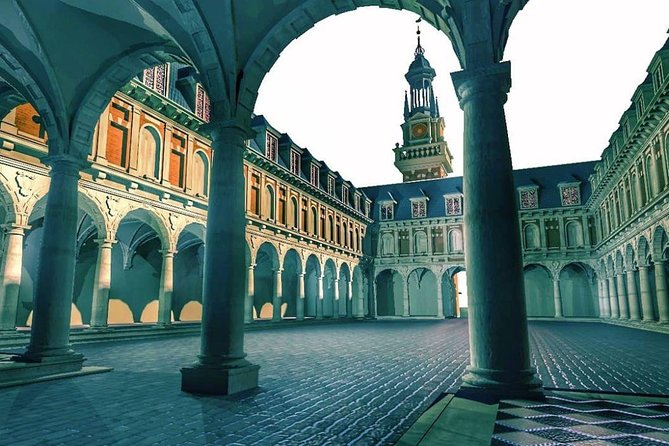
The tour begins at Bistro Berlage, Beursplein 1, and ends at Rokin 24HS. The finishing point is on the other side of Dam, about 500 meters from the start.
Both points are in central Amsterdam and near public transportation. That makes the experience easy to place before or after other activities in the old center. You should still allow time to find the exact starting point, since central Amsterdam streets can be busy and addresses around major squares may be easy to confuse.
A moderate level of physical fitness is recommended. The tour is a walking experience, and the duration is roughly two and a half hours. The supplied details do not specify the total distance, number of stairs, seating, or restroom access, so ask the provider if any of those points matter to you.
Wear sensible walking shoes. That is practical advice for almost any Amsterdam city walk, especially one that moves between several central stops. Since the tour is outdoors for much of its route, weather can affect your comfort, though no special weather policy is provided.
The mobile ticket is convenient, and confirmation arrives at booking. Cancellation is free up to 24 hours before the start time for a full refund. Changes or cancellations made less than 24 hours before the local start time are not accepted for a refund.
Who will get the most from this tour?
I would choose this tour if you enjoy seeing how trade and finance shape a city. It is a particularly good match for:
- People who want more than a standard canal-and-museum introduction
- Visitors interested in merchant wealth, banking, or economic bubbles
- Private groups that prefer their own guide and a flexible pace
- Repeat visitors who have already seen Amsterdam’s most famous sights
- Travelers who like a focused story rather than a broad survey of the whole city
It may not be the best choice if you want a general orientation walk, a major museum visit, or a long tour inside Beurs van Berlage or the city archives. The named stops are compact, with about 10 minutes allocated to the first two, so much of the value comes from the guide’s explanation as you move through the city.
If you are traveling with children, think about their interests before booking. Tulip Mania may catch their attention, but the merchant and banking sections could feel demanding for younger children. The private setting gives you more control than a large group tour, but the subject remains specialized.
Is the Financial History Tour worth booking?
I would book it for a group of friends or family members who want a private, focused look at Amsterdam’s commercial past. The route is central, the story connects architecture with real economic forces, and the former bank basement plus floating flower market give the walk some variety.
The strongest reason to choose it is the guide. Tijs de Boer is praised for his insights and useful local hints, which suggests the experience can extend beyond a string of dates and financial terms. The five-star rating from 16 published assessments and a 100 percent recommendation record also give the tour a strong performance history.
I would hesitate if your main goal is Amsterdam’s art, canal architecture, or a broad first-day overview. At $390.50, this is a specialist private tour, not a bargain walking introduction. But if Amsterdam’s fortunes, bubbles, merchants, and civic growth sound more interesting than another general city stroll, it offers a clear and unusual way to understand the center.
FAQ
Where does the Financial History Tour start?
It starts at Bistro Berlage, Beursplein 1, 1012 JW Amsterdam, Netherlands.
Where does the tour end?
It ends at Rokin 24HS, 1012 KS Amsterdam, Netherlands. The ending point is about 500 meters from the starting point, on the other side of Dam.
How long does the experience last?
The tour lasts approximately 2 hours and 30 minutes.
How much does the private tour cost?
The price is $390.50 per group, with up to 10 people included.
What language is the tour offered in?
The tour is offered in English.
Is the tour private?
Yes. Only your group participates in the activity.
Can I cancel for a full refund?
Yes. You can cancel at least 24 hours before the experience start time for a full refund. Cancellations or changes made less than 24 hours before the local start time are not accepted for a refund.
Just added around Amsterdam
- Amsterdam City Center Guided Walking Tour – 12 guests 2,5h★ 5.0 · 3 reviews
- Daytrip Tour from Amsterdam to Zaanse Schans and Giethoorn★ 5.0 · 3 reviews
- Amsterdam Light Festival Boat Cruise★ 5.0 · 3 reviews
- Amsterdam: Van Gogh Museum Entrance and Guided Tour★ 3.5 · 3 reviews
- Amsterdam: Red light tour in German/English for groups of 4 people or more★ 5.0 · 3 reviews
- Amsterdam: Roller Dreams & Amsterdam Nightlife Experience★ 3.7 · 3 reviews
- 2 Hour Making Rembrandt’s Traditional Oil Paints in Amsterdam★ 5.0 · 3 reviews
- Amsterdam Red Light District and Old Town Walking Tour★ 5.0 · 3 reviews
Historical Tours, compared.

Amsterdam Food and Cultural Tour with Tastings
Read our review →
Kinderdijk UNESCO World Heritage Entry Ticket
Read our review →
Hop-on Hop-off Old-Fashioned Heritage Tram Tour
Read our review →

Amsterdam High-End Dutch Food & History Tour – Up to 8 guests
Read our review →
Cruise through the Historic City Center with Guide
Read our review →
Browse the lists this tour appears in