
REVIEW · HISTORICAL TOURS
Small Group LGBTQ+ History Tour in Amsterdam
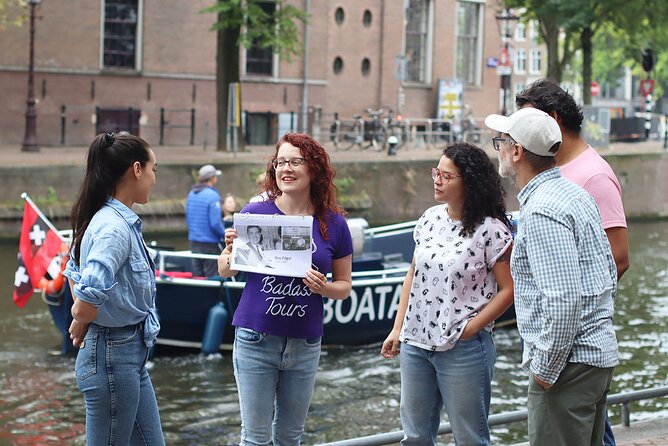
Amsterdam’s streets hold more LGBTQ+ stories than most visitors expect. This two-hour walking tour links nightlife, canals, monuments, and overlooked corners with stories about gay clubgoers, a married king, lesbian writers, trans military service, and the fight for equal rights.
I like the small group of eight or fewer, which gives the guide room to tell stories rather than shout facts to a crowd. I also like the route’s range, from royal scandals and church secrecy to wartime resistance and the world’s first legal gay marriage.
The main consideration is the weather. You’ll be outdoors for the full tour, and poor conditions can lead to cancellation or a date change. Bring a coat and comfortable shoes, especially if Amsterdam is showing its usual talent for wind and rain.
In This Review
- Key points to know before you book
- Why this LGBTQ+ history walk feels different
- Rembrandtplein sets the tone in 20 minutes
- Munt Tower reveals an act of quiet courage
- Koningsplein exposes a story the church tried to hide
- Keizersgracht brings literature, medicine, and identity together
- The Gay Monument connects celebration with mourning
- Herengracht honors queer resistance work
- Torensluis ends with an 18th-century trans soldier
- The small group changes the experience
- Is $47.34 a fair price?
- Practical details for a smooth walk
- Who should book this experience?
- Should you book the LGBTQ+ History Tour?
- FAQ
- How long does the LGBTQ+ History Tour in Amsterdam last?
- What language is the tour offered in?
- How many people can join the tour?
- Where does the tour start?
- Where does the tour end?
- What locations are included?
- Is the tour canceled in bad weather?
- Can I cancel for a full refund?
Key points to know before you book
- Seven central Amsterdam stops: The route runs from Rembrandtplein to Torensluis, with major canals and city landmarks along the way.
- A maximum of eight people: The small size should make it easier to hear the guide and ask questions.
- Stories beyond the usual Amsterdam sights: Expect LGBTQIA history tied to nightlife, royalty, religion, literature, war, and law.
- English-language storytelling: The tour is offered in English and led by a local guide with a strong interest in history.
- About $47.34 per person: That is fair value if you want context and storytelling, rather than a simple walk past famous buildings.
- A weather-dependent walking experience: Free cancellation is available up to 24 hours before departure, and poor weather can cause a full refund or a new date.
Why this LGBTQ+ history walk feels different
Many Amsterdam walks stay with the familiar subjects: canals, Golden Age merchants, grand houses, and famous painters. This one uses the same city streets but asks different questions. Who was allowed to meet in public? Which stories were hidden by powerful institutions? How did people protect one another when the law offered little help?
That approach gives the city a new shape. Rembrandtplein is not just a place for restaurants and nightlife. A canal house is not just a handsome facade. A monument is not only something to photograph. Each stop adds a human story to a place you might otherwise pass without a thought.
The tour also covers several centuries. You’ll hear about people and events connected with the 17th century, 18th-century Amsterdam, wartime resistance, and the legal recognition of same-sex marriage. That broad time span is one of the experience’s best features. It shows that LGBTQIA life is not a recent addition to Amsterdam’s story.
I would not choose this walk if you want a conventional sightseeing tour focused on architecture or museum interiors. The strength here is the guide’s storytelling, and the value depends on how much you enjoy social history told on city streets.
More Historical Tours in Amsterdam
- Amsterdam Food and Cultural Tour with Tastings
★ 5.0 · 2,442 reviews - Amsterdam: Haunted History and Ghost Walking Tour
★ 4.5 · 488 reviews - Amsterdam High-End Dutch Food & History Tour – Up to 8 guests
★ 5.0 · 482 reviews
Rembrandtplein sets the tone in 20 minutes
The tour begins at Utrechtsestraat 4 and moves to Rembrandtplein, Amsterdam’s nightlife center. The opening section provides a quick overview of the city before turning to stories of LGBTQ clubgoers, a married king who had affairs with men, and the path toward the world’s first legal gay marriage.
That is a strong opening because it places private lives beside public space. Nightlife is often treated as background scenery, but here it becomes part of the historical record. You’ll consider who could gather openly, who had to be cautious, and how Amsterdam’s social life changed over time.
The royal story adds another angle. It reminds you that same-sex desire was not limited to one class or one kind of neighborhood. The connection between a married king and affairs with men also gives the guide a way to discuss the gap between public identity and private life.
Rembrandtplein is a busy urban setting, so you should expect street noise and people moving around you. That is not a flaw, but it does mean you’ll need to stay close to the guide. The small group matters right away.
Munt Tower reveals an act of quiet courage
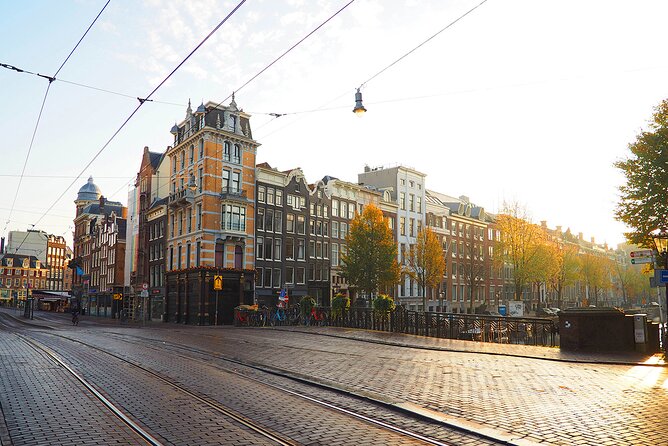
The 15-minute stop at Munt Tower, or Munttoren, focuses on a shopkeeper who tried to protect friends facing state violence. It is a compact story, but the subject brings the tour down from famous names and grand ideas to personal risk.
I find this kind of stop especially useful because it asks you to think about solidarity. Laws and official institutions often get the attention in history books, but ordinary people also made choices that helped others survive. A shopkeeper protecting friends may not sound as grand as a royal scandal, yet it can give you a clearer sense of how persecution affected daily life.
You’ll be standing outdoors near a major city landmark, with no admission ticket required. The guide uses the location as a prompt, so the appeal is not going inside the tower. It is hearing how a familiar place connects to a less familiar story.
Koningsplein exposes a story the church tried to hide

At Koningsplein, the tour spends about 15 minutes exploring the LGBTQIA connection of a familiar name and the effort by the Catholic church to keep that connection hidden.
This stop should appeal to anyone interested in the way institutions shape historical memory. The point is not only what happened, but also what later authorities wanted people to forget. That gives the walk a sharper edge than a simple list of dates and famous figures.
The location also helps break up the route. You are not confined to one LGBTQ district or a single set of venues. Instead, the tour shows how these stories appear across central Amsterdam, sometimes attached to places that seem entirely ordinary.
The information provided does not say that you enter a church or other building here, so plan for an outdoor explanation. If you prefer indoor attractions, you may find this section less satisfying. If you like connecting public places with overlooked stories, it should be worthwhile.
More historical tours:
- Amsterdam: Historic City Sightseeing Canal Cruise
★ 4.5 · 444 reviews - Amsterdam: Historical Highlights Walking Tour with Tasting
★ 4.6 · 381 reviews - Anne Frank and the Jewish History of Amsterdam Private Tour
★ 5.0 · 307 reviews - Amsterdam: 3-Course Meal in Historic 1st Class Waiting Rooms
★ 4.5 · 292 reviews
Keizersgracht brings literature, medicine, and identity together
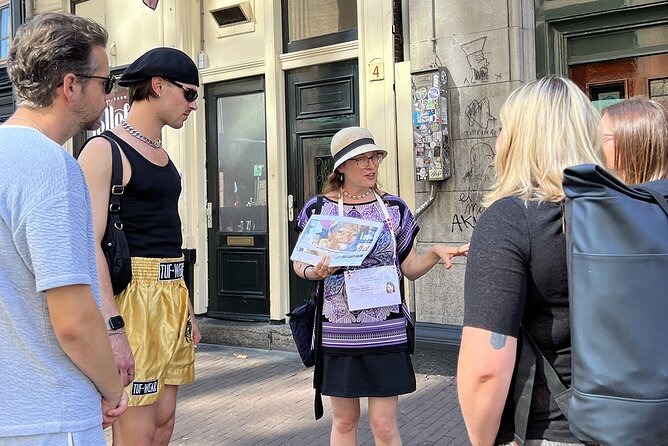
The 20-minute stop at Keizersgracht is one of the most varied sections of the route. It includes the Pope of the Gays, a 17th-century literary lesbian love triangle, and a pompous doctor who may have accidentally given lesbians legal cover.
Those subjects show how broad LGBTQIA history can be. You’ll move from a memorable nickname to literature, then to medicine and the law. The doctor’s story is particularly intriguing because it raises the possibility that a person acting for one reason may have produced a result that helped others.
The phrase Pope of the Gays suggests a colorful character, but the guide’s larger task is to explain what such figures meant in their own time. The literary love triangle adds a personal and creative side, while the medical story points to the danger of defining people through outside authority.
Keizersgracht is also a useful place to notice Amsterdam’s setting. You are walking beside one of the city’s major canals, surrounded by the architecture that draws people here in the first place. The tour does not treat the scenery as decoration. It uses the canal district as the stage for stories that are often absent from standard city tours.
Allow around 20 minutes here. The subject matter has several layers, and this is one place where asking a question could add real value.
The Gay Monument connects celebration with mourning
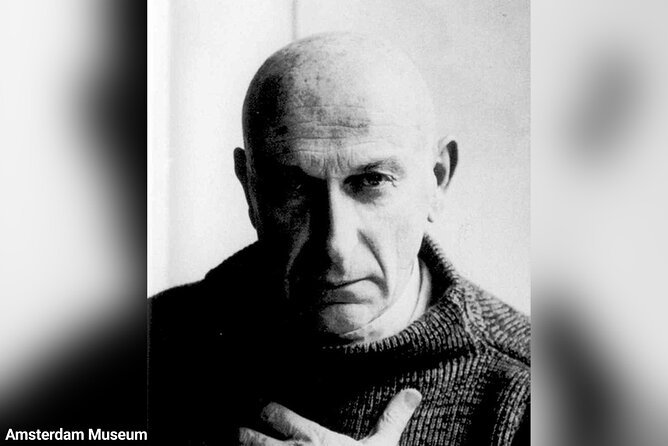
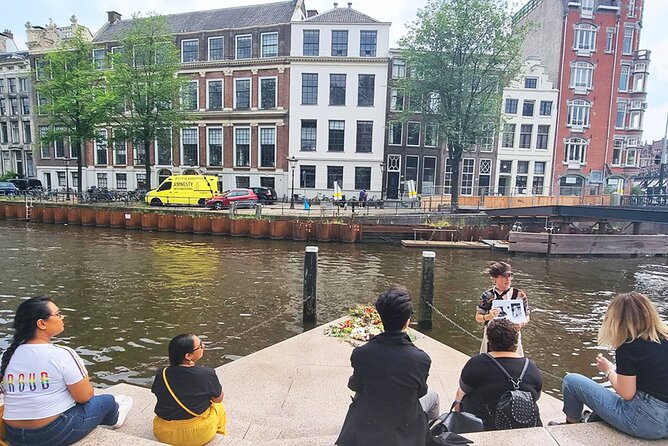
The Gay Monument is the route’s most direct physical memorial. Since its unveiling, it has served both as a place of celebration and as a site of mourning for Amsterdam’s LGBTQIA community.
The tour uses the monument to highlight a lesbian hero. That choice matters because public memorials do not always give equal space to women, lesbians, or people whose work happened outside the most familiar political stories. The stop lets the guide connect one person’s courage with the wider role of remembrance.
This is likely to be one of the more reflective moments of the walk. Earlier stops focus on hidden lives, social spaces, and historical records. Here, the city has made a visible statement. You’ll have a chance to consider why communities create monuments, what they choose to remember, and how a memorial can hold both pride and grief.
The stop lasts about 15 minutes. It is not presented as a museum visit, so do not expect an indoor exhibit or a long period to study displays. The value comes from the explanation and the setting.
Herengracht honors queer resistance work
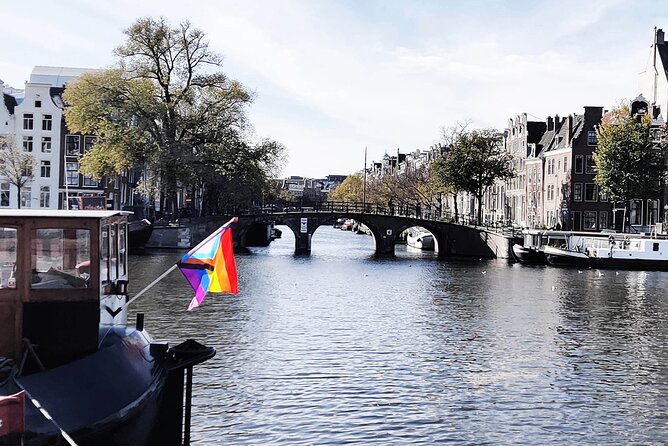
At Herengracht, the tour turns to queer Resistance fighters who worked in an inconspicuous canal house. The setting is important. Amsterdam’s grand canal houses can look formal and respectable, but the story here places courageous work behind an unremarkable facade.
This section gives the tour a wartime dimension without losing its focus on individual choices. You’ll hear about people who resisted in a setting that did not announce itself. That contrast, between the elegant canal outside and the secret work inside, makes the story easy to picture.
I appreciate that the tour does not limit LGBTQIA history to nightlife or legal milestones. Resistance work shows people acting under severe pressure, with consequences that could reach far beyond social embarrassment or exclusion. It also reinforces a useful point: queer history belongs in the story of Amsterdam’s war years, not in a separate footnote.
Again, you should expect to hear the story from the street. The tour does not include admission to the canal house. The setting is part of the lesson, but the guide’s delivery carries the main weight.
Torensluis ends with an 18th-century trans soldier
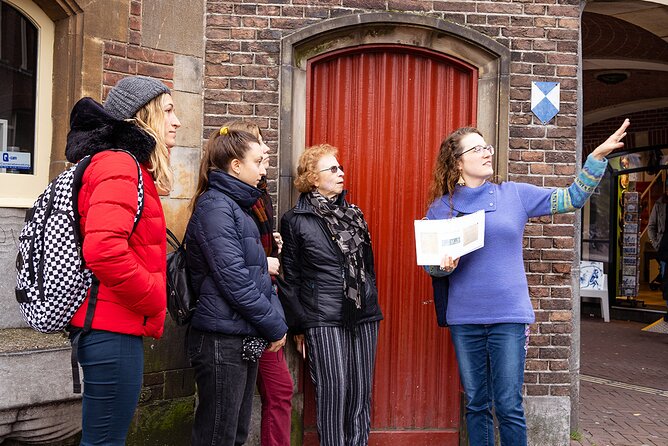
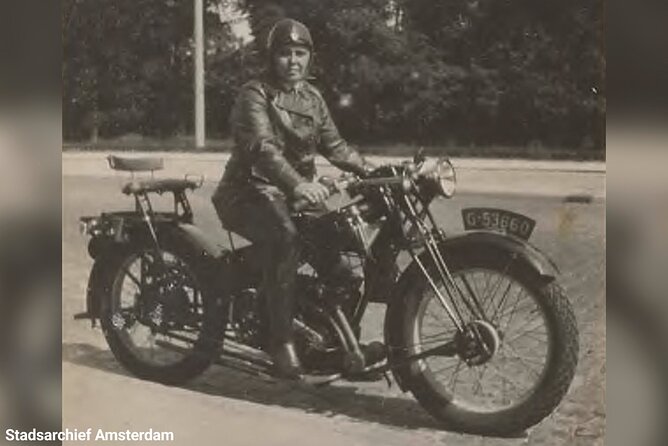
The final stop is Torensluis, where the tour ends near the Multatuli sculpture. The story concerns a trans soldier who served in Amsterdam’s 18th-century militia and leaves you with a surprising message.
Ending with a military story gives the walk a strong final turn. The earlier stops have covered clubs, royalty, religion, literature, medicine, memorials, and wartime resistance. This last account asks you to reconsider assumptions about gender, service, and belonging in an earlier period.
The phrase surprising message is fitting for a final stop, since the tour aims to leave you thinking rather than simply ticking off landmarks. You finish on a bridge in the center of Amsterdam, well placed to continue exploring the city on foot.
The endpoint is specific: Torensluis bridge by the Multatuli sculpture. That makes it easier to plan the rest of your day. The tour begins near Rembrandtplein and ends farther west in central Amsterdam, so you should be ready for a continuous walk rather than a return to the starting point.
The small group changes the experience
A maximum of eight people is a real advantage here. Historical storytelling works best when you can hear the guide clearly and when the guide can respond to the group. A large crowd would make intimate subjects harder to handle and could turn the walk into a one-way speech.
The guides named in the available feedback are Guus and Elyzabeth. Guus was praised for keeping the tour lively during cold, wet, windy weather, while Elyzabeth was described as engaging and passionate about people often left out of standard history. Guide assignments can change, so you should not assume one particular person will lead your departure.
The strongest praise centers on three qualities: the guides bring history to life, they care about the subject, and the two hours pass quickly. That combination matters. A guide can know many facts and still give a dull tour. Here, the focus appears to be on stories and connections, not on showing off a stack of dates.
The English-language format also makes the tour accessible to visitors who want a clear explanation without having to navigate a Dutch-language presentation.
Is $47.34 a fair price?
At about $47.34 per person, this is not the cheapest way to spend two hours in Amsterdam. You are paying for a local guide, a small group, and a carefully connected set of stories rather than admission to a building.
I consider the price reasonable if this subject is important to you. Seven stops in two hours gives you a focused introduction to Amsterdam’s LGBTQIA past, and the small group adds value that a large free walk cannot match. You also get a route through areas that many standard tours treat only as scenery.
The value is less clear if you want extensive time at each site or a museum-style experience with documents and objects. The stops are short, ranging from 15 to 20 minutes, and the tour keeps moving. You are buying interpretation and company, not a full academic course.
For a first visit, the walk can also serve as a useful orientation to central Amsterdam. For someone who already lives in the city, it may still offer a fresh way to see familiar places. One local who took the tour said it changed the way they viewed Amsterdam, which is a good sign for repeat visitors.
Practical details for a smooth walk
The tour lasts approximately two hours and is conducted in English. You receive a mobile ticket, and the route remains outdoors from start to finish.
The meeting point is Utrechtsestraat 4, 1017 VN Amsterdam. The tour ends at Torensluis, 1012 VK Amsterdam, by the Multatuli sculpture. Both points are near public transportation, and the route connects several central areas on foot.
Wear shoes you can walk in and check the forecast before leaving. The experience requires good weather, and it may be canceled if conditions are poor. In that case, you are offered another date or a full refund.
Confirmation normally arrives at booking. If you book within two days of the tour, confirmation may take up to 48 hours and remains subject to availability. Service animals are allowed, and the activity is suitable for most people, though the supplied information does not describe the exact walking distance or step-free details.
You can cancel for a full refund up to 24 hours before the start time. Changes or cancellations inside that 24-hour window are not accepted for a refund.
Who should book this experience?
I would recommend this walk to:
- Anyone who wants LGBTQIA history placed at the center of an Amsterdam visit
- History fans who prefer people and personal stories to a list of monuments
- LGBTQ+ visitors looking for a meaningful connection with the city
- Repeat visitors who have already seen the main sights
- Local residents who want a new reading of familiar streets
- Couples or friends who enjoy thoughtful discussion in a small group
I would be more cautious if you dislike walking in uncertain weather, need a fully indoor activity, or want a tour built mainly around architecture. The content is the attraction, and you need to be comfortable listening outdoors while the city carries on around you.
Should you book the LGBTQ+ History Tour?
Book it if you want Amsterdam to feel more complicated, personal, and honest than the usual postcard version. The route covers a lot in two hours, and the small group gives the guide space to tell stories about people who are often missing from standard accounts.
The best reason to go is not simply that the tour is LGBTQ+ focused. It is that the subject opens up Amsterdam’s wider story. You’ll look at nightlife, religion, literature, medicine, war, public memory, and law through lives that shaped the city but were not always recorded fairly.
At $47.34, it is a considered purchase rather than an impulse activity. For the right audience, the intimate format and strong storytelling make it good value. Bring weatherproof clothing, arrive ready to walk, and book at least 24 hours ahead if you want the refund option.
FAQ
How long does the LGBTQ+ History Tour in Amsterdam last?
The tour lasts approximately two hours.
What language is the tour offered in?
The tour is offered in English.
How many people can join the tour?
The tour has a maximum of eight participants.
Where does the tour start?
The meeting point is Utrechtsestraat 4, 1017 VN Amsterdam, Netherlands.
Where does the tour end?
The tour ends at Torensluis bridge, by the Multatuli sculpture, at 1012 VK Amsterdam, Netherlands.
What locations are included?
The route includes Rembrandtplein, Munt Tower, Koningsplein, Keizersgracht, the Gay Monument, Herengracht, and Torensluis.
Is the tour canceled in bad weather?
The experience requires good weather. If poor weather causes a cancellation, you’ll be offered another date or a full refund.
Can I cancel for a full refund?
Yes. You can cancel at least 24 hours before the experience start time for a full refund. Cancellations or changes made less than 24 hours before the start time are not accepted for a refund.
More LGBTQ-Friendly
- Amsterdam: Rainbow Rural Bike Tour With Local Gay Guide
★ 5.0 · 4 reviews
Just added around Amsterdam
- Amsterdam City Center Guided Walking Tour – 12 guests 2,5h★ 5.0 · 3 reviews
- Amsterdam Light Festival Boat Cruise★ 5.0 · 3 reviews
- Daytrip Tour from Amsterdam to Zaanse Schans and Giethoorn★ 5.0 · 3 reviews
- Amsterdam: Roller Dreams & Amsterdam Nightlife Experience★ 3.7 · 3 reviews
- Amsterdam: Van Gogh Museum Entrance and Guided Tour★ 3.5 · 3 reviews
- Amsterdam: Red light tour in German/English for groups of 4 people or more★ 5.0 · 3 reviews
- 2 Hour Making Rembrandt’s Traditional Oil Paints in Amsterdam★ 5.0 · 3 reviews
- Amsterdam Red Light District and Old Town Walking Tour★ 5.0 · 3 reviews
Historical Tours, compared.

Amsterdam Food and Cultural Tour with Tastings
Read our review →
Kinderdijk UNESCO World Heritage Entry Ticket
Read our review →
Hop-on Hop-off Old-Fashioned Heritage Tram Tour
Read our review →

Amsterdam High-End Dutch Food & History Tour – Up to 8 guests
Read our review →
Cruise through the Historic City Center with Guide
Read our review →
Browse the lists this tour appears in