

REVIEW · HISTORICAL TOURS
Small-Group Women’s History Tour in Amsterdam
Amsterdam has more women’s stories than you expect. This two-hour walking tour brings them into view through the old center, from the harbor near Centraal Station to the quiet Begijnhof. I like its small maximum of 12 people and its storytelling approach, which gives the city a fresh angle without turning the walk into a lecture.
I also like the range of subjects, from Queen Wilhelmina and Amsterdam’s first Queen Regnant to a motorcycle-riding rebel and the first Black female millionaire in the Americas. The main consideration is weather: this is an outdoor walking tour, and a cancellation or change may be needed in poor conditions.
In This Review
- At a Glance
- Why This Women’s History Walk Feels Different
- Starting Near Centraal Station and the Old Harbor
- Beurs van Berlage and Two Female Fighters
- Dam Square and a More Unexpected Side of the Past
- Beurspoortje and a Rule-Breaking Amsterdammer
- Nes, Theater, and a Black Millionaire from the Americas
- Queen Wilhelmina and Royal Power at Rokin
- Rokin, the Miracle of Amsterdam, and the Women’s Riot
- Ending at the Begijnhof, If It Is Open
- What the Two-Hour Format Gives You
- Is $47.47 a Fair Price?
- Who Should Book This Tour?
- Should You Book the Women’s History Tour?
- FAQ
- Where does the tour start?
- Where does the tour end?
- How long does the tour last?
- How large is the group?
- What is included in the experience?
- Are entrance tickets included?
- Will the tour visit the Begijnhof?
- Is the tour suitable for most people?
- What happens if the weather is poor?
- Can I cancel for a full refund?
At a Glance
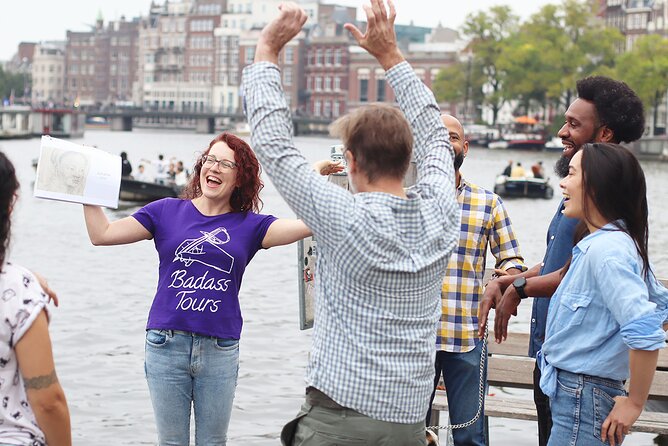
- Stories beyond the usual stereotypes: The tour presents women as political leaders, religious figures, artists, rebels, business figures, and social change-makers.
- A compact historic-center route: You walk from the area near Centraal Station through Beurs van Berlage, Dam Square, Nes, Rokin, and the Begijnhof.
- A trained storyteller leads the way: The experience is built around memorable episodes rather than a long list of dates and names.
- Only 12 places per group: The small size should make it easier to hear the guide and ask questions along the route.
- A strong first-day choice: The opening city introduction and central route can help you get your bearings while adding stories you may not hear on a standard city walk.
- About $47.47 per person: The price is fair if you value interpretation and personality more than a large number of sights inside.
Why This Women’s History Walk Feels Different
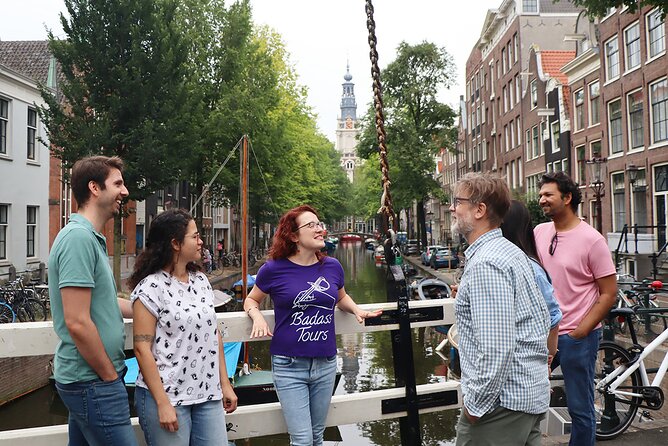
Many Amsterdam tours follow a familiar path: canals, merchant houses, grand civic buildings, and the city’s trading past. This walk uses those same streets, but it asks a different question: where were the women in this story, and what did they do when institutions were not built to include them?
That change of viewpoint matters. You are not simply being shown monuments connected with famous men. You are hearing how women acted within, around, and sometimes against the systems of their time. Some stories deal with power at the highest level. Others focus on culture, religion, money, sexuality, resistance, or plain nerve.
The tone sounds lively rather than solemn. One stop promises a salacious but tasteful episode, while another brings together motorcycles, Amsterdam’s first modern gay bar, and a woman who could drink Nazi soldiers under the table. Those details give you a sense of the tour’s character: serious about the past, but not afraid of a good story.
The guide, Elyzabeth, was praised for combining women’s history with the wider history of Amsterdam. That combination is important. You are not being pulled away from the city’s main story. You are being shown how much of that story changes when women are placed at the center.
More Historical Tours in Amsterdam
- Amsterdam Food and Cultural Tour with Tastings
★ 5.0 · 2,442 reviews - Amsterdam: Haunted History and Ghost Walking Tour
★ 4.5 · 488 reviews - Amsterdam High-End Dutch Food & History Tour – Up to 8 guests
★ 5.0 · 482 reviews
Starting Near Centraal Station and the Old Harbor
The tour begins at Prins Hendrikkade 48, near the water across from Amsterdam’s iconic Centraal Station. The first stop takes about 10 minutes and provides an introduction to the city.
This is a smart starting point. Centraal Station is one of Amsterdam’s easiest landmarks to find, and the old harbor gives you an immediate sense of the city’s connection to water, trade, travel, and movement. You are not starting in an isolated museum room. You begin with Amsterdam’s busy urban setting around you.
The opening introduction also helps place the later stories in context. Women’s history is not separate from the story of Amsterdam’s growth. It is tied to the city’s commerce, public spaces, religious life, royal power, theater, and social rules.
Give yourself enough time to locate the meeting point before the start. The tour uses a mobile ticket, and the confirmation is normally sent at booking. If you book within two days of the visit, confirmation can take up to 48 hours and depends on availability.
Beurs van Berlage and Two Female Fighters
The next stop is Beurs van Berlage, with about 15 minutes devoted to two female fighters. Their stories connect with Amsterdam’s old and new stock exchanges, including the former exchange building now used as an event hall.
This stop links women’s lives with money, trade, and public power. Stock exchanges can seem like places built around men in suits and formal rules. By placing female fighters here, the tour appears to challenge that image and ask who was allowed to participate in economic and civic life.
You should expect stories rather than a detailed architectural visit. Admission to the building is not included because the tour takes place along the public route, and the focus is on the people connected to the setting. If you want a full interior tour of Beurs van Berlage, this experience does not promise that.
Dam Square and a More Unexpected Side of the Past
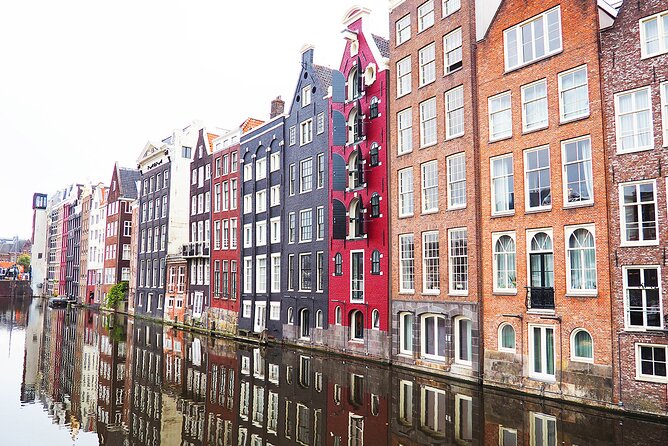
At Dam Square, the tour pauses for around 10 minutes. This is one of Amsterdam’s most recognizable public spaces, so you will have plenty to look at while the guide introduces one of the walk’s more provocative stories.
The location works well because Dam Square has always been a place where public life, power, commerce, and spectacle meet. A story with a salacious edge feels at home here, provided you prefer history with a little mischief.
The description makes clear that the story remains tasteful. That is useful to know if you are choosing this tour for serious historical context rather than shock value. Still, the tone may not suit someone who wants a strictly academic presentation with no humor or scandal.
More historical tours:
- Amsterdam: Historic City Sightseeing Canal Cruise
★ 4.5 · 444 reviews - Amsterdam: Historical Highlights Walking Tour with Tasting
★ 4.6 · 381 reviews - Anne Frank and the Jewish History of Amsterdam Private Tour
★ 5.0 · 307 reviews - Amsterdam: 3-Course Meal in Historic 1st Class Waiting Rooms
★ 4.5 · 292 reviews
Beurspoortje and a Rule-Breaking Amsterdammer
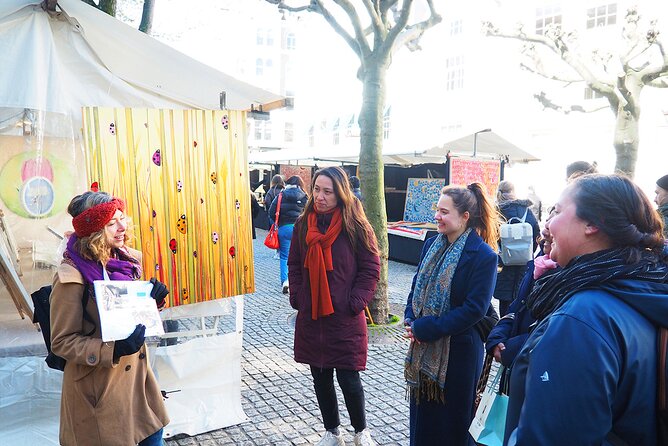
The Beurspoortje stop lasts roughly 10 minutes and focuses on one of the tour’s favorite badass figures. The story includes motorcycles, Amsterdam’s first modern gay bar, and the remarkable detail of drinking Nazi soldiers under the table.
This sounds like one of the walk’s most memorable episodes because it places a woman in settings often associated with male freedom and bravado. Motorcycles and bars are not treated as background color. They help show how a person could claim space in a city where social expectations were restrictive.
The guide’s storytelling skill matters most at a stop like this. The facts are unusual, but they need a clear connection to Amsterdam’s social history. With a trained storyteller leading the group, you can expect the focus to be on character and action, not only on dates.
Nes, Theater, and a Black Millionaire from the Americas

The walk continues to Nes, an area known for cutting-edge theater. You spend about 20 minutes here, making it one of the longer stops.
The setting gives the guide room to discuss women who shaped culture and public life. The featured story includes the first Black female millionaire in the Americas, with the useful reminder that she was not from the United States. That detail alone challenges the way American history is often told and places Amsterdam within a wider Atlantic story.
This is a strong part of the tour for anyone interested in how culture crosses borders. Nes also provides a change of mood from the commercial and political settings earlier in the walk. Theater is about performance, voice, visibility, and who gets to tell a story. Those ideas fit the tour’s larger purpose.
Because the stop is longer, you may hear more background here than at the shorter street-side pauses. You will still be walking through a public neighborhood, so the experience is not a seated theater talk or museum display.
Queen Wilhelmina and Royal Power at Rokin
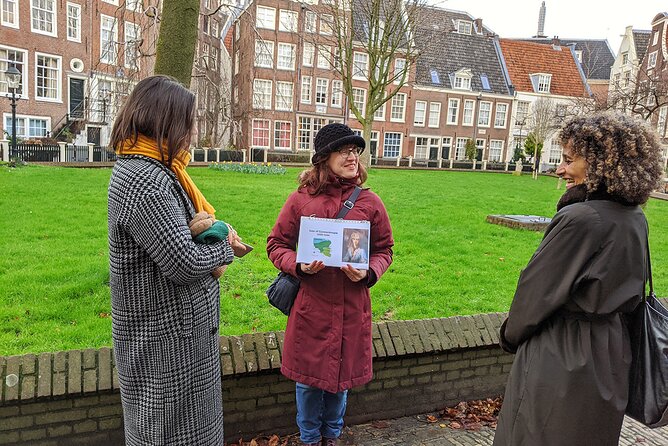
At the equestrian statue of Queen Wilhelmina, the guide turns to the Netherlands’ first Queen Regnant. The stop takes about 10 minutes and offers a clear look at women’s formal political power.
Queen Wilhelmina is a useful figure for this tour because her position was not a private act of resistance. She ruled publicly and represented the state. Under her statue, you can consider the difference between women who worked within official institutions and women who challenged those institutions from the outside.
The statue also gives the group an easy visual anchor. You are not asked to picture an absent person or search for a plaque. The subject is right in front of you, and the guide can connect the monument with the broader question of how women are remembered in public places.
Rokin, the Miracle of Amsterdam, and the Women’s Riot
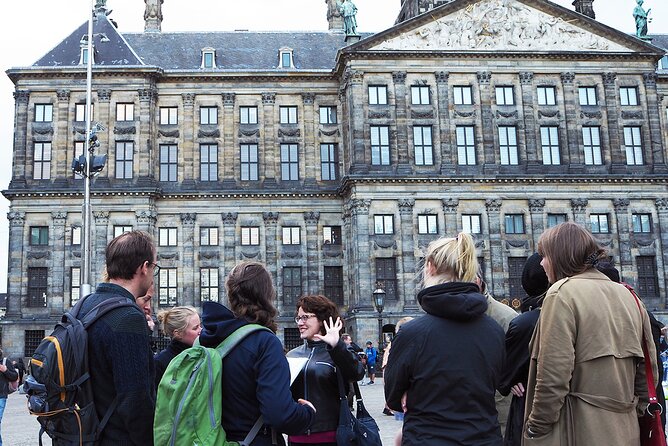
The Rokin stop lasts around 20 minutes, another substantial part of the walk. Here, you follow Amsterdam’s first main waterway while hearing about the Miracle of Amsterdam and the Women’s Riot.
This section brings religion and social action into the same story. The Miracle of Amsterdam points to the city’s spiritual past, while the Women’s Riot shows women acting together in a public conflict. That pairing helps explain how faith, civic life, and gender could collide in a historic city.
Rokin is also a practical place for understanding Amsterdam’s changing shape. The route follows an important waterway rather than treating the city as a set of disconnected landmarks. You are likely to get a better sense of how movement through the center shaped daily life.
The longer stop may appeal to you if you want context, not just quick anecdotes. If your ideal tour moves rapidly from one photo stop to the next, this part may feel slower. The pace is built for listening.
Ending at the Begijnhof, If It Is Open
The final stop is the Begijnhof, an enclosed women’s community in the middle of the city. The stop is planned for about 10 minutes, and access depends on whether the Begijnhof is open at the time.
This is a fitting ending. After stories of queens, rebels, religious figures, and cultural leaders, you arrive at a place associated with women living together within a protected setting. Its quiet atmosphere offers a sharp contrast to the noise and movement of central Amsterdam.
You should treat entry as a possibility, not a guarantee. If the Begijnhof is closed, the tour can still finish in the area, but you may not get the final visual experience inside the enclosure. The stated endpoint is at Spui, outside the Begijnhof, so expect the walk to finish in that central area rather than return to Centraal Station.
What the Two-Hour Format Gives You
The tour lasts approximately two hours and includes eight named stops. The listed stop times add up to about 105 minutes, leaving the rest for walking between locations, introductions, and transitions.
That pace should feel active without becoming an all-day commitment. You cover a central part of Amsterdam and get several distinct stories, but you are not expected to spend half a day on one theme. I see this as a useful addition to a first or second day in the city.
The small group limit of 12 is another real advantage. A smaller party can gather around the guide more easily, and the storyteller can keep the group together in crowded public places. It also leaves more room for questions than a large coach-style outing.
Still, this is a walking tour on city streets. Comfortable shoes are sensible, and you should be prepared for changing weather. The experience requires good weather, with a different date or a full refund offered if conditions force cancellation.
Is $47.47 a Fair Price?
At $47.47 per person, this is not the cheapest way to spend two hours in Amsterdam. You can walk through the same streets on your own for nothing, and many public landmarks are free to view from outside.
The value comes from the selection and delivery of the stories. You are paying for a trained storyteller, a planned route, historical connections, and a small group rather than simply following a map. If Elyzabeth’s style matches the promise of the experience, the unusual subjects can make familiar places feel new.
I would consider the price fair for someone who enjoys guided interpretation and wants a focused theme. It is less compelling if you want admission to museums, a long list of interior visits, or a general overview of every major Amsterdam sight. No entrance tickets are included, and the experience is entirely centered on the outdoor walk.
The strongest value may come from booking it early in your stay. The route introduces the city while giving you a subject that standard sightseeing often leaves out. You can then revisit Dam Square, Rokin, or the Begijnhof with a better sense of the people connected to them.
Who Should Book This Tour?
I would recommend this walk to visitors who enjoy social history, biography, and storytelling. It should also suit couples and mixed-interest groups because the subject is not limited to women attending alone. One review came from Lara, who joined with her husband Alessandro and found the experience interesting for both of them.
It is a good fit if you want:
- A compact tour in Amsterdam’s historic center
- A women-focused view of politics, culture, religion, and resistance
- A group capped at 12 people
- A guide who brings personality to unusual historical episodes
- A central route that begins near Centraal Station and ends near Spui
You may want another type of tour if your priority is art inside museums, canal transport, architecture, or a broad introduction to Amsterdam’s main attractions. This walk adds a lens to the city. It does not try to replace a general city tour.
With a 5 out of 5 rating from 16 reviews and a 100 percent recommendation rate, the experience has a strong early record. That is encouraging, though the sample is small. I would book it for the subject, the route, and the guide’s storytelling promise rather than relying on the rating alone.
Should You Book the Women’s History Tour?
Book it if you want Amsterdam to feel more personal and less predictable. The route gives you queens, rebels, religious communities, cultural figures, and women who pushed against social limits, all within about two hours.
The best reason to choose it is the range of stories. The main caution is that the experience depends on weather and on the Begijnhof being open for the final stop. For a modest-sized group, a central route, and a guide such as Elyzabeth who connects women’s stories with Amsterdam’s wider past, this is a worthwhile choice for curious visitors who want more than the standard postcard view.
FAQ
Where does the tour start?
The tour starts at Prins Hendrikkade 48, 1012 AC Amsterdam, near the area across the old harbor from Centraal Station.
Where does the tour end?
The tour ends in the Spui area, outside the Begijnhof.
How long does the tour last?
The walking tour lasts approximately two hours.
How large is the group?
The tour has a maximum of 12 participants.
What is included in the experience?
A passionate guide and Amsterdam history enthusiast leads the tour and shares stories from women’s history.
Are entrance tickets included?
No admission tickets are charged for the listed stops. The tour takes place along the walking route, and entry to the Begijnhof depends on whether it is open.
Will the tour visit the Begijnhof?
The final stop is planned at the Begijnhof, but entry is only possible if it is open at the time of the tour.
Is the tour suitable for most people?
Most visitors can participate, and the tour is near public transportation. Service animals are allowed.
What happens if the weather is poor?
The experience requires good weather. If it is canceled because of poor conditions, you will be offered another date or a full refund.
Can I cancel for a full refund?
Yes. You can cancel at least 24 hours before the start time for a full refund. Cancellations or changes made less than 24 hours in advance are not accepted for a refund.
Just added around Amsterdam
- Amsterdam City Center Guided Walking Tour – 12 guests 2,5h★ 5.0 · 3 reviews
- Amsterdam Light Festival Boat Cruise★ 5.0 · 3 reviews
- Daytrip Tour from Amsterdam to Zaanse Schans and Giethoorn★ 5.0 · 3 reviews
- Amsterdam: Red light tour in German/English for groups of 4 people or more★ 5.0 · 3 reviews
- Amsterdam: Roller Dreams & Amsterdam Nightlife Experience★ 3.7 · 3 reviews
- Amsterdam: Van Gogh Museum Entrance and Guided Tour★ 3.5 · 3 reviews
- 2 Hour Making Rembrandt’s Traditional Oil Paints in Amsterdam★ 5.0 · 3 reviews
- Amsterdam Red Light District and Old Town Walking Tour★ 5.0 · 3 reviews
Historical Tours, compared.

Amsterdam Food and Cultural Tour with Tastings
Read our review →
Kinderdijk UNESCO World Heritage Entry Ticket
Read our review →
Hop-on Hop-off Old-Fashioned Heritage Tram Tour
Read our review →

Amsterdam High-End Dutch Food & History Tour – Up to 8 guests
Read our review →
Cruise through the Historic City Center with Guide
Read our review →
Browse the lists this tour appears in