
REVIEW · MUSEUMS
Vlissingen: Maritime Museum Entry Ticket
Ships tell the story here. The muZEEum brings Zeeland’s seafaring past to life through paintings, underwater finds, audio stories, videos, and hands-on games. I especially like the mix of serious history and playful exhibits, plus the chance to see the sea from an old tower.
I also like the way the museum connects three historic buildings with modern architecture. The Lampsins’ 17th-century town house gives the visit real character, while the museum’s audio tour adds a clear narrative featuring Michiel de Ruyter and other sea characters. One drawback is that busy family periods can make the audio hard to hear, and the rooftop terrace may not always be open.
In This Review
- Key points to know before you go
- What the muZEEum adds to a day in Vlissingen
- Entering the Lampsins town house
- Following Michiel de Ruyter and Zeeland’s sea characters
- Finding treasure from sunken ships
- Interactive exhibits that keep the visit moving
- Looking out from the tower and terrace
- How long to stay and what $19 buys you
- Parking, access, and the practical details
- Who will enjoy the muZEEum most?
- Should you book the Vlissingen muZEEum?
- FAQ
- Where is the muZEEum located?
- How much does admission cost?
- How long is the ticket valid?
- How long should I allow for the visit?
- Is an audio tour included?
- Do children receive anything at the museum?
- Is food allowed inside?
- Can I bring a backpack or pet?
- Is the museum wheelchair accessible?
Key points to know before you go
- The audio tour carries the visit: Videos and sea characters give the displays a guiding thread instead of leaving you to read labels room by room.
- The museum covers more than ships: You’ll encounter Zeeland’s maritime life, Vlissingen’s troubled past, slavery linked to Zeeland, and objects recovered from sunken vessels.
- The historic setting matters: The Lampsins town house and two other old buildings are joined by newer museum spaces.
- Families get useful extras: Children receive a free creative do-book, with interactive games spread through the museum.
- Allow about two hours for a normal visit: One family found that enough time to see the museum without rushing, though your pace will depend on how much you use the audio tour.
- Plan for public parking: Parking can be awkward, so I would avoid treating the museum as a quick stop between tightly timed activities.
What the muZEEum adds to a day in Vlissingen
Vlissingen sits on the water, so a maritime museum makes sense here. The muZEEum is not simply a collection of ship models and old paintings. It uses Zeeland’s relationship with the sea to explain how the province developed, prospered, suffered, and changed.
You’ll see how maritime life shaped both local identity and wider events. The displays connect ships and sailors with trade, conflict, exploration, and the hard realities behind Zeeland’s wealth. A window presentation about Zeeland’s role in slave trading is especially important because it adds a difficult chapter to the story rather than offering only proud naval achievements.
I appreciate that balance. You can learn about famous commanders and dramatic sea voyages, but you are also asked to consider the human cost of trade and power. That gives the museum more substance than a simple celebration of Vlissingen’s nautical past.
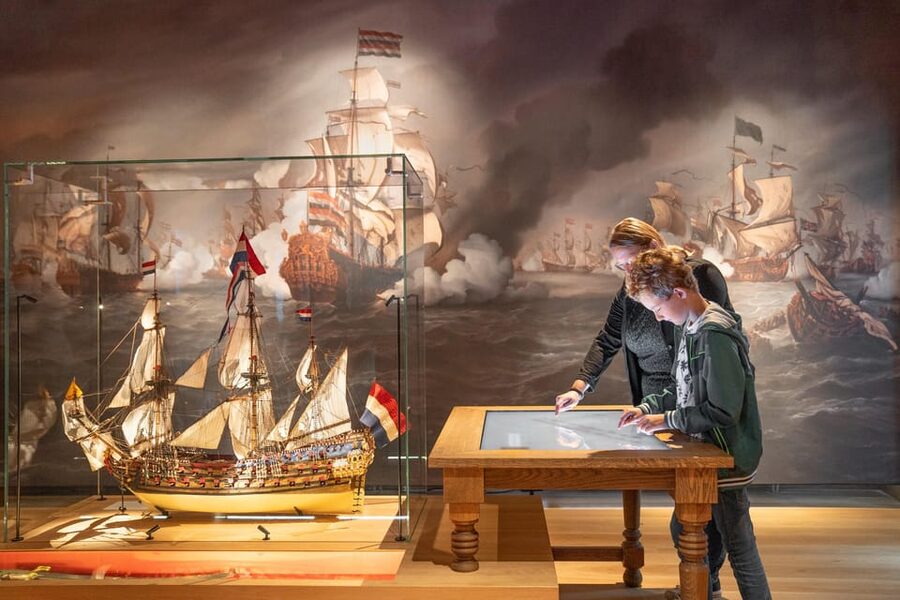
The museum works for different ages because it does not rely on one method. You might pause over a painting, listen to a short audio segment, watch a video, or try an interactive activity. If you are visiting with children, the format gives them something to do while you spend more time with the historical material.
A few more trips of this kind worth comparing:
- Middelburg: City Canal Cruise
★ 4.5 · 527 reviews - Middelburg: Guided City Walking Tour
★ 4.4 · 180 reviews - Self-Guided Electric Boat Rental
★ 4.5 · 60 reviews
Entering the Lampsins town house
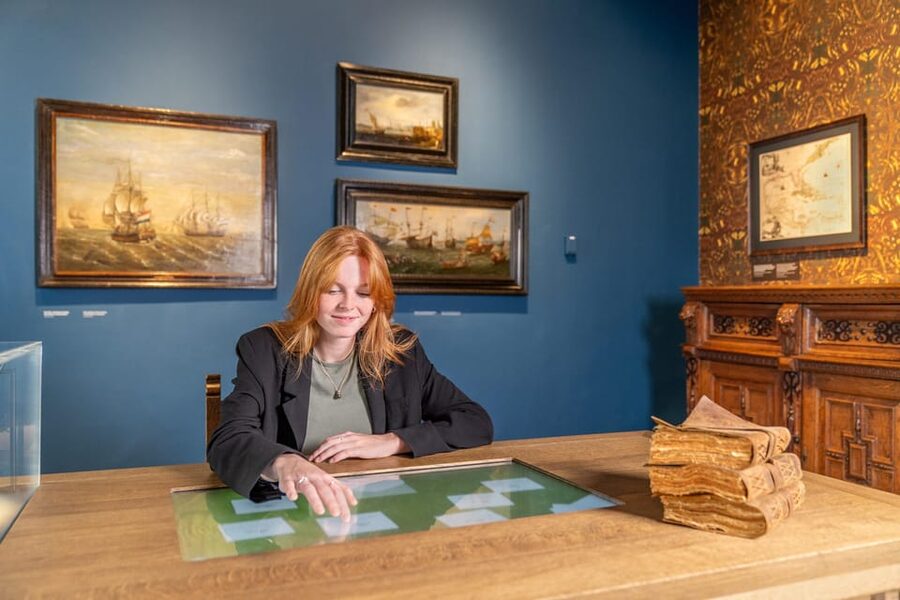
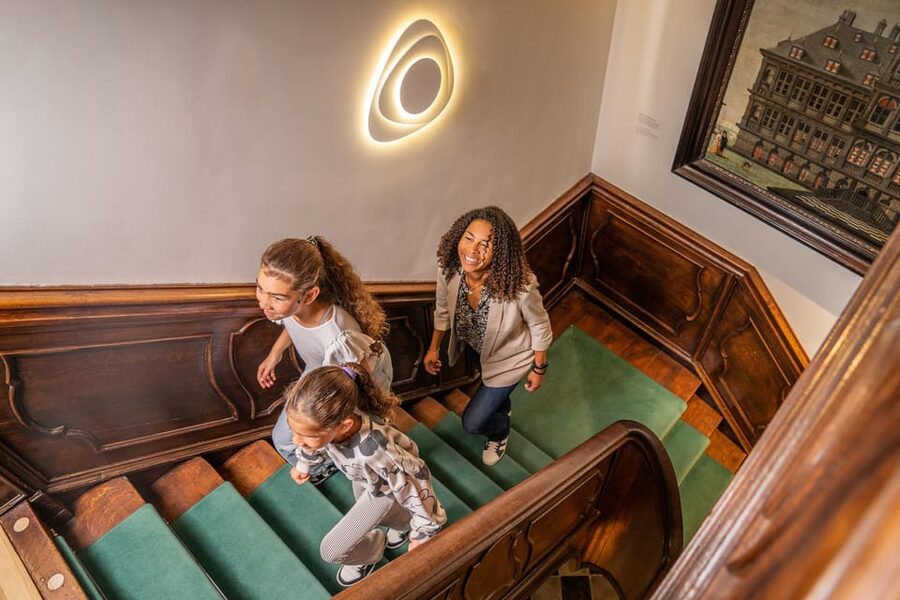
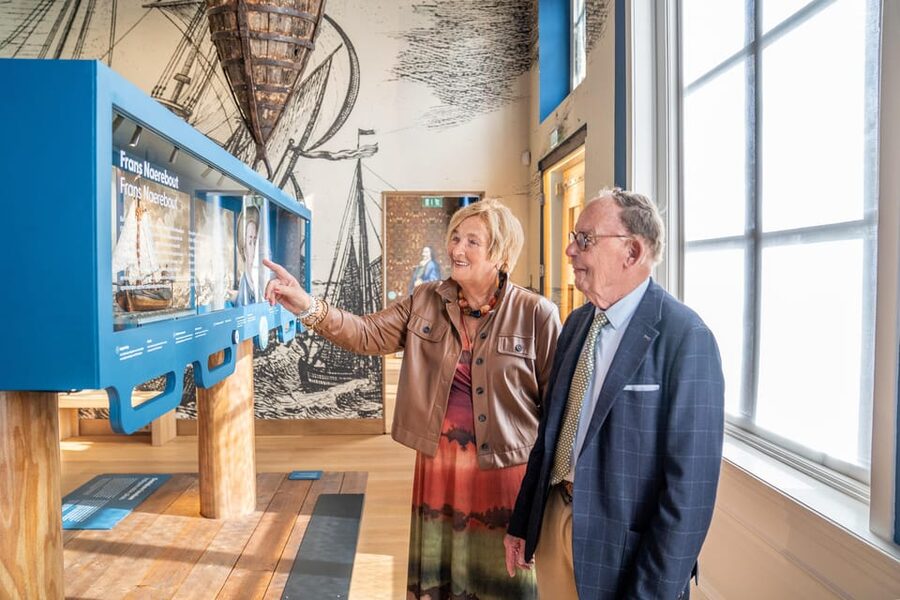
One of the most appealing parts of the visit is the Lampsins’ beautiful 17th-century town house. Historic rooms give you a sense of the world inhabited by wealthy maritime families, and the building itself becomes part of the exhibit.
This is where the museum’s setting earns its admission price. You are not walking through a plain modern hall filled with objects. You move between old architecture and newer museum areas, with each space offering a different feel.
The three historic buildings are connected by modern architecture, so the visit has a natural change of pace. The old structures provide atmosphere. The newer sections make room for interactive displays and clearer presentation.
I would take your time in the historic sections, even if you are mainly interested in ships. The rooms help explain how maritime money and influence reached into everyday life. They also make the story of Zeeland feel local rather than abstract.
Following Michiel de Ruyter and Zeeland’s sea characters
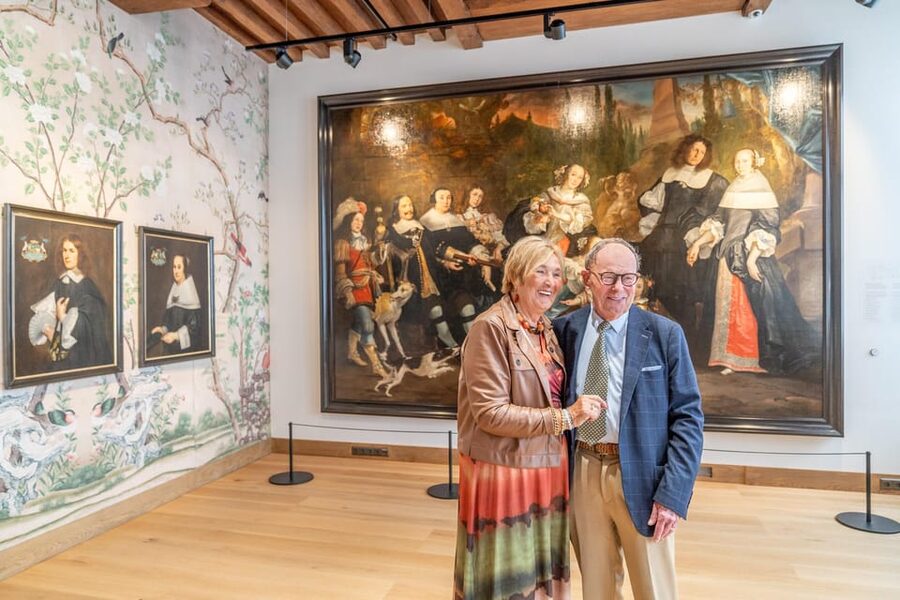
Michiel de Ruyter is one of the central figures here. His life story gives the museum a human focus, turning broad naval history into the story of a real person whose career was tied to the sea and to Vlissingen.
The audio tour helps guide you through this material. Instead of reading every panel in order, you can listen to a story, watch a video, and then look more closely at the objects around you. That works well for anyone who prefers a clear path through a museum.
The presentation also includes other sea characters. These voices and personalities help break up the usual sequence of dates and names. You are more likely to remember a story connected to a person than a wall of information about shipping routes.
The audio tour is available with videos, and it received particularly strong praise for making the experience more engaging. I would use it rather than treating it as an optional extra. It seems to provide the connecting thread that ties the different rooms together.
There is one practical catch. When the museum is full of children and the sound level rises, you may have trouble hearing the audio clearly. If that matters to you, choose a quieter time if possible, or pause in a calmer area before continuing.
Finding treasure from sunken ships
The underwater objects are among the most naturally appealing parts of the muZEEum. Finds from sunken ships offer a direct link to the past. Instead of looking only at paintings or written accounts, you see physical material pulled from the sea.
These objects also remind you how much maritime history remains underwater. Ships carried goods, people, tools, and stories, and wrecks can preserve pieces of that world for centuries. The museum uses these finds to make Zeeland’s connection with the sea tangible.
I like this section because it can work at two levels. Children may enjoy the idea of underwater treasure, while adults can think about shipping, wrecks, preservation, and the lives connected to those vessels. You do not need specialist knowledge to appreciate it.
The underwater displays fit well beside the wider story of Zeeland’s maritime life. They show that the sea was not merely a route for commerce or war. It was also a place of danger, loss, discovery, and memory.
More museums:
- Amsterdam: Van Gogh Museum Ticket
★ 4.7 · 52,054 reviews - Moco Museum Amsterdam Entrance Tickets with Banksy & More
★ 4.4 · 10,088 reviews - Amsterdam: The Upside Down Museum Entrance Ticket
★ 4.4 · 9,506 reviews - Amsterdam: Red Light Secrets Museum Entry Ticket
★ 4.2 · 5,722 reviews
Interactive exhibits that keep the visit moving
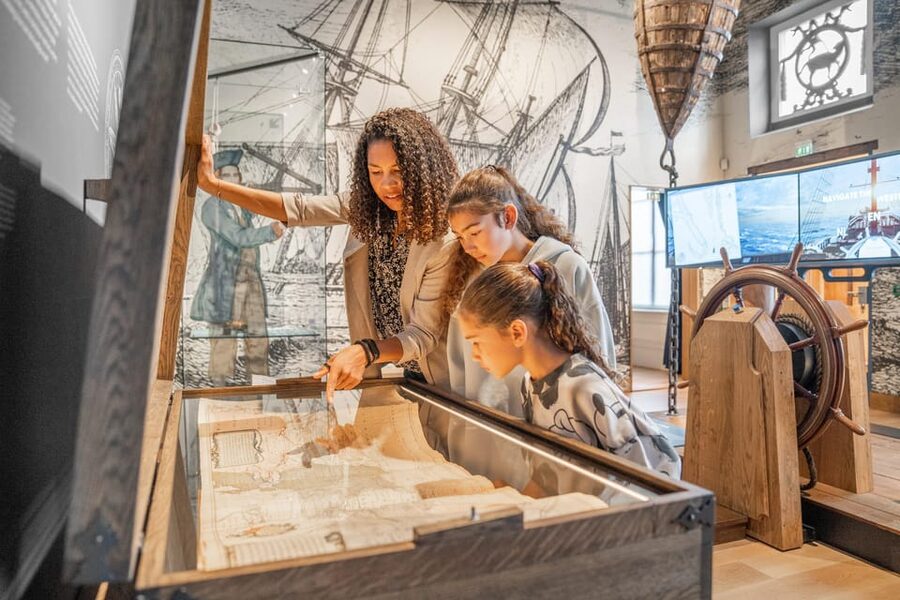
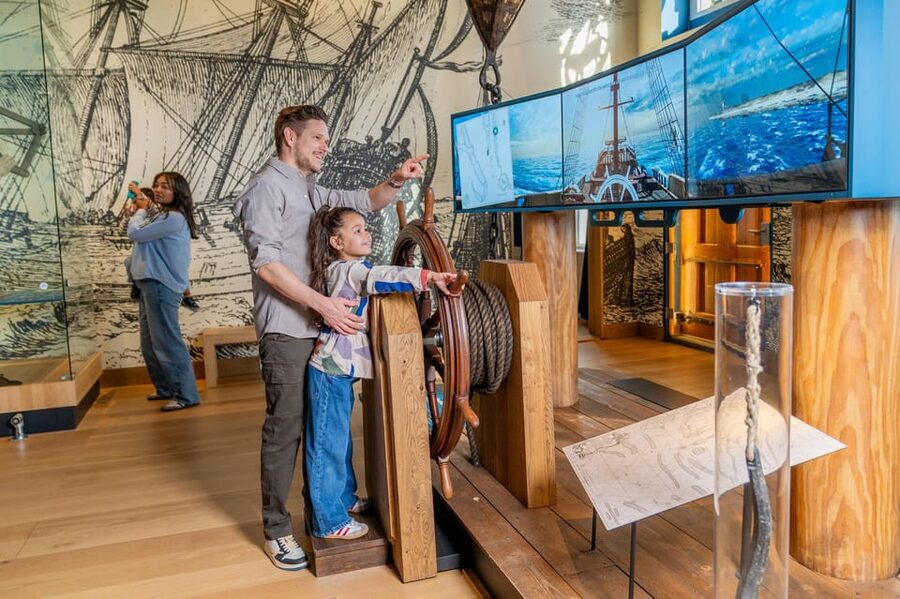
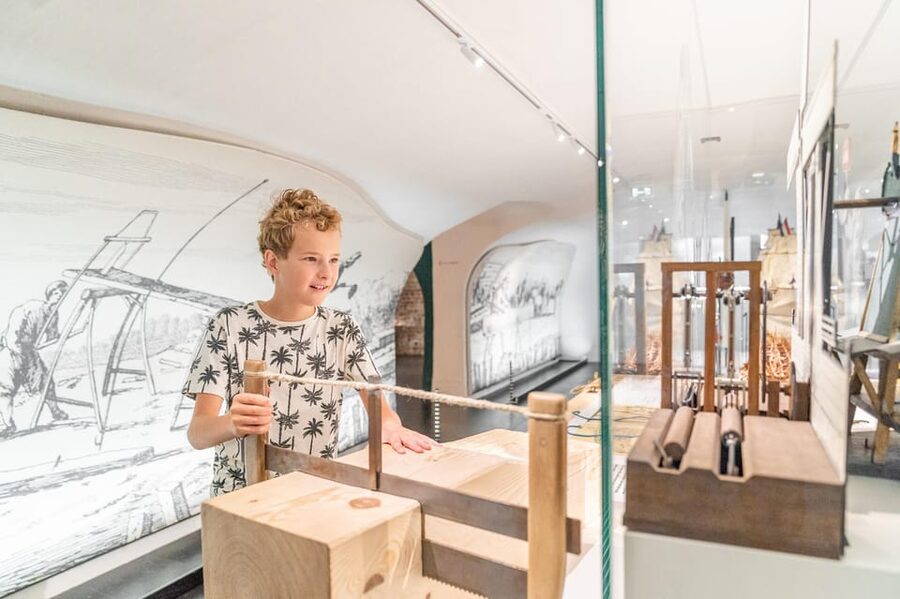
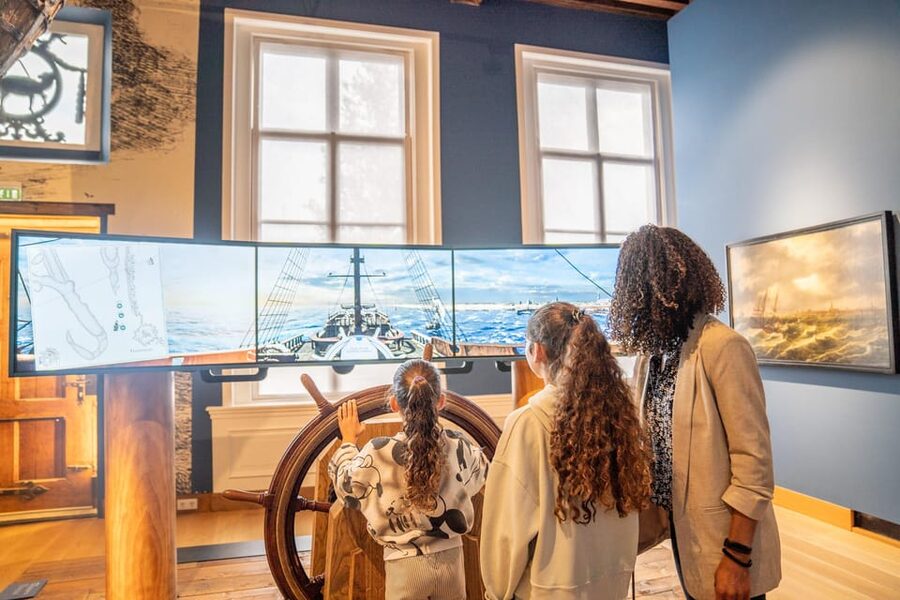
The muZEEum includes interactive exhibitions for all ages. These are useful because maritime history can become text-heavy if presented only through labels and paintings.
I would not expect a large amusement-style attraction. The interactive elements support the history rather than replace it. You may use a game, watch a video, or follow an audio prompt, then return to the objects and stories with a better sense of context.
For families, this balance is valuable. Children receive a free creative do-book, which gives them activities to complete as they move through the museum. The games and do-book help younger children stay involved, though the experience may be only partly interesting for a very young child. A 2.5-year-old, for example, may enjoy some of the visual and interactive material but will not follow the full historical story.
Older children should have more to work with. The combination of hands-on activities, sea characters, and underwater finds makes the museum easier to share as a family outing. You can let children explore at their level while still getting something from the more serious displays.
Adults without children should know that the family-friendly design is part of the experience. At busy times, children can make the museum noisier, especially around audio stations. That is not a reason to skip the museum, but it is worth keeping in mind if you want a quiet, uninterrupted museum visit.
Looking out from the tower and terrace
The museum includes a view over the sea from an old tower or terrace. This gives the visit a welcome connection to the water you have been hearing about inside.
The tower can be a highlight because it turns the museum’s history into a real view. After learning about ships, trade, naval power, and danger at sea, you can look outward toward the same broad waterway that shaped Vlissingen.
The terrace is not guaranteed to be open. One recent visit found it closed, while the tower still offered a fine view. I would treat the terrace as a bonus, not the main reason to buy your ticket.
Bring a camera if you enjoy views and historic architecture. Comfortable shoes are also sensible, since you will move through several buildings and spend much of the visit standing or walking.
How long to stay and what $19 buys you
The ticket costs $19 per person and is valid for one day. A typical visit can take around two hours, though the exact length depends on how closely you follow the audio tour, how many interactive displays you try, and how much time you spend with the paintings and historic rooms.
For me, the price is reasonable if you want more than a quick look at local artifacts. You are paying for access to several connected buildings, interactive exhibitions, an audio tour with videos, historic interiors, underwater finds, and a sea view.
The value is strongest for families and visitors who enjoy museums with a clear story. The free children’s do-book also adds something practical for parents. You are not paying separately for every activity once inside.
The value is less clear if you only have a few minutes in Vlissingen or dislike audio-guided museums. The muZEEum asks for attention. You will get more from it if you allow enough time to follow the story instead of rushing through the rooms.
Food is not included, and food is not allowed inside. Plan your meal before or after the visit. Backpacks are also not allowed, so pack lightly and avoid arriving with a large day bag.
Parking, access, and the practical details
Parking is based on public spaces, and it can be inconvenient. I would allow extra time to find a place rather than arriving just before a planned entry time.
The experience is suitable for all ages and is promoted as wheelchair accessible, but the information also says it is not suitable for wheelchair users. That is a clear conflict. If you use a wheelchair, contact the muZEEum before booking and confirm exactly which areas, buildings, tower spaces, and routes are accessible.
Pets are not allowed, although assistance dogs are permitted. Comfortable shoes and a camera are the most useful things to bring.
The ticket is valid for one day, and cancellation is allowed up to 24 hours before the visit for a full refund. You can also reserve now and pay later, which helps if your Zeeland plans are still changing.
Who will enjoy the muZEEum most?
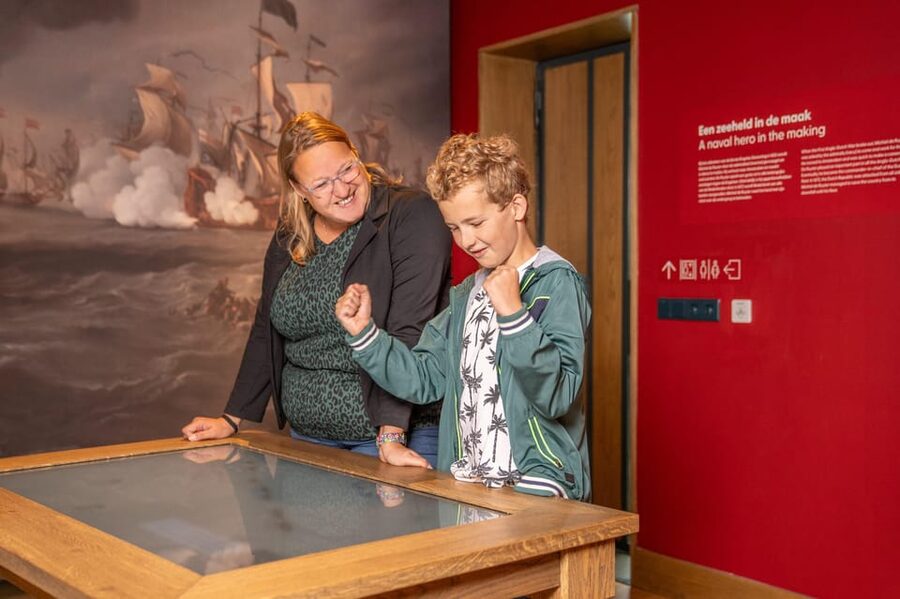
I would recommend the muZEEum to families who want an educational stop that does not feel like a school lesson. The games, do-book, videos, and sea characters give children several ways to stay involved.
It also suits adults interested in naval history, historic houses, local trade, and the complicated story of Zeeland’s wealth. The section on slave trading is valuable for anyone who wants a fuller account of the region rather than a polished story about famous sailors alone.
Couples and solo visitors should enjoy it too, especially if they like audio tours and museums with a strong narrative. The main caution is noise. If you want to hear every audio segment, avoid the busiest family periods if you have flexibility.
The museum is less suitable for anyone looking for a fast, self-contained attraction that takes 30 minutes. It has enough material to reward a proper visit, and the multiple buildings mean you should not rush.
Should you book the Vlissingen muZEEum?
Book it if you want to understand why the sea matters so much to Vlissingen and Zeeland. The combination of the Lampsins town house, Michiel de Ruyter’s story, underwater finds, interactive exhibits, and the tower view gives you a varied visit for $19.
I would be especially happy to recommend it to families and history-minded adults. Just plan for public parking, leave your backpack behind, and remember that the terrace may be closed. If you need wheelchair access, confirm the arrangements first because the accessibility information is inconsistent.
The muZEEum is a good choice when you want local history with real objects, clear stories, and enough activity to keep different ages interested.
FAQ
Where is the muZEEum located?
The muZEEum is in Vlissingen, in Zeeland, Netherlands.
How much does admission cost?
The entry ticket costs $19 per person.
How long is the ticket valid?
The ticket is valid for one day.
How long should I allow for the visit?
Allow about two hours for a typical visit. You may need more or less time depending on how closely you follow the audio tour and use the interactive exhibits.
Is an audio tour included?
Yes. The experience includes an audio tour with videos and sea characters.
Do children receive anything at the museum?
Yes. Children receive a free creative do-book and can use interactive games in the museum.
Is food allowed inside?
No. Food is not allowed, and food is not included with the ticket.
Can I bring a backpack or pet?
Backpacks and pets are not allowed. Assistance dogs are permitted.
Is the museum wheelchair accessible?
The information describes the experience as wheelchair accessible but also says it is not suitable for wheelchair users. Contact the muZEEum before booking to confirm current access arrangements.
Just added around the Netherlands
- Private tour: Markthal, Cube houses and Rooftop Het Witte Huis★ 4.5 · 3 reviews
- Amsterdam City Center Guided Walking Tour – 12 guests 2,5h★ 5.0 · 3 reviews
- Discover Rotterdam: Classic Highlights Bike Tour by a Local★ 5.0 · 3 reviews
- Private tour from Rotterdam to Windmills of Kinderdijk & Gouda Cheese Experience★ 5.0 · 3 reviews
- Oudenbosch: Guided City Walk★ 5.0 · 3 reviews
- Discover Rotterdam’s most Photogenic Spots with a Local★ 5.0 · 3 reviews
- Private Transfer from Rotterdam Port to Amsterdam Airport (AMS)★ 5.0 · 3 reviews
- Amsterdam Light Festival Boat Cruise★ 5.0 · 3 reviews
Museums, compared.

Moco Museum Amsterdam Entrance Tickets with Banksy & More
Read our review →
Amsterdam’s Weirdest Museum: Believe It or Not!
Read our review →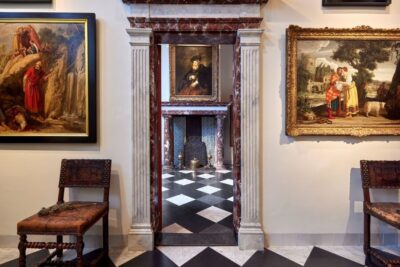
Browse the lists this tour appears in