
REVIEW · WALKING TOURS
Absolutely Amsterdam – the Essential Introductory Walking Tour
Amsterdam reveals itself best at street level. This 2.5-hour walk links the old harbor, canals, courtyards, markets, and major squares into one useful first look at the city. I especially like the small maximum group of 15 and the way the tour tackles difficult subjects such as prostitution, drug policy, colonial trade, and wartime persecution without skipping the uncomfortable parts. The main drawback is that the tour only views the hidden church from outside, and the weekday-only courtyard stop may not be available on every departure.
I also like the pay-what-you-wish format, priced at about $5.93 per person before any tip you choose to give. Guides such as Raymond, Jaap, Sergio, David, and Fernando are praised for clear storytelling, humor, and useful suggestions for the rest of your stay. You should still wear solid walking shoes, since Amsterdam’s busy streets and bike traffic demand attention.
In This Review
- Key points to know before you book
- Why this inexpensive walk is useful
- Beursplein and Damrak: water, money, and the old harbor
- Our Lord in the Attic and Chinatown: tolerance and drug policy
- The Waag: Rembrandt and the business of seeing people
- Oostindisch Huis: Amsterdam’s Golden Age, with the darker side included
- Waterlooplein: the Jewish Quarter and the Hunger Winter
- The Amstel and Oudemanhuispoort: canals, houses, and bicycles
- Dam Square and the Royal Palace: from republic to monarchy
- Guides, group size, and the walking pace
- What the $5.93 price really buys you
- Who should book this Amsterdam walk?
- Should you book Absolutely Amsterdam?
- FAQ
- How long does the Absolutely Amsterdam tour last?
- What language is the tour offered in?
- Where does the walking tour start?
- Where does the tour finish?
- Are museum admissions included?
- How large is the group?
- Can I cancel for a refund?
Key points to know before you book
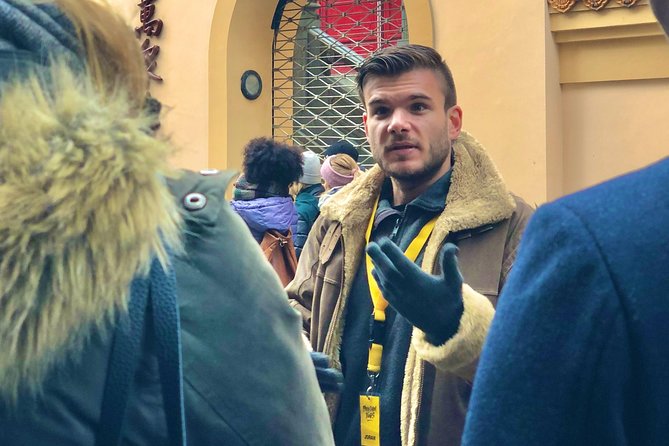
- Ten central stops in about 2 hours 30 minutes: The route covers major sights without requiring museum admissions.
- A serious look at Amsterdam’s complicated past: Expect discussion of religious tolerance, slavery and empire, Jewish persecution, prostitution, and drug policy.
- Maximum group size of 15: The smaller format should make it easier to hear the guide and ask questions.
- Best for a first day in town: The walk helps you understand the center and collect ideas for later visits.
- The hidden church is not entered: Our Lord in the Attic Museum is explained from outside, with interior images shown by the guide.
- The tour is in English: It begins at Freedam Tours, Beursplein 5, near the historic center.
Why this inexpensive walk is useful
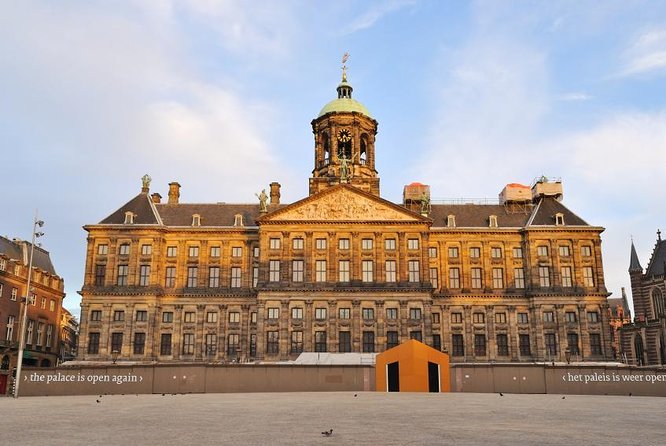
At roughly $5.93, this is an unusually low-cost introduction to Amsterdam. The price works because the tour is built around guiding and storytelling rather than included admissions. You do not receive entry to the church museum, the Waag, or the Royal Palace, but you do get a structured route through the old center and a chance to decide which places deserve a return visit.
I see the strongest value in the sequence. Amsterdam can feel like a collection of pretty canals and narrow houses until someone explains how water, religion, trade, war, and law shaped the city. This walk connects those subjects in a way that gives you a working map of Amsterdam, both geographically and socially.
The route is also manageable for many people. It lasts about two and a half hours, and several stops involve ten to fifteen minutes of explanation rather than a long continuous march. Still, you are on your feet for the full experience, and the center can be crowded. Bring water, wear comfortable shoes, and watch for bicycles when the group crosses streets or follows narrow lanes.
More Walking Tours in Amsterdam
- Anne Frank’s Story – Guided Walking Tour through Amsterdam
★ 5.0 · 11,619 reviews - Amsterdam: Life of Anne Frank and World War II Walking Tour
★ 4.8 · 10,467 reviews - Amsterdam: Anne Frank Guided Small Group Walking Tour
★ 4.8 · 2,722 reviews
Beursplein and Damrak: water, money, and the old harbor
The meeting point is Freedam Tours at Beursplein 5. The opening stop, in front of the Beurs van Berlage, sets up Amsterdam’s basic story: this city grew where water, commerce, and engineering met.
The exchange buildings were built on ground where the Amstel River once flowed. That detail gives the first explanation real purpose. You learn that Amsterdam was not simply a pretty settlement that happened to acquire canals. Its growth depended on controlling water and creating places where goods, money, and business could move.
From there, the group heads toward Damrak, the old harbor. This is where the tour shifts from finance to the Red Light District, including the unusual relationship between the church and prostitution. The guide explains how prostitution became legal, how the district changed during the twentieth and twenty-first centuries, and the problems it faces today.
I appreciate that this part is not treated as cheap entertainment. The subject is part of Amsterdam’s history and present-day policy, but the discussion also gives you context for what you are seeing around you. You should expect a frank conversation rather than a theatrical tour.
Our Lord in the Attic and Chinatown: tolerance and drug policy
At Our Lord in the Attic Museum, you learn how Catholic worship continued after Catholicism became illegal in the seventeenth century. The key idea is that Dutch tolerance often worked through strict, peculiar limits. A religion might be officially banned yet quietly accepted if it stayed out of public view.
The guide does not take you inside the museum. You see the exterior and are shown pictures of the interior, so this stop is about explanation rather than architecture. If the hidden church is a priority, plan a separate visit and pay the admission fee on your own.
The next stop is Chinatown, where the subject changes to Dutch drug policy. The guide explains how the area became a no-go zone in the 1970s and how that helped prompt the rise of coffeeshops selling marijuana.
This is a useful stop because it explains a policy many people find confusing. Amsterdam’s approach is not simply a slogan about being permissive. It grew from particular social problems and legal choices, and the tour places those choices in the setting where they mattered.
The Waag: Rembrandt and the business of seeing people
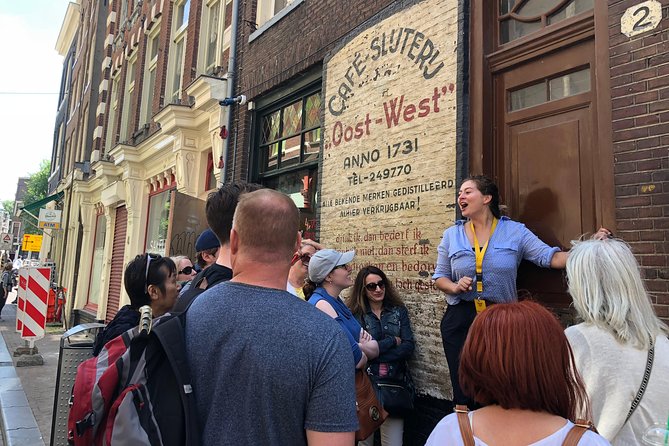
At the Waag, the focus turns to art. The guide explains where Rembrandt painted his first major work and how that painting changed portrait making. A copy of the painting is used to point out details that can be difficult to see in a quick glance at a building.
This is one of the more memorable touches because it makes the stop visual. Instead of hearing only a name and a date, you get a direct look at the painting being discussed. You can also connect Amsterdam’s commercial success with its demand for portraits, civic images, and art that showed status.
The Waag itself adds atmosphere, but the tour does not promise an interior visit. Think of this as a short art-history lesson in the street, not a museum tour.
More walking tours:
- Amsterdam: Anne Frank Walking Tour – Guided in EN/DE/IT/ES
★ 4.9 · 2,676 reviews - Amsterdam: Guided Cultural Walking Tour
★ 4.9 · 2,384 reviews - Amsterdam: Guided Ganja Walking Tour of Coffee Shops
★ 4.2 · 2,092 reviews - Anne Frank Walking Tour Amsterdam Including Jewish Cultural Quarter
★ 5.0 · 1,879 reviews
Oostindisch Huis: Amsterdam’s Golden Age, with the darker side included
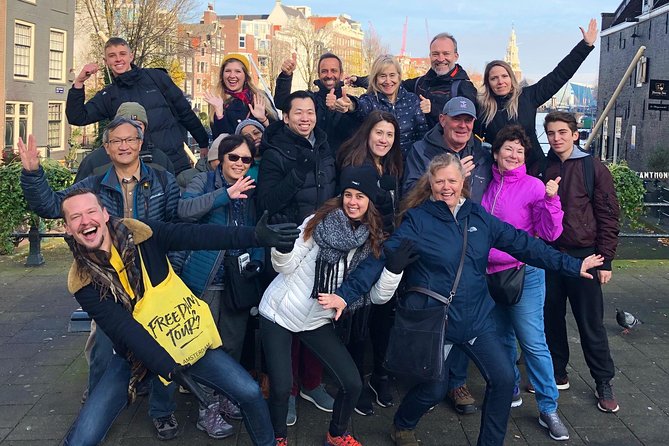
Oostindisch Huis brings the group to one of the most important stops on the route. On weekdays, you can access a striking seventeenth-century courtyard hidden inside the building. The space helps explain how Amsterdam became the center of a global trading empire.
This was the headquarters of the Dutch East India Company, described here as the first and largest corporation in human history. The guide links its business methods to the beginnings of modern capitalism and explains how Amsterdam became one of the world’s richest cities during the seventeenth-century Golden Age.
The best part is the refusal to present that success as a clean triumph. You hear about the profits and organization, but also the darker legacy of the period. That balance matters. Amsterdam’s wealth did not come only from clever merchants and attractive canals. It was tied to overseas power and exploitation.
The courtyard is only accessible during weekdays, so ask about that when booking or arriving. Even if the group cannot enter, the surrounding explanation remains one of the strongest historical parts of the walk.
Waterlooplein: the Jewish Quarter and the Hunger Winter
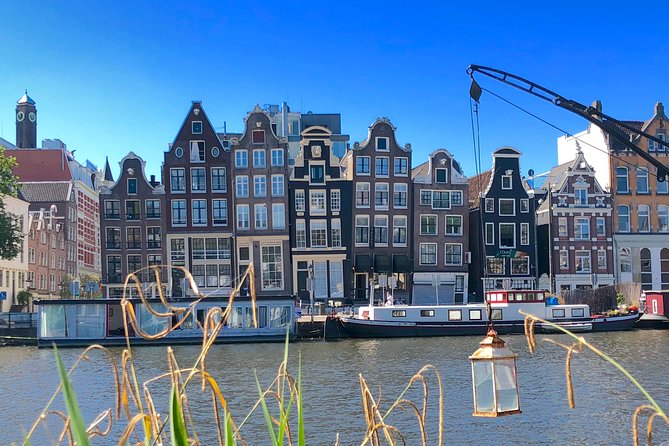
At Waterlooplein Market, the tour reaches Amsterdam’s former Jewish Quarter. The market is identified as the city’s oldest, but the larger subject is the neighborhood’s destruction during the Second World War.
The guide explains how Nazi occupation decimated Amsterdam’s Jewish population, once part of a city known as a safe haven for persecuted Jewish people from across Europe. The discussion also covers the final Hunger Winter and what people in Amsterdam had to do to survive.
This stop adds needed weight to the route. Amsterdam’s old center is easy to admire, but its buildings and markets also hold painful memories. The tour connects the physical neighborhood with the choices, losses, and survival stories that shaped it.
You may find this section more somber than the earlier stops. That is appropriate, but it also means the walk is not only a light sightseeing loop. It asks you to look at the city honestly.
The Amstel and Oudemanhuispoort: canals, houses, and bicycles
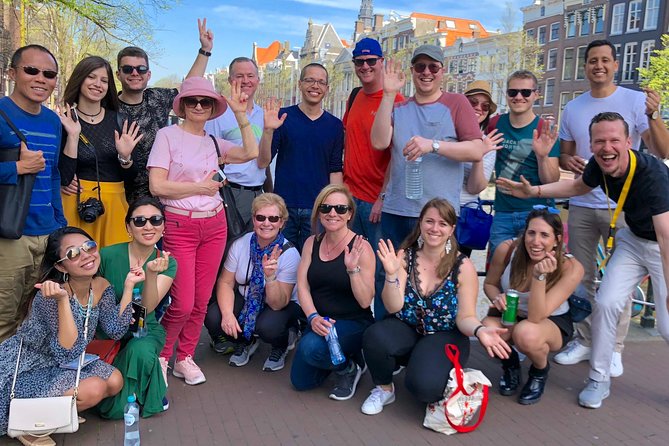
At the Amstel, or at another canal if weather or the guide requires a change, you learn why Amsterdam has canals and how the canal houses work. The guide covers the famous narrow fronts, the houses that lean, the hooks above the windows, and the Dutch habit of leaving curtains open.
These details are practical and fun because they turn ordinary streets into readable evidence. The narrow houses relate to the way plots were developed, while the hooks reveal how goods were moved into upper floors. The leaning buildings are not all signs of a crisis. Some of the appearance is intentional, though the tour explains the reasons in context.
The curtain question provides a lighter moment after the war discussion. It is also typical of the tour’s approach: familiar sights become prompts for social history.
Oudemanhuispoort is easy to miss without guidance. This former monastery later became a hospital and now forms part of the University of Amsterdam. The stop is used to explain Dutch bike culture, including why Amsterdam has more bicycles than people and why many bikes look plain and battered rather than stylish.
The bicycle discussion is useful before you explore alone. Amsterdam’s cycling system is part of daily life, not a show put on for tourists. The streets can be challenging, and one guide specifically warned that dodging bicycles is simply part of doing anything in the city. Stay alert and do not stop in a bike lane for photographs.
Dam Square and the Royal Palace: from republic to monarchy
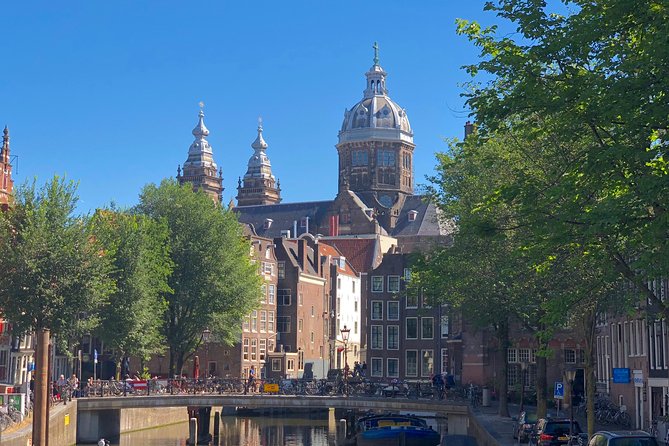
The final major stop is the Royal Palace on Dam Square. Here, the guide explains the unusual path from Dutch republic to monarchy, introduces the current royal family with pictures, and adds some lighter royal gossip.
This is a fitting ending because Dam Square brings together power, ceremony, commerce, and public life. The palace is impressive from outside, but admission is not included. If you want to see the interior, you will need to arrange a separate visit.
The tour ends around Dam Square, with the activity listed as returning to the meeting point. Confirm the exact finishing point with your guide, especially if you have a timed booking afterward. The central location makes it easy to continue sightseeing, find food, or return to a museum you noticed along the way.
Guides, group size, and the walking pace
Guide quality is a major strength. Raymond is praised for being a lifelong local, keeping a good pace, and mixing useful facts with humor. Jaap is singled out for his energy, personal experience, and strong presentation of Dutch history. Sergio is described as funny, helpful, and full of historical detail.
Other named guides include David, Fernando, Esi, Samuel, Dani, Alex, Sebastien, Ramses, Roman, Alexander, and Gianni. The individual style will vary, but the repeated pattern is clear: the best guides make the past easy to follow, use visual aids or maps when helpful, and offer suggestions for the rest of your stay.
Gianni used maps and visual material, while Roman was praised for remembering names and adding local food suggestions. One participant also mentioned a tasty waffle, though food is not listed as a guaranteed part of the experience. Treat that as a possible extra, not something to book the tour for.
With a maximum of 15 people, this should feel more personal than a large coach excursion. The group still moves through busy streets, so you may need to stay close to hear everything. Reviews describe the pace as easy and suitable for a broad range of walking abilities, but the tour remains outdoors and requires steady walking.
What the $5.93 price really buys you
The low price is the headline, but the real value is orientation. You get a guide for ten central stops, a clear introduction to Amsterdam’s major themes, and practical ideas for places to return to later.
You do not get museum admissions, private transportation, or a meal. That keeps the cost down, but it also means you should budget separately for Our Lord in the Attic, the Royal Palace, or any other site you decide to enter.
The tip-based model lets you decide what the experience was worth. If your guide, such as Raymond, Jaap, Sergio, or Fernando, gives you a strong start to your stay and useful advice, you can respond with a tip that matches the value you received. The listed booking price is therefore best viewed as a small reservation charge for a guided introduction, not the full cost of a private tour.
Who should book this Amsterdam walk?
I would choose this tour for a first visit, especially if you want to understand the center before spending money on museums. It also suits people who prefer history and social context over a simple checklist of photo stops.
It can work well for repeat visitors, too. A strong guide may reveal new angles on familiar streets, as happened for people who had already been to Amsterdam several times. The small group, English-language delivery, and relaxed pace add to its appeal.
You may want another option if you dislike frank discussions of prostitution, drug policy, war, or colonial trade. You should also choose something else if you need extensive indoor time, guaranteed museum entry, or a fully private experience.
Should you book Absolutely Amsterdam?
Yes, I would book it as an opening activity, particularly on the first or second day of your visit. The price is low, the route covers a lot of ground, and the strongest guides combine humor with serious context.
Book it for orientation, not for deep access to the sights. You will see the outside of the hidden church, the Waag, and the Royal Palace, while the Oostindisch Huis courtyard depends on a weekday visit. If you arrive ready to walk, listen, and think about Amsterdam beyond its postcard image, this is a smart and affordable start.
Free cancellation is available up to 24 hours before the local start time. A minimum group size applies, and if the operator cancels for that reason, you are offered another date or a full refund.
FAQ
How long does the Absolutely Amsterdam tour last?
The tour lasts approximately 2 hours and 30 minutes.
What language is the tour offered in?
The tour is offered in English.
Where does the walking tour start?
It starts at Freedam Tours, Beursplein 5, 1012 GZ Amsterdam, Netherlands.
Where does the tour finish?
The itinerary finishes around Dam Square, and the activity information also states that it ends back at the meeting point. Ask the guide to confirm the exact finishing point if you have plans afterward.
Are museum admissions included?
No. Admission is not included for Our Lord in the Attic Museum, the Waag, or the Royal Palace. The hidden church is viewed from outside, with interior pictures shown by the guide.
How large is the group?
The tour has a maximum of 15 participants.
Can I cancel for a refund?
Yes. You can cancel at least 24 hours before the experience start time for a full refund. Cancellations or changes made less than 24 hours before the start time are not refunded or accepted.
Just added around Amsterdam
- Amsterdam 1-Hour Rickshaw Tour★ 4.9 · 17 reviews
- Amsterdam: Canal Cruise and Jewish Cultural Quarter Tickets★ 4.2 · 17 reviews
- Keukenhof Gardens and Tulip Experience Tour from Amsterdam★ 4.8 · 17 reviews
- Marken, Volendam and Edam: Private Full-Day Tour★ 4.6 · 18 reviews
- Discover Amsterdam’s city center in this Outside Escape game tour★ 4.5 · 18 reviews
- Amsterdam: Personal Travel & Vacation Photographer★ 4.8 · 18 reviews
- Amsterdam: Luxury Saloon Boat Cruise with 3-Course Dinner★ 3.9 · 18 reviews
- Rijksmuseum & Amsterdam City Center Semi-Private Tour 12ppl Max★ 5.0 · 18 reviews
Walking Tours, compared.
Anne Frank’s Story – Guided Walking Tour through Amsterdam
Read our review →
Life of Anne Frank and World War II Walking Tour
Read our review →

Anne Frank Walking Tour – Guided in EN/DE/IT/ES
Read our review →
Anne Frank Walking Tour Amsterdam Including Jewish Cultural Quarter
Read our review →
Amsterdam Highlights Walking Tour: Small Group Experience
Read our review →Browse the lists this tour appears in