
REVIEW · WALKING TOURS
Amsterdam: Guided Cultural Walking Tour
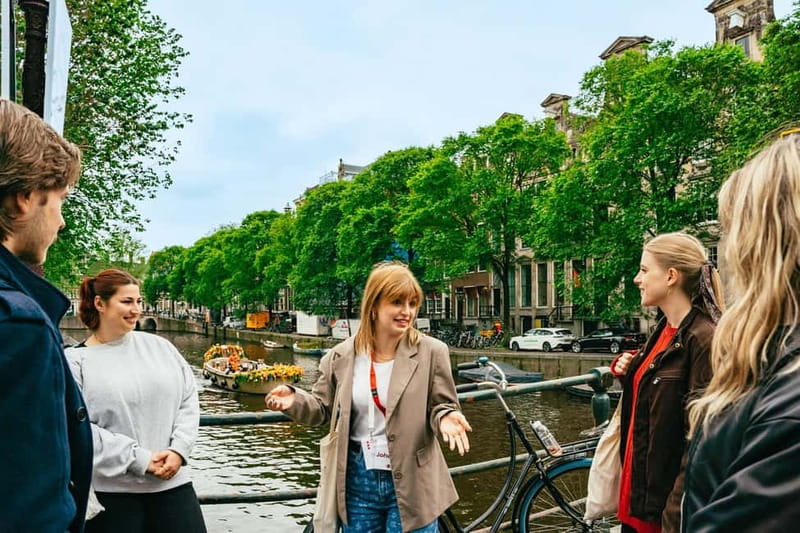
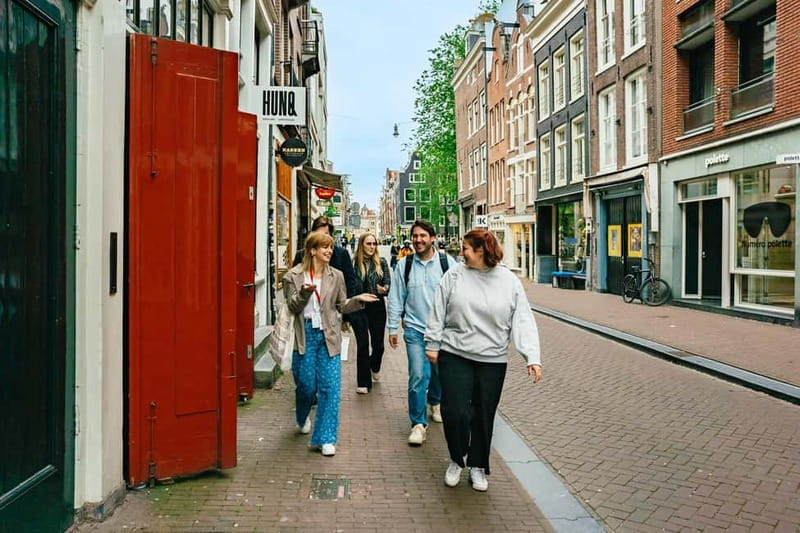
Amsterdam reveals itself on foot. This two-hour tour links Dam Square, the canals, Begijnhof, and the Amstel with stories about the city’s past and present. I like the clear route through central Amsterdam, and I like that your guide adds practical advice about food, cycling, and neighborhoods to explore later. The main drawback is that you see the sights from outside, with no admission visits included.
The tour costs $29 per person, which is a fair price for a guided introduction to the city, especially if you are new to Amsterdam. Guides such as Alex, Justin, Josh, Deborah, Stefanie, Charlotte, and Prisha have been praised for making the walk friendly, funny, and easy to follow. Do bring comfortable shoes and an umbrella, since Amsterdam weather has little respect for your plans.
In This Review
- Key points to know before you book
- Starting beneath the white pillar at Dam Square
- Dam Square, the Royal Palace, and the city’s beginnings
- Beurs van Berlage and Magna Plaza
- Canal houses and the Multatuli Statue
- Anne Frank Monument, Westerkerk, and the Homomonument
- De Negen Straatjes and the quieter Begijnhof
- The Amstel and the final memorial
- What the guides add to the walk
- Is $29 good value for two hours?
- Who will enjoy this Amsterdam walk?
- Practical details before you go
- Should you book this tour?
- FAQ
- Where does the Amsterdam walking tour begin?
- Where does the tour finish?
- How long does the walking tour last?
- What languages are available?
- Is the tour suitable for children?
- Is the walking tour wheelchair accessible?
- Are food and drinks included?
Key points to know before you book
- A two-hour city orientation: You cover a long list of central sights without stopping for indoor visits.
- A useful starting point: The walk begins at the National Monument on Dam Square, right in the middle of Amsterdam.
- History with a modern edge: Expect discussion of medieval life, the Golden Era, World War II, colonial history, tolerance, and multicultural Amsterdam.
- The route ends at Begijnhof and the Amstel: You see quiet courtyards, canal houses, and the river that gave Amsterdam its name.
- Good local advice: Guides can suggest foods such as bitterballen and stroopwafels, along with districts worth exploring by bike.
- Flexible and accessible: The tour is suitable for children, wheelchair accessible, available in English or German, and private groups can be arranged.
Starting beneath the white pillar at Dam Square
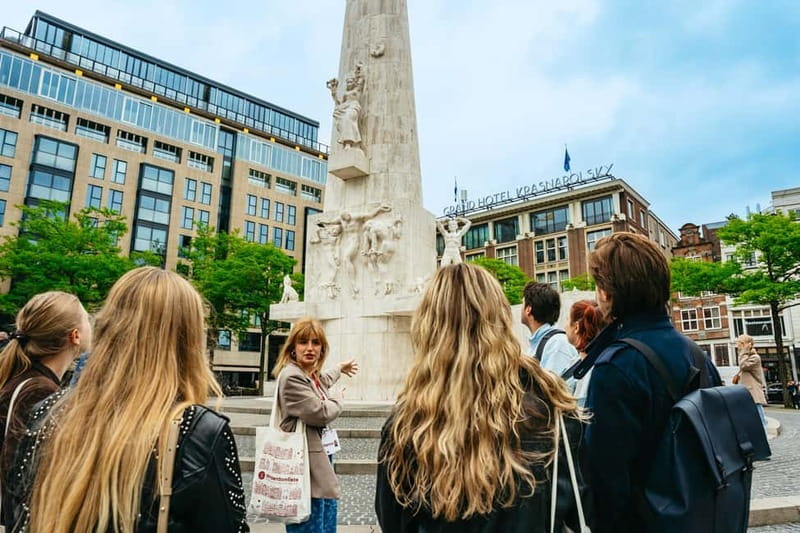
Your meeting point is easy to identify once you are in the square. Look for the large white National Monument, then meet your guide on its stairs. The guide wears a red name tag around the neck.
That red tag is useful, but it is not a perfect system. One person found it difficult to spot the guide because other tour leaders wore similar tags. I would arrive a few minutes early and stay close to the monument stairs rather than wandering around the square.
The National Monument gives the tour a meaningful start. It was first built to remember people who died in World War II and now honors victims of wars worldwide. The walk returns here at the end, so you do not need to arrange transport back to your hotel or find a new pickup point.
From the first minutes, you are in the busiest part of central Amsterdam. Trams, bicycles, pedestrians, street performers, and traffic all compete for space nearby. Keep your attention on the guide and watch where you step. This is a city walk, not a quiet museum visit.
More Walking Tours in Amsterdam
- Anne Frank’s Story – Guided Walking Tour through Amsterdam
★ 5.0 · 11,619 reviews - Amsterdam: Life of Anne Frank and World War II Walking Tour
★ 4.8 · 10,467 reviews - Absolutely Amsterdam – the Essential Introductory Walking Tour
★ 5.0 · 3,629 reviews
Dam Square, the Royal Palace, and the city’s beginnings
Dam Square is the natural opening chapter. Amsterdam grew around a dam on the Amstel River, and this square marks the place where the city took shape. Your guide uses the setting to explain how a settlement became a trading city.
The first guided stop lasts about 15 minutes. You can take photographs while hearing about the square’s role in Amsterdam’s development. It is a helpful introduction because later stops make more sense once you understand the city’s connection to water, commerce, and movement.
The Royal Palace follows, with roughly 10 minutes for explanation and photographs. The palace is one of the most recognizable buildings in the center, but this tour does not include an interior visit. You are getting context and an exterior view, so plan a separate palace visit if you want to see the rooms inside.
Nearby, the New Church, or Nieuwe Kerk, is included in the broader explanation of this part of town. The church sits beside the palace and adds another layer to the square’s civic and royal character. Again, the emphasis is on seeing and understanding, rather than entering.
Beurs van Berlage and Magna Plaza
The route continues to the Beurs van Berlage, where you have about 15 minutes for a guided look and photo stop. This building helps explain Amsterdam’s commercial past and the importance of trade to the city’s growth.
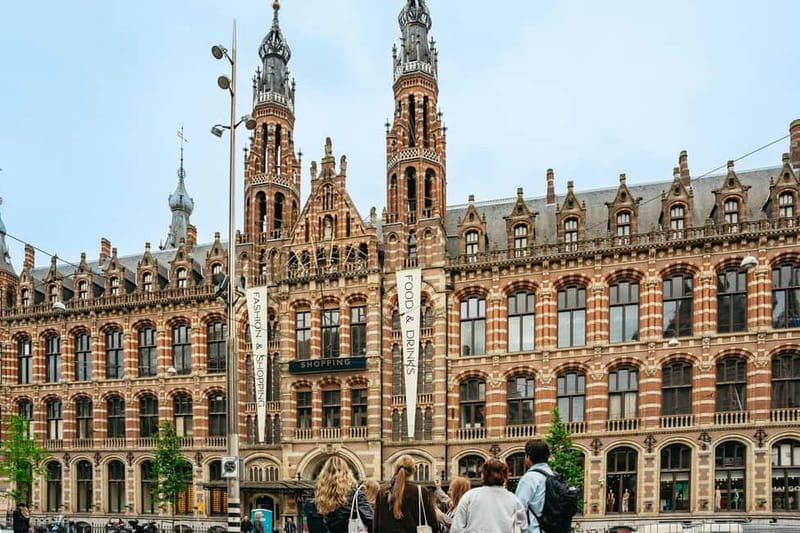
You then pass Magna Plaza, a former main post office with a more decorative architectural style. The stop is short, around five minutes, but it gives you another chance to compare old commercial buildings with later designs.
I like this section because it keeps the tour from becoming a parade of famous names. Your guide can connect buildings to the daily work of merchants, salespeople, and ordinary people who lived in the medieval city. That human angle is more useful than memorizing construction dates.
The pace also matters here. Two hours is enough time for several explanations, but not enough to linger at every facade. If you enjoy architecture, take note of the buildings you want to revisit after the tour.
Canal houses and the Multatuli Statue
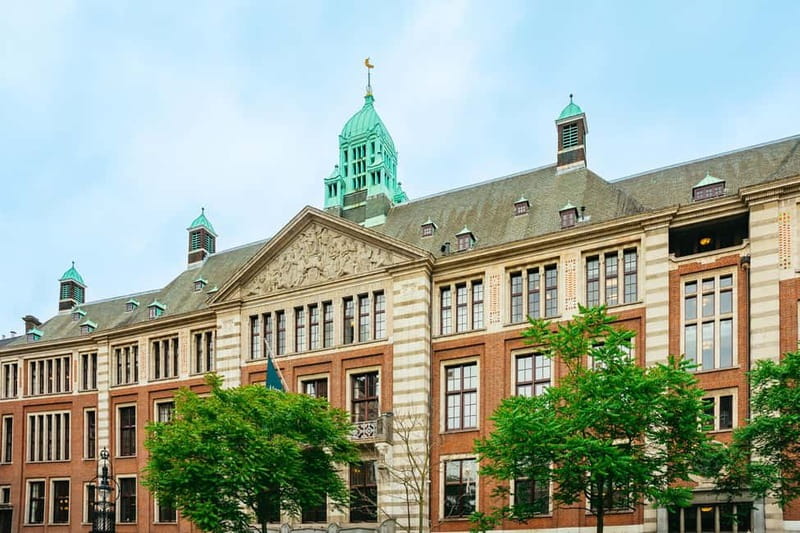
As you move through the center, the city begins to look more like the Amsterdam many people picture: narrow canal houses, old bridges, and water running beside the streets. The route includes the Torensluis Bridge, one of the city’s notable crossings.
At the Multatuli Statue, the guide discusses the colonial era and the writer Multatuli. This stop lasts about 15 minutes. It gives the tour a chance to address a difficult part of Dutch history rather than presenting Amsterdam as only picturesque canals and merchant houses.
The tiny house is another memorable detail along the way. Amsterdam’s narrow plots and high property costs helped produce some remarkably small homes. The tour does not turn this into an indoor visit, but seeing one from the street makes the city’s compact architecture easier to understand.
At this point, you are walking through areas where streets and canals can feel crowded. Stay aware of cyclists, who often have priority and may approach quietly. The guide’s commentary is easier to hear when you remain near the group.
More walking tours:
- Amsterdam: Anne Frank Guided Small Group Walking Tour
★ 4.8 · 2,722 reviews - Amsterdam: Anne Frank Walking Tour – Guided in EN/DE/IT/ES
★ 4.9 · 2,676 reviews - Amsterdam: Guided Ganja Walking Tour of Coffee Shops
★ 4.2 · 2,092 reviews - Anne Frank Walking Tour Amsterdam Including Jewish Cultural Quarter
★ 5.0 · 1,879 reviews
Anne Frank Monument, Westerkerk, and the Homomonument
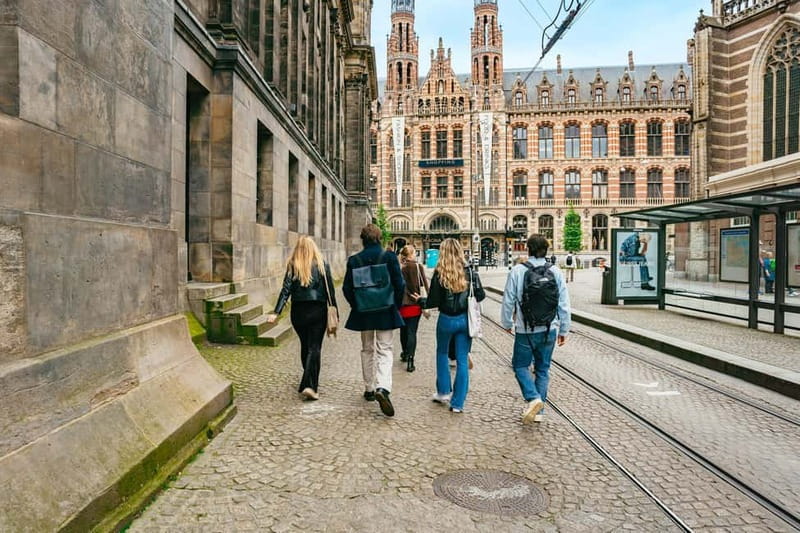
The route next brings you toward the Anne Frank Monument and Westerkerk. The Anne Frank stop lasts about 15 minutes and places World War II and the experience of Amsterdam’s Jewish population within the city’s physical setting.
The guide also discusses how the war changed Amsterdam’s people. This is an important part of the walk, but it can be emotionally serious. You should not expect a long memorial visit or museum-style presentation. Instead, you receive a short historical explanation as part of a wider city tour.
Westerkerk receives a shorter, five-minute stop. The church is closely associated with the canal district and is an important visual marker as you walk through this part of town. Since the visit is brief and exterior-based, it works best as a quick orientation point.
The Homomonument follows, with about 15 minutes for photographs and guided discussion. This stop shifts the focus toward Amsterdam’s modern identity and its long association with tolerance and LGBTQ+ remembrance. It helps show that the city’s culture is not only a story of old buildings. It also reflects current social values and public memory.
This mixture is one of the tour’s strongest features. You move from medieval housing to colonial history, wartime memory, and present-day city life without treating any one subject as the whole story.
De Negen Straatjes and the quieter Begijnhof
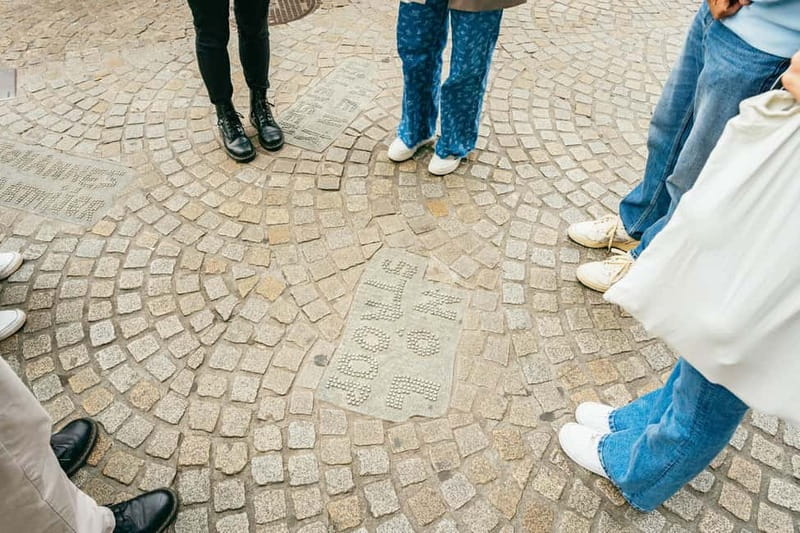
The walk passes through De Negen Straatjes, or the Nine Streets, a well-known canal district with small streets and canal-side buildings. The guided portion here is short, about five minutes, but the area is worth remembering for later independent exploration.
You then cross Spui Square on the way to Begijnhof. Begijnhof is one of the most peaceful places on the route, and the tour allows about 15 minutes for a guided stop and photographs. Its quiet courtyard feels far removed from the noise around Dam Square.
The contrast is the point. Amsterdam can change character within a few minutes of walking. A busy public square gives way to narrow lanes, water, private homes, and a secluded courtyard. Your guide explains the architectural designs and local way of life that shaped these spaces.
Please treat Begijnhof respectfully. It is not simply a photo backdrop. The calm atmosphere is part of its appeal, and a low voice helps preserve it for the people who live there.
If you enjoy the Nine Streets or Begijnhof, you may want to return later without a guide. The tour gives you enough orientation to recognize the areas and decide where to spend more time.
The Amstel and the final memorial
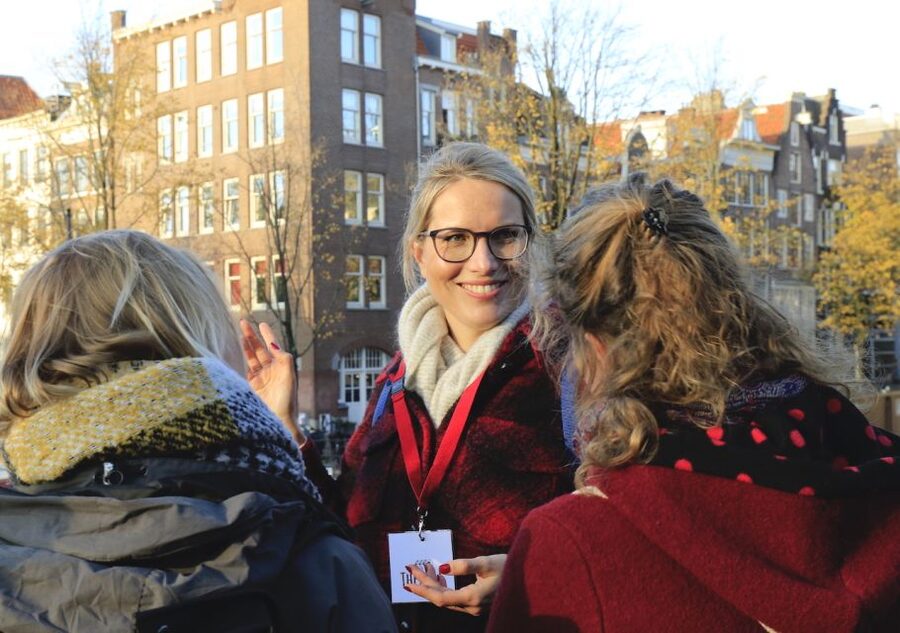
On the way back, the route reaches the Amstel River. This is a small but important moment because the river explains the city’s name and its location. You have already heard about Amsterdam’s relationship with water, and now you see the waterway at the center of that story.
The tour finishes at the National Monument, where it began. The closing stop connects the city’s past conflicts with the broader memorial to people who died in wars around the world. It gives the walk a thoughtful ending instead of simply stopping at a convenient corner.
By the end, you should have a mental map of central Amsterdam. You will know where Dam Square, the canal district, Begijnhof, the Nine Streets, and the Amstel fit together. That basic sense of direction is one of the real benefits of taking this walk early in your visit.
What the guides add to the walk
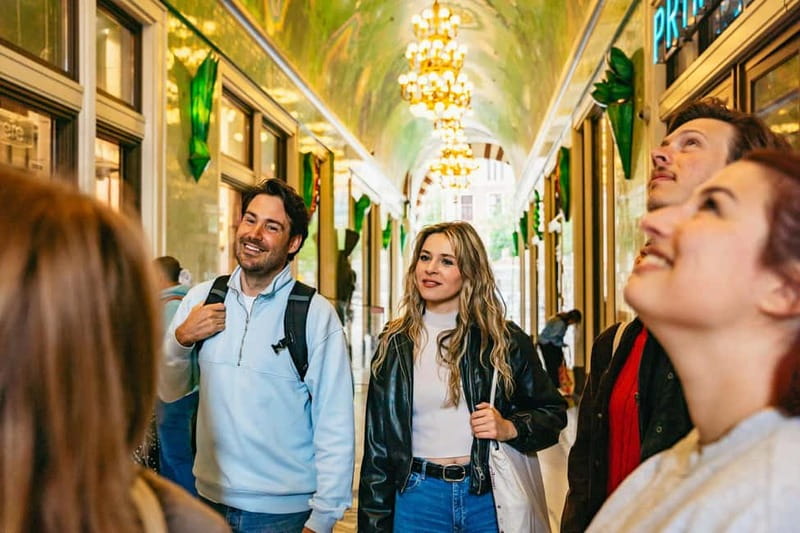
The guide makes or breaks a walking tour, and this experience has received especially strong praise for its personal style. Alex is described as joyful, friendly, and good at mixing historical and funny facts. One small group appreciated his local suggestions, including where to find good bitterballen.
Justin has been praised for looking after the whole group and combining history with memorable stories. His student perspective appealed to people who wanted a sense of how the city feels today, not only how it looked centuries ago.
Josh is noted for his informative delivery and enthusiasm, while Deborah is praised for explaining both historical and cultural subjects and answering many questions. Stefanie is described as funny, well informed, and good at keeping a comfortable pace, even when rain arrived.
Other guides, including Charlotte, Prisha, Noemi, Antonia, Claudia, Anne, Nikki, and Stephanie, have also been singled out for warmth, humor, clear explanations, and useful recommendations. That range suggests the experience depends partly on the individual guide, but the strongest pattern is clear: the tour works best when you ask questions and join the conversation.
Language options are English and German. One German-language participant enjoyed the tour but found a strong accent slightly difficult to understand. If spoken clarity is especially important to you, keep that possibility in mind when choosing your language.
Is $29 good value for two hours?
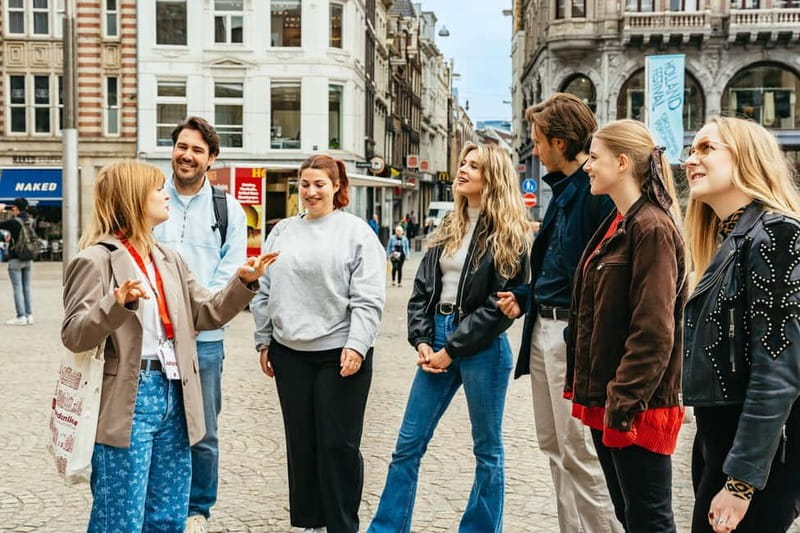
At $29, you are paying for interpretation, route planning, and local advice rather than admission tickets. Since the walk visits sights from the outside and includes no food or drinks, the price is not a bargain if you only want to take photographs.
I still consider it fair value for a first visit. A good guide can help you understand why Amsterdam looks the way it does, point out details you might miss alone, and save you from piecing together the center’s history one sign at a time.
The tour becomes better value if you use it as a first-day orientation. Afterward, you can choose which places deserve more time, which districts to visit by bike, and what foods to seek out. The tour may also include small extras depending on the guide and timing. One person received a stroopwafel tasting, though that should not be treated as a guaranteed inclusion.
You do not pay admission fees during the walk. That keeps the cost predictable, but you should budget separately for any museums, the Royal Palace interior, or other attractions you decide to visit afterward.
Who will enjoy this Amsterdam walk?
I would recommend it most strongly for first-time visitors who want a clear introduction without committing to a full-day program. Two hours is long enough to cover the central landmarks and short enough to fit around lunch, a museum, or an afternoon canal activity.
It also suits families. Children can handle the length more easily because the route includes frequent stops, changing scenery, stories, and photographs. The tour is wheelchair accessible, though the exact ease of every street and bridge can depend on conditions in the busy center.
You should also consider it if you enjoy social history. The walk covers merchants, poor residents, artists, colonialism, war, architecture, food, cycling, tolerance, and modern city life. It is not only a list of royal buildings.
You may want something else if your main goal is to enter attractions or spend long periods at one site. This tour does not replace the Anne Frank House, Royal Palace, or a museum visit. It gives you the framework for planning those visits.
Wear comfortable shoes. Bring water and an umbrella. Amsterdam’s weather can change quickly, and one group continued enjoying the walk even after rain, but dry clothing will improve your mood.
Practical details before you go
The tour lasts two hours, and starting times vary, so check availability before planning the rest of your day. It begins and ends at the National Monument on Dam Square.
The activity is available with a live guide in English or German. Private groups are available, which may suit families or friends who want a more personal pace.
Cancellation is free up to 24 hours before the tour for a full refund. You can also reserve now and pay later, which helps if your schedule is still shifting.
The overall rating is 4.9 from 2,384 ratings, with repeated praise for the guides’ humor, personal attention, historical explanations, and local recommendations. One person had trouble finding the guide among other tour groups, so I would make the red name tag the first thing you look for at the meeting point.
Should you book this tour?
Book it if you want a lively central Amsterdam orientation with history, culture, memorials, architecture, and practical food and cycling advice packed into two hours. The route is well chosen, the price is reasonable, and the guides appear to add real personality rather than reciting dry facts.
Skip it if you prefer independent wandering, indoor attractions, or a slower architectural study. For most first-time visitors, though, this is a sensible way to begin. Take it early in your stay, keep a note of the guide’s recommendations, and use the rest of your trip to return to the places that caught your eye.
FAQ
Where does the Amsterdam walking tour begin?
It begins on the stairs of the National Monument at Dam Square. The monument is a large white pillar or obelisk, and the guide wears a red name tag around their neck.
Where does the tour finish?
The tour ends back at the National Monument in Dam Square, the same place where it begins.
How long does the walking tour last?
The tour lasts two hours. Starting times vary, so you need to check availability for the date you want.
What languages are available?
The live tour guide is available in English and German.
Is the tour suitable for children?
Yes. The tour is stated to be suitable for children.
Is the walking tour wheelchair accessible?
Yes. The activity is wheelchair accessible.
Are food and drinks included?
No. Food and drinks are not included, and any food tasting should not be assumed as a standard part of the tour.
Just added around Amsterdam
- Amsterdam 1-Hour Rickshaw Tour★ 4.9 · 17 reviews
- Keukenhof Gardens and Tulip Experience Tour from Amsterdam★ 4.8 · 17 reviews
- Amsterdam: Canal Cruise and Jewish Cultural Quarter Tickets★ 4.2 · 17 reviews
- Marken, Volendam and Edam: Private Full-Day Tour★ 4.6 · 18 reviews
- Discover Amsterdam’s city center in this Outside Escape game tour★ 4.5 · 18 reviews
- Amsterdam: Personal Travel & Vacation Photographer★ 4.8 · 18 reviews
- Amsterdam: Luxury Saloon Boat Cruise with 3-Course Dinner★ 3.9 · 18 reviews
- Rijksmuseum & Amsterdam City Center Semi-Private Tour 12ppl Max★ 5.0 · 18 reviews
Walking Tours, compared.
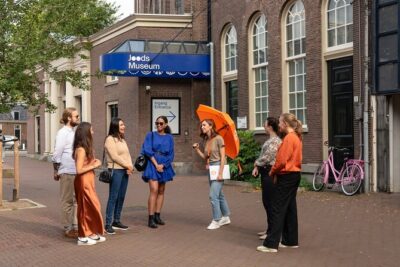
Anne Frank’s Story – Guided Walking Tour through Amsterdam
Read our review →
Life of Anne Frank and World War II Walking Tour
Read our review →
Absolutely Amsterdam – the Essential Introductory Walking Tour
Read our review →

Anne Frank Walking Tour – Guided in EN/DE/IT/ES
Read our review →

Anne Frank Walking Tour Amsterdam Including Jewish Cultural Quarter
Read our review →
Amsterdam Highlights Walking Tour: Small Group Experience
Read our review →Browse the lists this tour appears in