
REVIEW · MUSEUMS
Amsterdam: ARTIS-Micropia Microbe Museum Entry Ticket
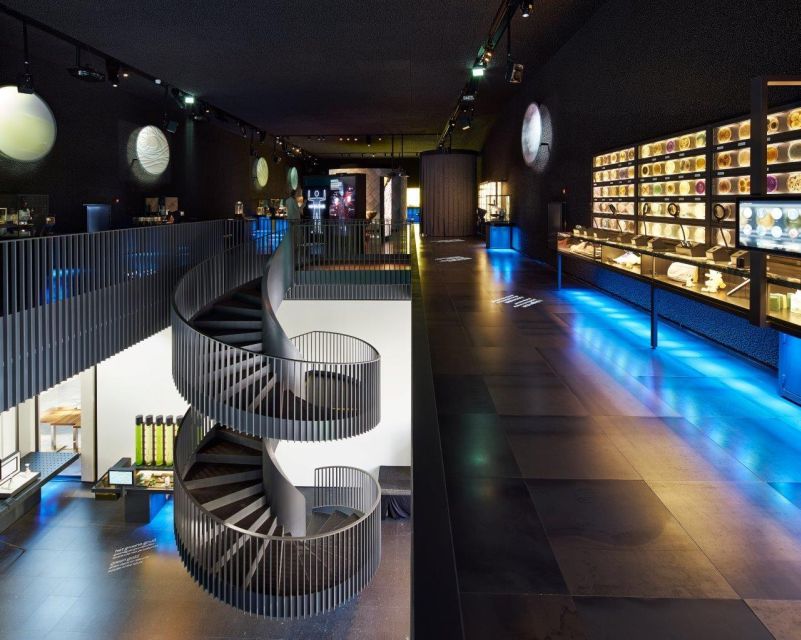
The invisible world gets a proper address in Amsterdam. ARTIS-Micropia turns bacteria, fungi, and other tiny life forms into something you can see, scan, and understand. I especially like the body microbe scanner and the real laboratory displays, which make science feel immediate rather than buried in a textbook. The museum is also only about a 10-minute walk from Amsterdam’s city center, so it fits neatly into a day of sightseeing.
I also like the stamp-collecting trail for children, along with the lively screens, models, and hands-on stations. The main caution is value: at about $21 per person, Micropia is not a large museum, and some people may finish in 45 minutes. If you stop to read the displays and try every activity, though, you could easily spend close to two hours.
In This Review
- Key points to know before you go
- What makes ARTIS-Micropia different
- Start with the body scanner
- Microscopes, mould, and the visible laboratory
- The interactive route and microbe stamps
- Spring-break activities for young explorers
- How long should you plan for?
- Pairing Micropia with ARTIS
- Is the museum good value at $21?
- Practical details for your visit
- Who should visit Micropia?
- Should you book ARTIS-Micropia?
- FAQ
- Where is ARTIS-Micropia located?
- How much does ARTIS-Micropia cost?
- How long does a visit to Micropia take?
- Is Micropia suitable for children?
- Is ARTIS-Micropia wheelchair accessible?
- What languages are available at Micropia?
- Does the Micropia ticket include ARTIS Zoo or the Groote Museum?
Key points to know before you go
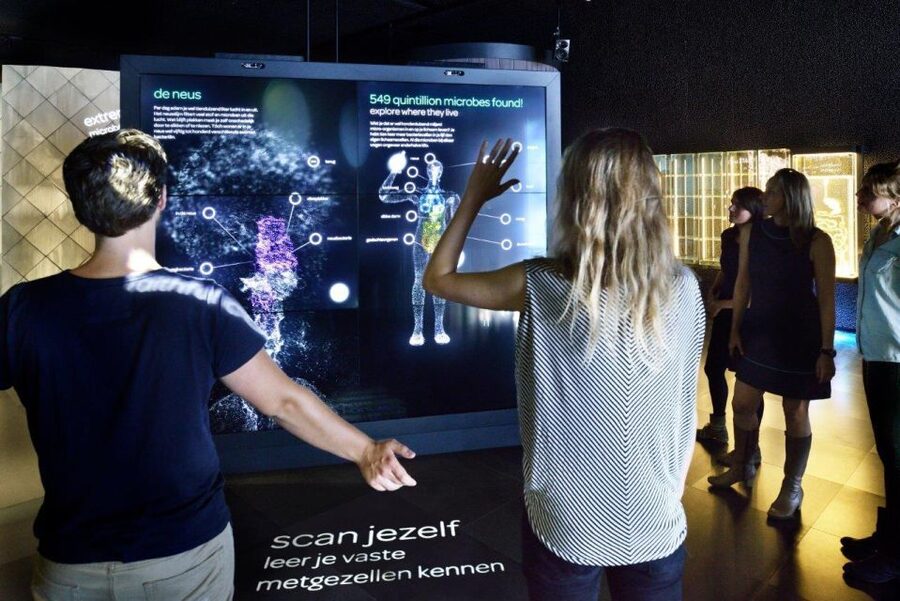
- Scan the microbes on and inside your body: A digital station shows how many tiny organisms live with you every day.
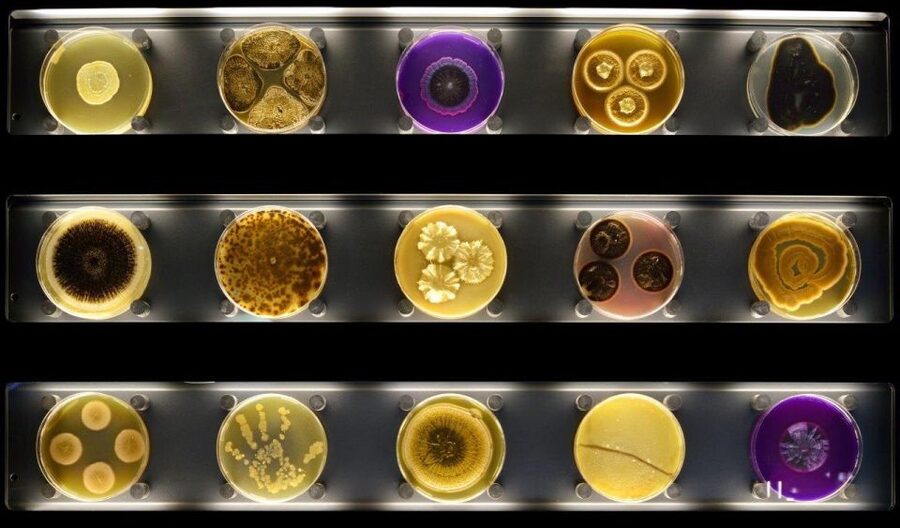
- See living science in action: Microscopes, growing mould plates, and a visible laboratory give the subject real presence.
- Allow 45 minutes to two hours: Your visit length depends on how carefully you read and how long you wait for interactive stations.
- Children up to age 12 enter free: The museum recommends Micropia for children aged 8 and older.
- Daily laboratory talks add context: Look for the talks in front of the Laboratorium.
- Pair it with ARTIS: Combination tickets can add the Groote Museum or ARTIS Amsterdam Royal Zoo.
What makes ARTIS-Micropia different
Amsterdam has museums for art, canals, Dutch history, and famous people. Micropia takes a less obvious subject, the microscopic life that surrounds you every second, and gives it a full museum.
That subject is more important than it first sounds. Microbes live in the air, on your skin, and in your gut. They help digest food, affect taste, support health, and keep natural systems in balance. Micropia’s main job is to show you that microbes are not simply something to fear.
I like this change in perspective. The museum presents bacteria, fungi, and other microorganisms as part of ordinary life. Some are useful, some can cause illness, and many are simply doing their work without asking for attention.
The setting also helps. Micropia is at Plantage Kerklaan 38-40, close to ARTIS Amsterdam Royal Zoo and the ARTIS gardens. You can walk there from the city center in around 10 minutes, making it a practical stop when you want something different from another large art collection.
More Attraction Tickets in Amsterdam
- Amsterdam: Van Gogh Museum Ticket
★ 4.7 · 52,054 reviews - Amsterdam: Heineken Experience Ticket
★ 4.6 · 30,055 reviews - Amsterdam: Rijksmuseum Entry Ticket
★ 4.7 · 25,535 reviews
Start with the body scanner
The most memorable station for many people is the scanner that reveals microbes living on and inside you. You do not need a biology degree to enjoy it. The appeal is simple: you become part of the exhibit.
The scan can produce alarming results if you are not prepared for how many microbes are associated with the human body. That is exactly the point. Your body is not a sterile container, and the museum uses the display to explain this relationship in a clear, visual way.
For children, the scanner turns an abstract subject into a personal discovery. For adults, it can be a useful reminder that health depends on complex systems rather than on the absence of all microbes.
You should allow extra time at interactive stations if the museum is busy. A visit can be quiet and quick at one moment, then slower when several families gather around the same machine. One useful tip is to begin with the stations that interest you most, then circle back to the reading displays.
Microscopes, mould, and the visible laboratory
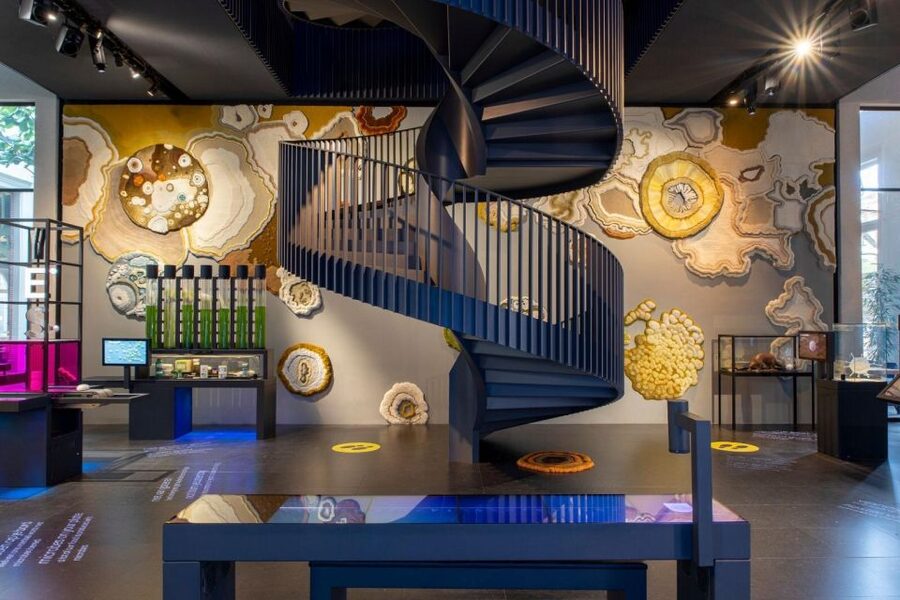
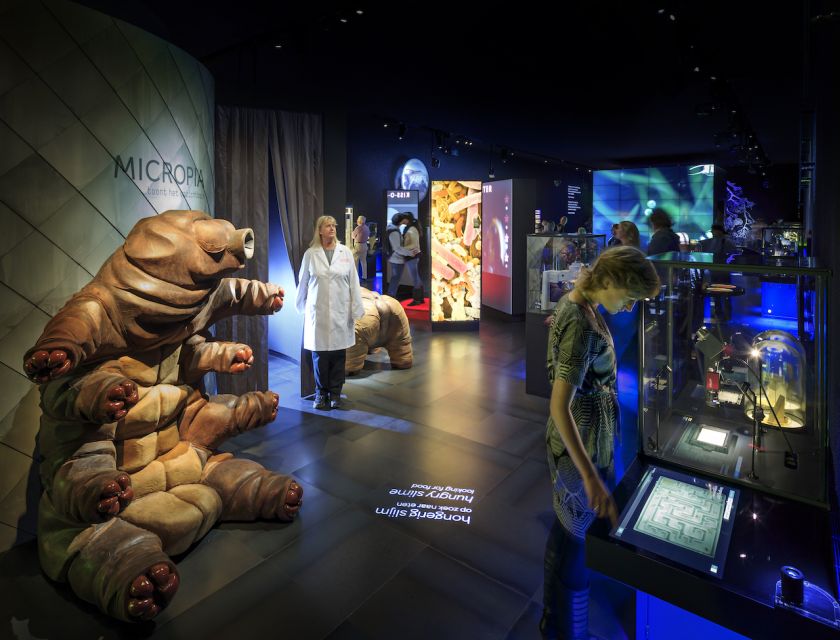
Micropia does not rely only on cartoon-style graphics. It also uses microscopes, living microbes, enlarged sculptures, and laboratory material to show what cannot normally be seen.
The microscope stations bring tiny organisms into view in a way that photographs cannot quite match. The larger sculptures help you understand shape and structure, while the screens and animations explain how microbes behave and why they matter.
The growing mould plates are particularly effective. They can be thrilling in a slightly unpleasant way, which is useful because they make the subject feel real. You are not just reading that microorganisms grow. You are looking at evidence of growth.
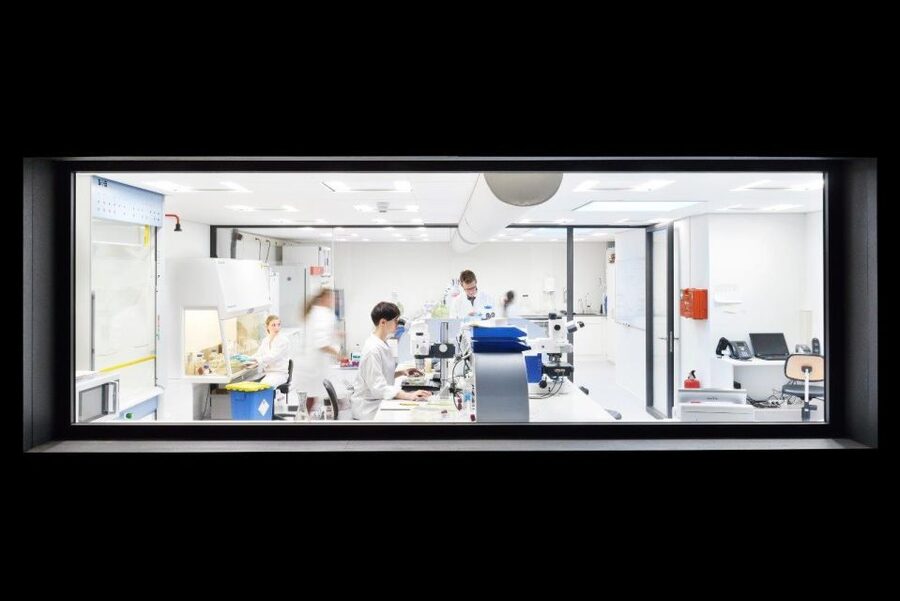
The visible laboratory adds another layer. You can see that the displays are connected to practical science, not just decorative museum design. Daily lab talks take place in front of the Laboratorium, so check the timing when you arrive if you want more explanation.
Staff speak Dutch and English. Helpful staff at the entrance can explain what to expect, and the museum is wheelchair accessible. Free lockers are available for bags and coats, which is useful because several exhibits work best when you have both hands free.
The interactive route and microbe stamps
Micropia works best when you treat it as an activity rather than a room full of labels. Touchscreens, digital effects, animations, and scanning stations keep you moving.
The microbe stamp trail is a simple idea, but it gives younger visitors a reason to look closely. Children can collect all the stamps as they pass through the museum, turning the visit into a small mission instead of a reading assignment.
The recommended age is 8 and older. That feels sensible. Younger children may enjoy the colours, shapes, and machines, but the explanations are more likely to make sense to school-age children. Children aged 0 to 12 enter free, which changes the value calculation for families.
Adults should not dismiss the museum as a children’s attraction. A couple can spend a rewarding hour or two here, especially if one of you likes biology, medicine, food science, or the natural world. The displays about bacteria and fungi are detailed enough to reward patient reading.
The museum also includes striking sculptures of bacteria and viruses. These make organisms that are normally invisible feel almost architectural. They are attractive objects, but they also help you compare forms and understand that microbes are not one uniform category.
More Museums in Amsterdam
- Moco Museum Amsterdam Entrance Tickets with Banksy & More
★ 4.4 · 10,088 reviews - Amsterdam: The Upside Down Museum Entrance Ticket
★ 4.4 · 9,506 reviews - Amsterdam: Red Light Secrets Museum Entry Ticket
★ 4.2 · 5,722 reviews - Amsterdam’s Weirdest Museum: Believe It or Not!
★ 4.5 · 4,086 reviews
Spring-break activities for young explorers
During spring break, children can collect the free Micro Mission at the ticket desk. The activity focuses on how plants, animals, and microbes work together in nature.
That theme is worth paying attention to. It moves the museum beyond the human body and shows that no species lives entirely on its own. The example of gut microbes helping with digestion gives children a familiar starting point, then leads them toward wider ideas about nature.
The Micro Mission is available every day during spring break from 10 a.m. to 5 p.m. A creative workshop is also offered during this period, according to the seasonal program information. Since these activities are tied to spring break, check what is running on your date before building your plans around them.
For a family with children aged 8 to 12, the stamps and Micro Mission may be the difference between a short visit and a full afternoon. For adults visiting alone, these activities are optional rather than central.
How long should you plan for?
The honest answer is anywhere from 45 minutes to two hours.
A quick visit, focused on the main machines and visual displays, can take around 45 minutes. That may be enough if you are fitting Micropia between a canal cruise and another museum, but you will not have time to read everything carefully.
If you want to try the interactive stations, examine the microscope material, pause at the laboratory, and follow the stamp trail with a child, plan for 90 minutes or more. Some people spend nearly two hours going through every station.
The museum’s size is both a strength and a weakness. You can cover it without exhausting yourself, and it does not demand a full day. At the same time, the $21 adult price can feel high if you expect a huge collection or a long traditional museum route.
I would judge the price by the quality of your visit, not by the square footage. Biology fans, families, and curious adults who enjoy interactive exhibits are more likely to feel they received good value. If you are only mildly interested in microbes, you may want to pair the ticket with the Groote Museum or the zoo.
Pairing Micropia with ARTIS
Micropia is next to ARTIS Amsterdam Royal Zoo, which makes combination planning easy. Your Micropia admission does not include the zoo or the ARTIS-Groote Museum, so check the ticket type carefully.
The Groote Museum explores connections among humans, animals, plants, and microbes. That makes it the most natural companion if you want to continue the ideas introduced at Micropia. Micropia focuses on the tiny systems around you, while the Groote Museum places those systems into a wider picture.
ARTIS Zoo offers a different experience, with animals and outdoor space. One useful arrangement is to visit Micropia first, then decide if you still have time and energy for the zoo. A discount may be available on the zoo after visiting Micropia, depending on the combination ticket or current offer.
The ARTIS setting is pleasant for a pause. You might find cafes and park space nearby, and the area gives you somewhere to wait if your plans involve a timed entry. A coffee and sandwich near the gardens can make the stop feel less hurried.
Is the museum good value at $21?
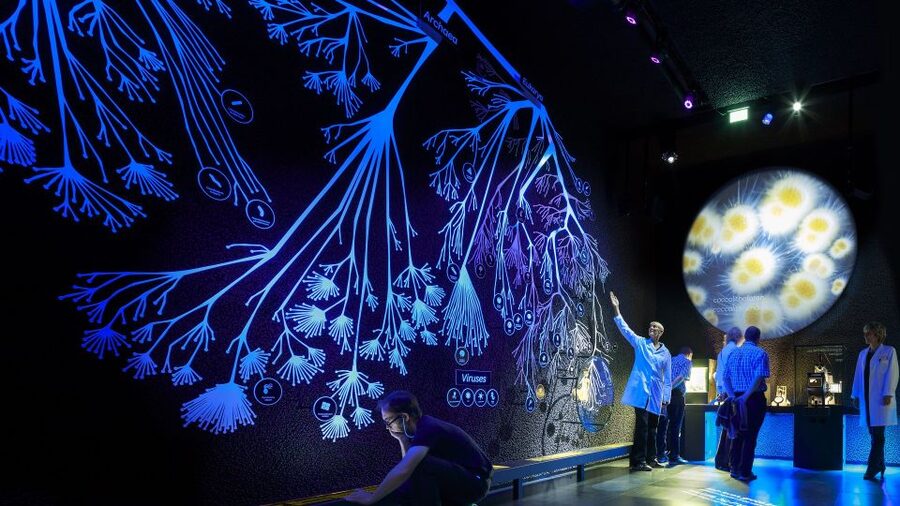
At $21 per person, ARTIS-Micropia is not a bargain attraction in the usual sense. You are paying for a highly specialised museum with interactive technology, living displays, and staff-led laboratory talks rather than for a vast collection.
The free admission for children up to age 12 improves the deal for families. A family can also get more from the ticket by taking time with the stamps, scanner, and seasonal Micro Mission.
For adults, the value depends on your interests. If you are a scientist, microbiologist, biology student, or simply someone who likes learning how the body and natural systems work, the museum offers material you can study rather than just glance at. One scientist described the sculptures, mould plates, visible lab, and explanatory material as strong reasons to return with a child.
If you are travelling on a tight budget, compare Micropia with the price of your other Amsterdam activities. The visit is shorter than a zoo day and much smaller than the city’s major art museums. Still, it has a subject you will not find presented in quite this way elsewhere.
Practical details for your visit
Micropia is open daily from 10 a.m. to 5 p.m. Special holiday hours apply: it opens from 9 a.m. to 5 p.m. on December 24, 25, and 26, from 9 a.m. to 4 p.m. on December 31, and from 10 a.m. to 5 p.m. on January 1.
Your ticket is valid for one day. The booking system allows you to reserve now and pay later, and you can cancel up to 24 hours in advance for a full refund. Starting times depend on availability, so check the schedule when choosing your date.
The entrance is at Plantage Kerklaan 38-40. The museum is wheelchair accessible, and Dutch and English are available. Children enter free through age 12, with the recommended museum age beginning at 8.
I would bring a little patience for the interactive exhibits. You may need to wait briefly if a popular station is occupied, especially when school-age children are visiting. Free lockers are useful for coats and bags, and they make it easier to participate in the hands-on displays.
One small practical criticism concerns the toilets. Cleanliness has not always matched the standard you might expect from a museum about microbes, so do not assume the facilities will be a highlight.
Who should visit Micropia?
I would recommend Micropia most strongly to:
- Families with children aged 8 to 12
- Adults interested in biology, medicine, or food science
- Visitors who enjoy interactive museums
- Anyone looking for a short stop near ARTIS Zoo
- Couples who want an unusual indoor activity in Amsterdam
- School-age children who like collecting, scanning, and solving small challenges
You may enjoy it less if you prefer grand buildings, famous paintings, or a long historical narrative. Micropia is focused and specialised. It succeeds by doing one unusual subject well, not by trying to cover everything.
The museum also works for mixed groups. A child can follow the stamp trail while an adult reads about gut bacteria or studies the laboratory displays. That shared structure makes it easier for different ages to enjoy the same visit.
Should you book ARTIS-Micropia?
Book it if you want a short, unusual, and genuinely educational Amsterdam stop. The body scanner, living displays, microscopes, mould plates, sculptures, and visible laboratory give the museum more substance than its modest size suggests.
For families, free admission for children up to age 12 and the stamp trail make the $21 adult price easier to accept. For adults with a serious interest in biology, the museum can fill 90 minutes to two hours with worthwhile material.
Skip it if you are counting every euro, have little interest in science, or expect a full-day attraction. In that case, Micropia may feel small for the price. But if the idea of seeing the invisible life on your skin, in your gut, and throughout nature sounds intriguing, this is one Amsterdam museum that offers something you cannot easily duplicate elsewhere.
FAQ
Where is ARTIS-Micropia located?
ARTIS-Micropia is located at Plantage Kerklaan 38-40 in Amsterdam, North Holland. It is about a 10-minute walk from the city center and next to ARTIS Amsterdam Royal Zoo.
How much does ARTIS-Micropia cost?
The listed price is about $21 per person. Children aged 0 to 12 can enter for free.
How long does a visit to Micropia take?
A visit can take around 45 minutes if you focus on the main displays. If you read the information, use the interactive stations, and complete the stamp trail, you might spend close to two hours.
Is Micropia suitable for children?
Yes. The recommended age is 8 and older, and children up to age 12 enter free. The interactive stations, body scanner, and microbe stamps are especially useful for keeping children involved.
Is ARTIS-Micropia wheelchair accessible?
Yes, the museum is wheelchair accessible.
What languages are available at Micropia?
Dutch and English are available. Daily laboratory talks take place in front of the Laboratorium.
Does the Micropia ticket include ARTIS Zoo or the Groote Museum?
No. Admission to ARTIS Amsterdam Royal Zoo and the ARTIS-Groote Museum is not included with the standard Micropia ticket. Combination tickets may be available.
More Museums
- Amsterdam: Van Gogh Museum Ticket and City Canal Cruise
★ 4.6 · 3,899 reviews - Amsterdam: Rembrandt House Museum Entrance Ticket
★ 4.7 · 3,385 reviews - Amsterdam: Van Gogh Museum Ticket & Canal Cruise
★ 4.5 · 3,304 reviews - Amsterdam: NEMO Science Museum Ticket
★ 4.4 · 2,979 reviews
Just added around Amsterdam
- Amsterdam 1-Hour Rickshaw Tour★ 4.9 · 17 reviews
- Amsterdam: Canal Cruise and Jewish Cultural Quarter Tickets★ 4.2 · 17 reviews
- Keukenhof Gardens and Tulip Experience Tour from Amsterdam★ 4.8 · 17 reviews
- Discover Amsterdam’s city center in this Outside Escape game tour★ 4.5 · 18 reviews
- Marken, Volendam and Edam: Private Full-Day Tour★ 4.6 · 18 reviews
- Amsterdam: Personal Travel & Vacation Photographer★ 4.8 · 18 reviews
- Amsterdam: Luxury Saloon Boat Cruise with 3-Course Dinner★ 3.9 · 18 reviews
- Rijksmuseum & Amsterdam City Center Semi-Private Tour 12ppl Max★ 5.0 · 18 reviews
Museums, compared.

Moco Museum Amsterdam Entrance Tickets with Banksy & More
Read our review →
Amsterdam’s Weirdest Museum: Believe It or Not!
Read our review →

Browse the lists this tour appears in