
REVIEW · MUSEUMS
Amsterdam: Houseboat Museum Entry Ticket
A home that once carried cargo. Amsterdam’s Houseboat Museum lets you step aboard the Hendrika Maria, a 1914 freight ship converted into a family home in 1967. I like the original 1970s interior, with its orange, yellow, and brown decor, and I like that the visit shows real domestic life rather than only explaining it from a distance. The original sailing mast and leeboard add a useful link to the boat’s working past. The main drawback is size: some visitors finish in five minutes, while a careful visit with the audio guide may take 15 to 20 minutes.
This is the only Houseboat Museum in Amsterdam, and it offers a close look at how four people lived aboard a working barge before houseboats became a familiar part of the city. At $12 per person, it is reasonably priced if you enjoy unusual museums and practical social history, but it may feel expensive if you expect a large attraction or a long tour.
In This Review
- Key points about the Hendrika Maria
- Entering a real Amsterdam houseboat
- The 1970s interior and family life aboard
- From freight barge to floating home
- How long the visit really takes
- Space, stairs, and practical comfort
- Is $12 a fair price?
- Who will enjoy this unusual museum
- How to fit it into your Amsterdam day
- My verdict on the Houseboat Museum
- FAQ
- Where is the Houseboat Museum located?
- What boat will I visit?
- How long does the visit take?
- Is the interior modern?
- Are there stairs inside the boat?
- Can I take photographs inside?
Key points about the Hendrika Maria
- A 1914 cargo ship turned home: The Hendrika Maria first carried freight and later became a residential houseboat in 1967.
- Original 1970s interior: Expect strong orange, yellow, and brown colors, plus the furnishings and style of a regular home from that period.
- A family of four lived aboard: The museum helps you picture daily life in a compact floating home.
- Working sailing equipment remains: The original mast and leeboard show how the boat once sailed to Scandinavian countries for freight transport.
- A short, focused visit: A quick look can take five minutes, while following the audio guide may take 15 to 20 minutes.
- Real limitations inside: Tight spaces and steep stairs make this less suitable for anyone who needs wide walkways or easy step-free access.
Entering a real Amsterdam houseboat
The appeal begins with the setting. You are not walking through a replica built for a museum. You are entering the actual Hendrika Maria, a former cargo vessel that became a home in 1967.
That distinction matters. A standard museum can show you photographs of houseboat life, but this boat lets you see how little space a family had to organize for cooking, sleeping, storage, and ordinary family routines. The rooms are compact enough to make the practical side of life on the water clear almost at once.
The museum covers more than a century of use on this boat. The Hendrika Maria began life in 1914 as a freight ship, carrying goods before later sailing to Scandinavian countries for transport work. Its original sailing mast and leeboard remain part of the vessel, giving you a physical reminder that this was once a working boat rather than a stationary home.
The conversion in 1967 is the key chapter. The ship was changed from a freight barge into a regular residence, and the preserved interior reflects the 1970s period when that new use began. I like this mix of working boat and family home because it gives the museum two stories at once: how the boat moved goods, and how people later made it suitable for everyday living.
More Attraction Tickets in Amsterdam
- Amsterdam: Van Gogh Museum Ticket
★ 4.7 · 52,054 reviews - Amsterdam: Heineken Experience Ticket
★ 4.6 · 30,055 reviews - Amsterdam: Rijksmuseum Entry Ticket
★ 4.7 · 25,535 reviews
The 1970s interior and family life aboard
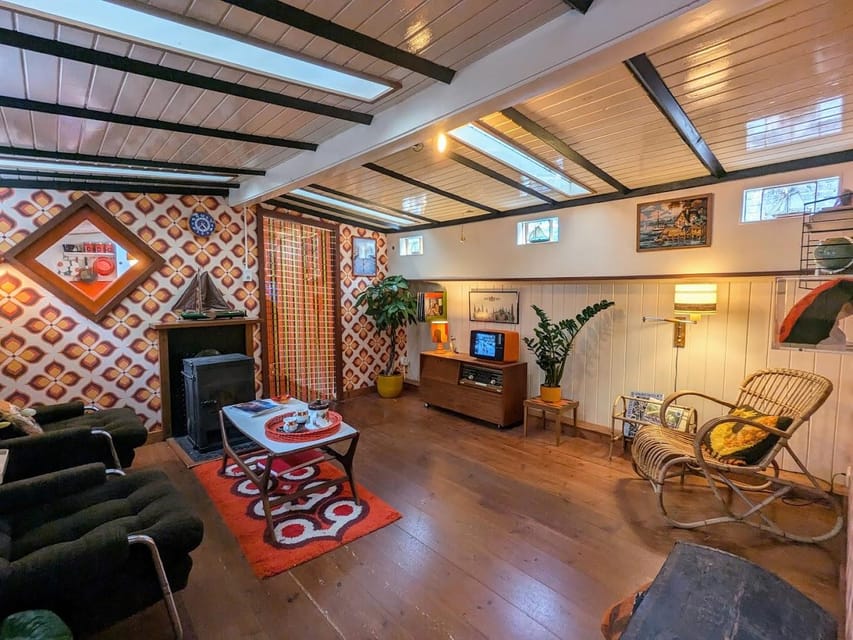
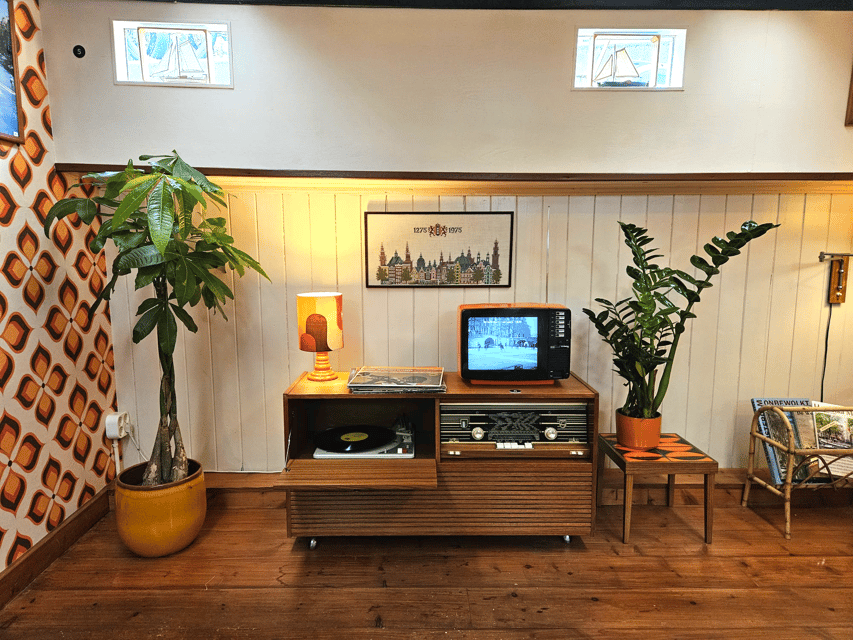
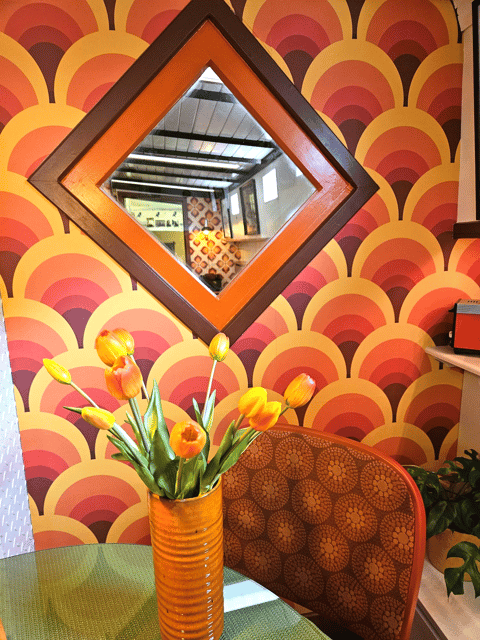
Inside, the first thing you notice is likely the color scheme. Orange, yellow, and brown dominate the decor, creating a strong time-capsule effect. If you enjoy period interiors, this is part of the fun. If you prefer polished modern design, the same colors may feel loud and dated.
The interior remains original from the 1970s, which gives the museum its character. You can see how a family of four used the vessel as a home, and the confined layout makes the practical questions easy to imagine. Where would everyone sit? How would the family manage personal space? How much storage would be enough?
The museum does not need a grand collection to make its point. The boat itself is the exhibit. The narrow rooms, low amount of open space, and steep stairs show the compromises that came with living on a converted cargo vessel.
I find that useful because modern houseboats can look like stylish floating apartments. The Hendrika Maria presents an earlier and more modest version of that idea. It shows houseboat living as a real household arrangement, shaped by the limits of an existing ship.
The presentation is interactive, with information shared during the visit. An audio guide can help you move through the boat at your own pace. One practical tip is to allow at least 15 to 20 minutes if you want to listen and read carefully. You can see the main spaces much faster, but rushing through in five minutes means losing much of the context.
From freight barge to floating home
The most interesting part of the visit is the change in purpose. A cargo ship is designed to carry goods efficiently. A home is designed around human comfort and daily habits. The Hendrika Maria had to serve both roles at different points in its life.
The original mast and leeboard are especially useful details. They are not just decorative pieces left on an old boat. They show how the vessel worked under sail and connect the museum to its earlier freight routes toward Scandinavia.
Even if you have little interest in boats, these features help explain why the Hendrika Maria is more than a floating apartment. The vessel has a working past, and the museum keeps that past visible alongside the residential interior.
I recommend paying attention to the contrast between the exterior equipment and the inside rooms. Outside, the mast and leeboard point to cargo transport and sailing. Inside, the bright 1970s decor points to family life. The shift between those two parts is the museum’s central story.
The experience also gives you a clearer idea of how houseboat living has changed. The museum focuses on a historic boat and its former residents, not on current floating-home design. That makes it valuable for anyone curious about the older roots of Amsterdam’s houseboat culture.
How long the visit really takes
The advertised duration is one day, but that refers to the period in which your ticket can be used, not the amount of time you will spend inside. The actual visit is short.
A fast visit can take about five minutes. That is enough to walk through the spaces and get the basic visual impression, but it will feel brief for the $12 admission. A slower visit with the audio guide and the museum’s interactive information can take 15 to 20 minutes.
This difference is important when planning your day. The Houseboat Museum works best as a small stop between larger Amsterdam sights. You do not need to set aside half a day, and you should not expect a full afternoon attraction.
I like short museums when they offer something specific. This one does. You see a real vessel, a preserved interior, and a clear story about changing use. Still, your enjoyment depends on your expectations. If you want a substantial museum with several rooms of objects, displays, or changing exhibits, this will seem limited.
For me, the right approach is to treat it as a focused visit. Take time to look at the layout, listen to the explanation, and notice the equipment that connects the boat to its freight years. The experience becomes more worthwhile when you slow down instead of simply walking from entrance to exit.
More Museums in Amsterdam
- Moco Museum Amsterdam Entrance Tickets with Banksy & More
★ 4.4 · 10,088 reviews - Amsterdam: The Upside Down Museum Entrance Ticket
★ 4.4 · 9,506 reviews - Amsterdam: Red Light Secrets Museum Entry Ticket
★ 4.2 · 5,722 reviews - Amsterdam’s Weirdest Museum: Believe It or Not!
★ 4.5 · 4,086 reviews
Space, stairs, and practical comfort
The museum is inside a real houseboat, so space is limited. You may need to move carefully through the interior, and the close quarters can be uncomfortable if you prefer wide rooms and open walkways.
The stairs are steep. This is one of the most important points to consider before booking. The boat may not suit anyone who finds steep steps difficult, and the information provided does not describe it as a step-free attraction.
Because the boat is compact, the experience may also feel less comfortable during a busy period. The available information does not give a group-size limit, so I would plan for a close, confined visit rather than a spacious museum layout.
Photography is allowed, which is handy for the bright period decor and the preserved boat details. Flash photography is not permitted inside. Turn off your flash before entering and use the available light.
There is no food, drink, hotel pickup, or drop-off included. That is not a serious issue for such a short attraction, but it confirms that you are buying admission only. Plan it as an independent stop in your Amsterdam sightseeing day.
Is $12 a fair price?
At $12 per person, the Houseboat Museum sits in the affordable range for a paid Amsterdam attraction, but value depends heavily on how long you stay and how much you enjoy the subject.
The price makes sense if you care about unusual local history, boats, domestic life, or period interiors. For that audience, the chance to enter the only Houseboat Museum in Amsterdam and see a genuine former cargo vessel is a fair deal.
The calculation looks different if you spend only five minutes inside. One visitor considered the experience too expensive for such a quick look. That criticism is reasonable, especially if you are already paying for several major Amsterdam attractions.
To get better value, use the audio guide and take time with the details. Look at the 1970s interior as a record of changing taste and practical living. Think about the four-person household and the transition from freight transport to residential use. Those details give the short visit more weight.
I would not book this as your main museum of the day. I would add it to a neighborhood plan, particularly if you are already interested in Amsterdam’s canals and floating homes. Its modest price and short length make it easy to fit into a wider schedule, but its narrow subject means it will not appeal to everyone.
Who will enjoy this unusual museum
I recommend the Houseboat Museum most strongly to:
- People curious about Amsterdam’s houseboat culture
- Visitors who enjoy historic homes and preserved interiors
- Families interested in how people organized daily life in small spaces
- Boat enthusiasts who want to see the mast, leeboard, and former freight layout
- Anyone looking for a short attraction with a local focus
- Visitors who enjoy 1970s design and period details
It is less suitable for anyone who wants a large museum, a long guided program, or a comfortable space with easy stairs. Children may find the compact rooms and unusual boat setting interesting, but the steep steps and limited floor area deserve attention.
The multilingual support is another plus. Host or greeter assistance is listed in English, French, Traditional Chinese, German, Spanish, Portuguese, Italian, and Dutch. The available information does not promise that every part of the visit is delivered live in all those languages, so check the language option when reserving.
How to fit it into your Amsterdam day
Think of the museum as a compact story rather than a destination requiring hours. Allow 15 to 20 minutes if you want the audio guide and a thoughtful look around, with extra time for finding the boat and fitting it into your wider plans.
The best use of the visit is to pair it with other canal-area sightseeing. The museum gives you an indoor look at life on the water, while the rest of Amsterdam lets you see the city’s canals and modern houseboats from outside. That contrast helps the Hendrika Maria make more sense.
Do not arrive expecting a standard museum entrance hall. You are boarding a boat, and the movement from one section to another is part of the experience. Keep your pace careful on the steep stairs and avoid using flash while taking pictures.
If your schedule is tight, this is easy to add because the visit is short. If you have plenty of time and want the strongest value, slow down and listen to the explanations rather than treating the boat as a quick photo stop.
My verdict on the Houseboat Museum
I like the Houseboat Museum because it offers something specific and real: a former 1914 cargo ship that became a family home in 1967. The original 1970s interior, the four-person household story, and the surviving sailing equipment give the visit more substance than its small size suggests.
The limitations are just as clear. The boat is cramped, the stairs are steep, and the visit can be over in five minutes if you move quickly. At $12, it is a good small attraction for the right audience, not an essential stop for every Amsterdam itinerary.
Book it if you enjoy local stories, historic homes, boats, or unusual museums. Skip it if you want a large collection, long activity, or easy step-free access. If you do go, give it 15 to 20 minutes, use the audio guide, and pay attention to the shift from working freight vessel to bright 1970s home. That is where the museum earns its price.
FAQ
Where is the Houseboat Museum located?
The Houseboat Museum is in Amsterdam, in North Holland, Netherlands.
What boat will I visit?
You will visit the Hendrika Maria, a 1914 cargo ship that was converted into a residential houseboat in 1967.
How long does the visit take?
A quick look may take about five minutes. Allow roughly 15 to 20 minutes if you follow the audio guide and take time with the information.
Is the interior modern?
No. The interior remains original from the 1970s, with strong orange, yellow, and brown colors.
Are there stairs inside the boat?
Yes. The boat has steep stairs, which may not suit everyone.
Can I take photographs inside?
Yes, photography is allowed, but flash photography is not permitted inside the museum.
More Museums
- Amsterdam: Van Gogh Museum Ticket and City Canal Cruise
★ 4.6 · 3,899 reviews - Amsterdam: Rembrandt House Museum Entrance Ticket
★ 4.7 · 3,385 reviews - Amsterdam: Van Gogh Museum Ticket & Canal Cruise
★ 4.5 · 3,304 reviews - Amsterdam: NEMO Science Museum Ticket
★ 4.4 · 2,979 reviews
Just added around Amsterdam
- Amsterdam 1-Hour Rickshaw Tour★ 4.9 · 17 reviews
- Keukenhof Gardens and Tulip Experience Tour from Amsterdam★ 4.8 · 17 reviews
- Amsterdam: Canal Cruise and Jewish Cultural Quarter Tickets★ 4.2 · 17 reviews
- Marken, Volendam and Edam: Private Full-Day Tour★ 4.6 · 18 reviews
- Discover Amsterdam’s city center in this Outside Escape game tour★ 4.5 · 18 reviews
- Amsterdam: Personal Travel & Vacation Photographer★ 4.8 · 18 reviews
- Amsterdam: Luxury Saloon Boat Cruise with 3-Course Dinner★ 3.9 · 18 reviews
- Rijksmuseum & Amsterdam City Center Semi-Private Tour 12ppl Max★ 5.0 · 18 reviews
Museums, compared.


Moco Museum Amsterdam Entrance Tickets with Banksy & More
Read our review →


Amsterdam’s Weirdest Museum: Believe It or Not!
Read our review →

Browse the lists this tour appears in