
REVIEW · WWII & JEWISH HISTORY TOURS
Amsterdam in World War II Tour
Amsterdam’s wartime past hides in plain sight. This three to three-and-a-half-hour walk connects the German occupation, Jewish life, resistance, deportation, and postwar memory through streets and buildings you might otherwise pass without a thought. I especially like the small limit of eight people and the use of wartime photographs, maps, logbooks, and other visual material. I also like that the guides are retired historians, including Peter and Ben, who bring serious subject knowledge without turning the walk into a dry lecture.
The main thing to consider is emotional weight. Stories of Nazi persecution, Jewish refugees, executions, and the Holocaust are central to the experience. You also visit the Anne Frank House only from outside, so you must arrange a separate museum ticket if you want to enter. At $46.44 per person, the tour is not the cheapest city walk, but the long duration and unusually small group make it a fair buy for anyone who wants more than a quick introduction.
In This Review
- Key points to know before booking
- Why this small Amsterdam walk is worth your morning
- Starting outside Anne Frank House on Prinsengracht
- From Raadhuisstraat to the Multatuli statue
- Magna Plaza and the post office under German rule
- Nieuwe Kerk and the Mozes en Aäronstraat story
- Dam Square, where occupation and liberation collided
- The former city hall at Sofitel Legend The Grand
- Ending at the National Holocaust Names Monument
- What the walking pace and group size mean
- The $46.44 price and who gets the best value
- Who should book this WWII tour?
- Should you book Amsterdam in World War II Tour?
- FAQ
- Does the tour enter the Anne Frank House?
- How long does Amsterdam in World War II Tour last?
- Where does the tour begin and end?
- How large is the tour group?
- Are coffee, tea, or transportation included?
- Can I cancel for a full refund?
Key points to know before booking
- The tour begins outside Anne Frank House: You hear about the German attack on the Netherlands, Jewish refugees, and Anne Frank’s setting, but museum admission is not included.
- A maximum of eight people keeps it personal: Guides can answer questions, adjust the walking speed, and make sure everyone can hear.
- Peter and Ben receive the strongest praise: They are retired historians who use photographs and maps to connect present-day streets with wartime events.
- Dam Square carries several major stories: The tour covers the occupation, the May 7, 1945 shooting, wartime recruitment, Remembrance Day, and the national war monument.
- The walk ends at the National Holocaust Names Monument: This gives the experience a reflective finish near the Portuguese Synagogue and city hall.
- Plan for a slow three-hour walk: There is no private transportation, and coffee or tea is not included, though a break may be possible.
Why this small Amsterdam walk is worth your morning
This is not a general introduction to Amsterdam. You will not spend the morning ticking off canals, art museums, and pretty bridges. The focus is the German occupation of the Netherlands from 1940 to 1945, with special attention to Amsterdam’s Jewish community, resistance, collaboration, military events, and remembrance.
That narrow focus is the reason to book it. A standard city walk may point out Dam Square and the Anne Frank House, then move on. Here, those places become part of a connected story. You hear how public buildings, streets, and memorials fit into the years before, during, and after the occupation.
I like the fact that the walk is guided by retired historians rather than a general sightseeing guide. Peter is described as a former university professor, and both Peter and Ben are praised for clear explanations, careful preparation, and a warm manner. The third guide is also a retired historian with a strong interest in the German occupation.
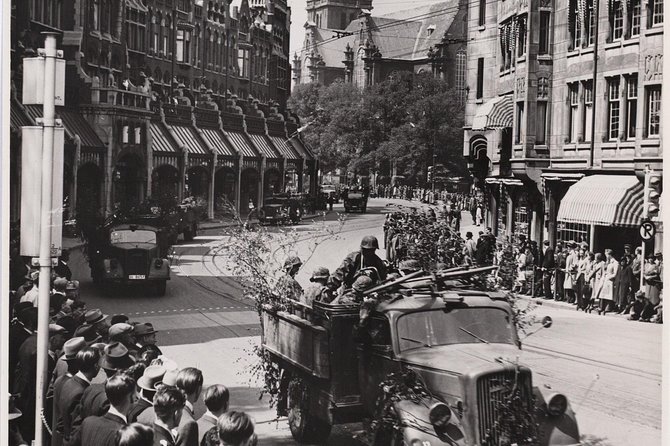
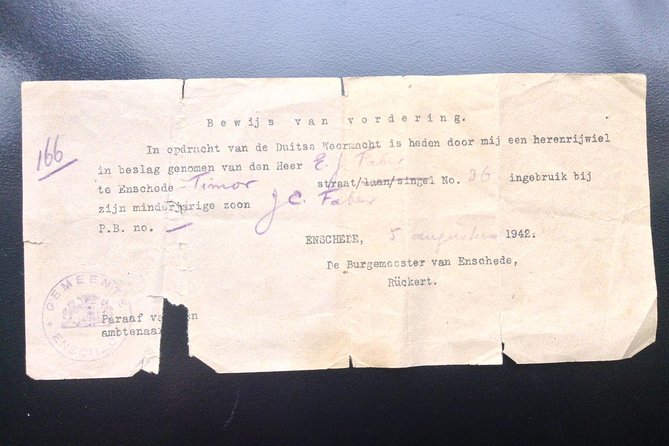
The visual material adds real value. Guides bring period photographs, maps, logbooks, and copies that may be shared with the group. Seeing an Amsterdam street as it looked during the occupation helps you read the modern city differently. You are not simply hearing dates. You are comparing the city in front of you with the city that existed during the war.
The published rating is 4.9 from 63 ratings, with 98 percent recommending the experience. That does not guarantee a perfect match for every person, but it does fit the repeated praise for the guides, the small group, the calm pace, and the depth of the material.
More WWII and Jewish history tours:
- Amsterdam: Life of Anne Frank and World War II Walking Tour
★ 4.8 · 10,467 reviews - Anne Frank Walking Tour Amsterdam Including Jewish Cultural Quarter
★ 5.0 · 1,879 reviews - Amsterdam: Dutch WWII Resistance Museum Entry Ticket
★ 4.7 · 951 reviews
Starting outside Anne Frank House on Prinsengracht
The meeting point is Prinsengracht 263, outside the Anne Frank House, at 9:30 a.m. This is a practical starting point because the building gives you an immediate connection to the subject, even though you do not enter the museum.
The opening covers the German attack on the Netherlands and the arrival of Jewish refugees. The guide places Anne Frank’s story within the wider experience of Jewish people in Amsterdam, rather than treating the house as an isolated attraction. You get about ten minutes here, so this is an introduction, not a full museum-style presentation.
Keep your expectations clear. An Anne Frank House admission ticket is not included, and the tour does not take you inside. If you already have a separate museum reservation, make sure its timing fits your morning. The walk itself starts at 9:30, so an entry time immediately afterward may be difficult, especially because the route ends elsewhere.
The outside meeting point should be easy to locate, and direct communication with Peter at the start has been praised. Still, arrive with a little extra time. Prinsengracht can be busy, and you do not want to begin a serious historical walk by rushing up at the last second.
From Raadhuisstraat to the Multatuli statue
The route continues through Raadhuisstraat and across the bridge over the Singel, where the guide uses the present-day streets to explain how Amsterdam changed after World War II. The stop at the statue of Multatuli lasts about ten minutes.
This is a useful pause because the tour is not only about wartime destruction and suffering. It also considers what happened afterward and how Amsterdam developed in the years following the occupation. The point is less about the statue itself than about using this part of the city to discuss change over time.
You might appreciate this broader view if you want to understand how a city carries on after war. The drawback is that the stop may feel less immediately connected to the Nazi occupation than Anne Frank House or Dam Square. The guide’s explanation is what gives it purpose.
This is also where the walking format begins to pay off. Amsterdam’s compact center lets you move between sites without private transportation. You are seeing ordinary streets, bridges, and buildings, not only formal memorials.
Magna Plaza and the post office under German rule
Magna Plaza is now a shopping mall in a former post office. During World War II, it was Amsterdam’s post office, and the tour tells the story of Dutch postmen who were executed by the Germans.
The stop lasts only about five minutes, but it shows how occupation history can be attached to a building with an entirely different modern use. You may be thinking about shops and architecture when the guide shifts your attention to the workers who once operated there and the danger connected to their actions.
Short stops like this keep the route moving. They also remind you that resistance and punishment were not limited to soldiers or famous leaders. Ordinary jobs could become political, and communication itself could carry risk.
Because the stop is outside, there is no admission charge. You should not expect a long visit inside Magna Plaza. The value comes from the guide’s explanation and the contrast between the building’s present use and its wartime role.
A few more trips of this kind worth comparing:
- Amsterdam: Van Gogh Museum Ticket
★ 4.7 · 52,054 reviews - Amsterdam Classic Saloon Boat Cruise with Drinks and Cheese
★ 5.0 · 31,825 reviews - Amsterdam Luxury Canal Cruise + Unlimited Drinks & Bites option
★ 5.0 · 30,518 reviews - Amsterdam: Heineken Experience Ticket
★ 4.6 · 30,055 reviews
Nieuwe Kerk and the Mozes en Aäronstraat story
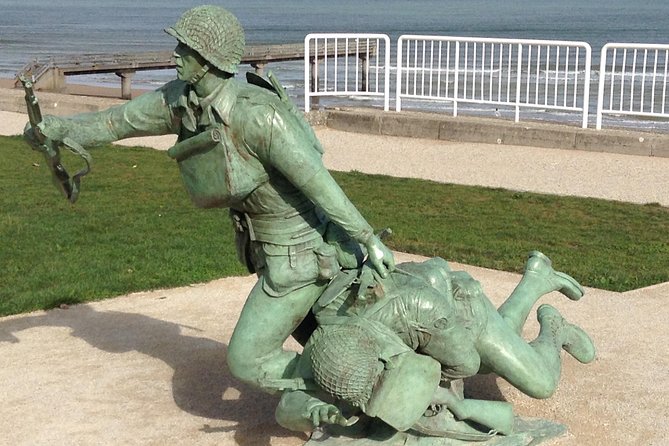
At Nieuwe Kerk, the guide discusses the street between the Royal Palace and the church, known as Mozes en Aäronstraat in the tour’s wartime story. The stop lasts about five minutes.
This part of the walk illustrates the way Amsterdam’s central landmarks intersect with religious and political history. The Royal Palace, Nieuwe Kerk, and surrounding streets are familiar sights, but the occupation gave them another layer of meaning.
As with Magna Plaza, this is a brief outdoor stop. If you want long architectural commentary about the church or palace, this tour is not designed for that. The focus remains World War II, and each location serves as a doorway into a particular event or theme.
Dam Square, where occupation and liberation collided
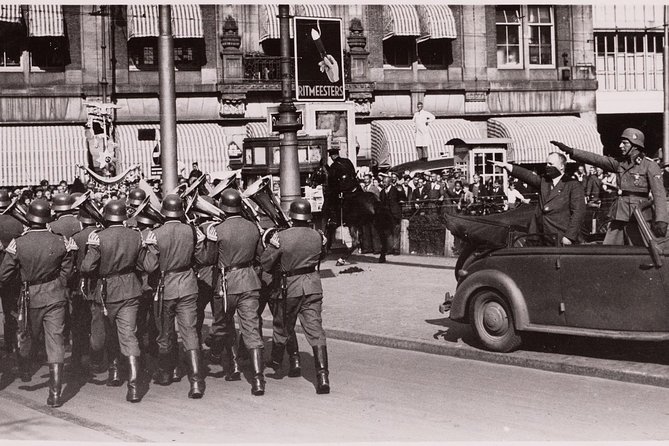
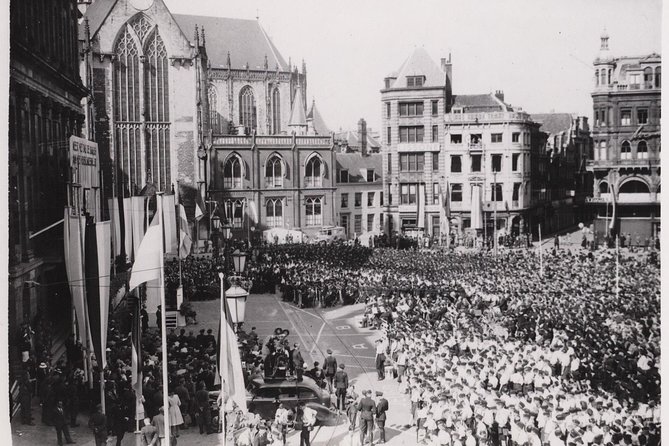
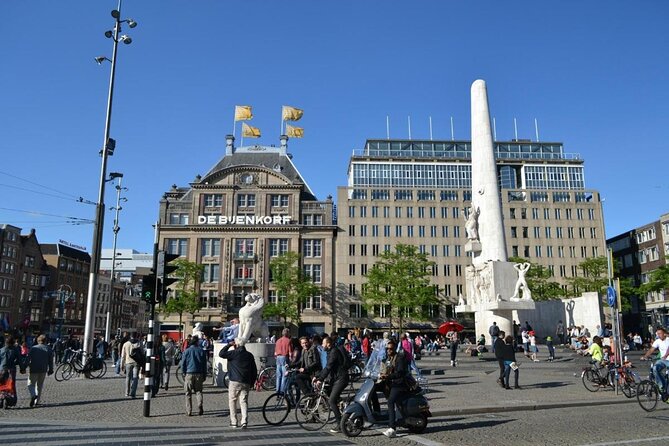
Dam Square receives the longest stop after the opening section, about 25 minutes. That makes sense. It is the heart of Amsterdam, and several important wartime and postwar events are tied to this space.
The tour covers the occupation of the square, the recruitment of Dutch volunteers for the crusade against Bolshevism, and the shooting incident on May 7, 1945, two days after the German surrender. That timing matters. Liberation did not produce an instant return to calm, and the square became the scene of violence even after Germany had surrendered.
You also hear about May 4 Remembrance Day and the World War II monument. This shifts the discussion from what happened in the 1940s to how the Netherlands remembers those years today.
I would expect this to be one of the most effective sections of the walk because the setting is open, central, and easy to visualize. The guide can point across the square while using photographs to show how the space looked during the occupation. A notebook of period images was especially useful to past participants, and the guides are praised for bringing copies, maps, and other material along the route.
Dam Square can be crowded and noisy. That is worth remembering. A small group helps, since the guide can position everyone close enough to hear, but you may still need to pay attention when the square is busy.
The former city hall at Sofitel Legend The Grand
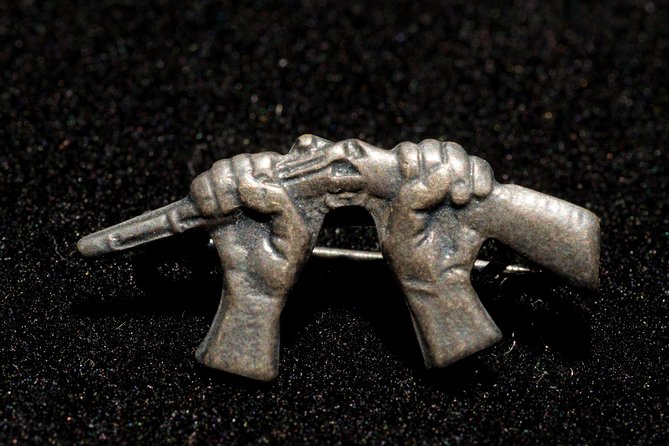
The final central stop is Sofitel Legend The Grand Amsterdam, which served as the city hall during World War II. The tour explains that German troops were welcomed there by Dutch civil servants on May 15, 1940.
It is a short five-minute stop, but the detail is striking. Occupation was not only a matter of military force in the streets. It also involved official buildings, public employees, and the choices made by institutions during a fast-moving political crisis.
The Grand is now a hotel, so again you are looking at a modern building with a wartime role. That contrast is one of the strengths of this walk. Amsterdam does not always announce its wartime history with plaques or dramatic ruins. Often, you need someone to tell you what happened at a place that looks perfectly ordinary today.
Ending at the National Holocaust Names Monument
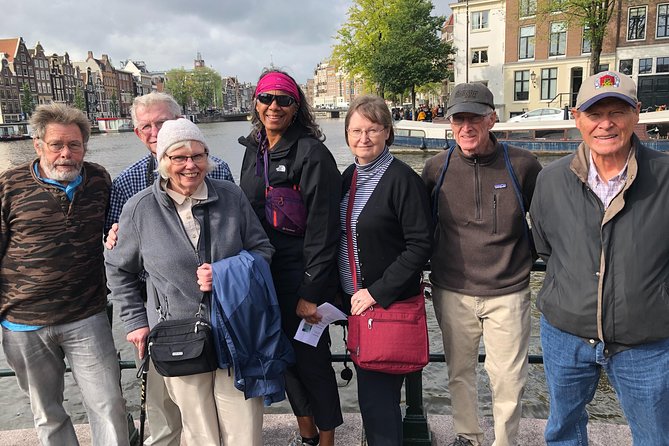
The walk ends at the National Holocaust Names Monument, near the Portuguese Synagogue and not far from city hall. This is an appropriate final point for a tour that begins with Anne Frank House and moves through the occupation’s effects on Amsterdam’s Jewish population.
The end point is not the same as the meeting point. You finish in the eastern part of the central city, so allow for that when planning the rest of your day. The route is practical for continuing toward nearby sights, but private transportation is not provided.
Ending at a Holocaust memorial gives the tour a more reflective close than finishing at a shopping street or transport stop. The experience does not treat World War II as a series of interesting facts detached from human lives. The guide discusses victims of the Holocaust, resistance, tragedy, and the choices made by Dutch people and German authorities.
That seriousness can make the final part difficult. I would not schedule a rushed activity immediately afterward. Give yourself time to process what you have heard, especially if you are also visiting the Anne Frank House or other Jewish heritage sites.
What the walking pace and group size mean
The tour lasts about three hours, sometimes stretching to three and a half. You walk slowly, and the guide sets the pace so the slowest person can keep up. This is important in a history tour because stopping often to look at photographs and discuss questions can make a fast walking rhythm frustrating.
The maximum group size is eight, though some departures may be smaller. A four-person group was praised for feeling friendly and personal. With so few people, you can ask about names, dates, and places without holding up a large crowd.
The guides also make an effort to keep everyone within earshot. That matters on city streets, where bikes, traffic, and public noise can swallow a quiet explanation.
Wear comfortable shoes and dress for changing Amsterdam weather. The experience requires good weather, and it may be canceled if conditions are poor. A coffee break may be possible, and one person appreciated a warm drink on a chilly, windy day, but coffee and tea are not part of the price.
Service animals are allowed, the route is near public transportation, and most people can participate. The supplied information does not promise a fully step-free route, so if you have specific mobility needs, ask before booking.
The $46.44 price and who gets the best value
At $46.44 per person, this is a mid-priced walking tour. You are paying for a guided experience lasting three to three and a half hours, not for museum entry, food, or transportation.
I think the price makes sense if you care about World War II and want a small group. A large, general city tour may cost less, but it is unlikely to give you this much time with a retired historian or make room for repeated questions and visual documents.
The value is strongest for people who want context. If you only want to see Amsterdam’s main sights, you can visit Dam Square and the outside of Anne Frank House on your own. If you want to understand why those places matter during the occupation, the guide is the reason to pay.
The tour is booked about 44 days in advance on average, which suggests you should not leave it until the last morning of a short Amsterdam visit. Free cancellation is available up to 24 hours before the start time. If poor weather or a failure to meet the minimum group size forces cancellation, you are offered another date or experience, or a full refund.
Who should book this WWII tour?
I would recommend it most strongly to:
- People with a serious interest in World War II, the Holocaust, or Dutch resistance
- Visitors who want Anne Frank’s story placed in a wider Amsterdam setting
- Anyone who prefers a slow walk and a small group
- Students, teachers, and history-minded families with older children
- People who value primary visual material such as photographs, maps, and logbooks
- Visitors who want to finish near the National Holocaust Names Monument
I would hesitate if you want to enter the Anne Frank House as part of the same booking, since that is not included. I would also choose another activity if you prefer light sightseeing, dislike emotionally difficult subjects, or have only a short window before another timed reservation.
Should you book Amsterdam in World War II Tour?
Book it if you want serious history in a personal setting, not a quick list of famous Amsterdam sights. Peter and Ben receive especially strong praise for their preparation, patience, clear speaking, and ability to bring old photographs and stories into the streets around you.
The best reason to choose this experience is the combination of subject focus and group size. For $46.44, you get a long, slow walk led by a retired historian, with time for questions and a route that links Anne Frank House, Dam Square, former wartime buildings, and the National Holocaust Names Monument.
Skip it if your main goal is museum admission or casual sightseeing. But if you want to understand how occupation shaped Amsterdam and how the city remembers it, this is a thoughtful and worthwhile morning.
FAQ
Does the tour enter the Anne Frank House?
No. The tour begins outside the Anne Frank House and discusses the German attack, Jewish refugees, and the wider wartime setting. Museum admission is not included.
How long does Amsterdam in World War II Tour last?
The experience lasts about three to three and a half hours. The walk is conducted at a slow pace.
Where does the tour begin and end?
It begins at Prinsengracht 263, outside the Anne Frank House, at 9:30 a.m. It ends at the National Holocaust Names Monument near the Portuguese Synagogue and city hall.
How large is the tour group?
The maximum group size is eight people. Some departures may be smaller.
Are coffee, tea, or transportation included?
No. Coffee and tea are not included, and there is no private transportation. The route is near public transportation.
Can I cancel for a full refund?
Yes. You can cancel at least 24 hours before the local start time for a full refund. Cancellations or changes made less than 24 hours before the start time are not refunded or accepted.
Just added around Amsterdam
- Amsterdam 1-Hour Rickshaw Tour★ 4.9 · 17 reviews
- Amsterdam: Canal Cruise and Jewish Cultural Quarter Tickets★ 4.2 · 17 reviews
- Keukenhof Gardens and Tulip Experience Tour from Amsterdam★ 4.8 · 17 reviews
- Marken, Volendam and Edam: Private Full-Day Tour★ 4.6 · 18 reviews
- Discover Amsterdam’s city center in this Outside Escape game tour★ 4.5 · 18 reviews
- Amsterdam: Personal Travel & Vacation Photographer★ 4.8 · 18 reviews
- Amsterdam: Luxury Saloon Boat Cruise with 3-Course Dinner★ 3.9 · 18 reviews
- Rijksmuseum & Amsterdam City Center Semi-Private Tour 12ppl Max★ 5.0 · 18 reviews
WWII & Jewish History Tours, compared.

Life of Anne Frank and World War II Walking Tour
Read our review →
Anne Frank Walking Tour Amsterdam Including Jewish Cultural Quarter
Read our review →
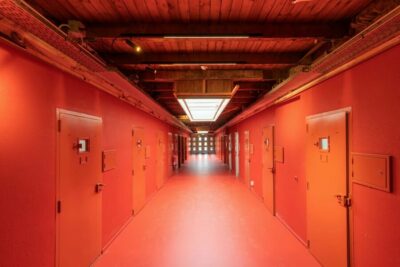
Oranjehotel World War II Prison Entrance Ticket
Read our review →
Anne Frank and Jewish Quarter Amsterdam Private Walking Tour
Read our review →

Anne Frank and Jewish Quarter Walking Tour (TOP RATED)
Read our review →
Browse the lists this tour appears in