
REVIEW · WWII & JEWISH HISTORY TOURS
Amsterdam: Dutch WWII Resistance Museum Entry Ticket
History feels close here. Amsterdam’s Dutch Resistance Museum presents the Nazi occupation through personal choices, daily fears, and acts of courage rather than only military dates. I like the excellent audio guide, which lets you choose how much detail to hear, and the many ordinary personal stories that show how resistance took shape in homes, offices, churches, and streets. The main consideration is time: you can rush through in an hour, but two to three hours gives the displays room to sink in.
This is a serious museum, but it is not hard to follow. Films, photographs, objects, documents, and interactive displays lead you through the Dutch wartime experience in a clear order. I also appreciate the section on the Dutch East Indies, though the subject matter is painful and the museum may feel emotionally heavy if you have several Holocaust or World War II sites planned for the same day.
In This Review
- Key points before you go
- Entering Amsterdam’s wartime story
- A walk through resistance, from strikes to espionage
- Why the personal stories matter
- Using the audio guide without losing your place
- The Dutch East Indies section
- Interactive displays and a clear layout
- The emotional pace of the visit
- Price, time, and practical value
- Who will get the most from this museum
- My verdict: book it if you want the human story
- FAQ
- Where is the museum located?
- What does the admission ticket include?
- How much does admission cost?
- How long should I allow for the visit?
- Which languages are available for the audio guide?
- Is the museum wheelchair accessible?
- Does the museum have a live guide?
- Can I cancel my booking?
- Are food and drinks included?
Key points before you go
- Plan for two to three hours: The museum is compact from the outside but holds far more material than you might expect.
- Hear stories in seven languages: The audio guide is available in Dutch, English, French, German, Italian, Spanish, and Portuguese.
- Resistance comes in many forms: Expect coverage of strikes, forged papers, hiding places, underground newspapers, escape routes, espionage, and armed action.
- Personal choices drive the visit: Documents and testimonies show how Dutch people faced pressure, fear, cooperation, and moral risk.
- The Dutch East Indies gets its own section: The exhibition also covers Dutch colonial experiences under Japanese rule.
- Wheelchair accessible: The museum is designed for wheelchair access, and the handheld audio units can make it easier to pause and sit when needed.
Entering Amsterdam’s wartime story
You begin by showing your ticket at the museum counter. There is no guide leading a group, so you can set your own pace from the start. Your admission includes the audio guide, which is central to the experience rather than a minor extra.
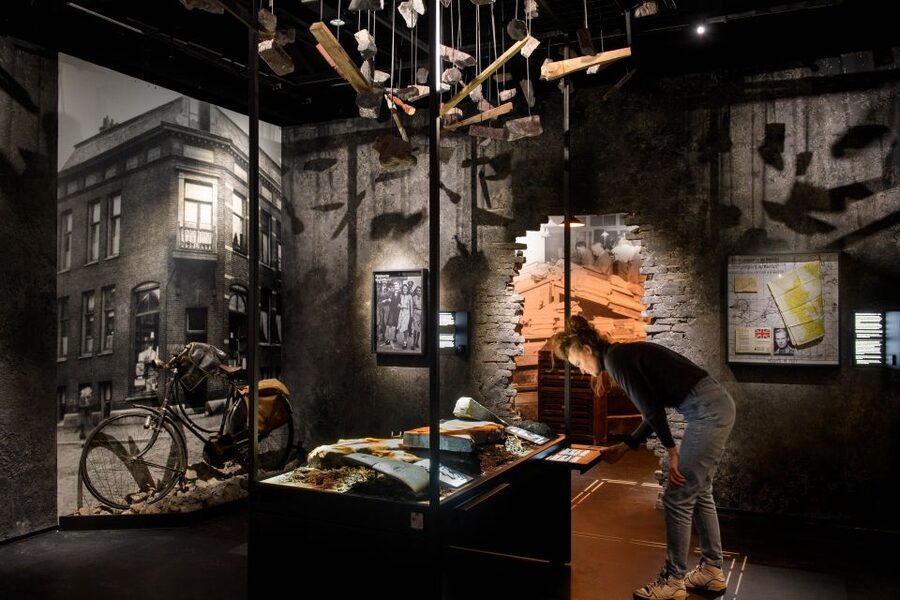
The museum takes you into the Netherlands of the 1940s through walls filled with photographs, objects, moving images, and written accounts. The effect is not a theatrical war show. Instead, it gives you a sense of how occupation altered familiar routines and forced people to make choices they had never expected to face.
That focus matters. Military history often tells you what armies did. This museum asks what happened to the civilian population when the German regime took control. You see how resistance could mean an organized armed operation, but also a strike, a false identity document, a newspaper printed in secret, or help given to someone in hiding.
The museum also gives space to people who collaborated or cooperated with the occupation. That balance is useful. It avoids presenting the Dutch population as one united block of heroes and villains. The pressure of occupation was uneven, and the choices were often dangerous, confusing, and personal.
More Attraction Tickets in Amsterdam
- Amsterdam: Van Gogh Museum Ticket
★ 4.7 · 52,054 reviews - Amsterdam: Heineken Experience Ticket
★ 4.6 · 30,055 reviews - Amsterdam: Rijksmuseum Entry Ticket
★ 4.7 · 25,535 reviews
A walk through resistance, from strikes to espionage
The exhibition covers a broad range of resistance activity. You learn about strikes, document forgery, hiding networks, underground newspapers, escape routes, espionage, and armed resistance. Each form tells you something different about the risks people accepted.
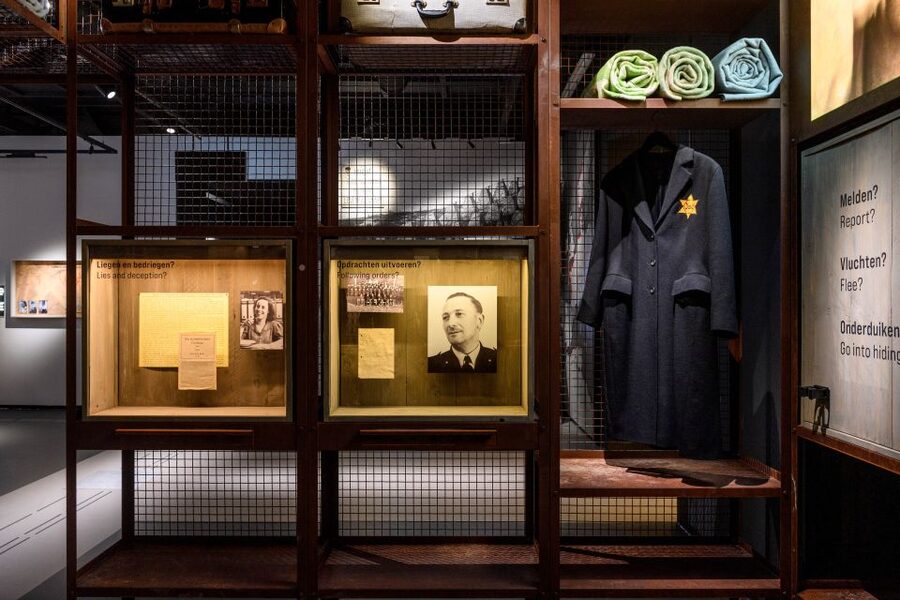
A forged identity paper could protect a person from arrest, forced labor, or deportation, but it also placed the forger and anyone using the document in danger. Helping someone hide meant finding food, shelter, and trustworthy contacts while knowing that a single betrayal could destroy the whole network.
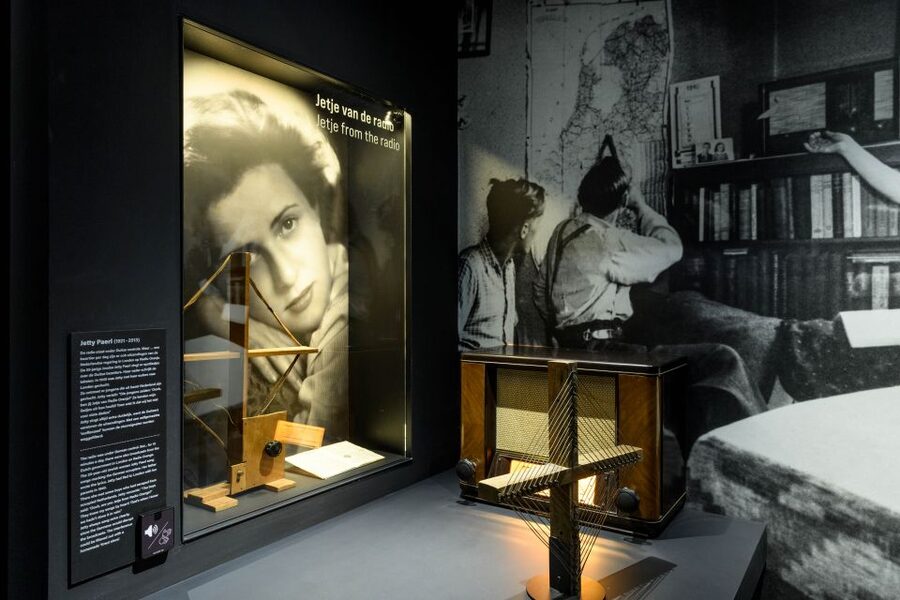
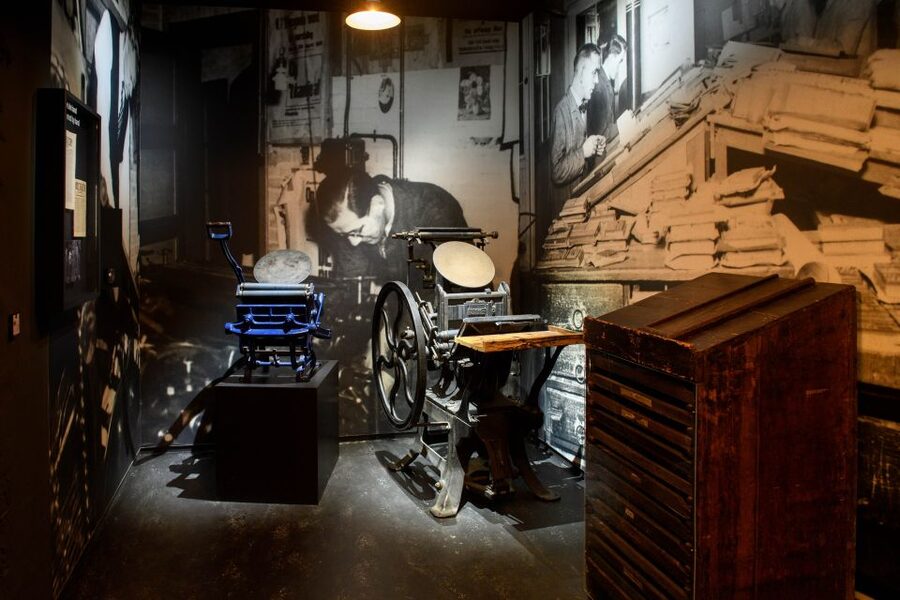
Underground newspapers show another side of resistance. Information itself became a weapon when official news was controlled. The museum’s documents and objects help turn that idea into something tangible. You are not simply told that resistance existed. You see the kinds of materials people handled, concealed, copied, and passed along.
Strikes reveal how public protest could challenge occupation, while armed resistance and espionage show the escalating danger of organized action. The exhibition does not suggest that every act had the same result or the same moral weight. Instead, it lets you consider why different people chose different paths.
I find this range one of the museum’s strongest features. It gives you a wider definition of courage. Some people acted publicly. Others worked quietly and never became famous. The museum remembers both.
Why the personal stories matter
The most moving part of the museum is its attention to individuals. You encounter personal documents and accounts from people who lived through the invasion, occupation, resistance, collaboration, hiding, persecution, and aftermath.
This approach makes the history easier to grasp, especially if you already know the broad outline of World War II but want to understand the Dutch experience. Rather than asking you to remember a long list of names and dates, the displays show how occupation reached into daily life.
You may read about a dilemma without receiving a simple answer. Should someone help a stranger who needs a hiding place? Should a worker follow an order to protect a family? Should a person risk arrest to distribute information? The museum’s value lies partly in showing that resistance was not always a clean or safe choice.
The stories also broaden the familiar Amsterdam wartime narrative. Many people know about Anne Frank and the secret annex. Here, you hear about other forms of bravery and about the networks, decisions, and compromises that shaped the wider city and country.
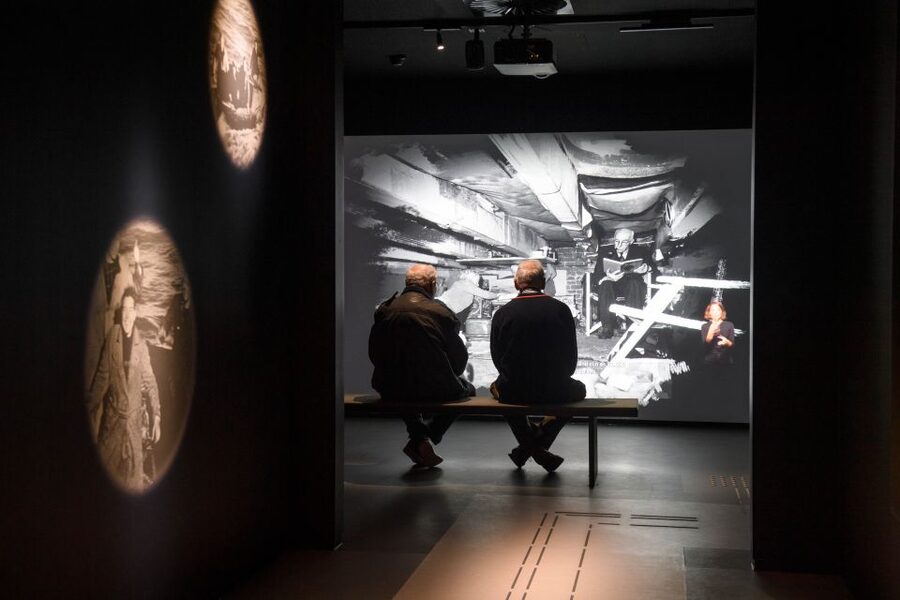
Short films add voices and movement to the displays. They help establish the period and give the individual accounts more weight. If you prefer reading, there is plenty to examine. If you learn better by listening, the handheld unit allows you to hear selected material in your chosen language.
Using the audio guide without losing your place
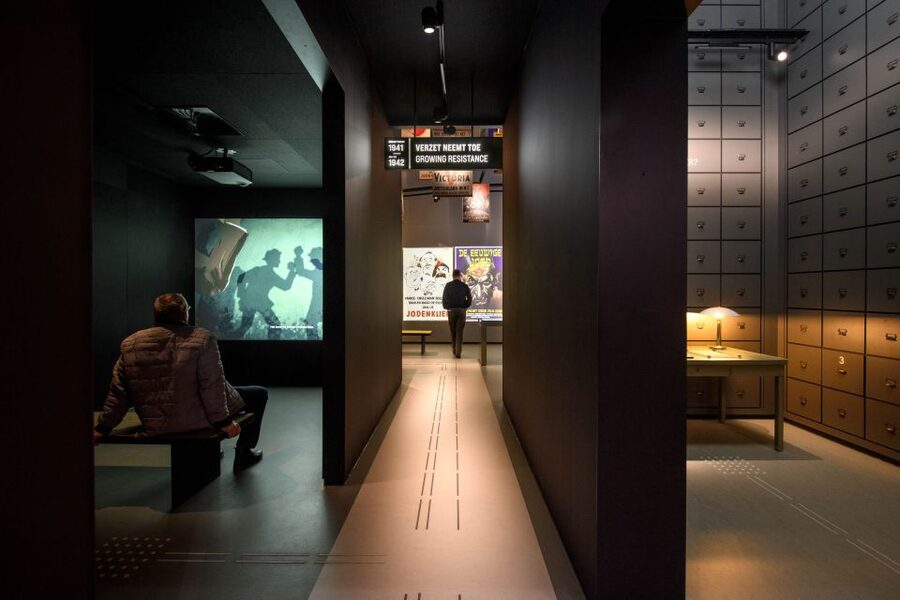
The audio guide is one of the best reasons to book this entry option. It is available in seven languages: Dutch, English, French, German, Italian, Spanish, and Portuguese.
The system uses a handheld unit and exhibit codes. You choose what to hear instead of being forced through every recording. That gives you control over the length and intensity of your visit. You can listen to the main explanation, then select extra stories when a document or object catches your attention.
That flexibility is especially useful in a museum with a lot of material. If you try to hear everything, two hours may not be enough. If you are short on time, you can focus on the major displays and skip some of the longer personal accounts.
A small practical warning: take a moment to learn how the unit works before you begin. One visitor found that the audio restarted after scanning too quickly. The system generally received strong praise for being easy to use, but a little care at each station should prevent frustration.
The device also lets you pause physically. One account described using the handheld unit while sitting down because of back and sciatic pain. That does not replace checking your own access needs in advance, but it shows how the audio format can make a long museum visit less tiring.
More Museums in Amsterdam
- Moco Museum Amsterdam Entrance Tickets with Banksy & More
★ 4.4 · 10,088 reviews - Amsterdam: The Upside Down Museum Entrance Ticket
★ 4.4 · 9,506 reviews - Amsterdam: Red Light Secrets Museum Entry Ticket
★ 4.2 · 5,722 reviews - Amsterdam’s Weirdest Museum: Believe It or Not!
★ 4.5 · 4,086 reviews
The Dutch East Indies section
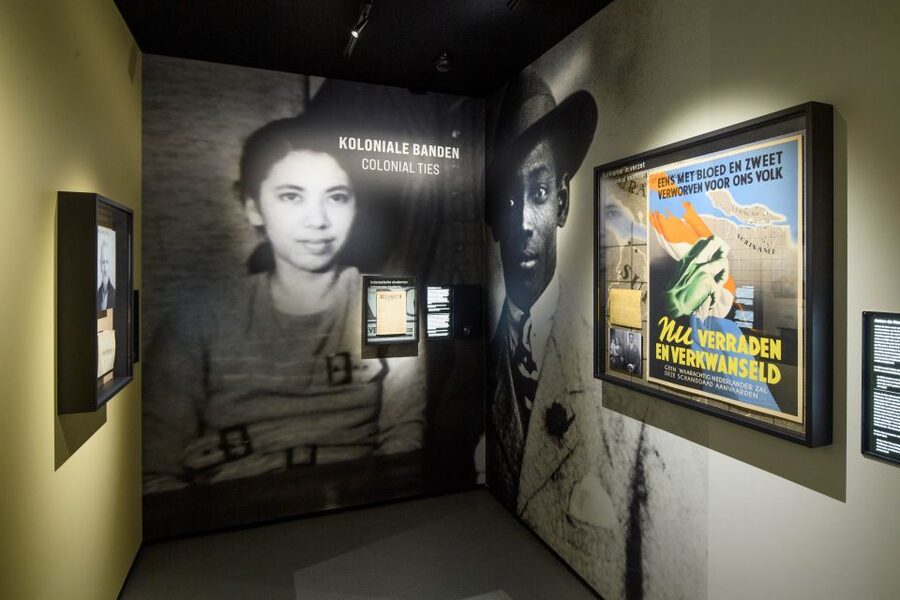
Do not assume the museum covers only the Netherlands under German occupation. A dedicated section examines the Dutch East Indies and the experiences of people who lived under Japanese rule.
This section adds an important colonial dimension to the story. The war did not affect all Dutch citizens in the same way, and the end of German occupation in Europe was not the only wartime experience connected to the Netherlands.
The accounts here describe a harsh regime of terror and the suffering experienced by people in the former colony. For families with a personal connection to the Dutch East Indies, this part may carry special weight. For other visitors, it fills a gap that many European war museums leave open.
Give yourself time in this section. It is easy to focus on the Amsterdam displays and move on, but the wider story helps you understand that Dutch wartime history extended far beyond the city’s canals and streets.
Interactive displays and a clear layout
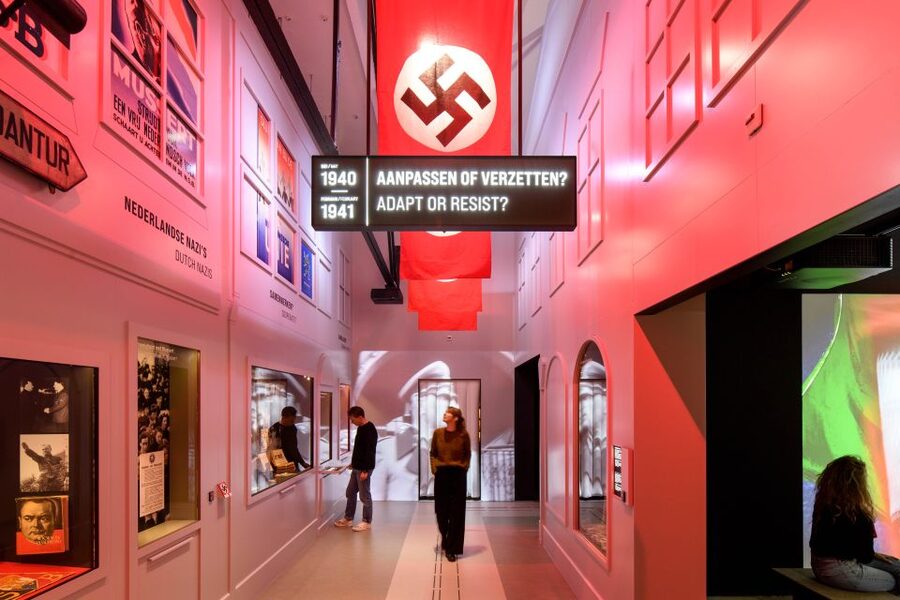
The museum is arranged so that the story flows in an understandable way. You move through photographs, objects, film clips, documents, and personal accounts without needing specialist knowledge.
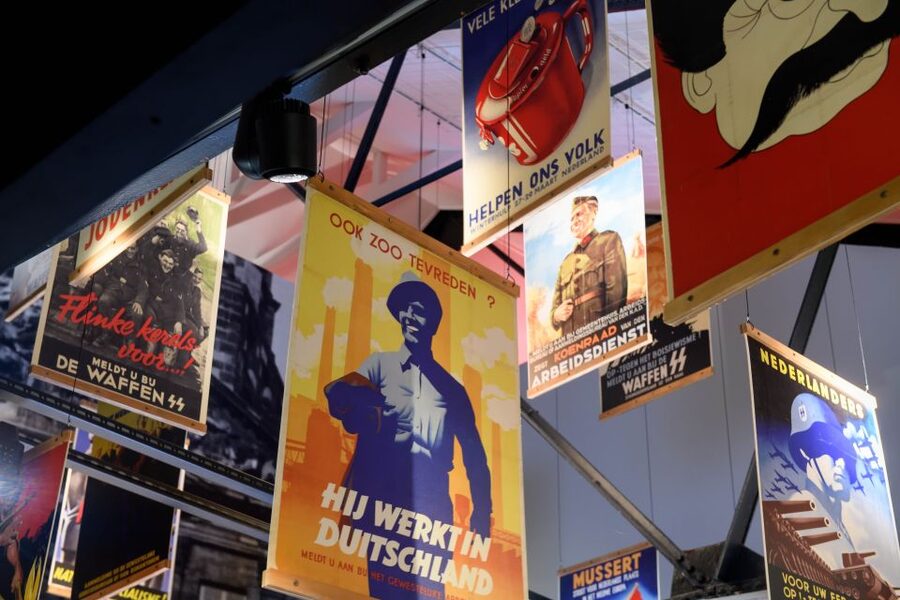
Interactive propaganda posters are one memorable feature. They show how public messages could be shaped and used during the occupation. This is a good example of the museum’s teaching style: you are not only looking at an old object, you are being asked to think about how it worked on the people who saw it.
The design is also friendly to different learning styles. You can read, watch, listen, and stop at the displays that interest you most. Several visitors found the plan easy to follow, while others were surprised by how much the museum contains after first assuming it was a small venue.
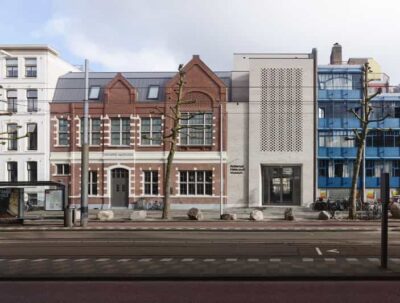
That surprise is worth keeping in mind. The building may not look like a full-day attraction at first glance, but the quantity of material can easily fill two or three hours. One person wanted a full day to see everything, while several others found two hours sufficient. Your timing will depend on how many audio selections you hear.
The emotional pace of the visit
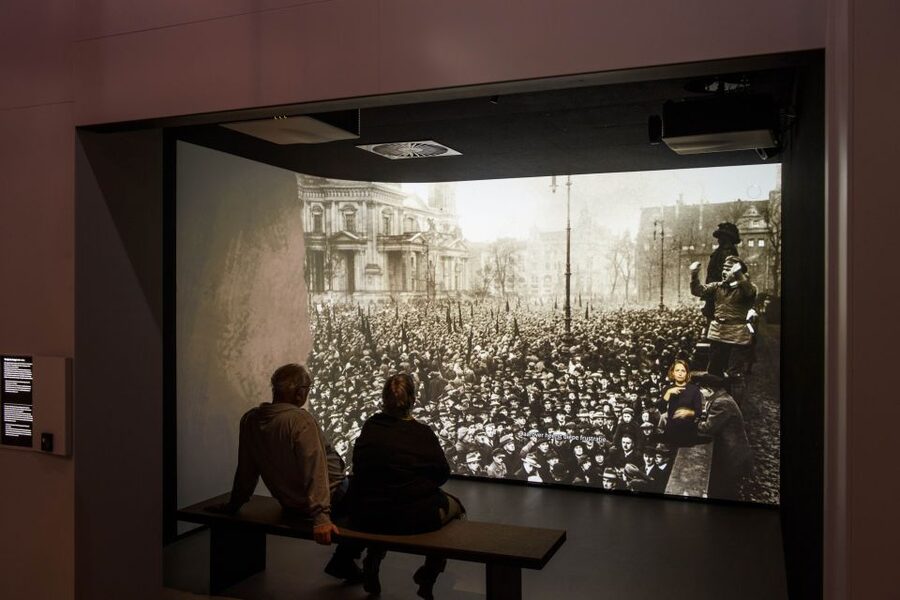
This is not a light museum stop between cafés. The subjects include Nazi persecution, the destruction of Jewish communities, forced choices, imprisonment, hiding, violence, and the suffering of people under Japanese rule.
The museum handles these themes through testimony, evidence, and context. That makes the visit moving without turning it into a simple story of triumph. You will see brave and generous actions, but also fear, cooperation, betrayal, and the hard years after the war.
I recommend planning a quieter activity afterward rather than placing this immediately before a packed schedule. You can visit the attached restaurant after the exhibition, which gives you a practical place to pause and process what you have seen. Food and drinks are not included with admission.
The museum works well for adults and older children who have enough background to understand the subject. It is also useful for people who know little about World War II. The explanations are clear enough for beginners, while the documents and personal stories provide plenty for serious history fans.
Price, time, and practical value
At about $21 per person, admission is not the cheapest museum ticket in Amsterdam. Still, the value is good if you use the audio guide and allow enough time to explore the material.
You are paying for more than a quick display of wartime objects. The museum combines a broad account of Dutch resistance with personal documents, films, interactive features, and the Dutch East Indies section. A two to three hour visit works out well compared with many shorter paid attractions, especially if World War II history is a major reason for your Amsterdam trip.
The ticket is valid for one day, and availability should be checked for the possible starting times shown when booking. You do not need to add the cost of a separate guide because the audio guide is included.
The ticket also offers free cancellation up to 24 hours in advance and a reserve now, pay later option. Those terms are useful if your Amsterdam plans are still shifting, though you should check the exact booking conditions at the time you reserve.
To enter, show your ticket at the museum counter. Food, drinks, and a live guide are not part of the admission. The museum is wheelchair accessible, but anyone with specific mobility or sensory needs should still confirm current arrangements before visiting.
Who will get the most from this museum
I would put this near the top of the list for anyone interested in World War II, Dutch history, Jewish history, civil resistance, or the ethics of life under dictatorship.
It is also a strong choice if you have already visited Anne Frank House and want a wider picture. The two experiences serve different purposes. This museum moves beyond one family’s story and shows many forms of resistance and cooperation across the Netherlands.
You do not need to be a history expert. The layout, films, and audio explanations give you a clear route through the subject. If you enjoy reading every label and hearing every story, plan closer to three hours. If you want the main story with selected details, two hours should give you a solid visit.
Families should judge the subject matter carefully. The museum is educational, but it includes painful wartime experiences. The audio guide is helpful for visitors who prefer listening to long blocks of text, and the interactive displays can help maintain attention, but the content remains serious.
My verdict: book it if you want the human story
I recommend booking the Dutch Resistance Museum if you want to understand how occupation affected ordinary people. Its best feature is the connection between large events and individual choices. The audio guide, films, documents, and objects work together without requiring you to join a scheduled tour.
Book it when you can spare two to three hours and have the energy for a thoughtful visit. It is less suitable if you want a quick, cheerful attraction or if your itinerary already contains several emotionally intense war museums.
At $21, the ticket is fair value for a substantial, well-organized museum with multilingual audio and wheelchair access. Go slowly, listen to the stories that catch your attention, and leave room afterward for a quiet meal or walk.
FAQ
Where is the museum located?
The Dutch Resistance Museum is in Amsterdam, in North Holland, Netherlands.
What does the admission ticket include?
The ticket includes entry to the Dutch Resistance Museum and an audio guide.
How much does admission cost?
The listed price is $21 per person.
How long should I allow for the visit?
The ticket is valid for one day, but most people will want to plan at least two to three hours to hear and read a substantial amount of the material.
Which languages are available for the audio guide?
The audio guide is available in Dutch, English, French, German, Italian, Spanish, and Portuguese.
Is the museum wheelchair accessible?
Yes. The museum is wheelchair accessible.
Does the museum have a live guide?
No live guide is included. The admission includes a self-guided audio guide instead.
Can I cancel my booking?
Yes. You can cancel up to 24 hours in advance for a full refund.
Are food and drinks included?
No. Food and drinks are not included, although a restaurant is attached to the museum.
More Museums
- Amsterdam: Van Gogh Museum Ticket and City Canal Cruise
★ 4.6 · 3,899 reviews - Amsterdam: Rembrandt House Museum Entrance Ticket
★ 4.7 · 3,385 reviews - Amsterdam: Van Gogh Museum Ticket & Canal Cruise
★ 4.5 · 3,304 reviews - Amsterdam: NEMO Science Museum Ticket
★ 4.4 · 2,979 reviews
More WWII and Jewish History Tours
- Amsterdam: Life of Anne Frank and World War II Walking Tour
★ 4.8 · 10,467 reviews - Anne Frank Walking Tour Amsterdam Including Jewish Cultural Quarter
★ 5.0 · 1,879 reviews - Anne Frank and Jewish Quarter Amsterdam Private Walking Tour
★ 5.0 · 684 reviews - Amsterdam: Anne Frank and Jewish Quarter Tour
★ 4.7 · 434 reviews
Just added around Amsterdam
- Amsterdam 1-Hour Rickshaw Tour★ 4.9 · 17 reviews
- Amsterdam: Canal Cruise and Jewish Cultural Quarter Tickets★ 4.2 · 17 reviews
- Keukenhof Gardens and Tulip Experience Tour from Amsterdam★ 4.8 · 17 reviews
- Marken, Volendam and Edam: Private Full-Day Tour★ 4.6 · 18 reviews
- Discover Amsterdam’s city center in this Outside Escape game tour★ 4.5 · 18 reviews
- Amsterdam: Personal Travel & Vacation Photographer★ 4.8 · 18 reviews
- Amsterdam: Luxury Saloon Boat Cruise with 3-Course Dinner★ 3.9 · 18 reviews
- Rijksmuseum & Amsterdam City Center Semi-Private Tour 12ppl Max★ 5.0 · 18 reviews
WWII & Jewish History Tours, compared.

Life of Anne Frank and World War II Walking Tour
Read our review →
Anne Frank Walking Tour Amsterdam Including Jewish Cultural Quarter
Read our review →
Oranjehotel World War II Prison Entrance Ticket
Read our review →
Anne Frank and Jewish Quarter Amsterdam Private Walking Tour
Read our review →

Anne Frank and Jewish Quarter Walking Tour (TOP RATED)
Read our review →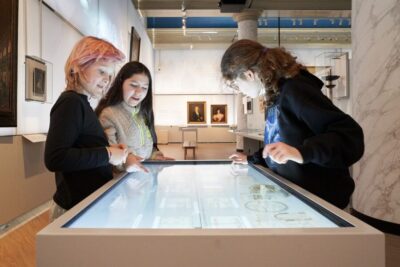
Browse the lists this tour appears in