
REVIEW · CANAL CRUISES
Amsterdam Museum of the Canals Admission Ticket with Audiotour
Amsterdam’s canals tell a bigger story. This compact museum explains how the UNESCO World Heritage-listed Canal Ring was planned, built, and shaped Amsterdam, all inside a 17th-century canal house. I like the mix of old rooms, models, projections, and audio commentary. It gives you more than pretty waterway views. It shows how the city was engineered.
I also like the interactive touches, especially the projected doll’s house and displays about construction methods. The main drawback is its short length. At about one hour, the museum gives you a clear introduction rather than a full study of Amsterdam’s past, and some subjects move along quickly.
In This Review
- Key points to know before you go
- Why Amsterdam’s canals deserve their own museum
- Entering Herengracht 386
- Following the one-hour multimedia tour
- Models, construction methods, and the projected doll’s house
- What the classical rooms and garden add
- How much history will you get in an hour?
- Is the $22.29 admission good value?
- Best timing and practical planning
- Who will enjoy the Museum of the Canals most?
- Museum of the Canals or simply walking the waterways?
- Should you book this Amsterdam canal museum visit?
- FAQ
- Where is the Museum of the Canals located?
- How long does the visit take?
- What does the ticket include?
- Is an audio guide provided?
- What are the published opening hours?
- Is the ticket available on a mobile phone?
- Can I cancel for a refund?
Key points to know before you go

- A 17th-century canal house provides the setting: You learn about Amsterdam’s canals inside one of the historic buildings that makes the city famous.
- The tour uses models and projections: Construction methods become easier to understand through visual displays, including a clever projected doll’s house.
- The visit takes about one hour: It fits neatly into a day of sightseeing without taking over your schedule.
- The audio guide adds structure: The multilingual format gives you commentary in your chosen language, with English offered.
- Advance booking protects your entry: The attraction is popular, and prebooking gives you a confirmed admission.
- The experience is best for a first look at canal history: It works well after you have spent a day or two getting to know Amsterdam itself.
Why Amsterdam’s canals deserve their own museum
Amsterdam is often reduced to postcard views: narrow houses, arched bridges, and boats sliding under them. Those views are lovely, but they do not explain how the city came to exist in its present form. The Museum of the Canals gives you that missing layer.
The Canal Ring is not simply a collection of scenic waterways. It reflects planning, land management, construction, and the growth of Amsterdam. The museum helps connect those ideas to the streets you walk every day.
I find this useful because the city can feel confusing at first. The canals curve and cross in ways that are pleasant to explore but not always easy to understand. After this visit, you can look at the water, houses, and streets with a better sense of how they fit together.
The museum focuses on Amsterdam and its canals rather than trying to cover every part of Dutch history. That narrow focus is a strength for a short visit. You get a focused explanation instead of a large museum that sends you in ten directions.
More Attraction Tickets in Amsterdam
- Amsterdam: Van Gogh Museum Ticket
★ 4.7 · 52,054 reviews - Amsterdam: Heineken Experience Ticket
★ 4.6 · 30,055 reviews - Amsterdam: Rijksmuseum Entry Ticket
★ 4.7 · 25,535 reviews
Entering Herengracht 386
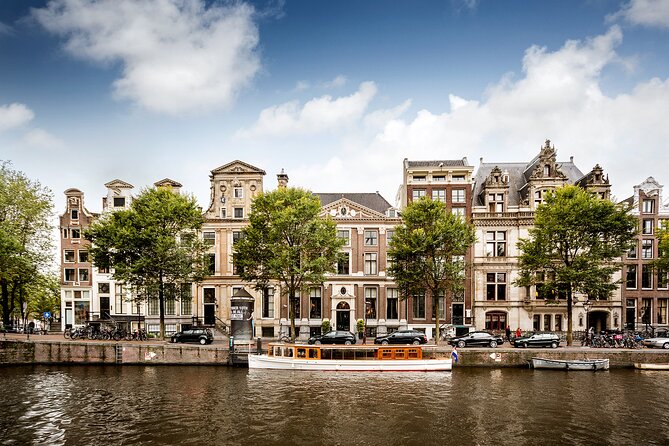
The museum is at Herengracht 386, in the heart of Amsterdam. Its location makes it easy to pair with a walk along the Canal Ring, and the meeting point is also where the visit ends.
The building itself matters. You are not entering a modern gallery with the city’s past displayed at a safe distance. You are walking into a historic canal house with classical period rooms and a garden. The setting gives the subject a physical sense of place before the audio tour even begins.
That combination is one of the strongest parts of the experience. The museum is not only about canals as engineering projects. It also shows the kind of domestic setting connected with Amsterdam’s canal belt.
The attraction is near public transportation, which helps if you are moving around the city by tram or another local service. The information provided does not specify a particular stop or route, so check your map and current transit directions before setting out.
Following the one-hour multimedia tour
The visit is designed as a permanent multimedia tour through the canal house. You move from room to room, using the audio guide and visual displays to build a picture of Amsterdam’s development.
The audio format gives the experience a clear pace. You are not left to guess what a model represents or why a room matters. Commentary explains the subject while you look at physical displays and the surrounding architecture.
The guide is multilingual, and English is offered. If you prefer another language, check the available choice when booking or entering. The supplied information does not name individual guides, because this is an audio-led museum visit rather than a tour with a live guide.
The one-hour estimate is important. You can reasonably fit this between other central Amsterdam plans, but I would not expect a slow, detailed study of every part of the city’s past. The experience is more like a well-organized introduction with enough detail to make the canals easier to read.
The small scale can be an advantage. You do not need half a day, and the subject never feels too broad. Families and mixed-age groups may also appreciate the variety, since the models and projections offer something to look at as well as something to hear.
Models, construction methods, and the projected doll’s house
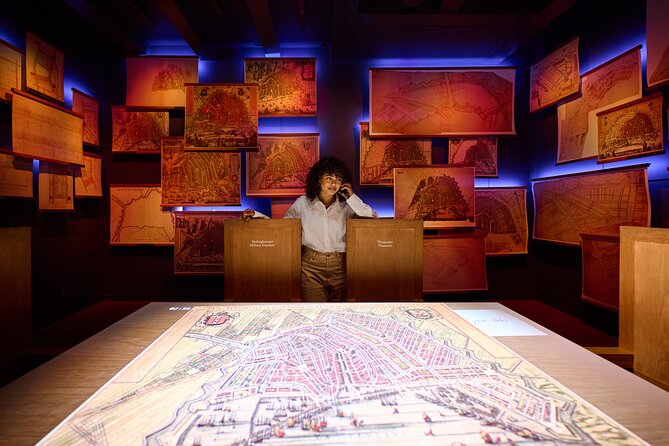
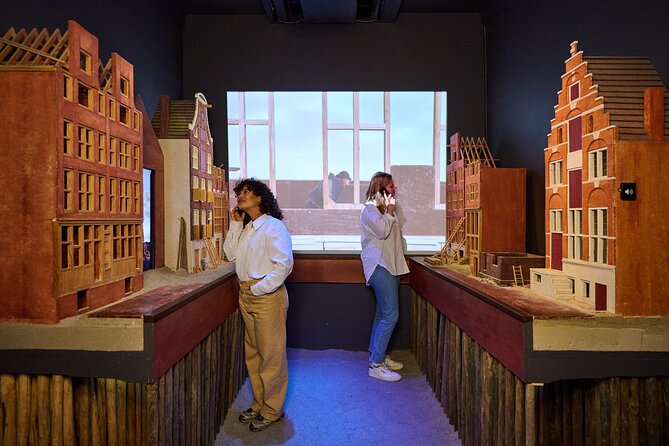
The visual displays are where the museum earns much of its appeal. One part explains construction methods with models, giving you a practical way to understand how the canals and buildings were made.
Models are especially helpful here because the city’s structure is difficult to grasp from street level. A building may look narrow from the sidewalk, while the canal system seems to stretch in every direction. A model can show relationships that are hidden by walls, water, and distance.
The projected doll’s house is another memorable feature. Projections are used inside it to explain the city’s development in a playful way. It is a clever choice because it turns a complicated subject into something visual and approachable.
I would not call the displays a substitute for a long historical museum. Some sections move quickly, and you may want more detail on particular periods or topics. Still, the museum chooses its tools well. The technology supports the story instead of becoming the story.
That distinction matters. An interactive display is useful when it helps you understand Amsterdam. Here, the models and projections appear to serve that purpose, especially for visitors who learn more easily through images than through labels alone.
More Museums in Amsterdam
- Moco Museum Amsterdam Entrance Tickets with Banksy & More
★ 4.4 · 10,088 reviews - Amsterdam: The Upside Down Museum Entrance Ticket
★ 4.4 · 9,506 reviews - Amsterdam: Red Light Secrets Museum Entry Ticket
★ 4.2 · 5,722 reviews - Amsterdam’s Weirdest Museum: Believe It or Not!
★ 4.5 · 4,086 reviews
What the classical rooms and garden add

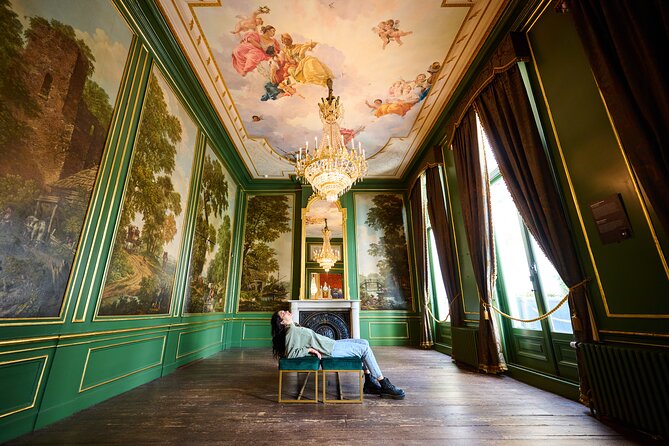
The canal house setting gives the visit a quieter character than a large city museum. Classical period rooms provide a sense of the building’s original world, while the garden offers a change of pace during the route.
These spaces also help you connect the city’s canal history with daily life. The waterways were not built as isolated decoration. They formed part of a working city and shaped the buildings, streets, and homes around them.
The garden is a welcome feature in a one-hour visit because it breaks up the indoor displays. The provided information does not describe its size or exact design, so you should think of it as part of the museum setting rather than plan your visit around an extended garden stop.
I especially like this blend of atmosphere and explanation. A purely historical presentation could feel dry. A purely atmospheric canal house might leave you with attractive rooms but little understanding. This museum aims for both.
How much history will you get in an hour?
You will learn how Amsterdam and its canals developed, including ideas about construction and city building. The visit is informative and gives you a useful framework for the Canal Ring.
You will not get every detail of Amsterdam’s history. Some parts are mentioned and then left behind fairly quickly. If you are fascinated by a particular era, building method, or social issue, the museum may leave you wanting a longer treatment.
I see that as a question of expectations rather than a serious flaw. The museum works best as a compact introduction. It helps you understand the city before or after you explore it on foot, but it is not meant to replace a full day of historical sightseeing.
Timing can affect how much you take away. If you hurry through the rooms, the information may feel like quick bursts of history. Give yourself the full approximate hour, listen carefully, and pause at the models. The visual details are worth more than a quick pass through the building.
A useful plan is to visit after a couple of days in Amsterdam. By then, you will have seen the canals and neighborhoods firsthand. The museum can then answer questions that have already started to form, such as why the waterways follow their particular pattern and how the city managed to grow around them.
Is the $22.29 admission good value?
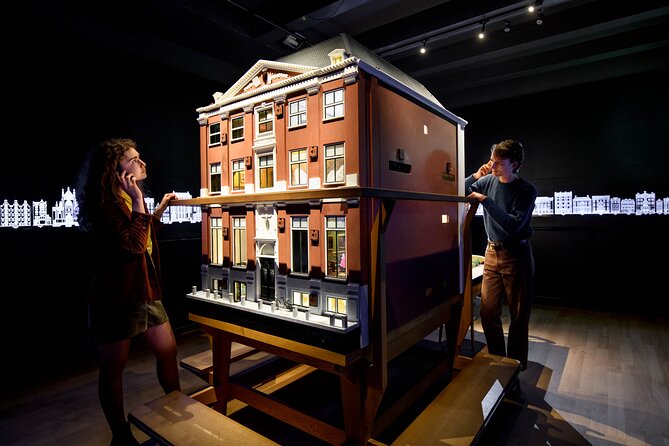
At $22.29 per person, this is not a throwaway attraction, but the price can make sense if you want more than photographs and a canal cruise. You are paying for entry to a historic canal house, the permanent multimedia tour, visual displays, classical rooms, and the garden.
The value depends on how you like to spend your sightseeing budget. If you enjoy history, architecture, and city planning, the museum gives you a focused hour with plenty to think about. If you mainly want outdoor scenery, you may find the price harder to justify, since Amsterdam’s canals can be enjoyed freely from the streets and bridges.
The audio guide also improves the value because it provides the structure you would otherwise need to create for yourself. You do not have to piece together the museum’s message from isolated objects. The route leads you through the subject in an orderly way.
Prebooking has practical value, too. Your admission is guaranteed, which matters when your schedule is tight or the attraction is popular. A confirmed ticket reduces the risk of arriving at the wrong time and having to rearrange your day.
The experience is offered through the Grachtenmuseum Amsterdam, and the booking information identifies Viator as the trusted platform used to buy directly from the museum. The listed ticket is mobile, so you can keep the admission details on your phone.
Best timing and practical planning
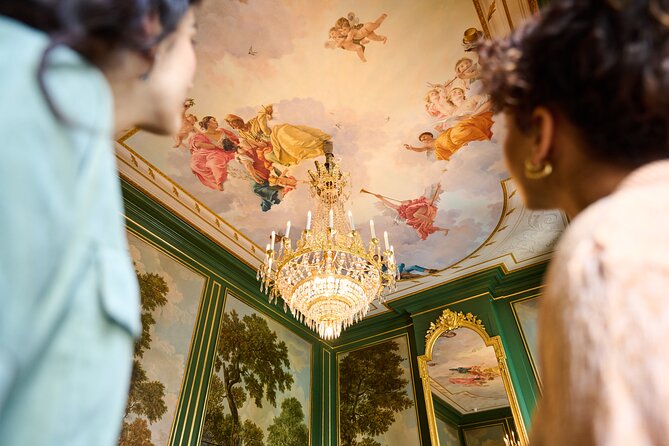
The published opening information lists Monday hours from noon to 5 p.m. for the period from May 16, 2024, through December 8, 2026. Because opening schedules can change, check the current hours before you go. One of the clearest practical lessons from this experience is not to assume the museum is open whenever you happen to pass by.
A one-hour visit gives you room to combine it with other central Amsterdam sights. Allow enough time to reach Herengracht 386, locate the entrance, and get settled with your mobile ticket. The stated duration covers the attraction itself, not the time you spend getting there.
The group maximum is 12 people. That is a relatively small limit for a museum activity and should help keep the visit manageable, although the experience remains centered on the audio tour rather than personal attention from a live guide.
Service animals are allowed, and most people can participate. The supplied details do not describe every accessibility feature of the building, so if you have specific mobility needs, contact the provider before booking.
Cancellation is flexible if you keep an eye on the clock. You can cancel for a full refund up to 24 hours before the start time. Cancellations or changes made inside that 24-hour window are not accepted for a refund, and the cut-off follows Amsterdam local time.
Who will enjoy the Museum of the Canals most?
I would recommend this visit to anyone who wants context for Amsterdam’s most famous feature. It is particularly suitable for:
- First-time visitors who want to understand the Canal Ring
- History and architecture fans
- Families who prefer displays with models and projections
- Visitors with only an hour to spare
- People who appreciate audio-led museums
- Anyone planning several walks along the canals
It may be less satisfying if you want a long, highly detailed account of Amsterdam’s past. The museum has a clear limit: it covers a lot in a short time, so certain subjects receive only a quick explanation.
The experience also works well for mixed groups. One person can listen closely to the audio while another studies the models and rooms. The museum does not depend only on reading long blocks of text, which can make the visit easier for younger visitors.
Museum of the Canals or simply walking the waterways?
You do not have to choose between the museum and an outdoor canal walk. They serve different purposes.
Walking the Canal Ring gives you scale, atmosphere, and the chance to notice details at your own pace. The museum gives you a framework for understanding what you are seeing. The strongest plan is to combine them.
If your schedule permits, visit the museum before a longer canal walk. You may recognize patterns in the streets and waterways more easily afterward. Visiting later also works, especially if your first days in Amsterdam have left you curious about how the city was formed.
A canal cruise is another different experience, but this ticket does not include one. The museum is land-based and focused on explanation. Do not book it expecting a boat ride or panoramic city views.
Should you book this Amsterdam canal museum visit?
Book it if you want an informative, well-paced introduction to Amsterdam’s canals and you value a historic setting, interactive displays, and an audio guide. The projected doll’s house and construction models give the hour some charm, while the period rooms and garden keep it connected to the real city outside.
Skip it if your priority is only outdoor sightseeing or if you want an exhaustive account of Amsterdam’s past. At $22.29, the ticket is best value for people who will listen, study the models, and use the information during later walks around the Canal Ring.
For most first visits, I think it earns a place in the schedule, especially after you have begun exploring Amsterdam. Just check the Monday opening hours, reserve ahead if your timetable is fixed, and allow the full hour rather than treating it as a five-minute stop.
FAQ
Where is the Museum of the Canals located?
The museum is at Herengracht 386, 1016 CJ Amsterdam, Netherlands, in the heart of Amsterdam.
How long does the visit take?
The experience lasts approximately one hour.
What does the ticket include?
Admission to the Museum of the Canals is included, along with access to its permanent multimedia tour, classical period rooms, garden, and changing exhibitions.
Is an audio guide provided?
Yes. The visit includes a multilingual audio guide, and English is offered.
What are the published opening hours?
The provided schedule lists Monday opening hours from 12:00 p.m. to 5:00 p.m. for May 16, 2024, through December 8, 2026. Check the current schedule before visiting.
Is the ticket available on a mobile phone?
Yes. The ticket is offered as a mobile ticket.
Can I cancel for a refund?
You can cancel at least 24 hours before the experience start time for a full refund. Cancellations or changes made less than 24 hours before the start time are not refunded or accepted.
More Museums
- Amsterdam: Van Gogh Museum Ticket and City Canal Cruise
★ 4.6 · 3,899 reviews - Amsterdam: Rembrandt House Museum Entrance Ticket
★ 4.7 · 3,385 reviews - Amsterdam: Van Gogh Museum Ticket & Canal Cruise
★ 4.5 · 3,304 reviews - Amsterdam: NEMO Science Museum Ticket
★ 4.4 · 2,979 reviews
More Canal Cruises
- Amsterdam Luxury Canal Cruise + Unlimited Drinks & Bites option
★ 5.0 · 30,518 reviews - Amsterdam: 75 Minute City Canal Cruise with Audio Guide
★ 4.4 · 17,501 reviews - Amsterdam: City Centre Canal Cruise
★ 4.2 · 12,827 reviews - Amsterdam: City Canal Cruise and Heineken Experience Ticket
★ 4.5 · 5,367 reviews
Just added around Amsterdam
- Amsterdam 1-Hour Rickshaw Tour★ 4.9 · 17 reviews
- Amsterdam: Canal Cruise and Jewish Cultural Quarter Tickets★ 4.2 · 17 reviews
- Keukenhof Gardens and Tulip Experience Tour from Amsterdam★ 4.8 · 17 reviews
- Marken, Volendam and Edam: Private Full-Day Tour★ 4.6 · 18 reviews
- Discover Amsterdam’s city center in this Outside Escape game tour★ 4.5 · 18 reviews
- Amsterdam: Personal Travel & Vacation Photographer★ 4.8 · 18 reviews
- Amsterdam: Luxury Saloon Boat Cruise with 3-Course Dinner★ 3.9 · 18 reviews
- Rijksmuseum & Amsterdam City Center Semi-Private Tour 12ppl Max★ 5.0 · 18 reviews
Canal Cruises, compared.
Amsterdam Luxury Canal Cruise + Unlimited Drinks & Bites option
Read our review →
75 Minute City Canal Cruise with Audio Guide
Read our review →

City Canal Cruise and Heineken Experience Ticket
Read our review →
Amsterdam Canal Cruise in Open Boat with Unlimited Drinks Option
Read our review →

Amsterdam Evening Canal Cruise with Live Guide and Onboard Bar
Read our review →
Browse the lists this tour appears in