
REVIEW · VAN GOGH MUSEUM TICKETS
Amsterdam: Van Gogh Museum Guided Tour & Entry Ticket (Max 6 ppl)
Van Gogh rewards a closer look. This 90-minute visit pairs a museum entry ticket with a Dutch art historian, so you get the major paintings and the personal story behind them without wandering aimlessly. I like the maximum six-person group, which gives you room to ask questions, and I like the focus on how Van Gogh’s family, mental health, and changing surroundings shaped his art. The main drawback is time: a tightly planned tour may skip some galleries, and one visitor noted that the second floor was bypassed.
You meet at Paulus Potterstraat 7 and finish inside the Van Gogh Museum at Museumplein 6. I also like that you may remain in the museum after the guided portion ends, giving you a chance to return to paintings that caught your eye. At $168.09 per person, this is a serious splurge, so it makes the most sense if you want interpretation, efficient routing, and personal attention rather than only a ticket.
In This Review
- Key points to know before you book
- Why Van Gogh is better with a guide
- Meeting at Paulus Potterstraat 7
- The Brabant period and The Potato Eaters
- Paris changes the color and pace
- Arles, Gauguin, and the yellow house
- Almond Blossom and Van Gogh’s final years
- How much art will you actually see?
- Is $168.09 per person good value?
- Who will enjoy this most?
- Practical details that matter
- Should you book this Van Gogh Museum tour?
- FAQ
- How long does the Van Gogh Museum guided tour last?
- How many people can join the tour?
- Is admission to the Van Gogh Museum included?
- Can I remain in the museum after the guided tour?
- What language is the tour offered in?
- What is the cancellation policy?
Key points to know before you book

- Six people maximum: A small party makes it easier to hear the guide and ask about particular paintings.
- A life-led route: The tour connects works such as The Potato Eaters, Sunflowers, The Yellow House, and Almond Blossom to Van Gogh’s family and changing circumstances.
- A Dutch art historian leads the visit: Guides including Titia, Lucien, Anke, Cécile, Lucy, Liz, Mercedes, and Genevieve have been praised for clear storytelling and strong art knowledge.
- Ninety minutes of focused viewing: You are guided toward important works, which helps when your Amsterdam schedule is tight.
- You can stay afterward: The guided visit ends at the museum, but your museum access continues for as long as you want.
- Book early for popular times: The museum releases timeslots only three months ahead, and an early reservation cannot guarantee the exact time you request.
Why Van Gogh is better with a guide
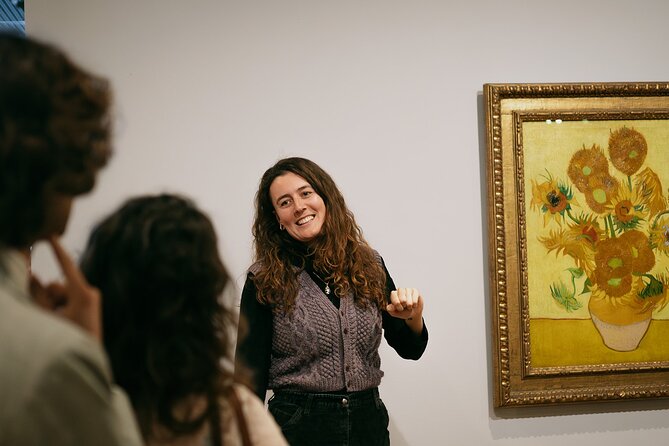
The Van Gogh Museum is not simply a room full of famous paintings. It is a carefully arranged account of a man who began painting seriously at 27 and developed quickly through trial, failure, study, and restless change.
Without context, you can admire the thick brushwork and intense colors, then move on to the next room. With a good guide, you begin to see the links between a painting and the period in which Van Gogh made it. That is the real value here.
The tour follows his development from his dark Brabant period to his experiments in Paris and his troubled time with Paul Gauguin in Arles. The pictures become less like isolated masterpieces and more like pages in a difficult, often moving life.
That approach suits this museum especially well. Van Gogh’s work changed rapidly, and the collection lets you track those changes in one place. A guide helps you notice shifts in palette, subject, brushwork, and mood without turning the visit into a lecture on art terminology.
The strongest praise has gone to guides who make the material personal and easy to follow. Titia has been singled out for her captivating account of Van Gogh’s life. Lucien was appreciated for linking technique and emotion. Cécile has been praised for her storytelling, warmth, and ability to answer questions.
Liz is a particularly good match if you want to see the important works efficiently in a crowded museum. Mercedes brings historical context and humor, while Genevieve has been praised for moving carefully from room to room and allowing time for questions. The individual guide matters a great deal, but the format gives each guide the chance to work with a very small group.
More Attraction Tickets in Amsterdam
- Amsterdam: Van Gogh Museum Ticket
★ 4.7 · 52,054 reviews - Amsterdam: Heineken Experience Ticket
★ 4.6 · 30,055 reviews - Amsterdam: Rijksmuseum Entry Ticket
★ 4.7 · 25,535 reviews
Meeting at Paulus Potterstraat 7
Your starting point is Paulus Potterstraat 7, 1071 CX Amsterdam. The tour then proceeds to the museum at Museumplein 6, 1071 DJ Amsterdam.
The supplied details do not describe the exact route between the meeting point and the museum, so allow enough time to find the starting address and meet your guide. The area is near public transportation, which makes the visit practical to combine with other Museumplein sights.
Your ticket is mobile, and confirmation arrives at booking. The experience is offered in English. Service animals are allowed, and most people can take part.
The small group is more than a marketing detail. In a six-person party, you are less likely to lose the guide’s explanation in the room, and you can ask why a specific color or figure matters. That personal exchange is hard to get on a large group tour.
It also means the guide can adjust the pace a little. If a particular painting raises questions, you have a better chance of receiving an answer instead of watching the group disappear around the corner.
The Brabant period and The Potato Eaters

The tour begins with the roots of Van Gogh’s art. You learn why he took up the brush at 27 and how his early work developed before the bright colors most people associate with him.
The Potato Eaters is central to this part of the story. Its dark tones and rough, earthy setting reflect Van Gogh’s early interest in working people and rural life. A guide can help you look beyond the famous name and see the choices in the painting: the dim light, the heavy faces, and the cramped meal shared by the family.
This is useful context for anyone who knows Van Gogh mainly through Sunflowers. The early work is not a rough draft of the later paintings. It shows a different artistic purpose and a different emotional world.
The guide also discusses Van Gogh’s relationships with his family, especially his brother Theo. Theo’s practical and emotional support is essential to understanding how Vincent continued working when money, health, and confidence were all uncertain.
The tour’s attention to family is one of its most human features. You hear about Van Gogh’s relationship with his father, his love life, and the role Theo played in his career. Those details do not replace the art. They help explain why certain subjects and moods return throughout his work.
Paris changes the color and pace
The Paris period marks a sharp turn. Van Gogh encountered new artistic ideas and began experimenting with lighter colors, stronger contrasts, and a freer brush.
A guide can make this transition visible as you move through the galleries. Instead of saying only that the paintings became brighter, you learn to look for the signs of an artist testing new methods. The move from the dark Brabant palette to the lively Paris period becomes a story of effort and adaptation.
This part is valuable for first-time visitors, but it also helps if you have already been to the museum. One person who had visited before found that a guide connected Van Gogh’s relationships, family life, asylum period, and changing style in a way that made the familiar collection feel new.
The museum itself is clean and visually striking, with an important collection arranged around Van Gogh’s work and life. The focus remains on the paintings, but the building gives the visit a calm setting after the crowded streets of Amsterdam.
More Museums in Amsterdam
- Moco Museum Amsterdam Entrance Tickets with Banksy & More
★ 4.4 · 10,088 reviews - Amsterdam: The Upside Down Museum Entrance Ticket
★ 4.4 · 9,506 reviews - Amsterdam: Red Light Secrets Museum Entry Ticket
★ 4.2 · 5,722 reviews - Amsterdam’s Weirdest Museum: Believe It or Not!
★ 4.5 · 4,086 reviews
Arles, Gauguin, and the yellow house
The Arles section brings the most dramatic material in the tour. Van Gogh’s time in the yellow house with Gauguin mixed artistic ambition with personal strain.
Here, paintings such as The Yellow House and Sunflowers gain extra weight. You are not only looking at color and composition. You are considering Van Gogh’s hopes for a community of artists, his intense working habits, and the tension that marked his relationship with Gauguin.
The guide also explains how Van Gogh’s mental difficulties appear beside his genius and temper. This needs careful handling, and a strong guide keeps the focus on the person and the paintings rather than treating illness as a cheap explanation for artistic talent.
That balance is one of the reasons the tour receives such high marks. Guides are praised for making the emotional journey clear without losing sight of technique. You can expect an account that places difficult events alongside the actual works in front of you.
The storytelling may become intense in the final galleries. Anke has been praised for sharing small, touching details and for making the last paintings especially moving. If you prefer a purely formal art lesson, this emotional approach may feel like too much. If you want to understand the person behind the canvas, it can make the visit far more memorable.
Almond Blossom and Van Gogh’s final years
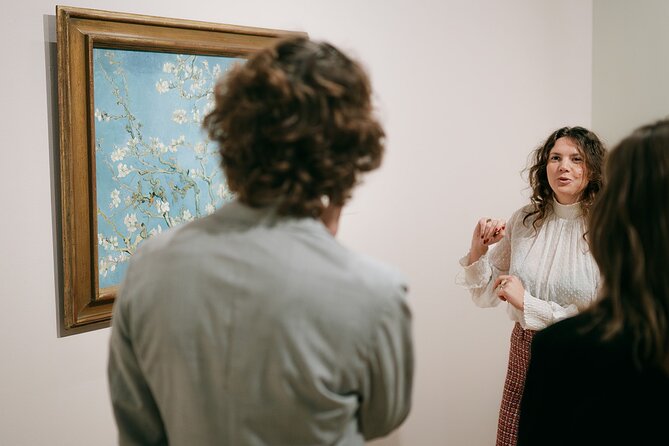
Almond Blossom offers a useful contrast to the heavier mood of other works. Its clear colors and delicate branches show another side of Van Gogh’s range and help you see that his work cannot be reduced to anguish and swirling paint.
The tour covers the final period of his life, including his death at 37 and Theo’s death a few months later. It then asks the practical question behind many famous artists’ stories: who helped make Vincent famous?
Theo’s role is crucial, but the tour also points toward the woman who helped preserve and promote Van Gogh’s work after both brothers had died. That detail gives the ending a wider frame. Van Gogh’s reputation was not created by his paintings alone. Family support, careful preservation, and later advocacy all mattered.
You may find the final part emotionally heavy. Several guides have been praised for bringing visitors to tears with their narration of the late works. That can be a strength, but it is worth knowing before you book. This is not a detached audio-guide stroll. It is a personal account built around loss, ambition, illness, and artistic growth.
How much art will you actually see?
The experience is designed to take you to the main works rather than every room. That is helpful if you have only one afternoon in Amsterdam or want a clear introduction before exploring on your own.
At the same time, a 90-minute route cannot cover everything. One visitor wanted more art and less time standing still, and noted that the second floor was skipped. That is the clearest caution in the available feedback.
Your experience may vary with the guide and the group’s questions, but you should not expect a complete survey of every gallery. The tour is best understood as a guided path through key works and important stages of Van Gogh’s life.
The good news is that your museum access continues after the tour. Use the guided hour and a half to build a framework, then revisit rooms independently. You can linger over a painting the guide treated quickly or see areas that were not part of the route.
That arrangement gives you the best chance of balancing efficiency with freedom. I would not book this expecting the guide to explain every object. I would book it to understand the collection, then use the remaining time to look quietly.
Is $168.09 per person good value?
At $168.09, this is expensive for a 90-minute museum experience. The price is much higher than an entry ticket alone would be, so the value depends on how much you want a personal guide.
For a first visit, the cost can make sense if you are short on time, feel unsure how to read modern art, or want the major works placed in a clear order. A six-person limit also gives you more access to the guide than a large group, and that personal attention is the main reason to pay a premium.
You may not find the price worthwhile if you already know Van Gogh well, prefer to move at your own pace, or want to spend several hours examining every gallery. In that case, a self-guided visit may suit you better.
The ability to remain in the museum after the tour improves the value. You are not forced to leave when the 90 minutes end. Plan to stay and use the guide’s route as your starting point, especially if the group moves past a floor or painting you want to see.
The experience is also booked an average of 53 days ahead, which tells you that popular times can fill early. If you have fixed Amsterdam plans, reserve ahead, but remember that museum timeslots are released only three months in advance. A booking made earlier than that is a preferred request, not a guaranteed time.
Who will enjoy this most?
I would recommend this tour to a first-time Van Gogh visitor who wants the museum to make sense quickly. It is also a strong choice for couples, families with older children, and anyone who enjoys asking questions rather than reading labels alone.
The small group should suit people who value conversation. Guides have been praised for being personable, upbeat, patient, and able to answer questions clearly. That tone can help younger visitors stay engaged, and one family found the experience gave them plenty to discuss for the rest of the day.
Art students and repeat museum visitors may also benefit, particularly if they want to connect the paintings to Van Gogh’s changing methods and relationships. The tour offers a different way to organize material you may already recognize.
I would hesitate to recommend it to someone who dislikes emotional storytelling or wants a slow, gallery-by-gallery examination. The route aims for the highlights, and some time is spent listening while standing. If your priority is maximum independent viewing, the guided format may feel restrictive.
Practical details that matter
The tour is in English and uses a mobile ticket. Confirmation is provided at booking, and the experience is near public transportation.
The meeting point and end point are different, with the tour beginning at Paulus Potterstraat 7 and ending at the Van Gogh Museum at Museumplein 6. Check both addresses carefully before setting out.
Most people can participate, and service animals are allowed. The group cannot exceed six people, which is helpful in a busy museum where hearing the guide can otherwise be difficult.
Free cancellation is available up to 24 hours before the start time for a full refund. Changes or cancellations made inside that 24-hour window are not accepted and are not refunded. The cut-off follows Amsterdam local time.
Should you book this Van Gogh Museum tour?
Book it if you want a focused introduction with a real person guiding the story, especially on a first visit. The best guides, including Titia, Lucien, Cécile, Lucy, Liz, Mercedes, Genevieve, and Anke, have been praised for making Van Gogh’s life and art easier to understand without losing warmth.
The 4.9 rating from 478 reviews and 99 percent recommendation are strong signals, but the practical choice is still yours. Pay the premium if personal interpretation, a six-person group, and a fast route to major works matter to you.
Skip it if you want every gallery, dislike standing while listening, or already have a firm plan for exploring the museum alone. For most first-time visitors with limited time, I think the guide adds enough context to justify the cost, particularly because you can stay afterward and continue on your own.
FAQ
How long does the Van Gogh Museum guided tour last?
The guided experience lasts approximately 1 hour and 30 minutes.
How many people can join the tour?
The group has a maximum of six travelers.
Is admission to the Van Gogh Museum included?
Yes, the museum admission ticket is included.
Can I remain in the museum after the guided tour?
Yes. After the guided portion ends, you can stay in the museum for as long as you want.
What language is the tour offered in?
The tour is offered in English and is led by a Dutch art historian.
What is the cancellation policy?
You can cancel up to 24 hours before the experience begins for a full refund. Cancellations or changes made less than 24 hours before the start time are not accepted and are not refunded.
More Museums
- Amsterdam: Rembrandt House Museum Entrance Ticket
★ 4.7 · 3,385 reviews - Amsterdam: NEMO Science Museum Ticket
★ 4.4 · 2,979 reviews - Amsterdam: Streetart Museum STRAAT Entrance Ticket
★ 4.8 · 2,137 reviews - Moco Museum Amsterdam Admission Ticket with Banksy and more
★ 4.0 · 1,745 reviews
More Van Gogh Museum Tickets
- Amsterdam: Van Gogh Museum Ticket and City Canal Cruise
★ 4.6 · 3,899 reviews - Amsterdam: Van Gogh Museum Ticket & Canal Cruise
★ 4.5 · 3,304 reviews - Van Gogh Museum Amsterdam Exclusive Tour w/ Reserved Entry
★ 5.0 · 1,760 reviews - Van Gogh Museum Tour Reserved Entry Semi Private
★ 5.0 · 1,437 reviews
Just added around Amsterdam
- Amsterdam 1-Hour Rickshaw Tour★ 4.9 · 17 reviews
- Amsterdam: Canal Cruise and Jewish Cultural Quarter Tickets★ 4.2 · 17 reviews
- Keukenhof Gardens and Tulip Experience Tour from Amsterdam★ 4.8 · 17 reviews
- Marken, Volendam and Edam: Private Full-Day Tour★ 4.6 · 18 reviews
- Discover Amsterdam’s city center in this Outside Escape game tour★ 4.5 · 18 reviews
- Amsterdam: Personal Travel & Vacation Photographer★ 4.8 · 18 reviews
- Amsterdam: Luxury Saloon Boat Cruise with 3-Course Dinner★ 3.9 · 18 reviews
- Rijksmuseum & Amsterdam City Center Semi-Private Tour 12ppl Max★ 5.0 · 18 reviews
Van Gogh Museum Tickets, compared.


Van Gogh Museum Amsterdam Exclusive Tour w/ Reserved Entry
Read our review →
Van Gogh Museum Tour Reserved Entry Semi Private
Read our review →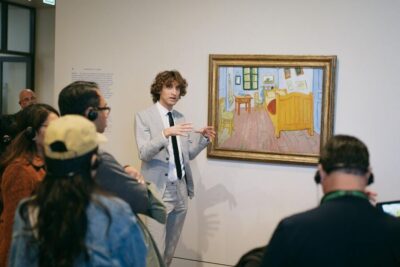
Combo Ticket: Van Gogh Museum Ticket and 1-Hour Canal Cruise
Read our review →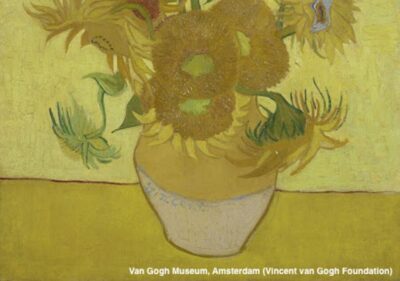
Browse the lists this tour appears in