
REVIEW · ROTTERDAM TOURS
Rotterdam: Architectural Highlights Guided Walking Tour
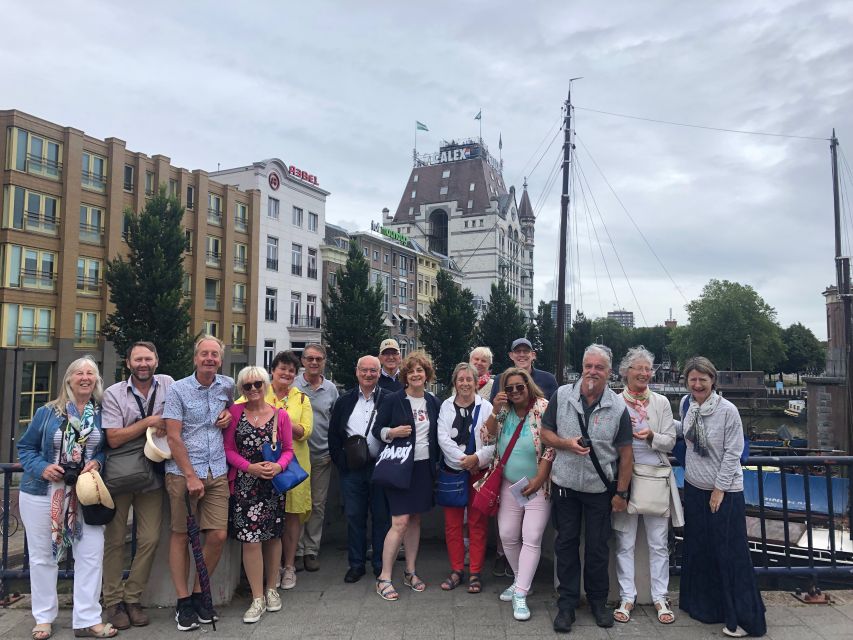
Rotterdam makes architecture part of the conversation. This two-hour walk turns a city of bold shapes, rebuilt streets, and high-rise ambition into a readable story, with a local architect leading you from Rotterdam Centraal to the Maas riverside. I especially like the route’s clear progression through the Lijnbaan, Markthal, and Cube Houses, and I like the way guides connect buildings to war, trade, daily life, and future city plans. The main drawback is pace: covering 3 to 4 kilometers in two hours leaves little time to linger or explore interiors.
You meet beneath the clock at Rotterdam Centraal Station and finish near the river, with the Erasmus Bridge and South Bank development in view. At $53 per person, this is a fair price for a specialist-led introduction, particularly if you want to understand why Rotterdam looks so different from other Dutch cities. Families should note that children from 0 to 12 join free, though parents should consider the distance and the amount of architectural discussion.
In This Review
- Key points at a glance
- Why Rotterdam needs an architecture tour
- Starting beneath the clock at Rotterdam Centraal
- The Lijnbaan and Rotterdam’s postwar experiment
- City Hall, Sint Laurens church, and old Rotterdam
- Timmerhuis and the city’s modern working center
- Inside the Markthal
- The Cube Houses, with room for a critical view
- The riverfront and Erasmus Bridge
- How the pace and walking distance feel
- Guide quality and the English experience
- Is $53 a good value?
- Who should book this Rotterdam walk?
- FAQ
- Where does the Rotterdam architecture tour begin?
- How long is the walking tour?
- Which language is the tour conducted in?
- Is the tour wheelchair accessible?
- Are children allowed to join?
- What is included in the price?
- My verdict on the Rotterdam architecture tour
Key points at a glance
- A city story told through buildings: Learn how Rotterdam changed after the 1940 bombing and how rebuilding shaped its modern identity.
- A practical station-to-river route: Start at Rotterdam Centraal and walk through the central districts toward the Maas.
- Major landmarks in one compact outing: See the Lijnbaan, City Hall, Timmerhuis, Sint Laurens church, Markthal, Cube Houses, and Erasmus Bridge.
- An architect’s way of looking: Guides explain design choices, urban planning, and how buildings function, not just what they look like.
- Strong value for a specialist tour: The $53 fee includes the walk and architect guide, with no transport or food costs added.
- Easy to schedule: The tour is in English, wheelchair accessible, available for private groups, and cancellable up to 24 hours before departure.
Why Rotterdam needs an architecture tour
Rotterdam can feel confusing at first. Its center lacks the continuous old-world fabric you find in Amsterdam, Delft, or Leiden. Instead, you see modern buildings beside older survivors, postwar planning beside daring experiments, and a skyline that keeps changing.
That contrast is the point. On your own, you might simply photograph an unusual façade and move on. With an architect beside you, the buildings become evidence of Rotterdam’s past and its ambitions. You learn to look at scale, purpose, materials, public space, and the choices that shaped the rebuilt city.
The 1940 bombing is central to this story. Much of Rotterdam’s historic center was destroyed, and the city had to decide what to do with the open space left behind. The result was not a careful copy of the past. Rotterdam chose wide routes, new housing, modern commercial districts, and room for large projects.
That choice still defines the city. The tour is especially useful if you want more than a parade of famous buildings. It explains how architecture reflects industry, shipping, housing needs, postwar confidence, and the city’s plans for the decades ahead.
More Walking Tours in Rotterdam
- Rotterdam Walk: Hilights, Gems, Architecture & WWII | 2 or 3hrs
★ 5.0 · 149 reviews - Rotterdam: Highlights & Gems Walking Tour with Dutch Local
★ 5.0 · 133 reviews - Rotterdam 2-Hour Walking Tour | Discover The City With A Local
★ 4.5 · 111 reviews
Starting beneath the clock at Rotterdam Centraal
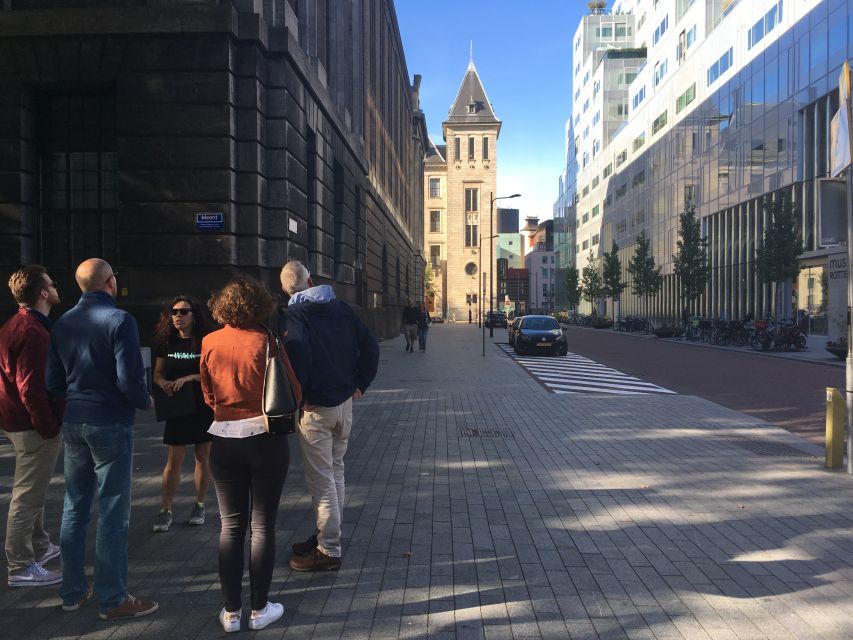
The meeting point is easy to find: beneath the clock at Rotterdam Centraal Station. This is a sensible starting place because the station itself introduces Rotterdam’s taste for big, modern gestures.
You begin by looking at the newly built Central Station before walking into the city center. The station is more than a place to catch a train. It represents Rotterdam’s role as a major transport hub and sets the tone for the rest of the walk: practical infrastructure can also become a civic landmark.
Your guide may use historical photographs or other visual material to help explain how the city changed. Sylvie, who has worked as an architect in Rotterdam, was praised for using a historical photo book while explaining the city’s architectural development. That sort of aid matters here because modern Rotterdam is easier to understand when you can compare present streets with the city before and after wartime destruction.
From the start, expect plenty of explanation. Guides such as Tania, Tanya, Silvia, and Sylvie have been singled out for their preparation, friendly manner, and ability to place design in its social setting. The exact guide can vary, but the experience depends heavily on who leads your departure.
The Lijnbaan and Rotterdam’s postwar experiment
The route moves into the Lijnbaan area, one of the key places for understanding postwar Rotterdam. It is associated with a new way of organizing city shopping and pedestrian movement, rather than simply rebuilding the old street pattern.
Here, your guide discusses the relationship between commercial space, traffic, and public life. You get a clearer idea of why Rotterdam’s center feels planned instead of accidental. The Lijnbaan also helps explain the city’s willingness to try something new after the war.
I like this part because it gives you a useful lens for the rest of the walk. Instead of asking only if a building is attractive, you start asking who it serves, how people move through it, and how it fits into the city.
The route is set, so you should not expect to choose every stop or visit a selection of social housing projects. One participant wished the itinerary included more housing, which is a fair limitation. This is a highlights walk through central Rotterdam, not a full course in every part of the city’s urban development.
City Hall, Sint Laurens church, and old Rotterdam
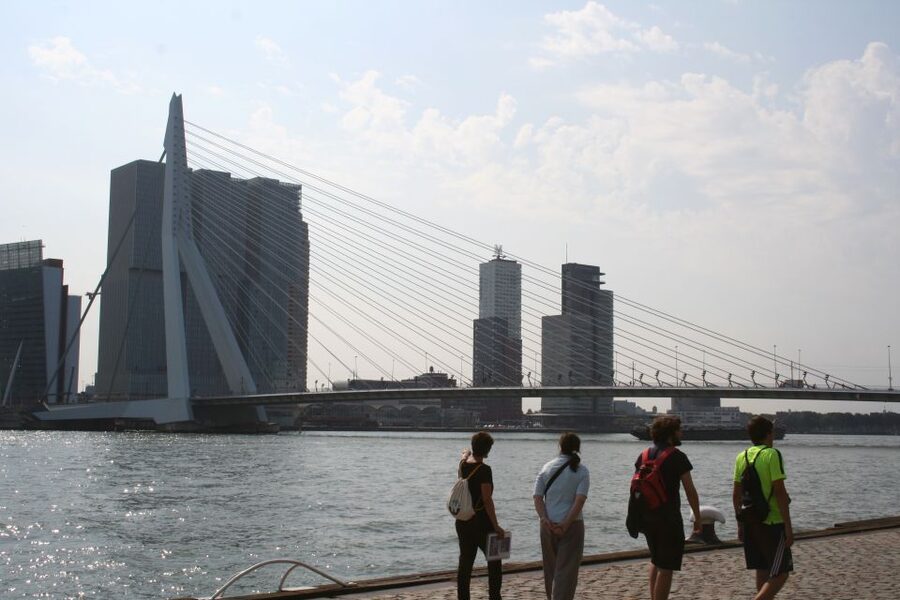
The walk then brings together some of the city’s older civic and religious landmarks. City Hall offers a useful contrast with the newer structures around it, while the Sint Laurens church is a reminder of Rotterdam’s prewar past.
This combination is one of the tour’s strengths. You are not looking at modern architecture in isolation. You see how the surviving or restored older buildings relate to the new center that grew around them.
The church is especially important as a visual marker of what came before the bombing. Rotterdam’s rebuilt center did not erase every older trace, and the contrast between the historic church and the city’s later buildings makes the story more vivid.
The guide also discusses everyday life, the industrial past, and the way Rotterdam developed as a working port city. That broader setting keeps the tour from becoming a technical lecture. You learn why the city needed certain kinds of buildings and streets, not just which architect designed them.
More walking tours:
- Walking Rotterdam Food Tour
★ 5.0 · 89 reviews - Rotterdam: City Center Walking Tour
★ 4.5 · 88 reviews - Rotterdam Architecture Highlights Walking Tour
★ 5.0 · 66 reviews - Rotterdam Walking Tour and Harbor Cruise
★ 4.7 · 59 reviews
Timmerhuis and the city’s modern working center
The Timmerhuis brings you back to contemporary Rotterdam. It is one of the city’s notable newer buildings and gives the guide a chance to talk about modern offices, public functions, and the changing central district.
Expect an explanation of how the building relates to its surroundings and how newer projects fit into Rotterdam’s long-term plans. Several participants valued this city-planning angle. One particularly useful benefit is that you begin to see Rotterdam as a city still being made, not a finished collection of landmarks.
The discussion can be detailed, but the guides generally adjust explanations to the group. A participant with little architecture background appreciated receiving information at an accessible level, while others enjoyed extended conversations about design and urban planning.
That flexibility is important. If you already know the basic history of Rotterdam, you can ask more specific questions. If architectural terms are new to you, the guide can explain the ideas through the buildings in front of you.
Inside the Markthal
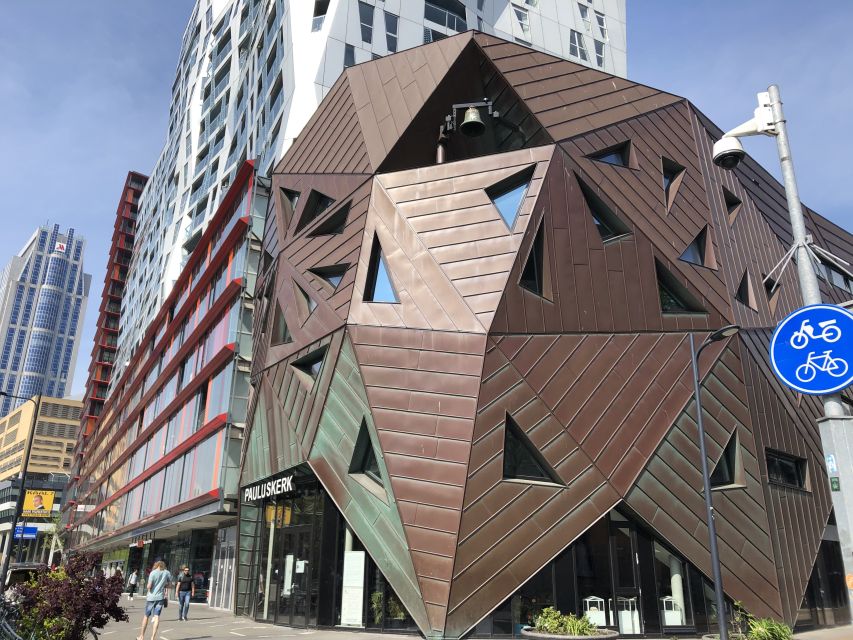
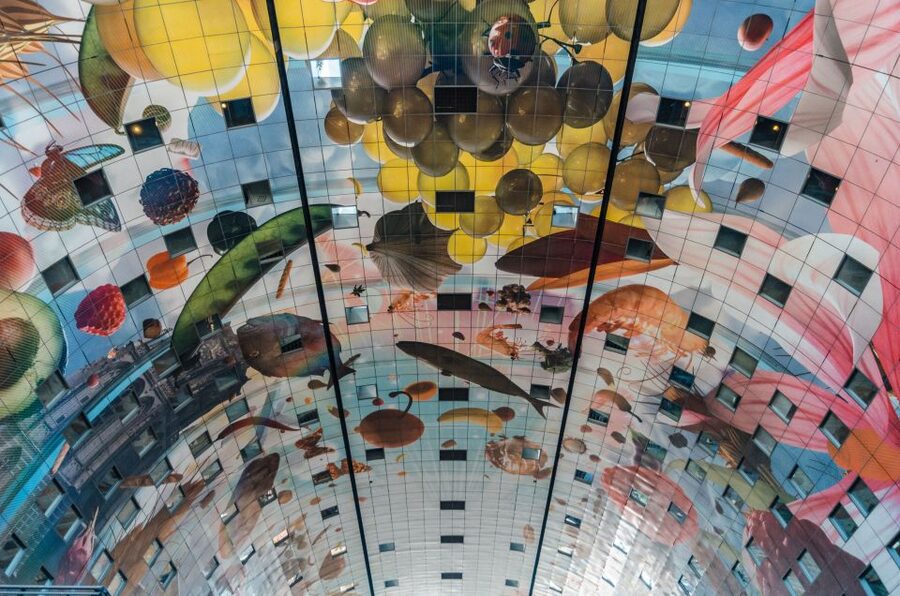
The Markthal is one of the most memorable stops because you go inside rather than simply view it from the street. The huge market building combines food stalls, apartments, and a dramatic interior artwork, giving you a chance to see how Rotterdam mixes public activity with large-scale construction.
Your guide explains the building as part of the city center’s redevelopment. The Markthal is not only a place to admire. It is also a working space, and that makes it a useful example of how a landmark can serve daily needs while attracting attention.
You should not count on a meal or drinks being included. Food and beverages are separate, so treat the stop as part of the architecture route, not a scheduled tasting break. If you want to buy something, the tight two-hour schedule may leave little time to sit down.
The Markthal is also a good place to pause mentally. After the station, shopping district, civic buildings, and church, the tour shifts toward Rotterdam’s most recognizable modern icons. You begin to see how the city uses architecture to create identity.
The Cube Houses, with room for a critical view
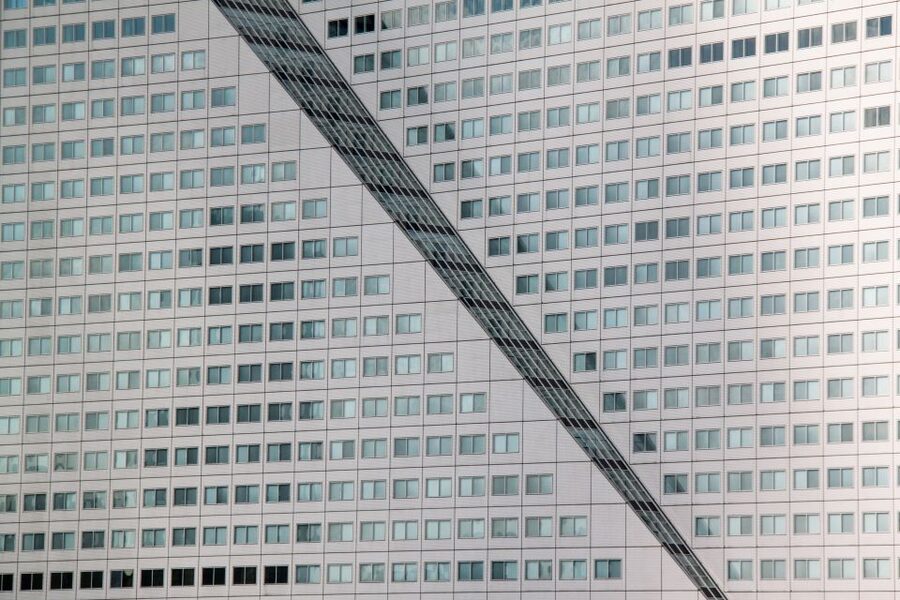
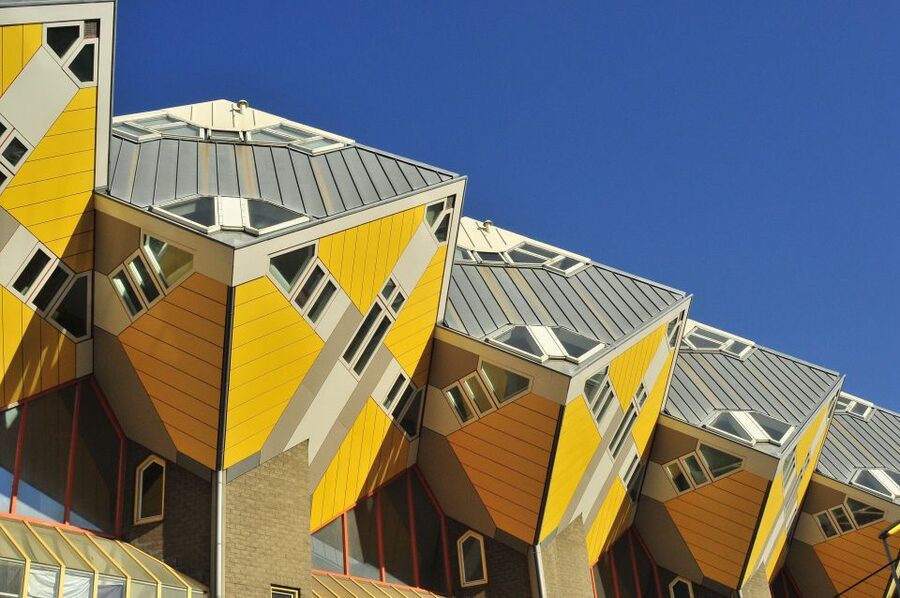
The row of Cube Houses is one of the route’s headline sights. Their tilted forms are easy to recognize and even easier to photograph, but the most useful part of seeing them with an architect is learning how to question the design rather than accepting it as automatically successful.
The houses were designed as a bold experiment in urban living. Their shape creates a striking public space, yet the unusual angles also raise practical questions about furniture, daylight, and ordinary domestic life.
One participant specifically appreciated that the tour included the Cube Houses, while another felt it was time to stop pretending they were a good idea. That split is helpful. You should expect admiration for the concept and a frank look at its limitations, not a sales pitch.
The tour passes the iconic row, but the available details do not promise an interior visit. If entering a Cube House is your main goal, confirm the arrangement before booking. The real value here is the guide’s explanation of the idea, the surrounding urban design, and the difference between an eye-catching concept and comfortable everyday housing.
The riverfront and Erasmus Bridge
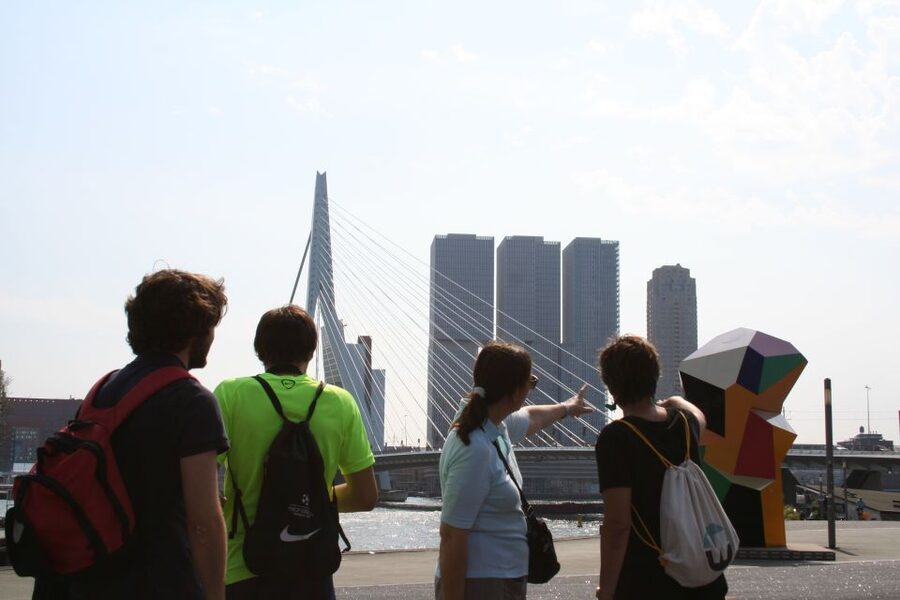
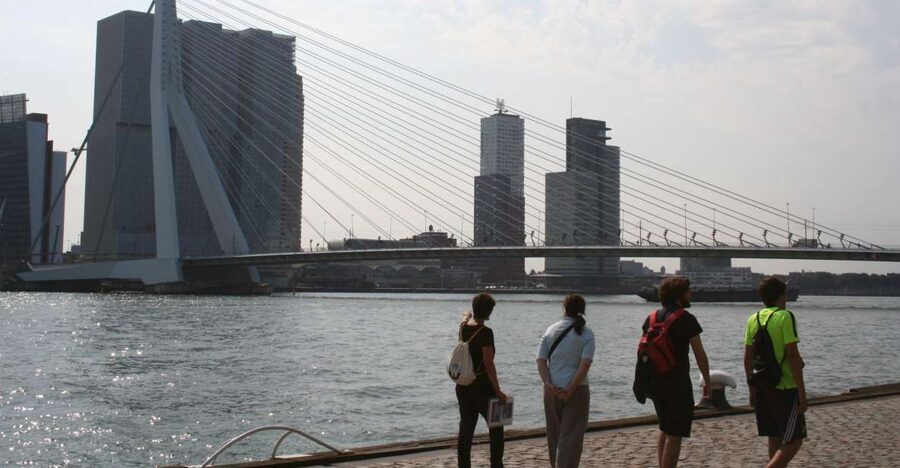
The final section takes you toward the Maas riverside, where Rotterdam’s scale opens up. You see new development on the South Bank and the high-rise skyline, including the Erasmus Bridge, one of the city’s best-known landmarks.
This ending works well because it ties the earlier stops to Rotterdam’s future. The city is not only preserving old traces and displaying experimental buildings. It is also adding offices, housing, infrastructure, and public spaces along the river.
The Erasmus Bridge gives you a strong visual finish. From this area, the skyline makes more sense because you have already learned how Rotterdam rebuilt its center and planned for growth. You can also better understand the link between the port, the river, and the city’s economic life.
Do not expect a long waterfront visit. The walk lasts two hours, and the route covers a lot. Several participants wished the tour lasted four hours, while others felt they left with a good sense of the city. I would treat the riverfront as a conclusion and orientation point, not a leisurely sightseeing session.
How the pace and walking distance feel
The route covers about 3 to 4 kilometers. That is manageable for many people, but the guide is talking much of the time, so you need comfortable shoes and enough energy to stay attentive.
The walk operates rain or shine. Rotterdam weather can change quickly, so bring suitable clothing rather than counting on ideal conditions. There are no included transport costs, but the route itself is designed as a walk from Central Station to the river.
Pacing appears to depend on the guide and the group. Silvia was praised for pausing so slower participants could catch up, though one person wanted a few more pauses. If you walk slowly, have mobility concerns, or want time for photos, tell the guide early.
The tour is listed as wheelchair accessible. Even so, the distance and weather are worth considering when deciding if this particular route suits you. Accessibility does not automatically mean the pace will feel comfortable for every participant.
Guide quality and the English experience
The strongest feature of this outing is the guide. The best departures are led by someone who can explain architecture without making you feel as if you need a degree in it.
Tania and Tanya received repeated praise for warmth, preparation, and lively explanations. Silvia and Sylvie were also valued for combining architecture with local history and urban planning. One guide was described as having a strong Spanish accent that was occasionally difficult to follow. That is a minor but useful point for anyone who finds spoken English challenging.
The tour is conducted in English. Guides seem willing to answer questions and adjust the conversation, but you should ask for clarification if a technical point or accent is hard to catch. The experience is at its best when you treat it as a conversation, not just a moving lecture.
Private groups are available. That may be worth considering for families, architecture students, or anyone who wants to spend more time on particular buildings. A small group also makes it easier to ask questions, though the standard group size is not specified.
Is $53 a good value?
At $53 per person, the cost is reasonable for a two-hour tour led by a practicing or locally based architect. You are paying for interpretation, not transport, food, entry tickets, or a full-day itinerary.
The value is highest if you are new to Rotterdam. In two hours, you receive a framework for understanding the city’s major central landmarks, its postwar rebuilding, and its future development. That can improve the rest of your visit because you will recognize patterns instead of seeing isolated oddities.
The value is less clear if you want a slow photo walk or a specialist tour focused on one narrow subject. The set route moves efficiently, and some stops receive only a short explanation. The tour also does not cover every neighborhood or promise social housing projects.
Free cancellation up to 24 hours ahead and the option to reserve now and pay later make the booking less rigid. Children aged 0 to 12 can join free, which makes the price more appealing for families, although the content and distance may suit older children better.
Who should book this Rotterdam walk?
I would choose this tour if you are visiting Rotterdam for the first time, enjoy buildings but do not always know what you are looking at, or want the city’s wartime and postwar story explained by someone who understands design.
It also suits architecture fans who want a thoughtful overview before exploring on their own. The route gives you a useful map of the central sights, and the guide can point out details you might otherwise miss.
I would hesitate if you dislike walking in poor weather, need long breaks, or want extensive time inside each landmark. I would also choose another format if housing policy, port infrastructure, or a single architectural period is your main interest.
FAQ
Where does the Rotterdam architecture tour begin?
Meet the guide at Rotterdam Centraal Station, underneath the clock.
How long is the walking tour?
The tour lasts two hours and covers approximately 3 to 4 kilometers.
Which language is the tour conducted in?
The live guided tour is conducted in English.
Is the tour wheelchair accessible?
Yes, the activity is listed as wheelchair accessible. You should still consider the 3 to 4 kilometer distance and the fact that the tour operates in all weather.
Are children allowed to join?
Yes. Children from 0 to 12 years old can join free. Parents should consider the walk’s distance, content, and two-hour duration.
What is included in the price?
The price includes the walking tour and an architect guide. Food, drinks, and transportation costs are not included.
My verdict on the Rotterdam architecture tour
I recommend booking this walk if you want Rotterdam to make sense quickly. The route covers the city’s best-known central examples, but its real strength is the explanation connecting them to the 1940 bombing, industrial growth, daily life, and long-term planning.
Book it early in your Rotterdam stay, then use what you learn to revisit the Markthal, Cube Houses, or riverfront at your own pace. If you want a leisurely outing, add your own time afterward. Two hours gives you a strong introduction, but Rotterdam has enough ideas, experiments, and arguments in its buildings to fill much longer.
Just added around Rotterdam
- Rotterdam: Summer Cocktail Cruise★ 4.7 · 18 reviews
- Skip the Line: SS Rotterdam Steam Ship Entrance Ticket★ 4.5 · 18 reviews
- Rotterdam: Beer Brewery Noordt Tastings with Optional Tour★ 4.9 · 18 reviews
- Guided 3-Hour Food Tasting Experience in Rotterdam★ 5.0 · 19 reviews
- Private Day Trip from Amsterdam to Rotterdam and the Hague★ 5.0 · 19 reviews
- Rotterdam Must Do Tour: Highlights, History, WW2 and Architecture★ 5.0 · 20 reviews
- Private Day Tour: Rotterdam and The Hague. English or Spanish★ 4.5 · 20 reviews
- Private Day Tour to Keukenhof Gardens – from Amsterdam/Rotterdam★ 5.0 · 20 reviews
Rotterdam Tours, compared.



Kinderdijk UNESCO World Heritage Entry Ticket
Read our review →
Browse the lists this tour appears in