
REVIEW · ROTTERDAM TOURS
Rotterdam: Highlights & Gems Walking Tour with Dutch Local
Rotterdam rewards walkers who keep looking up. This three-hour tour connects the city’s medieval beginnings, wartime destruction, bold rebuilding, and future-facing architecture with the help of local guide Yoreh. I especially like the mix of major sights and quieter corners, plus the way Yoreh uses photos and maps to show what Rotterdam looked like before and after WWII. The stroopwafel stop halfway is a small but welcome touch.
I also like that the tour brings together places many first-time visitors would struggle to connect on their own, from the Museum Quarter and Veerhaven to the Maritime District, Cube Houses, and Markthal. The main consideration is physical: you will cover about 6 kilometers, close to 15,000 steps, with periods of standing and a fairly steady walking pace.
In This Review
- Key points at a glance
- Why this Rotterdam walk is different
- Meeting Yoreh beside the black Santa Claus
- From the Rotte River to a modern port city
- From Santa Claus to the Museum Quarter
- Veerhaven and Rotterdam’s harbor character
- The Erasmus Bridge and skyline views
- Maritime District and Oude Haven
- Cube Houses and the problem of living inside art
- Markthal, the flavorful finish
- Pace, access, and what to wear
- Who gets the most from this tour
- Should you book the Rotterdam walking tour?
- FAQ
- How long does the Rotterdam walking tour last?
- How much does the tour cost?
- Where does the tour start?
- How can I recognize the guide?
- Which languages are available?
- Is the tour wheelchair accessible?
- How much walking is involved?
- Is there a restroom break?
- Are food and drinks included?
- Can I book a private tour?
Key points at a glance
- A local guide with a personal connection: Yoreh combines city history, personal stories, humor, photos, and practical advice.
- Rotterdam in several time periods: The route links the medieval Rotte River settlement, harbor growth, WWII, postwar rebuilding, and future plans.
- Big architecture in one walk: You pass the Depot Boijmans Van Beuningen, Erasmus Bridge, Cube Houses, Markthal, and more.
- Useful orientation for a short stay: The tour helps you understand the city’s layout and suggests places to eat, photograph, and visit later.
- A serious walk with small comforts: Expect around 15,000 steps, restroom and sitting breaks, photo tips, and Dutch stroopwafels.
- Good flexibility: Small-group and private options are available, and the route can avoid stairs for wheelchair users.
Why this Rotterdam walk is different
Rotterdam is not a city that reveals itself in one postcard view. Its old center was heavily destroyed during WWII, so much of what you see today is modern, experimental, and deliberately different from the historic centers of Amsterdam, Delft, or Leiden.
That makes a local guide especially useful. Without context, the Cube Houses can look like a clever photo stop, and Markthal can seem like a giant food court with an enormous ceiling mural. Yoreh’s role is to connect those sights to the city’s rebuilding choices, port economy, architecture, and daily life.
I like the tour’s broad sweep. You are not only taken to one famous building, then sent on your way. You move through several districts and see how Rotterdam changes from older streets to harbor-side landmarks and daring new construction.
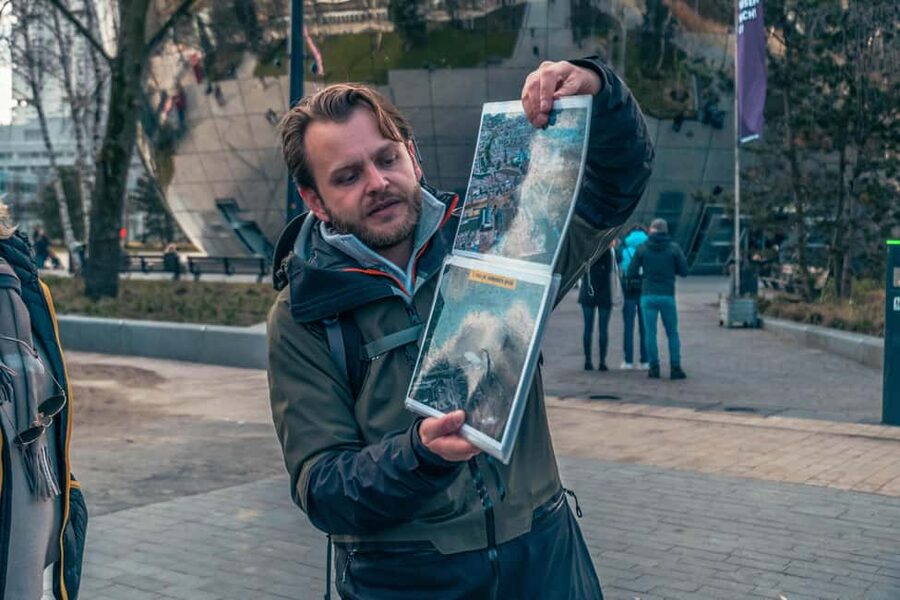
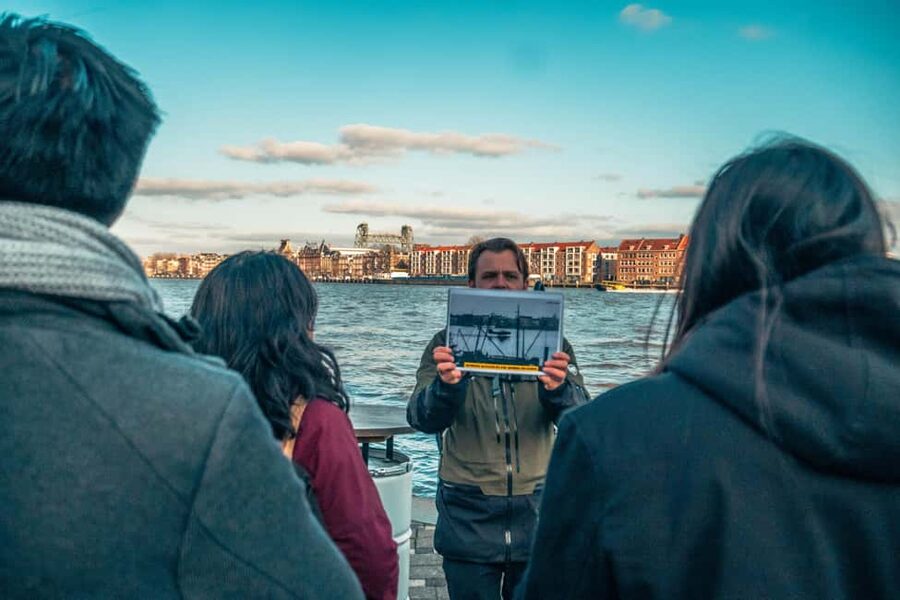
Yoreh also brings supportive photo material, including images and visual references from the city’s past and possible future. That matters here. Rotterdam’s story is easier to grasp when you can compare the present streetscape with earlier versions of the city.
More Walking Tours in Rotterdam
- Rotterdam: Architectural Highlights Guided Walking Tour
★ 4.8 · 215 reviews - Rotterdam Walk: Hilights, Gems, Architecture & WWII | 2 or 3hrs
★ 5.0 · 149 reviews - Rotterdam 2-Hour Walking Tour | Discover The City With A Local
★ 4.5 · 111 reviews
Meeting Yoreh beside the black Santa Claus
The tour begins at Oude Binnenweg 137, in front of the Swan gift shop and beside the large black Santa Claus statue. Look for the yellow Rottourdam umbrella, which is the clearest sign that you have found the group.
Arrive at least five minutes early. If you are late, contact the guide, but the stated waiting limit is only five minutes after the official start time. That is worth taking seriously, since a walking tour cannot easily pause for a missing participant.
The meeting point is easy to reach from Rotterdam Centraal by tram. Tram 4 toward Heemraadsplein, tram 6 toward Heemraadsingel, and tram 8 toward Spangen serve the area. From the cruise terminal, tram 5 toward Rotterdam Centraal gets you off at Kruisplein, followed by about a five-minute walk. Tram 3 toward Central Station stops at Beurs, from where the walk takes about ten minutes.
You can use a contactless debit or credit card on Dutch trains, buses, trams, and metro services. That removes one small nuisance from getting to the start.
From the Rotte River to a modern port city
Early in the walk, the story reaches back to the 13th century, when Rotterdam began on the banks of the Rotte River. The city grew from a modest trading settlement into one of Europe’s great port centers.
The useful point here is not simply memorizing dates. You begin to see why Rotterdam has such a practical, outward-looking character. Trade, shipping, engineering, and rebuilding all shaped the city. Yoreh’s explanations cover the harbor, industry, customs, important people, and everyday life, so the city feels like more than a collection of unusual buildings.
The WWII section is central to understanding modern Rotterdam. The destruction forced the city to make choices that older Dutch centers never had to make on the same scale. Instead of restoring everything exactly as it was, Rotterdam rebuilt with new materials, new street plans, and a willingness to test architectural ideas.
This is where the visual aids help most. A photograph or map can show the gap between the old city and the city you are walking through now. Yoreh’s storytelling also includes personal anecdotes from growing up in Rotterdam, adding a local voice to the larger historical account.
From Santa Claus to the Museum Quarter
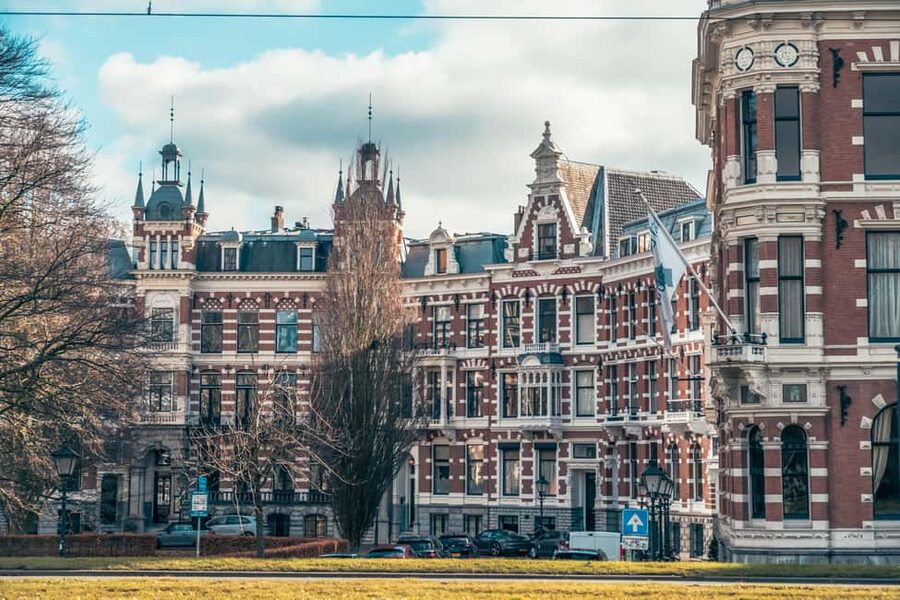
The first listed stop is Santa Claus, the oversized public sculpture near the starting area. It is an odd and memorable introduction to Rotterdam’s public art scene, and it gives the tour an early bit of humor before the route moves toward more serious architectural subjects.
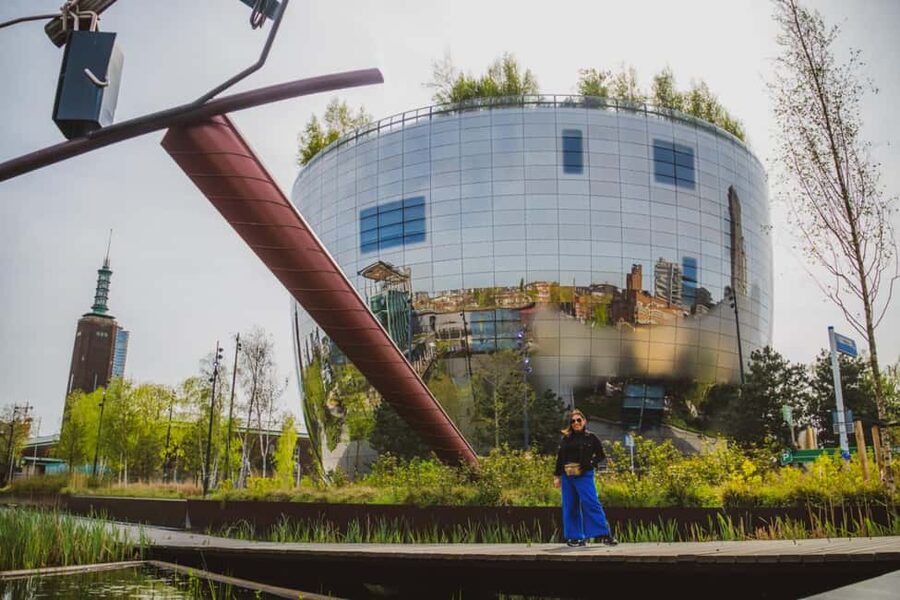
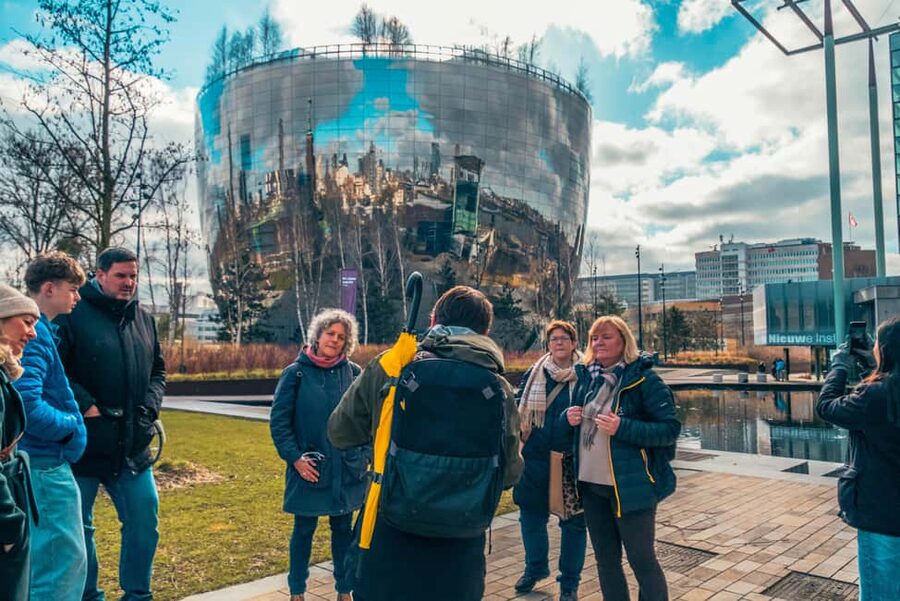
You then pass the Depot Boijmans Van Beuningen. The building is recognizable for its reflective, rounded form and its role in the Museum Quarter. The tour passes by rather than taking you inside, so you should not expect an art collection visit or indoor museum time.
That is not necessarily a weakness. The walking tour is designed as a city orientation, and the exterior helps you understand Rotterdam’s willingness to make museums part of the public streetscape. If you want to see the Depot’s interior or collection afterward, treat this stop as a preview rather than a substitute.
The Museum Quarter portion also helps link art, architecture, and urban planning. You will hear about the city’s current look and its future plans, not only its older buildings. For photographers, this part of the route offers useful advice about angles and photo locations.
More walking tours:
- Walking Rotterdam Food Tour
★ 5.0 · 89 reviews - Rotterdam: City Center Walking Tour
★ 4.5 · 88 reviews - Rotterdam Architecture Highlights Walking Tour
★ 5.0 · 66 reviews - Rotterdam Walking Tour and Harbor Cruise
★ 4.7 · 59 reviews
Veerhaven and Rotterdam’s harbor character
Veerhaven brings a different mood. After the modern geometry around the Museum Quarter, this harbor area offers a softer contrast and a chance to consider Rotterdam’s maritime identity from another angle.
The stop is passed by, so the value comes from the guide’s explanation and the changing streetscape rather than a formal visit. Yoreh’s harbor and shipping stories give the area meaning, especially if you are trying to understand how a port city functions beyond the dramatic skyline.
The tour also moves through the Shipping Quarter and Maritime District. These names can blur together if you explore alone, but walking through them with a local helps you notice the relationship between water, commerce, housing, and public space.
There are sitting opportunities at selected points when weather permits. That helps, since three hours is a long time to remain on your feet. Still, you should not treat this as a gentle stroll. The pace needs to stay steady so the group can cover the route and still finish on time.
The Erasmus Bridge and skyline views
The Erasmus Bridge is one of Rotterdam’s essential sights. Its sweeping white design has become a symbol of the rebuilt city, and the approach gives you some of the best broad views on the walk.
The tour passes by the bridge rather than promising an extended bridge crossing or a special access experience. You should expect time for explanation and photos, but not unlimited stopping. The guide specifically notes that photographs are possible while keeping a steady pace.
This balance is important. A good city walk gives you enough time to frame a picture, but it cannot become a private photo shoot for every participant. Yoreh’s tips on good photo spots add practical value, especially if you plan to return later with a camera or phone.
The bridge also works as a visual link between parts of Rotterdam. From here, you can better appreciate the city’s skyline and its mixture of old harbor areas, modern towers, and experimental buildings. Rotterdam’s architecture makes more sense when viewed as a conversation between past damage, present needs, and future ambitions.
Maritime District and Oude Haven
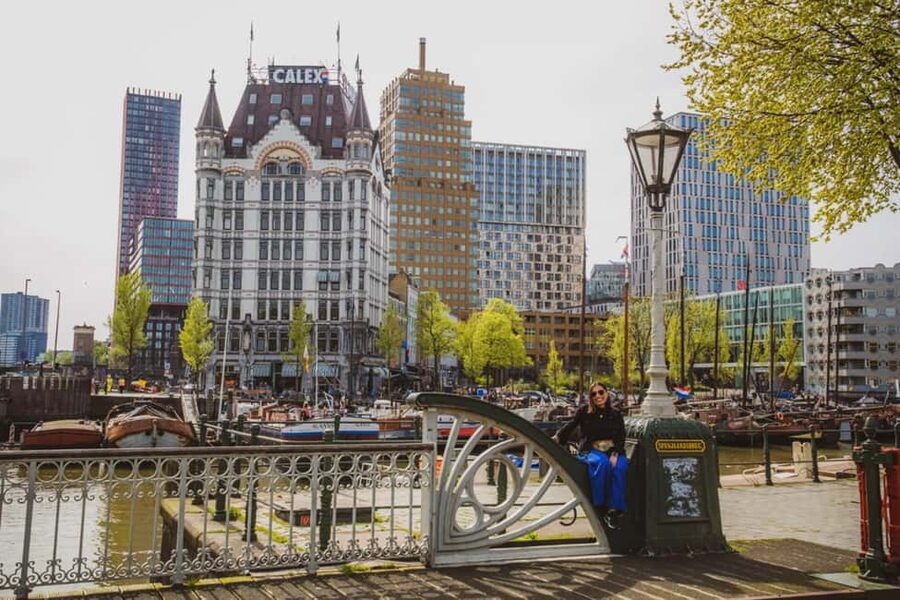
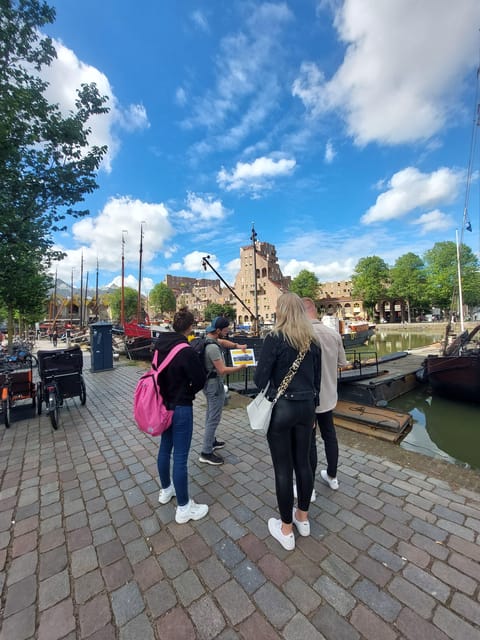
The Maritime District and Oude Haven show how Rotterdam uses its waterfront. The Oude Haven, or Old Harbor, brings the city’s working maritime past closer to the center, while the surrounding buildings show how harbor areas can become part of modern urban life.
These stops are passed by, not treated as separate museum visits. That keeps the tour moving and gives you a broad look at several neighborhoods, though visitors hoping for long stops at each harbor may find the schedule brisk.
I like this part because it helps explain Rotterdam’s scale. The city can feel spread out and confusing on a first visit. Moving from the bridge toward the old harbor gives you a practical mental map, so later you can return to a favorite district without wandering blindly.
The guide also answers questions about public transport, restaurants, and things to see after the walk. That advice can be especially helpful if you have only one day in Rotterdam or are visiting from a cruise ship.
Cube Houses and the problem of living inside art
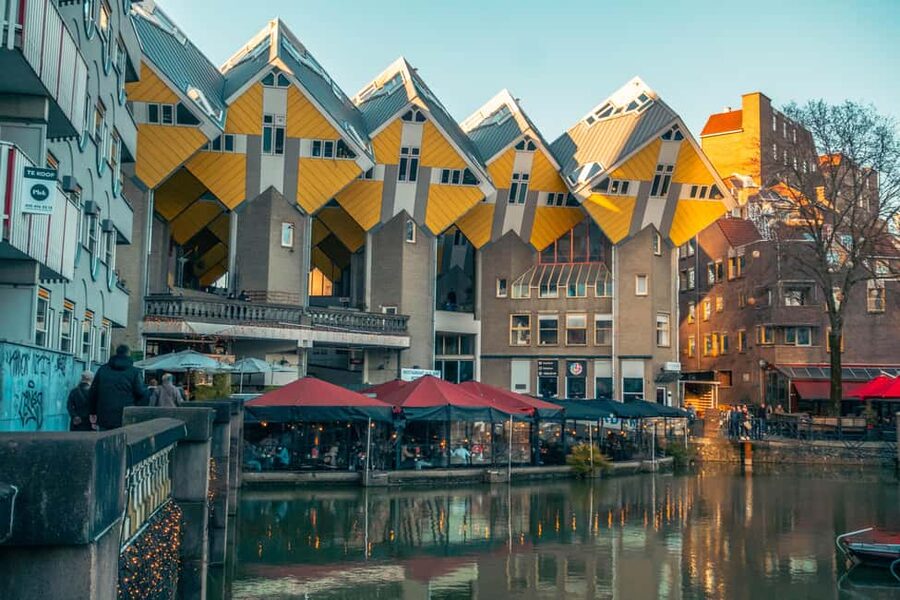
The Cube Houses are one of Rotterdam’s most photographed sights. Their tilted yellow forms are playful, strange, and difficult to understand at a glance. The tour gives you more than a quick look, explaining how the design fits Rotterdam’s larger interest in unusual housing and urban experiments.
The practical catch is that you pass by the Cube Houses rather than receiving a guaranteed interior visit. If you want to see what one feels like from inside, you will need to arrange that separately.
Even from the street, the buildings raise useful questions. How do people furnish rooms with angled walls? What happens when a city treats housing as an architectural statement? A local guide can turn a photo stop into a conversation about how Rotterdam lives with its bold designs.
The Cube Houses also sit close to the Oude Haven and Markthal, so the route brings several signature sights together without requiring another long trip across town.
Markthal, the flavorful finish
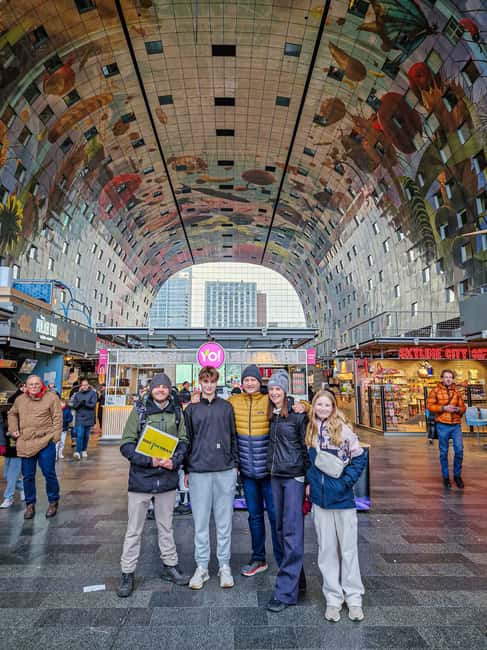
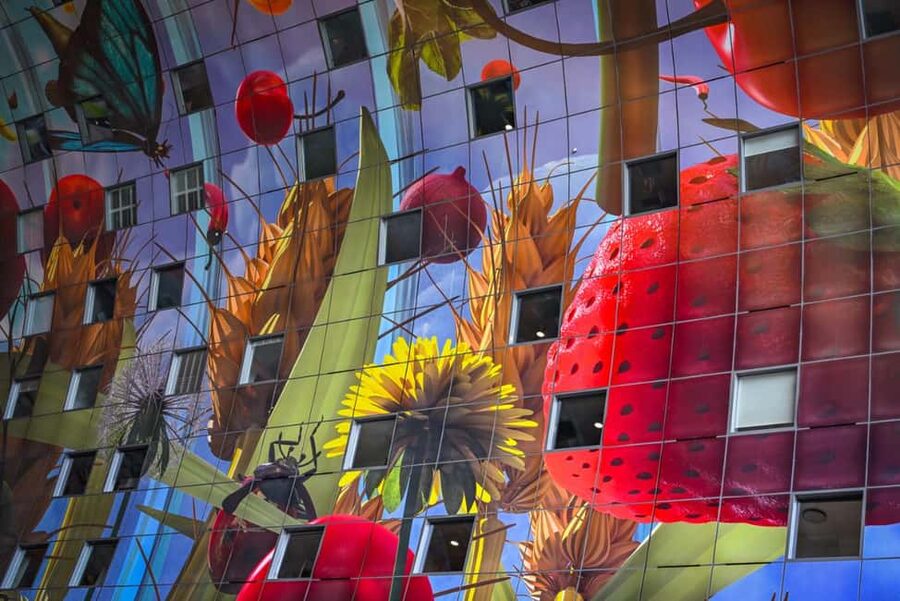
Markthal is the only listed stop described as a visit, and it makes a sensible finish. Its enormous interior artwork, often compared to a modern Sistine Chapel, turns a food market into an architectural attraction.
The tour ends with suggestions for what to eat inside. That is more useful than simply being told that the market is worth visiting. By the final part of a three-hour walk, you may be hungry, and Markthal gives you a chance to choose from many food options in one place.
The itinerary lists Market Hall, Westnieuwland 501, as a drop-off location. The activity information also says the tour ends back at the meeting point, so I would confirm the exact finish when booking, especially if you need to catch a train or return to a cruise ship.
Markthal works well as a final stop because it gathers several themes from the tour: new architecture, urban renewal, food, public life, and Rotterdam’s confidence in doing things differently.
Pace, access, and what to wear
Plan for roughly 6 kilometers and up to 15,000 steps. You will stand for longer periods, walk stairs in some parts, and keep moving between explanations. Comfortable shoes are not optional, and weather-appropriate clothing will make a real difference.
There is a restroom break halfway, along with small sitting breaks at selected locations when conditions are dry. Stroopwafels provide a typical Dutch snack and a quick energy boost, but they are not a full meal, so eat beforehand if you tend to get hungry while walking.
The tour is wheelchair accessible, and stairs or steps can be avoided on the route. The restroom is also wheelchair accessible. Because the route can still involve long periods of walking and standing, it is not recommended for people with back, hip, or foot problems, or for highly pregnant participants.
City events or extreme weather can cause a slight route change and may make the tour a little longer or shorter. That flexibility is sensible in a working city, but you should keep a little space in your schedule.
Who gets the most from this tour
I would choose this tour if you want Rotterdam to make sense quickly. It suits first-time visitors, cruise passengers with a day in the city, families with older children, and anyone interested in architecture, port history, WWII, or urban design.
The tour has worked well for families with teenagers, partly because Yoreh mixes serious history with humor and personal stories. It can also suit solo visitors, since a small group and an engaging guide make the city feel less anonymous.
You may want a different experience if you prefer slow museum visits, long café stops, or a short stroll with little physical effort. This is an orientation walk with serious ground to cover, not a relaxed two-hour wander.
At $46 per person, the value depends on how much use you make of the information. For that price, you receive three hours with a local guide, a small-group setting, visual material, a snack, restroom and sitting breaks, photo advice, and food suggestions for Markthal. If you are new to Rotterdam, those connections can save you time and help you choose what to revisit.
The private option may be worthwhile for families or groups with specific interests, particularly architecture, WWII, food, or photography. A standard small group should be enough for most people who want a lively introduction.
Should you book the Rotterdam walking tour?
Book it if you want a strong first look at Rotterdam and do not mind walking. The best reasons are Yoreh’s clear enthusiasm for his home city, the use of photos and maps, the mix of famous sights and less obvious corners, and the practical advice for the rest of your stay.
I would schedule it early in your visit. You will get your bearings, learn which districts deserve more time, and finish at Markthal with an easy place to eat. Bring good shoes, arrive early at the black Santa Claus statue, and keep your camera ready, but do not expect to stop at every building for long.
FAQ
How long does the Rotterdam walking tour last?
The tour lasts three hours. City events or extreme weather can make the route slightly longer or shorter.
How much does the tour cost?
The listed price is $46 per person.
Where does the tour start?
It starts at Oude Binnenweg 137, in front of the Swan gift shop and beside the large black Santa Claus statue.
How can I recognize the guide?
Look for the yellow Rottourdam umbrella.
Which languages are available?
The live tour guide is available in Dutch and English.
Is the tour wheelchair accessible?
Yes. Steps and stairs can be avoided on the route, and the restroom is wheelchair accessible.
How much walking is involved?
The tour covers about 6 kilometers and approximately 15,000 steps.
Is there a restroom break?
Yes. A restroom break is provided halfway through the tour.
Are food and drinks included?
Typical Dutch stroopwafels are included halfway through the walk. The guide also suggests places to eat inside Markthal, but a full meal is not listed as included.
Can I book a private tour?
Yes. A private group option is available.
Just added around Rotterdam
- Rotterdam: Summer Cocktail Cruise★ 4.7 · 18 reviews
- Skip the Line: SS Rotterdam Steam Ship Entrance Ticket★ 4.5 · 18 reviews
- Rotterdam: Beer Brewery Noordt Tastings with Optional Tour★ 4.9 · 18 reviews
- Guided 3-Hour Food Tasting Experience in Rotterdam★ 5.0 · 19 reviews
- Private Day Trip from Amsterdam to Rotterdam and the Hague★ 5.0 · 19 reviews
- Rotterdam Must Do Tour: Highlights, History, WW2 and Architecture★ 5.0 · 20 reviews
- Private Day Tour: Rotterdam and The Hague. English or Spanish★ 4.5 · 20 reviews
- Private Day Tour to Keukenhof Gardens – from Amsterdam/Rotterdam★ 5.0 · 20 reviews
Rotterdam Tours, compared.




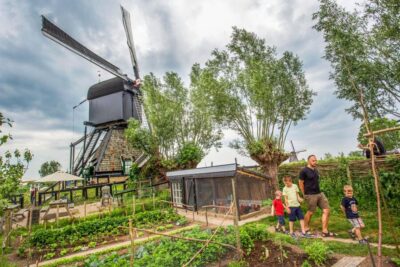
Kinderdijk UNESCO World Heritage Entry Ticket
Read our review →
Browse the lists this tour appears in