
REVIEW · WWII & JEWISH HISTORY TOURS
Small Group Tour to Nazi WWII concentration camp from Amsterdam
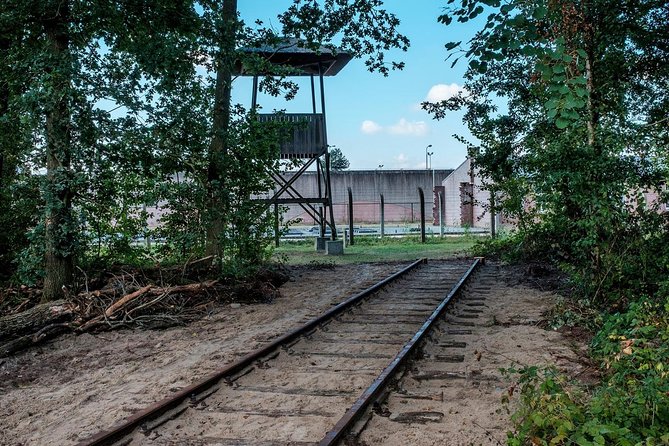
History feels different when you can walk through it. This six-hour excursion from Amsterdam takes you to Nationaal Monument Kamp Vught, the former Nazi concentration camp known during the war as Herzogenbusch. I like the included round-trip transport from central Amsterdam, and I especially like the mix of museum exhibits, reconstructed camp structures, and time for quiet reflection. The main consideration is the price, $199.55 per person, which feels fair only if you value a guided historical visit rather than a simple museum outing.
The small format can make a real difference. The advertised highlights describe a group of up to eight, while the general booking information allows as many as 16, so check the group size when you reserve. I also like that you receive both an audio guide and help from the tour leader, but the quality of the live commentary may depend on which guide is working that day. Eva receives especially warm praise, while Sarah is also described as an excellent guide.
In This Review
- Key points to know before booking
- From Amsterdam to Kamp Vught
- Entering Nationaal Monument Kamp Vught
- The children’s memorial and the names behind the numbers
- Walking to the execution area
- Why the small group matters
- What the personal storytelling adds
- Is $199.55 a fair price?
- Who should book this experience?
- Should you book the Kamp Vught tour?
- FAQ
- How long does the tour last?
- What time does the tour start?
- Where does the tour meet in Amsterdam?
- Does the tour return to Amsterdam?
- How long is the drive to Kamp Vught?
- What is included in the price?
- Is lunch included?
- Is there a live guide at the camp?
- How many people can join the tour?
- Is the tour suitable for children?
- Can I cancel for a refund?
- What happens if the operator cancels?
Key points to know before booking
- Kamp Vught held about 31,000 prisoners: The visit gives you a direct look at one of the Netherlands’ major wartime detention sites.
- The children’s memorial lists 1,269 names: This is one of the most affecting parts of the visit, especially for families and younger adults.
- Eva’s personal family story is a major strength: Her accounts of relatives who hid during the Holocaust add a human scale to the historical facts.
- The drive takes roughly 75 to 90 minutes each way: That time is used for background information, though road accidents can cause serious delays.
- The museum visit is partly self-guided: You have an audio guide and time to explore, rather than a guide leading every minute inside the exhibitions.
- The tour is not recommended for children under 10: The subject matter is difficult, and even older children may find the visit upsetting.
From Amsterdam to Kamp Vught
The day begins at 8:45 a.m. at Aloha, De Ruijterkade 151, near Amsterdam’s central transport area. The precise meeting point matters. The departure spot is described as being by the bowling alley, directly under the giant bowling pin, so arrive at least 15 minutes early and follow the instructions on your ticket carefully.
You travel in an air-conditioned vehicle with bottled water, a soft drink, and a snack included. Lunch is not included, though the museum has a café where you can buy drinks and snacks. That makes the outing easier, but I would still avoid arriving hungry, since the day is tightly planned and lunch is not built into the schedule.
The drive is usually around one hour and 15 minutes to one hour and 25 minutes. Guides use this time to explain the Second World War, the camp, and the wider Dutch setting. Several participants found the road commentary a major part of the day, especially when Eva was leading. Her family story, including relatives who hid from the Nazis and dealt with the war’s effects afterward, gives the history a personal connection without replacing the broader facts.
There are a couple of practical limits. One person found it difficult to hear the guide in the van, particularly without a microphone. If you cannot hear, say so promptly rather than waiting until the visit is over. Traffic can also change the schedule. One journey took an extra hour and a half after two motorway accidents, an unusual problem but a useful warning if you have a train, flight, or cruise departure later that day.
More WWII and Jewish history tours:
- Amsterdam: Life of Anne Frank and World War II Walking Tour
★ 4.8 · 10,467 reviews - Anne Frank Walking Tour Amsterdam Including Jewish Cultural Quarter
★ 5.0 · 1,879 reviews - Amsterdam: Dutch WWII Resistance Museum Entry Ticket
★ 4.7 · 951 reviews
Entering Nationaal Monument Kamp Vught
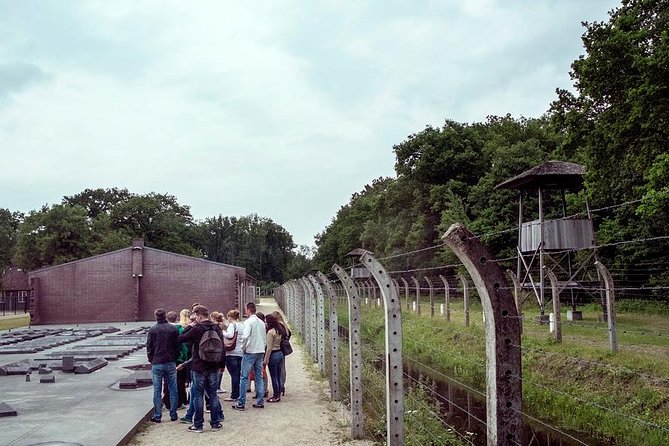
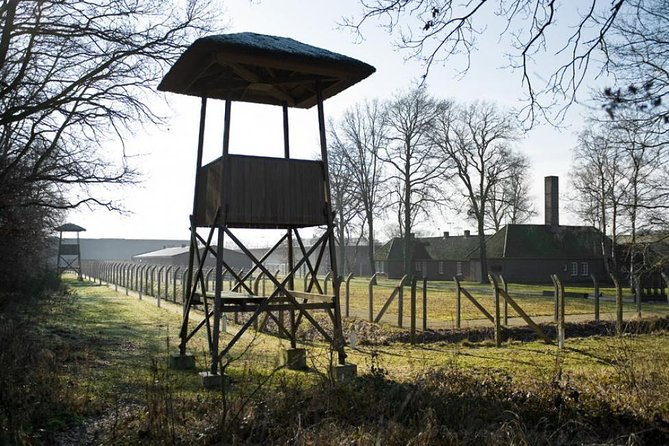
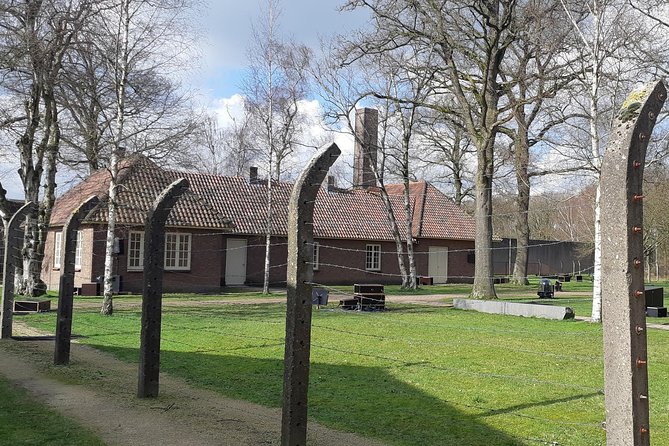
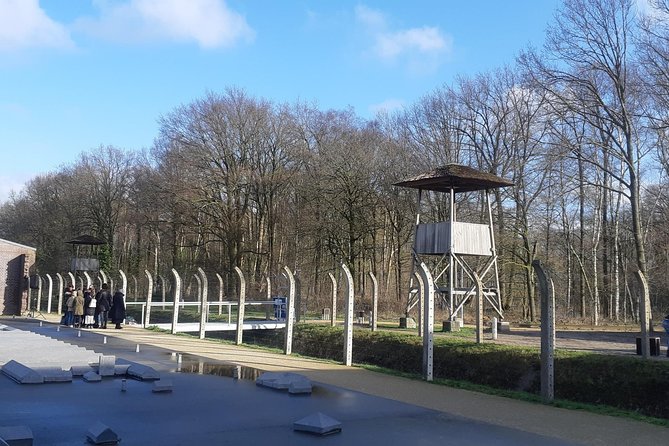
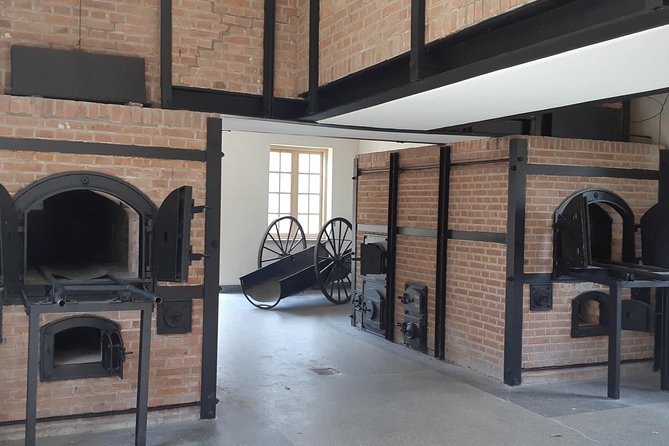
The main visit lasts about three hours, though some people spend closer to 90 minutes looking around. The grounds include reconstructed watchtowers, barracks, a crematorium, memorials, wooded paths, and the museum and memorial center.
Do not expect a preserved camp in the same way you might see at some larger memorial sites. Much of the original camp is gone, so the visit depends on a mixture of surviving traces, reconstructions, signs, exhibits, and carefully marked locations. That can require more imagination, but it also makes the memorial work feel deliberate. You are asked to picture the camp as a functioning prison complex while standing in a place that has been changed by time.
The reconstructed watchtowers and barracks help you understand the physical arrangement of the site. They are not simply photo stops. They show how controlled movement, surveillance, and confinement shaped daily life. The crematorium is another difficult stop, presented as part of the camp’s documented history rather than as a dramatic attraction.
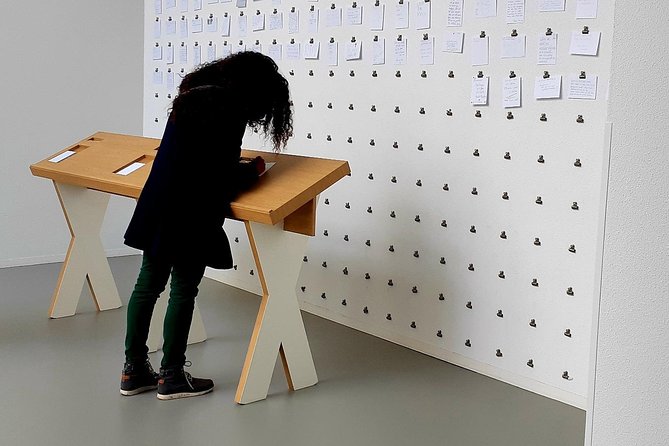
The memorial center and museum provide the clearest factual structure. Here, the audio guide gives you information at your own pace. This is useful if you want to pause at a particular exhibit, move more slowly, or take a quiet moment away from the group.
The tradeoff is that the museum portion is not always a fully guided walk. One participant would have preferred a guide inside to explain each section and answer questions on the spot. The tour leader generally covers much of the historical background during the drive and outdoors, while the museum itself is explored with the audio guide. If you prefer constant explanation, that arrangement may feel less personal than expected.
The children’s memorial and the names behind the numbers
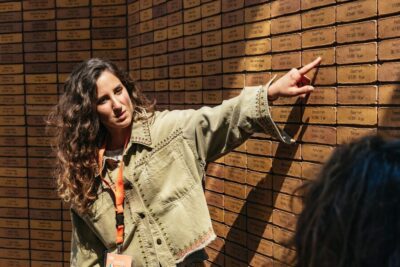
The children’s memorial is one of the most powerful parts of Kamp Vught. It lists the names and ages of 1,269 Jewish children deported in June 1943.
Numbers can make mass persecution feel distant. Names and ages do the opposite. You see that these were children with individual lives, not an abstract figure in a textbook. The memorial is centrally located on the camp grounds, so it becomes a natural point for silence and reflection during the visit.
This is also where the tour may feel especially hard for families. One parent brought a 12-year-old who had not yet studied this period at school and found the visit an important early lesson. The official guidance says the activity is not recommended for children under 10, and I would treat that as a serious suggestion rather than a minor age note.
Older children and young adults may learn a great deal here, but maturity matters more than the number on a passport. The subject includes imprisonment, deportation, murder, and the suffering of children. Talk with your family before booking so nobody is caught off guard.
Walking to the execution area
After the museum and central camp grounds, there is time to walk through the surrounding woods to the execution area. A memorial there lists the names of prisoners executed at the site.
This section changes the pace of the visit. The museum gives you documents, objects, and historical explanation. The walk into the woods gives you space and silence. The setting is calm, but the memorial’s purpose is unmistakable. That contrast can be unsettling, and it is part of why the visit stays with you.
The outdoor walk also means you should wear sensible shoes and be prepared to spend time outside. The supplied information does not specify the condition of the paths or the amount of walking required, so anyone with mobility concerns should ask the operator before booking.
A few more trips of this kind worth comparing:
- Amsterdam: Van Gogh Museum Ticket
★ 4.7 · 52,054 reviews - Amsterdam Classic Saloon Boat Cruise with Drinks and Cheese
★ 5.0 · 31,825 reviews - Amsterdam Luxury Canal Cruise + Unlimited Drinks & Bites option
★ 5.0 · 30,518 reviews - Amsterdam: Heineken Experience Ticket
★ 4.6 · 30,055 reviews
Why the small group matters
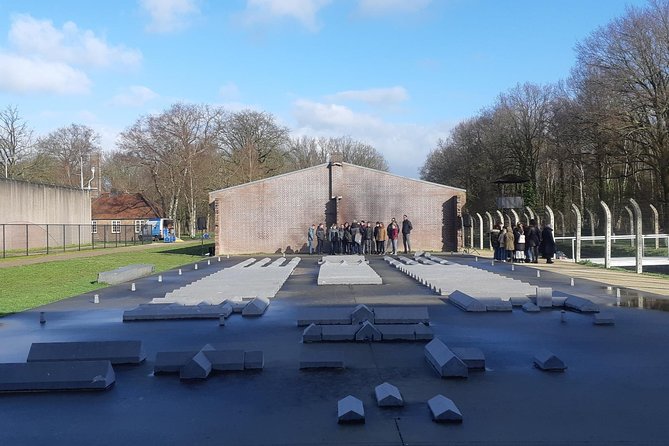
The strongest reason to choose this tour instead of arranging transport alone is the small-group setting. With six or eight people, it is easier to ask questions, hear personal stories, and discuss difficult subjects without feeling lost in a crowd.
The advertised maximum is eight, but the additional booking information permits up to 16 people. That difference is worth clarifying. A group of six offers a notably more personal day. A group of 16 can still be manageable, but it will not have quite the same intimate feel.
The guide also has more room to adjust the presentation. Eva has been praised for asking about the group’s prior understanding and shaping the explanation accordingly. Sarah has also received strong praise for clear historical commentary. Both names appear in the tour’s feedback, but you cannot assume Eva will lead every departure. One disappointing visit came from someone expecting Eva and receiving another guide instead.
That is a fair concern, especially because Eva’s family history is one of the tour’s most praised features. Still, the operator says its guides provide the same core background information and follow the same general approach. If Eva’s personal account is the main reason you want to book, ask in advance if she is scheduled.
What the personal storytelling adds
A visit to a concentration camp should never become a performance, and the best accounts here appear to avoid that trap. Eva’s stories concern her family’s preparation for survival, hiding during the war, and life after liberation. The material is personal, but it is used to connect individual choices and consequences with the larger events.
That approach helps explain why so many people describe the day as moving and educational rather than simply informative. You learn about the camp itself, but you also hear how wartime persecution continued to affect families long after 1945.
The tone matters. Guides have been praised for handling the subject with sensitivity and decorum. That is important at a memorial site. You want clear facts, room for questions, and respect for the people represented there, not theatrical delivery or sensational detail.
Still, live commentary is not identical on every departure. One person felt that the guide gave only a short introduction before arrival. Another found the road presentation very good. The difference may come from the guide, the group’s interest, or people sleeping during the drive. If you want the full explanation, stay engaged on the outward journey and let the guide know you would like more context.
Is $199.55 a fair price?
At $199.55 per person, this is not a cheap half-day outing. The price includes transport from central Amsterdam, admission fees, an air-conditioned vehicle, bottled water, a soft drink, a snack, and an audio guide. It also saves you the work of arranging your own route to Kamp Vught.
The value rests mainly in the guided context. If you only want to enter the museum, independent transport may cost less, though the supplied information does not provide a separate public transport price for comparison. You are paying for the drive, the background talk, the small group, and the chance to discuss the site with a guide.
I think the price makes the most sense for people who want a focused historical day and do not want to manage trains, buses, admission, and timing themselves. It makes less sense if you expect a full-time private guide inside every exhibition or if you are mainly looking for a general tour of Amsterdam.
The tour is frequently booked well ahead, with an average booking time of 71 days. That suggests you should not leave it until the final days of your trip, especially if you need a particular date or hope for a smaller group.
Who should book this experience?
I would recommend it to adults, older teenagers, history-minded visitors, and people whose families were affected by Nazi persecution. It can also suit anyone who wants to understand the Dutch wartime experience beyond Amsterdam’s popular city sights.
This is not a light sightseeing trip. You will spend part of the day with names, deportations, execution sites, and the memory of children who were murdered. That seriousness is the point, but it should match your expectations.
The tour may not suit young children, anyone seeking a relaxed countryside outing, or people who dislike self-guided museum time. It is also a poor choice if you have a strict afternoon appointment, since traffic can extend the return journey.
Free cancellation is available up to 24 hours before the 8:45 a.m. start time. Changes made inside that window are not accepted. The operator also requires a minimum number of participants and may cancel if that number is not reached, offering another date or a full refund. That happened to one booking with only two people, so keep this possibility in mind if you are arranging a cruise-day excursion or have no flexibility.
Should you book the Kamp Vught tour?
Book it if you want a serious, well-organized visit to an important memorial site, with transport handled and a guide who can connect the camp’s history to real family experiences. The children’s memorial, execution area, and reconstructed camp structures give the day a clear emotional and historical focus.
Before paying, confirm the meeting point, expected group size, and scheduled guide. Ask how much live commentary will be offered and remember that the museum portion uses an audio guide. For many people, the combination of personal storytelling, quiet outdoor memorials, and a small group will justify the price.
I would choose this tour for its subject and its personal approach, not for comfort or entertainment. Kamp Vught asks for attention and respect. If that is what you are looking for, this is one of the more meaningful day trips you can make from Amsterdam.
FAQ
How long does the tour last?
The full activity lasts approximately six hours, including transport from Amsterdam and the visit to Kamp Vught.
What time does the tour start?
Departure is at 8:45 a.m.
Where does the tour meet in Amsterdam?
The meeting point is Aloha, De Ruijterkade 151, 1011 AC Amsterdam. The instructions identify the bowling alley and the area directly under the giant bowling pin.
Does the tour return to Amsterdam?
Yes. The activity ends back at the original meeting point.
How long is the drive to Kamp Vught?
The drive usually takes about one hour and 15 minutes to one hour and 25 minutes each way, though traffic can make it longer.
What is included in the price?
The price includes an air-conditioned vehicle, admission fees and taxes, bottled water, a soft drink, a snack, and an audio guide.
Is lunch included?
No. Lunch is not included, although the museum has a café selling drinks and snacks.
Is there a live guide at the camp?
The tour includes a group guide and an audio guide. The live guide provides historical context during the journey and around the site, while the museum portion is largely explored with the audio guide.
How many people can join the tour?
The advertised small-group format is limited to eight people, while the additional booking information lists a maximum of 16. Confirm the expected group size before booking if this matters to you.
Is the tour suitable for children?
The activity is not recommended for children under 10 because of the difficult subject matter. Older children may participate, but parents should consider their maturity and readiness for Holocaust history.
Can I cancel for a refund?
You can cancel at least 24 hours before the local start time for a full refund. Cancellations or changes made less than 24 hours before departure are not accepted for a refund.
What happens if the operator cancels?
The tour requires a minimum number of participants. If that minimum is not reached, you will be offered another date or experience, or a full refund.
Just added around Amsterdam
- Amsterdam 1-Hour Rickshaw Tour★ 4.9 · 17 reviews
- Amsterdam: Canal Cruise and Jewish Cultural Quarter Tickets★ 4.2 · 17 reviews
- Keukenhof Gardens and Tulip Experience Tour from Amsterdam★ 4.8 · 17 reviews
- Marken, Volendam and Edam: Private Full-Day Tour★ 4.6 · 18 reviews
- Discover Amsterdam’s city center in this Outside Escape game tour★ 4.5 · 18 reviews
- Amsterdam: Personal Travel & Vacation Photographer★ 4.8 · 18 reviews
- Amsterdam: Luxury Saloon Boat Cruise with 3-Course Dinner★ 3.9 · 18 reviews
- Rijksmuseum & Amsterdam City Center Semi-Private Tour 12ppl Max★ 5.0 · 18 reviews
WWII & Jewish History Tours, compared.
Life of Anne Frank and World War II Walking Tour
Read our review →
Anne Frank Walking Tour Amsterdam Including Jewish Cultural Quarter
Read our review →
Oranjehotel World War II Prison Entrance Ticket
Read our review →
Anne Frank and Jewish Quarter Amsterdam Private Walking Tour
Read our review →

Anne Frank and Jewish Quarter Walking Tour (TOP RATED)
Read our review →
Browse the lists this tour appears in