
REVIEW · VAN GOGH MUSEUM TICKETS
Van Gogh Museum Private Tour
Van Gogh’s paintings reward a closer look. This two-hour private tour gives you a clear path through the Van Gogh Museum, from early peasant studies to the final works in Auvers. I like the personal guide and the way the visit follows Vincent’s changing style instead of treating the museum as one large room. I also like the shorter format, which fits neatly into a busy Amsterdam day.
The main drawback is the price: $263.20 per person is a serious spend for two hours, especially for a small private party. The tour is also limited to adults aged 18 and older, and you cannot remain in the museum afterward if you carry a thick jacket, suitcase, large bag, or liquids.
In This Review
- Key points at a glance
- Why this short Van Gogh tour works
- Meeting at Cobra Café and entering the museum
- Self-portraits: meeting Van Gogh face to face
- The Dutch years and The Potato Eaters
- Paris from 1886 to 1888: color arrives
- Arles: Sunflowers, The Bedroom, and Japanese prints
- Saint-Rémy on level three
- Auvers and the final room
- What the guides add
- Is $263.20 per person good value?
- Practical details that affect your visit
- Who should book this private visit?
- Should you book it?
- FAQ
- How long is the Van Gogh Museum private tour?
- What is included in the tour?
- Is the tour offered in English?
- Where does the tour begin?
- Where does the tour end?
- Can I stay in the museum after the guided visit?
- Can I cancel for a full refund?
Key points at a glance
- A life story told through paintings: The route moves from Van Gogh’s early portraits and peasant subjects to Paris, Arles, Saint-Rémy, and Auvers.
- Private attention: Only your own group participates, so you can ask questions and set the pace more easily than with a large public tour.
- Strong guide feedback: Sylvia, Giulia, and Kiran are praised for clear explanations, patience, good pacing, and keeping the visit lively.
- Useful audio equipment: A whisper system helps you hear the guide while standing near the paintings.
- A compact two-hour visit: The scheduled stops run from 15 to 20 minutes each, making this a focused introduction rather than an all-day museum session.
- Plan your bags carefully: The meeting point is at Cobra Café, and the visit ends at the museum. Large items and liquids affect how long you may stay afterward.
Why this short Van Gogh tour works
A museum as focused as this one can still feel confusing. Van Gogh’s work is displayed across periods, places, and changing artistic ideas. If you walk in alone, you may admire the famous pictures but miss how sharply his art changes from the dark, earthy Potato Eaters to the bright, broken color of his southern French paintings.
This tour gives you a simple thread to follow. You begin with self-portraits, move through the Dutch period, then follow Vincent to Paris, Arles, Saint-Rémy-de-Provence, and Auvers. That order makes the collection feel like a life unfolding rather than a series of famous canvases.
I especially like the use of a private guide here. You can ask why Vincent copied Japanese prints, what changed after he reached Paris, or how a painting such as Wheatfield with a Reaper fits into the later part of his life. The guide can spend more time on the pictures that catch your eye and move faster past those that do not.
The schedule is tight, but that is part of its appeal. Two hours gives you a strong first look without using your whole day. You can pair it with the Rijksmuseum, a canal cruise, or a walk around Museumplein. Just remember that this is not designed as a slow, independent museum visit. It is a guided highlight route.
More Museums in Amsterdam
- Amsterdam: Van Gogh Museum Ticket
★ 4.7 · 52,054 reviews - Moco Museum Amsterdam Entrance Tickets with Banksy & More
★ 4.4 · 10,088 reviews - Amsterdam: The Upside Down Museum Entrance Ticket
★ 4.4 · 9,506 reviews
Meeting at Cobra Café and entering the museum
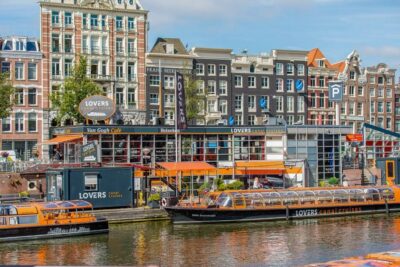
The tour begins at Cobra Café, Hobbemastraat 18, 1071 ZB Amsterdam. The museum itself is at Museumplein 6, 1071 DJ Amsterdam. Both are in a central museum area and near public transportation, which makes the meeting point practical for a sightseeing day.
Allow time to find the café and arrive ready to begin. The supplied details do not state a required arrival time, so your booking confirmation is the place to check for the exact meeting instructions. Confirmation is sent within 48 hours of booking, subject to availability.
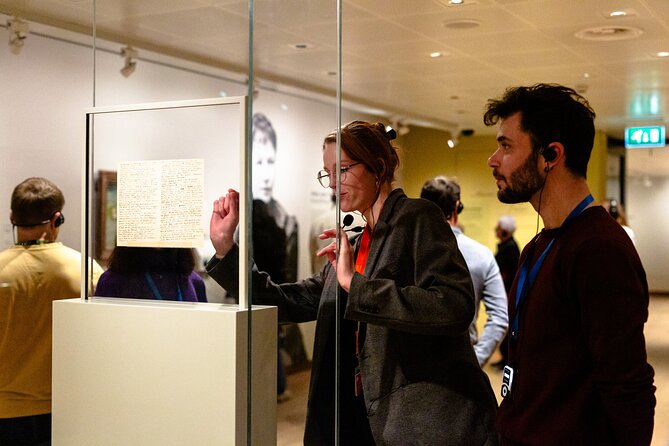
The visit includes a whisper system, a useful touch in a crowded gallery. You hear the guide through an earpiece instead of needing to stand directly beside the guide at every moment. One guest specifically praised how well the earpieces worked, and that matters in a museum where people gather around the best-known works.
The tour is private, but the price is listed per person and group discounts are available. The information does not specify the maximum number of people in a private party, so check the booking details if your group is larger than a couple or small family unit.
Self-portraits: meeting Van Gogh face to face
The first stop focuses on Van Gogh’s self-portraits and lasts about 20 minutes. This is a smart opening because the paintings give you an immediate sense of the man behind the work.
Van Gogh painted himself repeatedly, making the self-portraits useful markers of his development. A guide can point out changes in color, brushwork, clothing, and expression, then connect those changes to the periods you will see later in the museum.
For me, this opening also helps you look properly. Instead of rushing toward Sunflowers or The Bedroom, you start by studying the artist’s face and technique. That makes the later paintings easier to read.
Twenty minutes is enough for a guided introduction, but not enough to consider every self-portrait in detail. If self-portraiture is your main interest, plan to ask which works deserve extra attention during your own museum time, if the bag rules allow you to remain afterward.
The Dutch years and The Potato Eaters
The next 20-minute section takes place in the first-floor foyer and covers paintings connected with Millet, Jules Breton, and Van Gogh’s early interest in rural labor. You see Woman Lifting Potatoes, a wall of portraits titled Head of a Peasant Woman, and The Potato Eaters.
This is one of the most important parts of the route because it shows how far Van Gogh had to travel before reaching the bright, instantly recognizable style many people associate with him. The early works are heavy, serious, and tied to ordinary working people. They are not decorative pictures. They ask you to look at labor, poverty, and daily life.
The references to Jean-François Millet and Jules Breton help place Van Gogh’s ambitions in context. He was not working in isolation. His interest in peasants and field work grew from an admiration for artists who treated rural subjects with dignity.
The Potato Eaters is the natural anchor. A guide can help you notice its dark palette and the deliberate roughness of the figures. You may find this painting less immediately cheerful than the later works, but it gives the rest of the visit more weight.
The foyer setting may feel less intimate than a quiet gallery, and the stop is short. Still, this section earns its place. Without it, the yellow walls and swirling skies of the later paintings can seem to appear from nowhere.
More Private Tours in Amsterdam
- Rijksmuseum Amsterdam Small-Group Tour with Private Upgrade
★ 4.5 · 1,547 reviews - Van Gogh Museum Tour Reserved Entry Semi Private
★ 5.0 · 1,437 reviews - Private Amsterdam Red Light District and Coffee Shop Tour
★ 5.0 · 763 reviews - Anne Frank and Jewish Quarter Amsterdam Private Walking Tour
★ 5.0 · 684 reviews
Paris from 1886 to 1888: color arrives
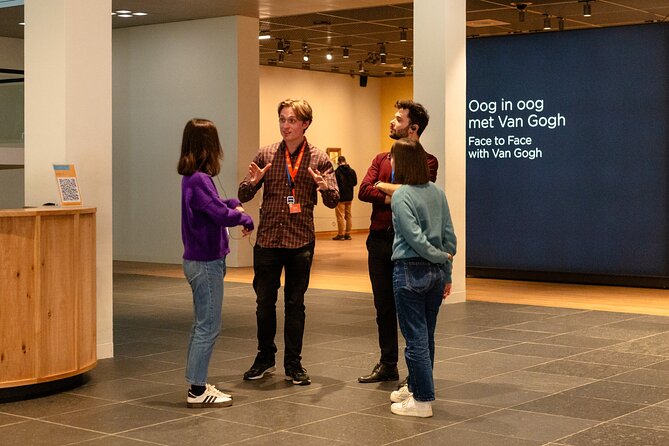
The Paris section lasts another 20 minutes and includes Self Portrait with Felt Hat, Still Life with Absinthe, In the Café: Agostina Segatori in Le Tambourin, and Garden with Courting Couples.
This is where the tour shows a clear change in direction. Van Gogh moved to Paris between 1886 and 1888, and the city brought him into contact with new ideas about color and modern painting. The works listed here allow you to track that shift through portraits, still life, café culture, and gardens.
The Self Portrait with Felt Hat is particularly useful as a comparison with the earlier self-portraits. Look for the difference in handling and color, not only the face. The picture can act as a bridge between the dark Dutch paintings and the more experimental work that follows.
The café subject adds a different mood. Agostina Segatori in Le Tambourin places you in a social setting, while Still Life with Absinthe and Garden with Courting Couples show how Van Gogh used everyday subjects to test color and brushwork.
This portion may be the most useful for people who already know the famous southern French pictures but want to understand how Vincent reached them. It also gives your guide a natural point for questions about artistic influences. Since the tour is private, you can ask for a slower explanation here if the move from Dutch realism to modern color feels abrupt.
Arles: Sunflowers, The Bedroom, and Japanese prints
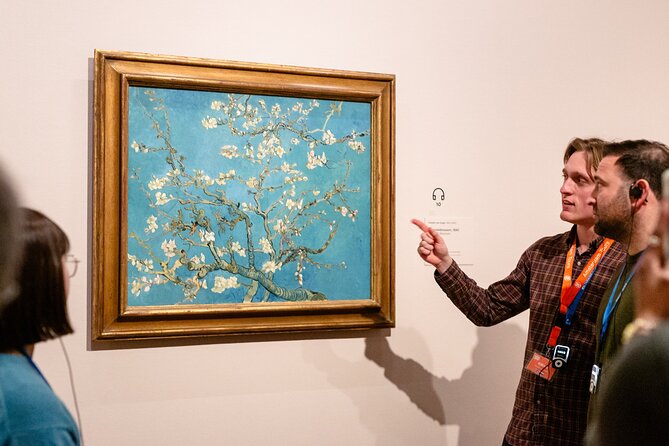
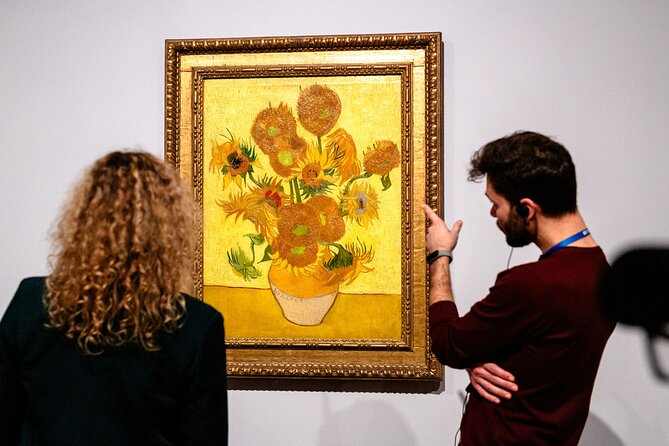
The Arles stop covers Van Gogh’s move to the south of France in 1888 and lasts about 20 minutes. It includes Sunflowers, Almond Blossoms, The Bedroom, Japanese paintings copied from prints, and The Yellow House.
This is likely the emotional center of the tour for many people. These are among the works that made Van Gogh famous, but the guide’s job is to show more than their postcard appeal. Sunflowers is not simply a bright vase of flowers. It belongs to Vincent’s hope for a working artistic community and his interest in using intense color to express feeling.
The Bedroom offers another kind of lesson. Its simplified forms and unusual perspective can look almost childlike at first glance. A guide can help you see that this was a deliberate visual choice, not a lack of skill.
The Japanese prints and copies are an important inclusion. They show Van Gogh’s interest in Japanese art and its influence on his use of flat areas, strong outlines, and cropped compositions. This is the sort of connection you may miss if you only pause for the famous names.
The Yellow House brings the Arles story into the route. It helps connect Vincent’s surroundings with his plans and personal life at that time. The precise balance of paintings on display can change, but the scheduled route identifies these works as the main subjects.
The section is still only 20 minutes, so do not expect a full lecture on every Arles painting. I would listen for the visual links between the works, then return to your favorites later if you are permitted to stay.
Saint-Rémy on level three
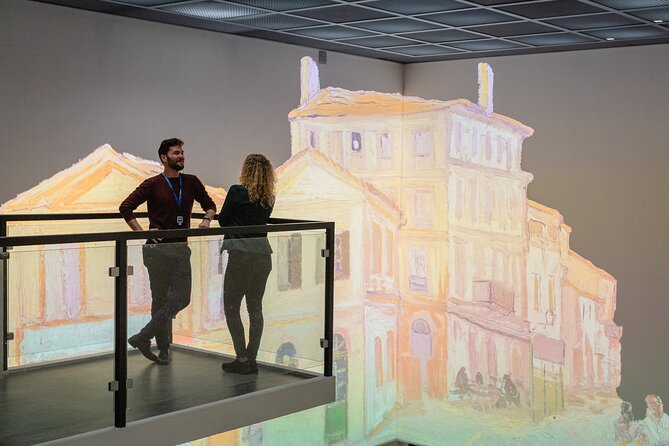
On level three, the tour turns to Saint-Rémy-de-Provence. This section lasts about 20 minutes and includes Almond Blossoms, Wheatfield with a Reaper, Iris, and Pieta, after Delacroix.
The mood here is more inward. The guide can help you connect the paintings to Vincent’s later period without reducing the work to a simple story about illness. That balance matters. Van Gogh’s biography is important, but the paintings deserve attention as paintings.
Iris is a strong example of how flowers become a study in line, shape, and color. Wheatfield with a Reaper returns to the rural subject from the Dutch years, but with a very different visual language. The repeated subject makes the changes in Van Gogh’s style easier to grasp.
The Pieta, after Delacroix, adds another layer. It shows Van Gogh engaging with an earlier artist rather than working only from direct observation. Along with the Japanese copies seen earlier, it reminds you that his art grew through looking, borrowing, and reshaping ideas.
One detail worth noting is that Almond Blossoms appears in both the Arles and Saint-Rémy portions of the supplied route. That may reflect the way the tour links the painting to both periods or the way the collection is arranged. Ask your guide to clarify the connection rather than assuming it is simply a repeated stop.
Auvers and the final room
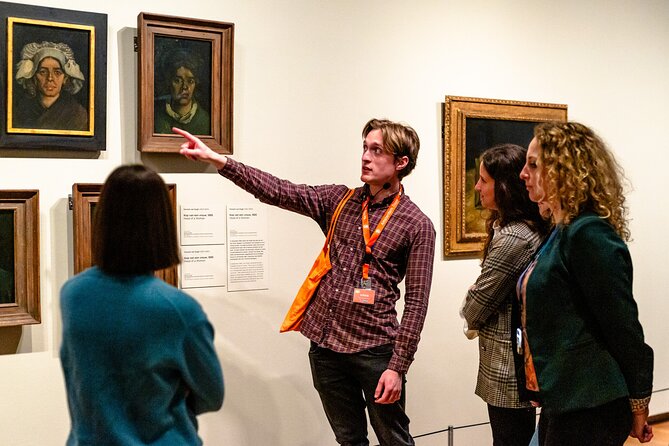
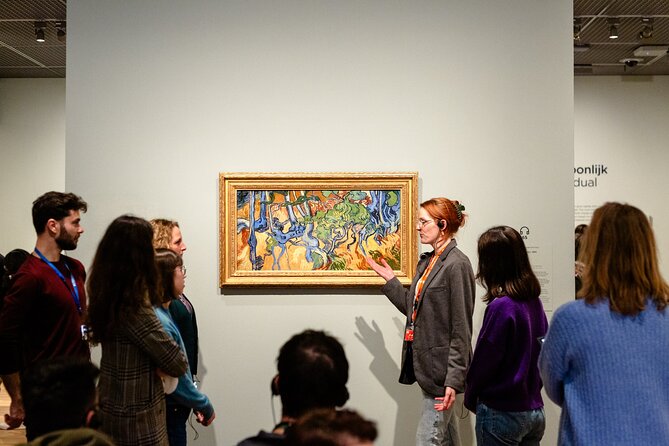
The final stop takes about 15 minutes in the Auvers Room on level three. It focuses on Tree Roots and Wheatfield with Crows.
This is a brief ending, but it gives the visit a strong closing point. You move from the early peasant studies to later works that feel more urgent and personal. Tree Roots and Wheatfield with Crows invite careful looking at movement, line, and atmosphere.
The short time allocation is the main limitation. If you want a long discussion of the Auvers works, you may need to ask questions quickly or arrange your own museum time afterward. The guide can still provide a useful final link between the periods, especially if you have followed the route from the first self-portraits onward.
The route does not promise to show every major work in the museum. It gives you a framework. That is valuable for a first visit, but serious art lovers may want more time with the collection than this tour provides.
What the guides add
The strongest praise centers on the guides and the way they communicate. Sylvia is described as warm, informed, interactive, and keen to keep the visit enjoyable. Giulia is praised for a calm pace, clear explanations, and making room for questions. Kiran is singled out for strong explanations, patience, and keeping a small group moving without rushing it.
That combination is exactly what you want in a museum guide. Facts alone are not enough. You need someone who can explain why a painting matters, notice when you have a question, and keep the group moving through a busy collection.
The private format gives the guide room to adjust. You are not sharing the visit with a large public crowd, and the supplied details say only your group will participate. The whisper system adds to that comfort, especially when you want to listen without standing shoulder to shoulder with the guide.
Guide quality can vary from one booking to another, so the named feedback should not be treated as a promise that one specific person will lead your visit. Still, the repeated praise for clarity, patience, pacing, and personal attention points to the tour’s main strength.
Is $263.20 per person good value?
At $263.20 per person, this is not a budget museum ticket. You are paying for a private two-hour guide, admission to the permanent collection, and the convenience of a planned route in your chosen language. Food and drinks are not included.
The value improves if you are a couple or a small group that wants personal instruction. Splitting the cost among a group can also make the private format more reasonable, especially since group discounts are available. The tour may be less attractive if you enjoy reading wall labels at your own pace or already know Van Gogh’s life and work well.
I would see the price as payment for structure and interpretation, not simply entry. The museum admission alone does not tell you why the dark Dutch works matter before the Paris paintings, or how Japanese prints connect with the Arles pictures. A good guide can save you from wandering without a plan.
The two-hour length also protects your day. You receive a focused visit, then can move on to other Amsterdam sights. The tradeoff is that the price is high for a compact experience, so I would choose it for the guide-led insight rather than for maximum time inside the museum.
Practical details that affect your visit
The tour is offered in English, and a private guide in your chosen language is included in the tour details. The experience is limited to adults aged 18 and older. Most people can participate, and the meeting area is near public transportation.
After the guided visit, you are not allowed to remain in the museum if you are carrying thick winter jackets, suitcases, large bags, or liquids. If you visit lightly with only a small jacket and small handbag, you may stay until closing time. This rule is important, so pack with the museum visit in mind.
Free cancellation is available if you cancel at least 24 hours before the start time. Cancellations or changes made less than 24 hours before the start are not refunded or accepted. The cut-off uses Amsterdam local time.
Who should book this private visit?
I would recommend it to an adult couple, a small private group, or an art lover who wants help making sense of the collection. It is especially useful if this is your first Van Gogh Museum visit and you want the major periods explained in a sensible order.
It also suits you if you have only a short window in Amsterdam. The two-hour format gives you a solid introduction without taking over your entire day. The guides’ reported patience and willingness to answer questions make it a good choice for someone who prefers conversation to a recorded audio device.
I would think twice if you are watching every euro, want a long independent visit, or have children under 18. The high cost is hard to justify for a casual museum stop, and the brief schedule may frustrate you if you want to study every painting closely.
Should you book it?
Book this tour if personal explanation matters more to you than the lowest possible price. The route covers Van Gogh’s main periods, the guide can connect the works into a clear story, and the private format gives you space to ask questions.
Skip it if you are happy exploring alone and plan to spend several hours with the permanent collection. For everyone else, this is a focused, well-paced introduction, with particularly strong value for adults who want to understand how Van Gogh changed from the somber Potato Eaters to the intense color of Arles and the final works in Auvers.
FAQ
How long is the Van Gogh Museum private tour?
The guided visit lasts approximately two hours.
What is included in the tour?
The price includes a two-hour guided tour of the permanent collection, a private guide in your chosen language, museum admission for the listed stops, and a whisper system.
Is the tour offered in English?
Yes. English is one of the offered languages.
Where does the tour begin?
The meeting point is Cobra Café, Hobbemastraat 18, 1071 ZB Amsterdam, Netherlands.
Where does the tour end?
The tour ends at Van Gogh Museum, Museumplein 6, 1071 DJ Amsterdam, Netherlands.
Can I stay in the museum after the guided visit?
You may stay until closing time only if you are not carrying thick winter jackets, suitcases, large bags, or liquids. With a small jacket and small handbag, you may remain after the visit.
Can I cancel for a full refund?
Yes, if you cancel at least 24 hours before the experience start time. Cancellations or changes made less than 24 hours before the start are not refunded or accepted.
More Museums
- Amsterdam: Red Light Secrets Museum Entry Ticket
★ 4.2 · 5,722 reviews - Amsterdam’s Weirdest Museum: Believe It or Not!
★ 4.5 · 4,086 reviews - Amsterdam: Rembrandt House Museum Entrance Ticket
★ 4.7 · 3,385 reviews - Amsterdam: NEMO Science Museum Ticket
★ 4.4 · 2,979 reviews
More Van Gogh Museum Tickets
- Amsterdam: Van Gogh Museum Ticket and City Canal Cruise
★ 4.6 · 3,899 reviews - Amsterdam: Van Gogh Museum Ticket & Canal Cruise
★ 4.5 · 3,304 reviews - Van Gogh Museum Amsterdam Exclusive Tour w/ Reserved Entry
★ 5.0 · 1,760 reviews - Amsterdam: Van Gogh Museum Entry Ticket and Guided Tour
★ 4.9 · 681 reviews
Just added around Amsterdam
- Amsterdam City Center Guided Walking Tour – 12 guests 2,5h★ 5.0 · 3 reviews
- Daytrip Tour from Amsterdam to Zaanse Schans and Giethoorn★ 5.0 · 3 reviews
- Amsterdam Light Festival Boat Cruise★ 5.0 · 3 reviews
- Amsterdam: Roller Dreams & Amsterdam Nightlife Experience★ 3.7 · 3 reviews
- Amsterdam: Van Gogh Museum Entrance and Guided Tour★ 3.5 · 3 reviews
- Amsterdam: Red light tour in German/English for groups of 4 people or more★ 5.0 · 3 reviews
- 2 Hour Making Rembrandt’s Traditional Oil Paints in Amsterdam★ 5.0 · 3 reviews
- Amsterdam Red Light District and Old Town Walking Tour★ 5.0 · 3 reviews
Van Gogh Museum Tickets, compared.
Van Gogh Museum Amsterdam Exclusive Tour w/ Reserved Entry
Read our review →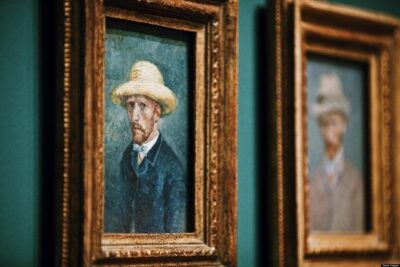
Van Gogh Museum Tour Reserved Entry Semi Private
Read our review →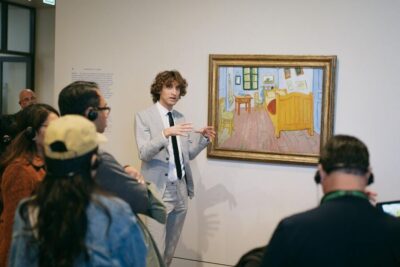
Combo Ticket: Van Gogh Museum Ticket and 1-Hour Canal Cruise
Read our review →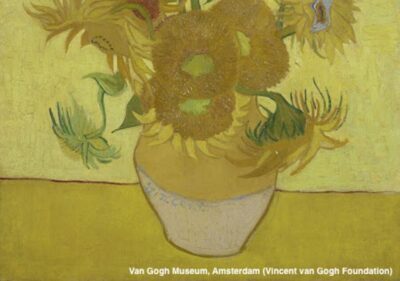
Browse the lists this tour appears in