
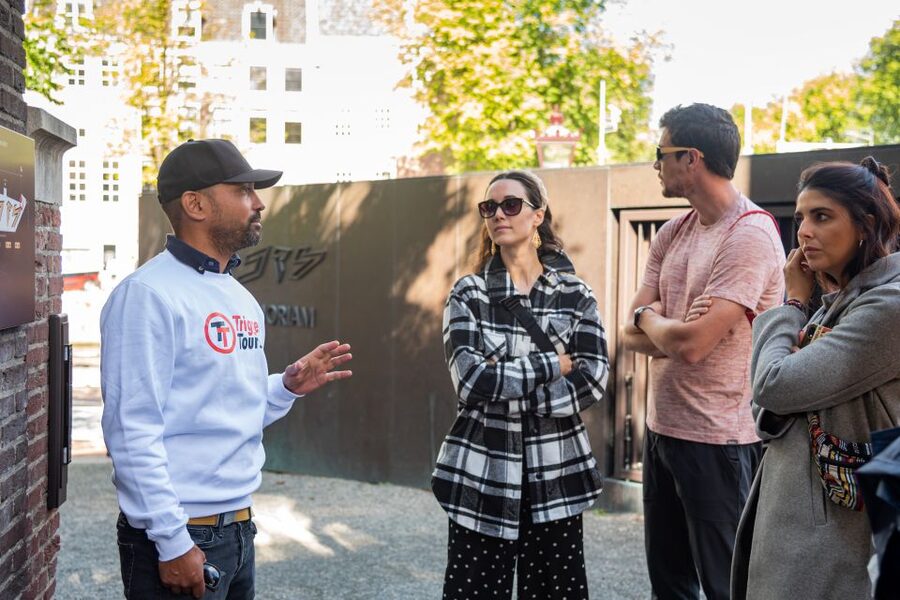
REVIEW · ANNE FRANK TOURS
Amsterdam: Anne Frank Walking Tour
Anne Frank’s story begins far beyond the Secret Annex. This two-hour walk connects her family’s story with Amsterdam’s Jewish Quarter, wartime landmarks, and the city’s long Jewish heritage. I like the way the route brings together the Portuguese Synagogue, Jewish Historical Museum, Auschwitz Monument, and Anne Frank House rather than treating Anne’s life as an isolated chapter. I also like the human scale: guides such as James, Aaron, Josha, and Jyry are praised for clear storytelling, patience, and a gentle touch with difficult material.
The main drawback is that entry to the Anne Frank House is not included. The tour reaches the house as part of the walking route, but you should arrange a separate ticket if you want to go inside. Also check the meeting point carefully, since it may vary by booking option, and note the conflicting accessibility information: the activity is described as wheelchair accessible in one place but also marked as unsuitable for wheelchair users.
In This Review
- Key points to know before booking
- Why this Amsterdam walk is about much more than Anne Frank
- Starting at Waterlooplein and entering the Jewish Quarter
- Portuguese Synagogue: a glimpse of Amsterdam’s Jewish heritage
- The Jewish Quarter and the Jewish Council headquarters
- Jewish Historical Museum and Waterlooplein
- Nieuwmarkt and Lastage: streets with wartime context
- The February Strike and the hunger winter
- The Auschwitz Monument: a quiet, moving finish
- Anne Frank House: important, but not an interior visit
- Plantage and the final connections
- Guide quality and group atmosphere
- Is $21 a fair price for two hours?
- Who should book this tour?
- Final verdict: book it for context, not house admission
- FAQ
- How long does the Anne Frank walking tour last?
- How much does the tour cost?
- Does the tour include admission to the Anne Frank House?
- Which languages are available?
- Where does the tour meet?
- Is this a private tour or a group tour?
- What should I bring?
Key points to know before booking

- The route covers more than Anne Frank: You explore the Jewish Quarter, Plantage, Nieuwmarkt, and wartime memorials.
- The Auschwitz Monument provides a powerful ending: The walk closes with a quiet reminder of the people lost during the Holocaust.
- Guiding is the heart of the experience: James, Aaron, Josha, Jyry, Guido, Andrea, and others have been praised for linking facts into a clear story.
- Two hours is a useful length: You get substantial historical context without giving up an entire day.
- The Anne Frank House is viewed from the route only: No museum admission or ticket is part of the $21 price.
- Expect a serious subject, not a light city stroll: The February Strike, hunger winter, deportations, and family loss are central topics.
Why this Amsterdam walk is about much more than Anne Frank

The name Anne Frank draws many people to this tour, but the route works best when you see it as a walk through Amsterdam’s Jewish history during and after the Second World War. Anne’s life is part of the story, not the whole route.
You begin near Waterlooplein and move through areas tied to Jewish life, wartime administration, resistance, and remembrance. That wider frame matters. It helps you understand that Anne and her family were not living through an event in isolation. They were part of a large Jewish community shaped by centuries in Amsterdam and then shattered by Nazi persecution.
I especially like this approach for first-time visitors. You will not only hear about the diary and the hiding place. You will also learn how Amsterdam changed during the occupation, how Jewish residents were controlled, how ordinary people responded, and how the city remembers what happened.
The route includes outdoor stops and guided commentary rather than long museum visits. That makes the experience active and place-based. You stand in the districts being discussed, then walk to the next piece of the story. The tradeoff is that most stops are brief, usually around 10 minutes, so the guide has to keep the narrative moving.
More Walking Tours in Amsterdam
- Anne Frank’s Story – Guided Walking Tour through Amsterdam
★ 5.0 · 11,619 reviews - Amsterdam: Life of Anne Frank and World War II Walking Tour
★ 4.8 · 10,467 reviews - Absolutely Amsterdam – the Essential Introductory Walking Tour
★ 5.0 · 3,629 reviews
Starting at Waterlooplein and entering the Jewish Quarter
The meeting arrangements can vary by option, with Studio Infinity listed as the starting and ending location in the supplied details. Waterlooplein is also identified as the meeting area, so confirm the precise point and time before setting out.
Once the walk begins, the guide sets the background. Amsterdam’s Jewish community has a long past, and the Jewish Quarter developed as a major center of Jewish life. You will hear how the community helped shape the city’s culture and heritage before the war, giving the later discussion a stronger sense of loss.
This introduction is important because it avoids reducing Jewish Amsterdam to wartime suffering alone. You get a picture of a living community, with homes, religious buildings, institutions, families, and neighborhood routines. That makes the later stories more personal and easier to place.
The narrow streets and alleys also help you read Amsterdam differently. Instead of seeing only canals and attractive old buildings, you begin to notice addresses, memorial markers, and traces connected with the occupation. One particularly useful detail concerns the small metal squares set into the pavement. The guide explains what they mean, turning an easily missed feature into part of the city’s memory.
Portuguese Synagogue: a glimpse of Amsterdam’s Jewish heritage
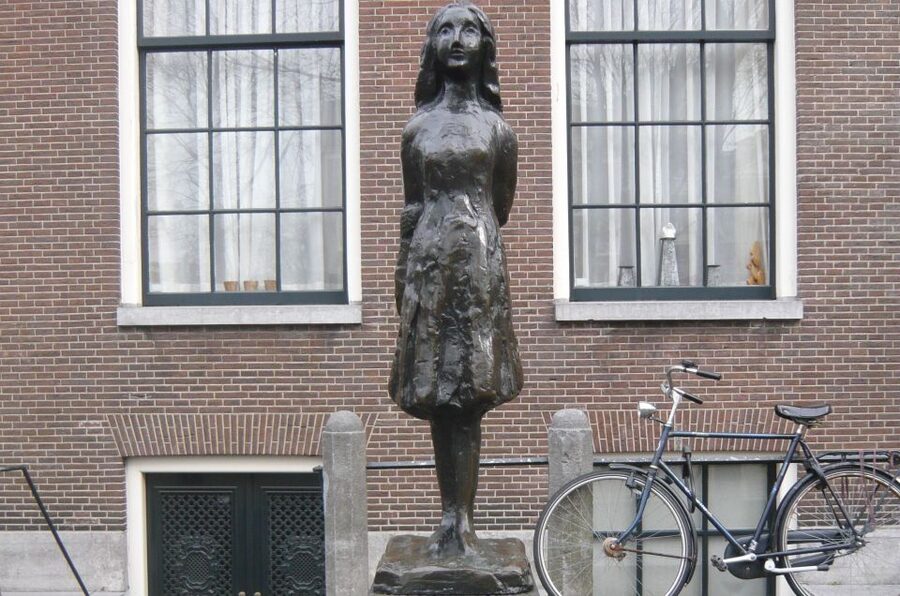
The Portuguese Synagogue is one of the early stops, with about 10 minutes of guided attention. Even without an extended interior visit, it gives the tour a strong historical anchor.
This building represents the earlier development of Jewish life in Amsterdam, before the Second World War. Its place on the route helps you see the Jewish Quarter as a historic neighborhood rather than simply a memorial district.
A 10-minute stop cannot cover every architectural or religious detail. Still, it gives your guide a useful chance to explain the community’s presence and the importance of Jewish institutions in the city. If you want a longer visit to the synagogue, you would need to arrange that separately, since the tour description does not include a full synagogue admission.
The Jewish Quarter and the Jewish Council headquarters
The Jewish Quarter receives the longest section of the walk, about 40 minutes. That extra time makes sense. Here the guide can connect buildings, streets, family experiences, and the machinery of wartime control.
You will learn about the Jewish Council headquarters and how Jewish life was organized under Nazi occupation. The subject is difficult, but it is central to understanding how persecution operated in Amsterdam. Rather than presenting the Holocaust as a series of distant dates, the walk links policy with the homes and streets where people lived.
The strongest guides appear to be those who build a thread from one stop to the next. James, for instance, has been praised for making separate events fit together as a single story. Other guides, including Aaron and Josha, have been noted for answering questions patiently and adjusting explanations for families and children.
That flexibility matters. You may arrive with a good grasp of Anne Frank’s diary but know little about Amsterdam’s wartime history. Or you may be traveling with teenagers who need clear explanations without an academic lecture. The best part of this format is the chance to ask questions as the story develops.
More Anne Frank walks and tickets:
- Amsterdam: Anne Frank Guided Small Group Walking Tour
★ 4.8 · 2,722 reviews - Amsterdam: Anne Frank Walking Tour – Guided in EN/DE/IT/ES
★ 4.9 · 2,676 reviews - Anne Frank Walking Tour Amsterdam Including Jewish Cultural Quarter
★ 5.0 · 1,879 reviews - Anne Frank’s Last Walk & See Anne Frank House in Virtual Reality
★ 5.0 · 957 reviews
Jewish Historical Museum and Waterlooplein
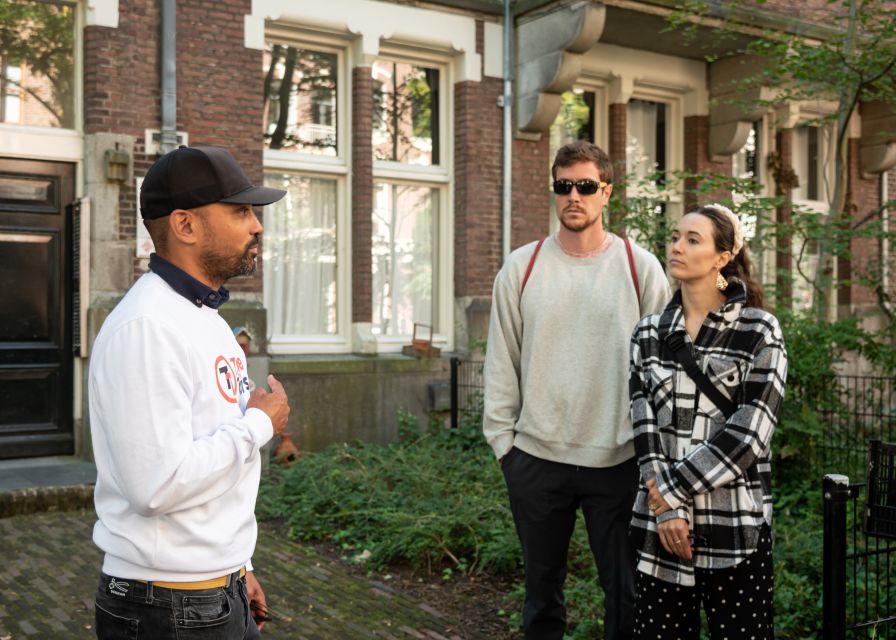
The Jewish Historical Museum receives roughly 10 minutes of guided commentary. This is not a substitute for spending time inside the museum, but it gives you useful context and may help you decide if you want to return for a longer visit.
The museum is tied to the wider story of Jewish identity, community life, and persecution in Amsterdam. Seeing it during the walk places the institution within the neighborhood rather than treating it as a stand-alone attraction.
Waterlooplein is another short stop. The square helps connect the Jewish Quarter with the wider city. Depending on the exact route and guide, you may hear more about local life, wartime changes, and the physical setting around the district.
Because the itinerary includes several 10-minute stops, you should not expect a long pause at each landmark. This is a walking lesson with frequent transitions. Wear comfortable shoes, and leave room in your schedule for the pace of the group.
Nieuwmarkt and Lastage: streets with wartime context
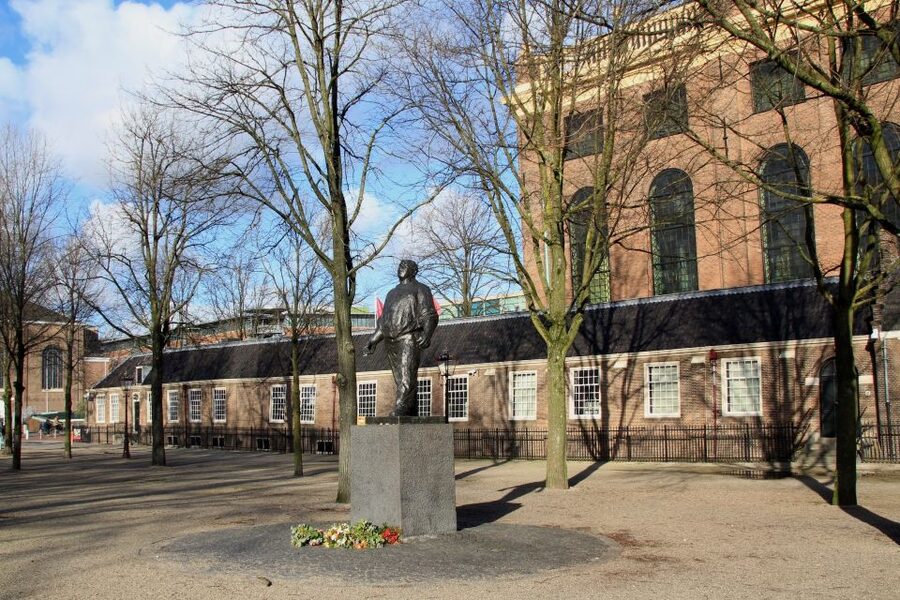
The walk continues through Nieuwmarkt and Lastage, areas that add variety to the route. These districts broaden the picture beyond the most famous Jewish landmarks.
The guide uses the streets and buildings to discuss Amsterdam during the war, including the pressures placed on Jewish residents and the changes brought by occupation. Some buildings still carry traces of the period, and the value here lies in having someone point out details you might otherwise pass without noticing.
This is one reason the tour can be useful even if you have already read Anne Frank’s diary. The book gives you a powerful personal account, but a city walk shows how that account relates to a wider urban setting.
You should expect interpretation rather than a parade of grand sights. Nieuwmarkt and Lastage are part of the historical route because of what happened there and what they help explain, not because every stop is a major attraction in the usual sightseeing sense.
The February Strike and the hunger winter

The wartime section includes the February Strike and the hunger winter. These subjects show both public reaction and the grim conditions of the occupation.
The February Strike is especially important because it reflects resistance to the persecution of Amsterdam’s Jewish population. The tour does not present the city as a simple story of heroes and villains. Instead, it explores the pressures people faced and the choices made under occupation.
The hunger winter brings the story into daily life. It helps you understand that wartime suffering extended beyond arrests and deportations. Food shortages and exhaustion shaped ordinary routines, making the period feel less abstract.
This part of the tour is emotionally heavy. Guides have been praised for being empathetic and open to questions, which is exactly what you want here. A guide who simply recites facts would miss the human weight of the subject. Strong storytelling gives you room to think without turning tragedy into spectacle.
The Auschwitz Monument: a quiet, moving finish
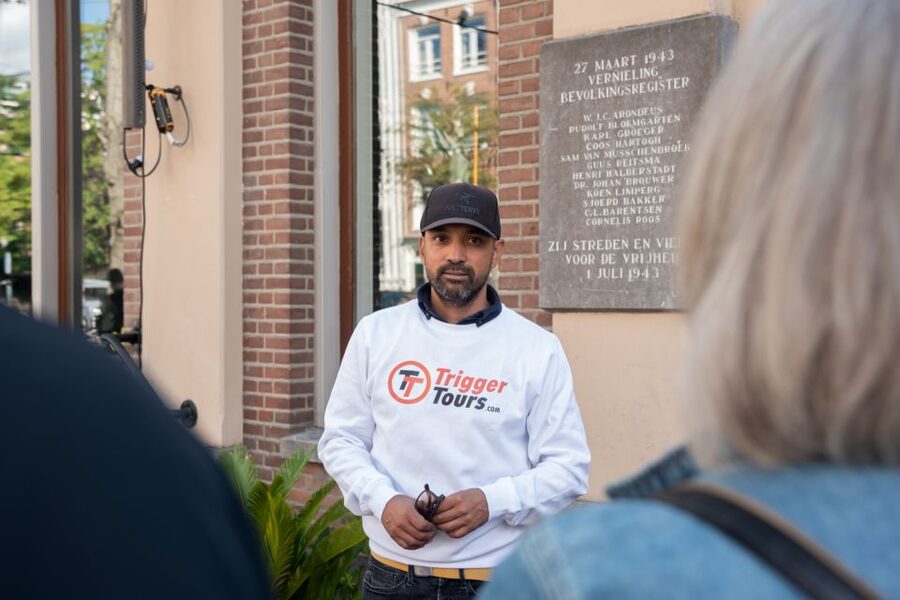
The Auschwitz Monument is one of the most significant stops, and the tour often ends its emotional arc here. The monument offers a place to pause after hearing about the Jewish community, the occupation, and the Holocaust.
Several accounts of the experience point to the memorial as a particularly moving part of the route. That makes sense: after walking through streets where people lived, worshipped, worked, and were persecuted, you arrive at a site designed for remembrance.
The stop is guided for around 10 minutes, so it is not a long memorial visit. Still, the setting gives the history a quiet finish. You may want to allow yourself a little time after the official tour ends, especially if the subject affects you strongly.
One especially poignant account describes meeting an 83-year-old woman who had come from the United States to see her grandmother’s plaque at the Holocaust memorial. That sort of encounter is not promised, but it shows how personal these memorials remain for families today.
Anne Frank House: important, but not an interior visit
The route includes the Anne Frank House, also listed as a guided stop of about 10 minutes. This is the point many people expect to be the main event, so the booking detail needs to be completely clear.
The tour does not include admission to the Anne Frank House. You will learn about the building and Anne’s story from outside or around the site, but you will not enter as part of this experience. A separate ticket is required for the museum.
The guide covers Anne’s move from Germany, her family’s experience in hiding, the diary, and the role of her father Otto Frank after the war. You will also hear how Otto arranged for the diary to be published and how it became one of the world’s best-selling books.
That context adds value even if you already know the basic story. The tour places Anne’s writing within her family’s life and within the fate of Amsterdam’s Jewish population. It also gives you a chance to ask questions that a self-guided visit may not address.
If entering the Anne Frank House is a priority, treat this walk as a companion experience, not a replacement. Book the museum separately if tickets are available, and do not assume that joining the walking tour provides access.
Plantage and the final connections
The Plantage district brings the route toward its close. This area is picturesque, but the tour uses it for historical meaning rather than simple scenery.
The guide connects the district with the Jewish community and the wartime story. You may hear about local buildings, institutions, and the ways the occupation left marks on Amsterdam. The contrast between pleasant streets and painful history is part of what makes the walk affecting.
Plantage also helps complete the route geographically. You have moved through the Jewish Quarter, Waterlooplein, Nieuwmarkt, Lastage, and the area around the Anne Frank House. By the end, the city feels less like a collection of separate attractions and more like one connected setting.
The listed timing gives Plantage about 10 minutes of guided attention. As with the other shorter stops, the guide must choose the most useful details. If you want to explore the district at length, plan another visit.
Guide quality and group atmosphere
The guides are the strongest part of this experience. James is repeatedly praised for linking the narrative, speaking clearly, adding humor at suitable moments, and making people feel comfortable. Aaron is described as friendly, informative, and good at handling questions. Josha receives similar praise for local knowledge and patience, including with children.
Other named guides include Guido, Andrea, Gyru or Jyry, Masha, Stan, and a Finnish guide whose name one participant could not recall. The range of names suggests that your exact experience will depend on who leads the walk, but the common thread is strong preparation and a personal approach.
The group format can be private or small group, depending on the option you choose. A private or smaller group should make it easier to ask questions and may feel more comfortable for families. It can also make the discussion more direct and less formal.
The tone is serious but not stiff. Some guides use light humor where appropriate, which can help maintain attention during a difficult subject. You should still expect a respectful history lesson, not a casual comedy walk.
Is $21 a fair price for two hours?
At $21 per person, I consider this a good value if you want structure and context. You are paying for a live guide, a carefully connected route, and access to historical interpretation that you would likely miss while walking alone.
The price is especially reasonable for a first visit to Amsterdam’s Jewish Quarter. You cover several important places in two hours, and the guide helps explain why they matter. The route also saves you from researching every memorial and landmark in advance.
The value is lower if you mainly want to enter the Anne Frank House. Since admission is not included, you will need to pay separately for that visit, if you can obtain a ticket. Think of the $21 as the price of the neighborhood and wartime context, not as an Anne Frank House admission fee.
The reserve-now-and-pay-later option and free cancellation up to 24 hours before the tour add flexibility. Starting times depend on availability. English and Spanish tours are offered.
Who should book this tour?
I would recommend it to anyone interested in Anne Frank who also wants to understand Amsterdam’s Jewish community and wartime experience. It suits first-time visitors, history fans, families with older children, and people who prefer learning through places rather than displays alone.
It is also a good choice if you have limited time. Two hours is long enough to cover serious material but short enough to fit around other Amsterdam plans.
You may want a different experience if you dislike walking, need guaranteed wheelchair access, or want a slow museum-focused visit. The supplied information gives conflicting accessibility details, so contact the provider before booking if mobility is a concern. Comfortable shoes are essential.
Final verdict: book it for context, not house admission
I would book this tour if you want Anne Frank’s story placed within Amsterdam’s Jewish history. The route reaches the Portuguese Synagogue, Jewish Historical Museum, Jewish Council headquarters, Auschwitz Monument, and Anne Frank House, while guides such as James and Aaron bring the material together with care.
I would skip it only if you want a quick photo stop or expect entry to the Anne Frank House. For a modest price, this is a thoughtful, well-paced introduction to a difficult part of Amsterdam’s past, with the memorials and neighborhoods doing much of the teaching.
FAQ
How long does the Anne Frank walking tour last?
The tour lasts two hours.
How much does the tour cost?
The listed price is $21 per person.
Does the tour include admission to the Anne Frank House?
No. Entrance and tickets to the Anne Frank House are not included.
Which languages are available?
The tour is available in English and Spanish.
Where does the tour meet?
The meeting point may vary depending on the option booked. Waterlooplein is identified as the meeting area, and Studio Infinity is listed among the starting locations, so confirm the exact point before you go.
Is this a private tour or a group tour?
Both options are available. You can choose a private or small-group format, depending on the booking option.
What should I bring?
Bring comfortable shoes. Food and drinks are not included.
More Walking Tours
- Amsterdam: Guided Cultural Walking Tour
★ 4.9 · 2,384 reviews - Amsterdam: Guided Ganja Walking Tour of Coffee Shops
★ 4.2 · 2,092 reviews - Amsterdam Highlights Walking Tour: Small Group Experience
★ 5.0 · 1,132 reviews - Amsterdam Small-Group Walking Tour
★ 4.7 · 995 reviews
Just added around Amsterdam
- Amsterdam 1-Hour Rickshaw Tour★ 4.9 · 17 reviews
- Amsterdam: Canal Cruise and Jewish Cultural Quarter Tickets★ 4.2 · 17 reviews
- Keukenhof Gardens and Tulip Experience Tour from Amsterdam★ 4.8 · 17 reviews
- Marken, Volendam and Edam: Private Full-Day Tour★ 4.6 · 18 reviews
- Discover Amsterdam’s city center in this Outside Escape game tour★ 4.5 · 18 reviews
- Amsterdam: Personal Travel & Vacation Photographer★ 4.8 · 18 reviews
- Rijksmuseum & Amsterdam City Center Semi-Private Tour 12ppl Max★ 5.0 · 18 reviews
- Amsterdam: Luxury Saloon Boat Cruise with 3-Course Dinner★ 3.9 · 18 reviews
Anne Frank Tours, compared.
Anne Frank’s Story – Guided Walking Tour through Amsterdam
Read our review →
Life of Anne Frank and World War II Walking Tour
Read our review →

Anne Frank Walking Tour – Guided in EN/DE/IT/ES
Read our review →
Anne Frank Walking Tour Amsterdam Including Jewish Cultural Quarter
Read our review →
Anne Frank’s Last Walk & See Anne Frank House in Virtual Reality
Read our review →
Anne Frank and Jewish Quarter Amsterdam Private Walking Tour
Read our review →
Browse the lists this tour appears in