
REVIEW · WALKING TOURS
Amsterdam Central Walking Tour
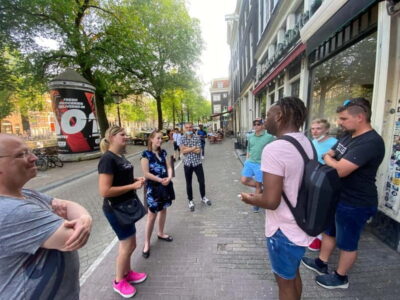
Amsterdam rewards slow walking. Yellow Bike’s two-hour Central Walking Tour follows canals, crooked houses, old bridges, and major landmarks while a local guide explains how Amsterdam grew, argued, traded, and changed. I like the small groups of up to 12 and the stop at a traditional Dutch café, where you can warm up and absorb the local mood. I also like the mix of famous sights and less polished stories, including squatting and civil resistance.
The main concern is the pace and weather. You walk outdoors in rain, cold, or wind, and one 2024 rating described the tour as disorganized with little information. The route is listed as wheelchair accessible, yet the activity is also marked unsuitable for people with mobility impairments, so check directly before booking if that matters to you.
In This Review
- Key points about this Amsterdam walk
- Starting at Nieuwezijds Kolk
- The Westerlijke Wallen and Amsterdam’s tilted houses
- Water, herring, and the Nieuwe Haarlemmersluis
- Koepelkerk and the canal of brewers
- Torensluis and the city beneath the bridge
- Bartolotti House and the gay monument
- The Anne Frank House and Westertoren
- A Brown Cafe break in the middle
- Negen Straatjes and Amsterdam’s changing style
- Spuistraat, Spui, and the Provo legacy
- Kalverstraat and the finish at Dam Square
- What $26 gets you
- Who should book this walk
- Should you book the Amsterdam Central Walking Tour?
- FAQ
- Where does the Amsterdam Central Walking Tour start?
- Where does the tour end?
- How long does the walking tour last?
- What languages are available?
- How much does the tour cost?
- Are drinks at the café included?
- Is luggage storage available?
- Does the tour visit the Anne Frank House?
- Does the tour operate in bad weather?
- Can I cancel for a full refund?
Key points about this Amsterdam walk
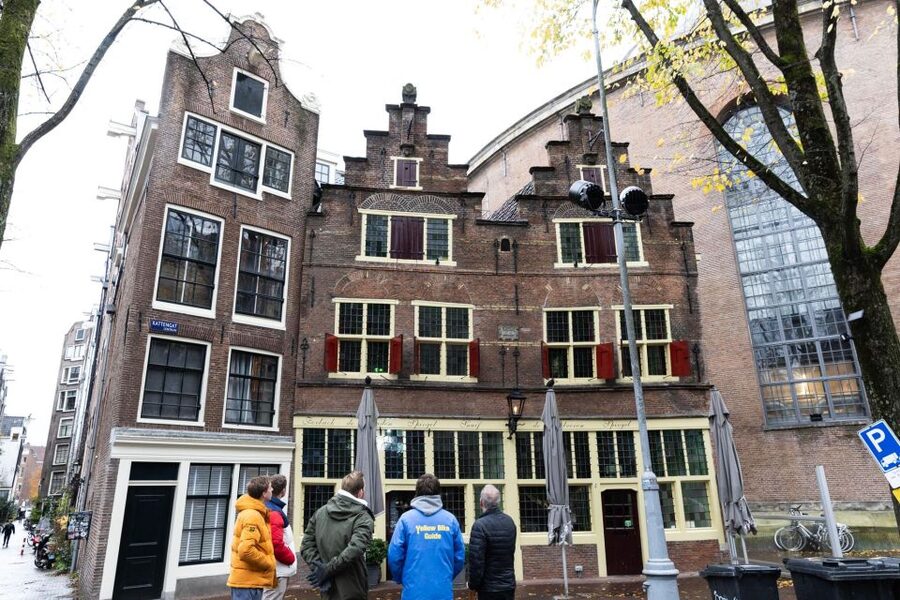
- Small groups make conversation easier: The maximum is 12 people, and some departures may be much smaller.
- The route covers old and modern Amsterdam: You see the Red Light District, Jordaan, Negen Straatjes, Spui, Dam Square, and the Anne Frank House area.
- Guides bring strong local context: Willem, also spelled Willen in one account, was praised for clear English, humor, and discussions of history, politics, and religion. Sid led one departure that became a private tour.
- A café break is built in: Drinks cost extra, but the stop gives you a chance to warm up during a winter walk.
- You get more than postcard views: The tour covers herring, brewing, wooden foundations, squatting, student protests, LGBTQ+ rights, and wartime memory.
- It is good value for a first look: At $26 per person, you receive two hours with a guide and free luggage storage, though major attractions are viewed from outside.
Starting at Nieuwezijds Kolk
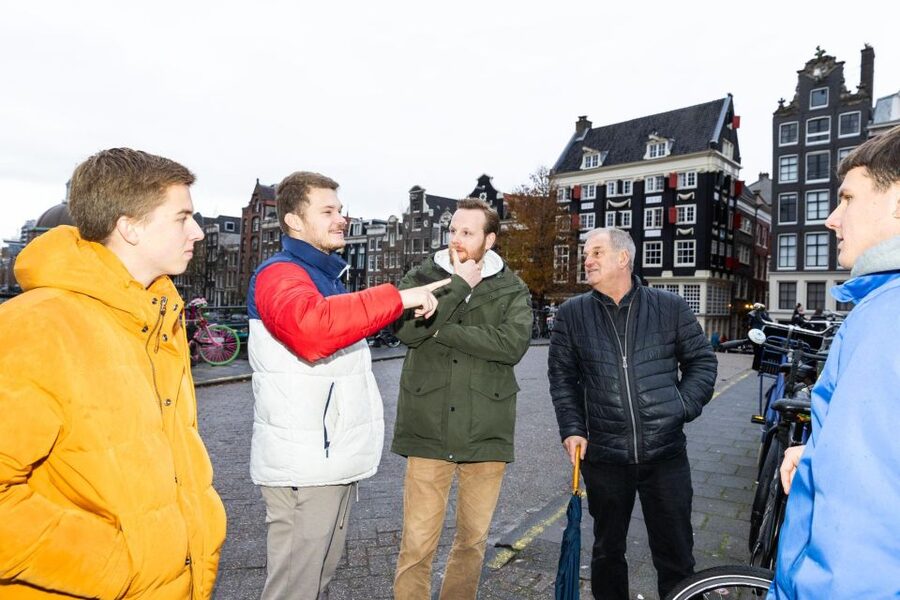
The tour begins at Nieuwezijds Kolk 29, where you look for the Yellow Bike office and check in at the counter. This is a useful location near the center, especially if you arrive in Amsterdam by train and want to start sightseeing without first crossing the city.
You begin in the oldest part of Amsterdam, hearing how the settlement developed around water, trade, and defense. The guide’s job here is not simply to point at buildings. You get the basic structure of the city, then see how each later neighborhood and canal fits into that story.
The meeting point also offers free luggage storage. That can be handy if you have checked out of your hotel and are carrying a small case. I would still arrive ready for an outdoor walk, since the tour takes place rain or shine.
More Walking Tours in Amsterdam
- Anne Frank’s Story – Guided Walking Tour through Amsterdam
★ 5.0 · 11,619 reviews - Amsterdam: Life of Anne Frank and World War II Walking Tour
★ 4.8 · 10,467 reviews - Absolutely Amsterdam – the Essential Introductory Walking Tour
★ 5.0 · 3,629 reviews
The Westerlijke Wallen and Amsterdam’s tilted houses
The early part of the route includes the Westerlijke Wallen, the historic Red Light District. The tour approaches this area with a clear rule of respect: do not take photographs, and do not linger. That guidance matters. You are seeing a lived-in and working part of the city, not a stage set for sightseeing.
The guide also points out Amsterdam’s famous crooked houses. Their angles are not just a visual joke. The tour explains why the city was built on wooden poles and how water and soft ground affected construction over time.
These houses are one of the best early reminders that Amsterdam is a practical city shaped by difficult conditions. The leaning facades make excellent photos elsewhere along the route, but the useful part is understanding why so many buildings look as if they are slowly tipping into the canal.
Water, herring, and the Nieuwe Haarlemmersluis
At the Nieuwe Haarlemmersluis, you learn how Amsterdam dealt with seawater entering its canal system. This stop connects the city’s attractive waterways with the hard work required to control them.
The story then moves to the herring trade, an important part of Amsterdam’s economic past. This is the kind of subject that gives the walking tour its value. A canal is not only a pretty view. It once carried food, goods, workers, and money, and the guide uses the street scene to explain that working life.
You may find this section more rewarding than a simple list of dates because it shows how trade shaped the city. The route keeps returning to that idea: Amsterdam’s identity came from water, commerce, religion, migration, protest, and survival.
Koepelkerk and the canal of brewers
The copper-covered Koepelkerk brings another layer of the city into view. The guide explains the story of this Lutheran church and its connection to Amsterdam’s ability to recover after a huge fire.
From there, the walk reaches Brouwersgracht, where the focus turns to grain shipments and breweries. The canal’s name reflects its connection to brewers, and the tour explains why Amsterdam gained a reputation as the Booze Capital.
That nickname may get a laugh, but the point is serious. Brewing was tied to trade, water quality, and daily life. This is also a good example of the tour’s range. In a few streets, you move from religious history to urban disaster to the business of making beer.
More walking tours:
- Amsterdam: Anne Frank Guided Small Group Walking Tour
★ 4.8 · 2,722 reviews - Amsterdam: Anne Frank Walking Tour – Guided in EN/DE/IT/ES
★ 4.9 · 2,676 reviews - Amsterdam: Guided Cultural Walking Tour
★ 4.9 · 2,384 reviews - Amsterdam: Guided Ganja Walking Tour of Coffee Shops
★ 4.2 · 2,092 reviews
Torensluis and the city beneath the bridge
The Jan Roodenpoortstoren section reveals a less visible side of Amsterdam. Beneath the bridge were historic prison cells, giving you a glimpse of how punishment and public life once occupied the same tight urban spaces.
Nearby, the Torensluis is presented as Amsterdam’s oldest bridge and a former part of the city’s defensive wall. It is easy to walk over a bridge without thinking about its original purpose. A guide helps you see that the canal crossings were once part of a larger system of gates, walls, and protection.
This is one reason I prefer a guided first walk to simply following a map. The buildings and bridges are still there, but their meaning is much harder to read on your own.
Bartolotti House and the gay monument
The route includes Bartolotti House, described as one of Amsterdam’s finest mansions. Its elegant appearance gives you a sharp contrast with the practical canal warehouses and working neighborhoods seen earlier.
The next stop is the gay monument, where the guide discusses the struggles and gains of the Dutch LGBTQ+ community. The site is connected to the world’s first gay marriage, according to the tour’s account.
This is an important part of the route because it connects Amsterdam’s reputation for tolerance with real political and social change. You are not asked to treat tolerance as a vague slogan. Instead, you hear about conflict, public action, and progress in a particular place.
The Anne Frank House and Westertoren
The Anne Frank House is viewed as part of the walking route, along with the story of Anne Frank, her diary, and the Second World War. The stop is reflective rather than lighthearted, and the guide provides context for the building and the events associated with it.
You should understand that this walking tour does not include entry to the Anne Frank House. You see the exterior and learn about its history from the street. If you want to visit inside, that requires a separate plan and ticket.
Nearby, the Westertoren rises above the canals as Amsterdam’s tallest church tower. Its height makes it an easy landmark, but the guide also explains its historical importance. Together, the Anne Frank House and Westertoren create one of the most memorable stretches of the walk: wartime memory on one side, centuries of religious and civic history on the other.
A Brown Cafe break in the middle
The scheduled stop at a traditional Dutch brown café is a welcome practical feature, especially in winter. These pubs are known for their cozy, worn-in atmosphere, and the break gives you a chance to sit down briefly and experience a familiar part of Dutch social life.
Drinks are not included, so bring a little extra money if you want coffee, tea, beer, or another beverage. The stop is not a full meal break. Think of it as a short pause rather than a chance to have lunch.
Past ratings show that the guides can make a big difference here. One guide kept a very wet and cold walk enjoyable, while another departure with Willem was praised for combining old history with current local news. At 4 p.m. on a cold Friday, one group was the only party booked, and the tour lasted about 1 hour 45 minutes instead of the full two hours. That smaller setting can feel almost like a private walk, though group size naturally depends on the date.
Negen Straatjes and Amsterdam’s changing style
The Negen Straatjes, or Nine Streets, brings you into a more polished part of central Amsterdam. These narrow streets were once associated with artisans and now contain boutiques, cafés, and attractive canal views.
The value here is the contrast. Earlier stops show canals as places of trade, defense, and work. The Nine Streets show how the same old urban fabric now serves shopping and dining.
You can enjoy the architecture without needing to spend money. If you do want to return for shopping, the guide’s comments can help you understand the area before you decide where to browse. The streets may feel busier than the quieter canal sections, so keep your attention on the guide and your footing on the cobblestones.
Spuistraat, Spui, and the Provo legacy
At Spuistraat, the tour covers Amsterdam’s squatting history. This subject gives you a less tidy picture of the city. Squatting grew from housing pressure and political conflict, and the buildings and streets became places where people challenged official decisions.
The walk continues to Spui, where a Provo statue recalls events linked to civil resistance, student protests, and cultural movements. The Provos used public action and provocation to question authority, and the guide places those events in the setting where they happened.
This section will appeal to you if you enjoy modern social history as much as old architecture. One strong feature of the tour is that it does not stop at the standard canal postcard. It also asks how Amsterdam’s public spaces became places for protest, debate, and change.
Kalverstraat and the finish at Dam Square
The route passes along Kalverstraat, the Netherlands’ best-known shopping street, with upscale stores and a more commercial atmosphere. It is not the most atmospheric part of the walk, but it shows another side of central Amsterdam and connects the older streets with present-day city life.
The tour finishes at Dam Square, then walks back to Yellow Bike at Nieuwezijds Kolk. Ending here gives you a central orientation point for the rest of your day. You can continue sightseeing, return to your hotel, or use the nearby streets for food and shopping.
The complete outing is scheduled for two hours. One account describes a finish at about 1 hour 45 minutes, so allow a little flexibility if you have a timed reservation afterward.
What $26 gets you
At $26 per person, this is a sensible price for a small-group city introduction. You receive a live Dutch or English-speaking guide, two hours of walking, a café pause, and free luggage storage. You are paying for explanation and orientation rather than admission to attractions.
That distinction matters. The Anne Frank House is seen from outside, and the tour does not include drinks at the café. You will also spend most of the time on foot, so the value depends on how much you want local context.
I think the price is strongest for a first or second day in Amsterdam. A good guide can show you where the Jordaan, Nine Streets, Spui, Dam Square, and the central canals sit in relation to one another. You leave with a mental map, not just a handful of photos.
The guide quality appears to be the largest variable. Sid led one private-feeling departure, while Willem received praise for his English, humor, and broad discussions. Most available ratings are highly positive, with an overall score of 4.9 from 11 ratings, but one lower score cited a messy route and limited information. That is a fair reminder that walking tours depend heavily on the individual guide and group dynamic.
Who should book this walk
I would choose this tour if you want a compact overview with plenty of context, especially if you enjoy architecture, social history, politics, religion, and local customs. It suits solo visitors, couples, and families with older children who can manage two hours outdoors.
A 15-year-old enjoyed the tour, according to one account, which suggests that the guide’s storytelling can work for teenagers. The small group limit is also helpful if you prefer the chance to ask questions rather than follow a large crowd.
Bring comfortable shoes, warm clothing, a hat, gloves, and a scarf. Amsterdam’s cobblestones and winter weather are not forgiving, and the walk goes ahead in rain or shine.
The activity is listed as wheelchair accessible but also not suitable for people with mobility impairments. That wording is not fully clear. If you use a wheelchair, walker, or need a slower pace, contact Yellow Bike before paying and ask exactly how the route is handled.
Cancellation is free up to 24 hours before departure, and you can reserve now and pay later. Starting times vary, so check availability before arranging another timed activity.
Should you book the Amsterdam Central Walking Tour?
Book it if you want local stories in a small group and are happy to walk outdoors for two hours. The route gives you major sights, but its best moments may be the less obvious ones: prison cells under a bridge, grain bound for breweries, squatting on Spuistraat, and Provo activism at Spui.
Skip it if you want interior visits, a relaxed ride, or a tour protected from bad weather. For most first-time visitors, though, $26 is good value, especially when a strong guide such as Willem or Sid turns the center into a connected story rather than a parade of names.
FAQ
Where does the Amsterdam Central Walking Tour start?
It starts at Nieuwezijds Kolk 29. Look for Yellow Bike and check in at the counter.
Where does the tour end?
The route ends at Dam Square, followed by a walk back to Yellow Bike at Nieuwezijds Kolk 29.
How long does the walking tour last?
The scheduled duration is two hours. One reported departure finished after about 1 hour 45 minutes.
What languages are available?
The live tour guide speaks Dutch or English.
How much does the tour cost?
The listed price is $26 per person.
Are drinks at the café included?
No. Beverages at the traditional Dutch café are not included.
Is luggage storage available?
Yes. Free luggage storage is included.
Does the tour visit the Anne Frank House?
The route includes the Anne Frank House area and its wartime story, but entry to the building is not included in the supplied tour details.
Does the tour operate in bad weather?
Yes. The tour takes place rain or shine, so bring warm clothing and prepare for wet conditions.
Can I cancel for a full refund?
Yes. You can cancel up to 24 hours in advance for a full refund, and the reserve now, pay later option keeps payment flexible.
Just added around Amsterdam
- Amsterdam City Center Guided Walking Tour – 12 guests 2,5h★ 5.0 · 3 reviews
- Amsterdam Light Festival Boat Cruise★ 5.0 · 3 reviews
- Daytrip Tour from Amsterdam to Zaanse Schans and Giethoorn★ 5.0 · 3 reviews
- Amsterdam: Roller Dreams & Amsterdam Nightlife Experience★ 3.7 · 3 reviews
- Amsterdam: Van Gogh Museum Entrance and Guided Tour★ 3.5 · 3 reviews
- Amsterdam: Red light tour in German/English for groups of 4 people or more★ 5.0 · 3 reviews
- 2 Hour Making Rembrandt’s Traditional Oil Paints in Amsterdam★ 5.0 · 3 reviews
- Amsterdam Red Light District and Old Town Walking Tour★ 5.0 · 3 reviews
Walking Tours, compared.
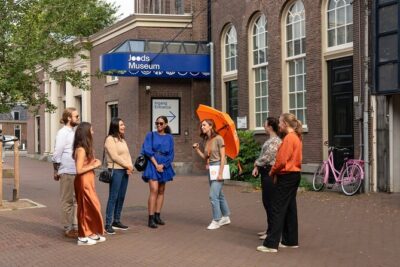
Anne Frank’s Story – Guided Walking Tour through Amsterdam
Read our review →
Life of Anne Frank and World War II Walking Tour
Read our review →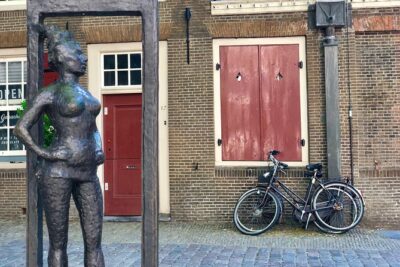
Absolutely Amsterdam – the Essential Introductory Walking Tour
Read our review →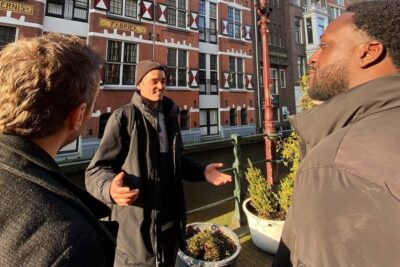

Anne Frank Walking Tour – Guided in EN/DE/IT/ES
Read our review →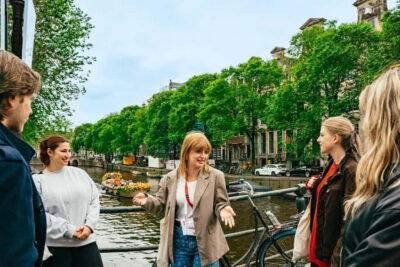

Anne Frank Walking Tour Amsterdam Including Jewish Cultural Quarter
Read our review →Browse the lists this tour appears in