
REVIEW · WALKING TOURS
Amsterdam: Guided Off-The-Beaten-Track Walking Tour
Amsterdam rewards walkers who look up. This 2.5-hour tour links the historic center, canals, Jordaan, and western islands in one steady route, with plenty of architecture and city stories along the way. I like the small-group format and the chance to see parts of Amsterdam that many first-time visitors miss.
I also like the practical advice built into the walk, from where to find good apple pie to which Jordaan streets are worth exploring later. The main consideration is language: the tour is offered in German, and the route is long enough that comfortable shoes are essential.
In This Review
- Key details that make this walk worthwhile
- Starting at Beursplein and Dam Square
- Torensluis and the canal belt story
- Herengracht, Prinsengracht, and the western islands
- Brouwersgracht and the Jordaan entrance
- Noordermaarkt on market day
- Anne Frank House and Westerkerk
- Homomonument and the useful finish
- What the guides add to the walk
- Price, comfort, and overall value
- Who should book this Amsterdam walking tour?
- Should you book it?
- FAQ
- Where does the tour meet?
- How long does the walking tour last?
- What language is the tour in?
- How much does the tour cost?
- What places does the route include?
- Does the tour enter the Royal Palace, Nieuwe Kerk, or Anne Frank House?
- Is the tour wheelchair accessible?
- What should I bring?
- Does the tour run in bad weather?
Key details that make this walk worthwhile
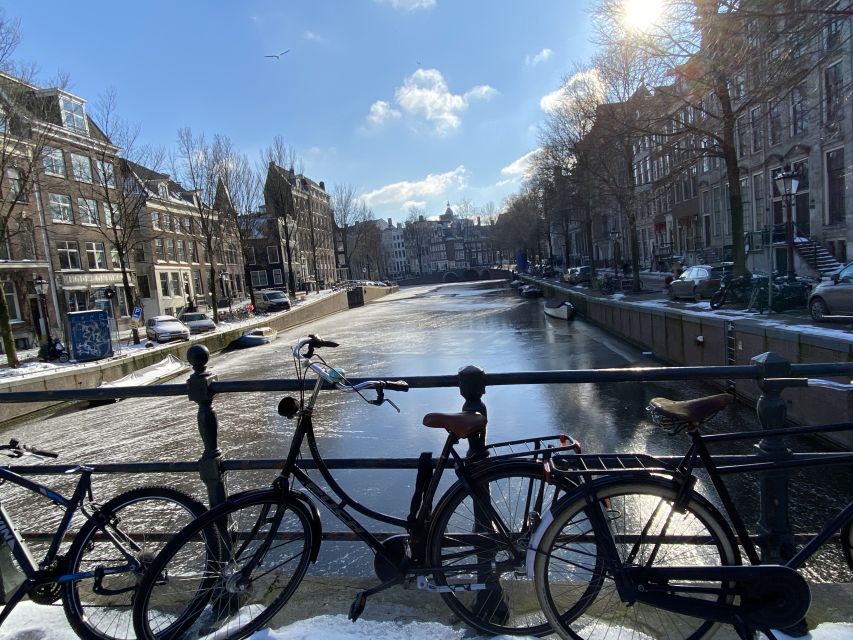
- A compact route with real variety: You move from Dam Square and royal Amsterdam to canals, former shipyards, houseboats, markets, and the Jordaan.
- The western islands add a different side of the city: Old small shipyards and newer Westerdok design give the walk more range than a standard canal-center stroll.
- Small groups keep the tour personal: The activity is described as limited to six people, while the included details also refer to groups of up to four, so expect an intimate format.
- German-speaking guides receive strong praise: Anna, Natascha, and Fred are singled out for friendly, clear explanations about Amsterdam’s past and architecture.
- The route ends in a useful place: You can continue into the Jordaan, explore the 9 Straatjes, eat nearby, or walk back toward central Amsterdam.
- Rain will not cancel the plan: The tour runs rain or shine, so bring suitable clothing and be ready for Amsterdam weather.
Starting at Beursplein and Dam Square
The meeting point is Beursplein on the Damrak, about 350 meters from Amsterdam Central Station. Look for the guide wearing a black-and-white striped band around the neck. This is a convenient starting point if you have just arrived by train, though the open city-center setting can be busy, so allow enough time to find the guide.
The walk begins through Amsterdam’s central streets toward Dam Square. This is not treated as a quick photo stop. You get an introduction to the Royal Palace, the National Monument, and the Nieuwe Kerk, three landmarks that help explain how Amsterdam became both a trading power and a seat of monarchy.
If the buildings are open, you may be able to look inside. The schedule does not promise entry, so think of the interiors as a possible bonus rather than part of the guaranteed tour. That distinction matters if you are hoping for a full palace or church visit.
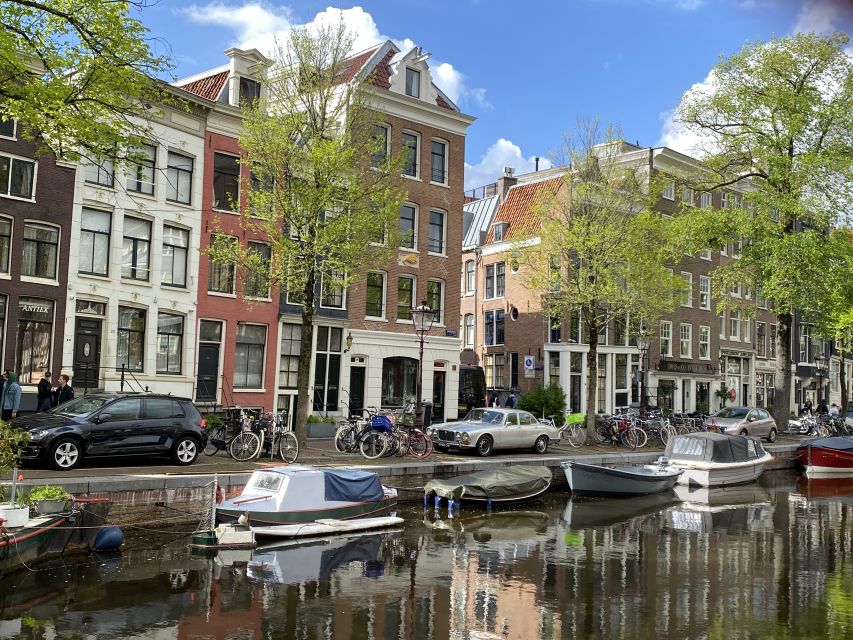
Dam Square can feel crowded and commercial, but the guide gives it some shape. You learn how the city grew from a small settlement into one of Europe’s major trading centers, and how wealth from the seventeenth-century Golden Age shaped Amsterdam’s grand canal houses and public buildings.
I find this opening useful because it gives you a basic map of the city before the route becomes more residential. You start with power, money, religion, and national identity, then walk into neighborhoods where daily life is easier to see.
More Walking Tours in Amsterdam
- Anne Frank’s Story – Guided Walking Tour through Amsterdam
★ 5.0 · 11,619 reviews - Amsterdam: Life of Anne Frank and World War II Walking Tour
★ 4.8 · 10,467 reviews - Absolutely Amsterdam – the Essential Introductory Walking Tour
★ 5.0 · 3,629 reviews
Torensluis and the canal belt story
After passing the Magna Plaza building, the route reaches the Torensluis. This former bridge is a good place to understand Amsterdam’s canal belt and the way the city expanded around water.
The canals are not just pretty streets with narrow houses. They were built for transport, trade, defense, drainage, and urban growth. As you walk, the guide points out details in the seventeenth-century canal houses, including the decorative touches that reflect the wealth and taste of their owners.
Look closely at the buildings as you go. Amsterdam’s canal architecture is full of small clues, and the tour is designed to help you notice them. The houses can look similar at first, but their fronts, proportions, ornaments, and location along the water tell different stories.
This is one of the strongest parts of the experience for anyone who wants more than a postcard view. You do not simply pass the canals. You get context for why they exist and why the buildings look the way they do.
The drawback is pace. Two and a half hours sounds generous, but the route includes many districts and sights. You will hear a lot while walking, and you may not have time to stop for extended photographs at every canal or building.
Herengracht, Prinsengracht, and the western islands
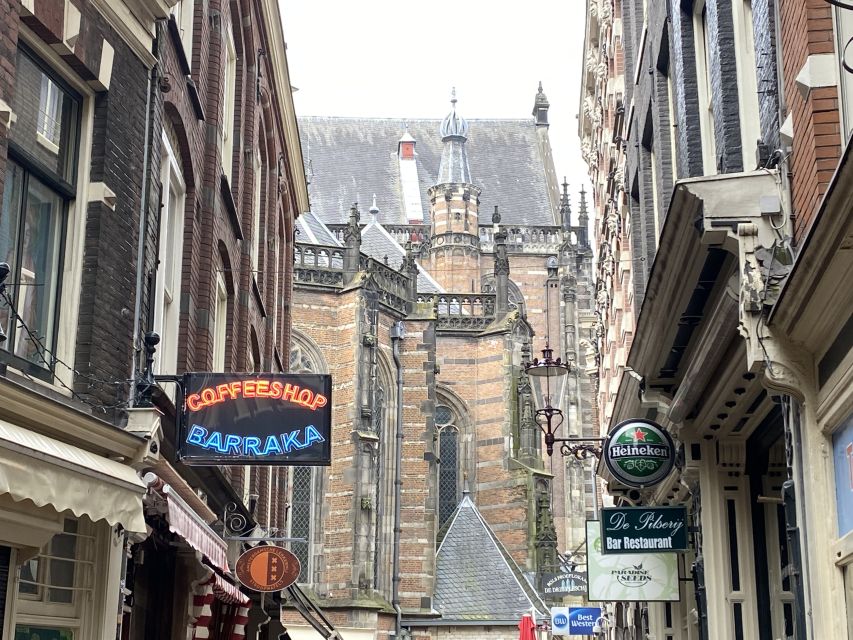
The route follows some of Amsterdam’s best-known waterways, including Herengracht and Prinsengracht. These canals offer the classic Amsterdam scenes: narrow façades, bridges, reflections, bicycles, and houseboats.
The walk then heads toward the Haarlemmer Buurt and the western islands. This change of setting is important. You leave the most familiar canal views and reach an area connected with Amsterdam’s working waterfront and former small shipyards.
Here, the city feels less polished and more practical. The route description points to old shipyards and ordinary Amsterdam life, which gives the walk a useful balance. Amsterdam was not built only for grand merchants and historic monuments. It was also a port city shaped by boats, workshops, workers, and trade.
You may also see houseboats along the water. They are part of Amsterdam’s modern identity, but they fit naturally into this route because they show how residents continue to use the canals as living spaces, not just scenery.
The walk takes a curve back through the newly designed Westerdok area. This gives you a contrast between old Amsterdam and newer waterfront planning. Rather than seeing the city as a museum, you get a sense of how former working areas are being reshaped for contemporary life.
The information does not promise a specific swimming stop, but it does note that swimming may be possible if you want to. Treat that as an optional possibility, not a central feature. Since the tour continues on foot, most people will probably prefer to stay dry and keep moving.
Brouwersgracht and the Jordaan entrance
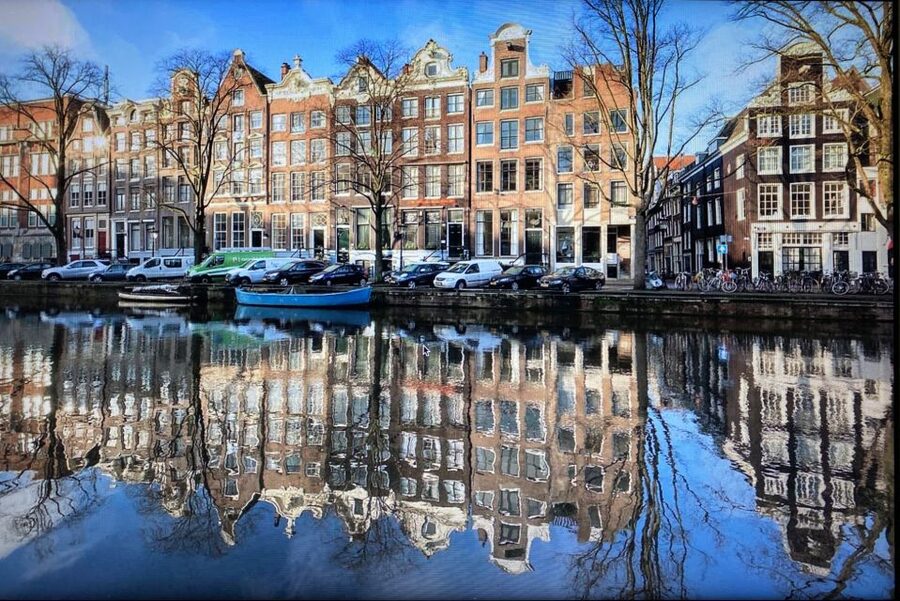
From the western islands, the route continues toward Brouwersgracht. Converted warehouses and old canal buildings help bridge the gap between the working waterfront and the Jordaan.
The Jordaan is often called Amsterdam’s most charming neighborhood, but the useful thing here is that you reach it after seeing some of the city’s wider story. You have already seen royal landmarks, merchant canals, old shipyards, newer waterfront design, and houseboats. The Jordaan then feels like a lived-in neighborhood rather than a decorative stop.
The narrow canals and small streets are made for wandering. You might find independent shops, cafés, galleries, and quiet corners, though the tour data does not promise particular businesses or stops. Your guide can point out useful places and suggest where to return after the walk.
This is also where the route becomes especially practical for the rest of your stay. If you take the tour early in your visit, you will have a better sense of how the central districts fit together. Bianca specifically found that taking the walk on the first day made it easier to find her way afterward.
That timing is worth considering. A tour at the start of your Amsterdam stay can help you decide where to return, where to eat, and which streets deserve a slower second look.
More walking tours:
- Amsterdam: Anne Frank Guided Small Group Walking Tour
★ 4.8 · 2,722 reviews - Amsterdam: Anne Frank Walking Tour – Guided in EN/DE/IT/ES
★ 4.9 · 2,676 reviews - Amsterdam: Guided Cultural Walking Tour
★ 4.9 · 2,384 reviews - Amsterdam: Guided Ganja Walking Tour of Coffee Shops
★ 4.2 · 2,092 reviews
Noordermaarkt on market day
The route includes a short visit to Noordermaarkt. If the market is operating that day, you can stroll among the stalls and get a taste of Amsterdam’s everyday food culture.
The market visit is dependent on the day, so you should not book this walk solely for market shopping. When it is open, though, it adds a welcome change from monuments and architecture. You might be tempted by herring or local ice cream, and the guide can offer suggestions for food nearby.
The market stop also gives the walk a more local rhythm. Instead of only hearing about Amsterdam’s past, you see a place where people shop, eat, and meet. It is a small part of the itinerary, but it helps the route feel connected to present-day Amsterdam.
The guide may also recommend restaurants around the Jordaan, a good apple pie, and enjoyable places for drinks. These suggestions can be valuable because the Jordaan has many choices, and a local recommendation may save you from choosing a restaurant simply because its menu is displayed in several languages.
Anne Frank House and Westerkerk
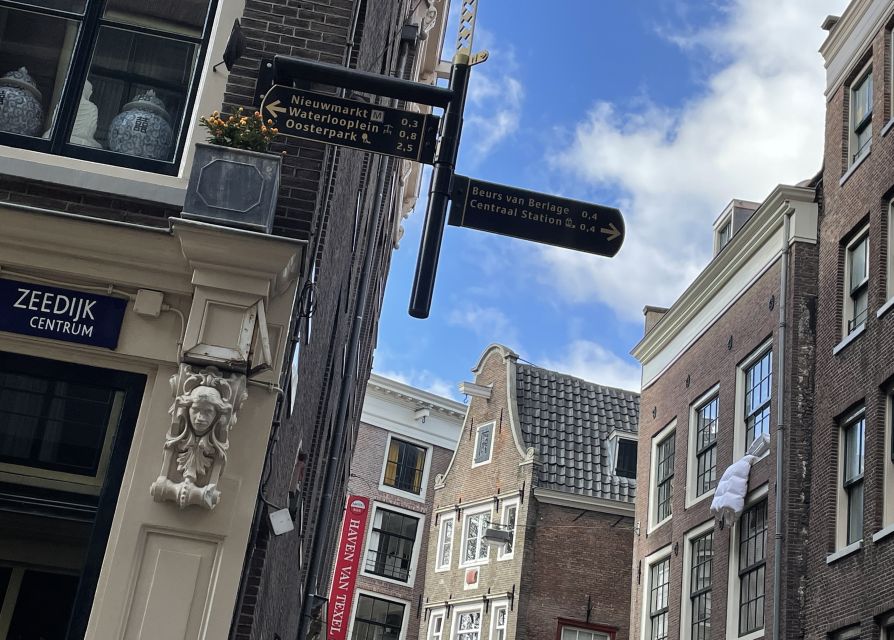
The route then passes the Anne Frank House and Westerkerk along the smaller Jordaan canals. These are among Amsterdam’s most visited sights, but the walk presents them as part of the neighborhood rather than as isolated attractions.
The Anne Frank House is a separate attraction, and this walking tour does not include admission. You see the exterior and learn about its place in the area. If you want to visit inside, arrange that separately and do not assume the walking tour provides entry.
Westerkerk adds another layer to the stop. Its tower and changing history are part of the guide’s discussion, and the church helps define this section of the Jordaan skyline.
This area can be crowded, especially near the Anne Frank House. A small group helps because you can hear the guide more easily than you might in a large party, but you should still expect a busy urban setting. The route is best for listening while walking, not for standing in one place for long periods.
Homomonument and the useful finish
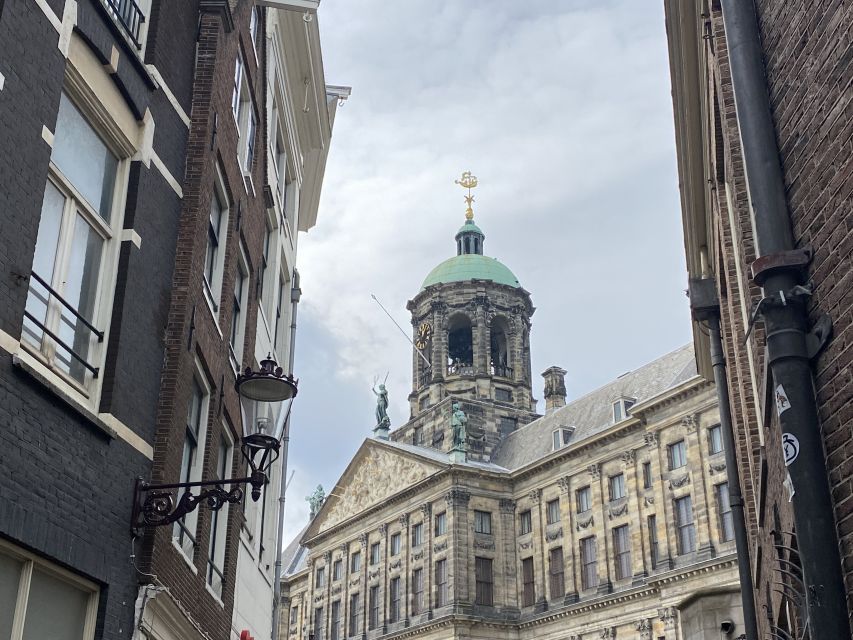
Near the end, the walk passes the Homomonument before reaching its finish. This adds a modern social and civic note to a route that has already covered monarchy, trade, religion, architecture, and urban development.
The tour can end with an accompaniment back to Beursplein if you want it. You can also remain in the Jordaan and continue on your own. That flexibility is one of the experience’s best practical features.
From this area, you can browse the 9 Straatjes, eat in the Jordaan, explore smaller canals, or make your way toward Amsterdam’s more fashionable shopping areas. In other words, you do not finish at an isolated meeting point with nothing around it. You finish in a neighborhood worth keeping on your schedule.
I would plan a little open time after the tour. The walk offers enough suggestions that you may want to stop for food, browse shops, or retrace one of the canals at a slower pace.
What the guides add to the walk
The strongest praise centers on the guides. Anna is described as friendly and especially good at sharing information beyond the usual standard facts. Natascha receives praise for making the city easier to understand, and Fred is noted for his command of Amsterdam’s history and architecture.
That range is important. A good walking tour should give you facts, but it should also help you read the city. The repeated emphasis on friendliness and careful explanations suggests that this experience is likely to feel more personal than a scripted, large-group outing.
The tour is offered in German only. If you are comfortable following a German-speaking guide, this can be a very good way to hear detailed explanations without the distractions of a large multilingual group. If you need English, Dutch, or another language, this is not the right choice based on the available information.
The group-size information needs a small note of caution. The activity is described in one place as limited to six participants, while the included details refer to a maximum of four. Either way, the group is intended to be small, but you should confirm the exact number when booking if that point matters to you.
Price, comfort, and overall value
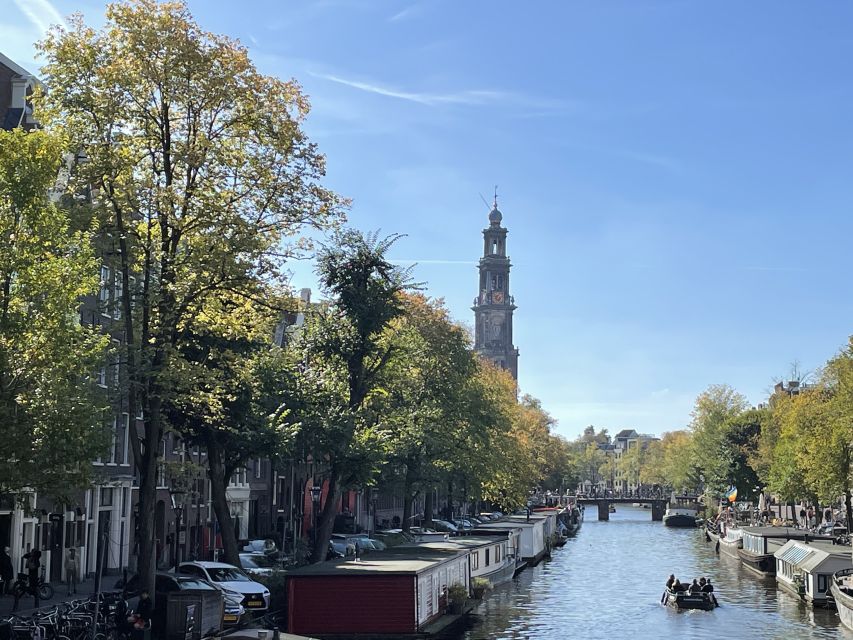
At $46 per person, the tour is not the cheapest way to see Amsterdam’s canals. Its value comes from the amount of ground covered and the guide’s interpretation, not from paid admissions or transport.
You are paying for a live guide, a 2.5-hour route, a small group, and a mix of central landmarks and less obvious districts. There is no mention of included food, drinks, or entry to the Royal Palace, Nieuwe Kerk, or Anne Frank House, so budget separately for those interests.
I think the price makes the most sense if you are visiting Amsterdam for the first time, want historical and architectural context, and prefer walking to a canal boat. It is also useful for returning visitors who have already seen Dam Square and want more time around the western islands and Jordaan.
Wear comfortable shoes. Bring water, sunscreen, and clothing suited to the forecast. The tour runs rain or shine, and Amsterdam’s weather can change quickly. The route is listed as wheelchair accessible, but you may still want to confirm the exact path and current conditions if you need specific mobility support.
The tour does not allow intoxication, alcohol, or drugs. That is standard conduct for a guided city walk, but it is worth keeping in mind if you are planning a market visit or drinks afterward.
Who should book this Amsterdam walking tour?
I would choose this tour if you want a German-language introduction to Amsterdam that mixes major sights with everyday neighborhoods. It suits people who enjoy architecture, city history, canals, markets, houseboats, and practical local suggestions.
It is a particularly good fit for a first day in the city. You can use the route to understand the center, then return later to the Jordaan, the 9 Straatjes, or a restaurant recommended during the walk.
I would think twice if you want long interior visits, extensive free time for photographs, or a slow food tour. The walk covers a lot, and several major sights are viewed from outside. You should also skip it if you need an English-language guide.
Should you book it?
Book this tour if you value a small group, a broad walking route, and thoughtful explanations of Amsterdam’s architecture and development. The combination of Dam Square, the canal belt, western islands, Westerdok, Noordermaarkt, and Jordaan gives you a fuller picture than a short center-only stroll.
The best strategy is to take it near the beginning of your stay, wear good shoes, and leave the afternoon open afterward. Choose another tour if English is essential or if you want guaranteed admission to the city’s famous museums and historic buildings.
FAQ
Where does the tour meet?
The meeting point is Beursplein on the Damrak, about 350 meters from Amsterdam Central Station. Look for a guide wearing a black-and-white striped band around the neck.
How long does the walking tour last?
The tour lasts 2.5 hours.
What language is the tour in?
The live guide speaks German. The available information lists German as the tour language.
How much does the tour cost?
The listed price is $46 per person.
What places does the route include?
The route includes Dam Square, the Royal Palace, the National Monument, the Nieuwe Kerk, Torensluis, Herengracht, Prinsengracht, the western islands, Westerdok, Brouwersgracht, Noordermaarkt, the Jordaan, Anne Frank House, Westerkerk, and the Homomonument.
Does the tour enter the Royal Palace, Nieuwe Kerk, or Anne Frank House?
Entry is not guaranteed. If the Royal Palace or Nieuwe Kerk is open, you may be able to look inside, but the walking tour does not list admission to these sites or the Anne Frank House as included.
Is the tour wheelchair accessible?
Yes, the activity is listed as wheelchair accessible.
What should I bring?
Bring comfortable shoes, sunscreen, water, and comfortable clothing.
Does the tour run in bad weather?
Yes. The tour takes place rain or shine, so bring clothing suitable for the forecast.
Just added around Amsterdam
- Amsterdam 1-Hour Rickshaw Tour★ 4.9 · 17 reviews
- Amsterdam: Canal Cruise and Jewish Cultural Quarter Tickets★ 4.2 · 17 reviews
- Keukenhof Gardens and Tulip Experience Tour from Amsterdam★ 4.8 · 17 reviews
- Discover Amsterdam’s city center in this Outside Escape game tour★ 4.5 · 18 reviews
- Marken, Volendam and Edam: Private Full-Day Tour★ 4.6 · 18 reviews
- Amsterdam: Personal Travel & Vacation Photographer★ 4.8 · 18 reviews
- Amsterdam: Luxury Saloon Boat Cruise with 3-Course Dinner★ 3.9 · 18 reviews
- Rijksmuseum & Amsterdam City Center Semi-Private Tour 12ppl Max★ 5.0 · 18 reviews
Walking Tours, compared.
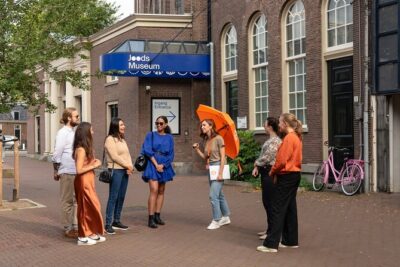
Anne Frank’s Story – Guided Walking Tour through Amsterdam
Read our review →
Life of Anne Frank and World War II Walking Tour
Read our review →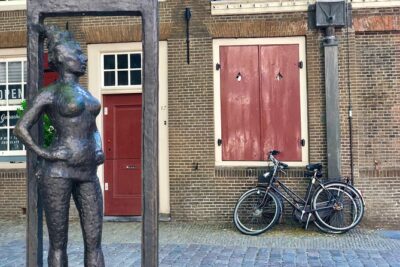
Absolutely Amsterdam – the Essential Introductory Walking Tour
Read our review →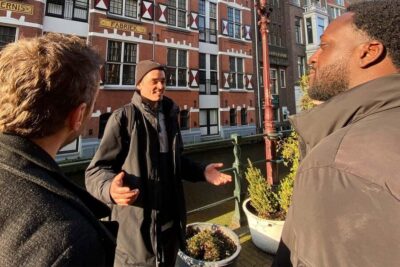

Anne Frank Walking Tour – Guided in EN/DE/IT/ES
Read our review →
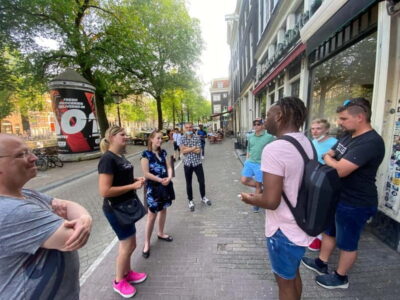

Anne Frank Walking Tour Amsterdam Including Jewish Cultural Quarter
Read our review →Browse the lists this tour appears in