
REVIEW · WWII & JEWISH HISTORY TOURS
Amsterdam: Private World War Two History Walking Tour
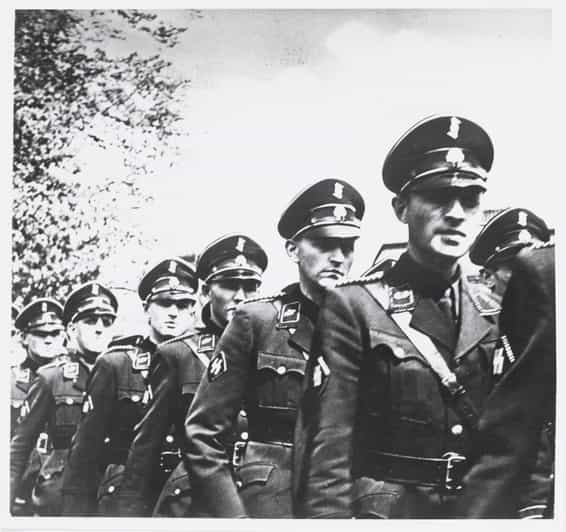
Amsterdam carries its wartime scars quietly. This three-hour private walk connects occupation sites, resistance memorials, deportation stories, and the terrible choices faced by ordinary people between 1940 and 1945. I like the small group of no more than four, which gives you room to ask questions instead of listening to a guide through a loudspeaker. I also like the use of old photographs at the very places where events happened, including images made by Dutch resistance fighters.
The walk begins outside the old Anne Frank House on Prinsengracht, but it does not include entry to the Anne Frank House. That is the main point to understand before booking. You will not visit the Resistance Museum or Hollandsche Schouwburg either, so this is best for people who want a street-level history lesson rather than a museum tour. The $188 group price is reasonable for four people, but less attractive for one or two.
In This Review
- Key points to know before booking
- Why this three-hour walk is different
- Meeting at the old Anne Frank House
- German occupation and the first wartime photographs
- Dam Square and the shooting of May 7, 1945
- Deportation, Auschwitz, Sobibor, and one Amsterdam street
- The Hunger Winter and food dropped from the sky
- Resistance memorials and the violin player from Auschwitz
- Small-group guiding and walking pace
- What the $188 price really buys
- Who should book this experience
- Practical details that affect your morning
- Should you book the Amsterdam wartime walk?
- FAQ
- Where does the Amsterdam World War Two walking tour begin?
- How long does the walking tour last?
- Is the Anne Frank House included?
- What language is the tour given in?
- Is the tour wheelchair accessible?
- Are refreshments included?
Key points to know before booking
- A private group capped at four: You receive direct attention from one of three retired historians and can stop to ask questions.
- A serious walk through wartime Amsterdam: Topics include the German invasion, resistance, deportation, Auschwitz, Sobibor, and the Hunger Winter.
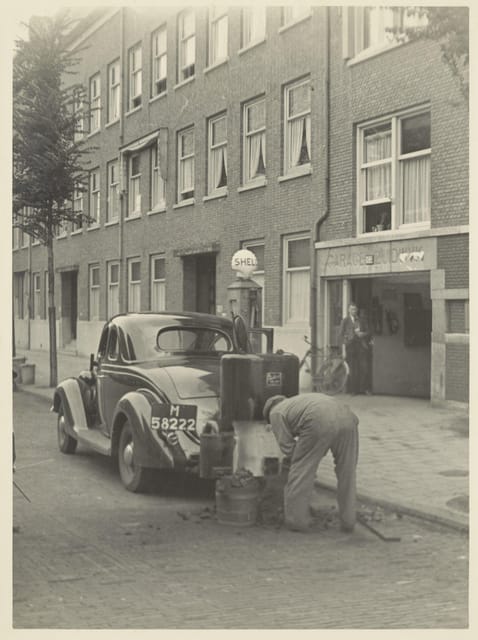
- Original wartime photographs: The guides show photographs at the locations where the events took place, adding a strong sense of place.
- A moving street-by-street record: A small booklet identifies Jewish residents from one Amsterdam street and records the camps where they died.
- A flexible walking pace: The tour can accommodate wheelchair users if you contact the guide in advance to plan the route and coffee stop.
- No major museum admissions included: Anne Frank House, the Resistance Museum, Hollandsche Schouwburg, drinks, and coffee are all outside the tour price.
Why this three-hour walk is different
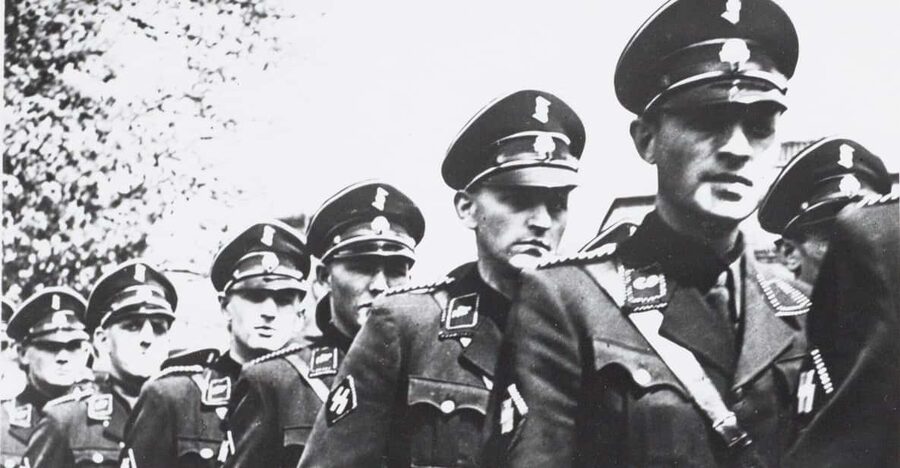
Many Amsterdam history walks concentrate on canals, merchants, churches, and grand houses. This one asks you to look at the same city through the years of Nazi occupation. You move through ordinary streets while learning how German rule changed daily life, how resistance took shape, and how Jewish families were removed from the city.
I like that the tour is built around places rather than a long lecture. A photograph of the German army entering Amsterdam means more when you are standing near the location shown in the image. The guide can point out what changed, what remained, and why a particular monument or square matters.
The subject is painful, and the tour does not pretend otherwise. You will hear about deportation and murder in Auschwitz and Sobibor, along with the choices made by Dutch citizens, German authorities, resistance workers, and bystanders. This is not a light morning activity, but it offers a useful way to understand Amsterdam beyond its familiar postcard views.
More Historical Tours in Amsterdam
- Amsterdam Food and Cultural Tour with Tastings
★ 5.0 · 2,442 reviews - Amsterdam: Haunted History and Ghost Walking Tour
★ 4.5 · 488 reviews - Amsterdam High-End Dutch Food & History Tour – Up to 8 guests
★ 5.0 · 482 reviews
Meeting at the old Anne Frank House
The meeting point is in front of the old Anne Frank House at Prinsengracht 263. Look for the guide between the museum and the Lunch Café, at Spot A on the meeting map. The guide carries a large notebook and a sign marked Anne Frank Huis.
This location is practical, but it can be confusing because the tour does not include admission to the Anne Frank House. You are meeting beside the former hiding place, not entering it. If you have a separate Anne Frank House ticket, allow enough time to handle that visit on its own, since this walking tour follows a different route and purpose.
The stated start time is 9:30 a.m. Check the available date and starting time when booking, since the activity notes say that times can vary. Bring an umbrella. Amsterdam weather has a habit of making a simple bit of rain feel like part of the itinerary.
German occupation and the first wartime photographs
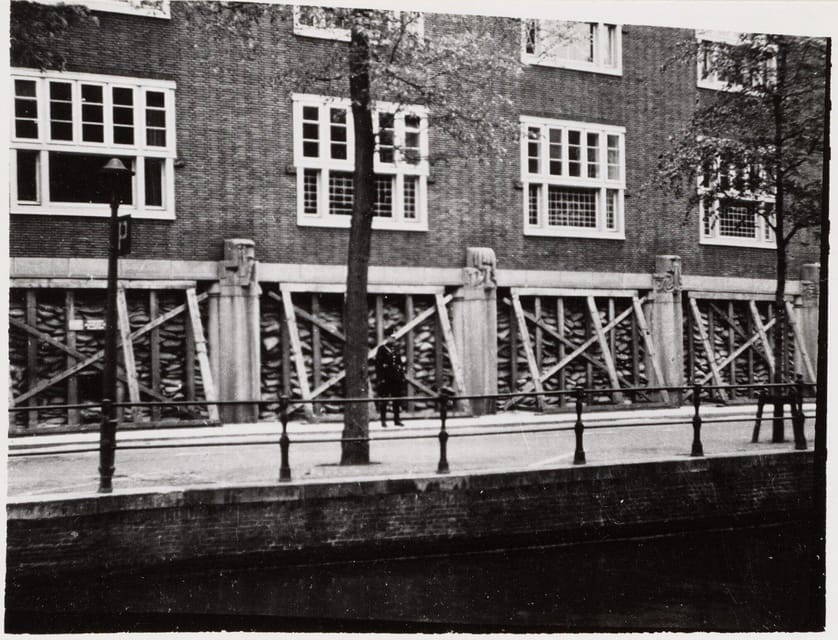
The opening part of the walk covers the entry of the German army, known as the Wehrmacht, into Amsterdam. The guides use preserved photographs to show the arrival and explain how the city reacted.
One especially striking scene concerns the former town hall, now the Grand Hotel. The guides show photographs of the German army being welcomed there, then contrast those images with the later celebration when Canadian troops were cheered. The two moments reveal how public mood and political power can change quickly, even in the same place.
I value this kind of comparison because it avoids presenting wartime Amsterdam as a simple story of heroes on one side and villains on the other. Photographs of crowds can be uncomfortable. They force you to think about fear, pressure, survival, opportunism, and the uncertain early days of an occupation.
The guide also discusses resistance photographs taken by Dutch resistance fighters. Seeing those pictures at the locations where they were made gives you a clearer idea of how carefully such evidence had to be recorded. It also reminds you that resistance was not only a matter of dramatic sabotage. Preserving information could be dangerous work too.
Dam Square and the shooting of May 7, 1945
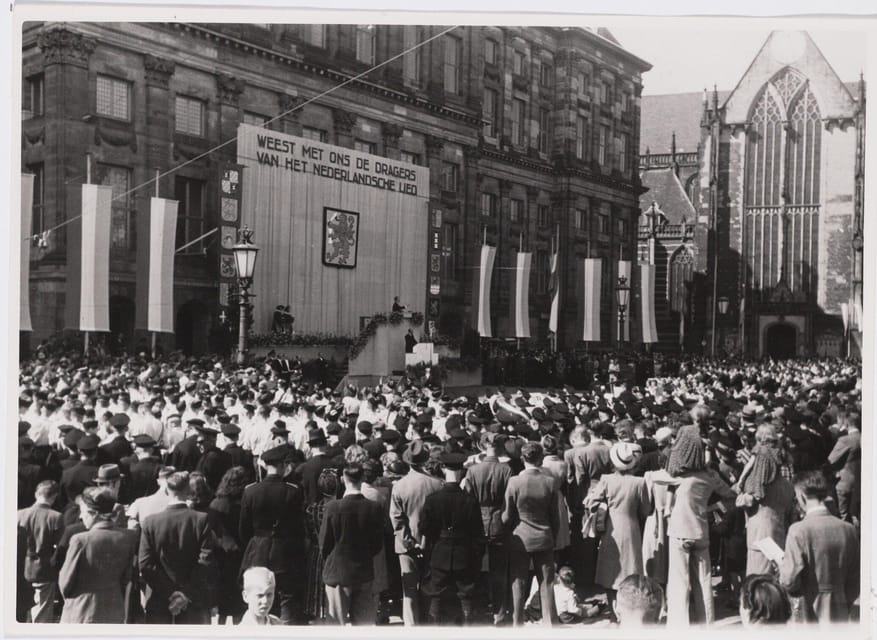
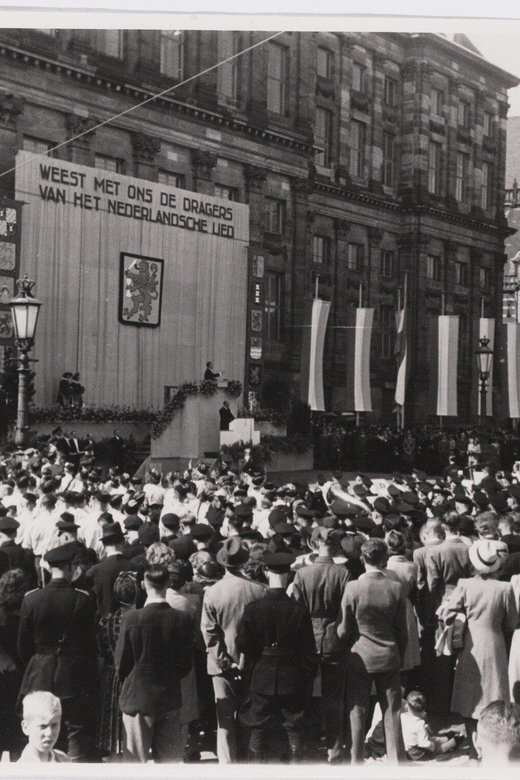
Dam Square is one of Amsterdam’s most familiar public spaces, filled with people, buildings, streetcars, and daily city life. The tour gives it a darker layer by explaining the shooting incident of May 7, 1945.
The date matters. Germany had surrendered, and liberation celebrations were underway, yet violence still broke out in the square. The tour treats this event as part of the complicated transition from occupation to freedom, rather than ending the story neatly on liberation day.
This stop is useful because it challenges the idea that peace arrives in a clean, instant moment. You may have seen Dam Square many times in photographs or during a shopping walk. Hearing what happened there in the days after the war changes how you read the space.
The guide’s use of photographs and local details is especially important here. Without that context, a large square can feel like a blank stage. With it, you begin to see how Amsterdam’s central spaces served as places of authority, public celebration, fear, and violence.
More Private Tours in Amsterdam
- Rijksmuseum Amsterdam Small-Group Tour with Private Upgrade
★ 4.5 · 1,547 reviews - Van Gogh Museum Tour Reserved Entry Semi Private
★ 5.0 · 1,437 reviews - Private Amsterdam Red Light District and Coffee Shop Tour
★ 5.0 · 763 reviews - Anne Frank and Jewish Quarter Amsterdam Private Walking Tour
★ 5.0 · 684 reviews
Deportation, Auschwitz, Sobibor, and one Amsterdam street
The most difficult part of the tour concerns the deportation of Amsterdam’s Jewish population and the fate of those sent to extermination camps. Auschwitz and Sobibor are discussed directly, so you should be prepared for frank and upsetting material.
One unusual feature is a small booklet about all the Jewish residents of one selected Amsterdam street. It includes photographs and names, along with the camp where each person died. This makes a huge crime personal without reducing it to a single famous story.
I find this approach particularly valuable. Numbers can become hard to grasp, but a street address, a face, and a name create a human connection. You are encouraged to think about neighbors, families, and homes rather than only about distant camps and large figures.
The wording about the street is important. The booklet concerns one Amsterdam street, not every Jewish victim in the city. Still, that focused record can show you how deportation affected a local community block by block. It is the sort of detail you are unlikely to get from a general sightseeing walk.
This section may not suit young children or anyone looking for a casual outing. The tour is educational, but it is also emotionally heavy. I would avoid scheduling it immediately before a celebratory meal or a packed day if you know difficult history stays with you.
The Hunger Winter and food dropped from the sky
The walk also covers the Hunger Winter, the severe food shortage that struck the Netherlands near the end of the war. The guide explains the food dropping that took place during this period, connecting a broad national crisis to Amsterdam’s streets and residents.
This topic helps you understand that wartime suffering did not end simply because the front line moved or liberation came closer. Hunger shaped ordinary decisions, family life, health, and movement. It also gives the tour a wider focus beyond the persecution of Jewish residents, while keeping attention on the civilians who endured occupation.
The strength of discussing the Hunger Winter on foot is that you can picture the city as a place where people still had to find food, travel, work, and shelter. The tour does not turn wartime history into a distant military story. It keeps returning to the pressure placed on people living in Amsterdam.
A short break comes about halfway through the walk. You can use the time for coffee, a restroom visit, or possibly something to eat, such as a late breakfast. Drinks and food cost extra, so carry a payment method and allow a little flexibility in the three-hour schedule.
Resistance memorials and the violin player from Auschwitz
Resistance monuments form another thread through the route. Rather than simply pointing at a statue and giving its date, the guides explain the story behind each memorial and why it was placed there.
The tour also includes a statue of a famous violin player from Auschwitz. The supplied information does not name the musician, so you should not expect the stop to be identified in advance by name. Its purpose is to connect the camp experience to a particular person and a form of music that survived amid terrible conditions.
This combination of memorials, photographs, and personal stories gives the walk variety. You are not only moving from one tragedy to the next. You are also considering remembrance, resistance, art, public memory, and the ways a city chooses to mark its past.
Because the route is led by retired historians, the tone should suit you if you enjoy asking questions and following a story beyond the basic dates. Peter Schaapman, one of the guides, has been praised for his extensive command of the subject and for telling exceptional stories. The organizers also include two other retired historians, all with a strong interest in the German occupation.
Small-group guiding and walking pace
The maximum group size is four. That is a major advantage in Amsterdam, where narrow sidewalks and busy streets can make large history groups awkward. You can hear the guide without an audio system, and you have a real chance to ask about a photograph, a memorial, or a family story.
The guides deliberately avoid an audio system because they prefer a personal approach. I think that suits this subject. A human voice, a pause, and a question from the group can make a difficult story easier to follow than a polished recording.
The pace is adjusted to the group. A wheelchair user can take part, but you should email ahead so the guide can account for the route and arrange a suitable coffee stop. The activity is described as wheelchair accessible, though the need to plan ahead is worth taking seriously.
The walk may run slightly longer than three hours. That can be a benefit if you want questions answered, but it also means you should not book another appointment immediately afterward. Treat the published duration as a guide rather than a guarantee to the minute.
What the $188 price really buys
The cost is $188 for a private group of up to four people. If four people share the booking, that works out to $47 per person for three hours of personal guiding. For a couple, the effective cost is $94 per person, and a solo participant pays the full group price.
That makes the tour strongest for a family, group of friends, or small party that wants a private history lesson. You are paying not only for walking from place to place, but also for a guide who can answer questions, show photographs, provide printed information, and adjust the pace.
The paper material is yours to keep. The booklet about the Jewish residents of one street is especially meaningful, though you should handle it with the seriousness its subject requires. It gives you something to read later, after the details of the walk have had time to settle.
The price does not include coffee, food, museum tickets, or entry to the Anne Frank House, Resistance Museum, or Hollandsche Schouwburg. If you want those attractions, budget for them separately and plan separate visits. This tour is not a package combining Amsterdam’s main wartime museums.
Who should book this experience
I would recommend the walk to you if you have already seen Amsterdam’s main sights and want a more serious look at the city. It is also a strong choice for history students, families with older teenagers, and anyone interested in the Second World War, resistance, Jewish life, or public memory.
You will get the most from it if you ask questions. The group size makes that easy, and the guides clearly welcome conversation. If you prefer a quick list of landmarks, a large group, or a light introduction to Amsterdam, this will probably feel too intense and too focused.
You should also choose your timing with care. The 9:30 a.m. start leaves much of the day free, and the midway break gives you a chance to pause. Still, the subjects of deportation, extermination camps, hunger, and postwar violence require emotional energy.
English is the stated tour language. The experience is private, and the guide is live rather than recorded. That means the quality depends partly on the individual guide, but the guide team consists of three retired historians, including Peter Schaapman, whose storytelling and command of the subject have earned especially strong praise.
Practical details that affect your morning
Meet at Prinsengracht 263, outside the old Anne Frank House, between the museum and Lunch Café. Look for the Anne Frank Huis sign and the guide with a large notebook. If you can locate the number plate 263, you are in the right place.
Wear comfortable shoes and bring an umbrella. The walk takes place outdoors, and the pace is adjustable, but Amsterdam streets are still best handled with sensible footwear. Plan for a coffee or restroom break halfway through, with refreshments paid separately.
The tour allows free cancellation up to 24 hours before the start for a full refund. You can also reserve and pay later, which helps if your Amsterdam schedule is still shifting.
Should you book the Amsterdam wartime walk?
Book it if you want a personal, serious, location-based account of Nazi-occupied Amsterdam and can share the $188 cost with up to three other people. The small group, wartime photographs, printed material, and street-level account of Jewish residents give it real value beyond a standard sightseeing walk.
Skip it if you mainly want the Anne Frank House, the Resistance Museum, or Hollandsche Schouwburg. Those sites are not part of the route, and you will need separate tickets and visits.
For the right audience, this is a thoughtful use of three hours. It asks you to look closely at familiar Amsterdam places and remember the people who lived through them. The experience is not easy, but it can give your time in the city a stronger sense of purpose.
FAQ
Where does the Amsterdam World War Two walking tour begin?
It begins at 9:30 a.m. in front of the old Anne Frank House at Prinsengracht 263. Meet between the museum and the Lunch Café at Spot A, near the number plate 263. The guide carries a large notebook and an Anne Frank Huis sign.
How long does the walking tour last?
The tour lasts about three hours. It may run a little longer, especially if the group has questions or uses the coffee break for food.
Is the Anne Frank House included?
No. The tour starts outside the old Anne Frank House, but it does not include entry. Tickets for the Anne Frank House, Resistance Museum, and Hollandsche Schouwburg are not included either.
What language is the tour given in?
The live tour is given in English.
Is the tour wheelchair accessible?
Yes, the tour can accommodate wheelchair users. You should email the organizers in advance so they can consider the route and plan an appropriate coffee stop.
Are refreshments included?
No. The halfway coffee or restroom stop is included in the schedule, but drinks and food must be paid for separately.
More WWII and Jewish History Tours
- Anne Frank Walking Tour Amsterdam Including Jewish Cultural Quarter
★ 5.0 · 1,879 reviews - Amsterdam: Dutch WWII Resistance Museum Entry Ticket
★ 4.7 · 951 reviews - Amsterdam: Anne Frank and Jewish Quarter Tour
★ 4.7 · 434 reviews - Amsterdam: Anne Frank and Jewish Quarter Walking Tour (TOP RATED)
★ 4.5 · 430 reviews
More Walking Tours in Amsterdam
- Anne Frank’s Story – Guided Walking Tour through Amsterdam
★ 5.0 · 11,619 reviews - Amsterdam: Life of Anne Frank and World War II Walking Tour
★ 4.8 · 10,467 reviews - Absolutely Amsterdam – the Essential Introductory Walking Tour
★ 5.0 · 3,629 reviews - Amsterdam: Anne Frank Guided Small Group Walking Tour
★ 4.8 · 2,722 reviews
Just added around Amsterdam
- Amsterdam City Center Guided Walking Tour – 12 guests 2,5h★ 5.0 · 3 reviews
- Amsterdam Light Festival Boat Cruise★ 5.0 · 3 reviews
- Daytrip Tour from Amsterdam to Zaanse Schans and Giethoorn★ 5.0 · 3 reviews
- Amsterdam: Roller Dreams & Amsterdam Nightlife Experience★ 3.7 · 3 reviews
- Amsterdam: Van Gogh Museum Entrance and Guided Tour★ 3.5 · 3 reviews
- Amsterdam: Red light tour in German/English for groups of 4 people or more★ 5.0 · 3 reviews
- 2 Hour Making Rembrandt’s Traditional Oil Paints in Amsterdam★ 5.0 · 3 reviews
- Amsterdam Red Light District and Old Town Walking Tour★ 5.0 · 3 reviews
WWII & Jewish History Tours, compared.
Life of Anne Frank and World War II Walking Tour
Read our review →
Anne Frank Walking Tour Amsterdam Including Jewish Cultural Quarter
Read our review →
Oranjehotel World War II Prison Entrance Ticket
Read our review →
Anne Frank and Jewish Quarter Amsterdam Private Walking Tour
Read our review →

Anne Frank and Jewish Quarter Walking Tour (TOP RATED)
Read our review →
Browse the lists this tour appears in