
REVIEW · WALKING TOURS
Amsterdam: Small-group Guided Walking Tour (French/English)
Amsterdam rewards a good walk. This tour links Dam Square, the canal belt, and Jordaan with stories that help the city make sense, rather than leaving you with a string of pretty photographs. I like the efficient route and the personal advice on food, drinks, shopping, boats, and further sightseeing.
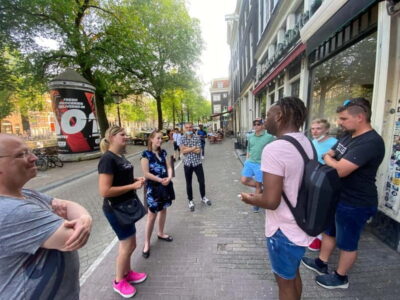
I also like the small-group feel and guide Chris’s friendly, story-filled style. He uses visual material at some stops, answers questions clearly, and sends useful links afterward. The main consideration is pace: with more than 20 stops in two to three hours, most places receive a short explanation and photo stop, not an interior visit.
In This Review
- Key points at a glance
- Starting beside Amsterdam Centraal
- From the station to the old harbor streets
- Attic churches, old stones, and Amsterdam Chinatown
- De Waag and the Dutch East India Company
- Dam Square, the Royal Palace, and Magna Plaza
- Torensluis and the 400-year-old canal belt
- Anne Frank House and Westerkerk
- Jordaan: the final neighborhood walk
- What makes Chris a strong guide
- Price, pace, and practical value
- Who should book this Amsterdam walk?
- Should you book it?
- FAQ
- How long does the walking tour last?
- What languages are available?
- Where does the tour begin?
- Is food included?
- Does the tour enter the Anne Frank House or other museums?
- Is the tour wheelchair accessible?
- Can I cancel the booking?
Key points at a glance
- Starts beside Amsterdam Centraal: Meet behind the station near the white and blue ferries, beside Pancakes Amsterdam at the IJ.
- Covers a lot on foot: The route runs from Zeedijk and Chinatown through Dam Square, the canal belt, Anne Frank House, Westerkerk, and Jordaan.
- Chris earns strong praise: His humor, local stories, visual aids, and restaurant advice are recurring strengths.
- French or English guidance: You can choose between the two listed tour languages.
- Good first-day orientation: The route gives you a useful city-center map in your head before you explore alone.
- No meal or museum admission included: Bring water and comfortable shoes, and treat the tour as an overview rather than a series of indoor visits.
Starting beside Amsterdam Centraal
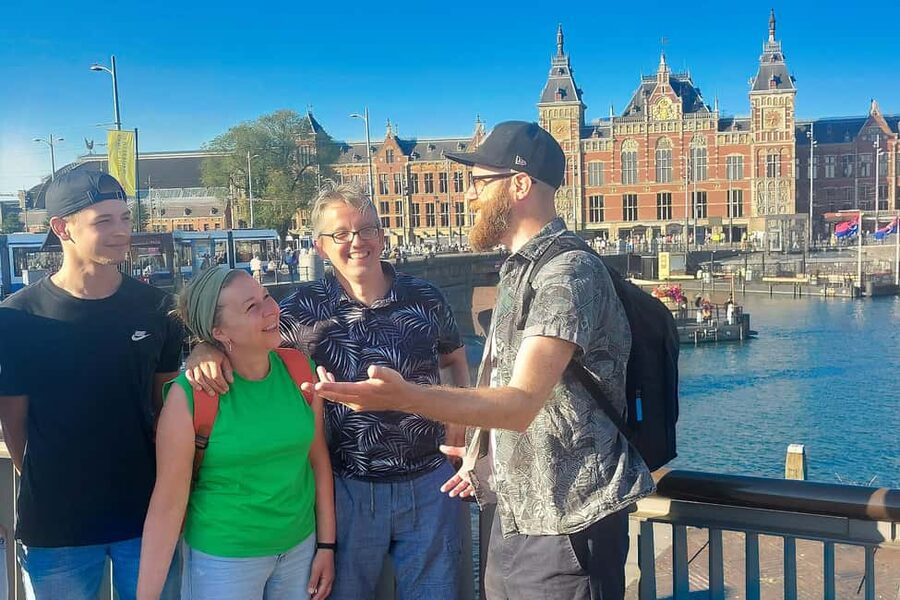
Your meeting point is behind Amsterdam Centraal Station, near the water where the white and blue ferries leave for Amsterdam North. Look for Pancakes Amsterdam at the IJ and the large D ferry halte sign beside the bike lane.
This spot can be confusing because the station, ferry area, bike traffic, and waterfront all meet in a tight space. Give yourself extra time to find the correct side of the station. The guide is described as wearing glasses, a beard, and a baseball hat, which helps with the final identification.
The tour begins with a practical advantage: you are already at the city’s main transport hub. If Amsterdam is your first stop in the Netherlands, this walk gives you an early sense of how the center is arranged. You start near the station, cross into the old city, and gradually connect the eastern center, Dam Square, the western canal belt, and Jordaan.
The tour lasts two to three hours. It is wheelchair accessible, and private or small-group formats are available. The exact route can shift for construction, local conditions, or your interests, so think of the stops as a well-planned framework rather than a rigid script.
More Walking Tours in Amsterdam
- Anne Frank’s Story – Guided Walking Tour through Amsterdam
★ 5.0 · 11,619 reviews - Amsterdam: Life of Anne Frank and World War II Walking Tour
★ 4.8 · 10,467 reviews - Absolutely Amsterdam – the Essential Introductory Walking Tour
★ 5.0 · 3,629 reviews
From the station to the old harbor streets
The first section introduces Amsterdam through a handful of short stops. Amsterdam Centraal itself receives a photo stop and about five minutes of explanation. That is enough to set the scene, but not enough for a full architectural visit.
From there, the route moves to the Dancing Houses, the Basilica of Saint Nicholas, and Zeedijk Street. The Dancing Houses are a classic Amsterdam sight: narrow canal-side buildings that appear to lean in different directions. They make an excellent early photograph and offer a quick lesson in the city’s distinctive architecture.
The Basilica of Saint Nicholas brings a different visual note. Its prominent church form contrasts with the tight streets and tall merchant houses around it. You then reach Zeedijk, one of the old center’s characterful streets, where Amsterdam’s long trading past and present-day mix of cultures meet.
A short stop at the Major Alida Bosshardt Statue adds a human story to the route. The statue commemorates a well-known Dutch social worker, so this is not just a march between famous buildings. It gives your guide room to connect Amsterdam’s streets with the people who worked and lived in them.
Attic churches, old stones, and Amsterdam Chinatown
The route continues to Our Lord in the Attic Museum, Oude Kerk, Burgwallen Oude Zijde, and Amsterdam Chinatown. These stops show how compact Amsterdam’s center can be, with religious, commercial, and residential stories packed into a few blocks.
Our Lord in the Attic Museum is especially unusual. Its name points to a Catholic church built in a hidden upper-floor setting during a period when Catholic worship faced restrictions. The tour does not include museum entry, so you should not expect to see the interior. Still, the guide can explain why a church in an attic matters and point out the building from the street.
Oude Kerk offers another useful contrast. It is one of the city’s major historic churches, located in the middle of the old center. The surrounding Burgwallen Oude Zijde area lets you see the older street pattern and the close relationship between Amsterdam’s waterways, houses, and public spaces.
Amsterdam Chinatown adds a modern multicultural layer. Here, the tour moves beyond Golden Age façades and church history. You get a reminder that Amsterdam is not a museum frozen in the seventeenth century, but a living city shaped by many communities.
One practical point: this part of the route is close to the Red Light District. The itinerary names the old center and Chinatown, but it does not promise a dedicated Red Light District tour. If that subject matters to you, ask Chris how much attention the current route gives it.
De Waag and the Dutch East India Company
Next come De Waag Restaurant and the VOC, or Dutch East India Company. De Waag is one of the city’s most recognizable historic buildings, with a strong connection to Amsterdam’s civic and commercial past. From the outside, it makes a useful stop for understanding how public buildings once served practical city functions.
The VOC stop takes you into one of the most important, and morally complicated, parts of Dutch history. Amsterdam’s wealth during the Golden Age was linked to global trade, shipping, and colonial power. A good guide can explain the company’s role without reducing the story to old houses and handsome canals.
This is one place where Chris’s storytelling style matters. Several people praised his ability to connect small details with larger events, and he is also described as using visual displays for historic and specific sights. That can help when a story involves people, dates, and places no longer easy to picture from the street.
The stop at the Narrowest House in Europe keeps things lighter. Amsterdam’s narrow houses are a visual shorthand for the city’s limited space and unusual property taxes. The claim attached to this particular building should be treated as a fun city fact, but it gives you a memorable way to notice how narrow and tall many old houses are.
More walking tours:
- Amsterdam: Anne Frank Guided Small Group Walking Tour
★ 4.8 · 2,722 reviews - Amsterdam: Anne Frank Walking Tour – Guided in EN/DE/IT/ES
★ 4.9 · 2,676 reviews - Amsterdam: Guided Cultural Walking Tour
★ 4.9 · 2,384 reviews - Amsterdam: Guided Ganja Walking Tour of Coffee Shops
★ 4.2 · 2,092 reviews
Dam Square, the Royal Palace, and Magna Plaza
The route then reaches Dam Square, the Royal Palace, and Magna Plaza. This is the central civic heart of Amsterdam, and it can feel crowded, noisy, and full of competing sights. A guide is useful here because the square’s scale and activity can make it hard to know where to look first.
The Royal Palace is presented as an exterior stop. You will hear about its place in Amsterdam’s civic and royal story, but entrance is not included. Magna Plaza, a grand former post office now used for shopping, adds another architectural layer and shows how old buildings continue to serve new purposes.
Dam Square is also a good point to pause and orient yourself. You can connect the route behind you, toward Centraal and the old eastern center, with the western canals still ahead. If you return later on your own, you will recognize this as a useful navigation anchor rather than just another crowded plaza.
The stop sequence is efficient, but it asks you to listen while people move around you. If you prefer slow architectural study, you may want to return after the walk with more time for photographs.
Torensluis and the 400-year-old canal belt
From Dam Square, the walk heads toward Torensluis Bridge and the Grachtengordel, Amsterdam’s canal belt. The canal belt is a UNESCO World Heritage site and one of the strongest parts of the experience.
Torensluis is a broad historic bridge with a fine view along the water. It helps you see how Amsterdam’s bridges, canals, and house fronts work together. The canal belt then supplies the classic views most people hope for: reflections, house gables, narrow façades, and streets designed around water as much as land.
The guide’s role here is to explain why the canals were built and how they supported the city’s growth from a small settlement on the Amstel into a major European trading center. You will hear about Amsterdam’s Golden Age, but also about daily life and the practical challenges of building on wet ground.
I particularly like this part for first-time visitors because the canals can otherwise become visual wallpaper. A short explanation about their age, purpose, and connection to trade makes the views more meaningful. You also get the chance to ask simple questions about Dutch life, architecture, and the city’s past.
Keep your footing near the water and watch the bike lanes. Amsterdam’s cycling traffic is part of the city’s character, but it is not forgiving of distracted walkers.
Anne Frank House and Westerkerk
The walk continues through the canal belt to Anne Frank House and Westerkerk. These are among Amsterdam’s most emotionally important stops, yet the tour offers an exterior visit and explanation rather than admission to the Anne Frank House.
That distinction matters. If you want to enter Anne Frank House, book a separate timed ticket through the official museum process. Do not assume this walking tour includes access. The guide can explain Anne Frank’s story and place the house within the neighborhood, but the full museum experience requires its own planning.
Westerkerk, nearby, adds architectural and historical context. Its tall tower is one of the best-known markers in this part of town, and the church helps you understand how religious buildings shaped the canal belt’s identity.
This section can be more serious than the earlier stops. Chris’s friendly approach and willingness to answer questions are useful here, but the tone may naturally shift as the subject turns to persecution and wartime history. You should allow yourself time afterward if you want to visit the Anne Frank House properly.
Jordaan: the final neighborhood walk
The tour ends in Jordaan, one of Amsterdam’s most appealing areas for wandering. The neighborhood is known for canals, small streets, independent businesses, and a more local feel than the main central squares. The walk does not promise entry into shops or a meal, but it gives you a solid starting point for returning on your own.
Jordaan is also where the tour’s personal recommendations become especially useful. Chris provides suggestions for cafés, restaurants, pubs, souvenir shops, boats, food, drinks, and other sights. One particularly practical food tip from the tour was bitterballen, a Dutch snack worth trying during your stay.
At the end, you receive helpful links to continue exploring. That follow-up is more useful than a generic list because you can ask about your own interests during the walk, then use the recommendations later. One guide even walked with a participant to show the route to an area they had not yet visited.
The final neighborhood setting is a good choice. Rather than ending at a major transport point and sending you away, the tour leaves you near streets where you can continue walking, stop for a drink, or explore at a slower pace.
What makes Chris a strong guide
The clearest strength here is the guide’s delivery. Chris is repeatedly described as friendly, funny, polite, and easy to talk with. He is also praised for answering questions instead of simply reciting a prepared speech.
That difference matters on a city walk. Amsterdam has plenty of landmarks, but you can find their names in a guidebook. The value comes from learning why a building looks the way it does, how a neighborhood changed, and which small detail you might otherwise miss.
Chris also appears comfortable covering several types of information: architecture, local history, Dutch culture, food, daily life, and practical sightseeing. He has been described as an Amsterdam encyclopedia, a phrase that captures the sheer number of small facts he brings to the walk.
The strongest fit is for people who enjoy stories and questions. If you prefer silent photography or a very short list of highlights, the amount of explanation may feel like too much. For most first-time visitors, though, the mix helps the city become easier to read.
Price, pace, and practical value
At $33 per person, this is a fair price for a two to three-hour orientation, especially if your guide uses the time well. You are paying for a route through several major areas, local interpretation, questions answered in real time, and recommendations you can use for the rest of your stay.
The value is strongest when you take the tour early in your visit. You can use the advice on restaurants, cafés, pubs, boats, shopping, and neighborhoods immediately afterward. It also reduces the time you might spend wandering without context in the center.
The tradeoff is depth. With roughly 20 named stops, many receive about five minutes. You are not getting long museum visits, extended interior tours, or leisurely time at every landmark. Think of it as a well-paced introduction that helps you choose where to return.
Wear comfortable shoes and bring water, an umbrella, and clothing suited to the weather. Drinks and food are not included. The route is accessible for wheelchair users, but crowded streets, bikes, bridges, and changing conditions can still affect comfort, so mention any needs when arranging the tour.
You can cancel up to 24 hours ahead for a full refund, and the reserve-now, pay-later option keeps your plans flexible. English and French are offered, and the tour can be arranged as a private or small-group experience.
Who should book this Amsterdam walk?
I would choose this tour for a first visit, a short stay, or the first full day after arrival. It covers enough ground to orient you without requiring public transport, and it gives you a useful list of places to revisit.
It also suits you if you like local stories more than formal lectures. Chris’s humor, visual aids, and food suggestions add warmth to the historical material. Families, couples, solo visitors, and small groups can all benefit, provided everyone is comfortable walking for up to three hours.
You may want another option if your main goal is entering museums, spending long periods at each monument, or focusing on one narrow subject. This is a broad city-center walk, not a dedicated Anne Frank House visit, canal cruise, food tour, or architectural study.
Should you book it?
Book it if you want a friendly, information-heavy introduction to central Amsterdam at a sensible price. The route covers the old center, canals, Jordaan, Dam Square, and major historic sights, while the guide’s restaurant and sightseeing advice adds value beyond the final stop.
Skip it only if you dislike walking tours with many short stops or need extensive indoor access. For everyone else, especially first-time visitors who want to get their bearings quickly, this is a useful and personal way to begin exploring Amsterdam.
FAQ
How long does the walking tour last?
The tour lasts approximately two to three hours.
What languages are available?
The live guide is available in English or French.
Where does the tour begin?
It begins behind Amsterdam Centraal Station, near the white and blue ferries to Amsterdam North. The meeting point is next to Pancakes Amsterdam at the IJ, near the large D ferry halte sign beside the bike lane.
Is food included?
No. Food and drinks are not included, but the guide provides recommendations for Dutch food, cafés, restaurants, pubs, and drinks.
Does the tour enter the Anne Frank House or other museums?
The route includes a guided stop at Anne Frank House and Our Lord in the Attic Museum, but museum admission is not listed as included. The stops are intended for exterior viewing and explanation.
Is the tour wheelchair accessible?
Yes, the activity is listed as wheelchair accessible.
Can I cancel the booking?
Yes. You can cancel up to 24 hours in advance for a full refund. A reserve-now, pay-later option is also available.
Just added around Amsterdam
- Amsterdam 1-Hour Rickshaw Tour★ 4.9 · 17 reviews
- Amsterdam: Canal Cruise and Jewish Cultural Quarter Tickets★ 4.2 · 17 reviews
- Keukenhof Gardens and Tulip Experience Tour from Amsterdam★ 4.8 · 17 reviews
- Marken, Volendam and Edam: Private Full-Day Tour★ 4.6 · 18 reviews
- Discover Amsterdam’s city center in this Outside Escape game tour★ 4.5 · 18 reviews
- Amsterdam: Personal Travel & Vacation Photographer★ 4.8 · 18 reviews
- Amsterdam: Luxury Saloon Boat Cruise with 3-Course Dinner★ 3.9 · 18 reviews
- Rijksmuseum & Amsterdam City Center Semi-Private Tour 12ppl Max★ 5.0 · 18 reviews
Walking Tours, compared.
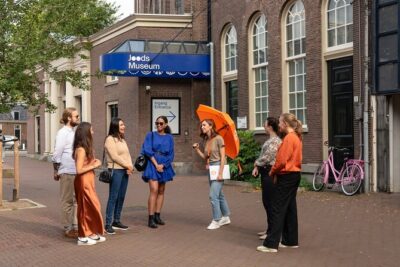
Anne Frank’s Story – Guided Walking Tour through Amsterdam
Read our review →
Life of Anne Frank and World War II Walking Tour
Read our review →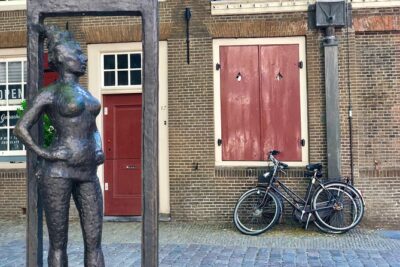
Absolutely Amsterdam – the Essential Introductory Walking Tour
Read our review →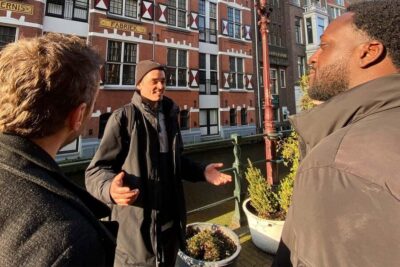

Anne Frank Walking Tour – Guided in EN/DE/IT/ES
Read our review →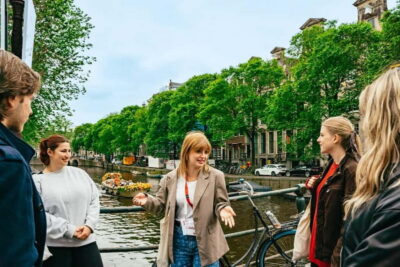

Anne Frank Walking Tour Amsterdam Including Jewish Cultural Quarter
Read our review →Browse the lists this tour appears in