
REVIEW · ROTTERDAM TOURS
Rotterdam 2-Hour Grand Walking Tour
Rotterdam tells its story in concrete and curves. This two-hour walk gives you a clear introduction to the port city, from Central Station and the postwar rebuild to the Markthal, Cube Houses, and River Maas. I especially like the focus on architecture and urban history, plus the chance to finish beside the water with views of the modern South Bank.
I also like the route’s practical shape: it covers major sights without trying to swallow the whole city in one day. Guides such as Tania have earned warm praise for explaining overlooked places in a friendly way. The main consideration is the walking distance, about 3 to 4 kilometers, with no shelter guarantee in rain or snow.
In This Review
- Key points to know before booking
- Why this short walk helps you understand Rotterdam
- Central Station and the first look at a rebuilt city
- Groothandelsgebouw and the marks of reconstruction
- Lijnbaan: shopping as postwar urban design
- City Hall and Timmerhuis show two different eras
- Markthal brings food, design, and public life together
- Cube Houses and Rotterdam’s playful side
- Along the Maas toward the South Bank
- What the two-hour timing really allows
- Guide quality and the human side of the walk
- Price, access, and who gets the best value
- Weather, shoes, and practical planning
- Should you book the Rotterdam Grand Walking Tour?
- FAQ
- Where does the Rotterdam walking tour begin?
- Where does the tour end?
- How long is the tour?
- How far do you walk?
- What language is the tour offered in?
- Is the tour wheelchair accessible?
- Can children join the tour?
- Does the tour visit the Markthal?
- Can I cancel for a full refund?
Key points to know before booking
- A city rebuilt in plain sight: The route explains Rotterdam’s postwar reconstruction through its buildings, streets, and public spaces.
- Markthal is a real stop, not a quick photo pause: You visit the indoor market and see its striking design from inside.
- The route connects old and new Rotterdam: City Hall and national monuments share the walk with Timmerhuis, Cube Houses, and newer waterfront development.
- The finish is scenic: The tour ends at Boompjeskade beside the Maas, with views toward the South Bank and the Head of the South.
- Expect a steady 3 to 4 kilometer walk: Comfortable shoes matter, and seasonal clothing is sensible in a city known for changeable weather.
- The guide makes the difference: English is offered, and private groups are available. Children aged 0 to 12 may join free.
Why this short walk helps you understand Rotterdam
Rotterdam can feel confusing at first. Its center does not present one neat old town, because much of the city was destroyed during the Second World War and then rebuilt in a strikingly modern style. This tour gives you a timeline for what you see.
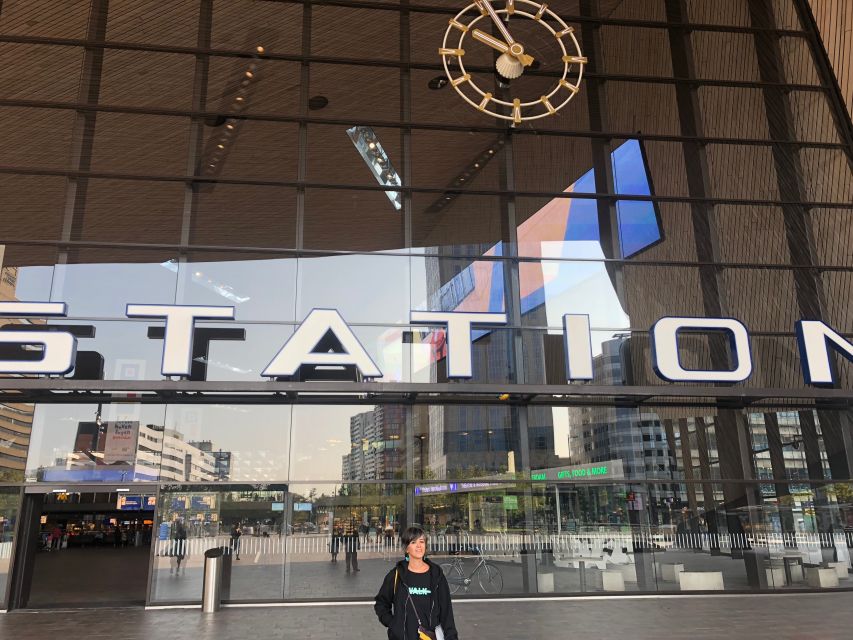
You begin at Rotterdam Central Station, where the meeting point is outside by the main entrance. That is a useful place to start because the station is easy to identify and the tour immediately places you in the city’s modern face.
From there, your guide introduces Rotterdam’s past, present, and plans for the future. The point is not simply to collect photographs of unusual buildings. You learn how the port shaped the city, how postwar planners made bold choices, and why Rotterdam often feels more experimental than other Dutch cities.
I like that this approach gives each building a role in the story. A shopping street, a city hall, an indoor market, and a riverfront development become part of one connected explanation.
More Walking Tours in Rotterdam
- Rotterdam: Architectural Highlights Guided Walking Tour
★ 4.8 · 215 reviews - Rotterdam Walk: Hilights, Gems, Architecture & WWII | 2 or 3hrs
★ 5.0 · 149 reviews - Rotterdam: Highlights & Gems Walking Tour with Dutch Local
★ 5.0 · 133 reviews
Central Station and the first look at a rebuilt city
The tour meets by the new gate of Rotterdam, the recently built Central Station. The station is more than a transport hub here. It sets the tone for a city that uses large, modern forms rather than relying on a preserved medieval center.
Your guide begins with the city’s character and chronology. This matters because Rotterdam’s buildings can otherwise seem like a collection of unrelated designs. With a guide, you get a clearer sense of which parts belong to the postwar period and which reflect more recent ambitions.
This opening is also useful if you have only just arrived. A two-hour walk gives you an early map of the center, along with names and landmarks to return to later. The tour does not include transport, so you spend the time looking closely at the city rather than moving between distant districts.
Groothandelsgebouw and the marks of reconstruction
The Groothandelsgebouw is one of the national monuments included on the route. It helps explain Rotterdam’s recovery after wartime destruction and shows how reconstruction was treated as a major civic task.
The value of this stop is the connection between architecture and daily life. Rotterdam’s postwar rebuilding was not only about replacing damaged buildings. It also involved creating a new working city for a major port, with offices, shops, transport links, and open public areas.
Your guide can give you the chronology that a casual walk might miss. That historical order is one of the tour’s strongest features. You see the city develop in stages rather than treating every modern building as part of one vague period.
The Groothandelsgebouw may appeal most to visitors who enjoy architecture, planning, and city history. If you prefer only picturesque streets and old facades, this part of Rotterdam may feel more functional than charming. That is also the point: the city’s character comes from its willingness to show its working past.
Lijnbaan: shopping as postwar urban design
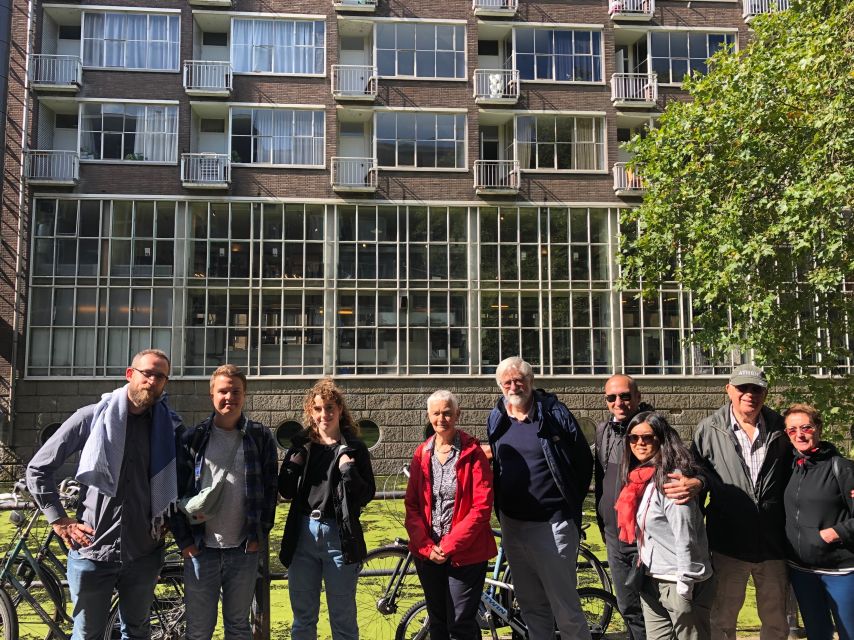
The walk continues through the Lijnbaan shopping area. It is easy to think of a shopping street as a place for errands, but here it becomes part of the story of rebuilding and modern city planning.
The Lijnbaan helps show how Rotterdam changed the relationship between pedestrians, shops, and traffic. Your guide explains the area within the wider postwar plan, giving you a reason to notice its layout rather than simply passing through on the way to the next sight.
This is one place where the tour’s guided format adds real value. On your own, you might see shops and pavement. With context, you begin to read the area as a piece of urban history.
Do not expect every stop to look spectacular. Some of the most useful parts of the walk are ordinary city spaces that reveal how Rotterdam works. That balance keeps the tour from becoming a procession of famous photo points.
More walking tours:
- Rotterdam 2-Hour Walking Tour | Discover The City With A Local
★ 4.5 · 111 reviews - Walking Rotterdam Food Tour
★ 5.0 · 89 reviews - Rotterdam: City Center Walking Tour
★ 4.5 · 88 reviews - Rotterdam Architecture Highlights Walking Tour
★ 5.0 · 66 reviews
City Hall and Timmerhuis show two different eras
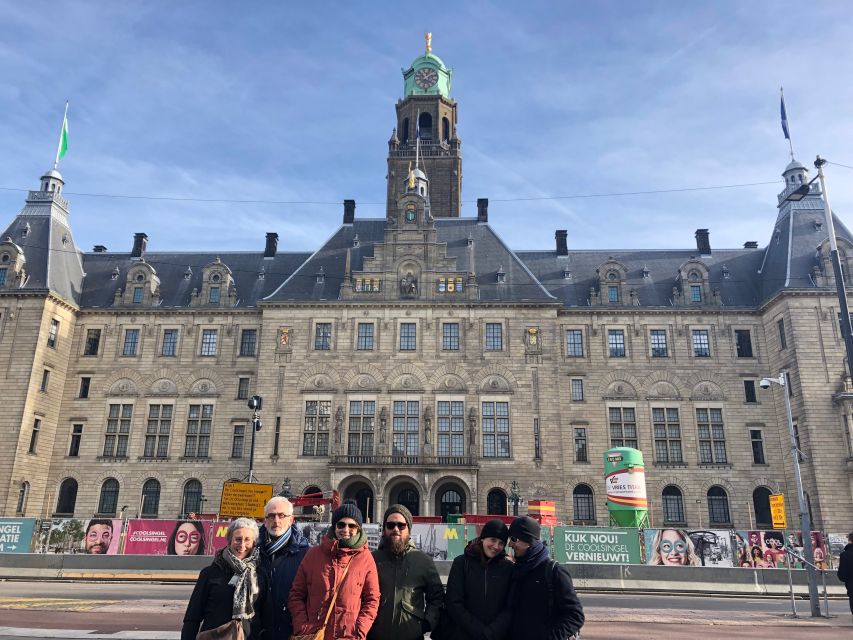
The route includes the neo-classical City Hall, a notable contrast to the modern buildings around it. Its presence helps you see that Rotterdam was not created entirely from scratch after the war. Older civic architecture still forms part of the city’s identity.
Then you encounter the contemporary Timmerhuis. Together, these two buildings make the city’s changing design language easy to understand. One represents a more traditional civic style, while the other reflects Rotterdam’s newer taste for bold, modern forms.
I like this pairing because it gives you a simple comparison. Instead of discussing architecture in abstract terms, the guide can point to two buildings and show how their purposes, shapes, and relationship with the street differ.
The tour is especially helpful for anyone who wants more than a quick look at Rotterdam’s headline attractions. The description of the walk promises attention to places you might otherwise overlook, and the positive comments about Tania highlight this strength. Her tours were praised for showing details people would not have found on their own.
Markthal brings food, design, and public life together
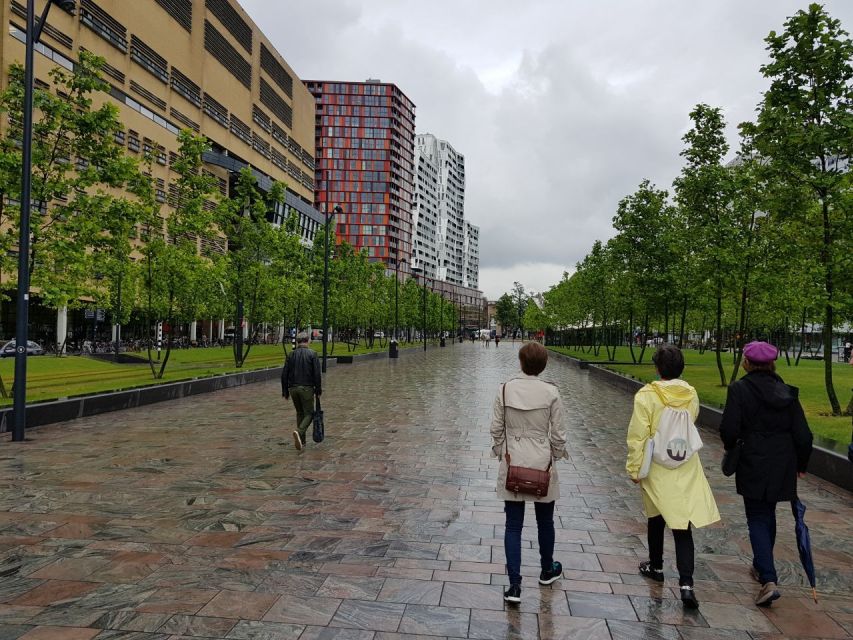
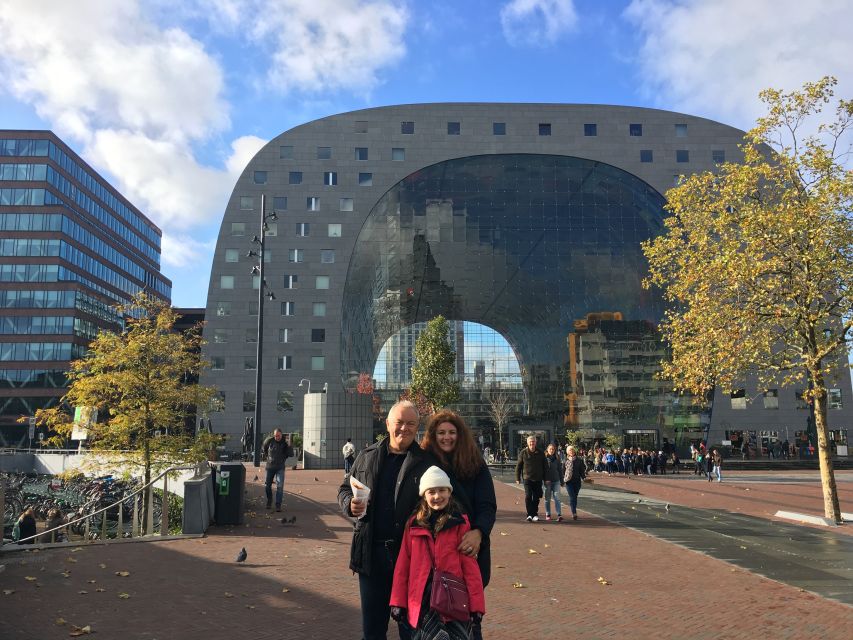
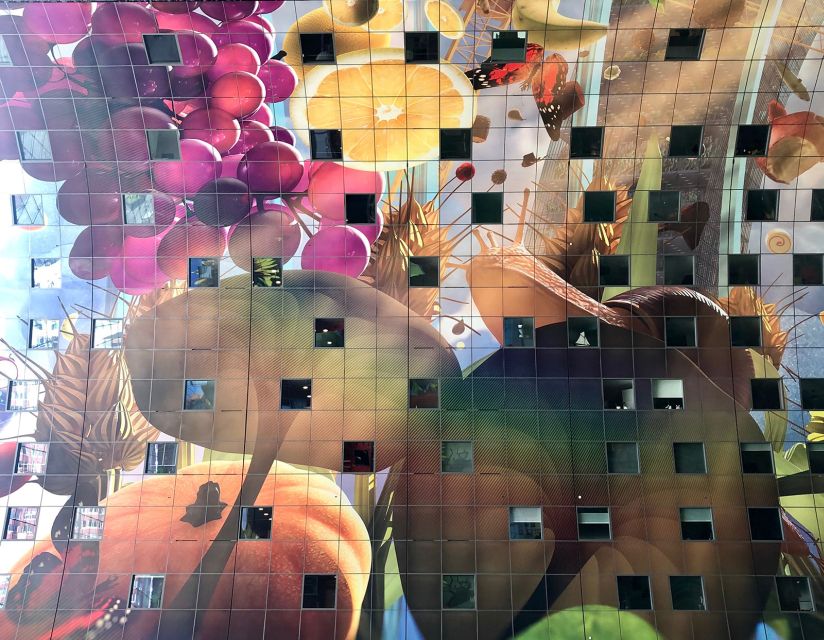
The Markthal is the route’s most obvious indoor attraction. You visit Rotterdam’s spectacular covered marketplace, where the building itself is part of the experience.
The stop works well in a walking tour because it gives you a change of setting. After streets and civic buildings, you enter a lively market interior with food and public activity under one roof. The market’s unusual design is a major reason to include it in a first visit to Rotterdam.
Your guide introduces the building rather than simply sending you inside for free time. That distinction matters. The Markthal is photogenic, but its place in Rotterdam’s new city center is just as important as its appearance.
It is also a useful weather break, though you should not assume the entire experience is indoors. Most of the walk remains outside, and the tour operates even in rain and snow. Bring suitable clothing instead of counting on the Markthal to rescue you from poor weather.
If you want a long meal or extended shopping time, this tour may not give you enough freedom for that. The Markthal is one stop within a larger route, not a dedicated food tour.
Cube Houses and Rotterdam’s playful side
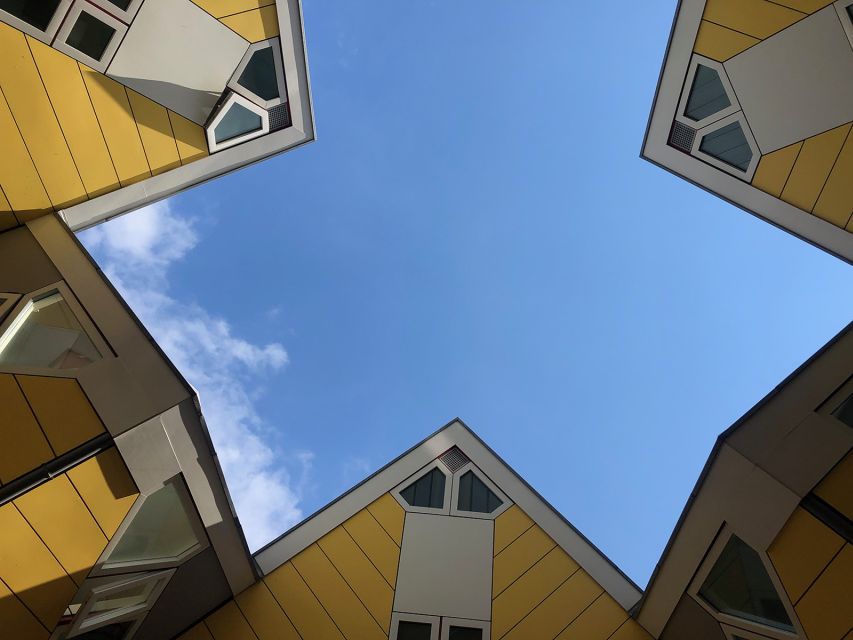
The Cube Houses introduce another of Rotterdam’s best-known architectural ideas. Their unusual shape makes them an easy landmark, but the guide adds the context that turns a quick photograph into a better understanding of the design.
Rotterdam’s modern architecture is often experimental, and the Cube Houses fit that character. They show how the city has been willing to question familiar ideas about homes, streets, and the way buildings occupy space.
You will want to pay attention to how the houses relate to one another and to the surrounding public area. Their visual impact is immediate, but a guide can explain why the design matters within the city’s wider architectural story.
This part of the route is likely to please anyone interested in design or photography. It may be less satisfying if you expect an interior visit or a long stop inside one of the houses. The information provided confirms an introduction to the Cube Houses, not a separate house tour.
Along the Maas toward the South Bank
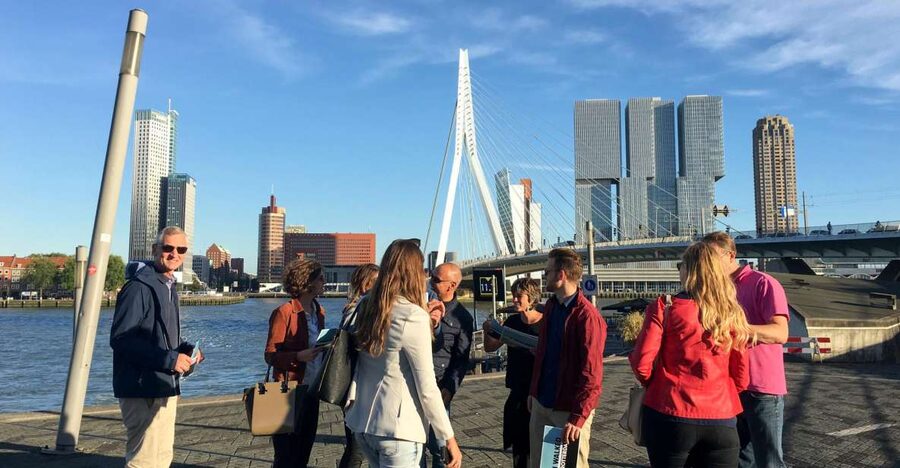
After the central sights, the walk continues toward the River Maas. The change in scale is welcome. Instead of looking up at individual buildings, you get a broad view across the water toward the modern South Bank.
The route highlights the Head of the South, a newer development on the south bank. This gives the tour a forward-looking ending. You have seen the city’s reconstruction, then its recent architectural projects, and finally the new development shaping the skyline across the river.
The riverside section is also where Rotterdam’s port-city identity feels easiest to grasp. The water links the city’s working past with its present growth. You are not just looking at a skyline; you are seeing how the Maas helps define Rotterdam’s position and ambitions.
The tour ends at Boompjeskade, a riverside location with views of the South Bank. That ending is convenient for anyone who wants to continue along the waterfront afterward, though no onward plans are included. You should check your own map before booking another timed activity immediately after the walk.
What the two-hour timing really allows
Two hours is enough for a strong first orientation, but it requires a steady pace. The route covers roughly 3 to 4 kilometers and includes several different areas, so you should expect continuous walking rather than long breaks at each sight.
The advantage is efficiency. You see Central Station, Groothandelsgebouw, Lijnbaan, City Hall, Timmerhuis, Markthal, Cube Houses, and the Maas in one compact outing.
The tradeoff is depth at individual stops. You will receive an introduction to many places, not an exhaustive architectural lecture on each one. If you want a slow visit to the Markthal, extended shopping, or long time for photographs, plan to return later.
The content also suits a first day in Rotterdam. You can use the walk to decide which buildings or districts deserve more time. The Italian feedback specifically valued the way the tour created a clearer understanding of Rotterdam’s history and identity after two hours, which is a good measure of what this experience does best.
Guide quality and the human side of the walk
The guide is central to the experience. The strongest comments praise Tania, described as punctual, prepared, kind, informative, and pleasant. One English-language comment spells her name Tanya, but Tania appears in several descriptions.
That praise points to more than factual delivery. A good city walk depends on pacing, clear explanations, and the ability to connect unusual buildings with everyday life. Tania’s personal approach seems to be a major reason the experience earns its high rating of 4.9 from 41 reviews.
The tour is offered in English. If you need another language, you are asked to contact the provider, so do that before booking rather than assuming another language is available on a regular schedule.
Private groups are available. That option may suit families, friends, or anyone who wants a more personal pace, though the supplied details do not specify the private-group price or maximum size.
Price, access, and who gets the best value
At $53 per person, this is not the cheapest way to walk around Rotterdam, since the main included service is the guided walk. Its value depends on how much you want explanation and structure.
I think the price makes the most sense if you are new to the city, care about architecture, or want a quick introduction before exploring alone. You are paying for a guide who connects scattered sights into a story and points out details you might miss.
The value is less clear if you already know Rotterdam well or mainly want free time in the Markthal. In that case, you could prefer an independent walk and spend longer at fewer places.
Children aged 0 to 12 can join free. Parents should still consider the 3 to 4 kilometer distance, the two-hour duration, and the subject matter. The tour is wheelchair accessible, which is important for many visitors, though you may want to confirm the route details directly if your chair has specific requirements.
Free cancellation is available up to 24 hours before the start for a full refund. You can also reserve now and pay later, which helps if your Rotterdam plans are still changing.
Weather, shoes, and practical planning
Wear comfortable shoes. The distance is moderate, but the route is long enough that thin soles or poor footwear can make the final riverside section less enjoyable.
Bring seasonal clothing and rain protection. The walk operates in rain and snow, and only part of the itinerary takes place indoors at the Markthal. Rotterdam’s waterfront can feel particularly exposed, so prepare for the conditions rather than relying on a mild forecast from the city center.
Meet outside Rotterdam Central Station by the main entrance. Arrive with enough time to identify the meeting point, especially if you are coming directly from a train and have luggage or children with you.
Because the tour ends at Boompjeskade rather than returning to the station, keep the finish in mind when arranging your day. The route is most useful when followed by more time in the center or along the Maas, not when squeezed between distant reservations.
Should you book the Rotterdam Grand Walking Tour?
Book it if you want a clear, guided introduction to Rotterdam’s postwar rebuilding and modern architecture. The route covers a lot in two hours, and the mix of Central Station, Lijnbaan, City Hall, Timmerhuis, Markthal, Cube Houses, and the Maas gives you a useful first picture of the city.
I would choose this tour for a first visit, an architecture-minded afternoon, or a short stay when you need orientation quickly. The high rating and repeated praise for Tania suggest that the guide can add warmth and detail to a city that may otherwise seem hard to read.
Skip it if you want a slow food stop, extensive shopping time, or a deep visit inside each landmark. You should also think twice if a 3 to 4 kilometer outdoor walk in uncertain weather does not suit you.
For most visitors who want Rotterdam explained rather than merely photographed, $53 is a fair price for a compact, well-planned introduction, especially with free admission for children up to age 12 and flexible cancellation.
FAQ
Where does the Rotterdam walking tour begin?
The tour begins outside Rotterdam Central Station by the main entrance.
Where does the tour end?
The walk ends beside the River Maas at Boompjeskade.
How long is the tour?
The guided walk lasts two hours.
How far do you walk?
The route covers approximately 3 to 4 kilometers.
What language is the tour offered in?
The tour is offered in English. You can contact the provider about another language.
Is the tour wheelchair accessible?
Yes, the activity is listed as wheelchair accessible.
Can children join the tour?
Yes. Children aged 0 to 12 can join free, though parents should consider the walking distance, content, and two-hour duration.
Does the tour visit the Markthal?
Yes. The route includes a visit to Rotterdam’s indoor Markthal.
Can I cancel for a full refund?
Yes. You can cancel up to 24 hours in advance for a full refund. You can also reserve now and pay later.
More 2-Hour Experiences
- Rotterdam: 2-Hour Guided Walking Tour
★ 4.6 · 58 reviews - Amsterdam: 2-Hour Canal Cruise incl. Drinks & Dutch Snacks
★ 5.0 · 594 reviews - Amsterdam 2-hour Private Canal Cruise with Live Guide and Drinks
★ 5.0 · 296 reviews - Utrecht 2-Hour Walking Tour | Discover The City With A Local
★ 5.0 · 138 reviews
Just added around Rotterdam
- Rotterdam: Summer Cocktail Cruise★ 4.7 · 18 reviews
- Skip the Line: SS Rotterdam Steam Ship Entrance Ticket★ 4.5 · 18 reviews
- Rotterdam: Beer Brewery Noordt Tastings with Optional Tour★ 4.9 · 18 reviews
- Guided 3-Hour Food Tasting Experience in Rotterdam★ 5.0 · 19 reviews
- Private Day Trip from Amsterdam to Rotterdam and the Hague★ 5.0 · 19 reviews
- Rotterdam Must Do Tour: Highlights, History, WW2 and Architecture★ 5.0 · 20 reviews
- Private Day Tour: Rotterdam and The Hague. English or Spanish★ 4.5 · 20 reviews
- Private Day Tour to Keukenhof Gardens – from Amsterdam/Rotterdam★ 5.0 · 20 reviews
Rotterdam Tours, compared.




Kinderdijk UNESCO World Heritage Entry Ticket
Read our review →
Browse the lists this tour appears in