
REVIEW · WALKING TOURS
Small Group Walking Tour – Hello Amsterdam
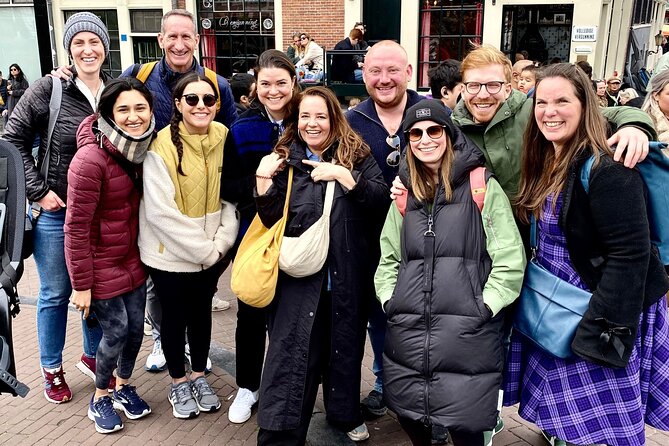
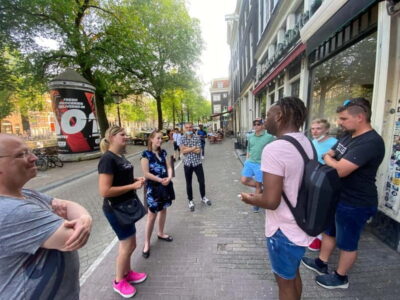
Amsterdam makes first steps easy. Hello Amsterdam’s two-hour walking tour links Dam Square, the canals, bike culture, and Westerkerk with games, stories, and local advice. I like the playful true-or-false activity at Damrak, and I like that guides such as Danni, Jonas, and Adam add restaurant and sightseeing suggestions you can use right away.
The $35.07 price is fair for a small group capped at 15 people, especially if this is your first visit and you want to get your bearings quickly. The main consideration is pace: the walk covers key central sights in a moderate amount of time, but some people may wish it lasted three or four hours. You should also allow a few extra minutes to identify the guide at the National Monument meeting point.
In This Review
- Five useful things to know before booking
- Is Hello Amsterdam a good first walk?
- Dam Square and Damstraat: a practical starting point
- Beurs van Berlage and Amsterdam’s financial rise
- Damrak: dancing houses and a true-or-false game
- Haarlemmersluis and the city’s bicycle culture
- Singel and the famous Dancing Houses
- Torensluis and the difficult parts of Amsterdam’s past
- Keizersgracht and the Dutch family ideal
- Westerkerk, Anne Frank House, and the Homomonument
- What $35.07 buys you
- Length, walking level, and weather
- Who will enjoy this Amsterdam tour?
- Should you book Hello Amsterdam?
- FAQ
- Where does the Hello Amsterdam walking tour begin?
- Where does the tour end?
- How long is the walking tour?
- How much does the tour cost?
- How large is the group?
- Is the tour offered in English?
- Can I cancel for a refund?
Five useful things to know before booking
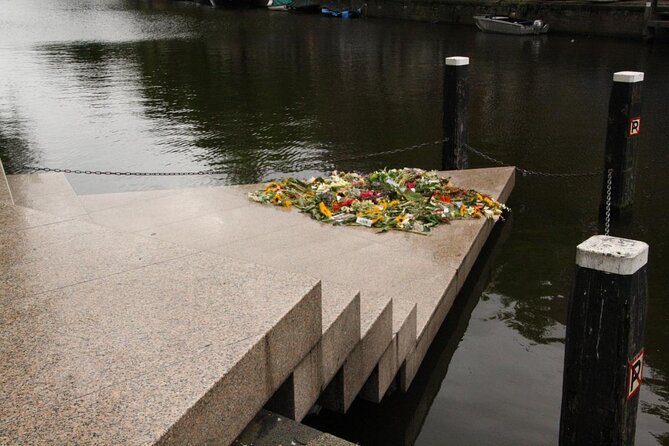
- The tour begins at the National Monument on Dam Square at 10:00 a.m. and ends near the Homomonument, Westerkerk, and Anne Frank House.
- Danni, Jonas, and Adam have each received praise for lively guiding, clear facts, humor, and useful personal recommendations.
- A maximum of 15 people keeps the group fairly compact, making it easier to hear and ask questions than on a large city walk.
- The route stays in central Amsterdam, passing the Royal Palace area, Damrak, Singel, Torensluis, Keizersgracht, and Westerkerk.
- Games are part of the teaching style, including a true-or-false activity about coffeeshops, tolerance, and Dutch culture.
- Free cancellation is available up to 24 hours before departure, although poor weather or too few bookings can lead to a change or cancellation.
Is Hello Amsterdam a good first walk?
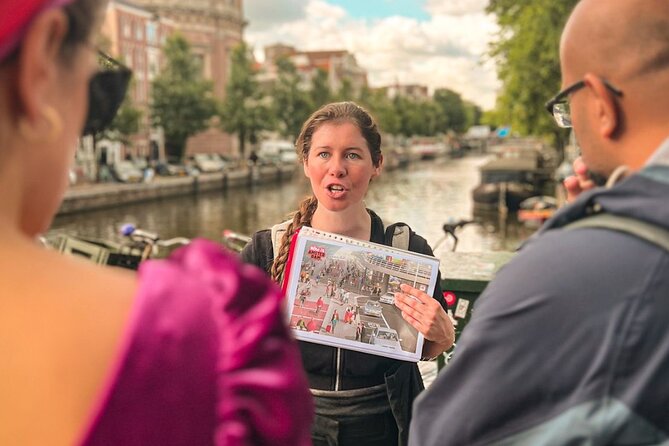
I see this tour as a city orientation with personality. It does not try to take you inside major museums or provide a long architectural lecture. Instead, it gives you a guided route through central Amsterdam and explains how the city works, from its canals and bicycles to its social attitudes and complicated past.
That makes it useful on your first morning in town. After two hours, you should have a clearer mental map and several ideas for what to do next. The final stop is close to the Anne Frank House, so the walk can help you decide how to arrange the rest of your day, though it does not include entry to that museum.
The tone appears intentionally social. You are walking with a small group, answering questions, hearing short stories, and comparing notes with people from different places. If you prefer a quiet, highly detailed historical lecture, this may feel light. If you want facts delivered with energy and a little humor, the format should suit you well.
More Walking Tours in Amsterdam
- Anne Frank’s Story – Guided Walking Tour through Amsterdam
★ 5.0 · 11,619 reviews - Amsterdam: Life of Anne Frank and World War II Walking Tour
★ 4.8 · 10,467 reviews - Absolutely Amsterdam – the Essential Introductory Walking Tour
★ 5.0 · 3,629 reviews
Dam Square and Damstraat: a practical starting point
The walk begins at the National Monument in Dam Square, the central meeting point surrounded by several of Amsterdam’s best-known buildings. You are introduced to the Royal Palace, the New Church, and the National Monument before moving along Damstraat.
This is a smart place to start because it gives you instant orientation. Dam Square can feel confusing when you first arrive, with major streets, tram routes, shops, and historic buildings converging in one place. A guide can help you understand which sights are nearby and how the central area fits together.
The scheduled stop is about 10 minutes, so do not expect a full tour of every building. The value is the overview. You get the basic setting, then move on before the square’s noise and crowds become tiring.
Arrive a little early. The meeting point is specific, but one person noted difficulty identifying the guide and found the ticket information unclear about the local company name. The operator later clarified that the company name and guide instructions were included, but you should still check your booking details and look for the guide carefully around the National Monument.
Beurs van Berlage and Amsterdam’s financial rise
The next stop is Beurs van Berlage, an important piece of Amsterdam’s commercial story. Here, the guide explains how Amsterdam helped pioneer the stock exchange and how finance and trade helped the city become a major power during the 17th century.
This section adds useful context to the canals and grand merchant buildings you see later. Amsterdam’s wealth did not appear by accident. Trade, banking, shipping, and organized markets shaped the city’s streets and buildings.
You should think of this as an exterior history stop rather than a full building visit. The itinerary allows around 15 minutes, and admission is not included. That is not a problem for a first orientation walk, but anyone seeking detailed financial history or interior architecture will need a separate visit.
I like this stop because it gives a reason behind the scenery. Without context, Amsterdam’s narrow houses and canals can look simply picturesque. With a little economic background, you begin to see them as the result of a powerful trading city.
Damrak: dancing houses and a true-or-false game
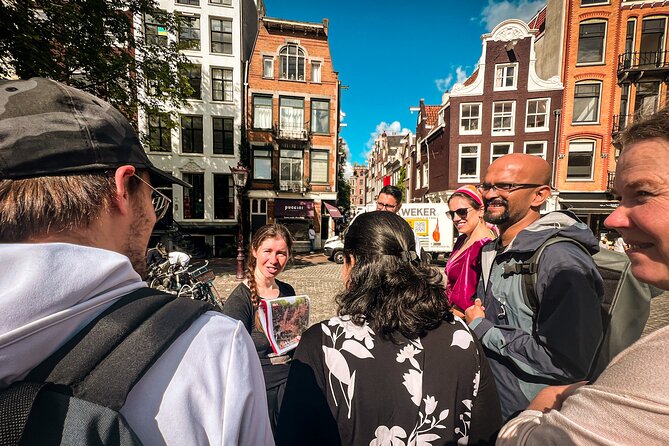
At Damrak, the tour turns toward one of Amsterdam’s most familiar views: the narrow canal-side houses often called the Dancing Houses. Their tilted facades make a memorable photograph, and the location is close to the Red Light District.
The teaching style becomes more playful here. You take part in a quick true-or-false game about coffeeshops, Dutch tolerance, and other parts of Amsterdam culture. You do not need prior knowledge, which is important. The point is not to test you, but to correct common assumptions and make the facts stick.
This is one of the strongest parts of the walk because it breaks up the usual guide speech. Danni was praised for using games to make facts fun, and that approach seems central to the tour’s appeal. It also gives you a reason to pay attention instead of simply following the group from one photo stop to another.
The trade-off is that complex subjects receive short explanations. Amsterdam’s policies and social history can take much longer to understand than a 10-minute stop allows. Treat this as a clear introduction, not the final word on sensitive topics.
More walking tours:
- Amsterdam: Anne Frank Guided Small Group Walking Tour
★ 4.8 · 2,722 reviews - Amsterdam: Anne Frank Walking Tour – Guided in EN/DE/IT/ES
★ 4.9 · 2,676 reviews - Amsterdam: Guided Cultural Walking Tour
★ 4.9 · 2,384 reviews - Amsterdam: Guided Ganja Walking Tour of Coffee Shops
★ 4.2 · 2,092 reviews
Haarlemmersluis and the city’s bicycle culture
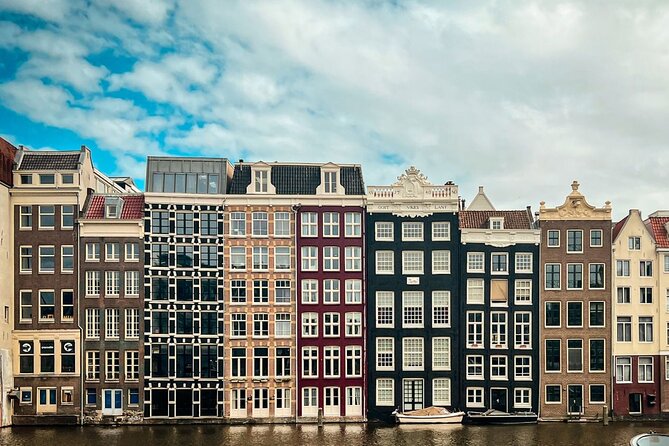
At Haarlemmersluis, the guide turns to the subject you cannot miss in Amsterdam: bicycles. The stop offers a view toward the canal belt and explains why cycling is such a large part of daily life in the city.
The basic fact is memorable: Amsterdam has more bikes than people. The guide also explains how the city’s bike culture developed and why two wheels shape the rhythm of central streets.
This information has practical value. You need to understand bike movement before walking around Amsterdam. A cycle lane may look like part of the pavement, and bicycles can approach quietly and quickly. A short introduction helps you read the street more safely.
The stop lasts about 10 minutes. That is enough for orientation, but not enough for a full discussion of transport policy or cycling etiquette. Still, it is a useful reminder to stay alert once you leave the tour.
Singel and the famous Dancing Houses
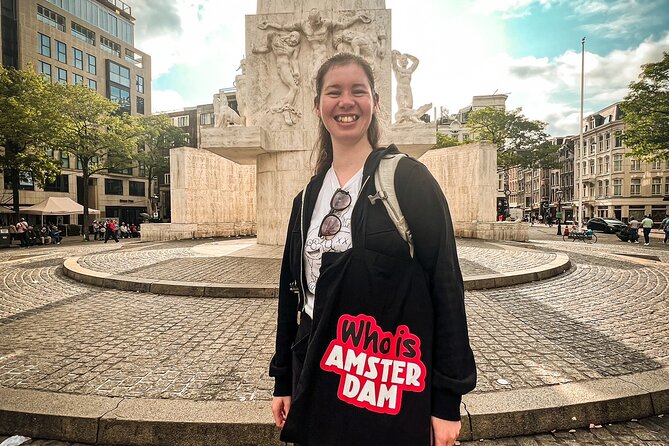
The Singel stop gives you one of the classic Amsterdam canal scenes. Along the water, you see more of the city’s distinctive narrow houses, including the famous Dancing Houses, with their leaning forms and closely packed facades.
The guide connects the view to stories about the buildings and the canal-side setting. This is where the tour offers a slower, more visual pause after the faster game at Damrak.
You should bring a camera, but do not expect a private viewing area. The route is through the city centre, and the main value is seeing the houses in context rather than receiving special access.
I also like the balance here. The tour does not spend every minute on solemn history. It gives you a few minutes to appreciate the strange, attractive details that make Amsterdam recognizable, while still explaining why the buildings look the way they do.
Torensluis and the difficult parts of Amsterdam’s past
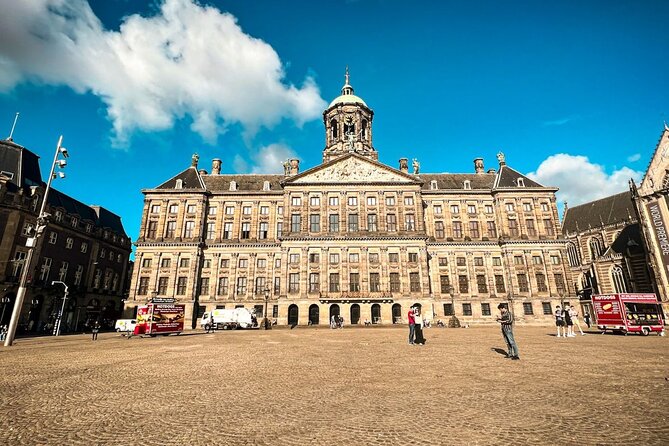
Torensluis is one of the more serious stops. The guide explains the creation of Amsterdam’s UNESCO canal belt, including its design, history, and unusual landmarks. You also hear about an extraordinary house and the city’s links to slavery.
This is an important choice in a short city walk. Amsterdam is often presented through canals, tolerance, art, and attractive old buildings. Those subjects matter, but they do not tell the whole story. A responsible introduction also needs to acknowledge the wealth and power built through colonial trade and slavery.
The stop does not turn into a full academic treatment, since only around 10 minutes is scheduled. Still, it signals that the city’s past has both beauty and harm. I value that balance, especially for a first tour, because it keeps the postcard image from becoming the entire story.
If you want extensive discussion of slavery, colonialism, or the canal belt’s planning, you should look for a dedicated history visit afterward. This section gives you a starting point and a reason to ask better questions.
Keizersgracht and the Dutch family ideal
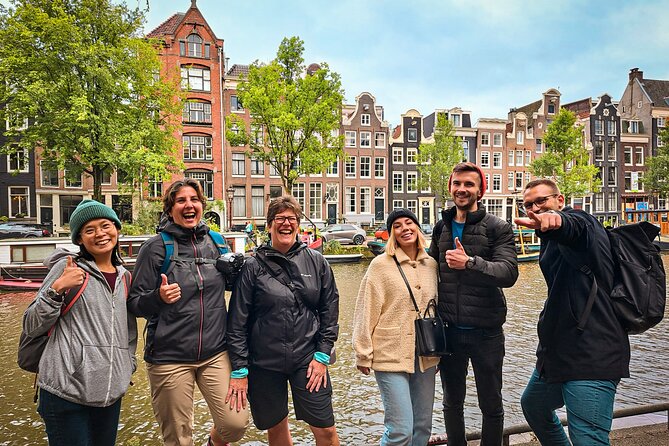
At Keizersgracht, the subject shifts from buildings to Dutch culture. The guide discusses family life and the reasons Dutch children were named the happiest in the world by UNICEF in 2017.
This is a more personal kind of sightseeing. Rather than simply pointing out architecture, the guide offers an idea of how Dutch society sees family, childhood, and everyday life. It helps explain the local character beyond the tourist sights.
The subject can also be broad. One short stop cannot represent every Dutch family or every person living in the Netherlands. You should take the discussion as a cultural introduction, not a rulebook for understanding all Dutch people.
Still, it is a welcome change of pace. You move beside one of the major canals while learning about ordinary life. That mix of place and people is often more useful than memorizing another date.
Westerkerk, Anne Frank House, and the Homomonument
The final section brings together several important places: Westerkerk, the Anne Frank House area, and the Homomonument. The tour ends at Westermarkt, beside the Homomonument and about a two-minute walk from the Anne Frank House and Westerkerk.
The theme is Amsterdam’s idea of live and let live, along with the city’s long and ongoing effort to make room for different beliefs, identities, and backgrounds. The Homomonument gives that discussion a clear physical focus.
This ending has practical value. You finish in a central location with major sights close by, so you can continue sightseeing without crossing the city. If you have an Anne Frank House reservation, check its time carefully and do not assume the tour will deliver you directly to an entry line.
The final stop also gives the walk an emotional finish. After stories about trade, canals, bicycles, and social customs, you are left with a broader idea of Amsterdam as a city shaped not only by buildings but also by the attitudes of its people.
What $35.07 buys you
At $35.07 per person, this is not the cheapest way to walk around Amsterdam, since the route uses public streets and does not include paid admissions. You are paying for the guide’s route, explanations, group experience, and local suggestions.
For a first visit, that can be good value. A guide helps you cover several central districts in two hours without spending the morning stopping to check a map. You also receive recommendations for places to eat and shop, which may save time later.
The group limit of 15 matters. It is small enough to keep the guide audible and allow some interaction, while still offering the social feeling of a shared walk. The price seems easiest to justify if you take the tour early in your stay and use the advice for the rest of your visit.
It is less convincing for someone who already knows central Amsterdam or prefers to set their own pace. You could walk past many of these sights independently. The main added value is the guide’s storytelling and the way the stops connect.
Length, walking level, and weather
The walk lasts about two hours and includes a moderate amount of walking. The route covers central streets and canals, with repeated stops of roughly 10 minutes and one 15-minute stop at Beurs van Berlage.
Most people can participate, and service animals are allowed. The tour is near public transportation, which makes reaching Dam Square fairly practical, but the provided details do not promise a fully step-free route or seating at every stop.
Weather matters. If poor weather causes cancellation, you are offered another date or a full refund. You should wear comfortable shoes and check the forecast, since the experience takes place outside and the schedule depends on suitable conditions.
The short length is both strength and weakness. You get a useful introduction without giving up half a day. But if you enjoy long historical explanations, you may finish wanting more. One person specifically wished the walk lasted three or four hours.
Who will enjoy this Amsterdam tour?
I would recommend Hello Amsterdam most strongly to:
- First-time visitors who want a quick orientation
- People who like learning through questions and games
- Solo visitors or couples who enjoy meeting a small group
- Anyone who wants local suggestions for food and shopping
- Visitors interested in both famous sights and everyday Dutch culture
- People with limited time who want to cover central Amsterdam efficiently
I would be more cautious if you want museum entry, a long specialist history lecture, or a very slow photography walk. The tour visits the Anne Frank House area and Westerkerk but does not include admission to either attraction.
The guide’s personality appears to matter a great deal. Danni is described as lively and a strong storyteller, while Jonas and Adam are also praised for clear facts, energy, and useful personal asides. Your exact experience will depend on who leads the walk that day, but the format gives the guide room to make the history personal.
Should you book Hello Amsterdam?
Book it if you are new to Amsterdam and want a friendly, efficient introduction before tackling museums and longer day trips. The route covers the essentials of the central city, and the games help keep two hours from feeling like a string of lectures.
Skip it if you already know the centre well or would rather spend $35.07 on a paid attraction. Also think twice if you dislike group activities, since the true-or-false game and social format are part of the charm.
For most first-time visitors, I think the best plan is to take it near the beginning of your stay, listen closely to the food and sightseeing tips, and use the final stop near Anne Frank House to continue your day. The walk will not explain every corner of Amsterdam, but it can give you a useful map, a better feel for the city, and several good questions to carry forward.
FAQ
Where does the Hello Amsterdam walking tour begin?
The tour begins at the National Monument in Dam Square, Amsterdam, at 10:00 a.m.
Where does the tour end?
It ends at the Homomonument at Westermarkt, near Westerkerk and about a two-minute walk from the Anne Frank House.
How long is the walking tour?
The tour lasts approximately two hours.
How much does the tour cost?
The listed price is $35.07 per person.
How large is the group?
The tour has a maximum of 15 participants.
Is the tour offered in English?
Yes. English is the listed tour language, and a mobile ticket is provided.
Can I cancel for a refund?
Yes. You can cancel at least 24 hours before the local start time for a full refund. Cancellations or changes made less than 24 hours before departure are not refunded, and poor weather or too few bookings may lead to a new date, another experience, or a full refund.
Just added around Amsterdam
- Amsterdam 1-Hour Rickshaw Tour★ 4.9 · 17 reviews
- Amsterdam: Canal Cruise and Jewish Cultural Quarter Tickets★ 4.2 · 17 reviews
- Keukenhof Gardens and Tulip Experience Tour from Amsterdam★ 4.8 · 17 reviews
- Marken, Volendam and Edam: Private Full-Day Tour★ 4.6 · 18 reviews
- Discover Amsterdam’s city center in this Outside Escape game tour★ 4.5 · 18 reviews
- Amsterdam: Personal Travel & Vacation Photographer★ 4.8 · 18 reviews
- Amsterdam: Luxury Saloon Boat Cruise with 3-Course Dinner★ 3.9 · 18 reviews
- Rijksmuseum & Amsterdam City Center Semi-Private Tour 12ppl Max★ 5.0 · 18 reviews
Walking Tours, compared.
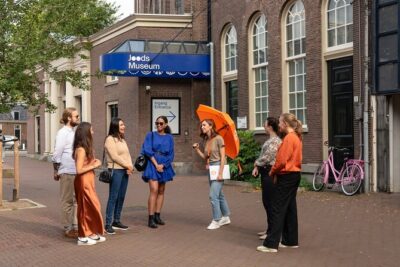
Anne Frank’s Story – Guided Walking Tour through Amsterdam
Read our review →
Life of Anne Frank and World War II Walking Tour
Read our review →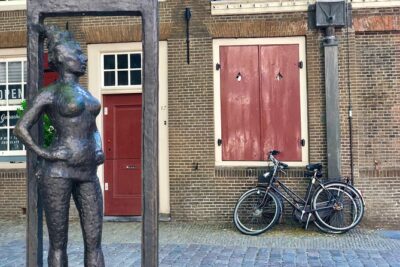
Absolutely Amsterdam – the Essential Introductory Walking Tour
Read our review →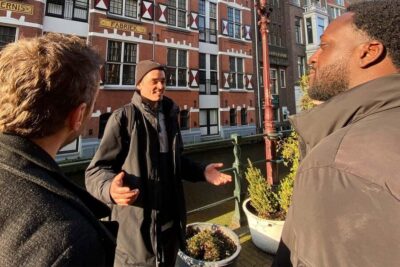

Anne Frank Walking Tour – Guided in EN/DE/IT/ES
Read our review →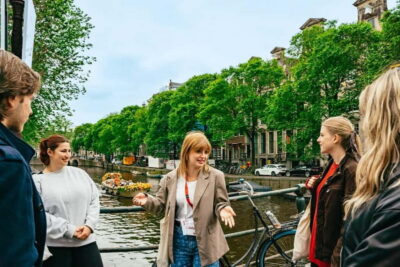

Anne Frank Walking Tour Amsterdam Including Jewish Cultural Quarter
Read our review →Browse the lists this tour appears in