
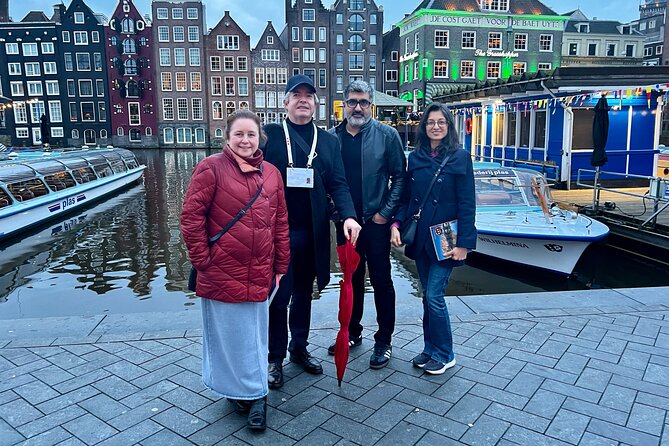
REVIEW · WALKING TOURS
Small Group Walking Tour in Amsterdam with Friendly and Fun Guide
Amsterdam makes more sense on foot. This three-hour walk links Dam Square, the medieval center, the canals, Jordaan, and Begijnhof with the stories that tie them together. The small group, capped at 12 people, gives the guide room to answer questions and adjust the pace.
I like the mix of major sights and quieter corners, especially the contrast between the old working-class Jordaan and the grand canals. I also like the stop for coffee or tea, a simple touch that gives your legs a break. The main drawback is that refreshments cost extra, and three hours on Amsterdam’s pavement may feel long if you have mobility concerns.
In This Review
- Key points
- Why this three-hour walk works well
- Starting at Dam Square and Damstraat
- Nieuwe Kerk and medieval Amsterdam
- Reading Amsterdam through its canals
- Jordaan: from canal workers to village atmosphere
- Old Center stories between the Waag and Dam Square
- Begijnhof and Amsterdam’s religious past
- David, Diana, and the guide’s role
- Small group size and walking comfort
- What the $41.13 price includes
- Who should book this Amsterdam walk
- Should you book it?
- FAQ
- How long is the Amsterdam walking tour?
- How many people can join the group?
- Is coffee or tea included?
- Where does the tour begin?
- Where does the tour finish?
- Is the Anne Frank House an included visit?
Key points
- A 12-person maximum keeps the walk personal and makes it easier to hear the guide.
- David is the most frequently praised guide, known for humor, energy, local stories, and clear explanations of Dutch culture.
- The route covers six central areas, from Dam Square and the medieval center to the canals, Jordaan, and Begijnhof.
- You pass near the Anne Frank House, but the experience is a city walk rather than an interior visit.
- The coffee or tea stop is not included, so carry a little spending money.
- The tour begins and ends at the National Monument on Dam Square, a convenient base for further sightseeing.
Why this three-hour walk works well
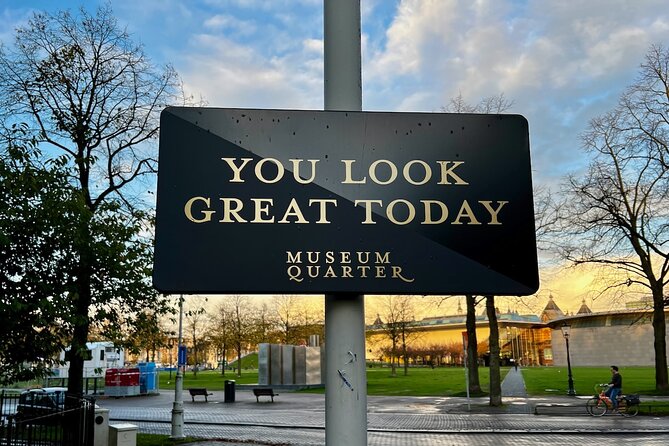
Amsterdam is easy to admire and surprisingly easy to misunderstand. You see attractive canal houses, bridges, bikes, and boats, but without context, the city can feel like a pretty set of disconnected scenes. This walk gives you a framework.
The route explains how Amsterdam grew from a fishing village about 750 years ago into a major trading center. It also connects the city’s physical layout with its social story: medieval commerce, canal expansion, working-class neighborhoods, religious communities, overseas trade, and modern daily life.
That broad view is the tour’s main value. You are not simply checking off monuments. You are learning why the city looks the way it does.
The format suits you best if you want a low-impact introduction before visiting museums or taking longer excursions. It is also useful early in a stay, since the route helps you understand where the old center, canal belt, and Jordaan fit together. One particularly strong detail from the guide feedback is that David often offered suggestions for the rest of the visit, making the walk useful beyond its three hours.
More Walking Tours in Amsterdam
- Anne Frank’s Story – Guided Walking Tour through Amsterdam
★ 5.0 · 11,619 reviews - Amsterdam: Life of Anne Frank and World War II Walking Tour
★ 4.8 · 10,467 reviews - Absolutely Amsterdam – the Essential Introductory Walking Tour
★ 5.0 · 3,629 reviews
Starting at Dam Square and Damstraat
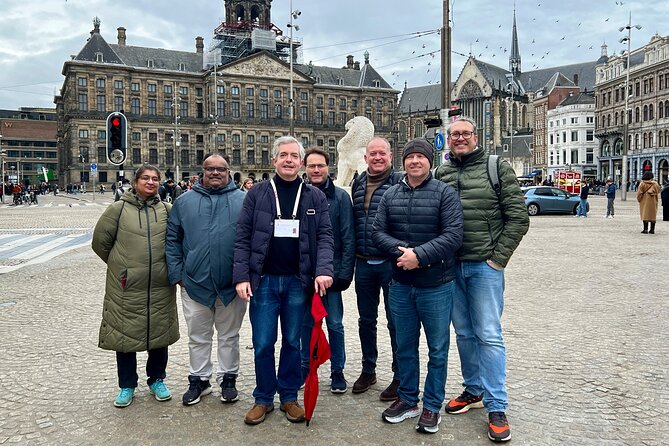
The meeting point is the National Monument on Dam Square, at Dam, 1012 JS Amsterdam. This is a central and recognizable place, near public transportation, though the square itself can be busy and full of movement. Give yourself enough time to locate the monument and gather before the start.
The first 15 minutes provide an introduction to Amsterdam. Instead of launching straight into a list of buildings, the guide sets up the city’s long transformation from a small fishing settlement into a powerful urban center.
Damstraat leads you into the older part of town. It is a good opening because you begin with the city’s basic story before moving into more specific buildings and neighborhoods. If this is your first time in Amsterdam, that early context helps the rest of the walk fall into place.
Nieuwe Kerk and medieval Amsterdam
The next stop is Nieuwe Kerk, one of the city’s major historic churches. The scheduled time here is about 15 minutes, so expect an outdoor explanation and orientation rather than a full church visit.
This part of the route focuses on medieval Amsterdam and the changes that took place over the centuries. The value is not only the church itself. You are also looking at how the old center developed around commerce, religion, government, and public life.
The short stop keeps the tour moving, but it also means you should not expect a detailed interior visit. If Nieuwe Kerk is high on your personal list, you may want to return later with more time. The walk gives you the setting and the story, then carries you onward.
Reading Amsterdam through its canals
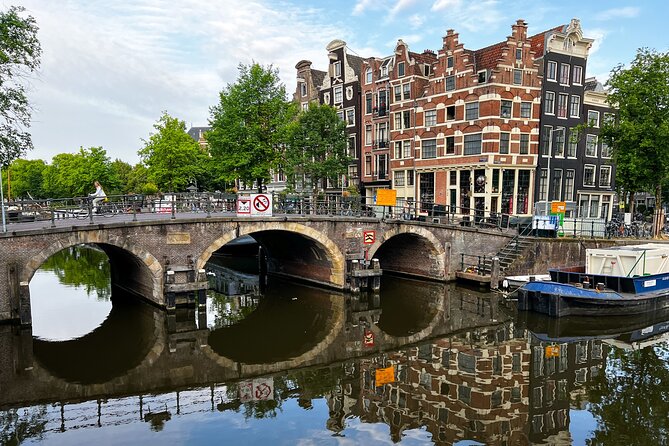
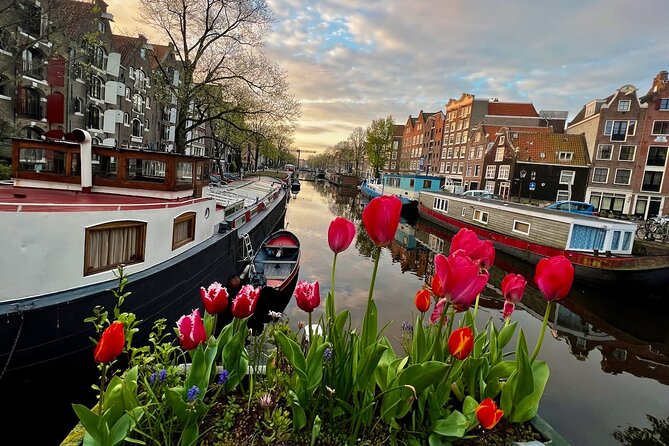
The canal section takes about an hour, making it the longest part of the experience. That extra time makes sense. Amsterdam’s canals are not just scenic waterways. They help explain the city’s growth and its place in 17th-century Europe.
You learn how the canals were built and why the 1600s brought such major change. The discussion links urban planning with trade and the events that helped make Amsterdam an international center.
This is where a strong guide matters most. Canal views are easy to photograph, but the interesting part is understanding the decisions behind them. David is repeatedly praised for combining facts with humor and for explaining how Dutch culture and daily life connect to the city’s past.
The walk may also touch on the city’s wider seafaring and commercial story. One especially useful feature is the connection between Amsterdam’s trade and the rest of the world, including links to the Caribbean and Dutch influence in New York. Those connections give the city’s history a wider reach than the postcard view suggests.
The canal hour is also where you should pay attention to your feet. The tour is described as low-impact compared with more strenuous activities, but it is still a three-hour walk. Wear comfortable shoes and bring an umbrella if rain is likely.
More walking tours:
- Amsterdam: Anne Frank Guided Small Group Walking Tour
★ 4.8 · 2,722 reviews - Amsterdam: Anne Frank Walking Tour – Guided in EN/DE/IT/ES
★ 4.9 · 2,676 reviews - Amsterdam: Guided Cultural Walking Tour
★ 4.9 · 2,384 reviews - Amsterdam: Guided Ganja Walking Tour of Coffee Shops
★ 4.2 · 2,092 reviews
Jordaan: from canal workers to village atmosphere
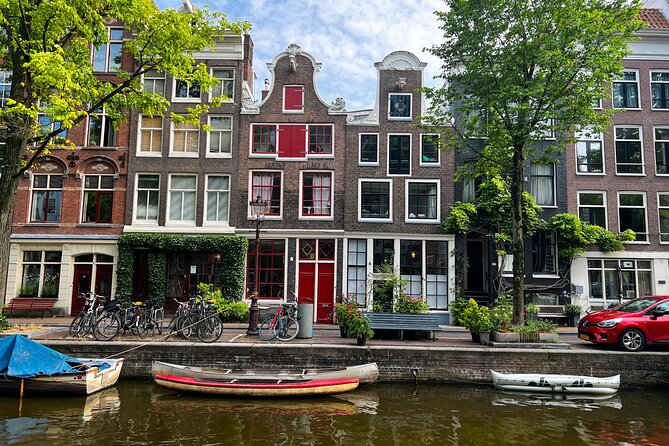
The route then reaches Jordaan for about 30 minutes. This neighborhood once housed the people who built the 17th-century canal expansion. That background gives the area more meaning than its current reputation as a pleasant place for food and drinks.
Today, Jordaan is often described as the village part of Amsterdam, with quieter streets and inviting places to stop. The appeal lies in the change of mood. After the grander canal areas, you get a closer look at the neighborhood scale of the city.
This section should suit you if you like seeing how Amsterdam feels away from its main squares. It also shows how a working-class district can acquire a different character over time without losing its basic street pattern.
The route does not promise a long meal or a dedicated restaurant visit. Think of this as a guided walk through the area, with time to note places you may want to return to later.
Old Center stories between the Waag and Dam Square

The Old Center section takes roughly 30 minutes and runs from the Waag back toward Dam Square. The Waag is a useful landmark for discussing Amsterdam’s commercial and civic past, while the route itself brings together many layers of the historic center.
This part of the walk is story-heavy. The guide can point out places that might otherwise blur into the surrounding streets and explain how the old city functioned.
The experience appears to favor interpretation over formal entry tickets. All listed stops have free admission, but that means the tour is primarily an outdoor orientation. You should not book it expecting reserved access to museums, churches, or historic interiors.
The benefit is flexibility. You see more of the city in a short time and can mark places for later exploration. The tradeoff is that some sights receive only a brief explanation.
Begijnhof and Amsterdam’s religious past
Begijnhof is the final listed stop and lasts about 15 minutes. This historic courtyard was originally used to house lay women who had not taken vows to become nuns.
It contains a group of beautiful houses, an English Reformed church from 1607, and a Catholic chapel. Together, these details show the religious variety and complicated history of Amsterdam in a small, enclosed setting.
Begijnhof offers a quieter change after the streets and canals. It is also a place where the guide’s storytelling can help you notice details you might otherwise miss. The short visit gives you an introduction, though not enough time for a long, unhurried examination of every building.
The activity ends back at the National Monument on Dam Square. That return is practical. You can continue toward the Royal Palace area, museums, shopping streets, or public transportation without having to find your way back from a distant neighborhood.
David, Diana, and the guide’s role
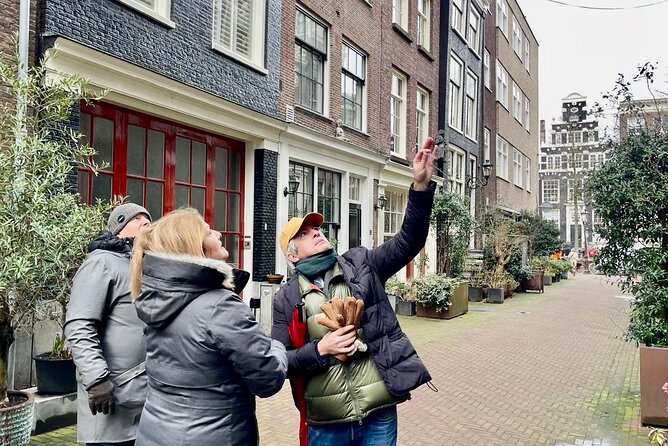
The clearest strength of this tour is the guide. David is the name most often associated with the experience, and the praise is consistent: people value his energy, humor, personal manner, and ability to explain both Amsterdam’s past and present.
That combination matters. A guide can know many dates and still deliver a dull walk. Here, David is described as keeping the pace comfortable, presenting plenty of information without overloading the group, and adapting explanations to different interests.
The range of ages also appears manageable. One group included people from 13 to 75, with everyone finding the walk enjoyable and informative. Another family appreciated that a 14-year-old stayed engaged for the full three hours.
Diana has also led the experience and is described as friendly and informative. Her group benefited from a small size, photographs, and a route selected to avoid the biggest bus-tour crowds.
You should still allow for variation. The exact guide can affect the tone, pacing, and emphasis. The consistent praise for the guiding style is encouraging, but no tour can guarantee one specific person at every departure.
Small group size and walking comfort
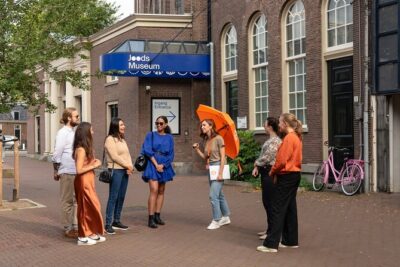
A maximum of 12 people is a real advantage in central Amsterdam. You are less likely to be separated from the guide at a crossing, and questions are easier to ask than on a large coach excursion.
A small group also allows some adjustment. The guide can respond to the interests of the people present, as several accounts describe. That may mean more attention to Dutch culture, trade, architecture, popular culture, or links with other places.
The tour is presented as suitable for most people and as a low-impact historical experience. Still, low-impact does not mean effortless. You should expect to be outside for about three hours, with time on your feet and possible weather exposure.
Bring an umbrella when rain is possible. Comfortable shoes are sensible, even though the route is not described as strenuous. If you need a seated tour or have difficulty walking for extended periods, this may not be the best match.
What the $41.13 price includes
At $41.13 per person, the cost is reasonable for a three-hour guided introduction in a group limited to 12 people. You are paying mainly for the guide’s time, local interpretation, and the structure of the route.
The value is strongest if you are new to Amsterdam and want a useful overview without committing to a full-day activity. You cover several central districts and gain ideas for what to revisit independently.
Coffee and tea are not included. Since the tour provides a refreshment break, plan to pay for your own drink. That is a small extra cost, but it is worth knowing before you arrive.
There are no admission fees listed for the stops. This keeps the price simple, but it also confirms that the activity is an outdoor walking tour rather than a ticketed sightseeing package. If you want museum interiors or a visit inside the Anne Frank House, you will need separate plans.
Who should book this Amsterdam walk
I would recommend it to first-time visitors who want to understand the city before exploring it on their own. It is also a good fit for families with older children and teenagers, especially if a guide’s humor and stories help keep young people interested.
History fans will appreciate the way the route links medieval Amsterdam, 17th-century expansion, global trade, religion, and neighborhood life. You do not need specialist knowledge. The explanations are designed to make the city easier to read as you walk.
The tour also suits people who prefer an intimate group and a human guide over a large bus or a self-guided audio route. The English-language format is clear from the booking details, and the guide’s conversational approach is a strong part of the appeal.
You may want another option if your priority is indoor sightseeing, extensive time at each landmark, or a very short walk. The three-hour length is manageable for many people, but it is still a substantial commitment on foot.
Free cancellation is available when you cancel at least 24 hours before the start time. Changes or cancellations inside that window are not accepted for a refund, so keep the local cutoff time in mind.
Should you book it?
Book this tour if you want a friendly, story-led introduction to central Amsterdam and prefer a small group to a large sightseeing operation. The strongest reasons are the broad route, the practical city context, and the guide style associated with David, who brings humor and enthusiasm to subjects that could otherwise feel like a string of dates.
The $41.13 price is fair for three hours of guiding, especially with the 12-person limit. Just remember that refreshments cost extra, the Anne Frank House is passed rather than visited inside, and the experience requires steady walking.
For a first morning or early afternoon in Amsterdam, this is a sensible choice. It helps you get your bearings, points out places worth revisiting, and gives the city a human voice.
FAQ
How long is the Amsterdam walking tour?
The tour lasts approximately three hours.
How many people can join the group?
The activity has a maximum of 12 participants.
Is coffee or tea included?
No. Coffee and tea are not included in the tour price.
Where does the tour begin?
The tour begins at the National Monument on Dam Square, Amsterdam, postcode 1012 JS.
Where does the tour finish?
The activity ends back at the meeting point on Dam Square.
Is the Anne Frank House an included visit?
The route passes by the Anne Frank House, but the supplied tour details do not list an interior visit or admission ticket.
Just added around Amsterdam
- Amsterdam 1-Hour Rickshaw Tour★ 4.9 · 17 reviews
- Amsterdam: Canal Cruise and Jewish Cultural Quarter Tickets★ 4.2 · 17 reviews
- Keukenhof Gardens and Tulip Experience Tour from Amsterdam★ 4.8 · 17 reviews
- Marken, Volendam and Edam: Private Full-Day Tour★ 4.6 · 18 reviews
- Discover Amsterdam’s city center in this Outside Escape game tour★ 4.5 · 18 reviews
- Amsterdam: Personal Travel & Vacation Photographer★ 4.8 · 18 reviews
- Amsterdam: Luxury Saloon Boat Cruise with 3-Course Dinner★ 3.9 · 18 reviews
- Rijksmuseum & Amsterdam City Center Semi-Private Tour 12ppl Max★ 5.0 · 18 reviews
Walking Tours, compared.
Anne Frank’s Story – Guided Walking Tour through Amsterdam
Read our review →
Life of Anne Frank and World War II Walking Tour
Read our review →
Absolutely Amsterdam – the Essential Introductory Walking Tour
Read our review →

Anne Frank Walking Tour – Guided in EN/DE/IT/ES
Read our review →

Anne Frank Walking Tour Amsterdam Including Jewish Cultural Quarter
Read our review →Browse the lists this tour appears in