
REVIEW · HISTORICAL TOURS
Amsterdam 2 Hour History Walking Tour
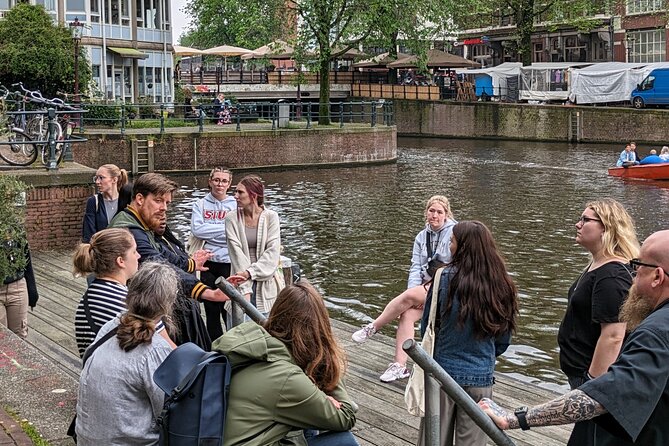
Amsterdam makes water part of everyday life. This two-hour walk uses that idea to explain the city’s canals, trade, religion, monarchy, wartime suffering, and modern character. I like the small group of up to 10 and the easy mix of serious history, humor, and practical advice.
I also like the route’s variety, from the Monet bridge and Begijnhof to the Red Light District and former Dutch East India Company headquarters. The main drawback is its brisk format: with ten stops packed into two hours, you get a lively overview rather than long visits or detailed time inside buildings.
In This Review
- Key points at a glance
- A smart first look at Amsterdam’s long story
- Canal Ring: Amsterdam begins with water
- De Wallen: looking past the surface
- Dam Square and South Church: power, faith, and public life
- Jodenbreestraat and Amsterdam’s wartime memory
- Bushuis and Oost-Indisch Huis: the price of Dutch power
- Stopera Pier: an honest look at modern Amsterdam
- Begijnhof: a quiet courtyard in the center
- Royal Palace: orange, blue, white, and red
- Groenburgwal and the Monet bridge
- What the two-hour format really means
- Price, meeting point, and small practical details
- Who should book this Amsterdam walk?
- Should you book the Amsterdam 2 Hour History Walking Tour?
- FAQ
- How long is the Amsterdam 2 Hour History Walking Tour?
- What time does the tour start?
- Where does the tour begin?
- Where does the tour end?
- What language is the tour offered in?
- How large is the group?
- Are admission tickets included?
- Is bottled water provided?
- What is the cancellation policy?
Key points at a glance
- A compact route through ten major sights: You cover the canal belt, De Wallen, Dam Square, the Jewish Quarter, Begijnhof, the Royal Palace, and more.
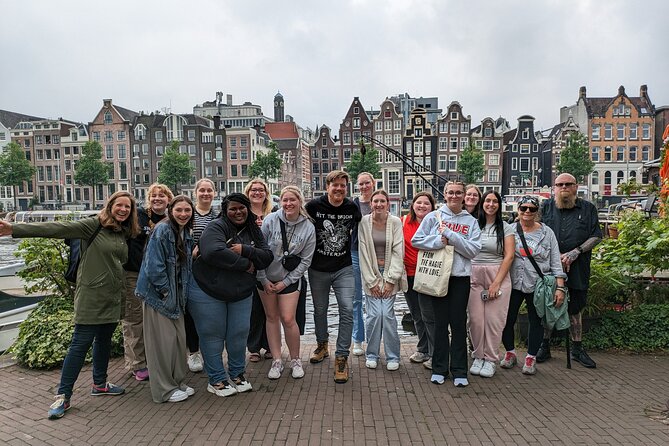
- Small groups keep the walk personal: The maximum group size is 10, a useful limit in narrow streets and crowded central areas.
- History comes with humor and local context: The guide connects water management, religion, empire, war, monarchy, and modern Amsterdam.
- The Monet bridge adds a strong photo stop: Groenburgwal offers a quick picture break near the end of the route.
- A good first-day activity: Practical tips make this useful when you are still learning how Amsterdam fits together.
- Bring a refillable bottle: Water is not supplied, but several places along the way let you refill.
A smart first look at Amsterdam’s long story
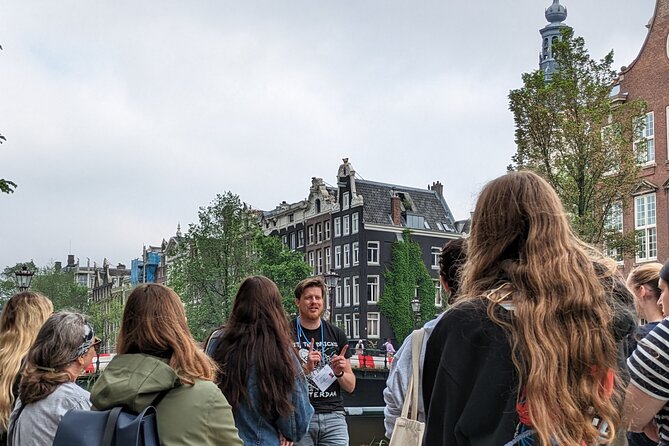
Amsterdam’s 2 Hour History Walking Tour is designed to help you get your bearings quickly. It begins at Hit the Bricks Walking Tours on Prinsenstraat and moves through the old center before ending at Dam Square, close to the starting point and well connected by public transportation.
At $30.04 per person, the price is fair for a two-hour guided walk in central Amsterdam, especially with a small group and a local guide. You are paying for interpretation, not entrance tickets. Most stops are outside and free, while the Royal Palace is seen from the route rather than entered.
The strongest value comes early in your visit. You learn how Amsterdam works, why the city looks the way it does, and which places deserve a closer look later. That can save you from wandering past major sights without understanding them.
The tour is offered in English and begins at 11:00 am. Since it is booked an average of 27 days ahead, I would reserve it before your trip if the timing suits you. The 4.9 rating from 31 ratings and 97 percent recommendation also suggest a consistently strong experience, though one booking problem shows why it is wise to confirm the meeting details before leaving your accommodation.
More Historical Tours in Amsterdam
- Amsterdam Food and Cultural Tour with Tastings
★ 5.0 · 2,442 reviews - Amsterdam: Haunted History and Ghost Walking Tour
★ 4.5 · 488 reviews - Amsterdam High-End Dutch Food & History Tour – Up to 8 guests
★ 5.0 · 482 reviews
Canal Ring: Amsterdam begins with water
The walk starts in the Grachtengordel, Amsterdam’s famous canal belt. This is more than a pretty opening view. The canals explain the city’s shape, its trade, its engineering, and even parts of the Dutch attitude toward cooperation and practical problem solving.
You learn how residents had to live with water rather than simply push it away. That makes the canals easier to read. They are not just scenic strips beside old houses. They are part of a long effort to build, drain, move goods, and create a functioning city on difficult ground.
The five-minute stop is short, so expect a clear introduction rather than a technical lesson in Dutch water engineering. Still, it gives the rest of the walk a useful frame. Many later subjects, from Dam Square to overseas trade, connect back to the question of how this small country made room for itself.
De Wallen: looking past the surface
The Red Light District is one of Amsterdam’s most famous areas, and the tour treats it as a place with a past and a social system, not just a photo opportunity. The ten-minute stop covers why the district exists, how it operates, and how Dutch society views it.
That context is valuable because De Wallen can be confusing if you see it only as a row of windows, bars, and old lanes. A guide can help you understand the difference between Amsterdam’s reputation and the way local attitudes have developed over time.
This is also one place where respectful behavior matters. The tour gives you background, but it does not turn the neighborhood into a spectacle. Keep your camera away from people working in the windows, listen to the guide, and follow local rules.
The stop is short enough to avoid letting one neighborhood dominate the entire walk. If De Wallen is a major reason for your visit, you will need a separate visit later. This tour gives you orientation, not an extended exploration.
Dam Square and South Church: power, faith, and public life
Dam Square is Amsterdam’s central square and one of the best places to connect the city’s civic life with its struggle against water. The five-minute stop returns to the theme introduced at the canals, showing how environmental challenges helped shape Dutch culture and ways of thinking.
The square can feel crowded and visually noisy, so a guide adds useful focus. Instead of seeing only a large open space surrounded by major buildings, you get a sense of why this location matters to Amsterdam.
Nearby South Church offers a quieter change of mood. In the church’s inner courtyard, the guide explains how the Dutch moved from Catholicism to Protestantism. The setting helps: a calm courtyard makes it easier to consider a major religious and political change without the distractions of a busy street.
Again, five minutes is enough for a sharp explanation but not a full architectural visit. If you want to go inside churches or study religious art, plan extra time beyond the walk.
More Walking Tours in Amsterdam
- Anne Frank’s Story – Guided Walking Tour through Amsterdam
★ 5.0 · 11,619 reviews - Amsterdam: Life of Anne Frank and World War II Walking Tour
★ 4.8 · 10,467 reviews - Absolutely Amsterdam – the Essential Introductory Walking Tour
★ 5.0 · 3,629 reviews - Amsterdam: Anne Frank Guided Small Group Walking Tour
★ 4.8 · 2,722 reviews
Jodenbreestraat and Amsterdam’s wartime memory
At Jodenbreestraat, the tour turns toward the Jewish Quarter and the painful story of the Jewish people who lived in Amsterdam before and during the Second World War. It also covers the Hunger Winter, a period of severe hardship during the war.
This is one of the most serious sections of the walk. It brings balance to the lighter stories about canals, royal colors, and the city’s trade. Amsterdam’s past is not only a tale of clever engineering and commercial success. It also includes persecution, loss, and the lasting marks of war.
The five-minute timing means you receive an introduction rather than a full memorial visit. I would treat this stop as a prompt to return to the area for more time if the subject matters to you. The walk gives the history a place within the city rather than presenting it as an isolated museum topic.
Because the subject is painful, the guide’s tone matters. The tour’s overall style is described as informative, funny, and personable, but this part naturally requires a more measured approach.
Bushuis and Oost-Indisch Huis: the price of Dutch power
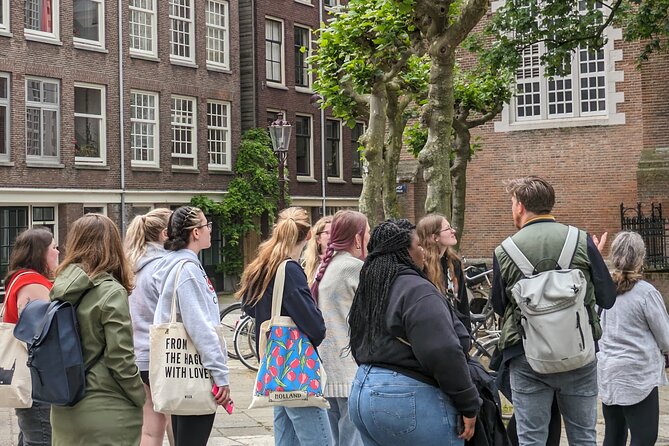
The former Dutch East India Company headquarters shifts the story from local survival to global trade. Here, you learn how a small country built a far-reaching empire and gained control of the spice trade while still fighting for its own independence.
This is a valuable correction to the postcard image of Amsterdam. The canal houses and merchant wealth did not appear by magic. They were tied to shipping, finance, political power, military conflict, and overseas commerce.
The ten-minute stop is among the longest on the route, and that makes sense. There is a lot to explain, including the company’s role in trade and the tension between the Netherlands’ struggle for freedom and its later imperial ambitions.
You should not expect a full examination of colonial history in ten minutes. The stop gives you the basic framework and a chance to notice the building with new eyes. It also helps explain why Amsterdam became such an important commercial center.
Stopera Pier: an honest look at modern Amsterdam
Along the Amstel River, the route reaches the modern city hall known locally as Stopera. The name combines stadhuis, meaning city hall, with opera. The building is often disliked for its appearance, yet it remains a source of local pride.
That contrast is exactly why the stop works. A city is not made only of beloved monuments. Amsterdam also includes practical public buildings, political choices, arguments about design, and places locals claim as their own even when outsiders find them unattractive.
The five-minute visit offers a quick view of modern civic Amsterdam and a reminder that local identity is not always based on beauty. You get a more human sense of the city when the guide explains what residents actually think, not just what appears in guidebooks.
Begijnhof: a quiet courtyard in the center
Begijnhof is one of the most appealing changes of pace on the route. This enclosed courtyard offers a peaceful setting in the middle of the city, with a story linked to the beguine women who built and lived in the community.
The ten-minute stop gives you time to appreciate the contrast between busy Amsterdam streets and a sheltered inner space. It is also a good example of how the city can hide calm places close to its busiest sights.
The guide explains who the beguines were and why this community mattered. You get social and religious history alongside the physical setting, which makes the courtyard more memorable than a quick photograph alone.
Keep in mind that a quiet courtyard calls for quiet behavior. Treat Begijnhof as a lived and respected place, not simply a shortcut or photo backdrop. The visit is brief, so you may want to return later if you prefer to linger.
Royal Palace: orange, blue, white, and red
The Royal Palace stop looks at how the Dutch royal family came to be, what France had to do with that development, and why the national color is orange even though the flag is red, white, and blue.
These are the kind of details that make a city’s symbols easier to understand. You leave with more than a photograph of a grand building. You learn why orange carries such strong national meaning and how Dutch history became tied to a royal house.
The palace is viewed from the outside during the walking route, and admission is not included. That keeps the tour price down, but it also means you should plan a separate palace visit if you want the interior.
The stop lasts about five minutes. It works best as a concise explanation of monarchy and national identity rather than a palace tour.
Groenburgwal and the Monet bridge
The final photo stop is Groenburgwal, home to the well-known bridge associated with Claude Monet’s Amsterdam paintings. It lasts only about three minutes, but that is enough to pause, frame a picture, and enjoy one of the city’s most recognizable canal views.
This is a pleasant finish after heavier subjects such as wartime suffering and colonial trade. The route ends with a simple visual reward, and the bridge gives you a picture that feels distinctly Amsterdam.
Do not expect a long photography session. If you want the best light or several compositions, return independently. The guide’s job here is to point out the view and give you a quick chance to capture it.
What the two-hour format really means
The listed stops add up to about 63 minutes, leaving the rest of the two hours for walking, transitions, questions, and short explanations along the way. That is a useful way to set expectations. You are not spending ten full minutes at every location.
The pace should feel active but manageable for most people, since the route is spread across central Amsterdam and the operator says most participants can take part. Still, comfortable shoes are sensible. You will be outside, moving between stops, and the tour requires good weather.
The small group helps. With a maximum of 10 people, it should be easier to hear the guide and ask a question than on a large city walk. The guide’s humor and personal manner are major parts of the appeal. Axel is praised for making the city’s history engaging, while Mark is also singled out for being personable and effective.
The tour includes local tips and tricks for getting more from your time in Amsterdam. Discount codes for the operator’s other tours are available upon request, which may interest you if you want to add a canal cruise or another activity with the same company.
Price, meeting point, and small practical details
The $30.04 cost is reasonable if you want a guided introduction rather than a self-guided walk. The value is strongest for first-time visitors who need context fast, especially those arriving with only a few days in Amsterdam.
Meet at Hit the Bricks Walking Tours, Prinsenstraat 13, 1015 DA Amsterdam, at 11:00 am. The walk ends at Dam Square, about two minutes from the starting area, where you can connect with public transportation.
Bring a refillable water bottle. Bottled water is not included, but there are several places to fill your bottle along the route. Service animals are allowed, the meeting point is near public transportation, and confirmation is sent when you book.
Free cancellation is available up to 24 hours before the start time for a full refund. Changes made inside that 24-hour window are not accepted, and late cancellations are not refunded. Since the activity requires good weather, a cancellation caused by poor conditions brings the choice of another date or a full refund.
One operational warning is worth noting. A booking error once left the local operator without notice of an expected group, and a 90-minute canal tour was offered instead. The substitute worked out well, but I would keep your voucher handy and verify the meeting point before setting out.
Who should book this Amsterdam walk?
I would choose this tour for a first visit, a short stay, or a morning when you want a clear introduction before exploring alone. It suits people who enjoy stories about politics, religion, trade, war, and local habits, not just pretty canals.
It is also a good fit if you prefer a relaxed small group and a guide with humor. The positive feedback highlights an informative, personable style that helps people feel socially comfortable while learning.
I would think twice if you want long stops, museum entry, or a specialist focus on one subject. The tour moves quickly, and the serious topics receive short introductions rather than extended study.
Should you book the Amsterdam 2 Hour History Walking Tour?
Book it if you want a friendly, compact orientation to Amsterdam at a moderate price. The route covers more ground and more subjects than a basic canal stroll, while the group limit keeps the experience from feeling impersonal.
Skip it if you already know central Amsterdam well or want a slow photography walk. For most first-time visitors, though, this is a practical way to learn the city’s basic story, collect useful tips, and identify the places worth revisiting on your own.
FAQ
How long is the Amsterdam 2 Hour History Walking Tour?
The tour lasts approximately two hours.
What time does the tour start?
It starts at 11:00 am.
Where does the tour begin?
The meeting point is Hit the Bricks Walking Tours, Prinsenstraat 13, 1015 DA Amsterdam, Netherlands.
Where does the tour end?
It ends at Dam Square, about two minutes’ walk from the starting point. Dam Square has access to all forms of public transportation.
What language is the tour offered in?
The tour is offered in English.
How large is the group?
The maximum group size is 10 people.
Are admission tickets included?
The listed stops are free except for the Royal Palace, where admission is not included. The walking experience does not include palace entry.
Is bottled water provided?
No. Bring a refillable water bottle, since there are several stops where you can fill it.
What is the cancellation policy?
You can cancel up to 24 hours before the start time for a full refund. Cancellations or changes made less than 24 hours before the start time are not accepted for a refund. If poor weather causes the tour to be canceled, you can choose another date or receive a full refund.
More Walking Tours
- Amsterdam: Anne Frank Walking Tour – Guided in EN/DE/IT/ES
★ 4.9 · 2,676 reviews - Amsterdam: Guided Cultural Walking Tour
★ 4.9 · 2,384 reviews - Amsterdam: Guided Ganja Walking Tour of Coffee Shops
★ 4.2 · 2,092 reviews - Anne Frank Walking Tour Amsterdam Including Jewish Cultural Quarter
★ 5.0 · 1,879 reviews
More Historical Tours
- Amsterdam: Historic City Sightseeing Canal Cruise
★ 4.5 · 444 reviews - Amsterdam: Historical Highlights Walking Tour with Tasting
★ 4.6 · 381 reviews - Anne Frank and the Jewish History of Amsterdam Private Tour
★ 5.0 · 307 reviews - Amsterdam: 3-Course Meal in Historic 1st Class Waiting Rooms
★ 4.5 · 292 reviews
Just added around Amsterdam
- Amsterdam 1-Hour Rickshaw Tour★ 4.9 · 17 reviews
- Amsterdam: Canal Cruise and Jewish Cultural Quarter Tickets★ 4.2 · 17 reviews
- Keukenhof Gardens and Tulip Experience Tour from Amsterdam★ 4.8 · 17 reviews
- Marken, Volendam and Edam: Private Full-Day Tour★ 4.6 · 18 reviews
- Discover Amsterdam’s city center in this Outside Escape game tour★ 4.5 · 18 reviews
- Amsterdam: Personal Travel & Vacation Photographer★ 4.8 · 18 reviews
- Amsterdam: Luxury Saloon Boat Cruise with 3-Course Dinner★ 3.9 · 18 reviews
- Rijksmuseum & Amsterdam City Center Semi-Private Tour 12ppl Max★ 5.0 · 18 reviews
Historical Tours, compared.

Amsterdam Food and Cultural Tour with Tastings
Read our review →
Kinderdijk UNESCO World Heritage Entry Ticket
Read our review →
Hop-on Hop-off Old-Fashioned Heritage Tram Tour
Read our review →

Amsterdam High-End Dutch Food & History Tour – Up to 8 guests
Read our review →
Cruise through the Historic City Center with Guide
Read our review →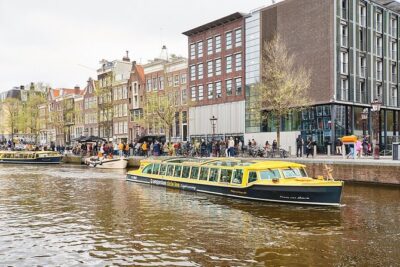
Browse the lists this tour appears in