
REVIEW · WWII & JEWISH HISTORY TOURS
Amsterdam National Holocaust Museum and Memorial Entry Ticket
The past feels close in Amsterdam. This thoughtful visit links the National Holocaust Museum with the former Hollandsche Schouwburg theatre, using personal stories, photographs, letters, art, and an audio guide to explain the Holocaust in the Netherlands. I like the careful focus on individual lives, and I like that your ticket includes two nearby sites rather than only one museum.
The former teacher training school adds real weight. Jewish children were held in the crèche next door, and members of the resistance helped smuggle hundreds of them to safer places. The main drawback is that the audio guide is offered in English, with no Spanish option noted, and the displays can feel crowded with information if you try to read everything.
In This Review
- Key points to know before you go
- Why this Amsterdam Holocaust visit matters
- The National Holocaust Museum in the former school
- Using the audio guide without losing your bearings
- Personal stories, letters, and art
- The Hollandsche Schouwburg memorial
- How long the visit really takes
- Price and what you receive for $24.03
- Who will appreciate this experience most
- Practical planning details
- How it compares with an Anne Frank visit
- Should you book the National Holocaust Museum ticket?
- FAQ
- How long does the Amsterdam National Holocaust Museum experience take?
- What is included in the ticket?
- Is a live guided tour included?
- Does the ticket include the Jewish Museum and Portuguese Synagogue?
- What language is the audio guide offered in?
- Can I cancel the ticket for a refund?
Key points to know before you go
- Two connected sites tell different parts of the story: The museum explains the Holocaust through exhibitions and personal accounts, while the Hollandsche Schouwburg serves as a memorial and place of remembrance.
- The historic school building matters: The National Holocaust Museum occupies a former teacher training school linked to the rescue of Jewish children during the Second World War.
- An audio guide is included: It adds useful context at exhibition stations, though the audio does not always match the object or location in front of you.
- Allow about 1 hour 45 minutes: The museum takes about 1 hour 15 minutes, followed by roughly 30 minutes at the memorial.
- The visit is serious and emotional: This is not a casual sightseeing stop. Give yourself time afterward before moving on to another busy Amsterdam attraction.
- The $24.03 price covers both entries: It does not include a guided tour, the Jewish Museum, or the Portuguese Synagogue.
Why this Amsterdam Holocaust visit matters
Amsterdam’s Holocaust story is often linked first with Anne Frank, and rightly so. But the National Holocaust Museum and Hollandsche Schouwburg give you a broader view of what happened to Jewish people in the Netherlands, including persecution, deportation, resistance, rescue, and collaboration.
I value that wider frame. The experience is not built only around photographs of suffering. It also follows the sequence of events and shows how ordinary places were turned into holding sites, schools became places of rescue, and a theatre became a place where people waited for deportation.
That approach makes the visit useful for anyone who wants more than a single famous story. You see how the Holocaust affected families, children, rescuers, and communities. The personal accounts keep the subject from becoming a list of dates and statistics.
This is also a place for quiet attention. The displays cover material that can be painful to read and hear. If you are visiting with children or teenagers, think about their age and prepare them for a serious museum experience.
More Attraction Tickets in Amsterdam
- Amsterdam: Van Gogh Museum Ticket
★ 4.7 · 52,054 reviews - Amsterdam: Heineken Experience Ticket
★ 4.6 · 30,055 reviews - Amsterdam: Rijksmuseum Entry Ticket
★ 4.7 · 25,535 reviews
The National Holocaust Museum in the former school
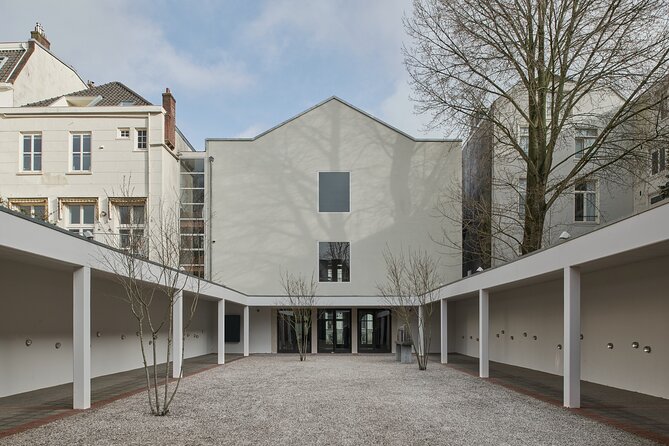
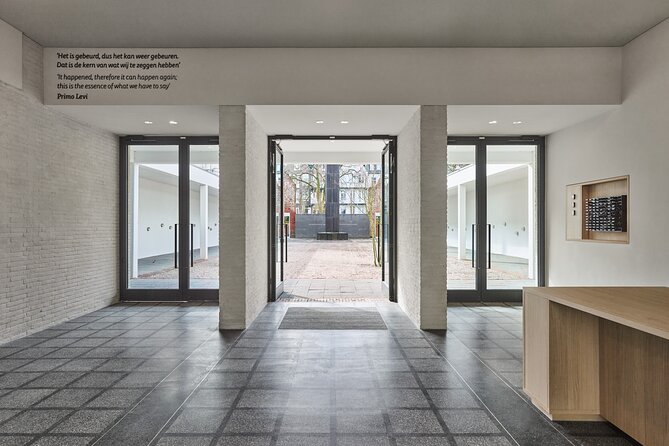
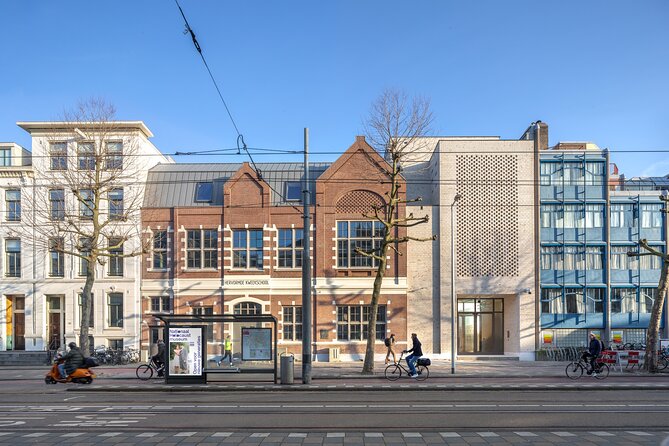
Your main stop is the National Holocaust Museum, housed in a former teacher training school. The building itself is part of the story, not just a container for the exhibits.
During the war, Jewish children were held in the crèche next door. Resistance workers helped move hundreds of them to relatively safer places. Knowing this before you enter changes the way you read the building. A classroom-like setting now carries the memory of children whose lives were suddenly controlled by others.
Inside, the Holocaust is presented through changing exhibitions and events. The material uses personal accounts, photographs, letters, art, and other media. The artistic presentation gives the museum a reflective tone, but it does not soften the facts.
I especially appreciate the attention given to the chronological progression of the Shoah. You are guided through developments rather than being shown disconnected objects. The role of rescuers and collaborators also receives attention, which helps explain the many choices and pressures that shaped life in the Netherlands under occupation.
That focus makes this museum different from institutions that center mainly on photographic evidence of atrocities. Neither approach tells the whole story by itself. Here, the timeline and personal material work together to show how persecution grew and how people responded.
Using the audio guide without losing your bearings
The included audio guide is one of the most useful parts of the ticket. It gives added context at different points and helps explain the people, objects, and events in front of you.
The system uses small handheld recorders for the stations. That makes it easy to listen at your own pace, and you can pause when a story needs more time. The audio also helps if you are not familiar with Dutch history or the specific events that took place in Amsterdam.
There is one practical weakness. The audio does not always connect clearly to your exact position or to the object you are looking at. If you feel lost, stop and check the station number or nearby information before continuing. Do not feel pressured to listen to every item.
The museum contains plenty of written material, including hanging signs in the ground-floor room. You may find more text than you can reasonably read during a 75-minute visit. I would focus first on the main timeline and personal stories, then return to smaller panels if you still have energy.
The audio guide is in English. If someone in your party does not speak English, that person may miss one of the main layers of interpretation. One visitor translated the content for a family member, but that naturally turns the visit into a more demanding shared task.
Personal stories, letters, and art
The museum’s emotional force comes from its human scale. Photographs and documents show what happened, but letters and personal accounts show how people experienced fear, separation, hope, and loss.
You might find the artistic material especially effective if you prefer a museum that gives you room to think. The objects are arranged with care, and the information beside the works helps explain their place in the larger story.
I would not rush through this section. The subject is too heavy for a quick glance and a photograph. Stop at the accounts that catch your attention, even if that means leaving some panels unread.
The museum also gives space to rescuers. That does not lessen the horror of the persecution. Instead, it helps you understand that people made choices within terrible conditions, and that some risked their safety to help children and adults escape.
At the same time, the museum does not turn rescue into a simple feel-good ending. The overall story remains one of mass persecution and murder. The balance between courage, fear, cooperation, and betrayal is one of the visit’s strongest features.
More Museums in Amsterdam
- Moco Museum Amsterdam Entrance Tickets with Banksy & More
★ 4.4 · 10,088 reviews - Amsterdam: The Upside Down Museum Entrance Ticket
★ 4.4 · 9,506 reviews - Amsterdam: Red Light Secrets Museum Entry Ticket
★ 4.2 · 5,722 reviews - Amsterdam’s Weirdest Museum: Believe It or Not!
★ 4.5 · 4,086 reviews
The Hollandsche Schouwburg memorial
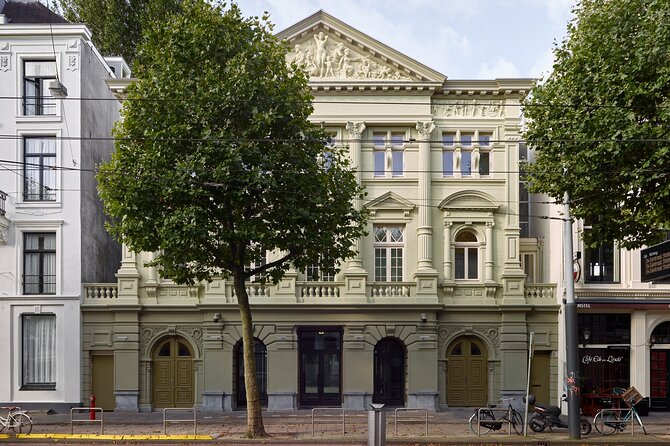
After the museum, continue to the Hollandsche Schouwburg. Your entry is included, and you should allow about 30 minutes for this second stop.
Before the war, the building was a theatre. During the occupation, Jewish people were forced to assemble there. Tens of thousands were held in the building while they waited, often without knowing what would happen next, before deportation to concentration and extermination camps.
The mood changes when you enter the memorial. The museum explains and interprets. The Hollandsche Schouwburg asks you to remember.
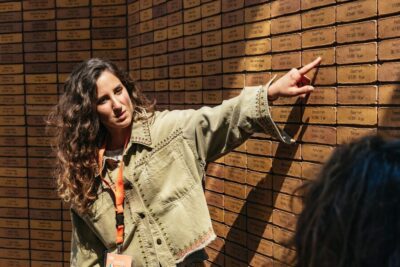
A wall of names commemorates Jewish victims. This is the point where the numbers become individual people. Take your time here. Reading even a small section of the names can be more powerful than trying to take in the entire wall at once.
The memorial also contains an exhibition about the Holocaust in the Netherlands. It gives you another chance to connect the national story with this particular place. I find the pairing of the two sites helpful because the museum provides background, while the former theatre gives that history a specific address.
Do not treat the memorial as a brief add-on. It is a separate part of the experience, and many visitors find it the most moving stop. If you are planning to visit Anne Frank House on the same day, allow emotional space between the two rather than packing them together without a pause.
How long the visit really takes
The advertised timing is about 1 hour 15 minutes at the National Holocaust Museum and 30 minutes at the Hollandsche Schouwburg. That gives you an overall visit of roughly 1 hour 45 minutes.
You can move faster, but I would not recommend planning this as a 45-minute stop. The material needs time, and the audio guide adds listening time on top of reading.
If you read every panel, the museum may take longer. One ground-floor room has many hanging signs, and it is easy to spend extra time there. The changing exhibitions and personal accounts also reward a slower pace.
The scheduled entry time is useful because it lets you fit the museum into a larger Amsterdam day. You should still avoid placing an important timed activity immediately afterward. A little flexibility helps if you need a quiet break or find yourself staying longer at the memorial.
Price and what you receive for $24.03
At $24.03 per person, the ticket is not the cheapest museum admission in Amsterdam. Still, the price includes entry to both the National Holocaust Museum and the Hollandsche Schouwburg, along with the audio tour.
That combination gives the ticket solid value if you plan to visit both locations. You are not paying for a generic walk through one exhibition. You are visiting a museum, a historic rescue site, a former deportation holding place, and a memorial wall of names.
The ticket does not include a live guide. That matters if you prefer to ask questions or have someone lead you through the exhibits. The audio guide provides structure, but you are responsible for setting your own pace and deciding what deserves the most attention.
The ticket also does not include access to the Jewish Museum or the Portuguese Synagogue. If those sites are part of your plan, check your admission arrangements separately rather than assuming this entry covers them.
Who will appreciate this experience most
I would recommend this visit to anyone seeking a serious account of Jewish life and persecution in the Netherlands. It suits adults, students, people tracing Jewish family history, and visitors who want context beyond Amsterdam’s best-known wartime addresses.
It can be especially meaningful if you have a personal connection to Holocaust survivors. The museum’s use of family stories, letters, and individual accounts gives the subject a personal focus rather than presenting it only as a national event.
History-minded visitors will appreciate the chronological structure. You can follow how restrictions and persecution developed, then see the effects on families and communities. People interested in resistance history will also value the story of the Jewish children rescued through the efforts of people next door.
This may be a harder fit for someone seeking a light activity between canal cruises and shopping. The entire visit is quiet, sad, and demanding. That is not a flaw, but it is something you should understand before booking.
Practical planning details
You receive confirmation when booking, and the experience uses a prebooked timeslot. Since it is booked around 21 days ahead on average, reserving early makes sense if your Amsterdam schedule is tight.
The experience is offered in English and includes a mobile ticket. It is near public transportation, and most people can participate. Service animals are allowed, and the group size is limited to a maximum of 15 people, although the museum experience itself is self-paced rather than a live guided tour.
Free cancellation is available if you cancel at least 24 hours before the scheduled start time. Changes or cancellations made within 24 hours are not accepted for a refund, and the cut-off follows local Amsterdam time.
Wear comfortable shoes, but do not expect this to be a physically demanding excursion. Your main challenge is concentration. The emotional weight and amount of written material can be tiring, so plan a calm activity afterward.
How it compares with an Anne Frank visit
The National Holocaust Museum and Hollandsche Schouwburg should not be treated as substitutes for Anne Frank House. Each place tells a different story.
Anne Frank House centers on one family and one hiding place. This experience places that personal story within the larger history of Jewish persecution in the Netherlands. It also adds the stories of rescuers, collaborators, deportees, and children who were moved to safety.
If your schedule allows both, the combination can be powerful. Visit them on separate parts of the day if possible. You will get more from each site if you are not rushing from one difficult story to the next.
The museum and memorial also give you a way to remember people who are less widely known. The wall of names at the Hollandsche Schouwburg makes that point plainly.
Should you book the National Holocaust Museum ticket?
Book it if you want a serious, well-presented account of the Holocaust in the Netherlands and can give the subject at least 1 hour 45 minutes. The two-site format, included audio guide, personal accounts, and memorial wall make the $24.03 cost reasonable for a meaningful museum visit.
Think twice if you need a live guide, require Spanish audio, or have little time for reading and reflection. The audio can be hard to follow at some stations, and the amount of text may feel poorly organized if you try to absorb every word.
For most visitors who want to understand Amsterdam’s wartime history beyond one famous address, I would book it. Go slowly, listen selectively, and leave room for the memorial to make its own impression.
FAQ
How long does the Amsterdam National Holocaust Museum experience take?
The National Holocaust Museum visit takes about 1 hour 15 minutes. The Hollandsche Schouwburg takes about 30 minutes, for an overall visit of roughly 1 hour 45 minutes.
What is included in the ticket?
The ticket includes entry to the National Holocaust Museum, entry to the Hollandsche Schouwburg National Holocaust Memorial, and an audio tour.
Is a live guided tour included?
No. A guided tour is not included. The ticket provides an audio guide instead.
Does the ticket include the Jewish Museum and Portuguese Synagogue?
No. Access to the Jewish Museum and Portuguese Synagogue is not included.
What language is the audio guide offered in?
The experience is offered in English, and the audio guide is available in English. A Spanish-language audio option is not noted.
Can I cancel the ticket for a refund?
Yes. You can cancel up to 24 hours before the experience start time for a full refund. Cancellations or changes made less than 24 hours before the start time are not refunded.
More Museums
- Amsterdam: Van Gogh Museum Ticket and City Canal Cruise
★ 4.6 · 3,899 reviews - Amsterdam: Rembrandt House Museum Entrance Ticket
★ 4.7 · 3,385 reviews - Amsterdam: Van Gogh Museum Ticket & Canal Cruise
★ 4.5 · 3,304 reviews - Amsterdam: NEMO Science Museum Ticket
★ 4.4 · 2,979 reviews
More WWII and Jewish History Tours
- Amsterdam: Life of Anne Frank and World War II Walking Tour
★ 4.8 · 10,467 reviews - Anne Frank Walking Tour Amsterdam Including Jewish Cultural Quarter
★ 5.0 · 1,879 reviews - Amsterdam: Dutch WWII Resistance Museum Entry Ticket
★ 4.7 · 951 reviews - Anne Frank and Jewish Quarter Amsterdam Private Walking Tour
★ 5.0 · 684 reviews
Just added around Amsterdam
- Amsterdam 1-Hour Rickshaw Tour★ 4.9 · 17 reviews
- Keukenhof Gardens and Tulip Experience Tour from Amsterdam★ 4.8 · 17 reviews
- Amsterdam: Canal Cruise and Jewish Cultural Quarter Tickets★ 4.2 · 17 reviews
- Marken, Volendam and Edam: Private Full-Day Tour★ 4.6 · 18 reviews
- Discover Amsterdam’s city center in this Outside Escape game tour★ 4.5 · 18 reviews
- Amsterdam: Personal Travel & Vacation Photographer★ 4.8 · 18 reviews
- Amsterdam: Luxury Saloon Boat Cruise with 3-Course Dinner★ 3.9 · 18 reviews
- Rijksmuseum & Amsterdam City Center Semi-Private Tour 12ppl Max★ 5.0 · 18 reviews
WWII & Jewish History Tours, compared.
Life of Anne Frank and World War II Walking Tour
Read our review →
Anne Frank Walking Tour Amsterdam Including Jewish Cultural Quarter
Read our review →
Oranjehotel World War II Prison Entrance Ticket
Read our review →
Anne Frank and Jewish Quarter Amsterdam Private Walking Tour
Read our review →

Anne Frank and Jewish Quarter Walking Tour (TOP RATED)
Read our review →
Browse the lists this tour appears in