

REVIEW · RED LIGHT DISTRICT TOURS
Amsterdam Red Light District and City Center Walking Tour
Amsterdam’s oldest streets tell surprising stories. This two-hour walk through De Wallen combines the Red Light District, Dutch laws, old city buildings, and coffeeshop culture with a useful introduction to central Amsterdam. I like the small group limit of 16 and the chance to ask questions as you go. The main drawback is that the route is not recommended for people with limited mobility.
I also like the tour’s clear historical focus. You are not simply shown a row of red windows and sent on your way. Guides such as Robin, Gio, and Aaron have been praised for friendly delivery, careful group management, and detailed explanations. Still, the experience may feel uncomfortable if you are looking for a quiet sightseeing walk rather than an honest look at sex work and adult businesses.
In This Review
- Key points at a glance
- What this Amsterdam walking tour is really about
- Starting in De Wallen, Amsterdam’s oldest center
- The Dam and Amsterdam’s wooden foundations
- Int Aepjen, one of two wooden survivors
- The Waag and the old defensive wall
- The smallest house and a trading company connection
- The world’s first condom shop
- Guides, group size, and the feel of the walk
- Who should book it, and who should skip it
- Is the $31.24 price worth it?
- Should you book the Amsterdam Red Light District and City Center Walking Tour?
- FAQ
- How long does the Amsterdam Red Light District and City Center Walking Tour last?
- What language is the tour offered in?
- How much does the tour cost?
- Where does the tour start?
- Where does the tour finish?
- How many people can join the tour?
- What places are included on the route?
- Is the tour suitable for people with limited mobility?
- Can I cancel for a full refund?
Key points at a glance
- The Red Light District is treated as a real neighborhood: You learn how De Wallen developed and how prostitution rights, window work, and coffeeshop laws fit into Amsterdam life.
- The route includes rare old buildings: See Int Aepjen, one of Amsterdam’s two remaining wooden buildings, and The Waag, a former city gate and guild center.
- The Dam explains Amsterdam’s unusual foundations: The city’s buildings often rest on wooden poles driven through clay, peat, and water into a sandy layer.
- The smallest house has a practical past: Its first known use was as storage for the VOC trading company before people lived there.
- The group stays manageable: A maximum of 16 people gives the guide a fair chance to keep everyone together and take questions.
- It returns to the starting point: Meet at Geldersekade 2, near public transportation, and finish back at the same location.
What this Amsterdam walking tour is really about
This is a short introduction to Amsterdam’s historic center, with De Wallen as its main subject. The Red Light District is famous, but fame often reduces it to neon windows, coffeeshops, and crude jokes. A good guide gives you the missing context: how the district began, how the oldest part of Amsterdam grew around it, and how the city approaches sex work and drug policy.
The tour lasts about two hours and is offered in English. Multiple start times make it easier to fit into a day of museum visits, canal walks, or other plans. Since the route focuses on narrow central streets, you spend your time looking closely at buildings and street life rather than covering long distances across the city.
I would treat this as an orientation walk. It will not explain every corner of Amsterdam, but it can help you understand where you are and what you are seeing. The meeting point at Geldersekade 2 puts you close to the old center, and the tour ends there, so you do not need to work out a new location afterward.
The price is $31.24 per person. That is a fair charge for a two-hour guided walk, especially if your guide is as attentive as Aaron, who was praised for keeping track of the whole group and making eye contact with each person while speaking. The value comes from interpretation, not from admission tickets, since the listed stops are viewed from the streets.
More City Tours in Amsterdam
- Amsterdam: 75 Minute City Canal Cruise with Audio Guide
★ 4.4 · 17,501 reviews - Amsterdam: City Centre Canal Cruise
★ 4.2 · 12,827 reviews - Amsterdam: Smoke and Lounge City Boat Cruise
★ 4.7 · 8,572 reviews
Starting in De Wallen, Amsterdam’s oldest center
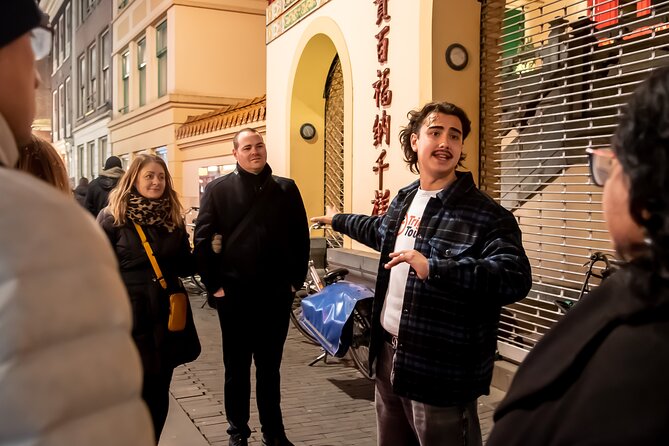
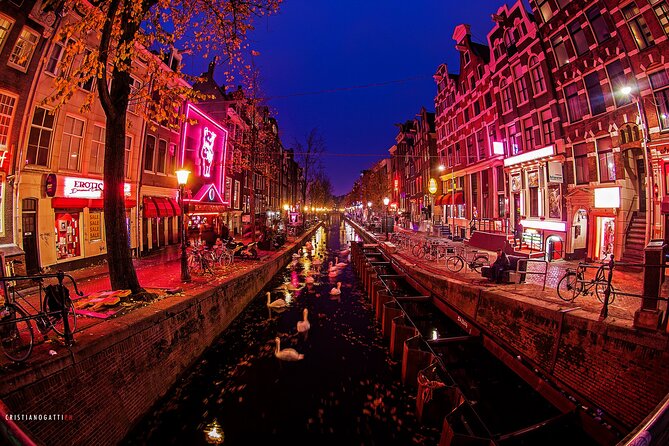
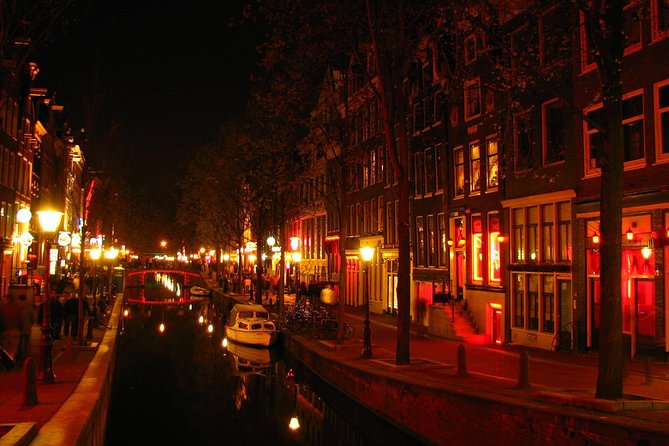
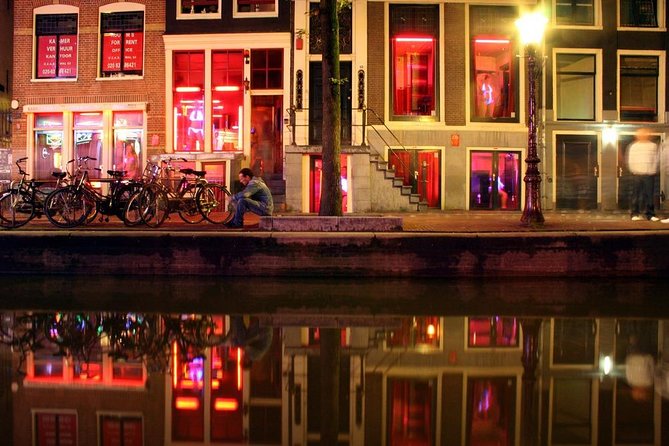
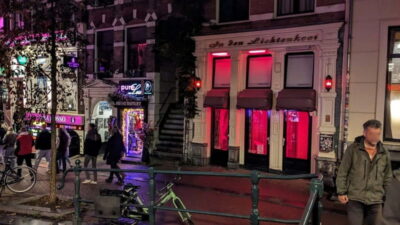
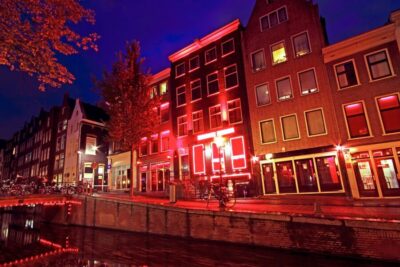
The main part of the walk takes place in De Wallen, the Red Light District within Amsterdam’s Old Town. This matters because you are not visiting an isolated adult-entertainment zone on the edge of the city. You are walking through one of Amsterdam’s oldest areas, where historic buildings, homes, pubs, shops, sex work, and tourist traffic share the same tight streets.
The route is described as a night visit to the district, although the tour offers multiple start times. Check the exact departure time when you book so the schedule matches the atmosphere you want. The district can feel very different depending on the hour, and you should be prepared for narrow lanes and crowded public spaces.
Your guide explains the coffeeshop culture and the sex work industry. The useful part is the distinction between popular stories and how Amsterdam’s laws and practices actually work. One of the strongest comments about the experience came from someone who had not understood how the district’s windows and coffeeshops operate before taking the tour.
That kind of explanation is the reason to book a guided walk instead of simply wandering through De Wallen with a phone camera. The district carries real social and legal questions, and a respectful guide can help you look at them without turning people or workplaces into entertainment.
You should also remember basic courtesy. The tour is about understanding the area, not photographing workers or treating the windows as a novelty display. The supplied information does not list a formal photography rule, but respectful behavior is essential in a neighborhood where people live and work.
The Dam and Amsterdam’s wooden foundations
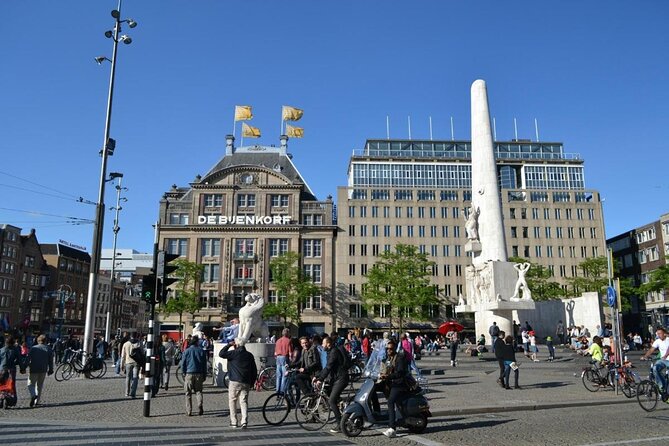
One stop focuses on The Dam, the central square that gives Amsterdam its name. The explanation here concerns the city’s unusual building foundations, and it is one of the more memorable pieces of practical history on the route.
Amsterdam sits on a thick layer of fen and clay. To keep buildings stable, builders drove wooden poles down through clay, peat, and water until the poles reached a firm sandy layer about 11 meters below ground. This is why Amsterdam is sometimes described as a city built on trees.
That fact helps explain the city’s narrow, leaning, and closely packed architecture. Instead of seeing old buildings as a collection of odd façades, you begin to understand the difficult ground beneath them. The stop also adds useful context to the rest of the walk because many buildings in the Old Town depend on the same basic foundation method.
The Dam is also a practical orientation point. If you are new to Amsterdam, learning how the central area fits together early in your visit can make later wandering easier. The tour’s value here is not just the fact itself, but the link between geology, engineering, and the shape of the city you see above ground.
Int Aepjen, one of two wooden survivors
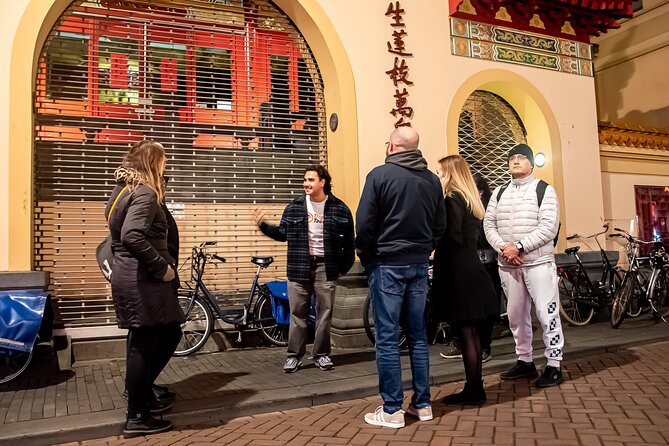
Pub The Ape, known in Dutch as Int Aepjen, is another distinctive stop. Built around 1540, it is one of only two remaining wooden buildings in Amsterdam.
The building survived a major fire in 1452, after which the government required houses to have brick façades. That rule changed the look of Amsterdam and helps explain why an old wooden building is such a rare sight.
This is the kind of stop that rewards a slow look upward. You are not simply passing another old pub. You are seeing a building connected to fire regulations, changing construction methods, and the hazards of a densely built medieval city.
The guide’s explanation gives the building a role in the wider story of Amsterdam. Without that context, Int Aepjen could be easy to miss among the packed streets. With it, the pub becomes a small reminder that much of the city’s appearance was shaped by practical rules rather than decorative planning.
More Walking Tours in Amsterdam
- Anne Frank’s Story – Guided Walking Tour through Amsterdam
★ 5.0 · 11,619 reviews - Amsterdam: Life of Anne Frank and World War II Walking Tour
★ 4.8 · 10,467 reviews - Absolutely Amsterdam – the Essential Introductory Walking Tour
★ 5.0 · 3,629 reviews - Amsterdam: Anne Frank Guided Small Group Walking Tour
★ 4.8 · 2,722 reviews
The Waag and the old defensive wall
The Waag adds another layer to the walk. It was once one of Amsterdam’s city gates and part of the defensive wall, dating from around the 1400s. It is also described as the second-oldest building in Amsterdam.
Later, the building became a center for guilds, the organizations that represented craftsmen and tradespeople. These groups had rooms in The Waag and around the square, linking the building to work, commerce, and civic life.
I like this stop because it shows how one building can change jobs as the city changes. First it helped protect Amsterdam. Later it supported the people who made and sold goods. Today, it is one of the historic landmarks in the Red Light District area.
The contrast is useful. You may arrive expecting a tour focused mainly on adult businesses, then find yourself discussing city walls, medieval trade, guilds, and urban development. That wider frame keeps the experience from becoming a one-note look at De Wallen.
The smallest house and a trading company connection
The route also points out Amsterdam’s smallest house, built around the 1700s. It was first used as storage for the VOC trading company before people began living there for a long period.
The building offers a compact lesson in Amsterdam’s past. A tiny structure can tell you about limited space, commercial activity, and the city’s connection to the VOC. It also gives you a chance to notice how tightly buildings were fitted into the old center.
The information provided does not give the house’s exact dimensions, so you should not expect a measurement-based visit. The interest is in its former uses and its place within the oldest part of town.
This stop also breaks up the darker themes of the Red Light District. The tour moves between social history, architecture, trade, and everyday urban life. That mix makes the two hours feel more useful for a first visit.
The world’s first condom shop
The final unusual stop is a condom shop that has been in place since 1987. It is described as the world’s first shop devoted specifically to condoms, with options that include customized sizing and novelty products.
The stop fits the subject of the walk, but it also shows how Amsterdam’s adult culture has been presented through commerce and public education. You can expect the guide to point out the shop as part of the neighborhood rather than treat it as a grand historical monument.
Some people will find this amusing. Others may find it awkward. That reaction is part of deciding if the tour suits you. The walk deals openly with sex work, coffeeshops, and adult retail, so it is not designed for anyone who wants to avoid those subjects.
Guides, group size, and the feel of the walk
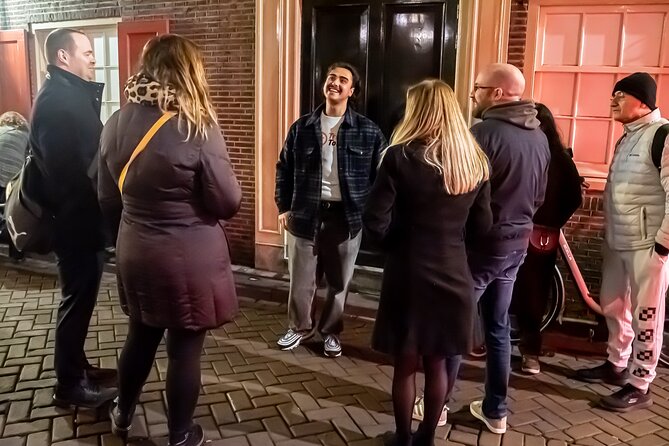
The strongest praise centers on the guides’ manner. Robin was described as friendly and well informed, Gio was credited with creating a memorable experience, and Aaron received especially strong praise for detailed explanations and keeping the group together.
Those details matter more than a polished route description. In a district with narrow streets and many distractions, a guide needs to speak clearly, watch the group, and make room for questions. Aaron’s habit of making eye contact with each person is a small but useful sign of good group leadership.
The group limit is 16 people. That is not a private tour, but it is small enough to feel more personal than a large city walk. You still need to stay alert and remain near the guide, particularly in crowded streets, but the maximum size should make it easier to hear and follow the explanations.
One rating gave the experience three out of five and raised a serious concern about a guide appearing impaired. That is a single negative account among otherwise very strong ratings, but it is worth keeping in mind. The overall score is 4.7 out of 5 from seven ratings, with five-star praise for friendliness, detail, and subject knowledge.
A private option has also been described as costing more but being worth the extra charge. That option is not part of the stated $31.24 group price, so ask about current availability and cost if you prefer a more personal format.
Who should book it, and who should skip it
I would recommend this walk if you are visiting Amsterdam for the first time and want a quick orientation to the old center. It suits curious adults who want the facts behind the Red Light District rather than a quick photo stop.
It is also a good fit if you are interested in the way Amsterdam handles prostitution, coffeeshops, and adult commerce. The guide can give you a framework for what you see later, even if you do not return to the district.
You should think twice if you dislike frank discussion of sex work or adult products. The subject is central, not a minor detail. You should also reconsider it if walking on narrow historic streets is difficult, since the activity is specifically not recommended for people with limited mobility.
Service animals are allowed, the meeting point is near public transportation, and most people can participate. Confirmation arrives when you book, and free cancellation is available up to 24 hours before the start time. Cancellations or changes made less than 24 hours before departure are not accepted for a refund.
Is the $31.24 price worth it?
The price makes sense if you value a guide’s explanation more than a list of sights. You are paying for two hours of organized context, not entry to paid attractions.
The best value comes when you ask questions and pay attention to how each stop connects to the next. The Dam explains the ground beneath the city. Int Aepjen shows the impact of fire regulations. The Waag connects defense with trade. The smallest house points toward commerce and limited space. De Wallen brings the discussion into modern questions about law and sex work.
If you only want to stroll through the district independently, you can do that without paying for a tour. But you will miss the structure that turns separate buildings and businesses into a coherent story. At $31.24, the cost is reasonable for a first-day activity, especially with a small group and several start times.
Should you book the Amsterdam Red Light District and City Center Walking Tour?
Book it if you want an honest, guided introduction to De Wallen and Amsterdam’s oldest center. The strongest reasons are the compact two-hour route, the maximum group size of 16, the mix of social and architectural history, and guides who have been praised for being friendly, detailed, and attentive.
Skip it if the Red Light District’s subject matter feels uncomfortable, or if you need a fully accessible route. For everyone else, this is a practical way to get your bearings, replace cliché with context, and see why Amsterdam’s oldest streets are more complicated than their reputation suggests.
FAQ
How long does the Amsterdam Red Light District and City Center Walking Tour last?
The tour lasts approximately two hours.
What language is the tour offered in?
The tour is offered in English.
How much does the tour cost?
The listed price is $31.24 per person.
Where does the tour start?
The meeting point is Geldersekade 2, 1012 BH Amsterdam, Netherlands.
Where does the tour finish?
The activity ends back at the meeting point.
How many people can join the tour?
The tour has a maximum group size of 16 travelers.
What places are included on the route?
The route includes De Wallen, The Dam, Int Aepjen, The Waag, Amsterdam’s smallest house, and a condom shop that has been in place since 1987.
Is the tour suitable for people with limited mobility?
The tour is not recommended for travelers with limited mobility.
Can I cancel for a full refund?
Yes. You can cancel at least 24 hours before the experience starts for a full refund. Cancellations or changes made less than 24 hours before the start time are not accepted.
More Walking Tours
- Amsterdam: Anne Frank Walking Tour – Guided in EN/DE/IT/ES
★ 4.9 · 2,676 reviews - Amsterdam: Guided Cultural Walking Tour
★ 4.9 · 2,384 reviews - Amsterdam: Guided Ganja Walking Tour of Coffee Shops
★ 4.2 · 2,092 reviews - Anne Frank Walking Tour Amsterdam Including Jewish Cultural Quarter
★ 5.0 · 1,879 reviews
More Red Light District Walks
- Amsterdam: Red Light Secrets Museum Entry Ticket
★ 4.2 · 5,722 reviews - Amsterdam: Red Light District Tour in German/English/Italian
★ 4.9 · 5,623 reviews - Amsterdam Red Light District & Coffee Shop Tour
★ 4.6 · 4,134 reviews - Amsterdam: Red Light District Pub Crawl with Unlimited Shots
★ 4.1 · 2,130 reviews
Just added around Amsterdam
- Amsterdam City Center Guided Walking Tour – 12 guests 2,5h★ 5.0 · 3 reviews
- Amsterdam Light Festival Boat Cruise★ 5.0 · 3 reviews
- Daytrip Tour from Amsterdam to Zaanse Schans and Giethoorn★ 5.0 · 3 reviews
- Amsterdam: Roller Dreams & Amsterdam Nightlife Experience★ 3.7 · 3 reviews
- Amsterdam: Van Gogh Museum Entrance and Guided Tour★ 3.5 · 3 reviews
- Amsterdam: Red light tour in German/English for groups of 4 people or more★ 5.0 · 3 reviews
- 2 Hour Making Rembrandt’s Traditional Oil Paints in Amsterdam★ 5.0 · 3 reviews
- Amsterdam Red Light District and Old Town Walking Tour★ 5.0 · 3 reviews
Red Light District Tours, compared.


Red Light District Tour in German/English/Italian
Read our review →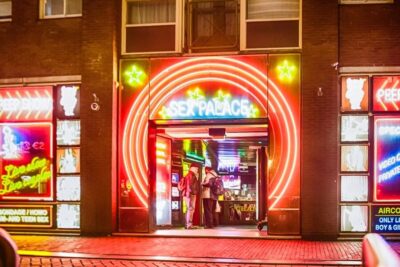
Amsterdam Red Light District & Coffee Shop Tour
Read our review →
Red Light District Pub Crawl with Unlimited Shots
Read our review →
Private Amsterdam Red Light District and Coffee Shop Tour
Read our review →Browse the lists this tour appears in